
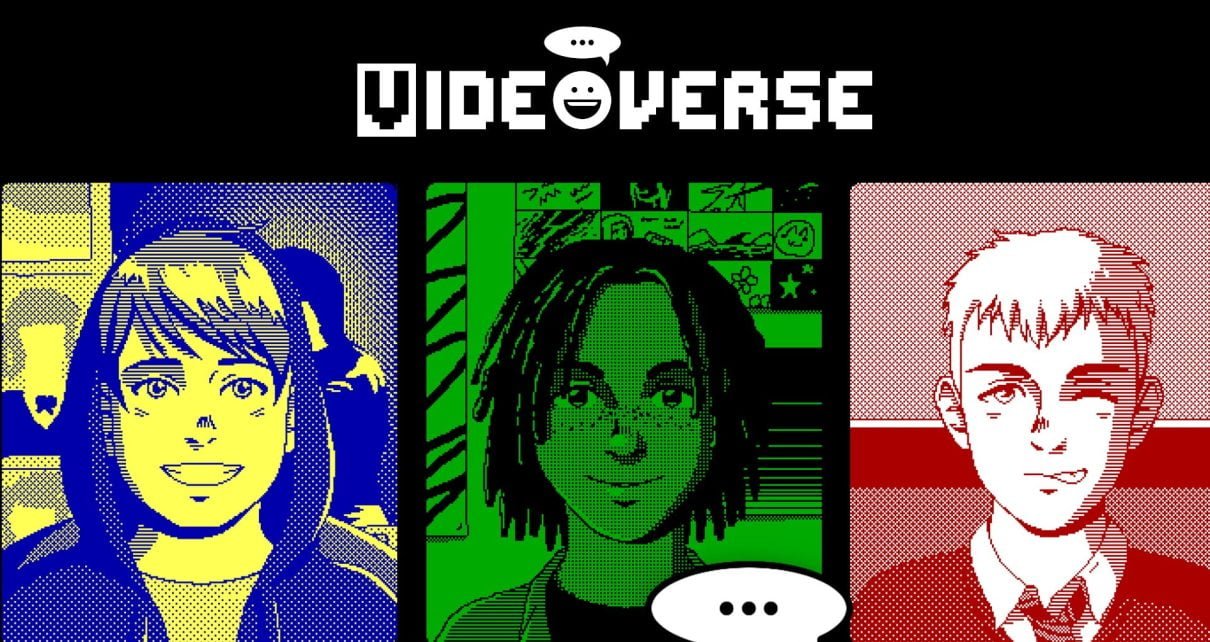
Nostalgia games are a cottage industry now, and it’s both amazing and terrifying to watch them strip mine my childhood to fill the catalogs of Steam and itch.io. Some of it is cheap shlock hoping to make a quick buck. A lot of it is a bit too nostalgic for my taste–games that feel like they could actually have existed in the 90s. But I keep coming back to the well because every once in a while I find something like VIDEOVERSE: the rare experience that masterfully evokes the feeling of a bygone era of gaming and thoughtfully connects its ideas to life today.
Back to the Past
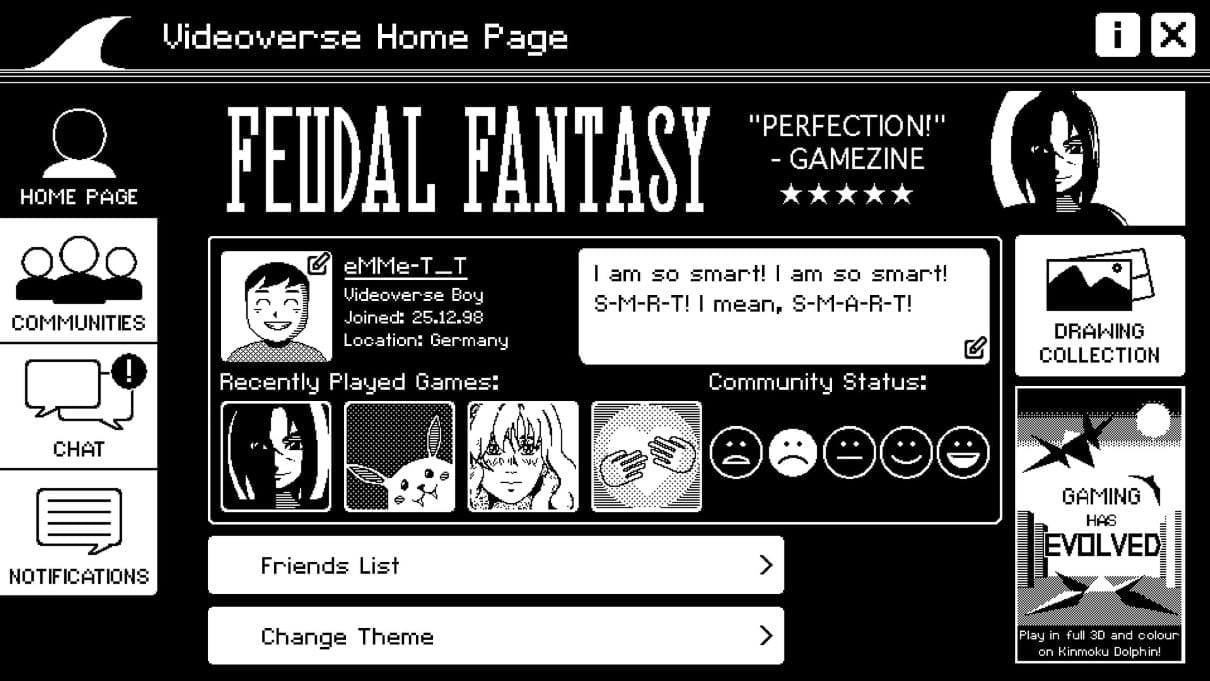
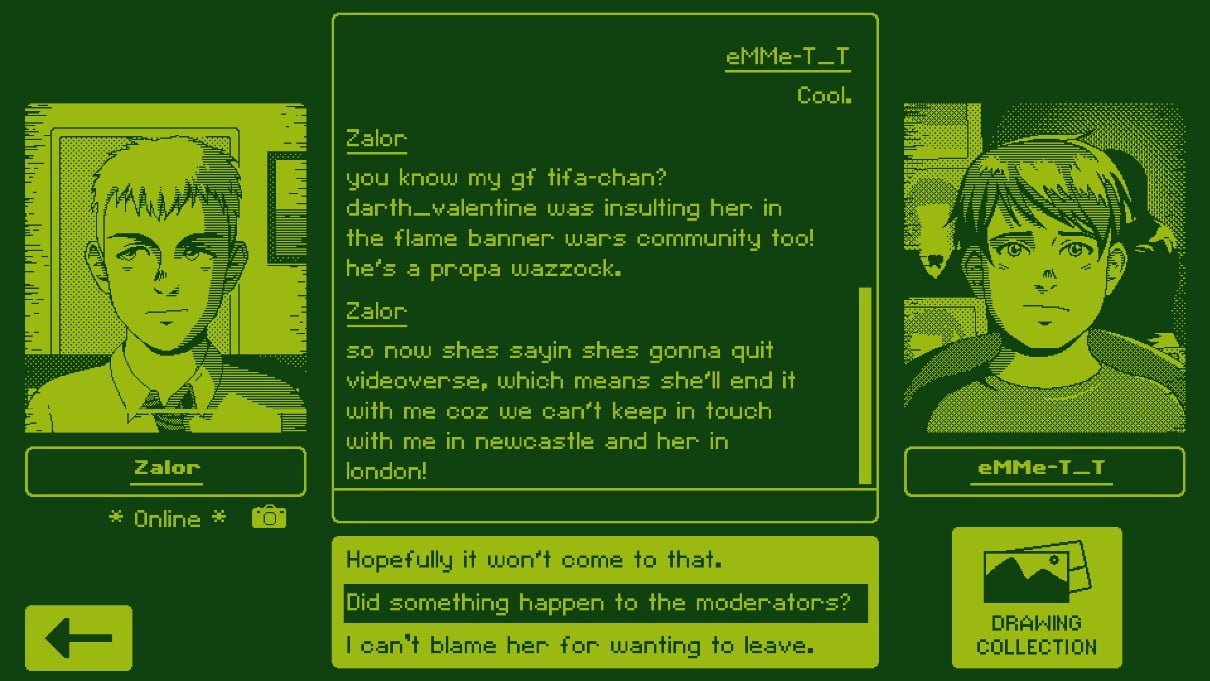
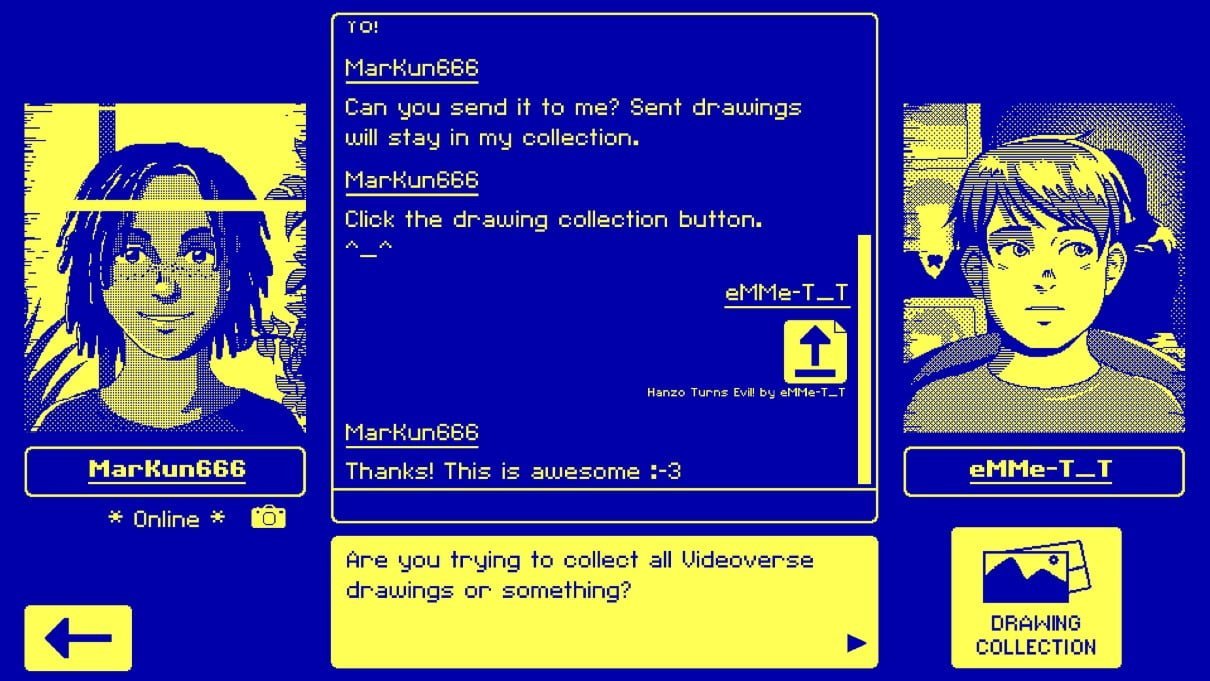
Travel back to 2003 when the Kinmoku Shark console and its social network service VideoVerse were all the rage. VIDEOVERSE follows 15-year old Emmett as he spends his free time chatting with friends, posting to the message boards, and playing the latest hit game Feudal Fantasy. VIDEOVERSE plays out at Emmett’s desk, and actions like sending a message or posting to a thread typically see you choose one of three options. You spend most of your time logged into VideoVerse, but you can also step back and look through Emmett’s physical belongings, such as his sketchbook and notebook. These both store useful information and plot points Emmett might want to follow up on as well as show how his digital and physical lives influence one another.
While the mechanics are simple, VIDEOVERSE gives you an impressive amount of freedom in its digital playground. For one, the dialogue is excellent and the lines you get to choose feel impactful. You’re also free to do what you want, including leaving messages on read and ignoring threads that don’t interest you, though the former may displease Emmett’s friends. Emmett starts out a naive and dorky kid, but he grows over the course of the story, and you get to determine how. Will he become more empathetic and self-aware or lean into his inner edgelord? In fact some choices are locked behind how you develop Emmett, requiring him to be sufficiently cocky or empathetic.
Coming of the Internet Age
Emmett’s story plays out primarily through his relationships with his closest friends. He starts out chatting about idle gossip, but as the story progresses, he learns more about their hopes, dreams, and challenges. These are thoughtfully written and touch on a range of issues such as healthy relationships and the effects of social media on self-image that are both true to the era of VIDEOVERSE and relevant today. It helps too that Emmett’s friends have so much character. There’s an international cast, highlighting how the internet opened up communication anywhere in the world, and everyone has a distinctive way of speaking (typing?) reflecting their nationality and personality.
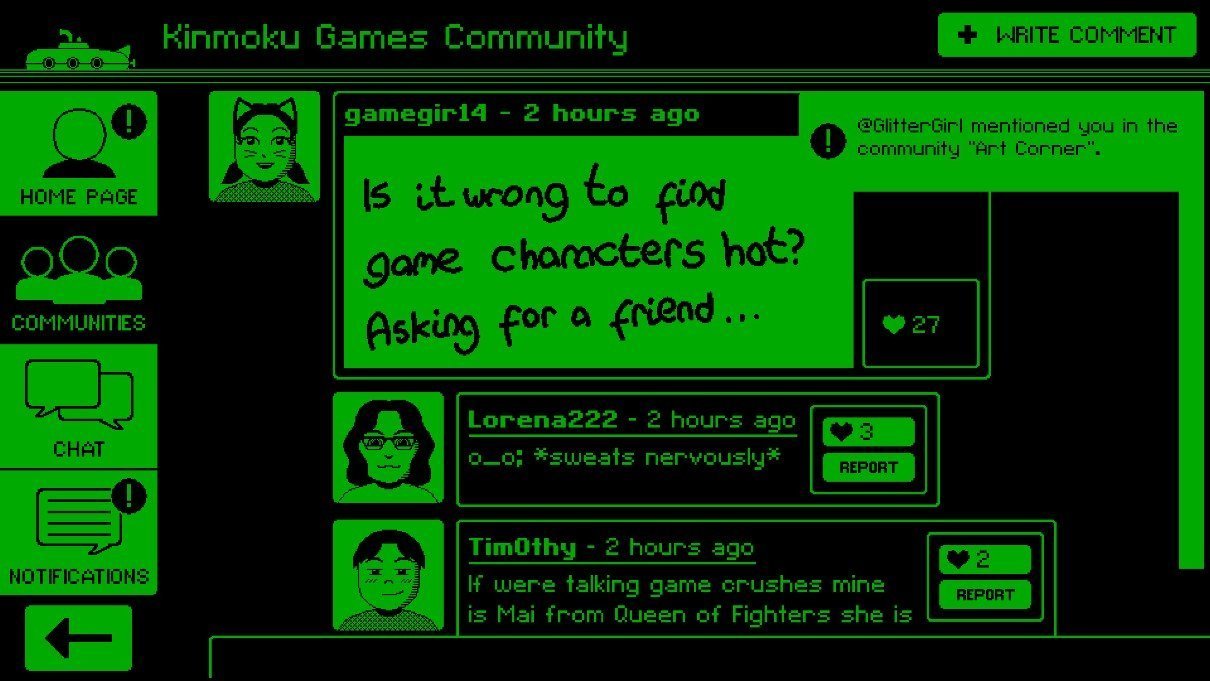
VIDEOVERSE is also the story of a community. VideoVerse has a community status indicator that ranges from bad to great, and Emmett’s choices can influence the type of community it evolves into. If Emmett chooses to push back against trolls and help people in need, VideoVerse grows into a kinder, more supportive place. If he chooses to sling flames and act the bully, it devolves into a toxic cesspool. Interacting on the message boards can add “Help Out” tasks to Emmett’s notebook; often these involve background characters outside his inner circle. The smaller stories these tasks tell make VideoVerse feel inhabited beyond Emmitt and his friends and even manage to give the background characters some nuance. Maybe some people troll for more complicated reasons than just being a jerk.
Halcyon Days
Much of the nostalgia of VIDEOVERSE lies in the way the Shark and VideoVerse have a strong spirit of community, one that you don’t find in today’s giant social networks. Everyone knows each other and the regulars are invested. The internet of 2003 was a smaller place where today’s endless void of content and self-promotion had yet to develop. Consequently, there’s a real sense that VideoVerse *is* the users, not some churning algorithm meant to keep people hooked as long as possible to feed the insatiable leviathan of growth. It’s both nostalgic and refreshing, and I think the search for this kind of community is why we’ve seen movement toward federated systems like Discord servers in modern social media.
However, VIDEOVERSE is thoughtful in not looking at the past through rose-colored glasses. The story explores themes including accessibility and commercialization that reflect barriers that existed at the time. The early internet required expensive equipment and some degree of expertise to access. By 2003, the internet had begun to mature, but adoption was far from universal. Similarly, the story examines how online communities might develop. Who has ownership? Who makes the rules? Who should be excluded?
The effect is that the message of VIDEOVERSE is not that the past was a better time and we should try to go back to it (which is impossible anyway). Rather, we can learn from the past, both the positives and negatives, and apply those lessons to today. Maybe if we act carefully, with kindness and empathy, we can recapture some of that sense of community that used to exist, but without excluding those on the margins. Maybe it’s possible to push back against commercialization and commodification. VIDEOVERSE makes no claims that doing so would be easy, but shows how it might be worthwhile.
Pixel Perfect
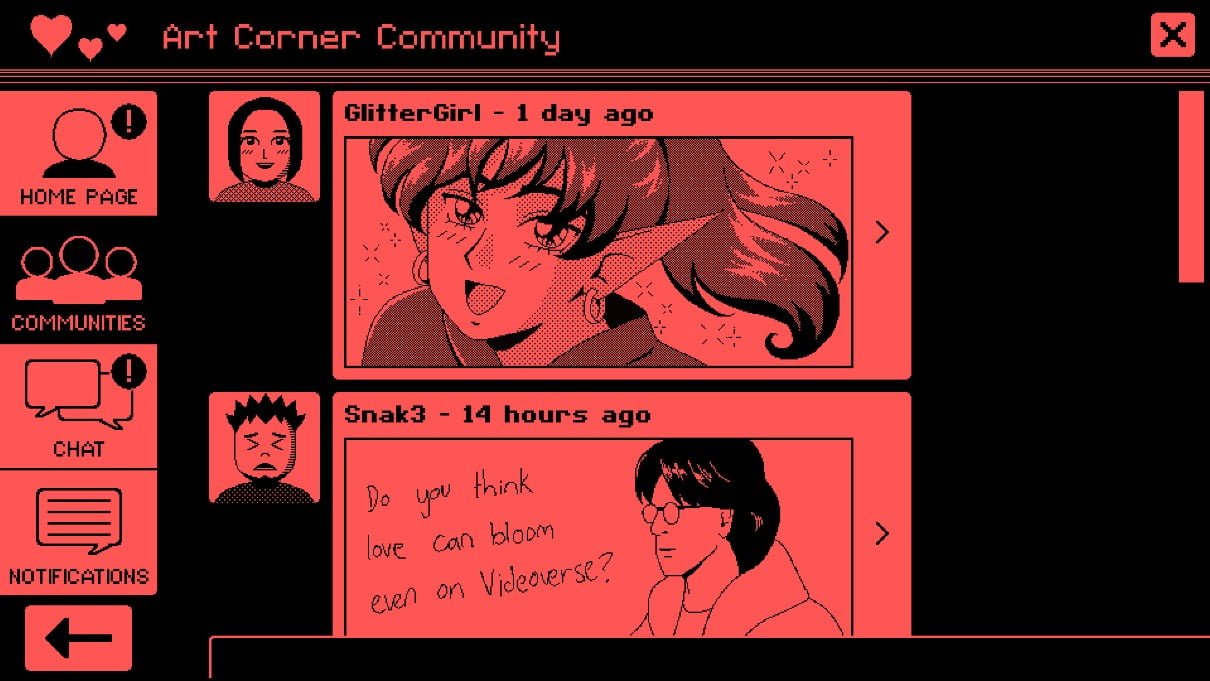
VIDEOVERSE looks and sounds great. Lush pixel art brings the VideoVerse on the Shark to life, and the Feudal Fantasy cutscenes that accompany Emmett’s story are especially striking. Atmospheric chiptune music adds to the retro aesthetic. VIDEOVERSE even features a number of small touches that add to the immersion such animated sprites of Emmett’s friends displayed on the “SharkCam” and a regularly updated thread full of old-school internet line art. Plus, who hasn’t waited in anticipation for an important message while “X is typing…” flickered on and off? True to its themes, VIDEOVERSE also includes accessibility features including a screen reader and a colorblind-friendly palette.
The one downside of all the immersion comes on replays. VIDEOVERSE has small story branches, easter eggs, and ultimately three possible endings, and to see it all you’ll need multiple playthroughs. Unfortunately, there’s no easy way to speed through the content you’ve already read. Still, it’s a small price to pay for how well VIDEOVERSE does everything else, and a single playthrough is plenty satisfying even if you don’t go the completionist route.
Verdict
VIDEOVERSE may seem like a product for a niche audience, and admittedly it probably hits different if you experienced the early internet, but its ideas and themes are relevant today. If you’re at all interested in stories about online communities and relationships, VIDEOVERSE is well worth your time.
VIDEOVERSE IS HIGHLY RECOMMENDED

Purchase: Humble Store
If you are looking for another visual novel, you may enjoy The Shell Part I: Inferno. We have also covered a wide variety of visual novels both original to English and localized from Japanese, which you can check out here.
Thank you to Kinmoku for providing a PC review code for this title.
A veteran of Oregon Trail and Battletoads, Wes has been playing and talking about games for as long as he can remember. He’s down to try almost anything, and he especially enjoys games with gripping narrative experiences.


