In typical Capcom numbering style, we now get the third Capcom Fighting Game Collection with Capcom Fighting Collection 2. Following the dream re-release of Marvel Vs Capcom Fighting Collection a year earlier, we have a slightly more SNK-themed release this time around. Perfectly timed with the recent return of Fatal Fury, right? Will this be a worthy re-release or feel more like a copy-pasted clone?
What’s Inside?
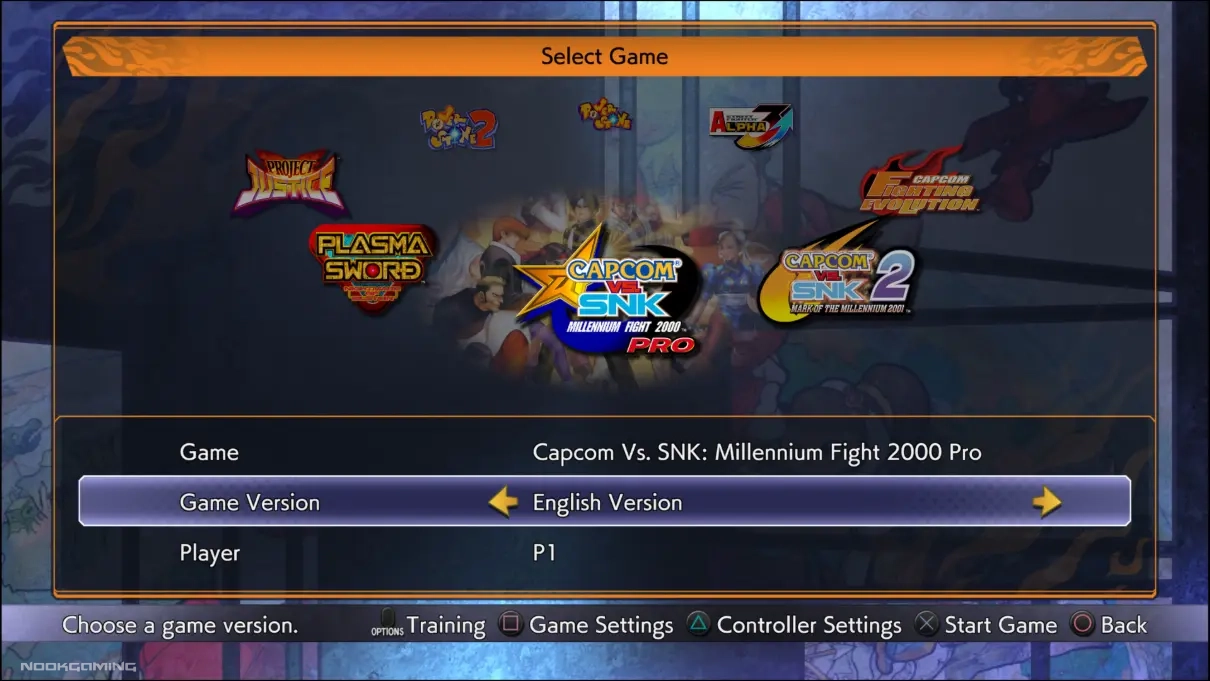
Much like the previous collections, Capcom Fighting Collection 2 consists of several titles from Capcom’s past. The twist this time is it is headlined by two games no one thought we would ever see releases of: Capcom VS SNK 1 and 2. The non-SNK titles are also highly sought after and hold their water in some way or another. The roster of games in this collection is as follows:
- Capcom vs SNK Millennium Fight 2000 PRO
- Capcom vs SNK 2: Mark of the Millennium 2001
- Capcom Fighting Evolution/Jam
- Street Fighter Alpha 3 Upper
- Power Stone
- Power Stone 2
- Plasma Sword: Nightmare of Bilstein
- Project Justice
Similarly to the previous collections, Capcom Fighting Collection 2 includes a quick save and load system, a gallery and jukebox with artwork and music specially produced for this title, and a plethora of display options. These are certainly nice additions, but it’s the games people really want to know about! Let’s take a look through this collection in the games’ original release date order!
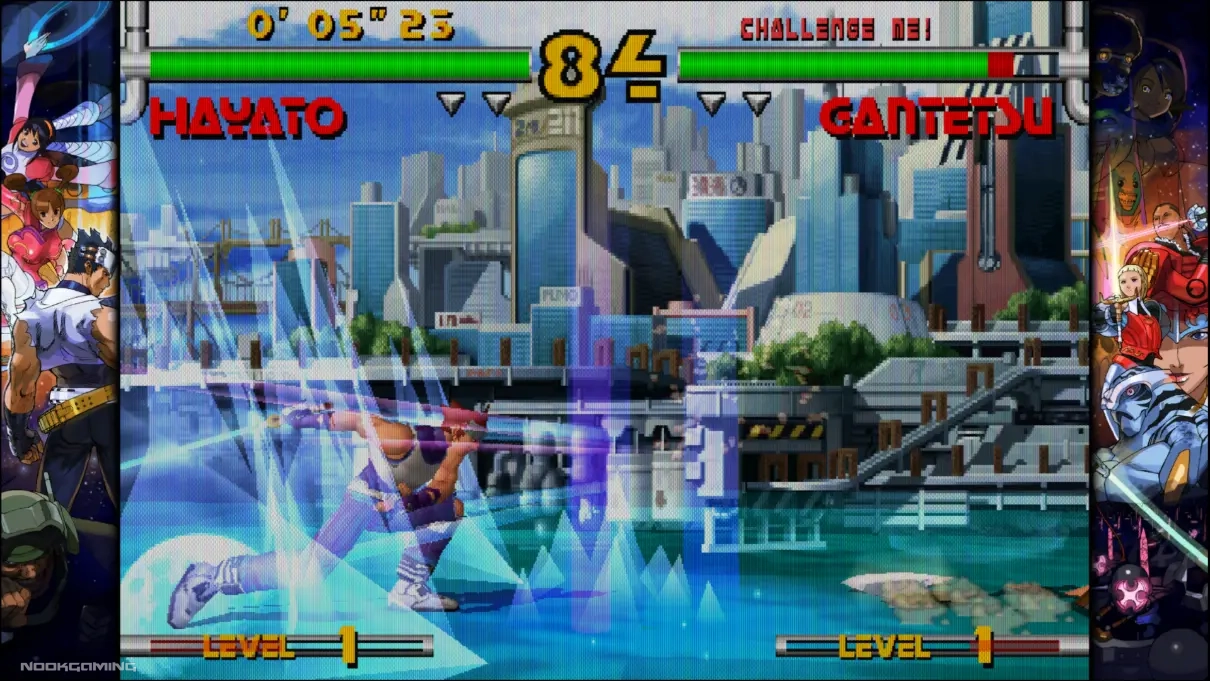
Plasma Sword: Nightmare of Bilstein
Plasma Sword: Nightmare of Bilstein is known in Japan as Star Gladiator 2. The English title makes it less obvious, but this is a sequel to the 1996 PlayStation 1 title Star Gladiator. Funnily enough, I have never met another soul who has played the game, with most seeing the protagonist Hayato and saying “Oh it’s the guy from Marvel Vs Capcom 2”.
Capcom has never really had the strongest output of 3D fighting games, and Plasma Sword: Nightmare of Bilstein isn’t exactly going to change anyone’s mind. While it’s not a terrible experience, it does feel rather floaty and awkward. It’s a product of its time.
The game has all the trimmings you need; special moves, super moves and a super bar, 3D side-stepping, and move cancelling. Unique to Plasma Sword is the Plasma Field, where when you use one bar of your special meter and hit an opponent, you can lock them in a cage with you to deliver them a good kicking.
The roster and the theme give off anime Star Wars vibes and it was clear that Capcom wanted to start another franchise under their belt to capitalize on Sci-Fi and fighting games. It’s a mix of wacky and edgy sci-fi, and there are quite a few returning characters from the original Star Gladiator. Even if you aren’t familiar with the original though, I believe that Plasma Sword has a character design to appeal to anyone.
Plasma Sword: Nightmare of Bilstein is not the game to sell this package by any stretch. It’s fine in multiplayer with friends for some brief fun, but you can tell almost instantly why there hasn’t been a Star Gladiator 3.
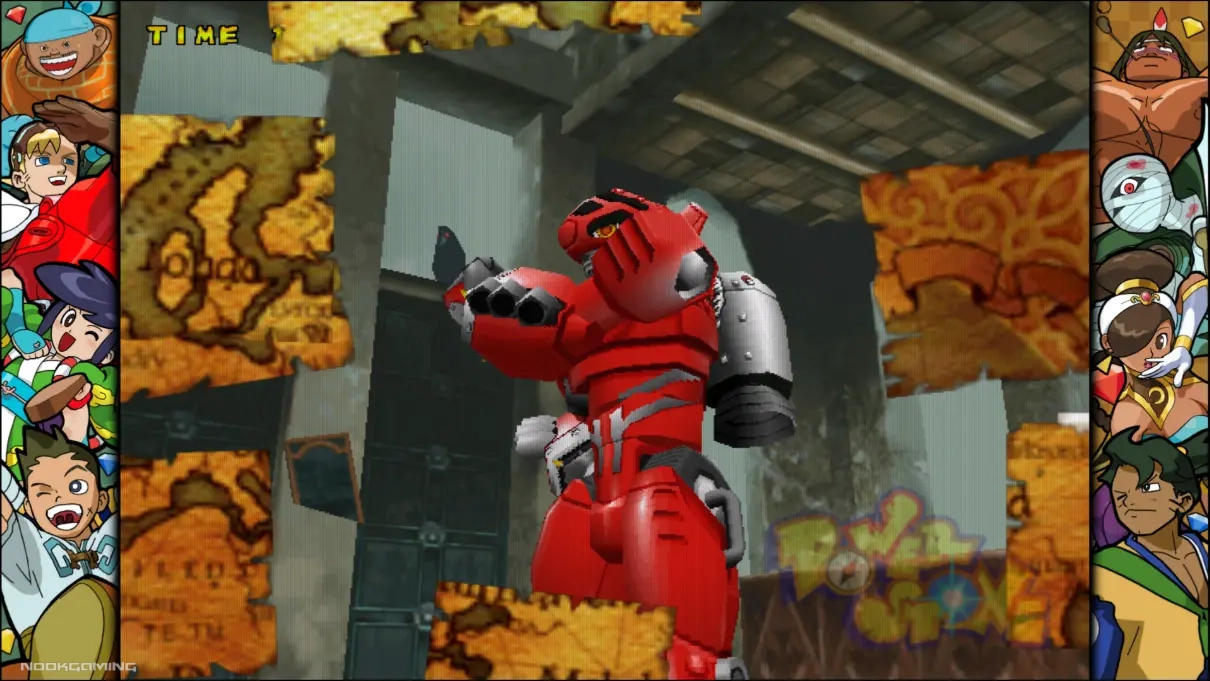
Power Stone 1 and 2
Power Stone 1 and 2 are likely the non-“vs SNK” titles in Capcom Fighting Collection 2 that people are most excited for. This was a relatively early foray into the world of party fighting games, and frankly, it’s a shame that we haven’t seen more games in this series to coincide with the continued success of party fighters like the Smash Bros. series.
Featuring full 3D movement and some of the most pickup-and-play controls around, the Power Stones have a punch, kick, jump, and grab button. You block attacks by pressing the direction into the attack, and items found around the areas either allow you to perform a specific attack or can be thrown at your victim.
There are stage objects to interact with such as pillars you can either swing around if you’re a smaller character or rip down if you have a little more muscle behind you. Power Stone 2 ups this ante by a mile with constantly changing stages. One example of this is a stage where you start on top of an aircraft before it gets shot down, and then you fight in mid-air before you land at a temple. The evolving stages keep you on your toes and make for some of my favorite stages in any game.
The roster is a fun cast of characters separated mainly by their special moves and what “weight class” they fall into. When you collect three of the power stones that drop in the middle of the match, you temporarily transform into a more powerful state where you can deliver some devastating moves. The second one of those gems appear, every fighter on the stage will inevitably make a beeline for them, causing even more chaos.
The pick-up-and-play controls and chaotic nature of the game really help bring everyone into Power Stone 1 & 2. Power Stone 1 is closer to an actual fighting game in terms of speed, being less chaotic with fewer items. Power Stone 2 is much more party focused with 4 characters on screen instead of 2, featuring many more items and stages that constantly keep you on your toes.
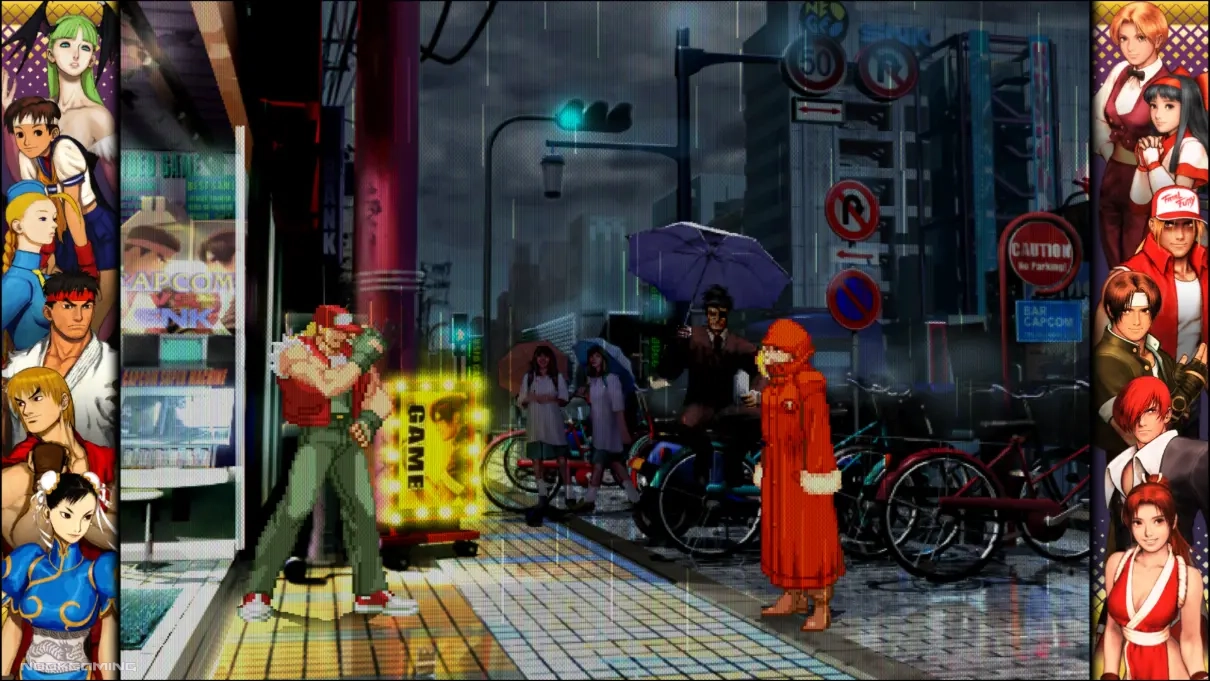
Capcom Vs SNK: Millennium Fight 2000
This is an often overlooked crossover fighting game between Capcom and SNK. It’s a team-focused 1v1 2D fighter with a roster composed of characters from the two titans of the genre. This was always going to be a winning formula, and despite balancing issues and the world’s quirkiest user interface, this is a fantastic first step for the series.
Teams are built using points known as Ratio. You have up to 4 points, and characters are given a value that determines how strong they are and how much damage they take. The idea is that you build your team around these points (i.e. one Ratio 2 and two Ratio 1 characters.)
Outside of that you then pick a “style”, either Capcom or SNK, that replicates how a Capcom or SNK fighter feels. There are tweaks such as SNK having rolls while Capcom gets air blocking, another neat and unique feature for its time. It is worth pointing out for die-hard fighting game fans, this is a 4 button fighter along the lines of King of Fighters or Marvel vs Capcom.
It’s a fantastic first attempt and likely would be more spoken about in gaming history had it not been followed up by a better-balanced and more widely released sequel with a better roster. Still, if there is one thing that you really should check out about this game, it’s the stages and stage intros. In my opinion, they are the best Capcom has ever done. They match the SNK energy so well with these and they’ve yet to top them.
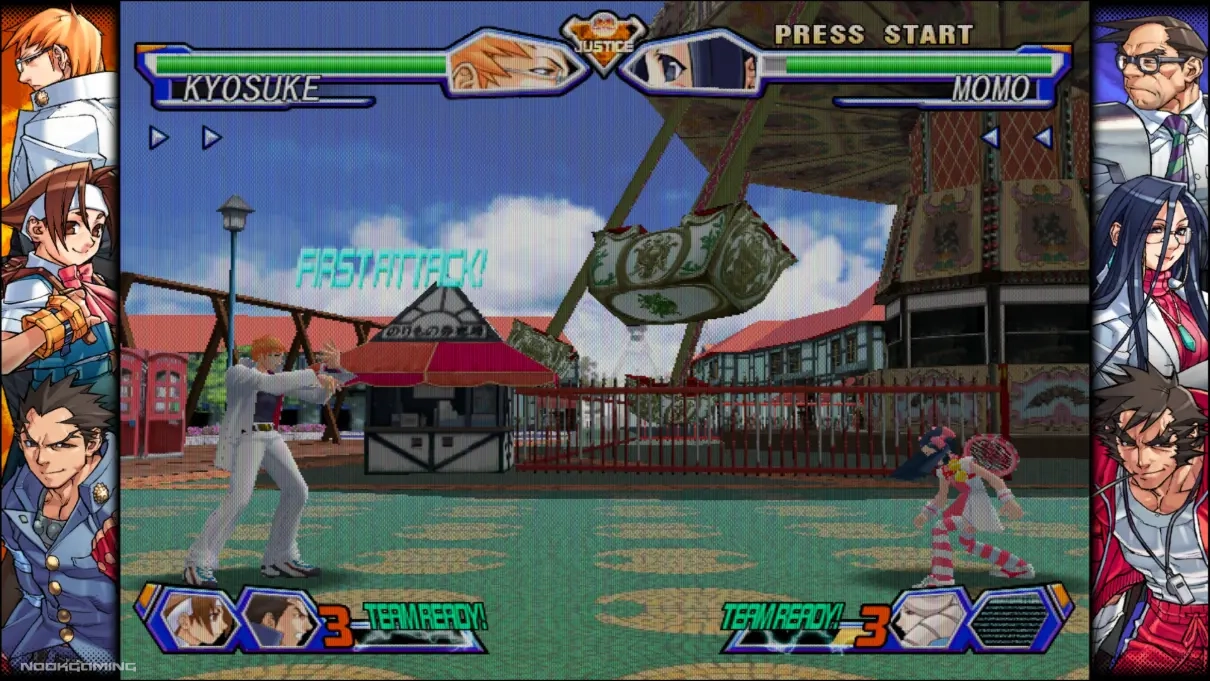
Project Justice
Project Justice is the sequel to the PlayStation 1 cult hit Rival Schools which saw Capcom’s unique brawling mentality take place in the familiar territory of high school. As one of the few 3D fighters developed by Capcom, similar to the Star Gladiator titles the series has always felt like they were dipping their toes into a world they didn’t quite understand. While much more realized here than in the original release, Project Justice doesn’t quite nail it where it needs to.
This is another team fighter without a tag mechanic. Instead, you pick a team of three and can switch your character between rounds. During matches your chosen team has an effect on what your “team up” attack does. Some deal damage and some heal, and they all have unique animations. It’s important for you to pick the team that suits your playlist if you want to be head of the school.
Not surprisingly, as this is an early 3D fighter and one by Capcom who generally struggled to get them right, it feels quite floaty and finicky to get used to when you first load it up. While the float never quite goes away, the control system and move inputs soon grow on you and you can play it very much like a traditional Capcom fighter with a sidestep button.
Project Justice does have quite an in-depth story which is likely why the game has such a strong cult following outside of the fighting game community. Sadly this doesn’t have the “Create a Student” mode that the original Japanese release had, but the Story Mode has plenty of high school drama mixed with a cheese-filled fighting game narrative that should keep you busy if you’re more drawn to playing games in single player.
It’s an otherwise fantastic little title, and it’s a shame that Capcom hasn’t done more with the franchise. It’s a high school brawler with the attitude of Street Fighter and plenty of crossover potential. Project Justice is easily one of the stronger titles in the collection and one I can see myself continuing to dive into on a rainy day.
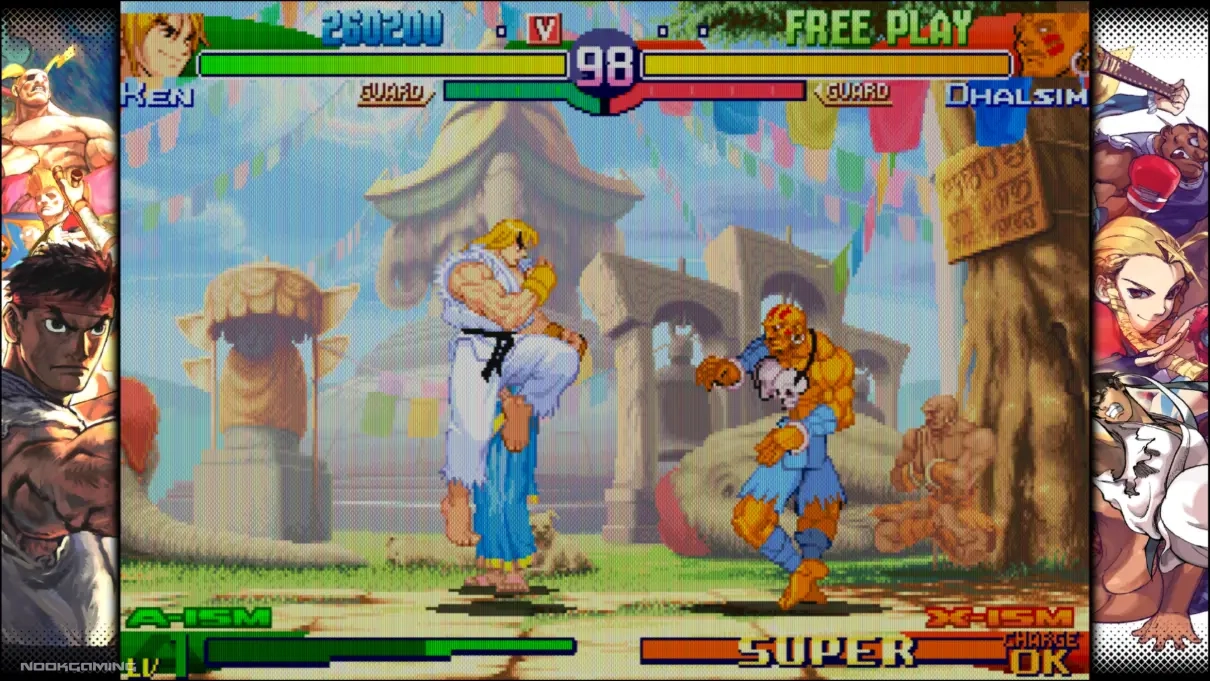
Street Fighter Alpha 3 Upper
This one feels a little like a slot filler. I love Alpha 3, but we’ve already had the Street Fighter 30th Anniversary Collection, and putting this on here makes it stick out like a sore thumb.
This title is the core arcade version of Alpha 3, so there’s no World Tour mode. Instead, you have balance changes standard to Capcom updated releases of the time, plus 6 extra characters such as Dee Jay, T Hawk, and two of M.Bison’s dolls. Outside of that, it feels like business as usual for this one. There isn’t anything with this title that makes the collection further stand out unless you need a core Street Fighter experience. I guess I should be thankful it’s not yet another version of Street Fighter II!
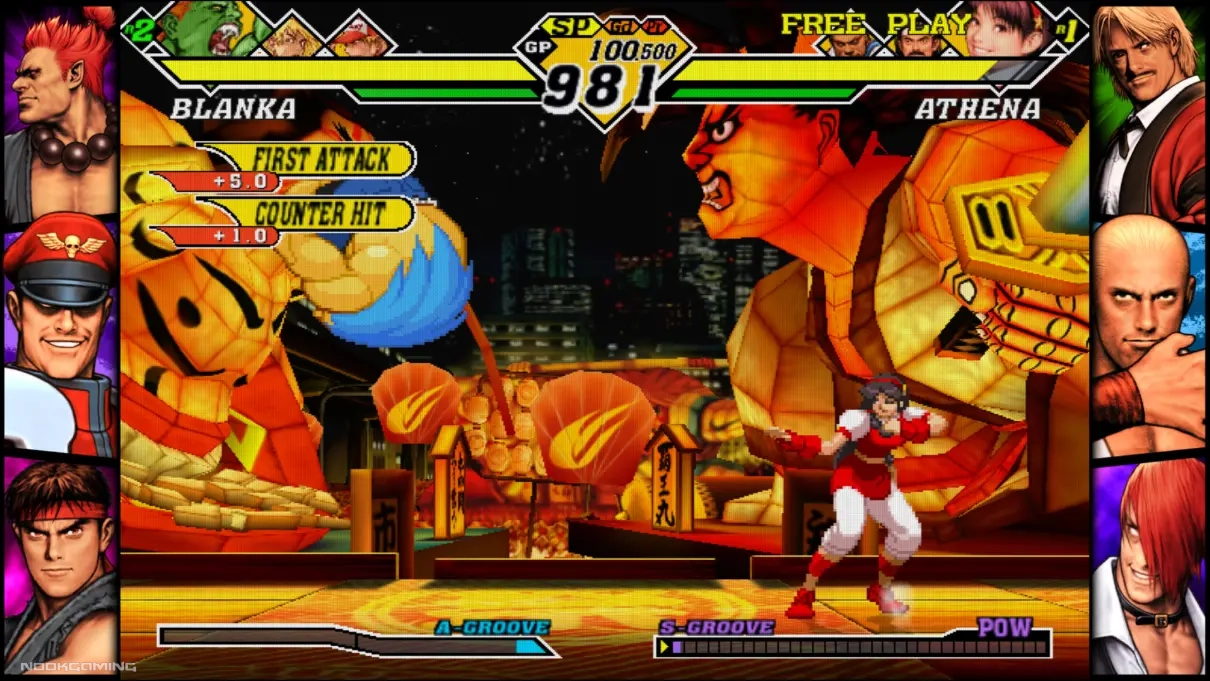
Capcom vs SNK 2: Mark of the Millennium 2001
Here we have the star of the show, and the re-release everyone wanted but no one expected to happen. This is Capcom’s second crossover content with SNK, and sadly their final crossover fighter (at least until Street Fighter 6 and Fatal Fury: City of the Wolves which features guest fighters from the other franchise). My friends, this game was and always will be a big deal.
The game has a large roster split between Capcom and SNK, with some surprising additions and perhaps bizarre omissions. Controls and balance have been tweaked to make it an even more pleasurable experience to play than Millennium Fight 2000 was, and the developers went all in making six different “styles” of play compared to 2000’s two. The Ratio system also returns, but you decide what ratio you want your character to be again from a total of 4 points.
This game uses the traditional 6 button style of combat with light, medium, and heavy attacks, normal jumps, small hops, and giant leaps. It does an ideal job of mixing the gameplay that both developers were known for rather than fully leaning into the Capcom side of things similarly to what SNK did with their crossover fighter SNK vs Capcom: Chaos.
The only area this title doesn’t eclipse the original is in the stage designs, which feel much more muted and use dodgy 3D models like in Marvel vs Capcom 2 instead of the absolute top-tier stages and intros from the first game. The music here absolutely hits though, and has some of my favorite tracks ever composed for a fighting game outside of the Street Fighter III: Third Strike soundtrack.
Capcom Fighting Evolution
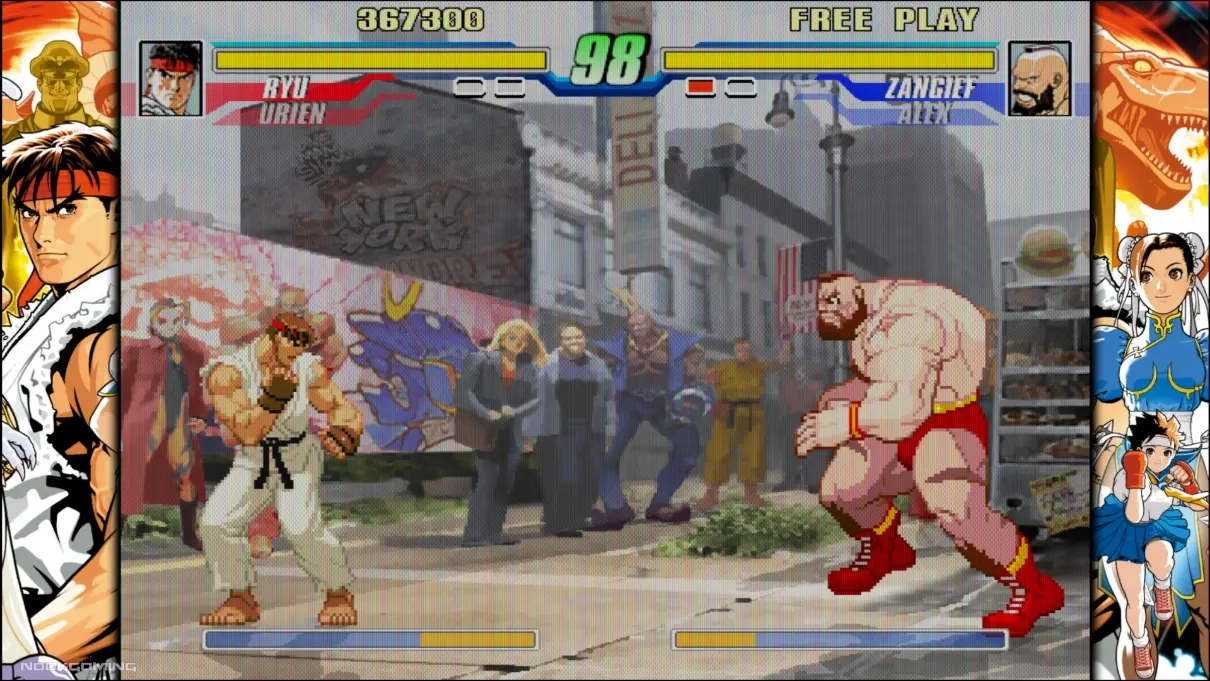
Last (and for the most part, least), we have Capcom Fighting Evolution. For those unfamiliar, this game is widely accepted for doing a lot of damage to the fighting game genre and definitely curbed any Capcom fighting games for many years, which ushered in what the fighting game community has dubbed “the dark years”.
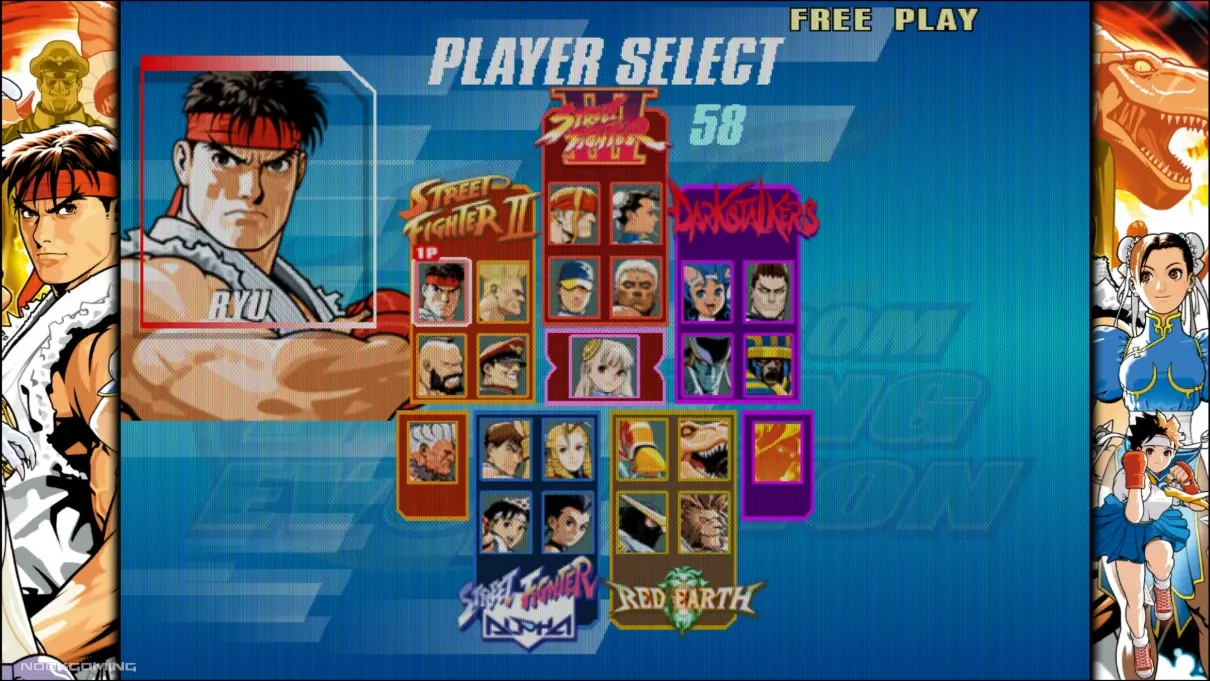
Despite Capcom’s rich history, Capcom Fighting Evolution manages to have one of the most boring rosters of any crossover fighting game. This is despite trying to step outside of the box with characters from Red Earth.
One of the more interesting and controversial choices for this game is that the characters chosen play in very odd and asymmetrical ways. For example, Ryu plays like Street Fighter 2 Ryu, where he’s got a super move and that’s about it. Urien from Street Fighter III by comparison has a super, a dash and the parry mechanic from his game. Five games are represented: Street Fighter II, Street Fighter Alpha, Street Fighter III, Darkstalkers, and Red Earth. Each has its own different mechanics, and to top things off, the original character Ingrid also has her own mechanics.
The controls feel fine, but the moves have all kinds of weird properties, such as coming out too fast or doing weird amounts of damage in comparison to others. Naturally, some characters are just at a massive disadvantage. It just doesn’t feel great to play, and the balance is all over the place in a bad way.
Stage designs in Capcom Fighting Evolution are the weakest they have ever been, with low-resolution art littering them and a complete lack of animation. Character designs for the art are all over the place, and I found Urien particularly terrifying.
The game feels quite low budget even for its time, and there is enough evidence out there to suggest this is the case. This game is more of a curiosity for most, and the most interesting thing is likely the story behind it.
Online and Extras
As with the previous releases, Capcom Fighting Collection 2 features online multiplayer for each game available. Having extensively played all of them I’m happy to report that it features Rollback Netcode that works well. Only once out of around eight multi-hour sessions between games did I hit any lag, and it was sorted out within a matter of seconds. Sadly the game isn’t cross-platform which limits the player pool, especially if you choose the Steam version that has other alternatives to contest with.
There are multiple versions of each game available. These are usually the localized and the Japanese versions, but in the case of Capcom vs SNK 2, you have the original version or the newer and differently balanced EO edition of the game. Also, each game gives you the ability to make the hidden characters playable from the get-go.
There are training modes for each of the games, which is fantastic. The only issue content-wise with this package is that once again it’s just the arcade versions of the games, and while the arcade versions are the “standard” for competitive play, the console versions usually had fun unique modes or extra characters. The lack of these bonuses is really the only sticking point with these collections as a whole so far.
Verdict
Capcom Fighting Collection 2 is yet another fantastic collection of Capcom fighting games. The selection is a little more mixed in terms of overall quality, but I feel this collection especially has more of “something for everybody” than the previous two.
This is an absolute must-buy for fans of classic fighting games. It may be slightly lacking in the stronger single-player content, especially compared to newer fighting games, but between the charm of titles like Power Stone and Project Justice and the intense action of Capcom vs SNK 1 and 2, you’ll lose just as many hours as you would credits in the arcade.
CAPCOM FIGHTING COLLECTION 2 IS HIGHLY RECOMMENDED

If you enjoy Fighting games, then perhaps you’d like our review of Tekken 8 or SNK vs Capcom: SVC Chaos.
Many thanks go to Capcom for a PC review code for Capcom Fighting Collection 2.
Pride of utopia & greatest thing ever, I found the One Piece, Collected the Dragon Balls & won the Mortal Kombat Tournament in one night, it was quiet for me that night! Follow me on Twitter @powahdunk