Two Button Racing
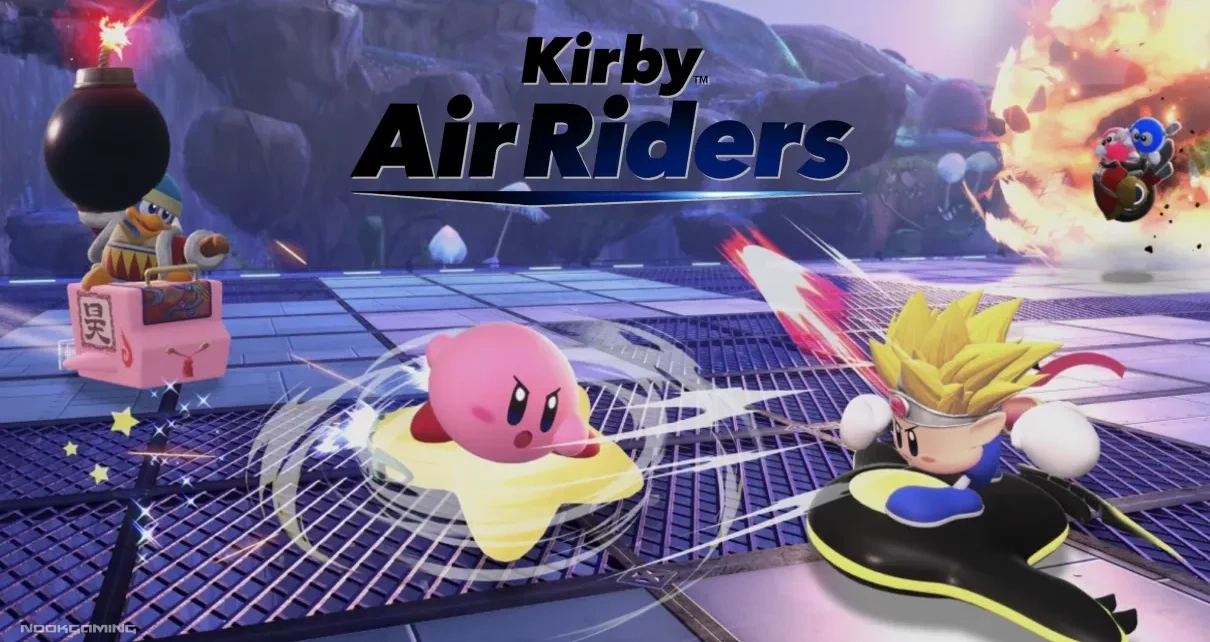
Kirby Air Riders, like the original game, is a very simple racing game on a mechanical level. In the GameCube original, you only used the control stick and a single button to do everything. Rather than accelerate with the push of a button, you instead accelerate automatically; all of the other things you would typically expect out of a racing game are left to your “Charge” command, which is done with almost every button on the controller. Charging is how you break, drift, boost forward, interact with stage items, and use boost panels scattered throughout tracks, all in one. You can do other things besides that, like take to the skies with a glide when hitting sloped terrain, and spin to attack nearby enemies and racers. Air Riders adds some extra mechanics on top of that, like getting speed boosts by riding trails of stardust left by other racers, or getting a boost of speed by landing your vehicle flat against any surface.
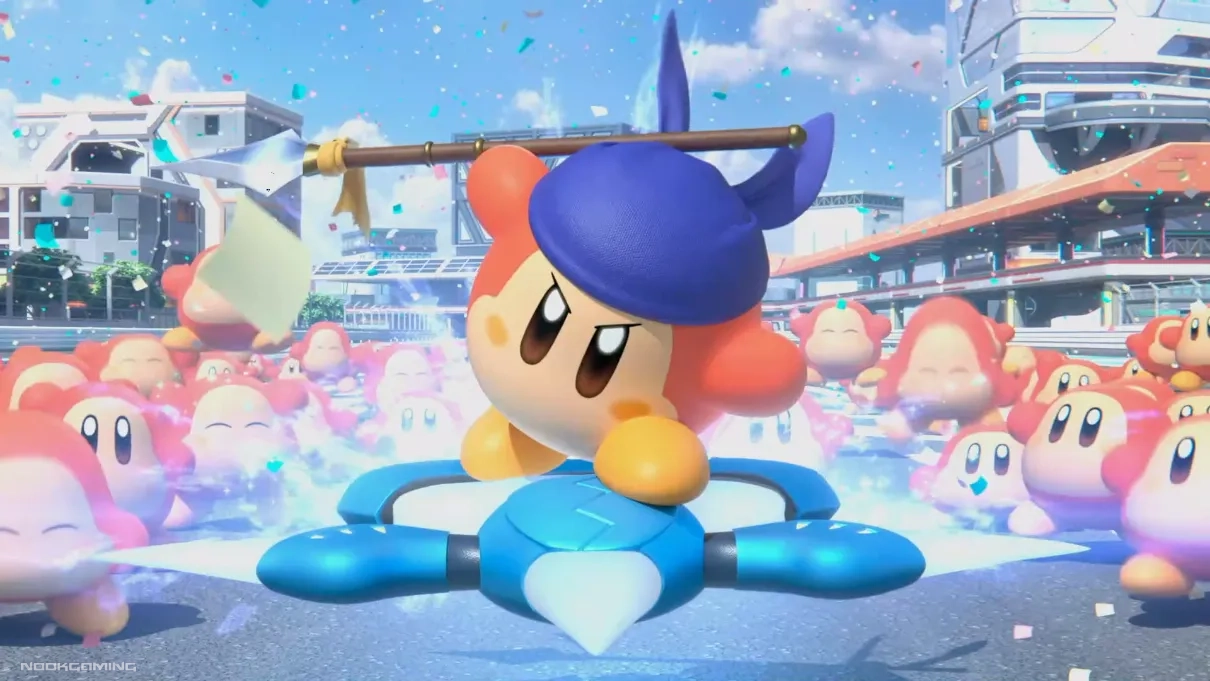
On top of this, you’ll do what Kirby (and for the first time, even others) does best, absorbing enemies to either spit them out as projectiles or to copy their abilities. Each ability has its own quirk, which can help in different ways in a given race. Sword automatically hits nearby enemies, Cutter and Fire hit enemies from afar, Spark builds up plasma energy that can both serve as a shield and be shot at enemies, Ice will freeze enemies and other characters; the list goes on. On top of doing permanent damage to enemy vehicles, hitting enemy racers or AI enemies will give you a small burst in speed. Being particularly aggressive will let you go a fair bit faster, and that’s before accounting for character-specific Special techniques, which are gauges that fill up as you attack others. Special techniques can be offensive like Kirby’s Ultra Sword or speed-based like Rick’s Full-Speed Dash.
Most important to a race is which Star (your “Air Ride”, as it were) you pick to race with. Each Star has a different gamefeel, some of which are dramatically different or have unique properties. While the standard Warp Star is a sort of all-rounder vehicle that doesn’t excel at any one thing, there are others like the Shadow Star that are frail but deal a lot of damage. Then you have quirky ones like the Wing Star, which has low ground speed but excellent gliding and air mobility, or the Wagon Star, which can’t charge a dash or glide, but makes up for it with excellent stats elsewhere.
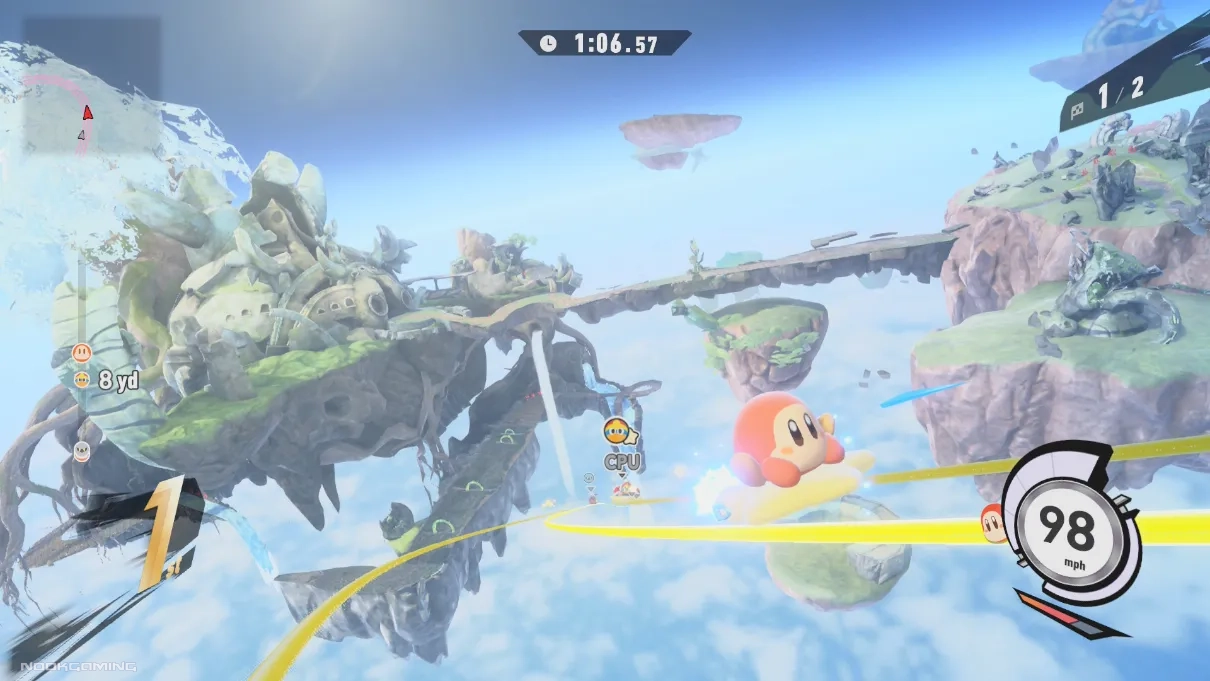
The core gameplay of Air Riders is really interesting on paper, combining elements of Kirby with the elegant simplicity that often characterizes Masahiro Sakurai’s games. However, it’s let down by being a little too inviting and beginner-friendly, as this bleeds into very low racing speeds during races and broadly simplistic track design that doesn’t fully leverage its mechanics. In particular, there’s too much emphasis placed on what you pick rather than how you play. I can appreciate a fighting game-like approach to vehicle selection, but too many moments in the track design hinge on what you picked to start with, rather than what decisions you choose to make during the race. It leaves the time trial element feeling similarly dull, and I don’t really get excited when races show up in the game’s various other modes.
The Reason You Play Air Riders
In 2003, City Trial was the main attraction of Kirby Air Ride. It was a mode where you competed with other players in a sprawling city to pick up stats to power up your vehicles, and to find new vehicles that might give you the edge in the forthcoming competition. Along the way, utter mayhem would be unleashed as players would fight each other for their stats, sabotage each other by stealing their vehicles, and be subject to fate as a number of random events would dramatically shake up what happened around the map. It was inviting chaos, leveraging Kirby Air Ride’s mechanics to make it more like a vehicle brawler that resembled the likes of Twisted Metal. In my opinion, it’s what single-handedly carried it from being a thoroughly mediocre racing game to an interesting, if still flawed experiment.
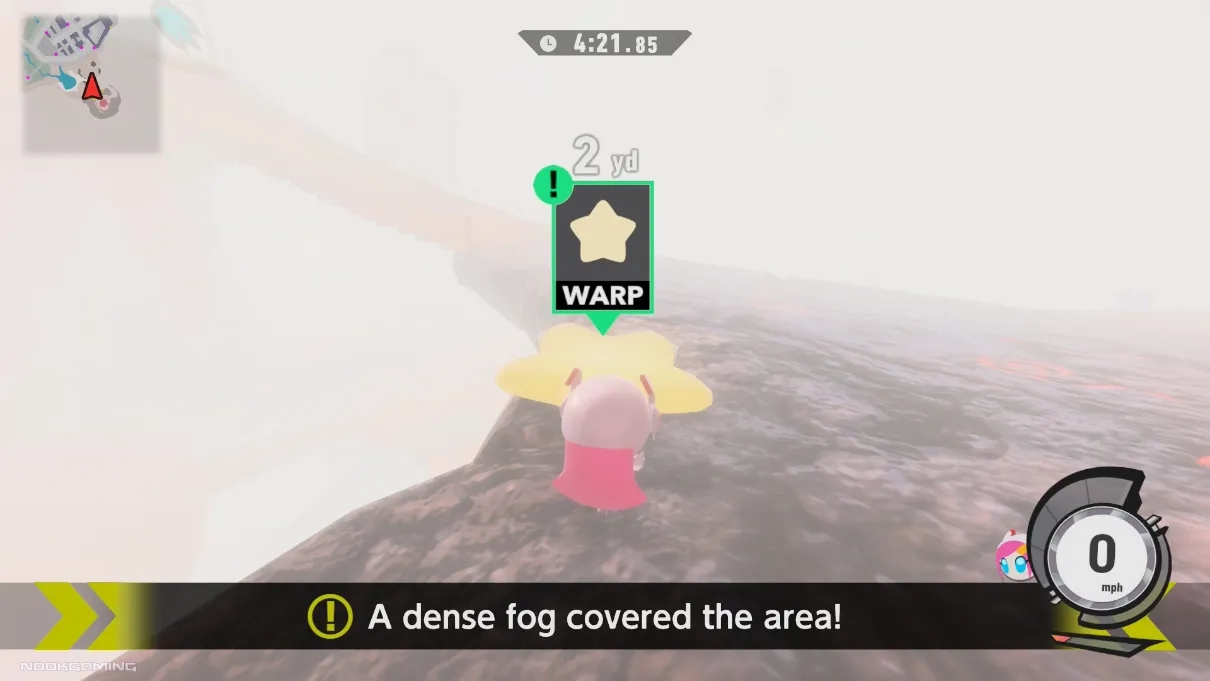
Flash forward to 2025, and that sentiment hasn’t changed even a little bit. Kirby Air Riders’ City Trial mode is better in nearly every meaningful way than its GameCube counterpart. For starters, the player count has been bumped up considerably (from 4 to 16), and the mode critically supports online play. The new map has also been made somewhat larger to compensate for this increased player count, though I am disappointed that it lifts as much as it does from the original map. It’s still got a volcano, a garage, and city streets, and the new areas by comparison seem a lot smaller. This wouldn’t be such a problem, except that there’s still for some reason only the one map for City Trial. It’s a fine, if not good map, but this was a huge issue even back on the GameCube. The randomized events aren’t enough to make matches feel distinct, and eventually it feels like I’m going through the motions to prepare for the forthcoming Stadium game.
Like before, you’re picking up items, stat boosts, and vehicles to prepare for the Stadium game, where you compete in one of four minigames to declare a winner. This can include finding stat increases or different Stars hidden in boxes or corners across the map, or defeating enemies and other players for a huge payout in stat increases. Kirby Air Riders’ additional and refined mechanics make this more enjoyable than the 2003 version by default. This is made better by the returning Legendary Air Ride machines, which are monstrously powerful vehicles you can grab by collecting the necessary three pieces in a given game. It adds a nice splash of excitement to it, though it’s disappointing that there aren’t any new ones; it’s still relegated to just the Dragoon and Hydra from the original Air Ride.
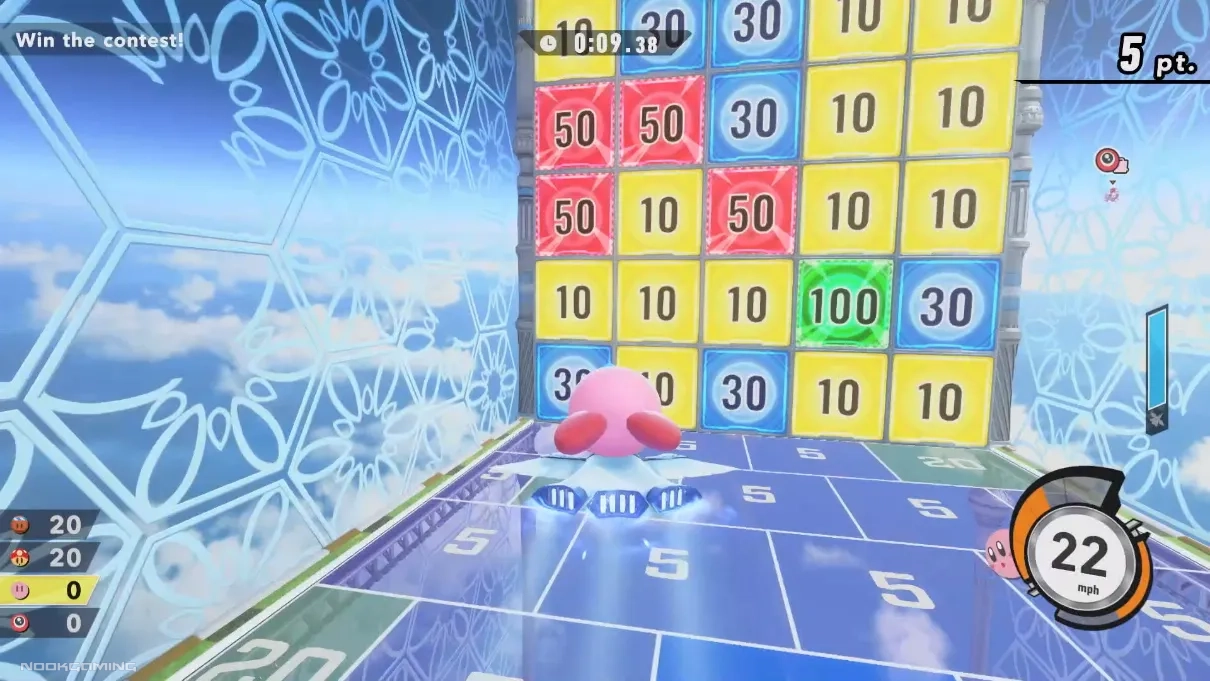
Each game of City Trial is capped off by a Stadium game, where you compete in a single event that tests you in different formats. These games include one where you’ll fight to see who can nab the most K.Os, a mode where you fly into targets to get the highest score, racing in a straight line, fighting a boss to try and land a killing blow, and doing a traditional race. These are all individually alright, but I think they suffer from being far too fleeting, leading to each City Trial feeling like a bit of an anti-climax. It’s really the sort of mode that would benefit from being round-based instead of a single competition.
This is compounded by Air Riders specific changes made to City Trial, the big one being that players will pick one of four Stadium games to compete in. How many players pick something will likely be determined by what their Star is best suited for, which in theory adds a layer of strategy. However, I think being totally random like before was the better choice, since it forced a lot of improvisation out of the player. There’s also the matter of players avoiding the more unpopular games, which again contributes to that feeling of anti-climax when there are few participants, or sometimes even zero. The first time I got a free win in City Trial because nobody else participated in the stadium I picked, it was cute. The tenth time, it makes me wonder what it was I was even doing for the past five minutes.
Pack Your Bags, Kirby
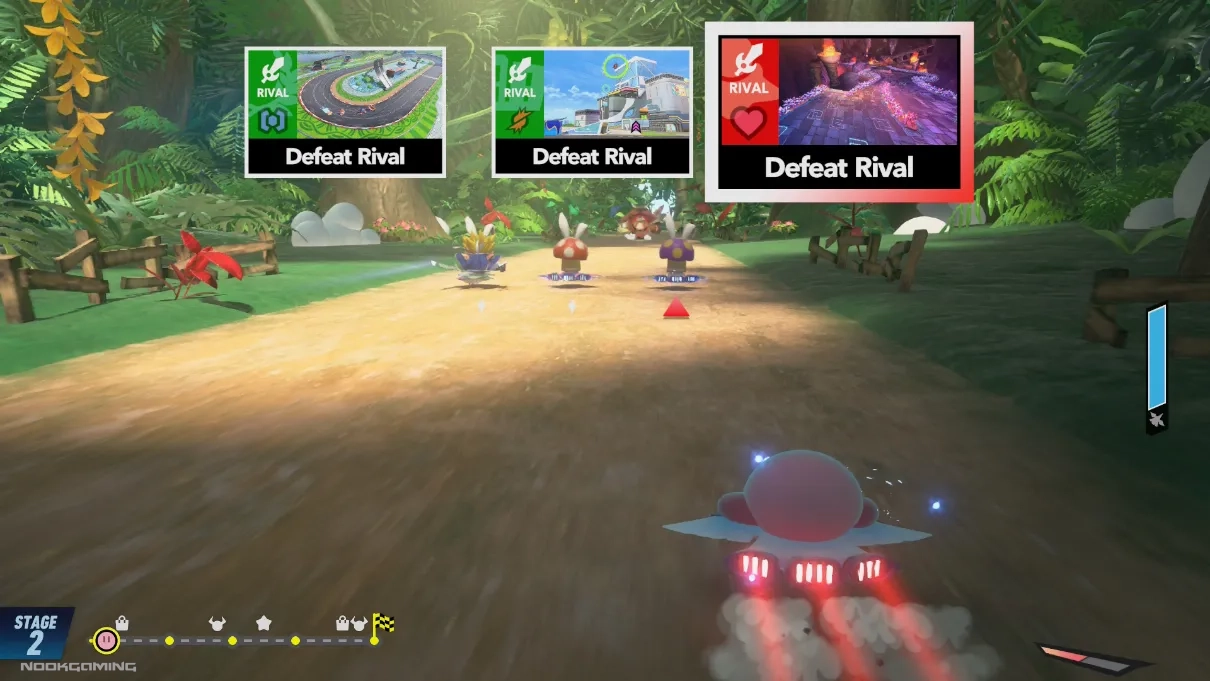
New to Kirby Air Riders is Road Trip, a single-player story mode that follows your chosen character as they complete randomized challenges and beat bosses. It’s presented as a mixture of Classic Mode from Super Smash Bros. and an adventure game like Oregon Trail, where you’ll face bite-sized challenges in various game modes and make some choices that will affect your journey along the way. Each map has at least four challenges, with a boss fight or two sprinkled in for good measure. While you’ll always start with the weakest Star with no stat upgrades, you’ll be able to pick those up depending on what challenges you pick. Each completed challenge will also earn you some money, which you can spend in shops for upgrades and perks, or to retry failed missions. Depending on what you pick up during your journey, you’ll be taken to a different world where challenges have different characteristics.
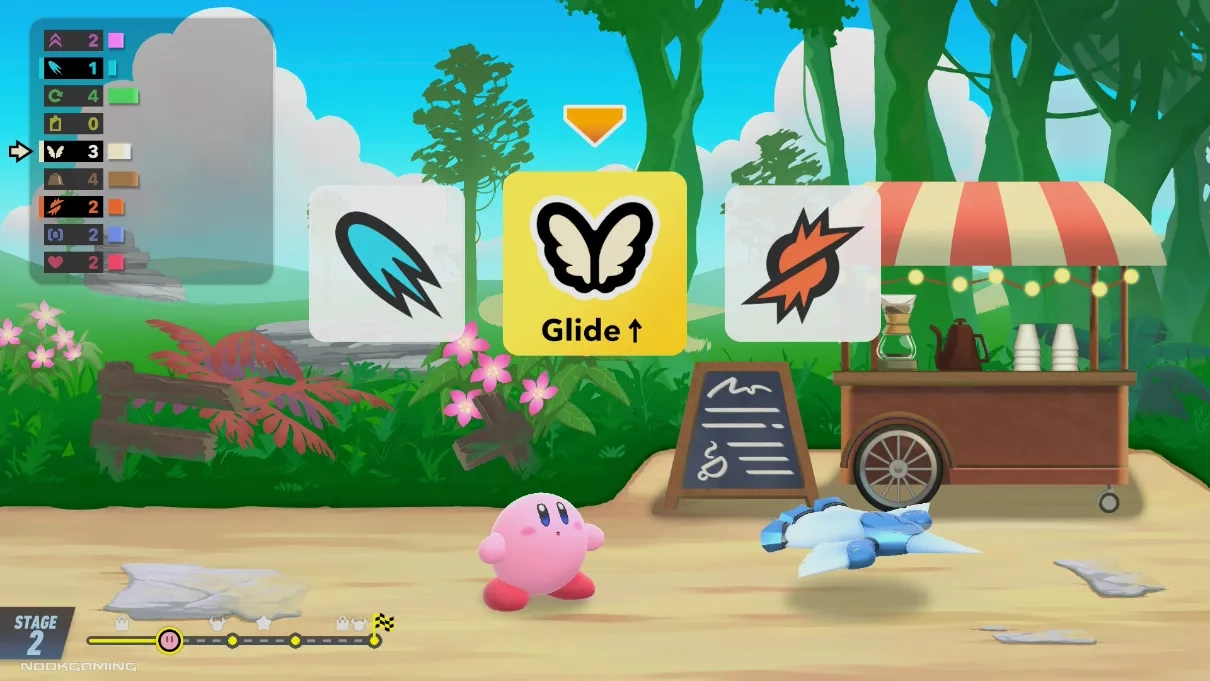
Wind up in a city, and your challenges will mostly involve racing on the futuristic courses. Meanwhile, if you wind up in a forest, your challenges will instead be battles. I think this mode is pretty fun, and it’s where Kirby Air Riders’ mishmash of mechanics gets a chance to properly shine when they’re presented in bite-sized challenges where you’re making constant, but impactful decisions on what challenges to take and how to upgrade your gear. The main complaint I have here is related to the game as a whole, in that there aren’t really enough tracks or play variety to go around to support this mode’s encouraged replayability. There are only 18 tracks in this game, noticeably fewer than its kart racing contemporaries, and half of those are from the GameCube original.
It means it’s not long before you see everything, despite the sense of variety the game wants to leverage. That’s not necessarily a bad thing, but again the main racing mode isn’t really all that engaging and City Trial based challenges are so brief that they’re footnotes. This means that you’re left with boss battles, which are good and have a nice variety of fanservice from across the series’ early days. I am sad that there’s little to chew on from the newer titles (there isn’t even a playable character from Forgotten Land), but what is here gets its flowers and then some. All in all, I think Road Trip is a nice crystallization of what this game does right, even if in retrospect it also makes clear its weaknesses.
The Other Stuff
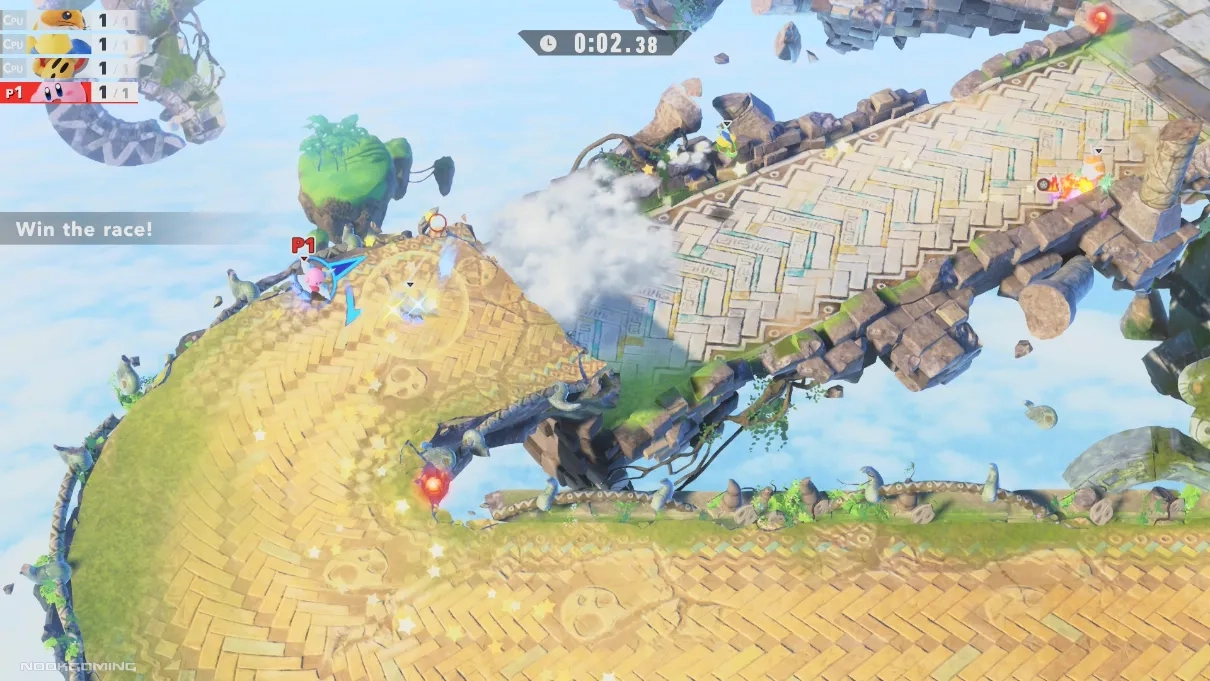
Kirby Air Riders’ progression system is a nice breath of fresh air after how many games nowadays tend to give you everything at the start, or have unlock systems that are unengaging. Air Riders gives you little at the start, and you instead have to unlock things like characters, stages, and Stars by completing a ton of challenges that usually involve completing niche tasks in different parts of gameplay. They’re the sorts of things you can do just by playing naturally, but some will require you to really focus to clear them. Things like not using a Charge in a given race, defeating a number of enemies within an allotted time, staying airborne for a certain amount of time, so on and so forth. It’s pretty good fun, and gives the game a lot to do in short bursts.
The original Air Ride also shared this quality, but here it’s better by simple virtue of having more stuff. This includes the returning Top Ride minigame, which remains an alright two-minute distraction where you race a slower, miniaturized version of normal races in a top-down view. I didn’t much like these in the original game, and I don’t here either. It’s a nice knick-knack that fans of the original will appreciate, though, and the aesthetic of this mode is undoubtedly cute. That said, the extras you can unlock have this same issue of feeling like knick-knacks and not much else. They can be decals for machines or alternate skins for characters, stuff that I feel really should just be there in the first place. It walks a fine line between being gratifying and feeling like busywork, and many times it can be the latter.
Four Generations Later
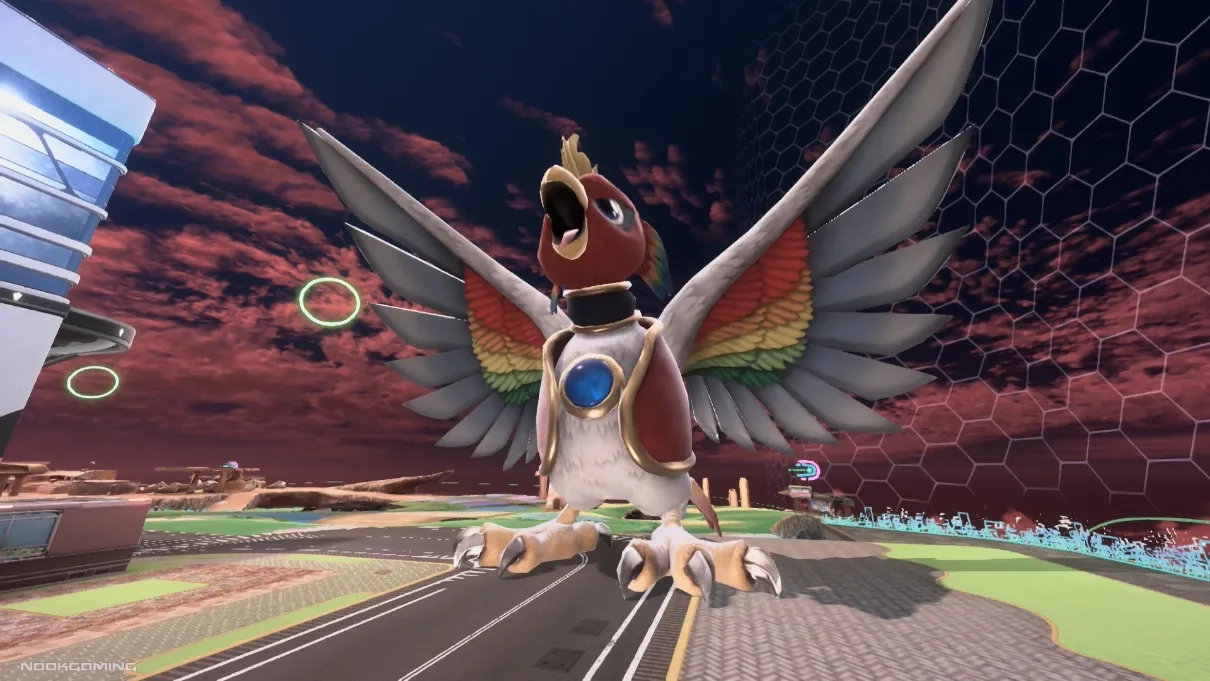
Kirby Air Riders is a pretty nice-looking game, courtesy of Bandai Namco’s spiffy new engine. While it doesn’t necessarily wow in terms of pure fidelity, it leverages very strong art design and attention to detail in its animations. Main tracks are very colorful and filled with flourishes that make them feel like playable CGs at certain points. Take a grind rail near the end of Floria Fields and you’ll fly through a vortex of petals as you approach the finish line. Fly through Waveflow Waters and you’ll be treated to really cool sights as its whirlpools come into view. This is unfortunately not consistent, as tracks returning from the GameCube original both look noticeably worse and lack those cool setpieces.
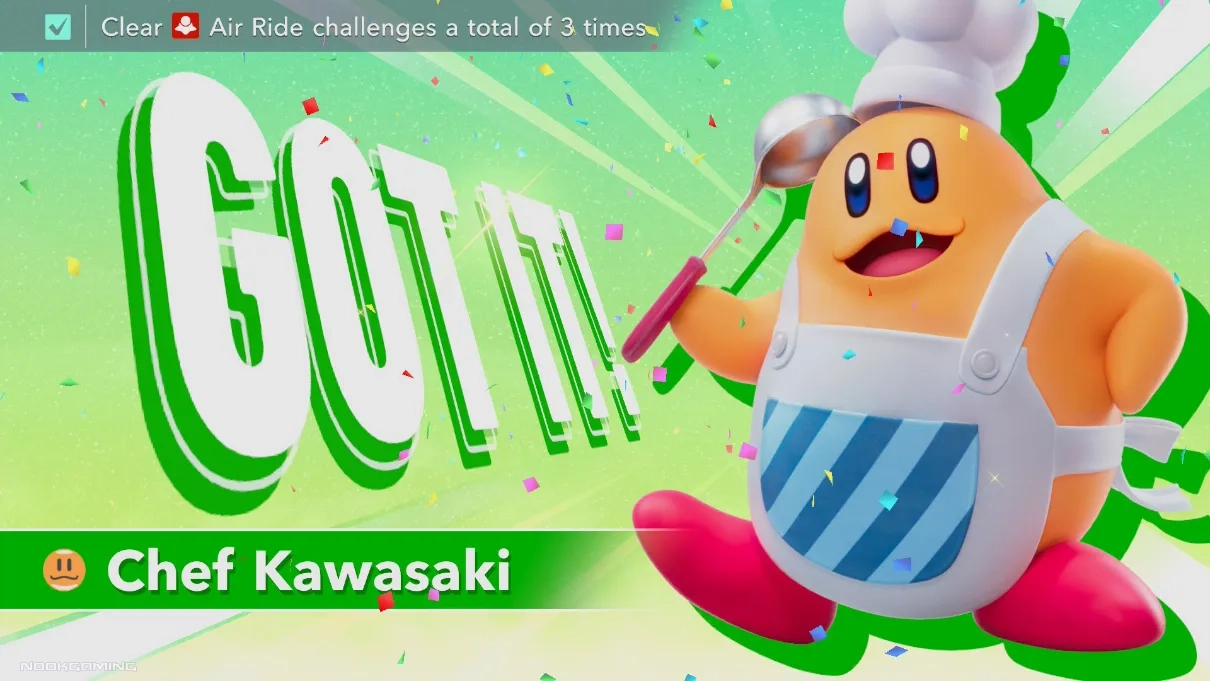
Kirby and company also animate great, having a lot of flourishes that sell that these are characters that truly inhabit these environments. They’ll wave, perform cool tricks, and appropriately react to slopes and changes in altitude with personality. Even defeating enemies feels extra satisfying thanks to the effective usage of freeze frames and movie-like effects to sell impact. Menus are another highlight, being both functional and full of personality. They didn’t have to have something like the sound test be shown on Kirby’s smartphone, but it’s an extra splash of fun that I like.
The soundtrack is also great, featuring a nice variety of remixes from past Kirby games while also having plenty of new stuff. There are even some tracks lifted from the Kirby anime, which the original Air Ride also did. Though I do wish there were more remixes from the 2003 game to go around, I’m happy with what’s here. The addition of a Smash Bros-like announcer is also a nice touch, and makes the game easy to get hyped about when you’re heading into a race or City Trial.
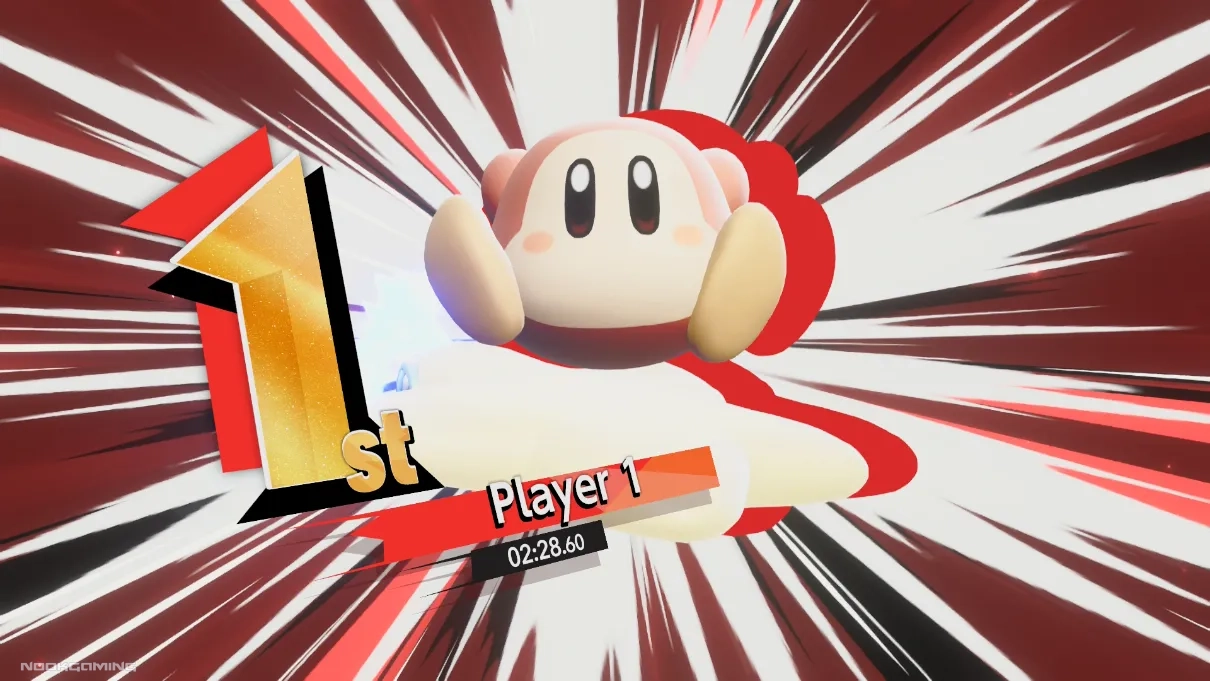
The one that doesn’t hold up, unfortunately, is the framerate. I’m not particularly sensitive to frame drops, but this game chugs hard in busier moments. This is especially true in split-screen play, be it 2-player or 4-player, making it less than optimal for couch co-op experiences. I’d have taken a solid, if still disappointing 30FPS like how modern Mario Kart does it over a very shaky 60FPS like this game. While in single-player modes like Road Trip, it works well enough. Still, it’s not as solid as it ought to be.
Verdict
Kirby Air Riders is like a box full of charming toys. There’s a lot to poke your nose into and prod away at, but it’s not long before I realize there just isn’t much to its many offerings. While its sense of polish and variety is impressive, this has come at the devastating cost of focus. You get lots of ideas and gameplay quirks that are individually fun for a while, but seldom do they come together to form something especially satisfying or cohesive. In its attempts to have lots of things that might please everyone, it winds up not doing any one thing all that exceptionally. As a racing game, it’s mechanically shallow and tracks offer little in terms of skill or engagement, often focused on looking nice rather than providing the player with fun challenges that are interesting to revisit. City Trial fares somewhat better, but having only one map whose changes generally aren’t that impactful means it has to fall back on randomness to do anything interesting.
Sure, there are things like Roadtrip or Top Ride that are kind of fun in their own right, but again, these are just a collection of distractions rather than anything substantive on their own. I suppose that’s fitting as the final form of an old GameCube that suffered from many of the same issues, but it’s a shame that time didn’t do this format as many favors as I was hoping. I think fans of the original game will like, if not love this, so in that sense I can’t call the game a failure despite my many misgivings with it. It wanted to be a bigger version of Kirby Air Ride, and for better and for worse, it wound up being precisely that.
KIRBY AIR RIDERS IS RECOMMENDED

If you are looking for another colorful game full of antics, you might want to check out Super Mario Party Jamboree.
Many thanks go to Nintendo for a Nintendo Switch 2 review code for this title.

A hobbyist who took up the pen to write about their favorite pastime: games. While a lover of many genres, Isaiah Parker specializes in Platformers, RPGs, and competitive multiplayer titles. The easiest way into his heart is to have great core gameplay mechanics. Self-proclaimed world’s biggest Sonic fan. Follow him @ZinogreVolt