Roughly 20 years ago, NIS released the original Phantom Brave on PS2 as a sort of project adjacent to their Disgaea series. It endured as something of a cult favorite, receiving many re-releases and updates throughout the years on several consoles. Out of the blue, however, it was announced it would be getting a full sequel in a visual style similar to the modern Disgaea titles. With so many years between the original and this new title, I was interested to see what ways it’s changed and improved in the interim. It’s time to make for the high seas in Phantom Brave: The Lost Hero.
Avast, Me Hearties
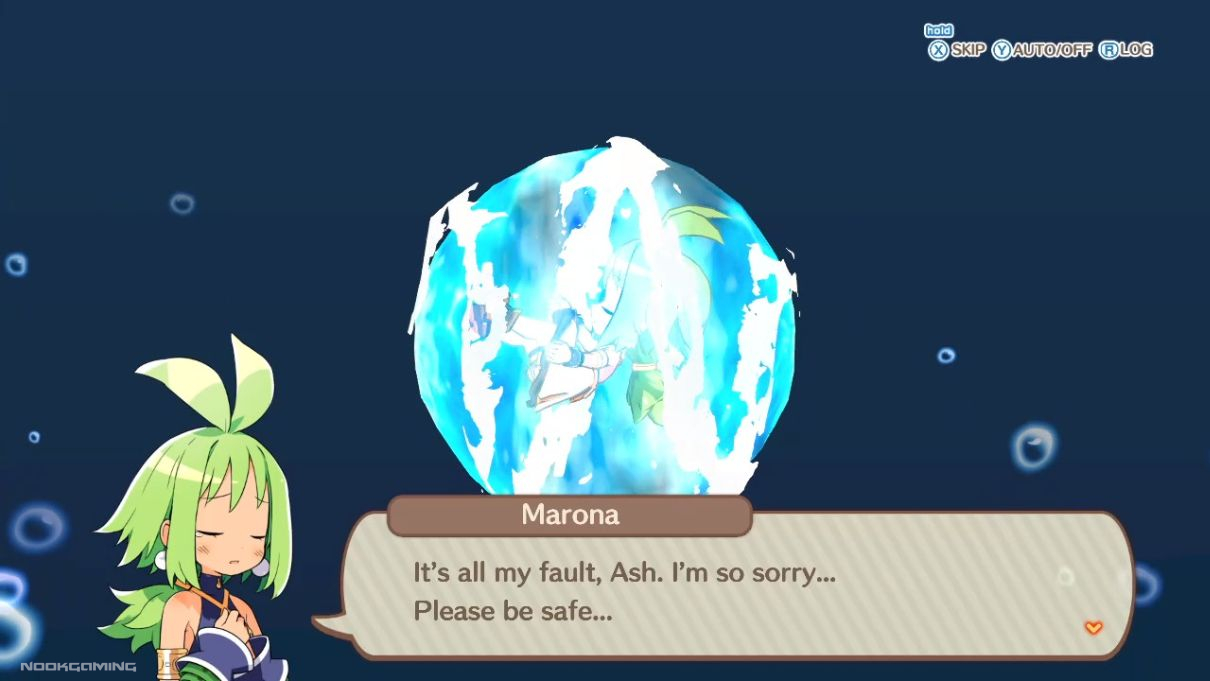
Picking up roughly half a year since the end of the first game, Phantom Brave: The Lost Hero again follow main characters Marona and Ash on their journeys. As the subtitle for this game implies, Marona’s reputation has taken a 180, going from being seen as a freak to being seen as a hero for her role in previously defeating Sulphur, the big bad of the original game. Marona has the power to see and interact with Phantoms, ghosts who have not passed on from the world for whatever reason. She also has the power to “Confine” them, to temporarily manifest their physical forms in an object. Ash is one such Phantom, having been killed early in the first game, but choosing to stick by Marona as a Phantom. Since then, she and Ash have taken on work as Chromas (essentially magically empowered public servants) and are traveling the seas in search of those who may need their help. While sailing towards their next job, their ship is suddenly ransacked by the Shipwreck Fleet, a series of ghost ships led by a captain with powers eerily similar to Marona’s.
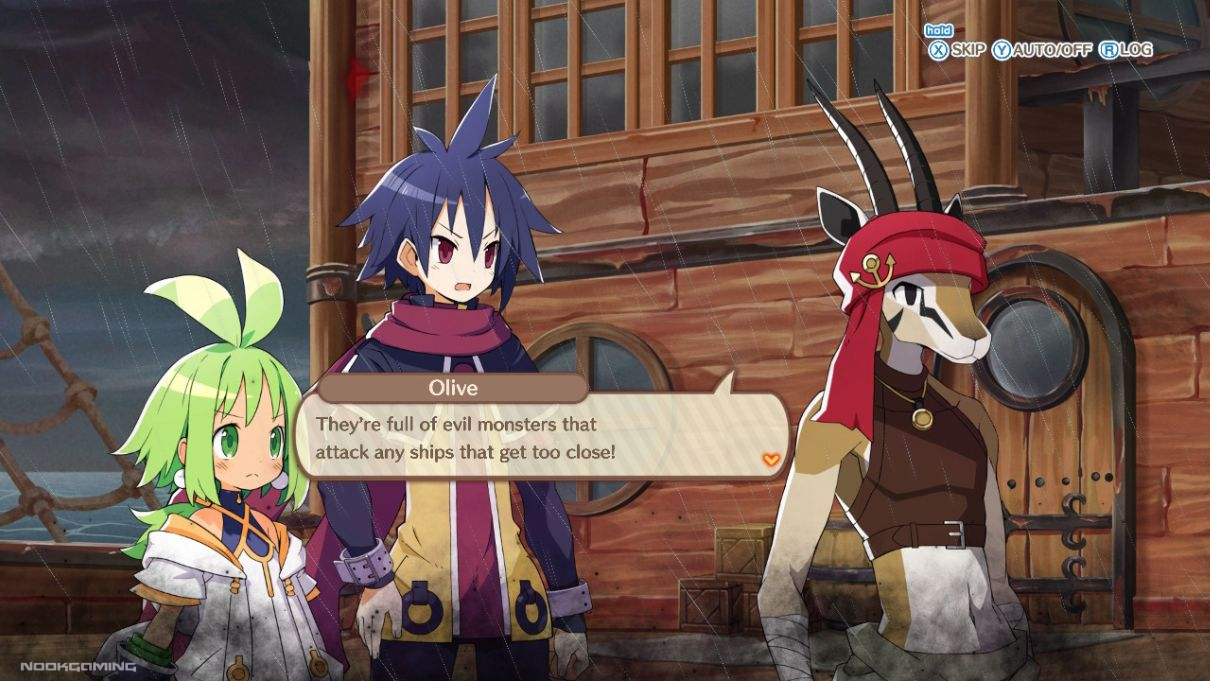
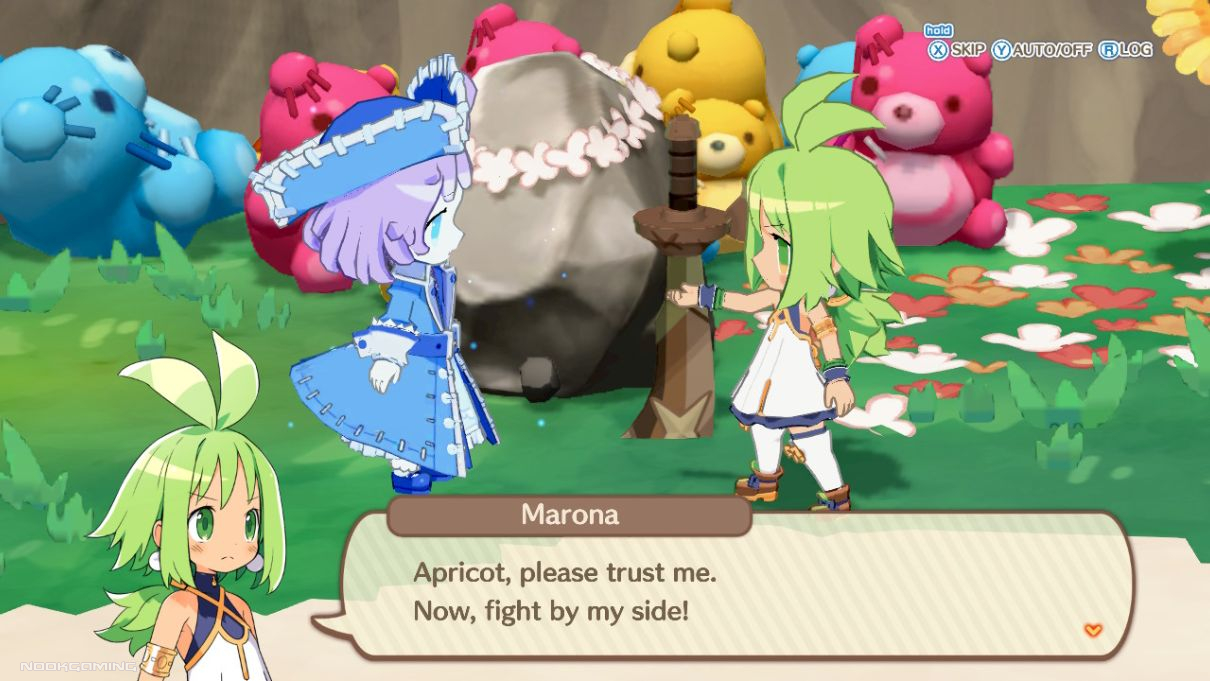
After an unsuccessful scrap against him, the captain drains Marona of most of her power, until Ash buys her time to escape by sea. Soon after, she awakens on an island to yet another Phantom named Apricot, a shy lass whose father did battle with the Shipwreck Fleet and gained a temporary victory. However, he vanished many years ago when they re-emerged, leaving Apricot alone until she unceremoniously died in waiting. After regaining her father’s crew with Marona’s help, everyone sets off to the high seas with the hopes of locating Ash and dealing the final blow to the Shipwreck Fleet.
I didn’t necessarily dislike the story of the original Phantom Brave, but I was left with the sense that it was somewhat uninterested in exploring the full implications of its subject matter. With The Lost Hero, I think the writers did a much better job at this—with there being heavy emphasis placed on the emotional talking points of dead people suddenly being given another shot at cleaning up unfinished business. I think it also manages to pay a lot of respect to the original game in terms of handling its legacy characters. Sequels with long gaps between their predecessors can, in many cases, feel like they don’t recapture that same spark for one reason or another. Here, though, I don’t think that’s the case. The writing here perfectly captures the wit and occasionally morbid charm of the original, while also feeling like it just does more with the core premise.
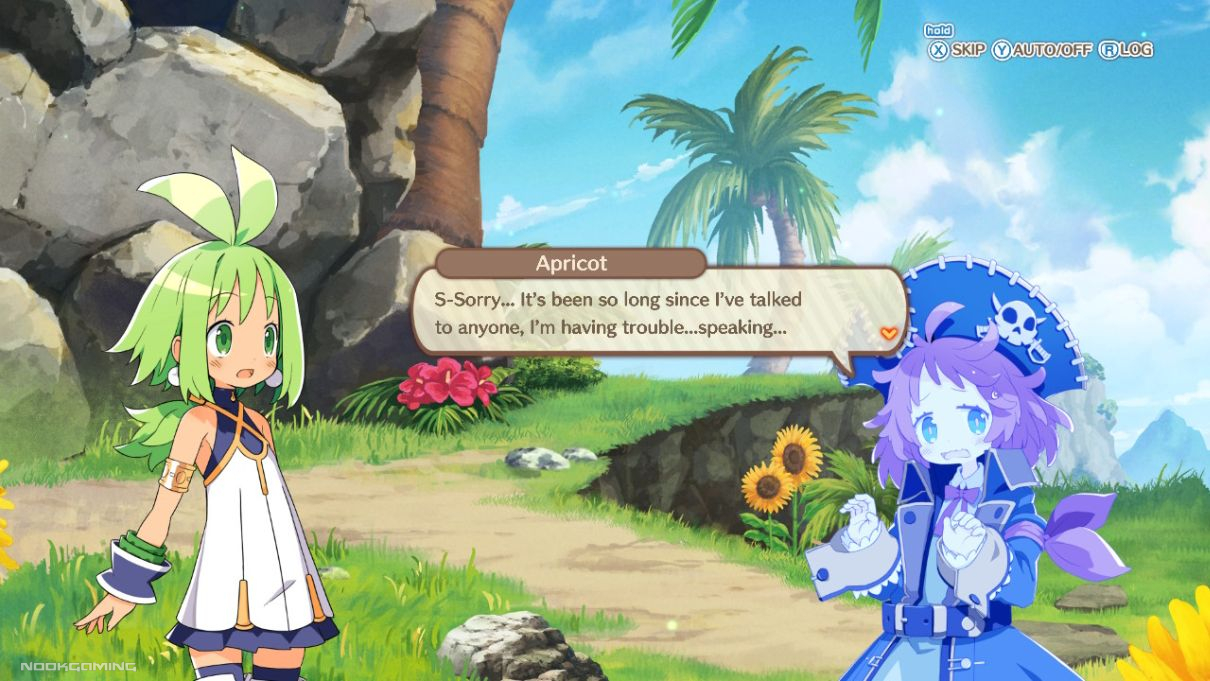
This is helped further by the characters, who aside from Marona and Ash are mostly new to this universe. Apricot is a fun deuteragonist thanks to her shy demeanor being an excellent contrast with Marona’s ever-adorable and outgoing personality, and her development over the course of the game is one of the highlights. She’s not quite as good a foil as Ash was in the previous game, but she makes up for this by her own story being more reactive and moving overall. Overall, I’d say this story was a big win and a solid upgrade over the previous game.
That Ghost Threw A Rock At Me
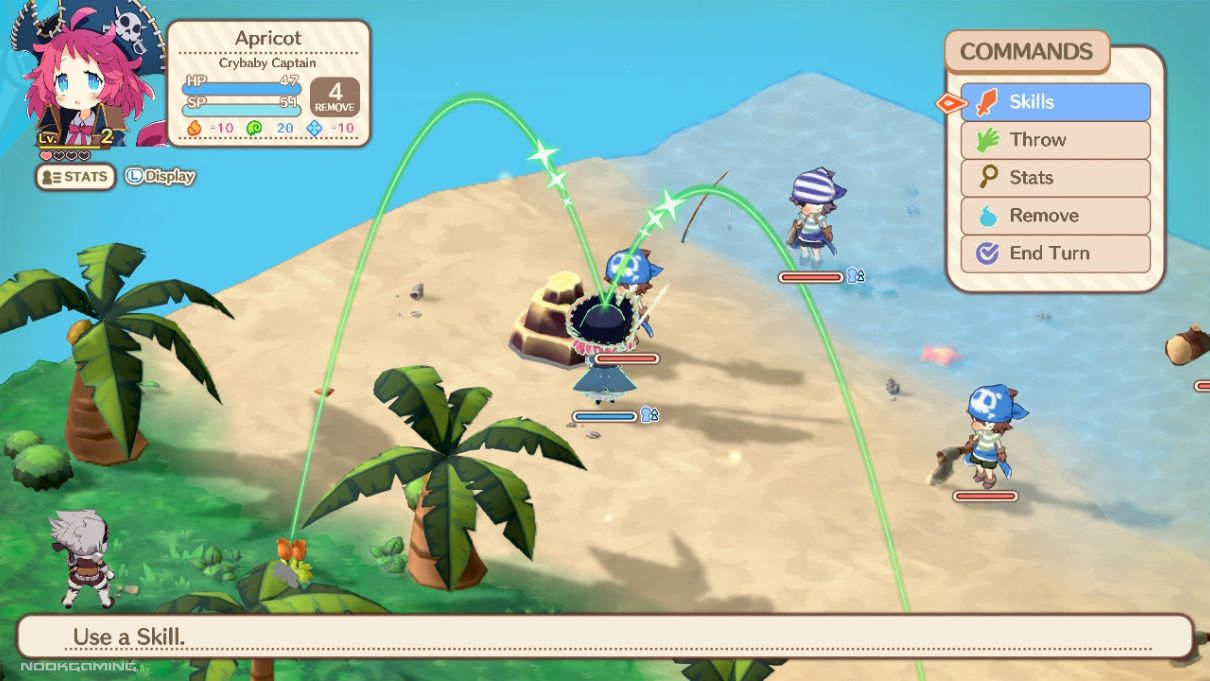
Phantom Brave: The Lost Hero primarily uses an SRPG battle system where you’re fighting on a quasi-grid and using a turn order system to determine who attacks when. Rather than conventional SRPGs where you choose which units to deploy before a battle begins, you instead choose them in the midst of battle. At the start, you only have Marona on the field, as the rest of your units are Phantoms which have to be materialized with her Confine ability. With Confine, Phantoms can be materialized by inserting their souls into various objects scattered around the map, and they will additionally be granted bonus effects based on what objects they are Confined into. Confining into rocks may grant defense bonuses, while confining into patches of grass may grant speed bonuses. Since enemy units are already deployed, carefully taking into account which Phantoms should be confined where and into what objects is key to claiming initial momentum.
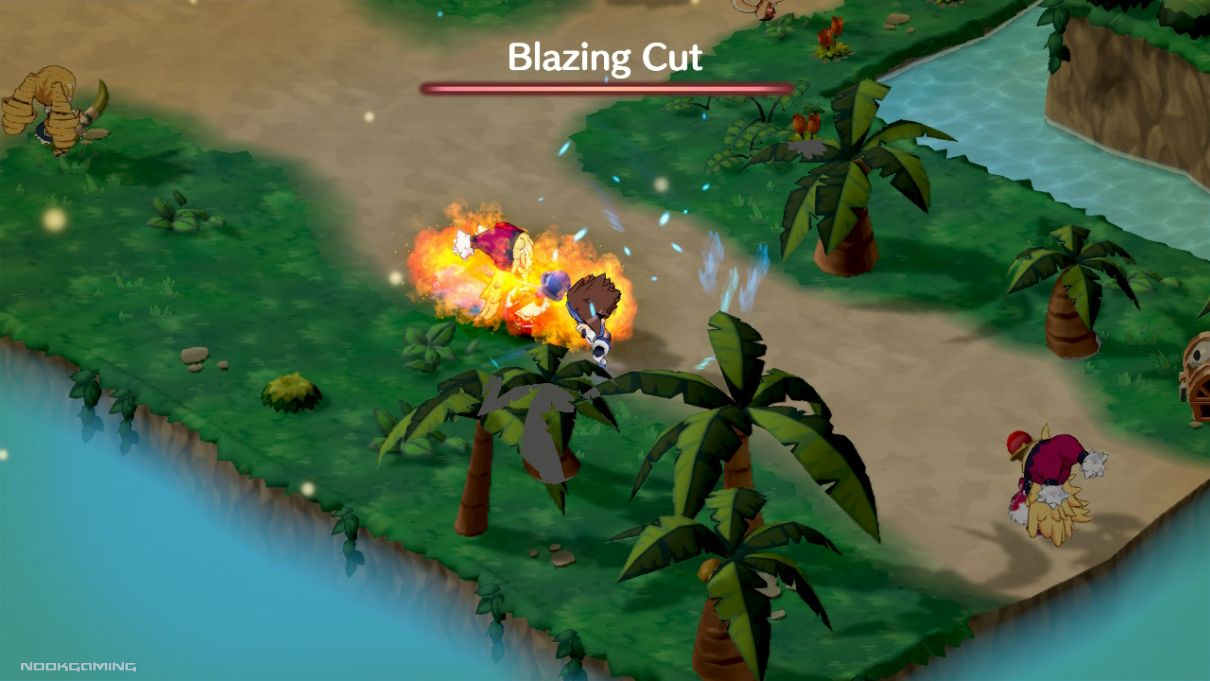
Once Phantoms are out on the field, they can only remain out for a limited number of turns before they de-materialize and are removed for the remainder of the fight. Making use of that time means knowing when best to deploy them, as sending your strongest units out prematurely will involve halted momentum later on. It’s also worth noting that how many units you can deploy are also limited based on Marona’s level and the approximate strength of the Phantom being sent out. With all this in mind, just knowing when to best use which Phantoms became a game unto itself. It’s nice that I can’t just mash the buttons on my strongest units to win the day like in many SRPGs, but I am left feeling that this turns the early turns of many battles into accidental busywork. It is a strong idea by itself but ultimately not where the truth depth of strategy lies.
Where things shine is in the emphasis on good character positioning and strategizing by making the most of each individual character’s kit. This is emphasized by the Class function, where Phantoms can be assigned roles that are broadly taken from typical RPG class selections. There are mages, fighters, swordfighters, thieves, archers, medics, and so on. They do roughly what you expect, with mages focused on distance-based spells of varying elements, which can have different results depending on what kind of enemy you’re facing. The thief has a far higher chance of being able to steal items compared to other allies, which is immensely useful since enemies will typically carry equipment much stronger than what the player can presently buy. Fighters and Swordfighters are more conventional close quarters damage dealers, while Archers focus on dealing physical-based damage from a distance.
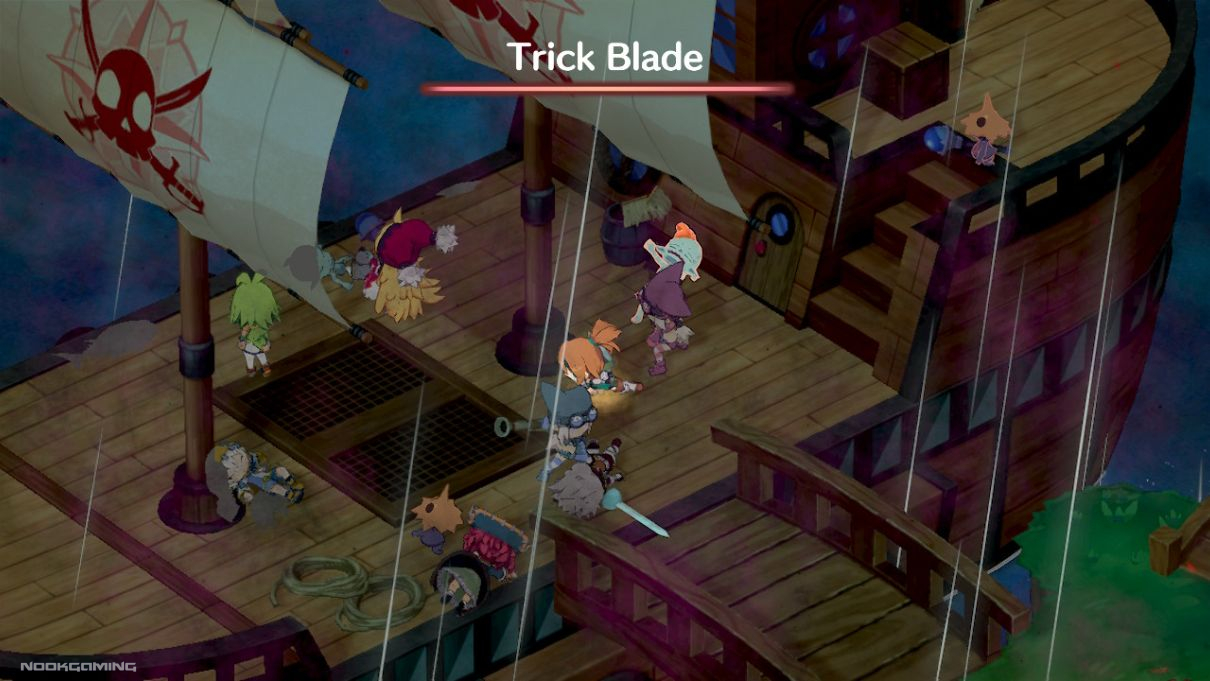
There are more out-there classes and mechanics we’ll get to momentarily, but suffice it to say that Phantom Brave’s gameplay is yet another strong example of NIS’s ability to craft SRPG experiences with immense player agency. I have some gripes with it like slow game speed, and the initially slow pacing that battles are subjected to, but once things pick up it becomes incredibly engaging.
Wait, That Actually Worked?!
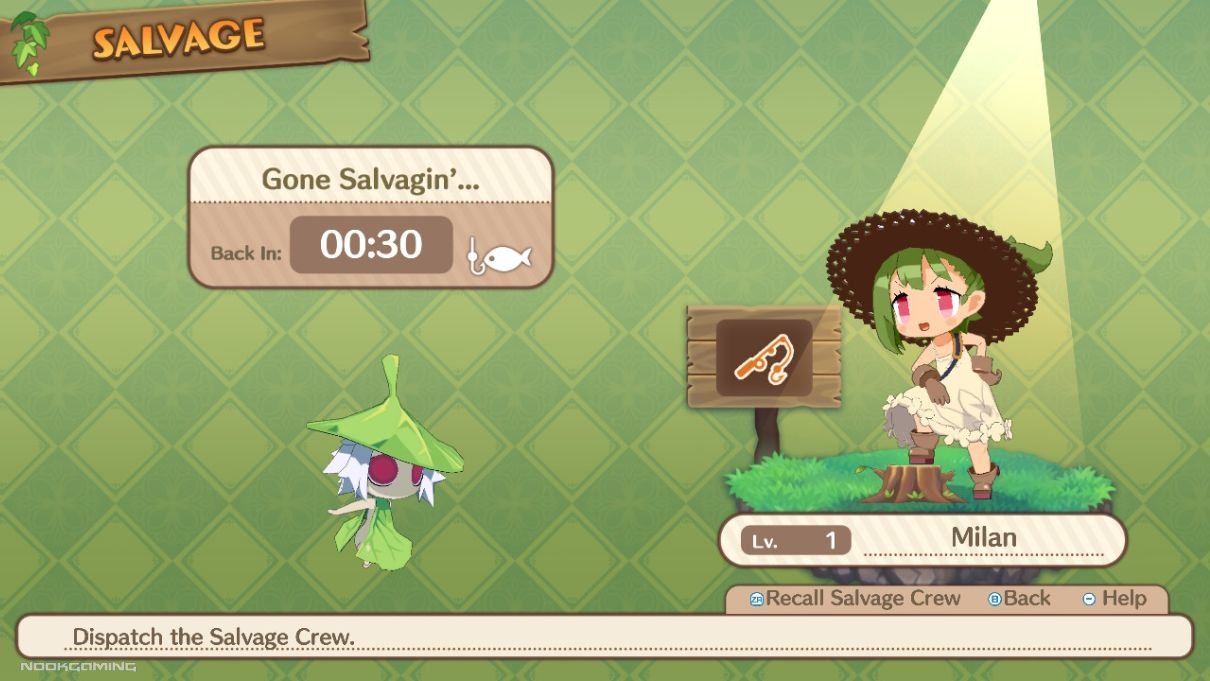
A big aspect of strategy in Phantom Brave: The Lost Hero is its OOB (‘out-of-bounds’) system, where characters can be knocked off of the map and removed from play entirely. Attacks can have varying degrees of knockback, which dictates how far the opponent is sent back upon being hit. While enemies will resurface before long, the player must use the special Fisherman class to fish them out of the water. This is one of the many ways that Phantom Brave manages to feel especially dynamic and not just like a glorified numbers game. This also manifests itself in the Toss mechanic, where you can lift equipment and various map objects and toss them. They can be thrown anywhere in the unit’s movement space, allowing you to do cheeky things like block enemy passage with a large boulder, or to pass a piece of strong equipment from one unit to another.
Upon completion of most stages, players will be granted rewards in the form of that stage’s obstacles, so things like bushes, rocks, and so on. While this might not seem particularly useful at first, it can prove invaluable the moment it clicks that these things can all be equipped. Not only do most of the equippable obstacles come with their own movesets, but more importantly they can be used to be thrown on the field so a Phantom can be confined into it. So you can, say, bring a Boulder into a map with a lot of enemies to give the Phantom you summon with it more defense to tank damage better. A strategy I grew particularly fond of was using Marona as a means to ferry equipment between units, while the main utility units such as Fishermen and Chefs carried in obstacles so I could Confine more units in quicker succession.
While the latter stages of the game do lean more into NIS’s patented “numbers get extremely big” style of progression, its element of strategy still felt strong and reactive. While this is partly owed to the maps themselves being well made, its rules of play are generally what allowed for the kinds of improvisation that I appreciate in RPGs. All told, while not without a handful of quibbles, I really enjoyed the combat in Phantom Brave: The Lost Hero.
I Share My Dreams With Ghosts
Marona’s abilities to summon Phantoms also extends to the game’s various progression systems and bonus functions. While not in combat, the main use that Phantoms will serve is for the various facilities they’ll run. Each class in the game has an associated shop that will help to further strengthen them for the battles ahead. This can be things like the Chef’s Juice Bar, which allows for EXP gains for units who are lagging behind, or it can be things like the Fighter’s Gym teaching your characters new abilities. Even a basic equipment shop is locked behind this, needing a Merchant to open. Fishermen can also be sent out to sea to find items, returning with various goods after an amount of real-world minutes have passed.
As these units level up and gain new abilities, their facilities will improve as well. The Merchant will carry stronger equipment as she grows stronger, and the Medic will be able to heal fallen allies without using as much Mana. In that same breath, it’s worth keeping in mind that units who fall in battle will not be able to use their shops until they are healed. So if you bring your best Merchant into battle and she gets K.O’d, that shop will be closed until they’re healed—forcing you to come back later or rely on a weaker merchant. This is a mechanic that I have mixed feelings on. On the one hand, it’s a pretty unique way of facilitating failstates and can heighten the tension when characters are running low on HP. On the other hand, it’s hard not to feel like this isn’t just an annoyance rather than something that genuinely compels me.
Good systems by themselves? Absolutely, but they also highlight major problems involving the game really wanting for some quality of life features. Normally, I’m okay with a lack of QoL because it means mechanics may have chances to present themselves in a more raw capacity, but here it’s just about having to do menu-ing for what feels like an eternity. Having to individually equip my units with new weapons takes an eon, worsened by menus not being very fast to begin with. Something simple like an auto-equip option would have done a lot in alleviating this. Problems don’t stop there, either. When making new Phantoms, for example, I’m always kicked out of the menu when I create just one, when I’m trying to create several. Why? What benefit does that serve me? This issue extends to every single facility in the game, and only worsens as time goes on and I create new Phantoms to fill out necessary niches.
All of these issues combined with my aforementioned problems with slow combat speed means that the game moves at the pace of a turtle. I suppose that’s still slightly faster than the snail’s pace of the original Phantom Brave, but there is no reason at all for things to be this way.
Graphics and Sound
Phantom Brave: The Lost Hero is another solid upgrade over the artstyle first presented in Disgaea 6 and refined further in Disgaea 7. Rather than use sprites like the original game, The Lost Hero instead uses small, cute chibi character models colored using cel shading, meanwhile much of the story is conveyed using drawn portraits in Takehito Harada’s ever-charming artstyle. The end result looks quite pleasant on the eyes, with the seafaring aspect really brought into focus thanks to more saturated coloring when placed next to the somewhat gloomier lighting of the original game. Character models look nice and animate well, too. Despite it being a big leap in presentation, I didn’t really miss the artstyle of the original game for even a second. Unfortunately, there are some issues with shaky framerates in the game’s latter stages when there’s tons of units on screen.
Elsewhere I found the audio to be quite good in both music and voice acting. I must confess that I found the original Phantom Brave to have a pretty forgettable soundtrack, but The Lost Hero’s music was more memorable. Sweeping violin is used for major battles and the home base theme is appropriately “beach-y”, for lack of a better term. I played with the English voice track and thought it was quite good, and was pleasantly surprised that Sandy Fox and Lex Lang got to reprise their roles as Marona and Ash respectively after all this time. The original game occasionally suffered from stilted and directionless performances, but here I broadly thought everyone was spot on. The text quality and general localization efforts were also quite good, with most characters speaking in distinct cadences that help further illustrate their histories and distinct personalities.
Verdict
Phantom Brave: The Lost Hero is a game that I have no trouble saying is better than its predecessor, yet I’m left with the sense that it’s not as much of an upgrade as it ought to be. I have no complaints with the story and feel it is about as good as a sequel to the original should have been. While in terms of gameplay, it offers up some varied systems that allows for player freedom and fun improvisation that provides dynamic play, it’s also undoubtedly cumbersome. Game speed is slow and the way it completely eschews quality of life features means that a lot of time is spent tediously fiddling with menus rather than engaging with the meat of its strategy elements. Its tutorialization is equally as clumsy, and coupled with its high difficulty, it means I can only really recommend this to highly dedicated SRPG players.
A charming game with rich mechanics, to be certain, but you’ll have to wade through some weeds to fully grasp the fun.
PHANTOM BRAVE: THE LOST HERO IS RECOMMENDED

If you are looking for more JRPGs, you might want to check out our review of Tales of Graces f Remastered.
Many thanks go to Reef Entertainment for a Nintendo Switch review code for Phantom Brave: The Lost Hero.

A hobbyist who took up the pen to write about their favorite pastime: games. While a lover of many genres, Isaiah Parker specializes in Platformers, RPGs, and competitive multiplayer titles. The easiest way into his heart is to have great core gameplay mechanics. Self-proclaimed world’s biggest Sonic fan. Follow him @ZinogreVolt