Ratatan is a 2025 rhythm roguelike action game released by Ratata Arts in collaboration with Tokyo Virtual Theory and pH Studio. The game features a unique spin on the rhythm game genre by incorporating a randomized build into a side-scrolling army-building action game full of cute, goofy-looking eyeball-like creatures.
Ratata Arts is an indie studio established by the creators of a beloved rhythm game classic, Patapon, and serves as a spiritual successor to its successful trilogy. Following a wildly successful Kickstarter, they launched a public demo in June 2025, with the early access version becoming available for purchase in September 2025. They estimate the remaining roadmap of updates to last at least six more months, with the possibility of extending up to more than a year.
Having loved Patapon as a series all the way back from when I was still a kid, the announcement of Ratatan’s development two years ago was probably one of the most exciting events in gaming for me in recent times. Seeing and hearing all the samples they had prepared during the Kickstarter gave me a blast of nostalgia and thoughts of what could have been if Patapon had come out with a fourth title. But it has since been made apparent that the game is a different experience altogether from its predecessor. It’s trying to forge its own unique identity even with Patapon’s large shadow looming over its head. In a way, it’s pretty endearing for a game to have such clear inspirations all while striving to make an experience for players that is uniquely its own. But at the end of the day, uniqueness isn’t what makes a game great; it’s how fun it is!
So how well does Ratatan’s tune mesh with the chaotic nature of roguelike action games? It’s time to take time to listen to the Chorus as they sing their way through the treacherous lands of Redo!

An Instrument to Get to the Everafter
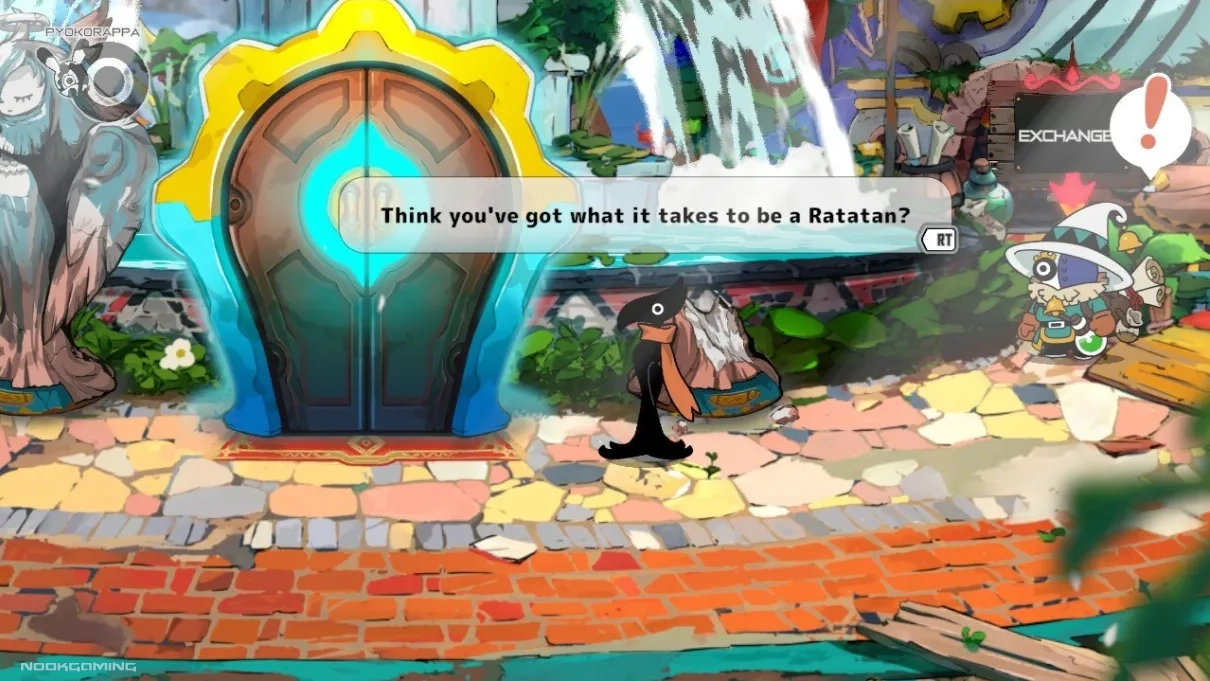
Ratatan starts with the protagonist being woken up from their slumber by Crow, a relatively tall, well, crow-like being, and Fortrun, a singing ship, in an unknown place. The two bumped into the protagonist while they were on a journey, and have since been trying to bring them back to consciousness through unclear means. Although disoriented, the duo quickly realizes that the protagonist is a “Ratatan”, which are melodical warriors that can harness the power of music to command small creatures called Cobuns. These Cobuns are fiercely loyal to their master who, through receiving part of the Ratatan’s power called Medama, allow them to gain power to defend themselves from the dangerous creatures residing in the abandoned world of Redo. Faced with an opportunity of a lifetime, Crow asks the Ratatan for their help in their journey to the Everafter, a promised land in Redo where their Goddess is said to reside with yummy sweets and fluffy beds waiting for her followers.
With their trusty instrument called Melodium on hand, the Ratatans march into Rataport to prepare for their dangerous journey. Along the way, they meet various native fauna in different areas of Redo working together with black fuzzballs called Teshitas, who seem to hate the Ratatan and their Cobuns. They seem agitated to see the protagonist march towards the Everafter, doing their best to try and stop them in their tracks. Perhaps they know something that awaits once the Ratatans reach the elusive Goddess?
Rat-tat! Rat-tat! Rat-tat-tat! The melody plays as these cute critters march through their new adventure in a vibrant yet unfamiliar world.
Worlds, Stages, and Everything In-Between
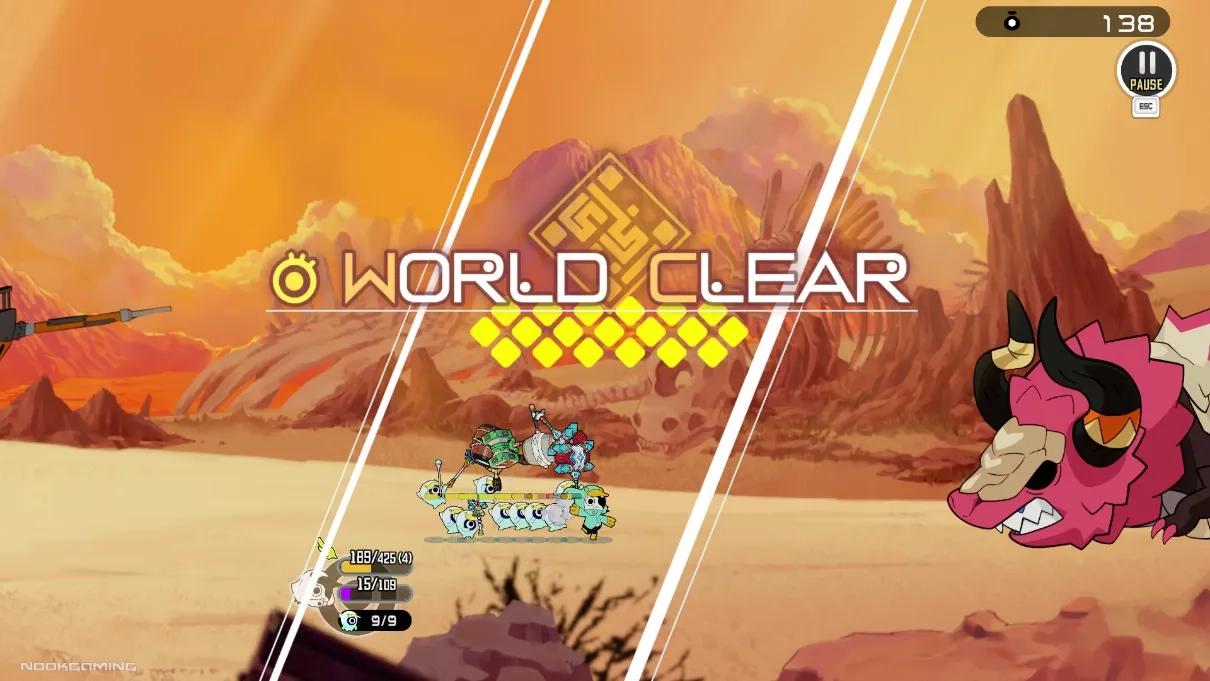
Ratatan proposes a very simple gameplay loop: go on an adventure, kill enemies, gain upgrades, and farm equipment and materials. This loop is structured by making use of worlds, which serve as stages that players need to go through every time they embark on an adventure. This repetitive structure makes sense given that Ratatan is a roguelike, where repetition is key to clearing higher difficulties of content either through the sheer force of farming upgrades or better decks/loadouts. But to provide this familiar yet different experience each session, the game needs to send the player back to the start each run to simulate a similar yet tangibly different progression experience. Each world will start to feel faster the more you play, as the enemies do not scale with your own strength. Hence, the game is inherently grindy; to clear it, players will spend multiple sessions just repeating the same worlds to farm equipment and materials that can make their Cobun stronger to clear previous worlds faster and with less danger than before.
This means, however, that for players who are not used to this repetitive experience, it gets incredibly tedious the longer you play Ratatan in each game session. There aren’t many differences in terms of enemy army compositions and mechanics, so by the time you’re strong enough to challenge the next few stages, you’re just spending time you can’t avoid wasting to steamroll weaker worlds. It becomes a bit of a pain, especially if you’re gated by certain boss mechanics later down the road, as getting back to that specific boss to practice fighting requires going through the same set of worlds again and again. It ends up feeling like a chore instead of a new, refreshing experience of the same thing.
Conducting the Chorus!
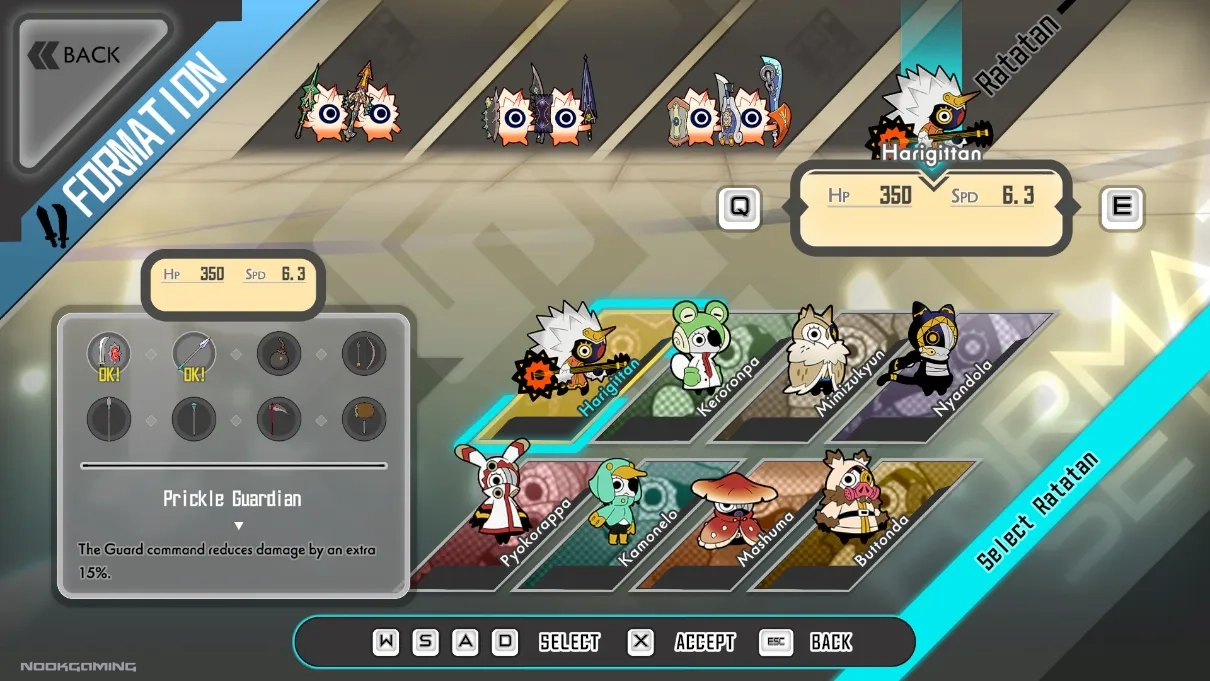
To progress through each world, players will need strong Cobuns to defeat increasingly harder and tankier enemies. To upgrade these Cobuns, players need to access the Rataport (a sort of home base for the army), clear specific objectives in the Quest Board, buy permanent upgrades through the Support Desk, and trade materials for customizable upgrades in the Ratatan Dock. Additionally, as players go through worlds repeatedly, they will amass weapons of various rarities that they can then equip to Cobuns for higher stats. These are upgradable through Crafting, where you can feed weapons to each other to level them up and potentially uncap them. When put together, these features make up the general progression system in the game.
Of course, it’s not just raw stats that determine a player’s success in Ratatan. Their army must fit a preferred strategy, and the Squad option gives them a multitude of options to choose from to personalize it for themselves. Squad gives the option to select a Ratatan out of eight possible types to build battle strategies around. Each of these Ratatan comes with their own unique passive for the army and a set of Cobun types that they can command. Out of eight total Cobuns, Ratatans have access to two by default, which can then be increased by clearing in-game objectives. There’s also a list of individual Cobuns per type that you can recruit for your initial squad, which have varying HP, ATK, CRT, and WIZ stats. Overall, the game has a decent pool to pick from to change up the player’s experience every now and then. There’s a surprising amount of depth to building your army, and with its limitations, it also forces you to play different playstyles at least early on.
Sugar, Spice, and Music so Nice
At first glance, it’s a bit hard to imagine how Ratatan works as a game. It combines multiple genres that normally feel like they don’t work together, so it’s hard to try to immediately digest it as a singular product. Instead, let’s try and tackle each of them one by one.
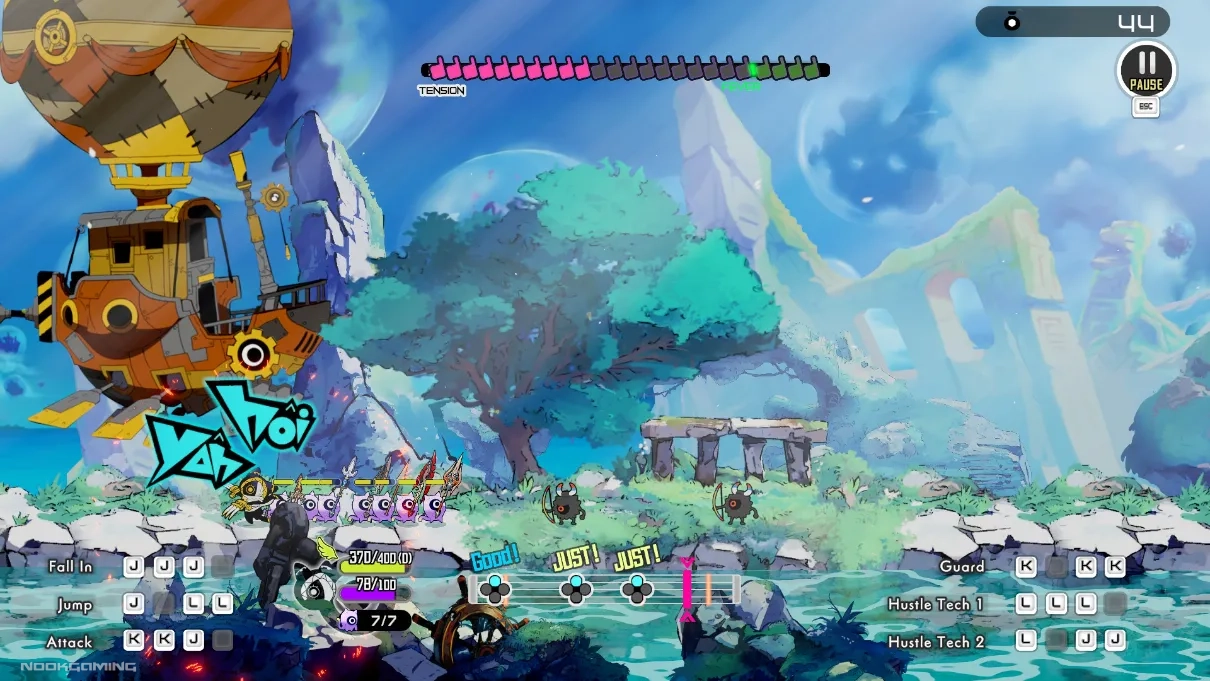
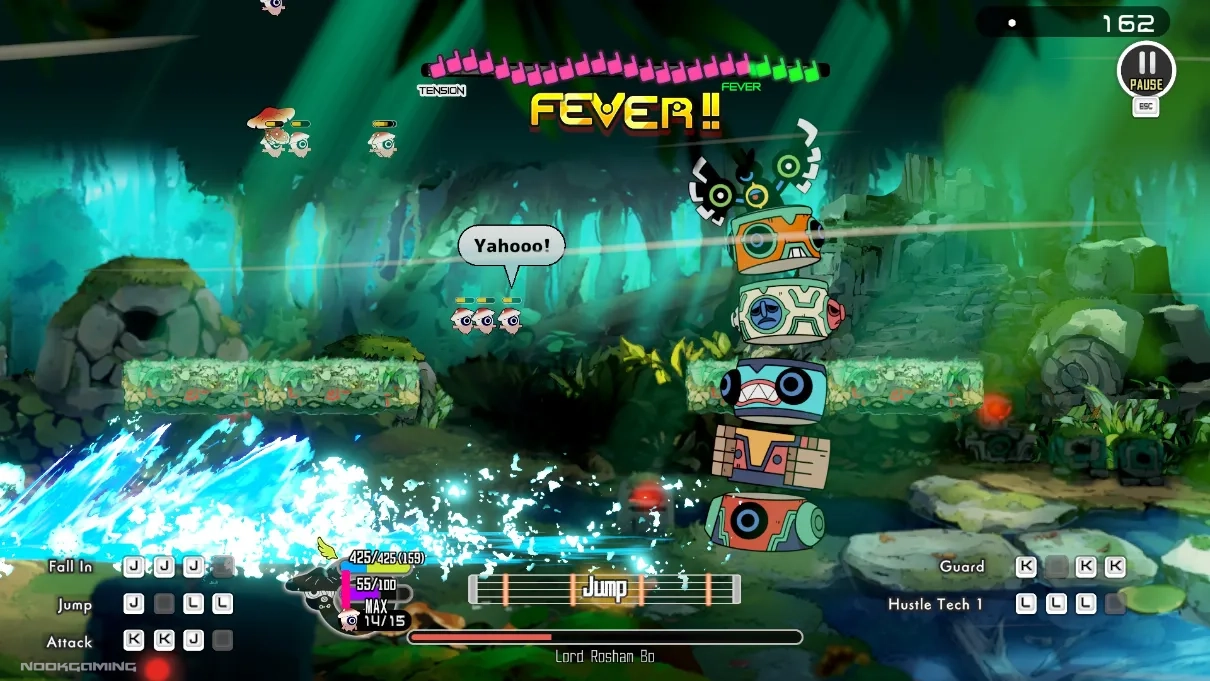
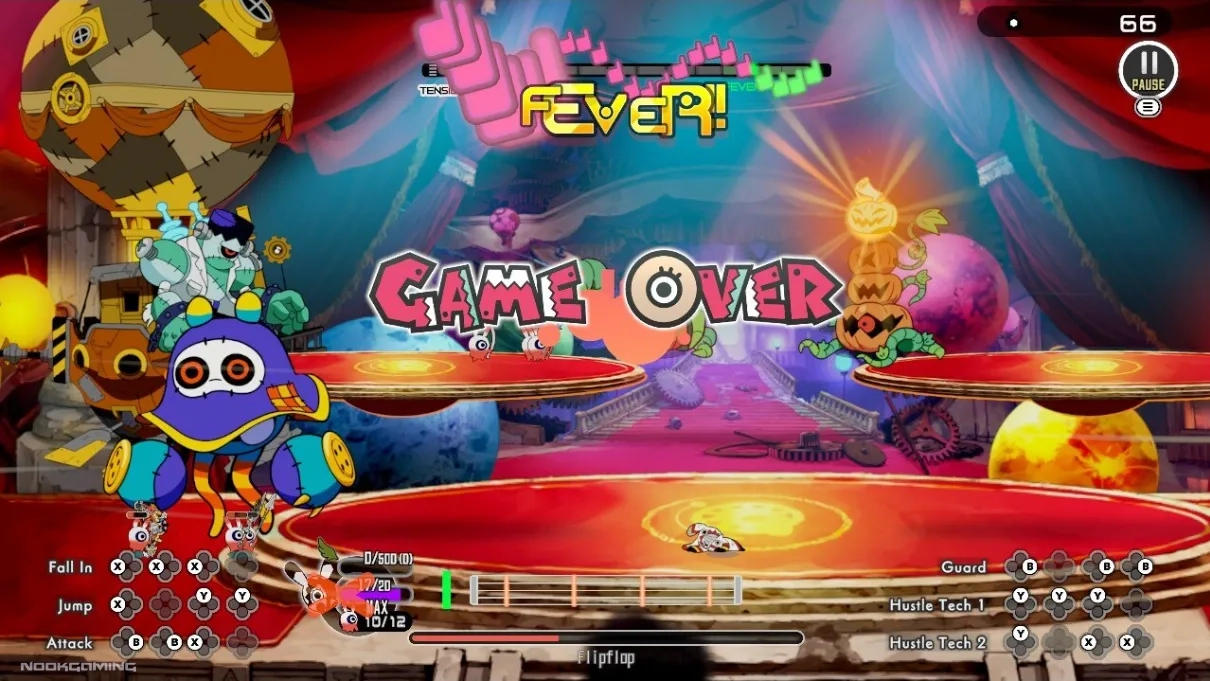
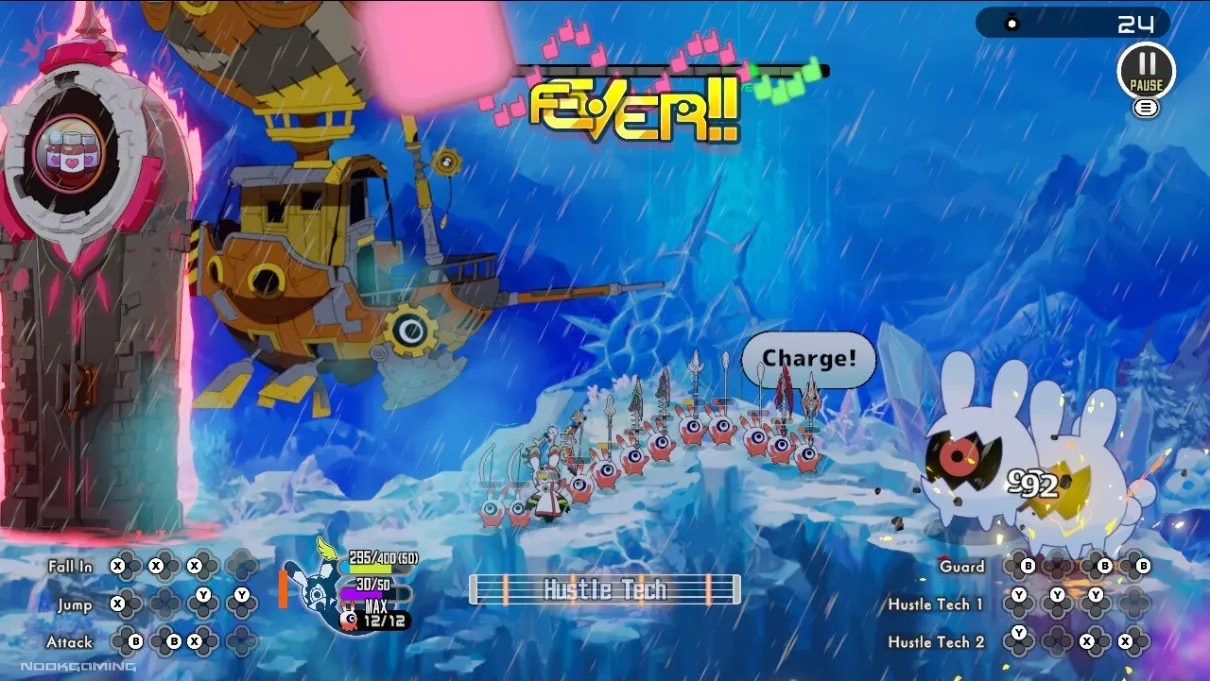
Starting with its rhythm game and army commandeering aspect, similar to its spiritual predecessor Patapon, it incorporates battle commands into rhythmic gameplay by using a four-beat sequence as the basis for the Ratatan playing three specific sounds: RATA, ZUN-TAKA, and YA-HOI. Depending on the combination you use, you can issue a total of six commands that the Cobun will follow accordingly. These commands cover three attack variations, a guard mechanic, a jump action, and “Fall In”, which is essentially repositioning the army to the Ratatans’ location. Chain these commands consecutively and you’ll trigger “Fever”, which changes the background music to a dynamic sing-off between the Ratatan and the Cobuns. All together, these commands form the bread and butter of Ratatan and mostly allow the player to navigate through different stages and boss mechanics.
Interestingly, Ratatan plays with the four-beat measure a little bit by incorporating one-fourth rests between its combinations. This means that instead of playing four RATAs to activate “Fall In”, the player is only required to hit three RATAs across the first ¾ of the measure, essentially giving space for the Ratatan to ad-lib a two-beat long RATA at the end of the sequence. This triad of inputs is consistent across all command combinations, such as RATA [] YA-HOI YA-HOI, for jump and ZUN-TAKA ZUN-TAKA ZUN-TAKA [] for normal attacks. Because of this, it introduces an additional layer of difficulty that rewards players who panic less and remain composed despite the chaos of a stage. Additionally, breaking your line of inputs does not immediately kill your rhythm’s momentum; depending on the level of “Fever”, you can last at most two measures without any inputs without killing the motivational melody that the Cobuns sing. So in a way, if necessary, the game gives players space to learn mechanics without being confused by consecutive inputs, which is important given how runs work in its roguelike system.
Same World, Different Vibes
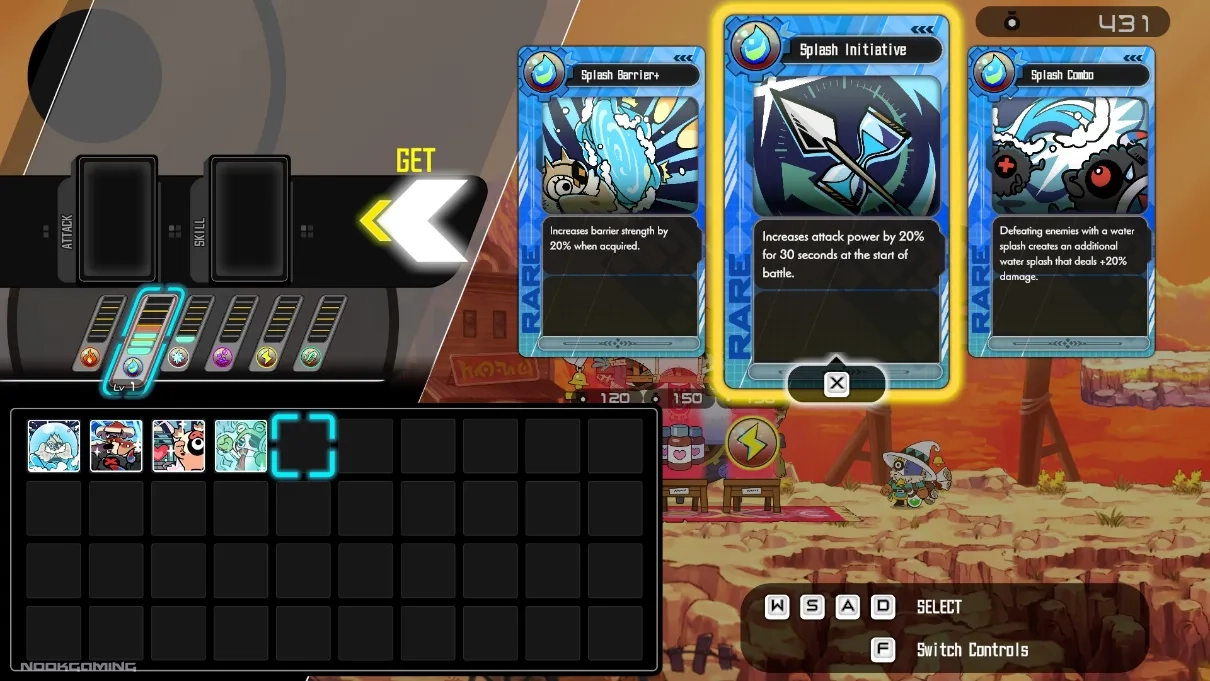
Ratatan incorporates the randomness of roguelike games through the use of a deck that players need to build up every time they do a run. These cards grant various effects that fall under a specific element that, in turn, reflect a general theme for the kind of strategy they provide. There are six elements in total that the player can build towards: water, ice, wind, fire, lightning, and poison. Depending on the card, Cobuns will gain the ability to enhance their normal attacks, special techniques, or gain an additional passive. Ratatans, on the other hand, will gain various offensive or defensive benefits depending on what three elements they decide to level to at least Level 2 throughout a run. Each elemental card they select will add one bar to the Ratatan’s overall element proficiency, with two bars raising the element by one level.
This part of the gameplay loop was very fun to experiment with. Due to the large selection of Ratatans and six elements to play with, there’s a number of combinations you can try in each run to figure out a general strategy that works for you. This, however, only really lasts for the first few runs. After trying most of the cards out, I found myself leaning towards specific elements that were overwhelmingly stronger compared to the others. The area of effect of its enhancements, the benefits to the Ratatan, and the overall value it provides for sustain and survival make them almost a no-brainer to choose over all the other builds. Of course, I was still technically free to choose the other elements over my favorites, but given how tedious the overall loop is, I just kept leaning towards what felt more comfortable for better progression. It’s technically unavoidable to have a specific “meta deck” in roguelikes such as this, but with the better choice so clear, I hope that they consider better balancing in the game’s future updates.
Lights, Camera, Action!
As for its action game aspect, Ratatan breaks from its rhythm game restrictions by allowing the player’s Ratatan to move freely throughout the length of a stage. A Ratatan’s movement is not restricted within the four-beat measure, nor do they need to issue commands to move at all. Hence, alongside the rhythmic structure of commanding the Cobuns, the Ratatan engages in free flowing movement to dodge boss mechanics that would otherwise deal damage to them. This is important since a run doesn’t end as long as a Ratatan remains alive, as Cobuns eventually respawn after a number of measures of being dead. Rounding it up, to clear a stage or world in its entirety, players need to be able to command Cobuns appropriately, build a deck consistent with their goals and/or strategy, and move the Ratatan to safety through skilled maneuvering of boss attacks and good positioning.
I really like this as a balancing feature. Although you can choose to be aggressive with your Cobuns because of their effective immortality, the game punishes you by exposing your Ratatan to firsthand danger when you eventually run your army down to zero. The movement options available to you are limited to moving left and right and jumping, and you can’t exactly fine-tune your jump, so once the enemies break through your vanguard, it becomes increasingly hard to take space without losing a chunk of your HP. This was a game-ender for me many times, because enemies ended up just hitting me for free. As a result, even though the game is forgiving in terms of recklessness of commands, there is still an appropriate punishing mechanic present when you do not employ any strategy at all.
My only problem with this is that the rhythm game aspect of Ratatan directly interferes with the fluidity with which you can move your Ratatan. When you play your instrument for the three possible command songs, the Ratatan stops in place to execute it, and as a result, exposes you to dangers that happen simultaneously with your command phase. It leaves only two possible options: you either tank the hit to execute the command properly, or you give up on one measure to ensure you dodge that damaging mechanic. Sure, it does introduce an additional level of complexity that rewards skilled decision-making, but when it comes to functioning as a rhythm game, it’s incredibly off-putting for someone immersed in the stage’s background song to suddenly just stop playing to its tunes. It’s mechanically rewarding, but thematically disturbing for the game’s main pull, which is its music.
Currently Empty Pots at the End of the Rainbow
Disappointingly, even though Ratatan has an incredibly cute and vibrant world with surprisingly deep gameplay mechanics, its current state feels more like a convenient way to pass time instead of a game that makes you want to continuously engage with it. The overall story of the game is bare; aside from the opening sequence and a few pieces of dialogue with Crow in Rataport after finishing a world for the first time, there’s not much going for Ratatan in terms of story. When I got to the last available stage in its current edition (pre-October 2025 update), which is World 5, I still had barely any idea about the driving forces behind the Ratatan’s adventure, the Cobuns as a whole, and why Crow and Fortrun are looking for a way to get to Everafter. I don’t even know who the Goddess they want to meet is! For a game with so much background detail present in promotional material they post in their social media accounts, there’s not yet much to appreciate when you dive into the game itself.
When you couple that with a relatively grindy gameplay loop that makes you repeat the entire game from the start each time, Ratatan becomes a less attractive game for people who aren’t already fans of the genre. Even with the available accessibility options such as easier command combinations and forgiving input windows, there’s a sort of missing piece to help hook in the player to Ratatan’s world. There’s no mystery beyond seeking new enemies and stronger equipment, which makes it feel pretty shallow as a narrative experience. It’s pretty sad that essentially, beyond the grind and complex game mechanics, there’s nothing to look forward to.
Cute Creatures, Catchy Music, and Multiplayer Experiences
To finish on a better note, let’s talk about Ratatan’s visual and musical appeal. From the onset, the biggest attraction Ratatan has is its cute, little squishable critter art style and the incredibly dynamic background tracks it features.
To expand on the music, while there’s a general tune in the background that plays according to the current world, once the player reaches Fever, the Cobuns start participating in the performance, going as far as even changing the original beat to reflect a more festive, energy-packed atmosphere that permeates infectious feelings of happiness. It’s probably the best part of the game itself and the single, greatest positive that repeating each stage has. This is all while you watch the itty bitty Cobuns wiggle as they move to the beat. It’s deathly adorable! I cannot express how much I like World 3’s Fever track; you can listen to how fun it is by opening the trailer of the game, as it is featured there.
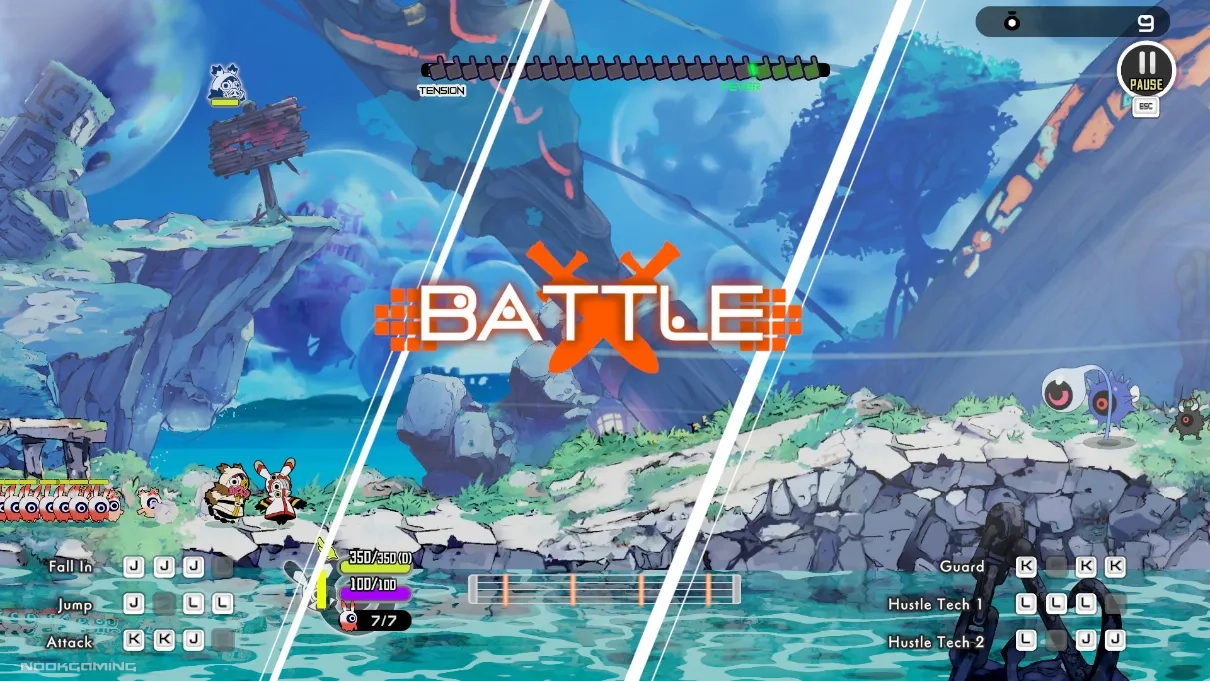
Last but not least, Ratatan does have an available multiplayer option. You can play with up to three other people for a maximum of four in each party, and each of their Ratatans will bring their own Cobuns as if it were a single-player run.
Honestly, if you just wanted to experience Ratatan without having to stress about mechanics, multiplayer is probably your go-to. It’s just so much more of an easier experience playing with multiple Ratatans and armies that it’s almost like a different game. If there are only a few people online at a certain time, you can even make use of CPUs to supplement the missing members. Overall, it makes Ratatan incredibly easy, which adds to the already impressive spread of accessibility options the game offers.
Verdict
Ratatan is a unique rhythm game that incorporates roguelike action mechanics to create a one of a kind experience for players both new and acquainted with the genre. Sporting adorably cute caricatures of monsters and a dynamic, energizing soundtrack, players are sure to have hours of fun chasing their own goals as they build their own strong, stuffed toy armies. While the game is quite lacking in terms of overall narrative and longevity, the developers have promised four major updates in their proposed roadmap as Ratatan works on its Early Access build. It is with great excitement for the future that I hope these updates deliver justice to a game with such a promising premise.
RATATAN IS PROMISING
If you are looking for another roguelike/roguelite game with deckbuilding elements, check out our review Card-en-Ciel.
Many thanks go to Game Source Entertainment for a PC early access code for Ratatan.

Visual novel reader that wishes there were more than 24 hours in a day. Gacha victim, TCG enjoyer, and VTuber simp. Still trying to live happily.