Shuten Order is a murder mystery visual novel by Neilo Inc. and Too Kyo Games in collaboration with DMM GAMES. The story is set in the fictional nation of Shuten, where members of the religious organization Shuten Order eagerly wait for the end of humanity. Similar to Too Kyo’s other titles, it was released simultaneously for both Japanese and English audiences. Other titles they’ve worked on are World’s End Club, Master Detective Archives: RAIN CODE, and the recent hit game The Hundred Line -Last Defense Academy-.
Picking up Shuten Order was a bit of an impulsive decision for me. Although most of the staff for the visual novel are prominent people in the industry who’ve contributed to largely successful franchises like Danganronpa and Zero Escape, I haven’t had the opportunity or time to actually play their games because of how tight my schedule usually is. But after reading the synopsis, I felt a strong force tugging at me to pick it up. The general vibe, my expectations of the developer, and the prominent themes in their promotional material all tickled my fancy in a good way. So despite having next to nothing to use as references for my experiences reading, I couldn’t help but volunteer myself. It makes me feel like a kid again, feeling all giddy about first experiences and whatnot. What am I getting myself into this time?
The end of humanity is approaching; the party starts as soon as the guests run out here in Shuten Order!
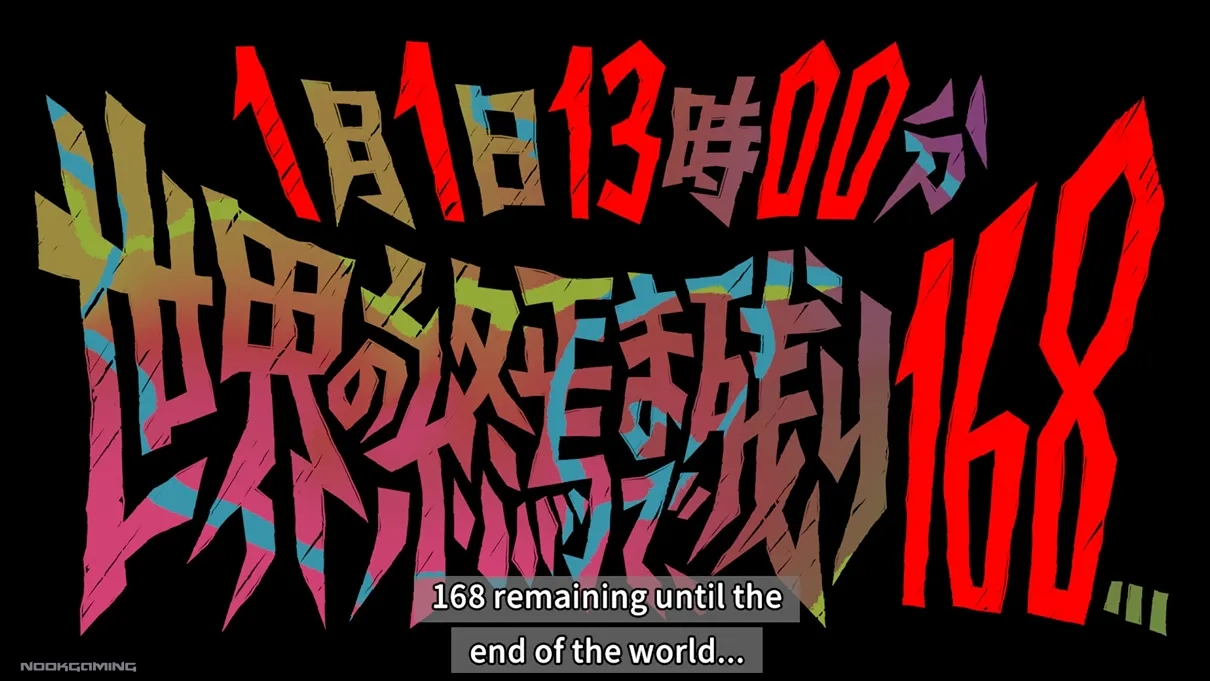
The Countdown to the End of Humanity Begins!
Shuten Order is set in the fictional nation of Shuten, where people are celebrating the coming of a new year with festivities throughout the city. The citizens of Shuten are part of a strange religious organization called the Shuten Order, where members actively yearn and pray for the end of the world. Tragedy strikes however, as Inugami Kishiru, winding down from the celebration, witnesses an impossible event: the dismembered body of Shuten’s great Founder, who had been secluded in their prayer chamber, suddenly falls from the sky in the middle of Central Park. In the cloak of the night, the highest-ranked official of the nation was murdered by an unknown assailant without so much as a creak. To prevent a nationwide crisis from happening, Kishiru swiftly recovers the body parts without anyone’s knowledge. He brings them to the Shuten Order HQ, where the Ministers will discuss their next actions.
Shortly after, our unnamed protagonist wakes up in an unfamiliar room without any memories of who she was or what she had been doing. As she struggled to find her bearings, she heard a knock on the door. Waiting behind it are two figures who introduce themselves as angels: a tall man with green shaggy hair named Mikotoru, and a small kid with blond hair named Himeru. They explain that the protagonist was killed last night, even though she wasn’t meant to die at that moment, and that God gave her a second chance to correct their fate. They give the protagonist the temporary name “Shimobe Rei”, a playful take on the words meaning “a servant of God”.
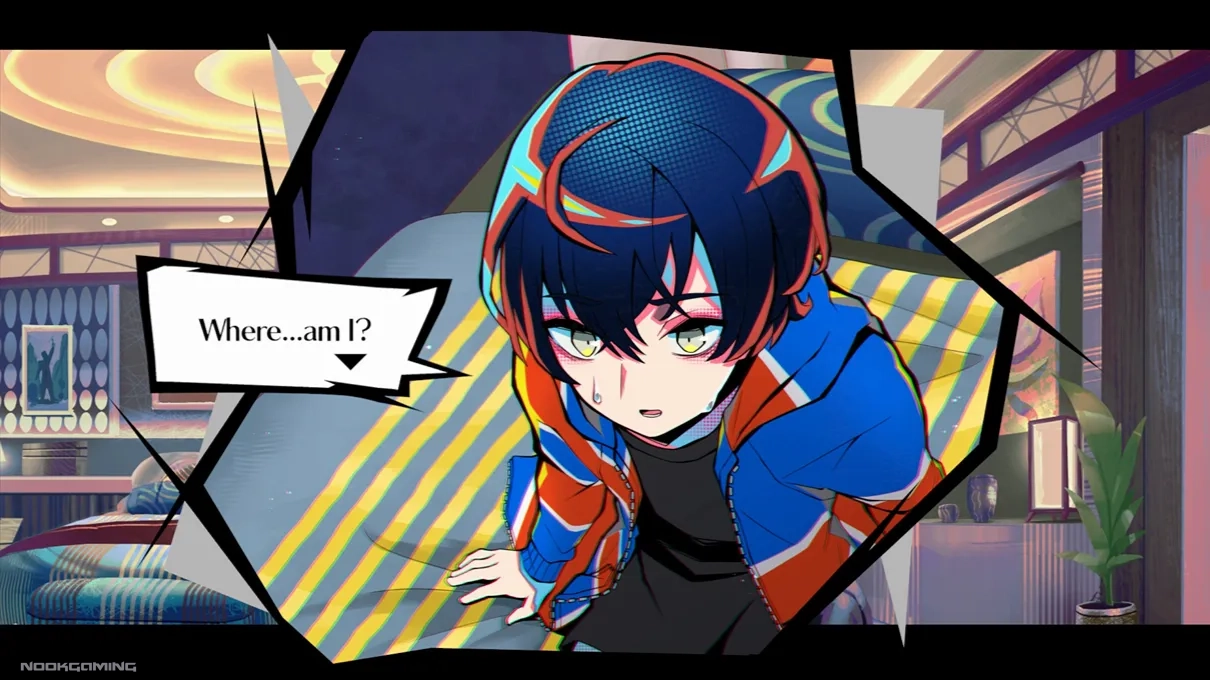
For Rei to regain what she lost, she needs to succeed in God’s trial. She must first force a confession out of her killer, and once they’ve been proven guilty, Rei must take their life. There is, however, a time limit: once the sun rises on the fourth day of Rei’s resurrection, her temporary body will turn into ash. With stakes at an all-time high, Rei must comb through the suspects’ alibis and figure out who her murderer is by using the power of God. The only problem? The five murder suspects are the five Ministers, the highest-ranked officials of the Shuten Order outside of the Founder!
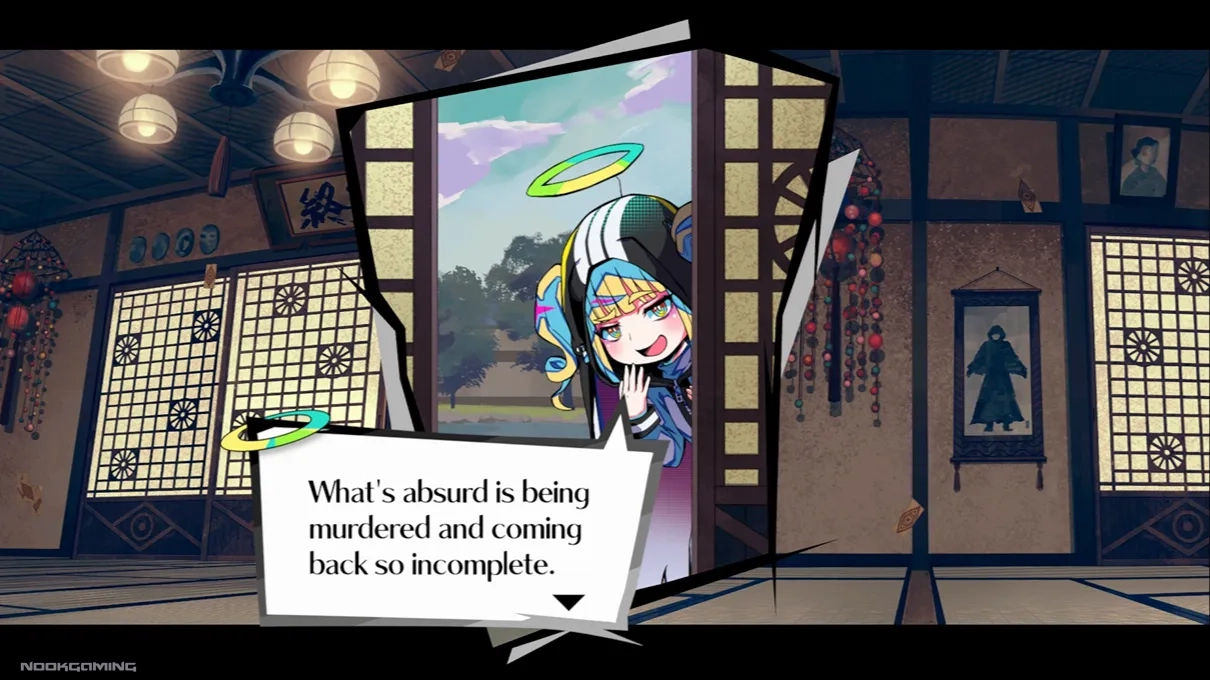
Whodunnit?
Shuten Order’s story largely focuses on Rei’s investigation of Shuten Order’s five ministers as she pieces together the available evidence to figure out the mystery behind her sudden death. Along the way, as Rei spends time with each of the ministers, she begins to unravel their unique peculiarities and ideals, putting into question whether the person she’s suspecting really did do the deed. The implementation of this storyline utilizes a branching structure where the player chooses a minister to pursue after finishing the game’s prologue. Each of these ministers are considered an in-game route, which, upon completion, unlocks a Final Chapter for the reader to enjoy. One thing to note is that this needs to be achieved within a single playthrough or save file; loading an earlier save at the “Select Route” scene resets your progress towards the Final Chapter. The game naturally sends you back to select a different route after finishing one, so rest assured, they did not want you to save scum routes. You automatically enter the Final Chapter after finishing your fifth route.
As for the narrative, each route more or less follows a general pattern of Rei getting involved with a minister as they deal with their own emergencies brought upon by the death of the Founder. While a little bit repetitive (and predictable up to a certain point), their choice of taking inspiration from different genres for each route makes each one feel like a fresh experience to play.
Before diving into the unique parts of each route, I’d like to first give praise to the visual presentation of the game as a whole. With bright, neon-like colors being used for lighting on character sprites, the whole visual novel is charged with pleasantly contrasting features that feel like a never-ending treat for the eyes. The decision to opt for speech bubbles instead of the standard textbox at the bottom of the screen elevates the immersiveness of the game’s atmosphere. It introduces opportunities for the sound design of the game to shine, as speech bubbles accompanied by well-timed sound effects give an almost physical aspect to a character’s spoken line. It sometimes even felt like I was being slapped!
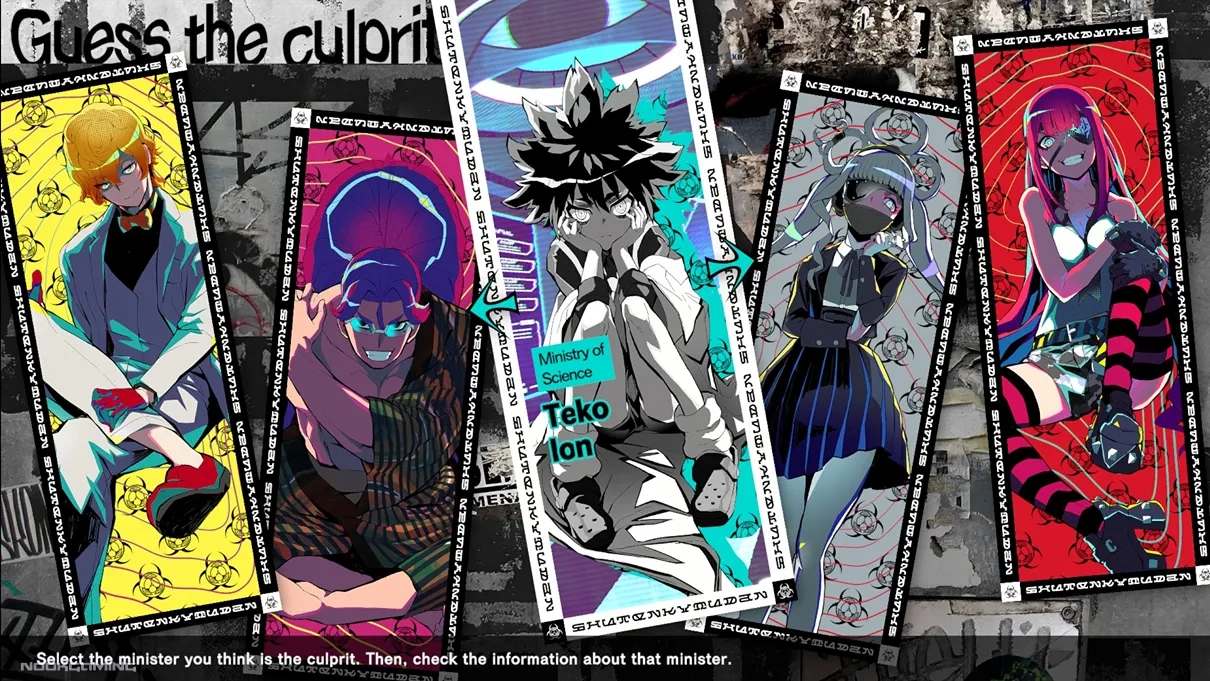
A Consistent and Rich Palette
Taking a look at the main cast of the characters, besides Rei herself whose relatively unassuming design fits her role as an amnesiac protagonist, the Shuten Order ministers all have memorable motifs that surprisingly fit their role and personality well. One I particularly liked was Ushitora Yugen’s, because despite the traditional clothing and the yakuza boss-like impression I got, he had a mostly gentle and kind demeanor that lined up really well with his unexpected background on health. The rigidity that his persona exuded at first glance was instead usurped by a stubbornness to pursue what he thinks is morally and, sometimes, logically correct. And that’s only considering the design! Reading through the story, it really feels like there was a lot of love given to forming the game’s cast and it reflects well on how strongly established the characters are.
In terms of character motivations though, these feel a little bit too simplistic and one-dimensional. The characters in Shuten Order are mostly flat characters who serve more as story drivers for Rei and the progression of the mystery surrounding her death, which limits opportunities in the story for their own development within their respective routes. They’re mostly consistent from start to end, save for one person whose route I found to be significantly more enjoyable than the others because of how nice the payoff was even before it became connected to the overarching story. Aside from a few twists here and there about their characters that were hidden on purpose to push players to suspect them, their actions fit the particular mold they were introduced with. This isn’t a bad thing for the overall story as consistent characters create a solid foundation for mystery plots, but it does detract from the experience that you expect from a traditional visual novel route where the protagonist and the main hero/heroine contribute to the resolution of their respective inner conflicts.
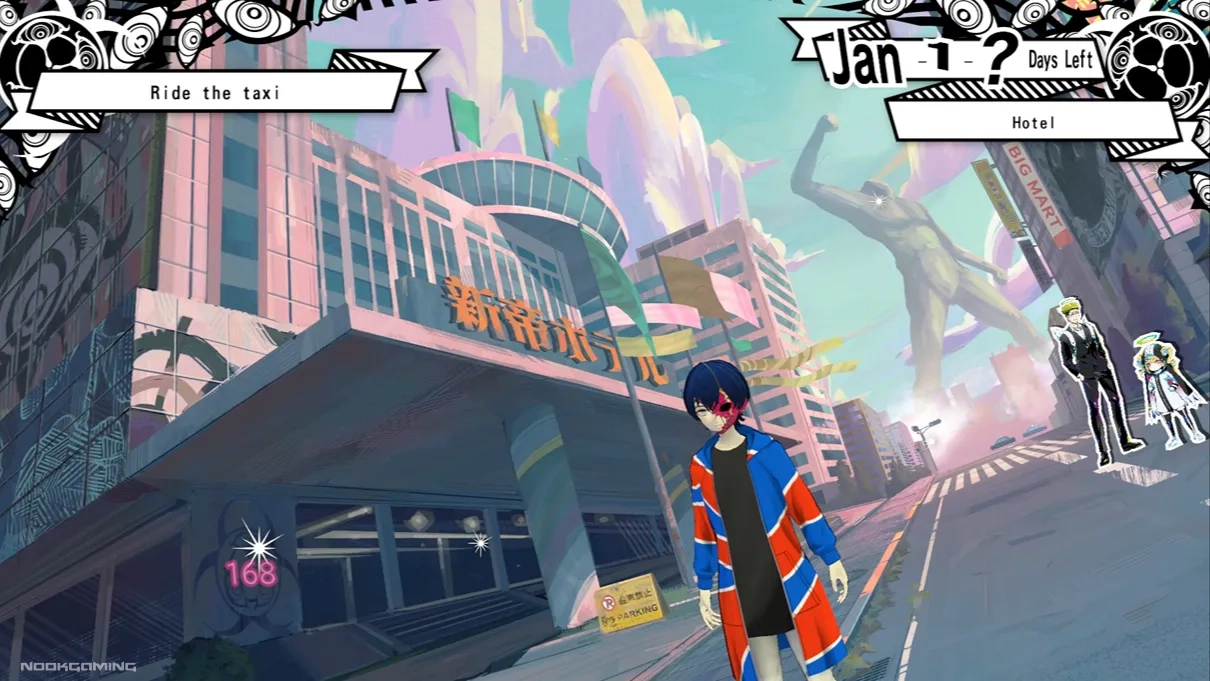
It’s Almost a Game Bundle
One of the main features marketed for Shuten Order was its use of multiple game genres to create a unique gameplay experience. For people skeptical of this premise, I’m here to assure you that there were, indeed, at least five different gameplay mechanics spread out across the minister routes and the Final Chapter. Although I’d like to call them mini-games, it isn’t really an exaggeration to say that each of the gameplay variations were prominent enough in the routes they were featured in to be considered central gameplay loops. Aside from being integral to the genre the routes were trying to emulate, they all had simple yet individually unique mechanics that made them stand out from each other. Every section I did had some nostalgic element to it, as they reminded me of a game within the genre that I played some time in the past.
Thinking about the final product, it’s an amazing feat to conceive the idea of having multiple genres and then turn it into reality. But of course, as a game with so many things squeezed into it, it’s inevitable that there will be shortcomings in some aspects of the gameplay.
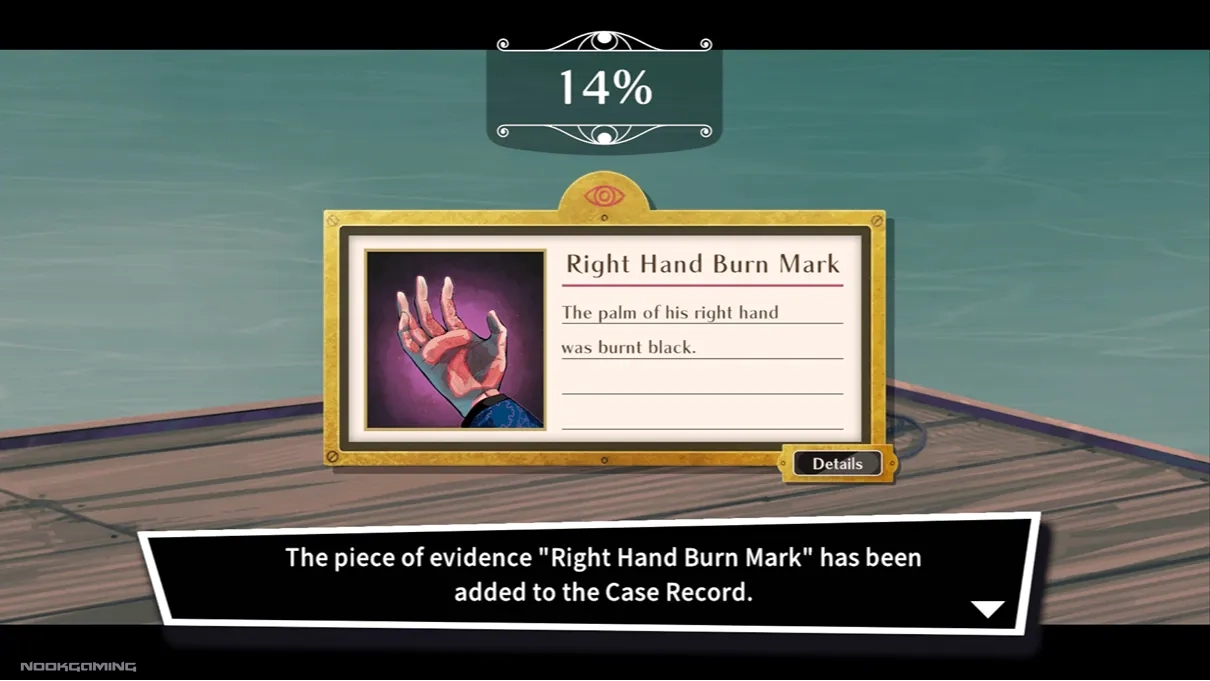
Truth and Lies Come Hand in Hand
Inugami Kishiru’s route is described as a detective adventure game with a plot that revolves around a series of murders that take place within the property of a recently deceased wealthy man. The main gameplay loop of the route involves a point-and-click section where you are given the option to interrogate witnesses present within the scene or investigate suspicious articles that might be related to the current incident. During these sections, there’s a trust meter that serves as an indicator of the remaining mistakes the player can make during the stage. The evidence is then corroborated during a big gathering at the middle of each in-game day, where Rei pieces together the information collected during the point-and-click section to get closer to identifying the perpetrator of the serial murders.
Honestly, although this section was pretty simple in terms of mechanics, the way the developer was able to create intense discussions amongst the characters while keeping it stylishly snappy in terms of visuals made me enjoy this section a lot. The mechanic of pointing out suspicious lines in character dialogues with Rei was very fun and made me feel like it was an actual investigation. The system was sufficiently punishing as well; I liked how it limited players from being too trigger-happy without consequences and rewarded appropriately scrutinizing players by hiding some investigation progress behind fully finishing someone’s lines before sussing them out. The discussion section also allowed players to both challenge themselves or make the entire thing easier by rewarding attention to detail. They made it so that fitting testimonies don’t only make sense in terms of context, but also how well they visually fit in the route’s gameplay system. My only problem is probably how slow the pacing of the discussions were at times. Rei’s critical thinking sometimes felt like they were taking too many obvious steps in between deliberations and conclusions, so that I sometimes got the answer wrong because I was too ahead of the current point in contention!
Puzzling Reasons for Hosting a Death Game
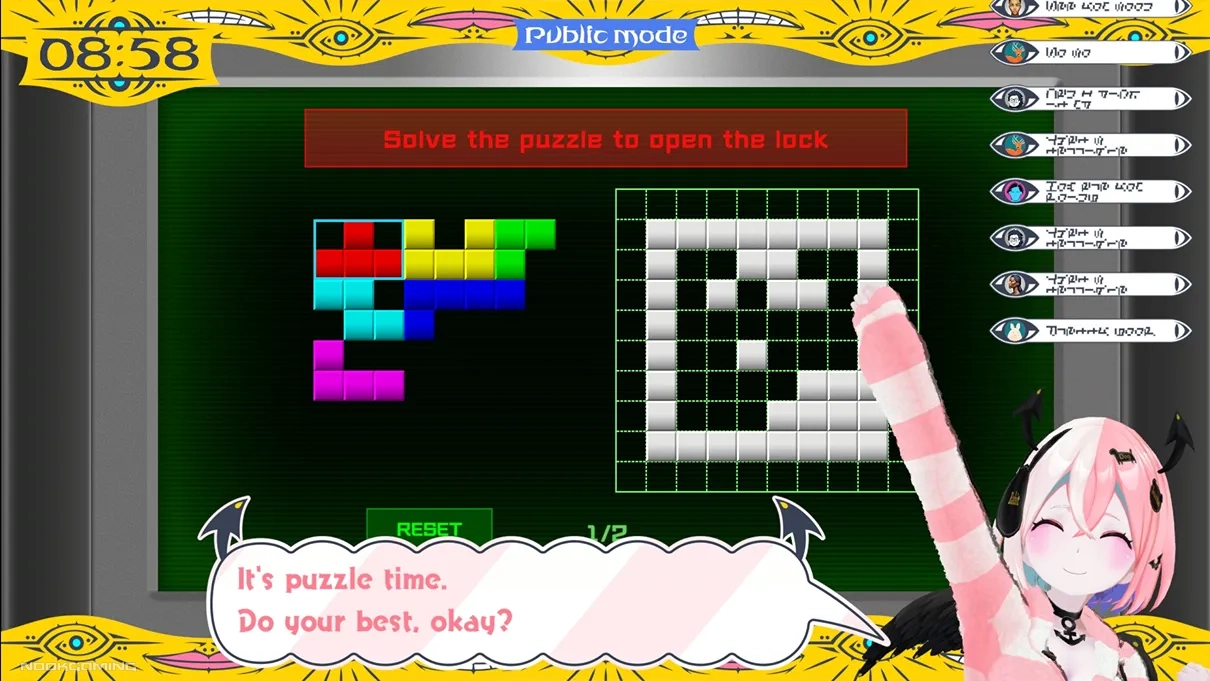
For the second scenario, Rei’s extreme escape adventure with Ushitora Yugen involves twenty-one participants being kidnapped to participate in a death game for an unknown reason. The gameplay mechanics featured for this route resemble a first-person dungeon crawler with escape doors as checkpoints. Instead of enemies, the player is threatened by three types of puzzles of varying difficulty; one involves fitting a number of blocks in a limited space, another is literally connecting the lines while avoiding overlaps, and the last one is your typical sliding puzzle that involves properly forming a displayed image. There’s also a point-and-click investigation section that, in contrast to Kishiru’s route, is solely for gathering clues to solve a puzzle that allows you to exit the room. In addition, there are sections that feature timers which add to the overall pressure of the puzzle games.
Unfortunately, the “extreme escape adventure” in this scenario only really extends to the death game that the route revolves around. Most of the puzzles that I encountered in this section were really easy to solve, save for maybe one or two that I found difficult because of my brain’s limited capacity to deal with Tetris blocks. Even the sliding puzzles, which I’m notoriously bad at, felt like a breeze to go through. Because of how fast they were to go through, they felt more like mini-games that were there just to slow down my reading speed. As for the dungeon-crawler-slash-escape-adventure aspect, it felt inconsequential because of the lack of punishing mechanics in the stage design itself and the inability to become lost because of doors that are literally locked. The stage pushes you to go a certain direction most of the time, which takes away the exploration aspect. There aren’t even any rewarding items to be gotten from exhausting all explorable spaces, making this main gameplay mechanic feel more like a chore than anything. Looking at the positives, its gameplay loop at least meshes really well with the prevalent motif of the route’s visual design.
The Many Branches of Science
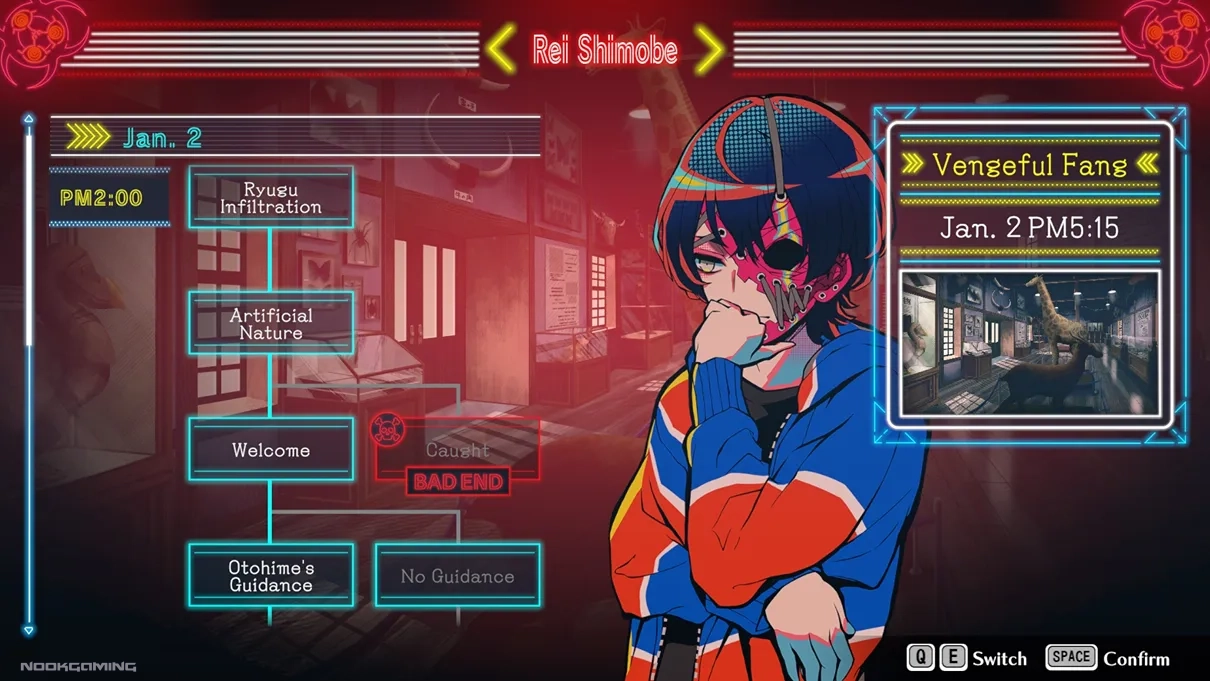
The next scenario, which features Ion Teko, is described as a multi-perspective adventure about a terrorist attack that happens in the Ryugu Lab, an important research institution in Shuten. The main gameplay mechanic in this scenario involves an interactive flowchart for each participating character that represents the possible branches in the route’s storyline. Every now and then, depending on the choices you make in specific scenarios, you will encounter any one of the three possible types of branches: a locked branch, which opens upon selecting the appropriate related choice from another character’s perspective, a closed branch, which is a dead end for one character’s flowchart that usually leads to the third branch type, a bad end, for another character. The goal is to achieve the good (or true) end for all character flowcharts by navigating different perspectives in the story.
While resembling what is technically a traditional visual novel in terms of gameplay, I found myself enjoying the systematic way that Teko’s route presents the standard plot progression of a branching plot. The degree of freedom that you have when it comes to exploring the multi-perspective layout of the story is pretty limited considering the scene selection mechanic, but because it’s structured in a way that you can technically pursue any perspective you want to in any order you want, the experience of reading it feels like it’ll be unique across different players. The visual presentation of the story’s progression also makes sense logically in how it is structured and serves as a great reference for the reader’s pace. It’s a flowchart fan’s wet dream! My only problem with it is that because the story progression is split across characters, sometimes the scene for one character will be so short that the flowchart section of the route feels disruptive to interact with. The story just sometimes suddenly pauses at an awkward junction, which I feel stunted my enjoyment of specific parts of the route. Overall though, this was probably my favorite gameplay type, with Kishiru’s detective adventure being a close second.
Words Expressing Love
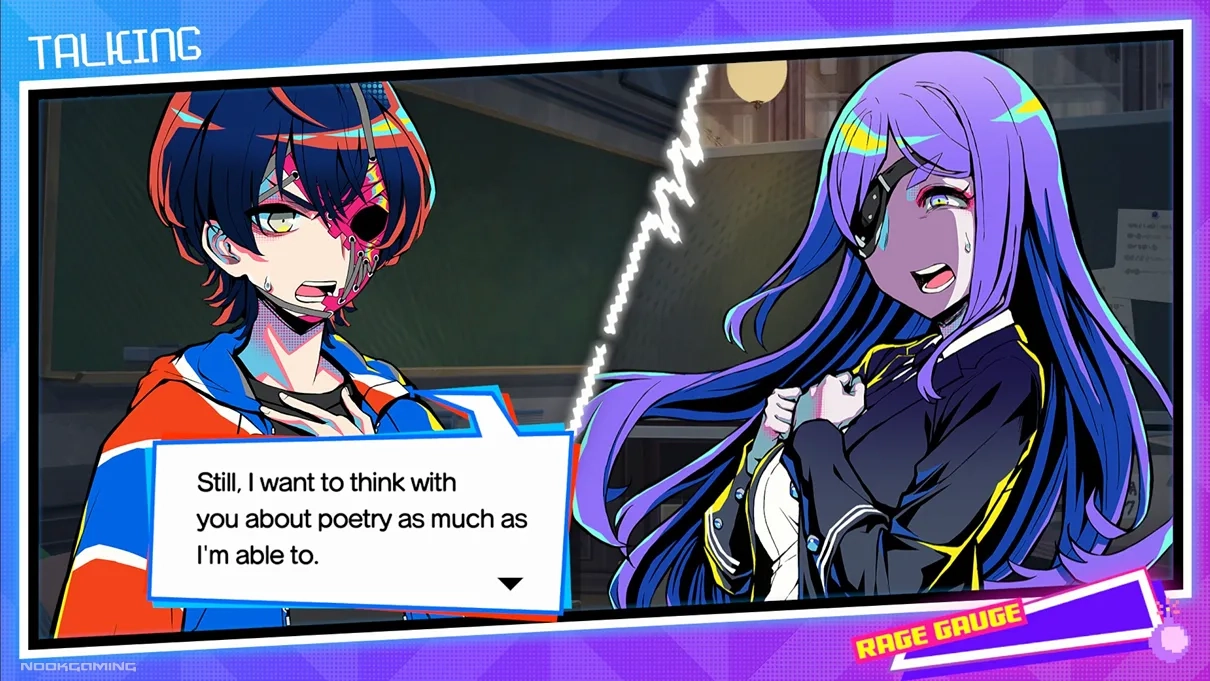
Jumping into the first route featuring a girl, Kokushikan Honoka’s scenario is a romantic adventure (of sorts) centered around her desire to fall in love. Rei is tasked with helping the Minister of Education experience what passionate love is by making Honoka fall in love with her through simulating a youthful school romance. The main gameplay in the route involves visiting various sites in Shuten Academy; upon arriving at the sites, Rei can either meet one of three potential romantic interests or talk to members of the ensemble cast that’ll give her hints to help her grant Honoka’s wish or provide random lines of dialogue that are irrelevant to the plot. The goal is to manage the heroine’s affection levels and eventually, engage in an intense confrontation with them with timed choice segments that, upon succeeding, leads to a passionate confession scene that concludes their mini-routes.
This one was a hit and miss for me. On one hand, while I really liked the timed choices in the final stage of the dating segments in each mini-route, there wasn’t really much to enjoy in terms of the dating simulation aspect that this scenario emulates. The flags for each heroine number around four to five in total and consist of short scenes that barely establish a romantic rapport for Rei amongst her potential romantic interests. The time management, although present, was negligible as well due to the segmented way they implemented the heroine routes within the scenario. I feel like it fails to deliver on what felt like its main premise going in.
This is, however, what I believe to be the point. The disappointing gameplay loop is a distraction because, at the end of the day, it’s more of an adventure game than it is a romantic simulation. It fits very nicely with the overall motif of the route and the overarching mystery of Shuten Order, but because the main interactive element of the route still revolves around the largely inconsequential dating simulation mechanic, it feels awkward and annoying to play through given that there’s no real payoff for that particular aspect of the game. It felt more like a puzzle game where you have to choose the correct options to solve timed investigations that lead to the routes’ endings.
Heresy in Dark Corners
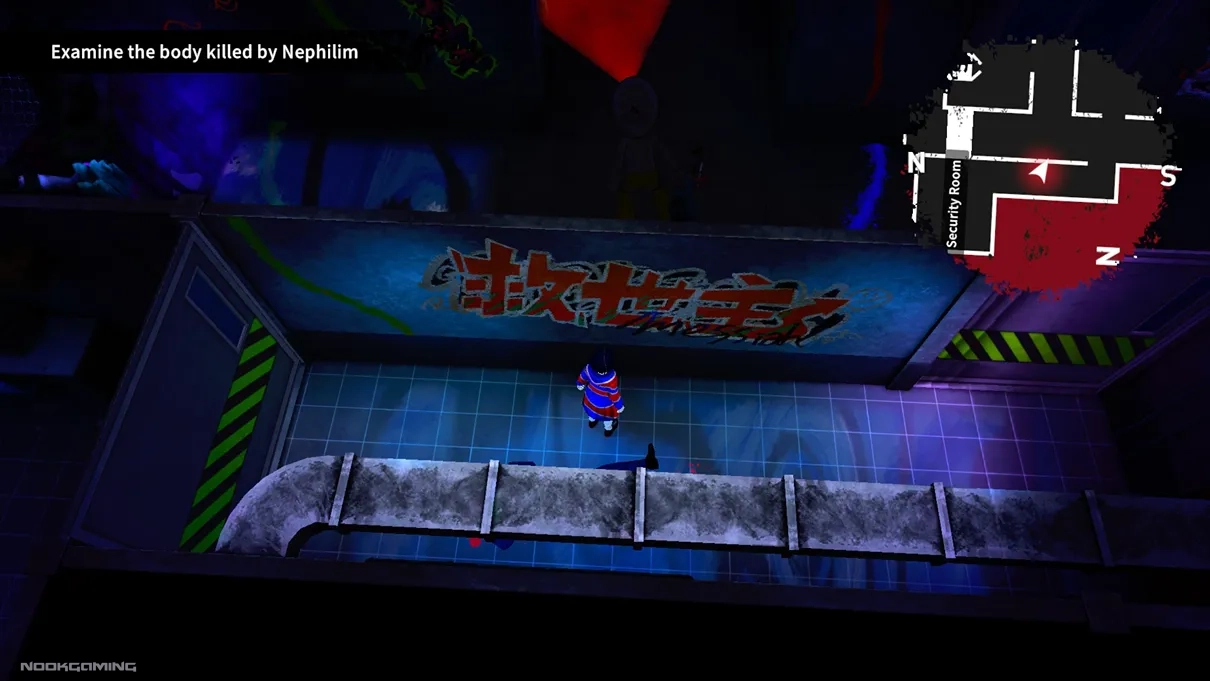
Last but not least, Fushicho Manji’s route is a stealth action horror game that features Rei’s involvement in a series of grotesque murders perpetrated by an elusive murderer. Its gameplay loop involves three-dimensionally rendered stages where players have a bird’s eye view of Rei’s model as she works on escaping the killer. The main points of interaction in the stage involve deployable barriers, hiding spots, and short puzzles that are solvable by exhausting a list of objectives. The goal is to escape without being caught, and by the end, figure out the killer’s identity.
The fifth game system employed by Shuten Order felt a little bit too easy for a stealth/action horror game. There’s generous lighting in each stage that makes spotting the killer a given, and there are barely any chokepoints to punish being unfamiliar with a particular stage’s layout. Since there’s an almost non-existent cooldown for the killer losing their hostility, you can basically call down a barrier and hide somewhere, and you will be guaranteed escape from them. It trivializes most of the stealth and horror aspects of its mechanics, which is a shame given the premise.
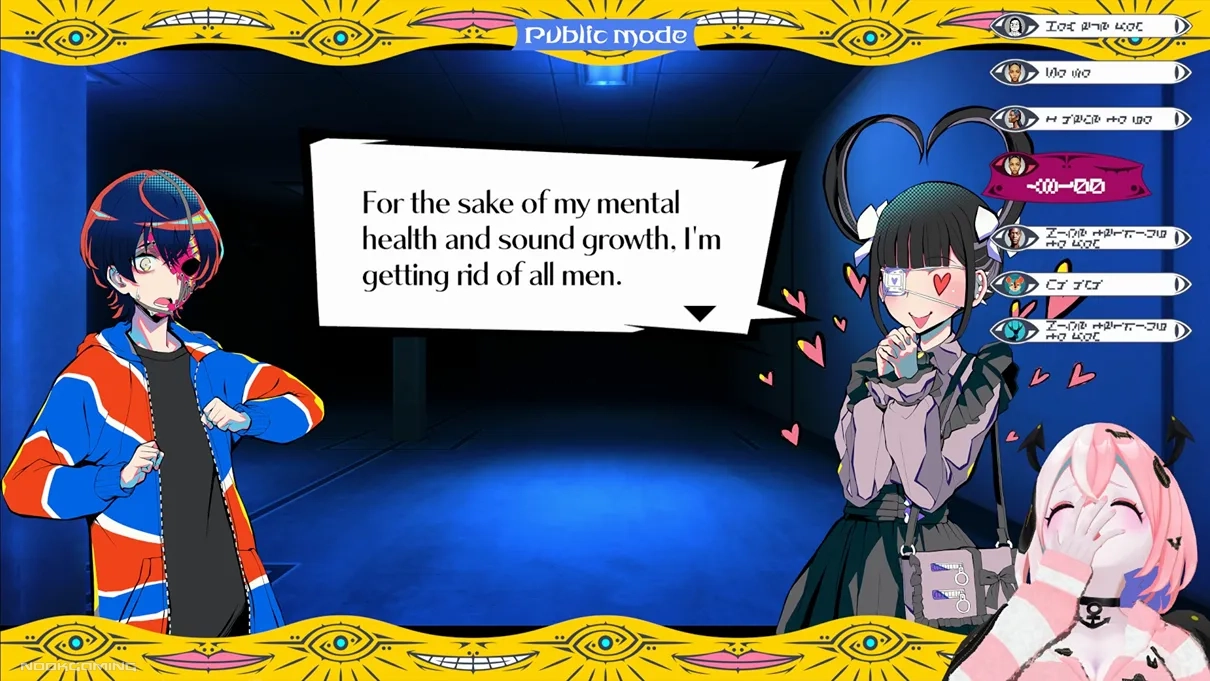
Lost My Head in All the Content
While the experience of playing through all five routes is pleasantly different and fresh per scenario, there’s still the question of how well it fits in the overall premise of the visual novel. To reorient ourselves, Shuten Order is a murder mystery game first and foremost, which is why when evaluating the title in its entirety, it’s important to consider how well all its components come together to achieve what the story initially set out to be. Luckily, although it sometimes feels like you’re playing a different game when going through a minister’s route, the conscious effort by Rei as a character to repeatedly remind herself of the mystery surrounding the Founder’s death and the angels nagging at her to progress God’s trial allows the story to remain grounded, despite its ambitious structure.
This grounded aspect of both Rei as a protagonist and her angels allows the story to easily tie facts presented within each scenario into the greater web of information that surrounds the murder mystery. While satisfactorily enjoyable stories on their own, although they feel largely isolated from each other, the various events that happen in each route create a series of situations that contribute to the game’s worldbuilding and substantiate motives related to the murder. This makes the progression to the Final Chapter satisfying in both its background and its conclusion, as none of what happens feels awkwardly out of place. Instead, the ending feels like a natural culmination of everything that happens throughout the story. That said, I do have some grievances about how convenient or shallow some of the character choices are in the narrative.
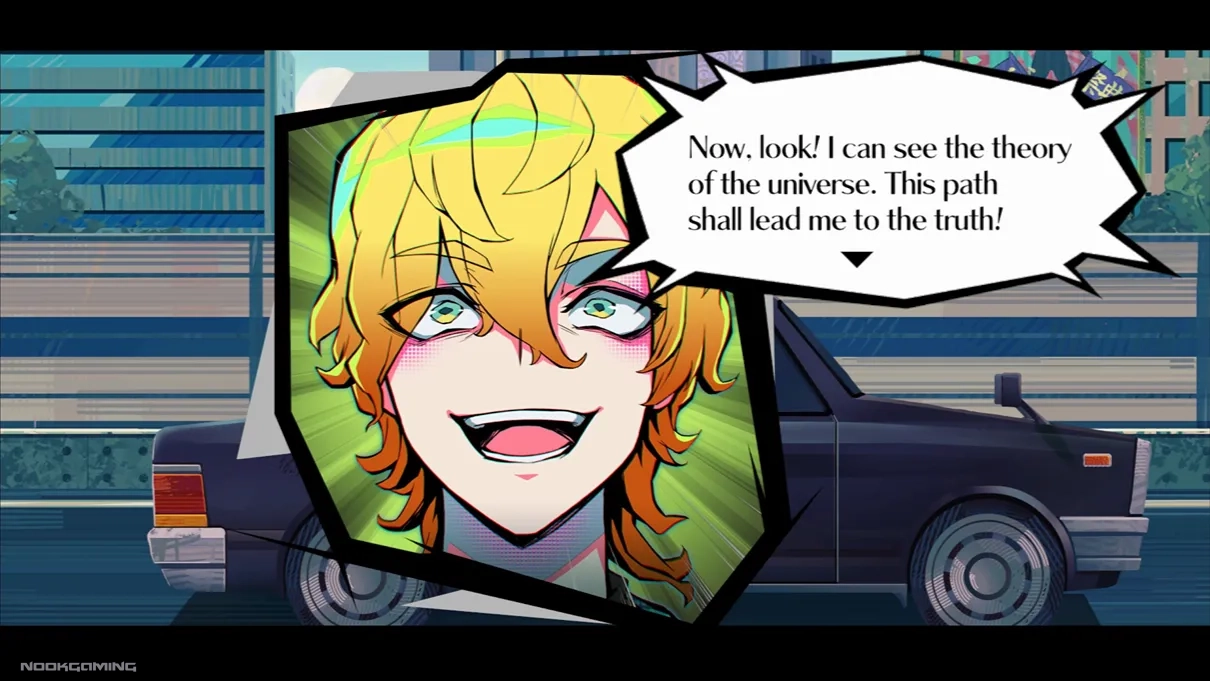
The Truth of the Matter
To wrap it up, although I respect the decision to introduce multiple gameplay genres into one visual novel, it’s naturally hard to maintain consistently good quality across all of them. Spreading itself too thin in many areas makes it susceptible to compromises, which takes away from parts of the overall experience. That being said, despite having a few areas that are notably weaker than the others, the overall story of Shuten Order is solid and well-established. This is because of a conscious effort to reiterate the main motivation of Rei as a protagonist, which is to interrogate the main suspect behind her untimely demise and uncover the real identity of her murderer. Alongside that, the relationship with God is well-established throughout the various scenarios, which adds to the suspense and satisfaction as the story heads to its conclusion. By the end of the game, my investment in the plot felt appropriately rewarded, making the ending satisfying to read.
Partly due to the gameplay sections themselves taking up sizable portions of a playthrough, the progression of the plot does feel a bit awkward in some areas when it comes to its pacing. This isn’t really a problem in routes that feature gameplay loops grounded in the visual novel system itself, such as Kishiru’s detective adventure game. But for Yugen’s and Manji’s scenarios specifically, the longer gameplay segments annoyingly slow down the plot. It makes it hard to remain invested in what’s happening since they take attention away from the mystery that’s supposed to be story-driven in the first place.

Art and Music
Regrettably, Shuten Order does not have a gallery option that features the large amount of visual assets it uses throughout its story. A reason for this might be due to the lack of fully sized CGs in the game; most of the assets are smaller in size and serve as cut-ins during various segments of the game, never really standing as a representation of significant scenes when compared to other titles in the visual novel genre. They are still, however, really well done, which is why it’s a shame that they can’t be freely viewed as part of the game’s miscellaneous features.
The main artist for the game is Shimadoriru (Shima Drill), whose style is easily recognizable due to their work on the Danganronpa series, Master Detective Archives: RAIN CODE, and The Hundred Line -Last Defense Academy- alongside fellow Tookyo Games artist Komatsuzaki Rui. Shimadoriru’s use of bright, bold colors to create the perception of layers and lighting on character sprites is endearing and creates a sort of eeriness by itself. Due to how unnaturally colored everything is, the setting and characters in turn feel larger than life, confidently making it known how fantastical and absurd the setting is. Moreover, it makes use of manga-like panels as cut-ins to present its CGs in-game, creating a sort of reading experience that made me feel like I was reading a Japanese-style comic book at some points. The choice of using anime-esque expressions, such as falling sweat, floating hearts, and sound effects visually represented in Japanese katakana, added a nice touch of cuteness to the overall presentation as well.
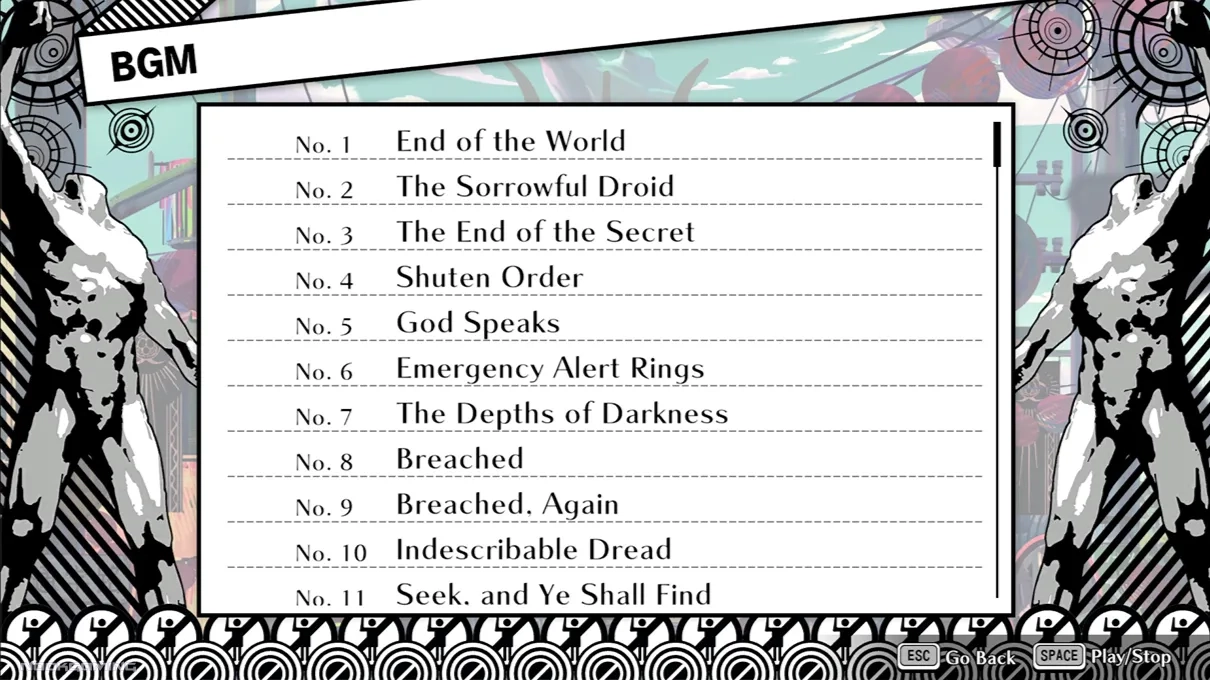
As for the music, Shuten Order features an appropriately large selection of tracks to cater to the wide range of genres its multiple routes cover. The soundtrack comes courtesy of Masafumi Takada, whose expansive back catalog includes everything from The Silver Case to Danganronpa to Earth Defense Force 6. Amassing an impressive total of 113 tracks, it’s no wonder that the game is able to establish different kinds of atmospheres well enough to successfully immerse readers in its story. One thing I really liked about Shuten Order’s tracks is that it makes prominent use of notes that evoke feelings of either divinity or holiness; in both contexts where the protagonist is successful or being threatened, there’s a tinge of the otherworldly that lurks in the background music for their significant encounters. It gives the game a unique flavor that feels just right given its unique, cult-like setting.
If there’s something I thought was weird about sound direction, it’s probably the default balancing they did on the BGM, SFX, and voices. There are times when I felt that there could have been a more prominent sound effect for parts of the scene, and other times I could barely hear whatever else is happening between the characters due to an overbearing (yet excellent) musical track. It’s more of a minor nitpick though, since you can technically balance the sounds to your liking yourself using the Options menu. On the brighter side, my disappointment here is more because of how it sometimes feels like a shame that I can’t hear the excellent voice acting of the game’s cast. The game features a ton of big shots voicing the cast, so I’m sure people will recognize a bunch of them from shows they’ve watched before. Personally, I could use more Daisuke Ono in my games. His handsome voice makes me feel a certain way.
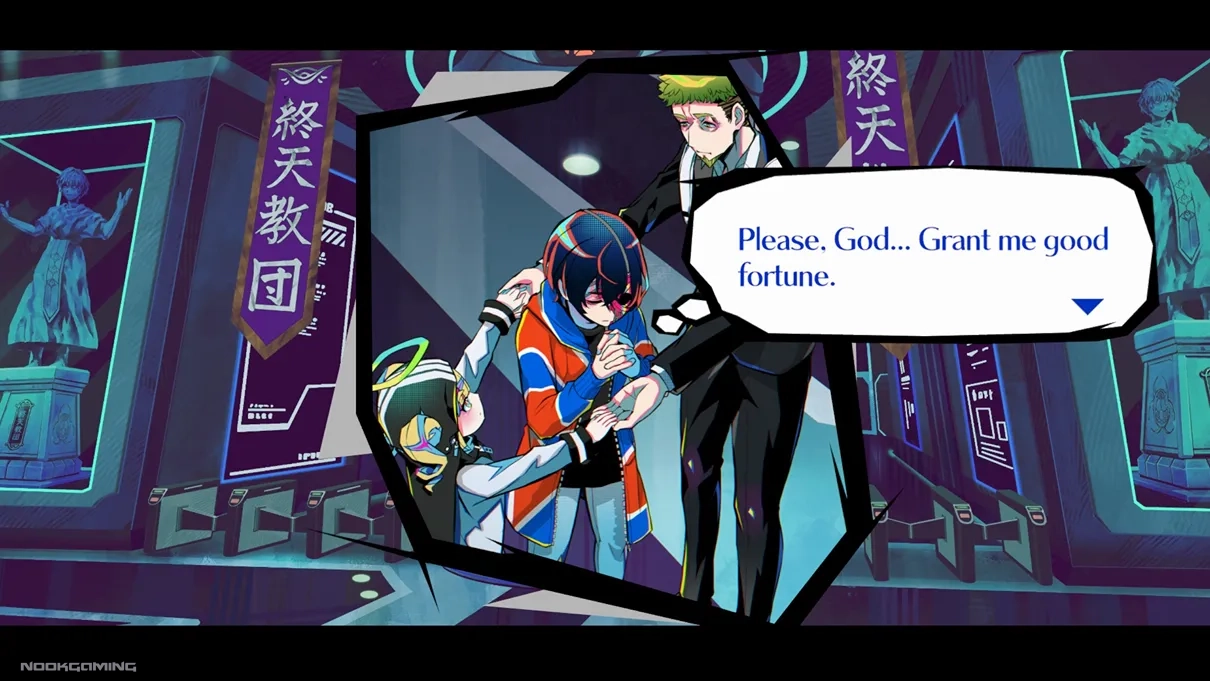
Verdict
Shuten Order is a murder mystery visual novel that turns the premise of saving an apocalyptic world on its head by introducing a cast that actively yearns for the end of humanity. Set in an isolated nation that largely resembles today’s society, it questions the meaning of a person’s life and existence as they confront a reality that threatens to swallow them whole. Given a second chance after an undeserved death, is Rei willing to snuff someone else’s future out for her own? With a premise that’s weirdly interesting because of how murder intersects with God’s will, it’s an eyecatcher that promises you an experience not quite like anything you’ve had before.
Despite being well-grounded in terms of its overall plot, the use of a branching structure to present stories that are structurally different because of how they take inspiration from different game genres introduces a bunch of compromises in both the route’s gameplay mechanics and its self-contained story. Although it feels lacking at times, its ability to tie in largely isolated scenarios into the overall murder mystery is one of its better points. It’s a little bit weird how the routes feel like their own mini visual novel, yet by the end of each of their stories, Rei is able to make progress towards solving the mystery behind her death. In a way, even though particularly tedious gameplay segments take your immersion away, the fact that all the game’s added functionalities work together properly is an amazing feat by itself.
Featuring a borderline impossible murder mystery (in the narrative, anyway) with an endearing cast supported by solid designs and high-quality voice acting, Shuten Order is a visual novel you won’t want to miss out on. Even though it has its flaws here and there, the sheer variation in what it has to offer makes the journey feel consistently fresh as readers tangibly feel the progression of its plot. Keep an open mind as you go through the comfortably familiar catalogue of features; there’s a lot to unwrap both in mechanics and in its themes. As long as you remain aware of its limitations and how it can come short, you’re guaranteed to have a wonderfully fulfilling time. Blessed be the Shuten Order!
SHUTEN ORDER IS RECOMMENDED

Want to check out more visual novels? Why not check out our review of Anonymous;Code? We have also covered a wide variety of visual novels both original to English and localized from Japanese, which you can check out here.
Many thanks go to Spike Chunsoft for a PC review code for Shuten Order.

Visual novel reader that wishes there were more than 24 hours in a day. Gacha victim, TCG enjoyer, and VTuber simp. Still trying to live happily.