Released back in 2022, Sonic Frontiers represented an important turning point for the blue blur. While decidedly imperfect in many ways, Sonic Frontiers’ ambitious new open zone formula and darker storyline captured a lot of audiences and was a good shot in the arm for a series that had been dragging its feet before that point. While not the best game ever made by any stretch, it wound up being a favorite of mine in the year it was released, and its positive effects on the series as a whole are evident. Nearly four years on, it’s returned with a new version released for Nintendo Switch 2.
Paths Revisited
Sonic Frontiers represents perhaps the most dramatic gameplay shakeup the series has seen since the initial jump to 3D. Originally a series built around speeding down a linear series of levels with speed, skill, and finesse, Frontiers completely flips the appeal by turning it into an “open zone” game, essentially a platforming sandbox à la Banjo-Kazooie or Super Mario 64. We now have four main non-linear islands to explore with lots to do throughout them relating to Sonic’s signature speed and platforming abilities. On top of being able to run really fast, Sonic comes equipped with the Boost, allowing him to hit top speed at the press of a button. He can also stomp to descend extremely quickly, slide to get under tight obstacles, use the Light Speed Dash to trace a trail of rings, homing attack to lock onto enemies, and many more things besides.
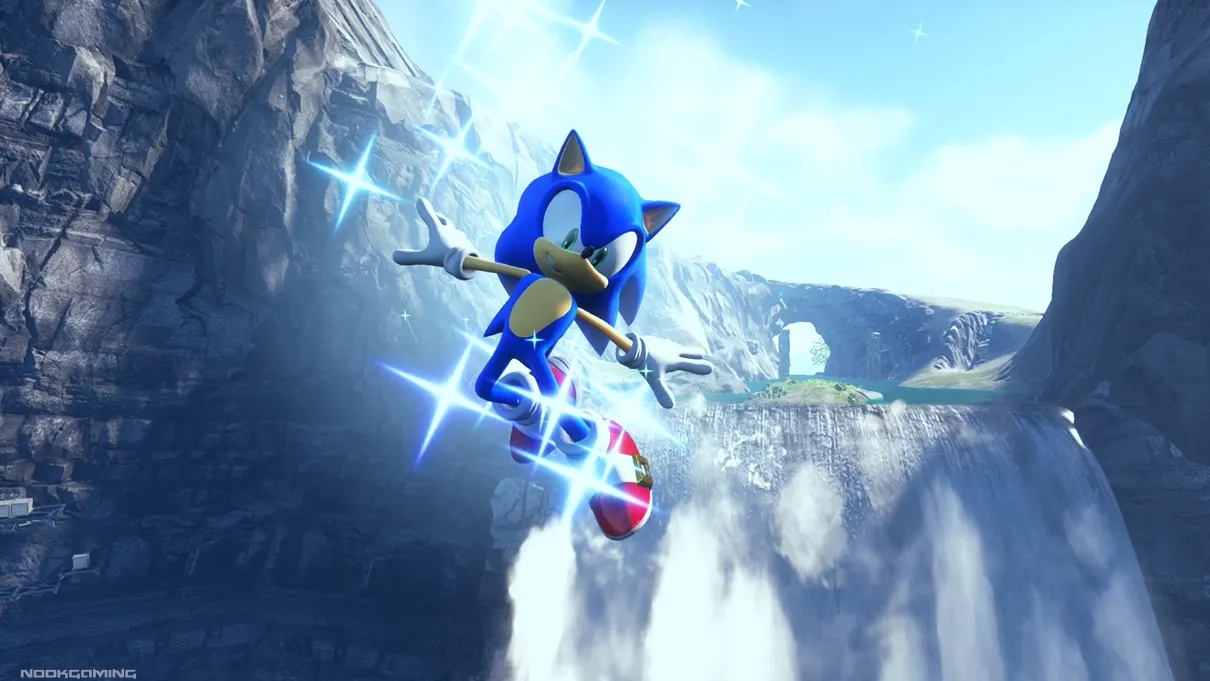
In addition to that, there’s also a newfound focus on combat here, with lots of enemies and boss battles peppering each open area, with their defeats granting access to Cyber Space. Combat is pretty brainless due to feeling a bit overly simple and easy, with some questionable balancing elements like an infinite parry and enemies that can’t really keep up with Sonic. Overworld bosses are okay, but they’re not so fun that I’m chomping at the bit to engage with them all the time. The Titan battles at the end of each of the main islands fare a lot better. While they’re equally as simple as other boss fights, they use over-the-top presentation to justify this, with really cool displays of Super Sonic’s powers backed by some of the best vocal tracks in series history. Overall, I would not say combat improves or worsens the games, but I think the aforementioned Titan boss fights make its inclusion worthwhile.
Sonic Frontiers’ backdrop is also quite a lot more somber compared to past games, with a serious and bittersweet story at the forefront as Sonic runs through the ruins of a race that was wiped out ages ago. Even the way the voice acting is done reflects this, with everyone giving more reserved performances to reflect the personal and heavy stakes at play as Sonic works to free his friends from their cybernetic prisons. It’s certainly imperfect in its own ways, but it represents a major step up from the writing in previous Sonic games, and one I would have no reservations calling “good.” The plight of the Ancients is surprisingly heartbreaking and maturely told, and newcomer Sage gets some of the best and most developed character writing in the series.
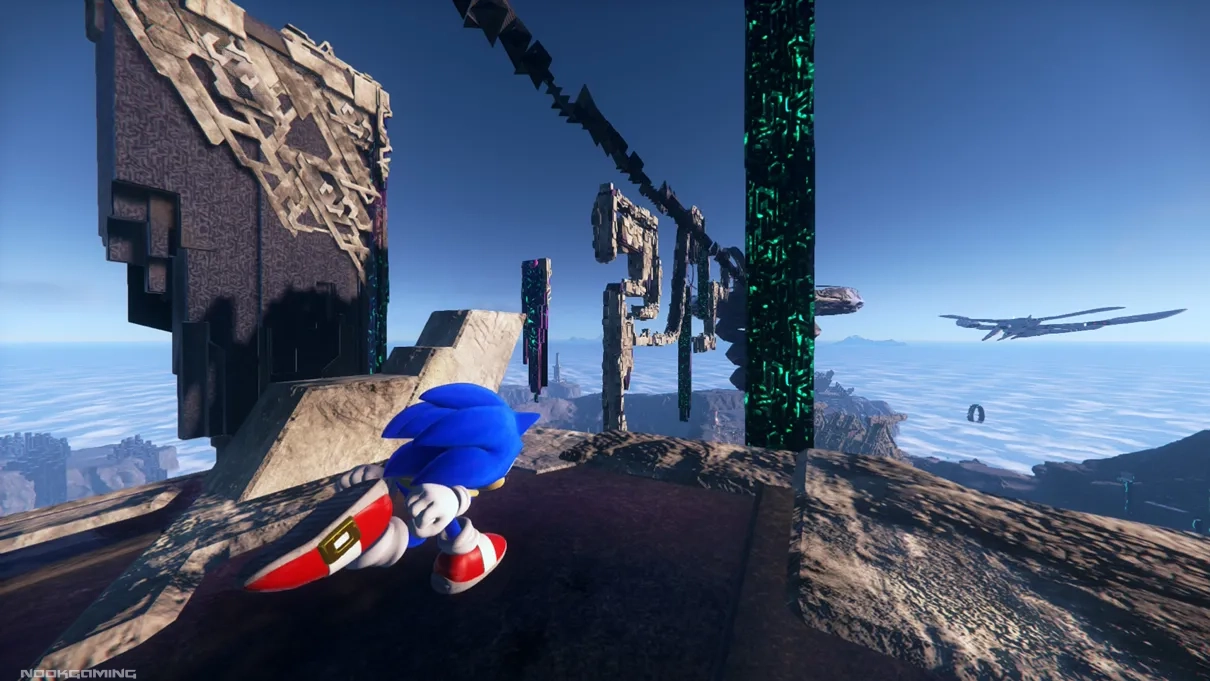
I would recommend reading our original review of Sonic Frontiers for a fuller breakdown of the base game, but suffice it to say that I quite enjoy it despite its own problems. It’s ambitious and while it stumbles in some critical places, I don’t think that’s enough to break the spell the game cast on me. Rather, it makes me even more excited for a sequel, especially given its improvements made to the story and continuity. There’s a lot of room left for this new format of Sonic to grow, but what’s here is plenty appreciable in its own right.
Sights, Sounds, and Speed
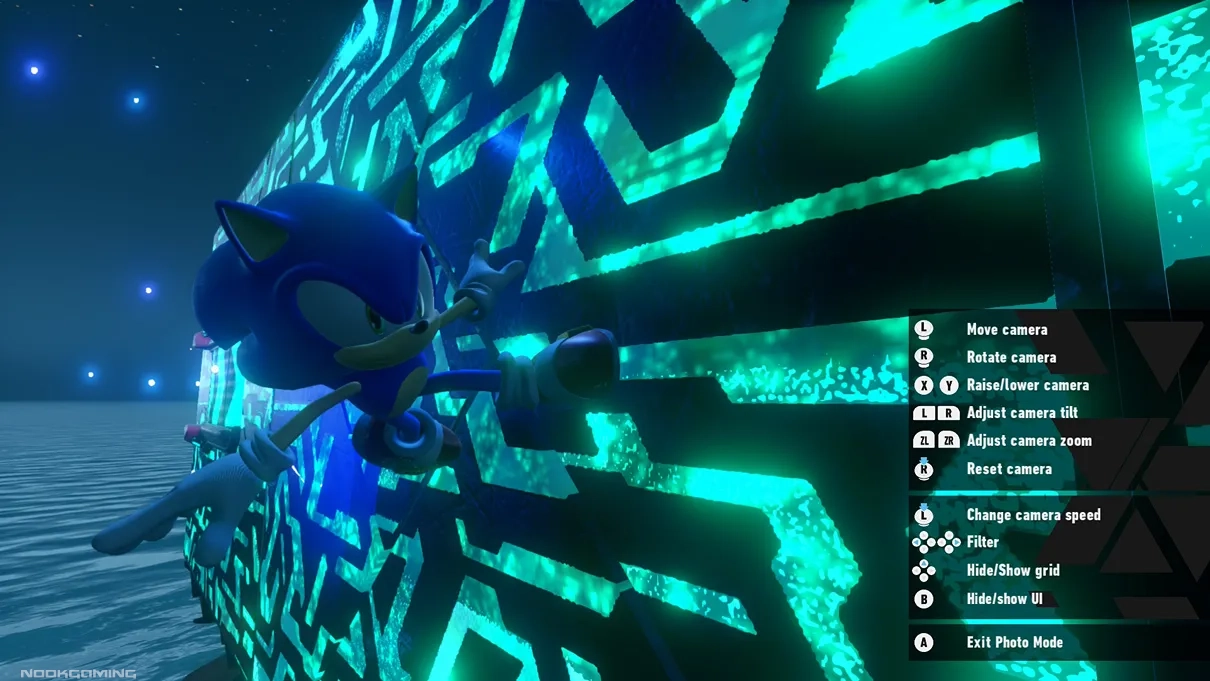
The “Sights, Sounds, and Speed” update added a fair number of new features to improve the base game. A fairly extensive Photo Mode has been added and can be used any time when exploring the open zones, though it is sadly not usable while in Cyber Space. I don’t tend to use Photo Mode much, but Frontiers is a surprisingly photogenic game, and so I often found myself pausing the game to nab a good shot or three at random points. In addition to generous camera control, players can also apply various kinds of filters to add a splash of personality to their snapshots.
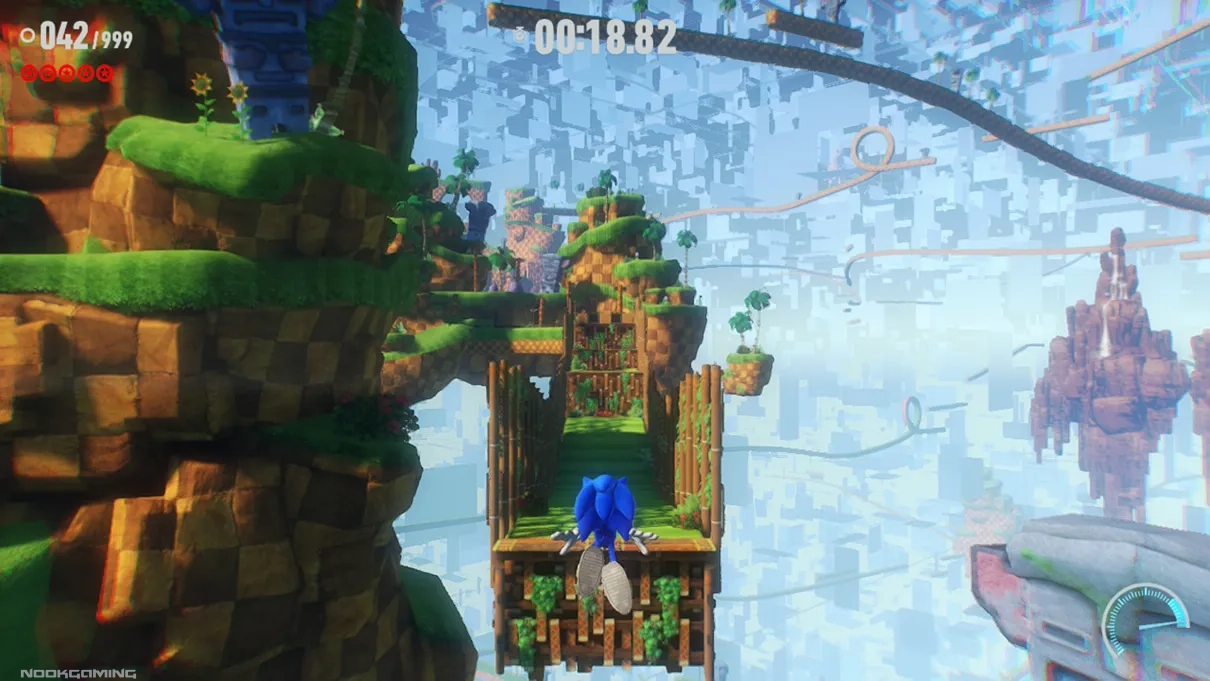
There’s also the new Cyber Space Challenge mode, unlocked after beating the main game. This will have you do speedrun challenges across each Cyber Space “zone”, split up by islands. After completing them all, you unlock a final challenge that spans every Cyber Space level across the game, minus the ones only present in The Final Horizon. Once that’s done, players will unlock the Cyber Space Power Boost, allowing Sonic to go at even higher speeds in Cyber Space levels. This is very convenient for speedrunning enthusiasts, heavily resembling the Egg Shuttle feature from Sonic Colors in how it allows for uninterrupted playthroughs. I can only hope that it becomes a standard for the series moving forward.
In addition to that, there’s also the new Battle Rush mode, which works similarly to Cyber Space Challenge. In this mode, you’ll fight through rounds of enemies and overworld bosses before finally facing one of the game’s Titans at the end. After completing the Battle Rush that spans the full game, players will unlock Extreme Mode difficulty for the main game. In addition to all of Sonic’s stats being locked to Level 1, he also dies in just one hit no matter the context. Cyber Space levels are also made far more difficult to S-Rank across the board. Extreme Mode is fun enough in a vacuum, but because of its changes, certain elements like fighting regular enemies or collecting stat-boosting items become pretty pointless. It’s fun one time, but it’s not something I see myself returning to.
Lastly, there’s the new addition of a Jukebox feature as well as new Sound Memories scattered across the map. Collecting Sound Memories will reward you with various songs from across the entire Sonic series, with each song usually themed after the area you find the sound memory in. While you might start with Angel Island from the Classic games, you’ll inevitably find tracks like Dusty Desert from Sonic ‘06 or Arid Sands from Sonic Unleashed while perusing Ares Island. This is a fantastic addition and probably my favorite new feature out of this particular update. There’s an incredible sense of zen to running around and grabbing trinkets while blasting my favorite Sonic tracks in the background, and finding the Sound Memories themselves can be plenty rewarding.
Sonic’s Birthday Bash
The second major update is Sonic’s Birthday Bash, which as implied by the name is themed around the series’ anniversary on June 23rd. In addition to a sweeping number of optional additions and changes to Sonic’s controls, this update adds new birthday decals as well as more music in the form of a 35-minute-long mixtape with music that spans the entire series. Unlike the Sound Memories from the previous update, this mixtape is mostly focused on music from various smaller titles and spinoffs like Sonic Riders, Sonic Advance, and even more niche picks like Knuckles Chaotix. This, in addition to all the decorations in a somber environment, gives this update a very self-aware goofy energy that I rather appreciate when I’m not getting absorbed in the game’s primary aesthetic.
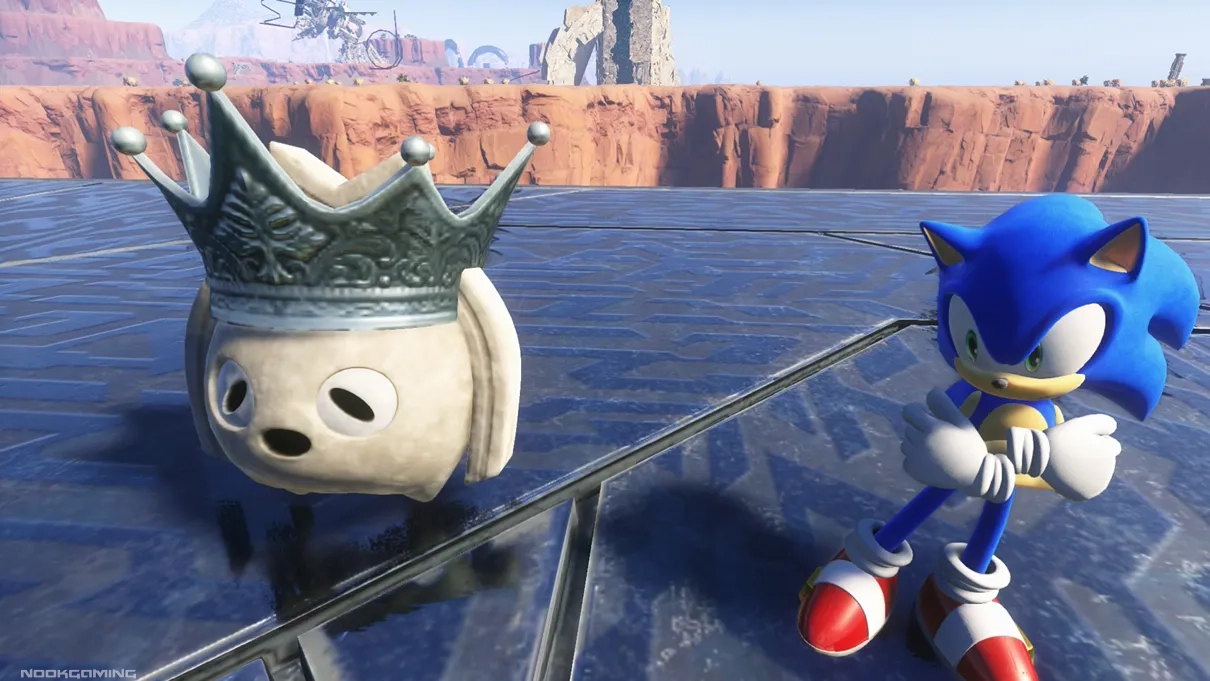
There are also many new Koco to gather across each of the islands, which will grant the player an extended Boost Gauge. That by itself isn’t really that remarkable, but the Koco are fun to collect since they’re associated with some of the best and most challenging platforming moments in the entire main game. Not only are they long, but they leverage gimmicks and ideas in interesting ways, such as hitting switches on a giant puzzle box on Kronos Island or playing with floating fans on Ares Island to reach higher altitudes. Even in Extreme Mode, where there is no reward for collecting them, I still felt compelled to do so simply because I thought they were a lot of fun.
Additionally, there are now also Action Chain Challenges scattered across every island, where players will rack up points by interacting with enemies, bosses, and various platforming elements while increasing their score multiplier by collecting various glowing orbs scattered across the map. These are fine enough additions, but I wasn’t especially taken by this since the game’s movement system isn’t really built for expression or pushing a skill ceiling. Bomb Rush Cyberfunk this very much isn’t, but I do hope they keep it around and refine it for future titles. Still, the reward for completing all of the Action Chain Challenges is very much worth it.
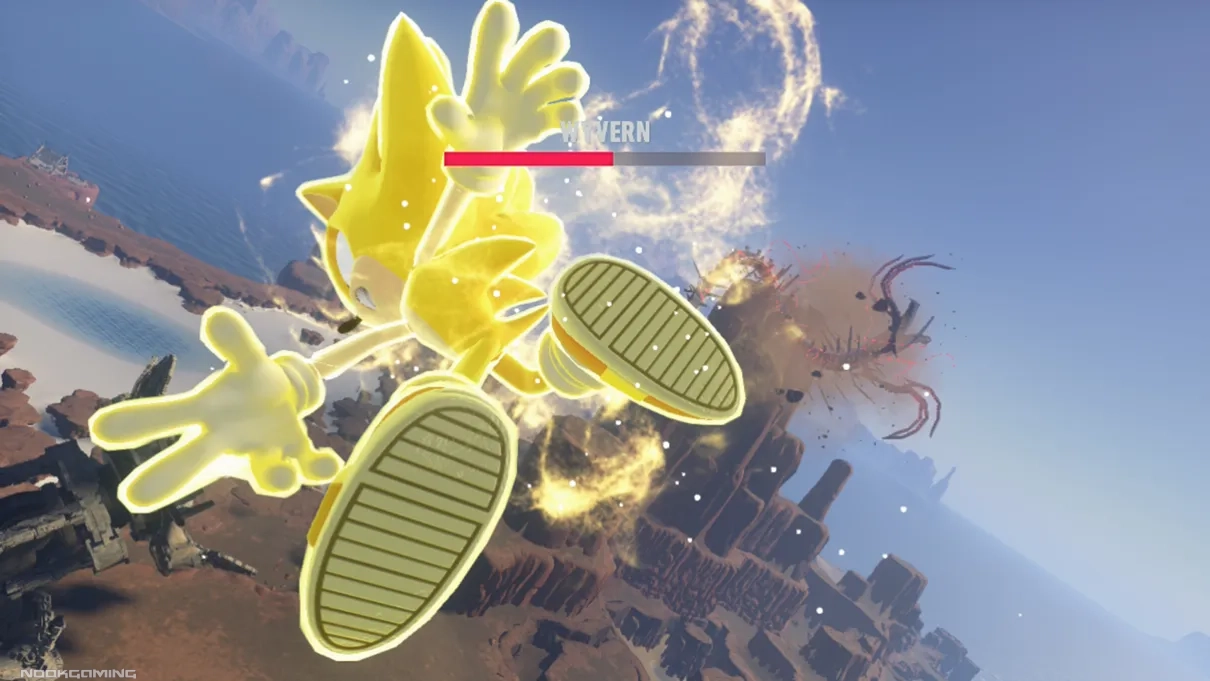
After completing all Action Chain Challenges, the player is granted Sonic’s signature Spin Dash ability, giving him a new tool that completely transforms interaction with both the open zone areas and Cyber Space. Any slope or hill in the vicinity is now a key for Sonic to fly into new horizons and interact with the level designs in ways previously not possible. While it’s absolutely overtuned in terms of the distance and height you can reach, it’s incredibly rewarding to play the game like this and see what’s possible within each level. Grabbing memory tokens in the open zone in particular is lots of fun because there are so many new approaches to how players want to grab them compared to before. Really, my only issue with the Spin Dash is that you effectively have to have already beaten the game in order to unlock it, or you have to carry it over into a New Game+ save to fully leverage it.
The Final Horizon
The biggest of the three updates by far is “The Final Horizon,” which adds a new story that can be accessed from the final island and completely changes the game’s original finale, which was broadly thought to be underwhelming and rushed. Ouranos Island now houses many new platforming challenges, areas to discover, enemies to battle, and puzzles to complete. This version of Ouranos Island is also far more difficult, being much more demanding than anything in the base in every regard. Platforming challenges are more difficult, bosses now hit and move like trucks, puzzles are much bigger brain teasers, and all of the Sonic-related story content like the trial towers and subsequent Master Koco trials rank among the hardest moments in any Sonic game period. It’s fair to say that they went overboard, but I also think it made for some very gratifying and creative moments. I especially loved climbing the trial towers, which utilize precision platforming, Spin Dash physics, and reaction times in a way unlike what Sonic has done prior in 3D.
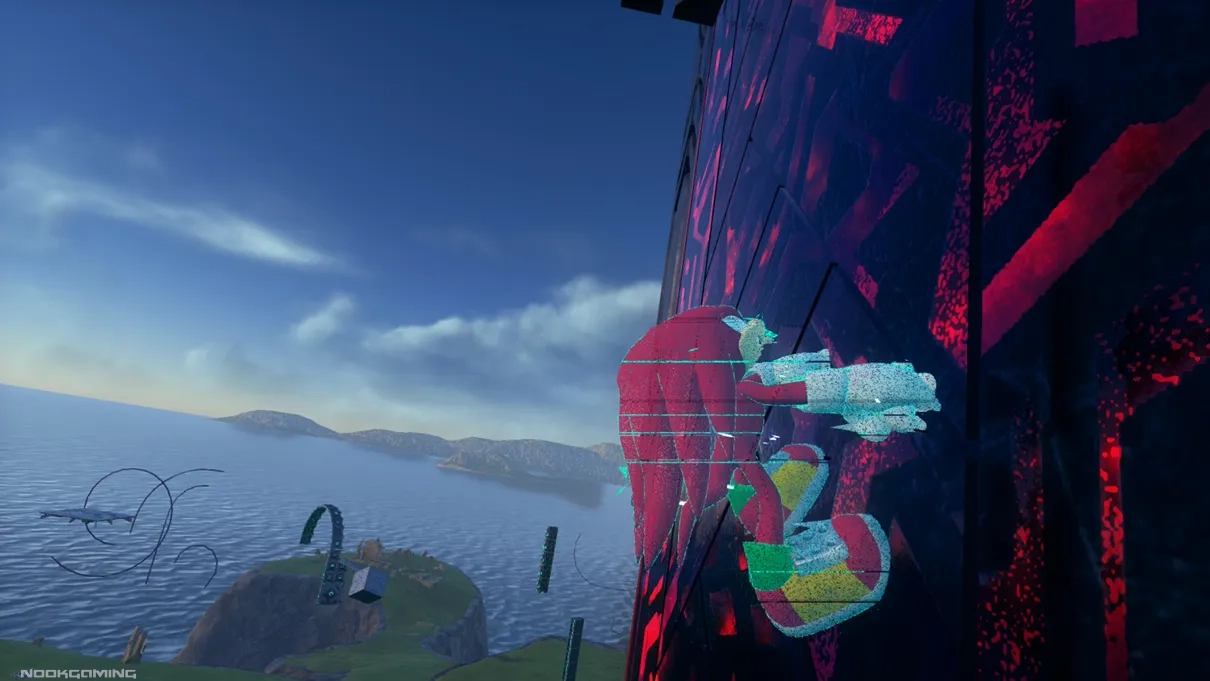
You’ll also notice earlier that I said “Sonic-related,” and that’s because The Final Horizon also adds Tails, Amy, and Knuckles as playable characters for the first time in a 3D game in about 15 years. Besides the fact that they cannot enter Cyber Space, they feel as feature-complete as Sonic, each having stats that need to be leveled up and distinct skill trees that give them access to unique abilities. This is alongside the things you would expect them to already be able to do. Knuckles can glide and turn quickly in the air, Tails can fly throughout the air, and Amy plays like a more user-friendly version of Sonic with access to a triple jump. They can also all perform the Cyloop like Sonic can, while also having their own unique versions of the instant Cyloop like Sonic. Tails shoots a Cyloop projectile, Amy uses her hammer to create a heart-shaped pattern, and Knuckles can perform his own while climbing up rocky surfaces.
They’re all fun to use, if massively overtuned. Tails in particular needed some reconsideration with his absolutely busted Cyclone ability, letting him fly in the air indefinitely if you remember to give yourself an infinite Boost meter first. It skips over a lot of platforming challenges with ease, which is a real shame when the level design this time around is much better than the base game’s offerings, being tailored for the Spin Dash (which is given to Sonic at the start if it’s not already unlocked). I also prefer how this side of the game is structured compared to the base game, with everyone needing to manually track down their next objective by filling out the map, done through completing missions and finding various Koco across Ouranos Island.
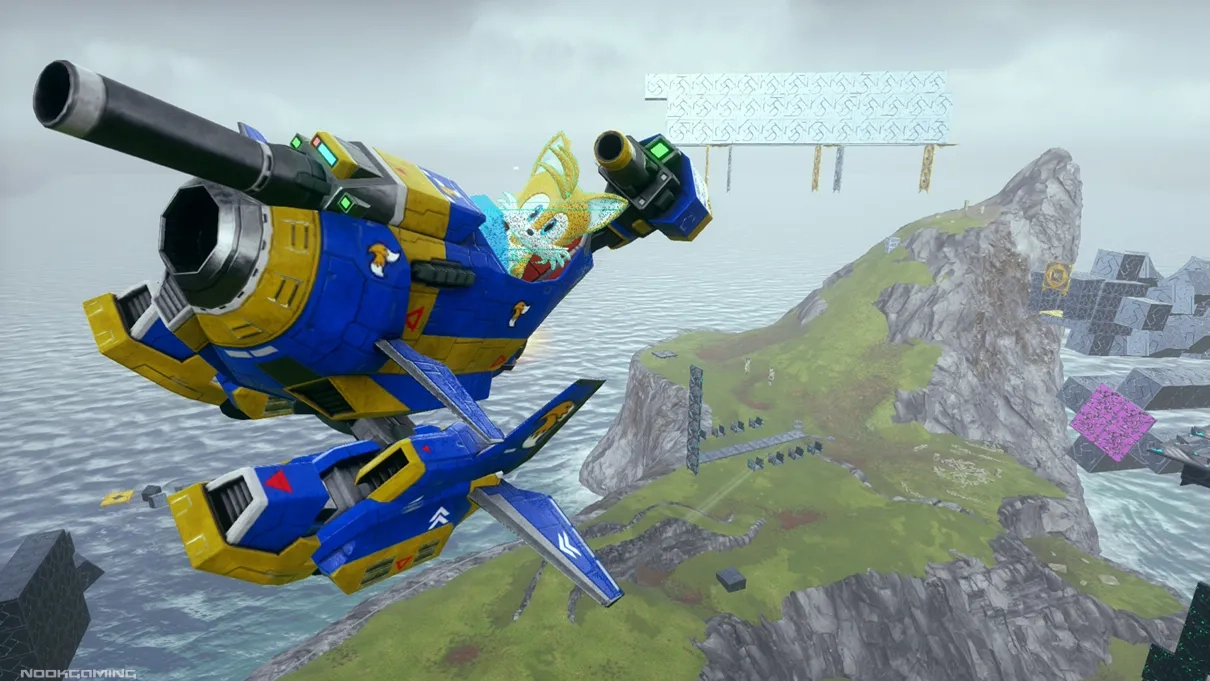
The nine new Cyber Space stages added here are also all excellent, being fully 3D and featuring some outrageous and distinctive gimmicks that make them more engaging to play, helped by being much more difficult in general. One stage may have low gravity while another may have you strapped to a bomb that’s constantly counting down; there are also ones where you race against a hologram version of Tails or others that have secret exits that need to be sniffed out. I’m hoping these levels serve as the benchmark for future 3D Sonic games, since I would daresay these are more engaging than what’s there in Shadow Generations. Overall, I really like The Final Horizon despite its almost comical lack of polish. It’s a much more involved endgame and writing-wise I think it’s an improvement too, giving everyone a chance to shine. It’s also quite long, with full map and Cyber Space completion adding a decent 8 to 10 hours of extra playtime.
“Definitive” Edition
The Switch 2 conversion of Sonic Frontiers is a bit disappointing in its general quality. While it’s far from the worst port ever, given the impressive scale and quality of titles that have hit the Switch 2 while also just looking better than Frontiers at a baseline, it’s a shame that it couldn’t do more than just this. Even compared to other Switch 2-specific Sonic conversions like the superb port of Sonic Racing: CrossWorlds (which runs at 1440p/60fps) and the generally good quality of Sonic x Shadow Generations’ port, it perhaps says something about an unpolished technical backend that Frontiers – Definitive Edition is the way it is. To be clear, it is still worlds ahead of the awful Switch 1 version, which looked like it was hacksawed in an attempt to run on the thing, and it’s better than last-gen conversions on PS4 or Xbox One.
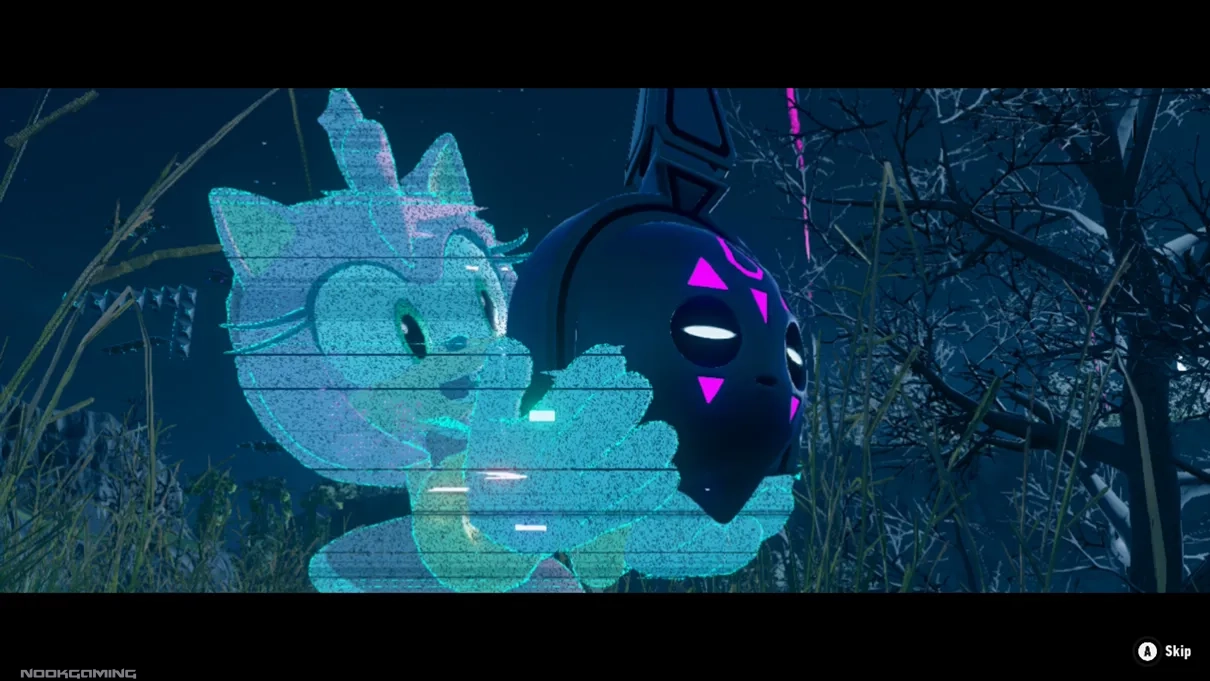
When playing in docked mode, Quality Mode looks very sharp and it comes with all of the same assets and graphical effects as the current-gen versions at a reasonable 30FPS cap that seems largely consistent. Performance Mode comes in at a much lower resolution and looks a bit fuzzy on most displays, and some graphical effects are removed, though general players are not likely to notice this in the midst of play. It’s reasonable for what it is, and is roughly in line with what I experienced in Shadow Generations’ Performance Mode on Switch 2. Where things start to get rough is during handheld play, which has a stable Quality Mode but a rough Performance Mode. Although the framerate is consistent, the resolution can take a major hit in areas with lots of foliage, a problematic notion when three of the game’s five islands are mostly grasslands. On Ares Island and Chaos Island, the result is far more reasonable.
Elsewhere, the lack of changes and improvements is disappointing. While pop-in for aerial objects has been improved dramatically over the other versions, it’s still a mess in other places. Enemies, foliage, objects, and so on will appear out of thin air, and in some cases that can outright impede play. It’s also disappointing that the game’s various issues with wonky collision and hit detection weren’t addressed even in places where it can really hurt play. Overall, this version is absolutely an improvement over past-gen versions and especially the Switch 1 iteration of Frontiers, but it’s not quite as good as I feel it ought to be.
Verdict
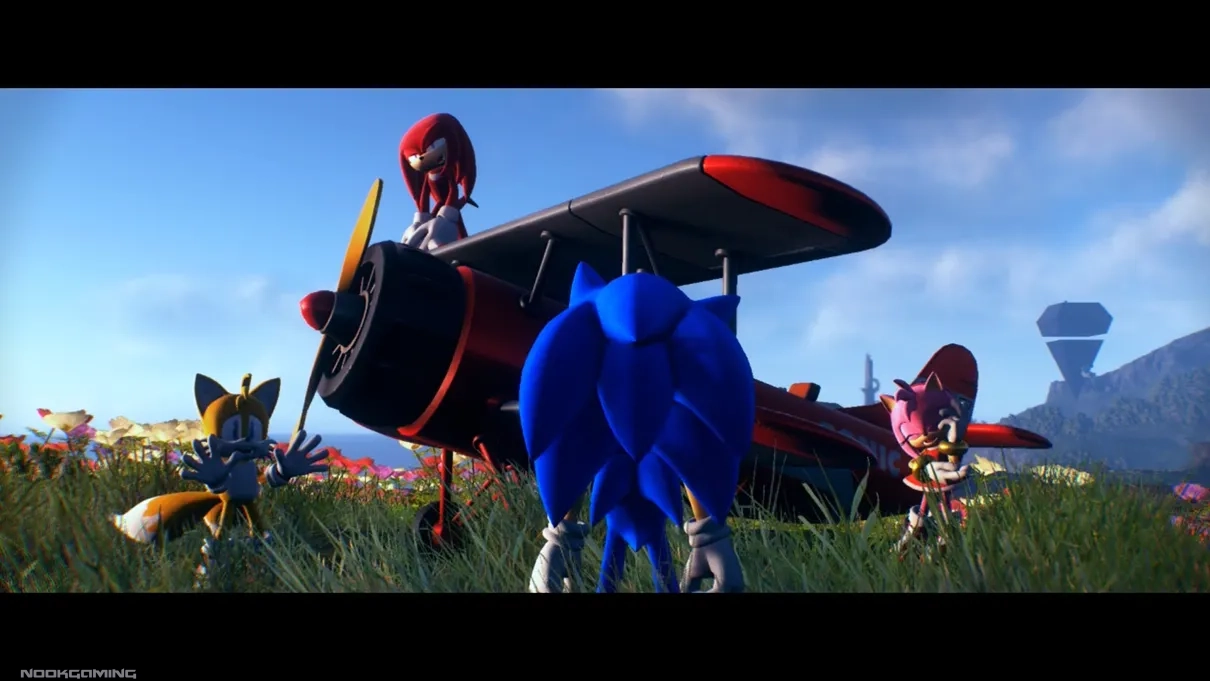
While Sonic Frontiers – Definitive Edition is absolutely a misnomer, it’s a fine way to play the game if you haven’t already. The updates it has received since its initial release in November 2022 make the game worth revisiting, with lots of new content that’s fun to play even if they don’t necessarily fix any of the game’s more foundational problems. There’s a good game to enjoy even with the warts present in Sonic Frontiers, but given the cynical nature of this version’s release, it’s hard not to feel like they should have gone harder in improving it. While I wouldn’t expect every problem to be addressed, things like fixed bugs and technical issues would surely have gone a long way in making a fun game even more easy to enjoy.
SONIC FRONTIERS – DEFINITIVE EDITION IS RECOMMENDED

If you are looking for another Nintendo Switch 2 game, check out our review of Star Fox (2026).
Many thanks go to Sega for a Nintendo Switch 2 review code for Sonic Frontiers – Definitive Edition.

A hobbyist who took up the pen to write about their favorite pastime: games. While a lover of many genres, Isaiah Parker specializes in Platformers, RPGs, and competitive multiplayer titles. The easiest way into his heart is to have great core gameplay mechanics. Self-proclaimed world’s biggest Sonic fan. Follow him @ZinogreVolt