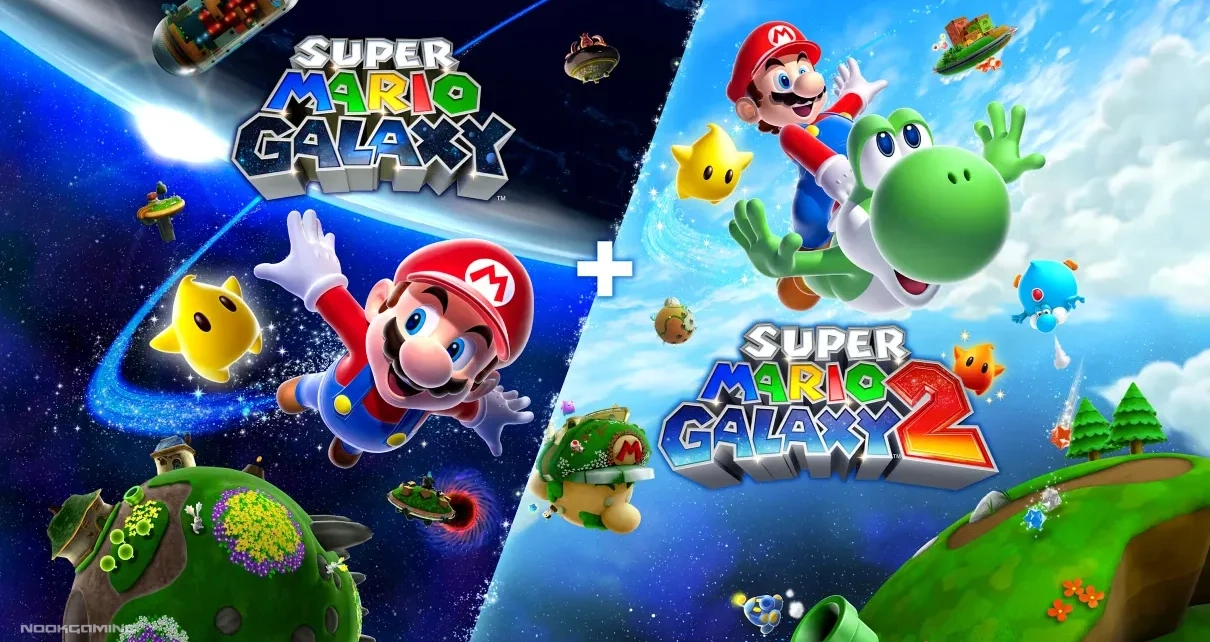
Super Mario Galaxy and its sequel are games that hardly need any introduction. Both released back on the Wii and were immediately hailed as some of the greatest games ever made thanks to a combination of inventive platforming, excellent presentation, and tasteful motion control implementation. While the series has since moved on from those games, its influence is still plainly felt in current mainline titles. The first game saw a re-release as part of the now delisted Super Mario 3D All-Stars collection, but the second game languished on its original hardware and Wii U digital storefront before now. With all that being said, both games are back with brand new remasters on Switch in Super Mario Galaxy + Super Mario Galaxy 2.
Phone Home, Mario
The core gameplay of Super Mario Galaxy doesn’t change much between games, so I’ll talk about both here before going into the nuanced differences between the two of them. Super Mario Galaxy 1 + 2 were, at the time, a notable departure from the previous two 3D Mario platforming outings (64 and Sunshine). Rather than have the focus be on large sandboxes and an explorable hub with lots of secrets, they focused more on linear platforming with a greater emphasis on gimmicks and setpieces. Like in Super Mario 64, your objective in each stage is to complete a given challenge and grab a Power Star that will help you progress. You’ll do this through platforming and doing most of the things that Mario does without introduction. Mario can jump, triple jump, long jump, wall jump and perform a spin with a lot of grace as you traverse over a wide range of obstacles of enemies.
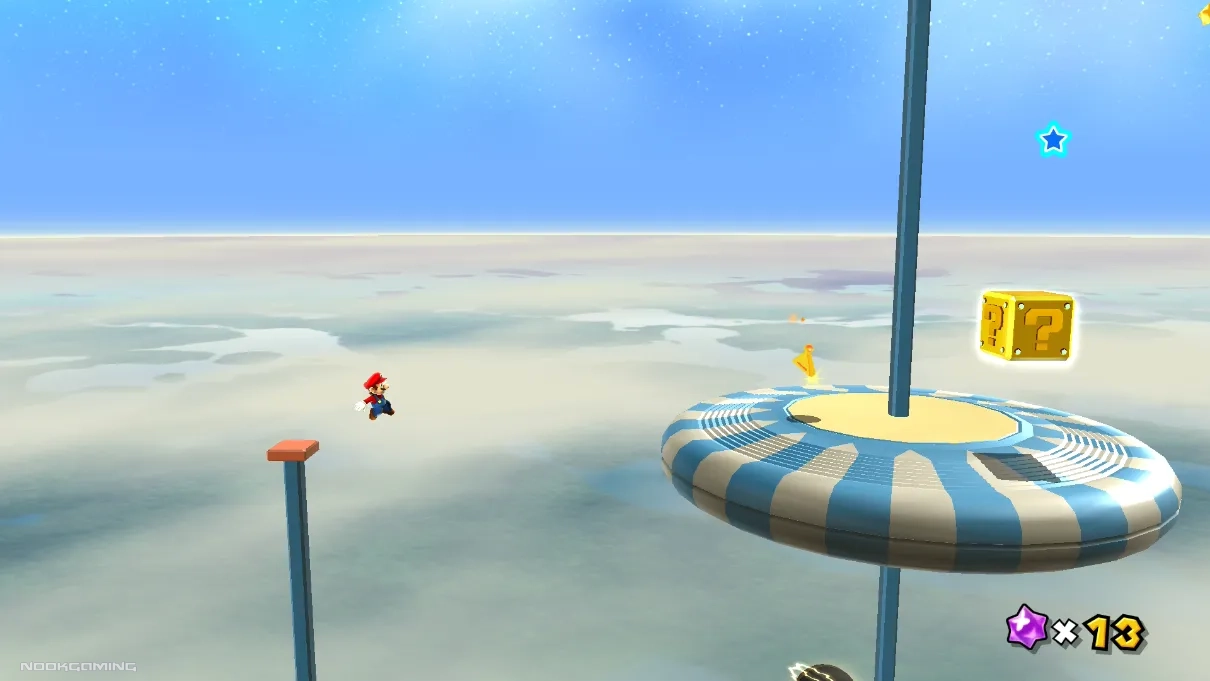
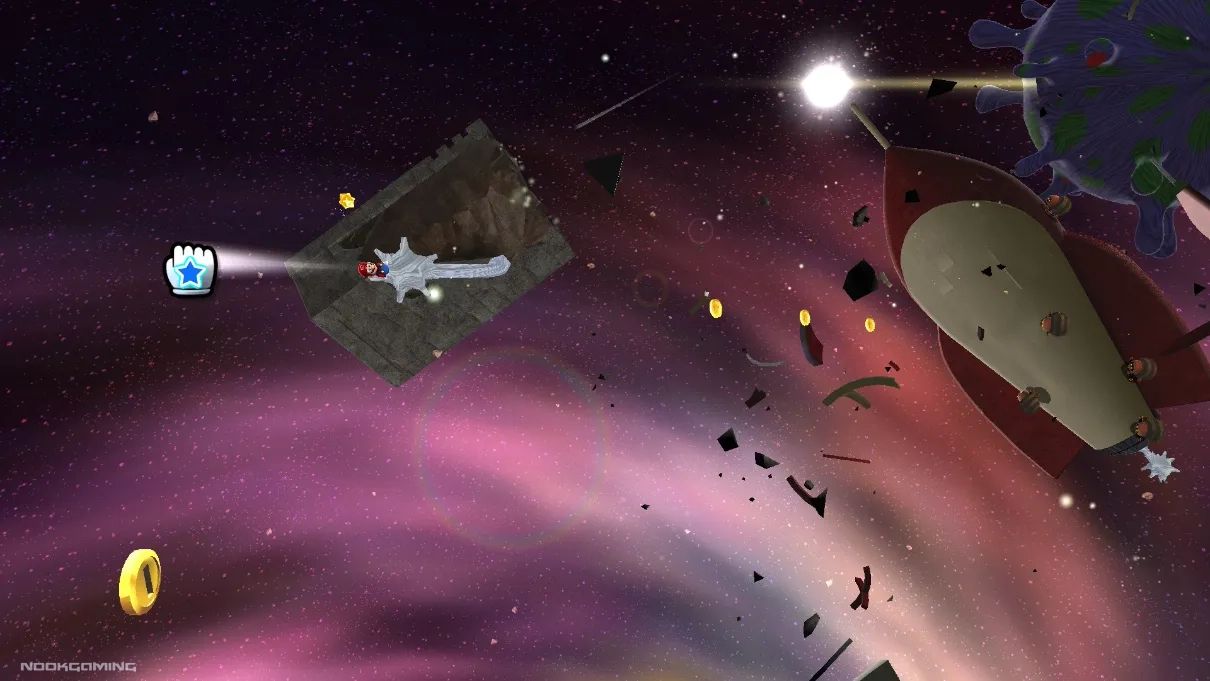
Super Mario Galaxy 1 + 2 also implemented heavy use of motion control. Many actions throughout the game involved either shaking the Wiimote or using its infrared (IR) pointer to do a lot of different things. This could involve using the pointer to pick up distant or nearby Star Bits (a secondary currency used to unlock some extras), or using the pointer to drag Mario into nearby Blue Stars and fling him from floating space debris. Here on Switch, the general principle is the same. You still shake the Joycons to spin or perform shake-based actions, and you use their gyrometers for the pointer controls. Although typically I balk at motion controls in games with fine precision, Mario Galaxy’s floatier gamefeel allows for greater room for error. It’s a lot easier to feel like it’s my fault if I screw up a jump when I can use a spin for extra height to save me. While this has the knock-on effect of occasionally making the game feel sluggish, it is for the most part a success.
This is thankfully also complimented by what is, rather consistently, top-of-the-line level design. Levels are quite varied in scope and have fun associated gimmicks, and some contain creative applications of power-ups too. Many levels also have hidden Power Stars (the main objective) via bonus challenges that are off the beaten path or ask the player to fulfill a niche objective. For example, smashing through a golden Chain Chomp in Gusty Garden Galaxy by doing some well-timed spins as you hold onto giant dandelions. Or in Beach Bowl Galaxy, you might instead have to take a Koopa shell and use it to open up a treasure chest on a completely different part of the level. What’s impressive about all this is not just the quality and variety, but the quantity. There’s a lot of things to do and see, and because of the rather generously low number of Power Stars needed to beat both games, you technically don’t need to see many of them.
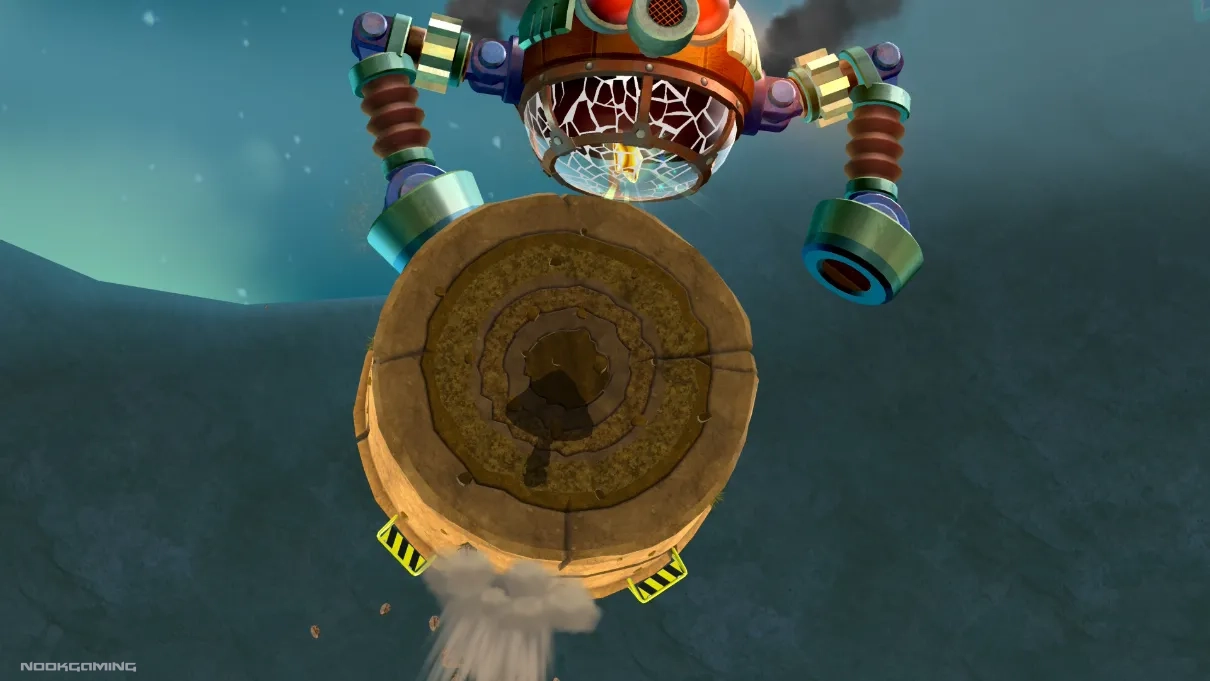
This also extends to the surprisingly numerous bosses in both games. Each Galaxy usually has one or two bosses waiting to be beaten, and they too are fun thanks to a nice mixture of using associated level gimmicks and simply being fun to stomp on. The fights with Bowser and Bowser Jr. scattered throughout both games in particular are very strong, combining epic music and scale with simple but clever attack patterns. All in all, both games pack variety, quantity, quality, and confidence in spades. Compared to 64 and Sunshine, these games felt and still feel a lot bigger and more polished.
Plumbers Can Breathe in Space
Broadly, the differences in both Super Mario Galaxy games boil down to scale and different level gimmicks. Galaxy 2’s levels are generally larger, longer, and more complex. It also has a noticeably sharper difficulty curve compared to the first game, utilizing power-ups old and new in ways that are more demanding and creative. Levels are also generally laid out in ways that are more challenging, with there being more bottomless pits or instant death traps compared to before. Both games also come with a heavy emphasis on utilizing gravity, as you hop from planetoid to planetoid and run around them to find secrets and the way forward. During 2D sections, gravity may yet further be defied as you run across ceilings and walls, needing to pay close attention on how to interact with platforms and when to time jumps.
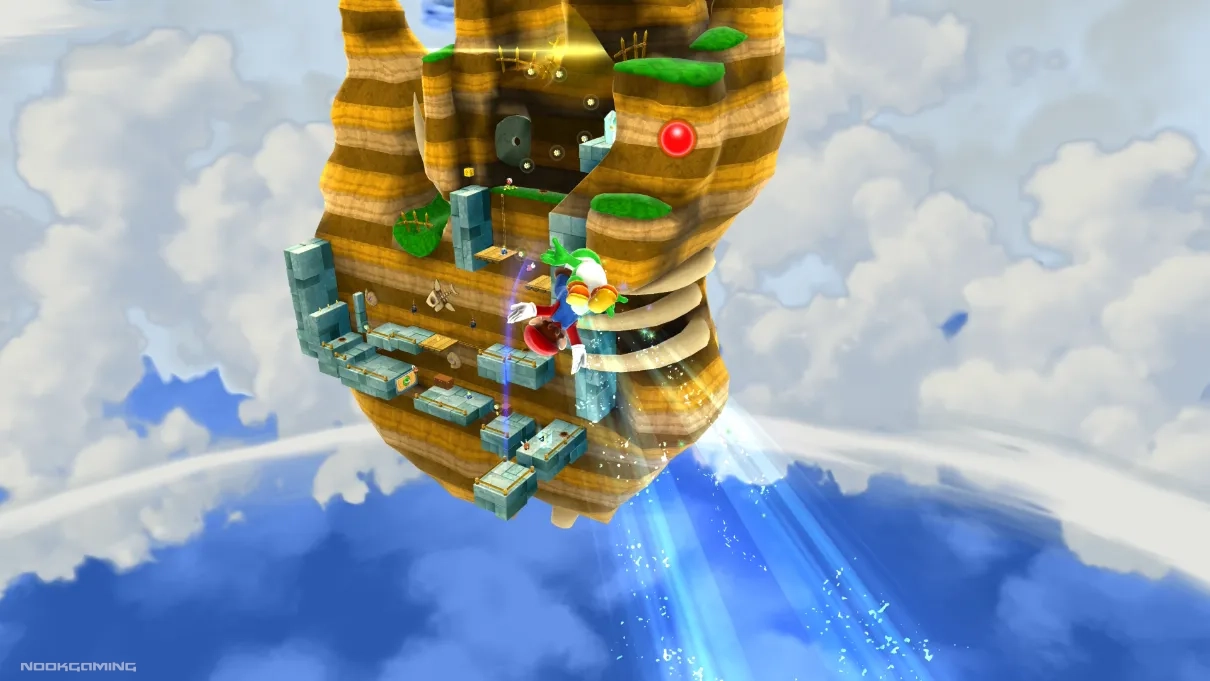
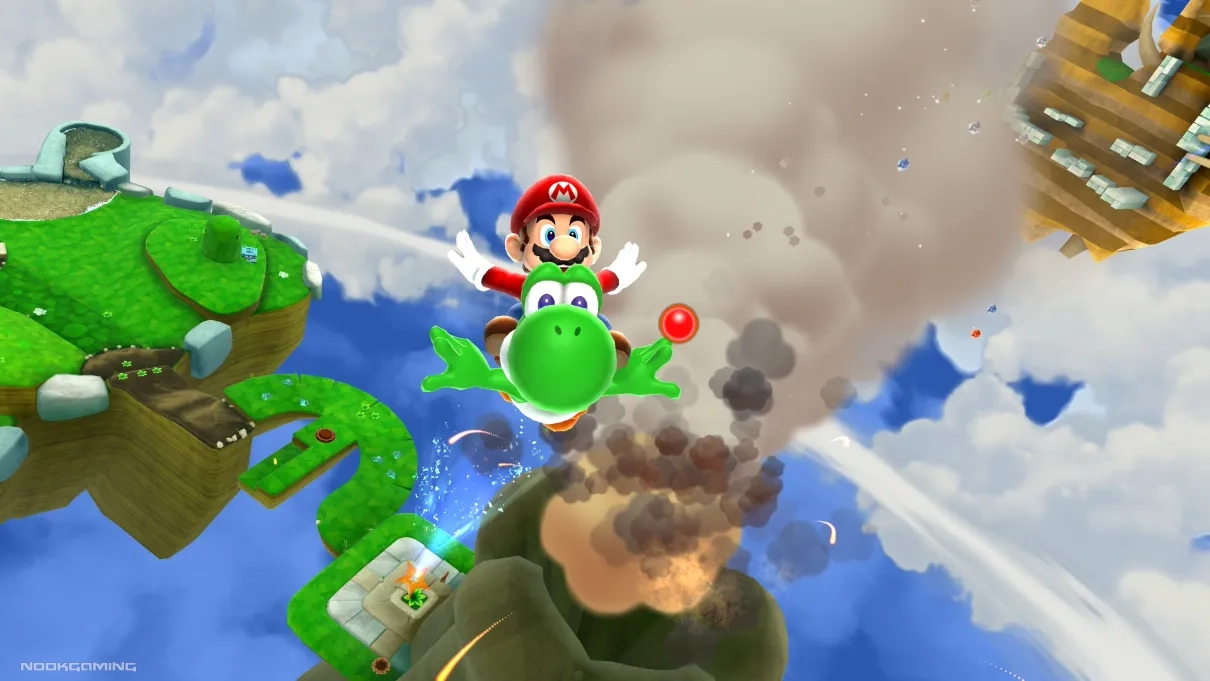
It’s all brought together quite beautifully thanks to its variety. Levels can either be somewhat large and more exploration-focused, or they can be smaller and much more linear. This is opened up even further with the introduction of Yoshi in Galaxy 2, who is rather brilliantly implemented. Like in Super Mario World, Yoshi acts as a sort of extension to Mario. He can eat things that are normally hazards, he can grapple onto distant objects to push and pull them, and he has his own set of power-ups that spice up the gameplay too. My favorite of his power-ups is the Dash Pepper, which has Yoshi dashing across walls at high speeds to reach different parts of the level.
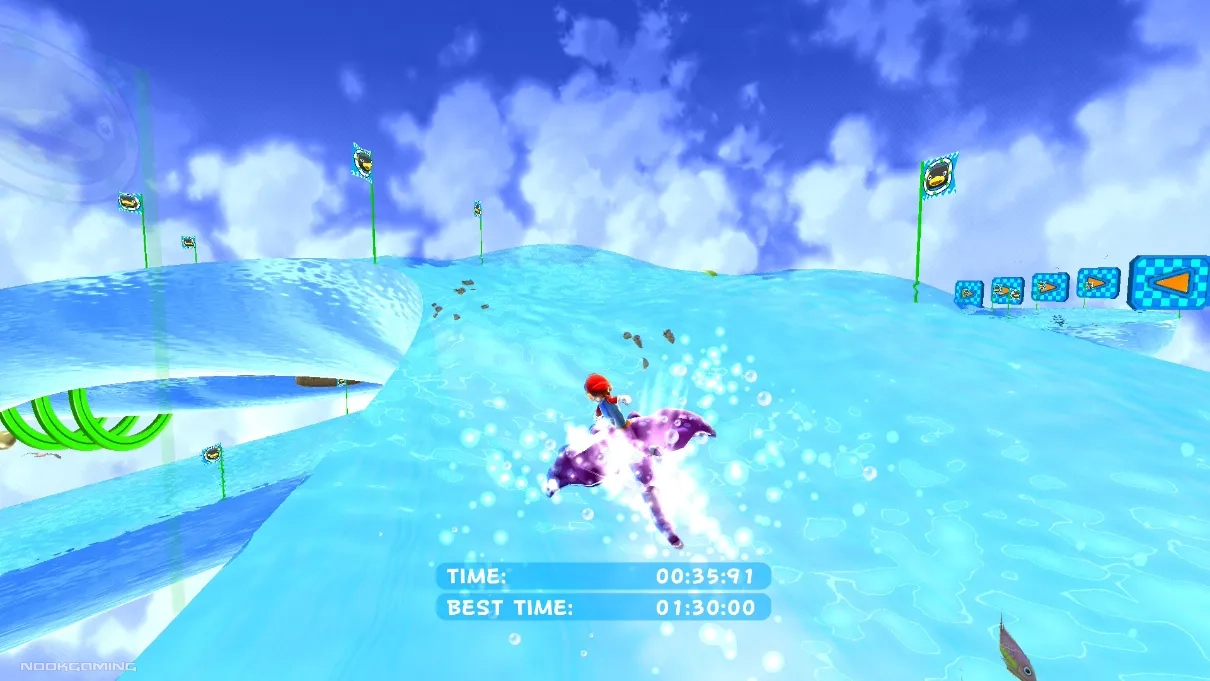
Broadly, I would say I am happy with the new power-ups, but some are definitely left underutilized. Boo Mario from Galaxy 1 is barely ever used in the game, and in Galaxy 2 it’s used a grand total of once. Others like Cloud Mario, which lets you make a limited number of platforms with a spin, get a much better workout. It’s definitely a case of having too many cooks in the kitchen, as some leave something to be desired because of how they don’t really get a proper rise and climax in level design or usage. This also applies to some of the motion control based minigames, some of which (like the Manta Ray surfing) you only do once or twice across both games. I can appreciate the constant barrage of variety, but it does slip into not letting interesting creative ideas properly simmer.
Red Caps in the Final Frontier
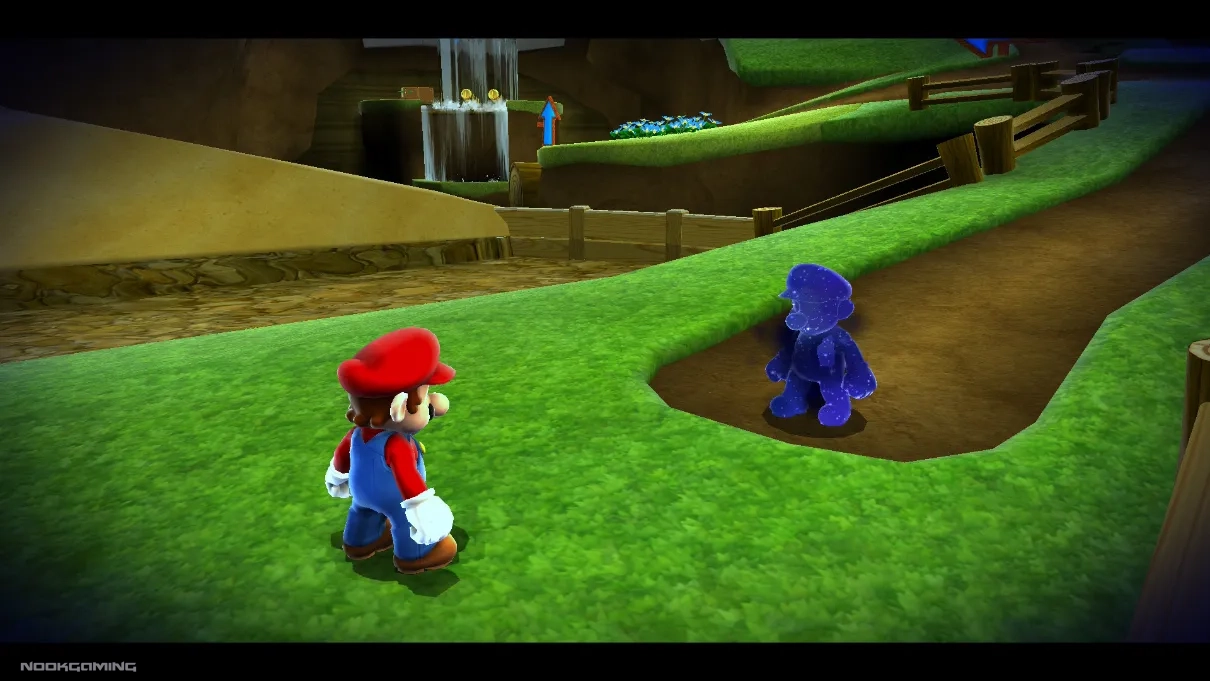
Super Mario Galaxy + Super Mario Galaxy 2 each have a good amount of extra content, usually in a more difficult form found later in the game. The first is through Prankster Comets, special comets that pass over different galaxies and cause different effects that change how you play through a familiar level or boss. Bosses may require you to beat them in one try, you may have to beat a familiar level under a strict time limit, or you might have to race a clone towards one of the stars. Your reward for doing these are, of course, extra Power Stars. I’m mixed on these because they walk a fine line between feeling like sufficiently remixed content and feeling like padding that just asks me to do the same thing again with little real difference. The speedrun-based ones I especially wasn’t very fond of, since they were too generous with the amount of time they gave me to feel any real sense of pressure. Others, like the Cosmic Clone gimmick in Galaxy 2, felt a lot more effective at feeling different.
Both games also feature storybooks, adding some lore and background to the stories of each game. Galaxy 1 already had this, but there is a brand new chapter added in this remaster, while Galaxy 2’s storybook is wholly new and gives some background to characters like Lubba. These are a nice, strangely sincere splash of melancholy and emotion that Mario tends to buck until it’s time for the credits to roll. Combine this with my earlier thoughts on Galaxy 1’s presentation, and I think it creates a strong sense of pathos that’s still unlike anything the series has done since. Galaxy 2 isn’t quite as elevated with the new storybook, but I think it’s still appreciable and has some interesting lore implications and reveals.

After completing both games, you’ll unlock quite a bit of extra content to keep you busy. After completing the first game with 120 Power Stars, you’ll unlock Super Luigi Galaxy, letting you play the whole game again with Luigi who controls differently. In the second game, completing the entire thing with 120 Power Stars will unlock an additional 120 Green Stars, which are hidden throughout every main stage. Green Stars have the same problem as the Prankster Comets, where they teeter a very fine line between feeling like new content and feeling like repeats. Green Stars can be especially egregious in the repetition department, as some are placed directly next to the locations of regular Power Stars.
Finally, there are the super-tough bonus levels awaiting players who’ve gone out of their way to do everything. These levels are long and brutally challenging, testing the player in just about every gimmick both games have to offer them. I think these are so good that it makes the process of 100%ing both games completely worth it, and they serve as excellent capstones to both experiences. It’s not any wonder why this wound up becoming a regular thing for 3D Mario moving forward.
Aged Like Wine
Both Super Mario Galaxy games were always considered graphical hallmarks for the Wii, having vibrant colors topped with expressive visual and character design. Compared to Sunshine and 64, it’s a massive step up in presentation owed to a greater sense of cinematic flair and polish found in smaller details. Even the way Mario simply moves around looks great, with him reacting to everything in gameplay or cutscenes with an appropriate sense of weight and panache. Thanks to this, there’s an excellent sense of grandiosity to both Super Mario Galaxy games that fit the space theme quite excellently.
This also extends to the now-legendary soundtracks of both games, which often utilize full orchestra. Everything under the sun has been said about the music of Super Mario Galaxy 1 and 2 already, so I’ll say that every compliment they’ve received over the years is fully warranted. The way the orchestra tends to build over the course of the game and align with Mario’s actions gives the games a sort of romantic quality. This can be the way music starts up in time with the way Mario lands in a new galaxy, to how the hub worlds of both games steadily build up and add more instrumentation as you make progress through them. As is also typical of Mario music, Yoshi has some fun instrumentation of his own added to every song when you’re riding him through a level. It’s wonderful stuff.
The music when combined with the sense of color and tone makes Galaxy 1 especially stand out in my eyes. Galaxy 1 had a sort of lonely, often melancholic atmosphere that fit the space theme very well. While I rarely felt that Galaxy 2 didn’t have the better level design and gameplay between the two, I often bemoaned that comparative lack of emotion. It’s much more video game-y than Galaxy 1, which is to say it’s much less occupied with sucking you into its mood and world than it is in simply delivering fun gameplay. While this is expected of Mario as a brand, it’s disappointing when it’s specifically a sequel to Galaxy. Rather than broaden that sense of emotion that Galaxy 1 tended to elicit quite well, Galaxy 2 simplifies things in a bid of what I felt was a short-sighted concession to further broaden appeal.
As for how the remasters of Super Mario Galaxy + Super Mario Galaxy 2 hold up, the boosts to both resolution and texturing are significant, yet subtle enough to feel like the versions of Galaxy 1 and 2 that I imagined in my head as a kid. This is especially true on Nintendo Switch 2, where I conducted both of my playthroughs. There, both games run at a faultless and razor sharp 4K image at a locked 60FPS, with load times that are so brief that they’re practically eliminated. The improved gyrometers of the Switch 2’s Joycons also see a dramatic improvement to the game’s extensive use of motion control. While I wouldn’t say it feels quite as intuitive as the Wii pointer, it’s close enough to where I would say things never felt awkward. Though this only applies to Docked/Tabletop play, as playing on Handheld Mode or with a Pro Controller fares much worse. Super Mario Galaxy was arguably never meant to be played with conventional control setups anyway, but I still feel as if they could have made it feel a lot better than how it does right now.
Verdict
There’s not really much more that needs to be said about Super Mario Galaxy + Super Mario Galaxy 2, is there? Even now, they remain quintessential examples of Nintendo being masters of the craft. If you can swallow the hefty price tag, you’ll find that these are excellent ports that bring out these games’ full potential in both graphics and performance. While the control scheme in Handheld Mode is disappointingly finicky, Docked Mode and Tabletop Mode offer up experiences that feel nearly as good as they did back on the Wii. I think both of these games are must-plays if you enjoy 3D platformers. While I wouldn’t say Galaxy 1 warrants the extra purchase if you already own 3D All-Stars, definitely jump into Galaxy 2 if you haven’t already.
SUPER MARIO GALAXY + SUPER MARIO GALAXY 2 IS HIGHLY RECOMMENDED

Check out our review for Kirby and the Forgotten Land Nintendo Switch 2 Edition + Star Crossed World as well if you’re looking into 3D platformers for the Switch 2!
Many thanks go to Nintendo for a Switch 2 review code for Super Mario Galaxy + Super Mario Galaxy 2.

A hobbyist who took up the pen to write about their favorite pastime: games. While a lover of many genres, Isaiah Parker specializes in Platformers, RPGs, and competitive multiplayer titles. The easiest way into his heart is to have great core gameplay mechanics. Self-proclaimed world’s biggest Sonic fan. Follow him @ZinogreVolt