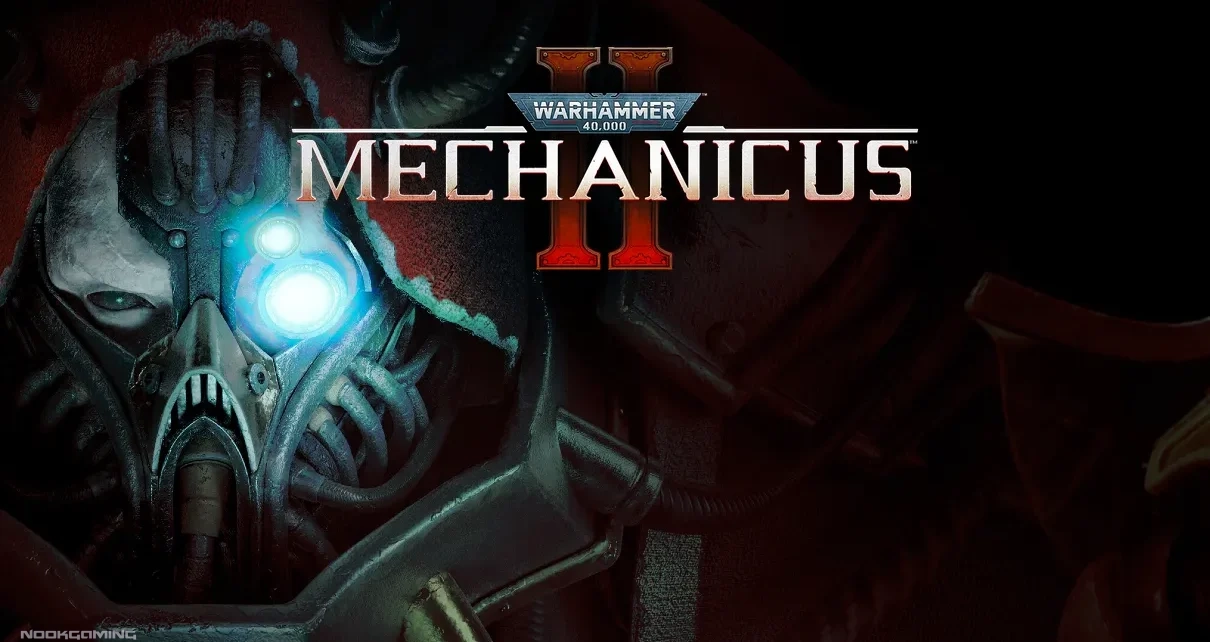
It’s once again time to delve into the reaches of the grimdark universe of Warhammer 40,000 (aka 40k), the ever-eternal field of battle. This time, we return with Warhammer 40,000: Mechanicus II, a follow-up to the extremely well-received Warhammer 40,000: Mechanicus. Can the Adeptus Mechanicus continue the momentum from their first skirmish, or have the Necrons downloaded their strategy?
Where Flesh Meets Metal
The story sees the Adeptus Mechanicus doing what they do best: raiding old tombs, finding old technology, and trying to adapt them to be used in the war against the Xenos. Naturally, while doing this, they accidentally awaken Vargard Nefershah, the elite bodyguard and trusted advisor of the Necrons’ Phaeron Sankhotep. For those less familiar with the long-running Warhammer 40k franchise, the Necrons are a somewhat ancient Egyptian-styled faction, only with a robotic aesthetic and god-enslaving abilities.
The Necron race is a force to be reckoned with. They are more-or-less ancient Egyptian Terminator-style robots with zero humanity and a passion for complete universe domination. Going face-to-face with them are the Tech-Priests and religious zealots of the Adeptus Mechanicus. It is just all-out war for complete domination of the planet, a conflict that could have lasting implications for the larger war effort.
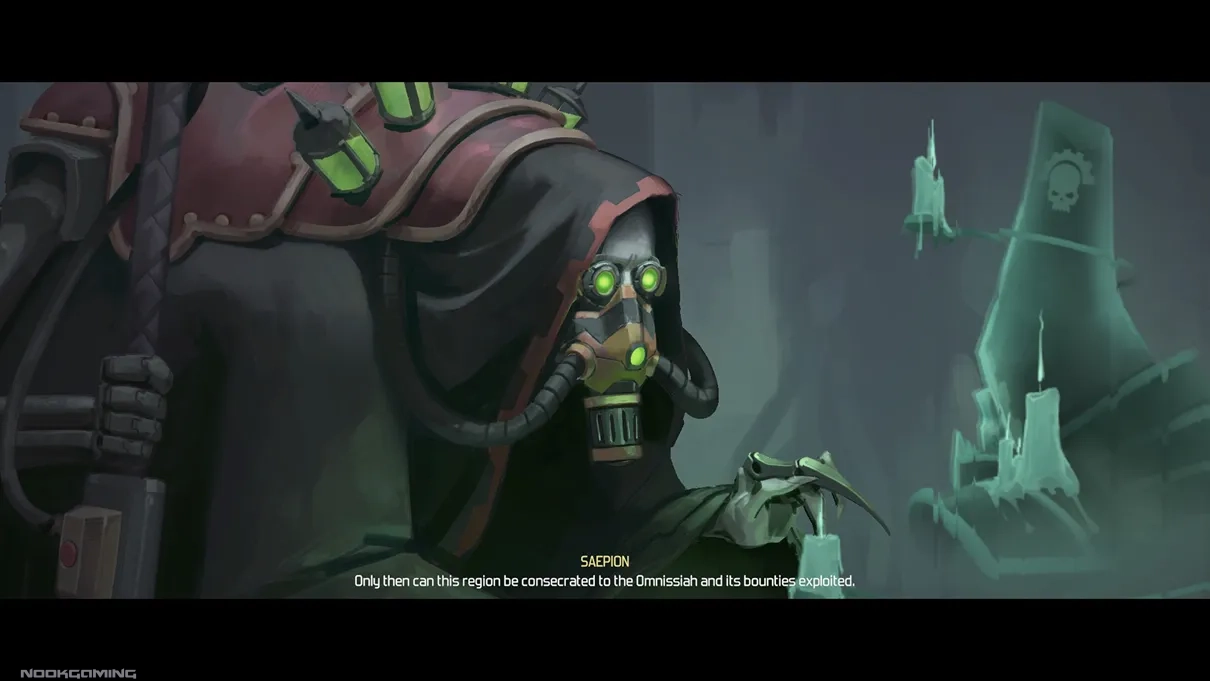
The narrative here is very much a “Warhammer-coded” story. It has the tone and dialogue that you would expect from the franchise, and it goes for a “fans need only apply” attitude regarding the nitty-gritty of what’s going on and why. The game is perfectly playable in terms of mechanics. However, if you are playing for the story, you will need a base knowledge at the very least to get anything out of it. For better or worse, the writing is aimed at 40k fans first and foremost.
If you are “in the know” when it comes to Warhammer 40k, even with some basic knowledge, there is an engaging story here. This is especially true because you can see both sides of the war: one perspective from the Necrons and one from the Adeptus Mechanicus. This perspective wasn’t available in the previous Mechanicus title, and it really leans into the many, many shades of gray that define Warhammer 40k.
War Table Time!
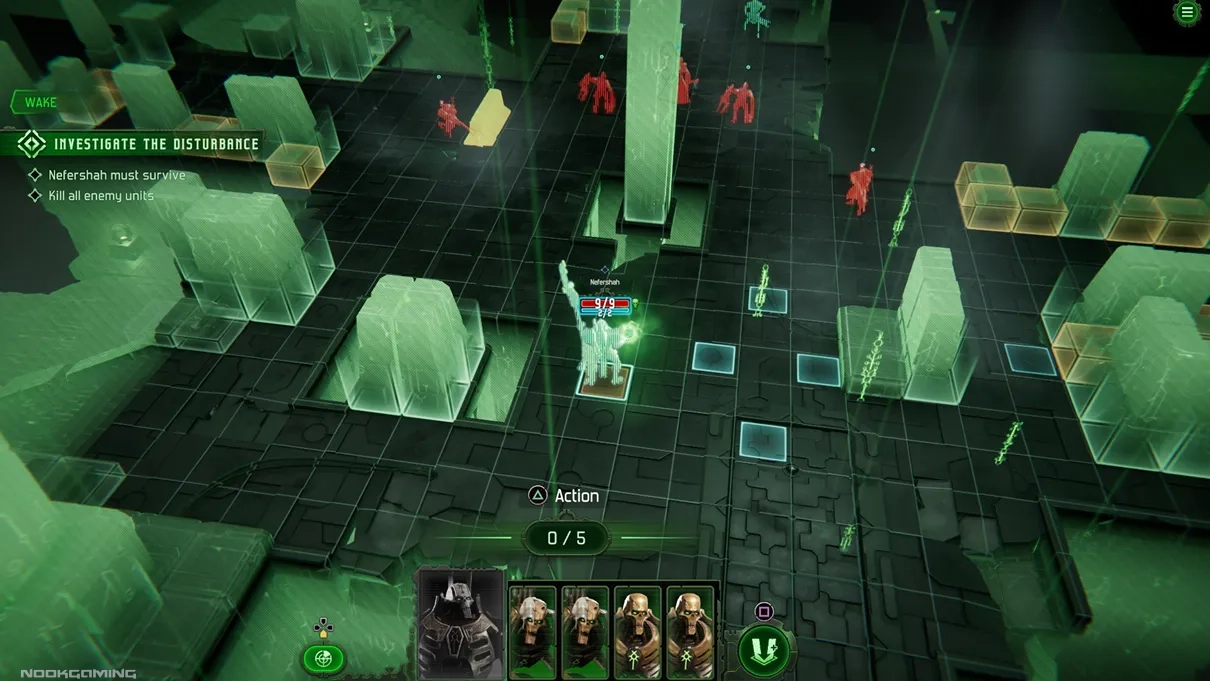
Warhammer 40,000: Mechanicus II is a turn-based strategy game, similar to XCOM or Metal Slug Tactics. There is a heavy focus on movement, taking cover where possible, and being slapped by the enemy for making the “wrong move.” You will easily suffer the consequences of a poor choice down the line.
The game controls well enough with a controller. PlayStation 5 isn’t my first choice for strategy games like this, but I would say it translates quite well (and it is available on PC if you prefer the mouse and keyboard). The turn-based speed of battles certainly removes the urgency that would come if the game were an RTS, for example. Outside of a few iffy inputs and losing the cursor a few times, it played really well on console.
Fights tend to boil down to a few objectives: kill all the enemies, escape, or survive for a few rounds. These can be changed at times with narrative choices you make before the battles. However, the game really hasn’t gained any new mission types since the original Mechanicus outing. While functional, it does mean the repetition kicks in quite quickly.
The balancing, much like Warhammer 40,000: Mechanicus, is still completely messed up in the early hours of the game. Once you get out of the first few hours with either faction, you have all the tools and then some to deal with everything the game throws at you with relative ease. In contrast, the initial few hours can be quite the struggle.
Fortunately, there are plenty of difficulty settings you can tweak to make the experience as easy or intense as you would like. There are a couple of preset modes, such as Narrative or Hard, but the sliders allow you to truly customise your campaign and get the most out of it.
Just Like the First
While very similar to the original Mechanicus game, this sequel has made great efforts to make the experience a little friendlier to players and streamline the process. It cuts out a lot of freedom when it comes to Tech-Priest builds, and it stops allowing you to choose your own path through tombs. However, it does provide a much smoother transition for players to really get stuck into the action, whereas the original was at times quite a tough one to initially break into.
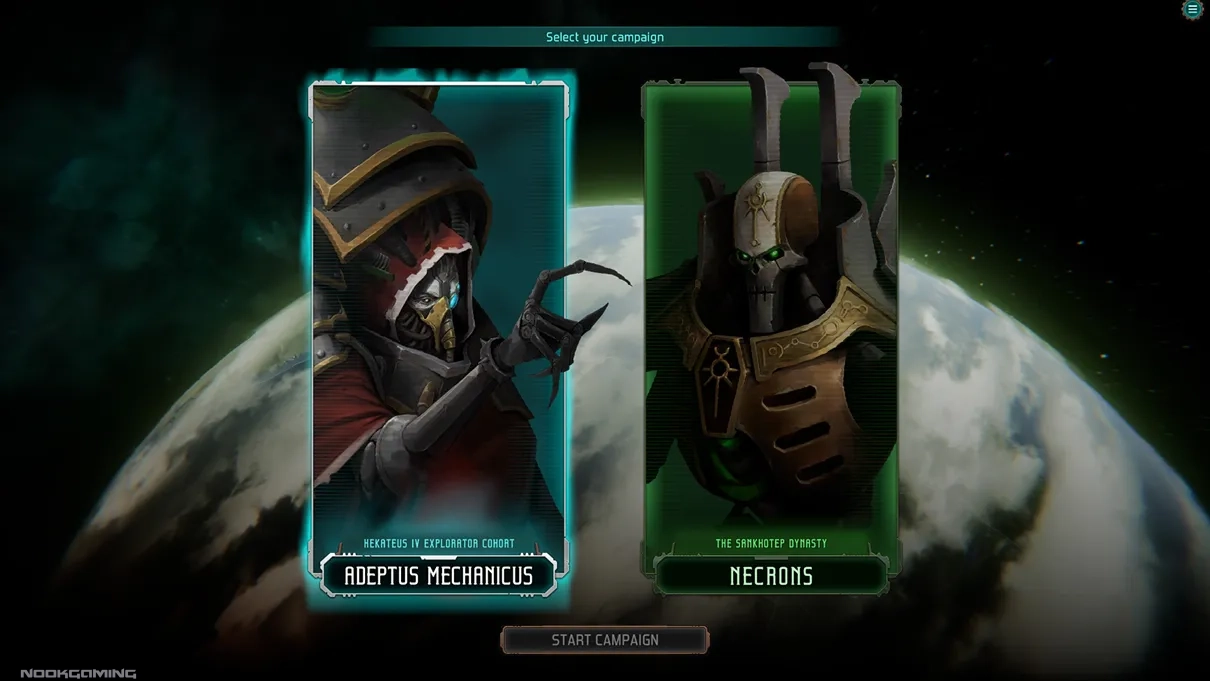
This is certainly helped by the fact that you can now play the campaign through as the Necrons, if you wish. Choosing this path offers a distinct gameplay experience, steering away from the mechanics of the fleshy Mechanicus. They also have plenty of nasty tricks to show the universe how it was once under their control, and why they were able to enslave gods. Change is good, and this was the first thing I did when given the option. I played the original game to death, so you know full well I wanted a taste of what handed me defeat many, many times in the past.
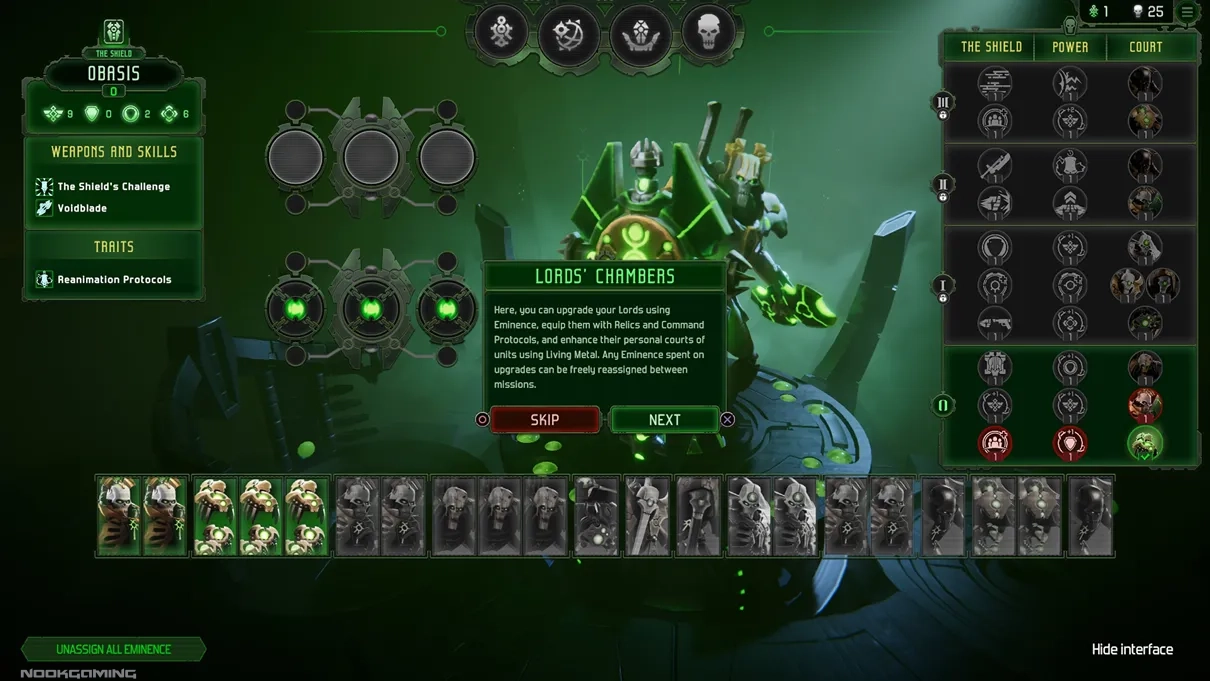
One of the more controversial streamlining features, I feel, is the fact that you have less freedom over how you develop your “hero” characters. The Tech-Priests and Vargards are now more neatly shoehorned into specific roles. While more newbie and casual-friendly, it does away with the flexibility to fully build your army the way you want, like in the original. It does allow for a little more creativity in how special “heroes” play, but it comes at the price of restriction.
May Look Larger In Rear View Mirror
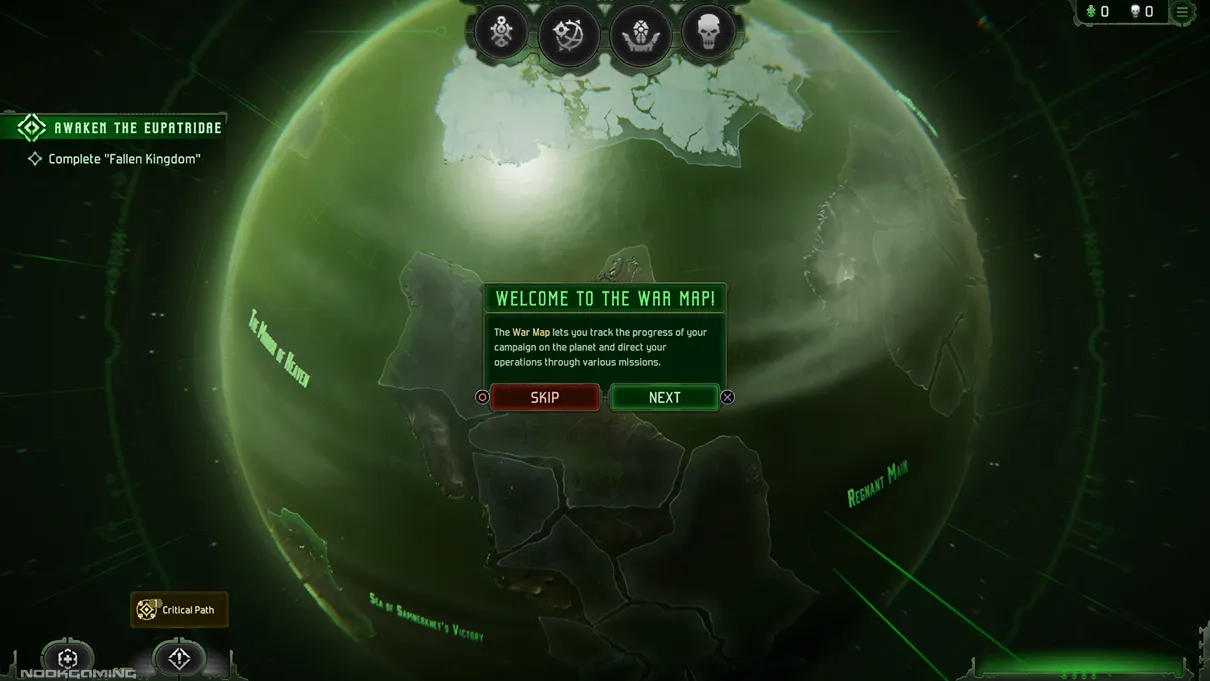
There is a rather deceptive illusion of scale with this game. While the original had you just picking from a mission list, this sequel features a world map. Initially, I was excited at the prospect of something more akin to a 4X strategy, but it wasn’t long until I noticed it was mostly window dressing. The map never really changed with wins or losses, and it just felt a little basic when compared to certain other Warhammer titles. I did appreciate that it was more than just scrolling through a mission log, but it felt like it could have been so much more.
That final statement could be the tagline for this game. Warhammer 40,000: Mechanicus II is a safe sequel that, while it restricts some freedom for the trade-off of being more accessible, doesn’t do enough to really stand head and shoulders above the original. The two factions are only slightly different, and the world map is shallow. While it’s done away with the pesky meter that would slowly build to your fight with the main threat, it doesn’t replace it with any mechanic of urgency, or anything that represents the scale of the world map.
I absolutely loved the original Warhammer 40,000: Mechanicus, and this game has all the same things I adored about it, but it doesn’t feel like a massive step forward. It feels more like a side step. Don’t get me wrong, I loved the fact that I can dominate the planet as the Necrons, I just needed it to have a little more to it. Larger-scale battles and more unit types were a good start, but the overall flow of the game isn’t quite the planetary leap I expected.
What A Paint Job
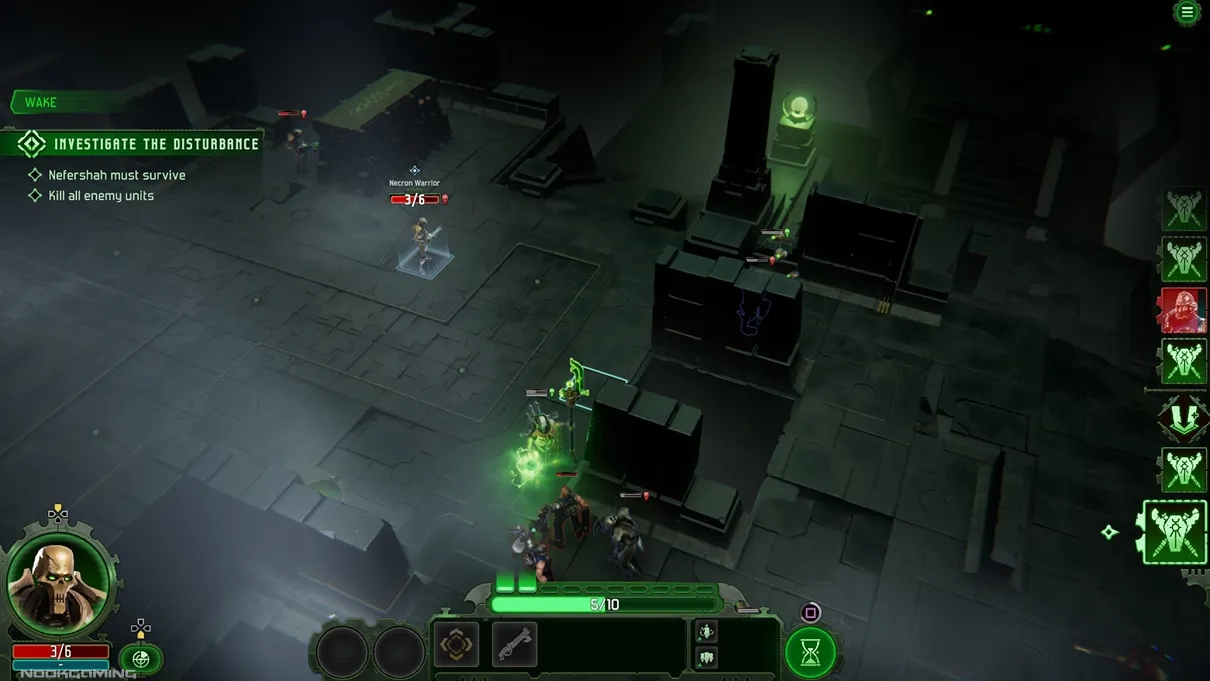
That all said, one area where it is notably different is the graphics. The game is such a step up in the visuals department; it’s astounding. While the original had a rather unique art direction and a Matrix-style green hue to it, this sequel really leans more into the overall style of Warhammer 40k as a whole. It foregoes the horrendous green glow and puts a lot of emphasis on the battlefields and the units throwing down on them.
The realisation that this game was throwing out the red carpet came a few hours in. After a few battles set in the familiar Necron Tombs, I found myself having to survive in a harsh jungle environment. This was uncharted territory for this game, but I loved it. The next mission was set in a bunch of ruins with an impressive electrical pulse piercing the very middle of the battlefield. I fell in love instantly.
What I didn’t love, though, was the toll it took on the performance. I chose to shoot at the obviously explosive barrels. They exploded, which caused the frames to drop to what felt like single figures and actually locked up the game for a few seconds. It put me in a panic state, thinking I might have to do this mission again. This happened quite a few times when stages had these effects on them, and especially when the larger unit counts would come into play.
The voice acting is a mixed bag. Some of the actors really lean into their grimdark alter egos, whereas others feel like they just turned up for the money and ran.
The soundtrack, on the other hand, much like the previous game, is a thing of beauty. It perfectly encapsulates the war through an absolutely mesmerising mix of synth and almost hymn-like vocals, perfectly pierced with organs. It absolutely nails the tone of Warhammer 40k and the ongoing skirmish between Necrons and Tech-Priests: technology vs. biology.
Verdict
Warhammer 40,000: Mechanicus II is a decent sequel, but perhaps it lacks the weight of being a truly worthy successor. While the streamlined mechanics and expanded scope don’t quite deliver that jaw-dropping “wow factor” needed to completely overshadow the original, it remains a thoroughly enjoyable experience.
If you loved the original or are a fan of the franchise, it is certainly worth a look. Playable Necrons alone make this worthy of a purchase, and the slightly expanded scope does present the potential of a much bigger game in the future, be it another sequel or even DLC. For me, it will keep me coming back for more and more despite some missteps along that sequel path.
WARHAMMER 40,000: MECHANICUS II IS RECOMMENDED
If you enjoy strategy games, then perhaps you’d like our review for Capes or Persona 5 Tactica.
Many thanks go to Kasedo Games for a PlayStation 5 review code for Warhammer 40,000: Mechanicus II.
Pride of utopia & greatest thing ever, I found the One Piece, Collected the Dragon Balls & won the Mortal Kombat Tournament in one night, it was quiet for me that night! Follow me on Twitter @powahdunk