Atelier Resleriana: The Red Alchemist & the White Guardian is a title that has generated considerable confusion. It promises us a return to ‘classic Atelier’ after Atelier Yumia changed up the formula quite a bit, and it follows Atelier Resleriana: Forgotten Alchemy & The Polar Night Liberator, which was a gacha game that was only available globally for about a year before it ended service. On top of that, it’s a crossover title featuring characters from all across the Atelier series, including Mana Khemia.
Understandably, people may not know quite what to expect from this JRPG. So, let’s dive in and get to the bottom of just what this JRPG is all about.
(Almost) Everyone Is Here
To preface this review, the nature of crossovers often expects that you’re familiar with the source material. While I do think you’ll get a little more out of it if you are, Atelier Resleriana: The Red Alchemist & the White Guardian is a standalone title and can be played as such.
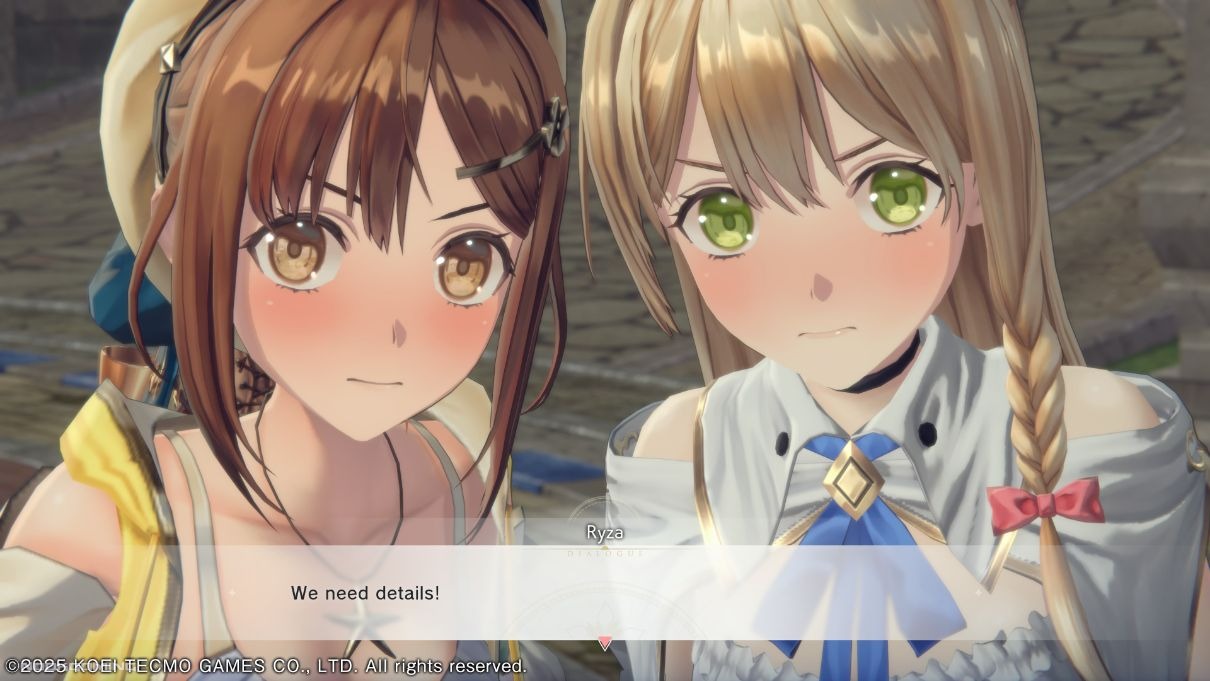
We meet a lot of characters from other titles, but it’s the first time that our dual protagonists have met any of them, so they each get introduced as such. There are quite a few references to the events of their own games, but these tend to be framed as the characters talking about them to people from other worlds rather than expecting the player to know anything. If anything, I imagine there’s some intention to try and tempt the player into picking up the titles, or at least those which are available. After all, a lot of Atelier fans started with Atelier Ryza and haven’t dived into the earlier ones like Atelier Rorona or Atelier Ayesha.
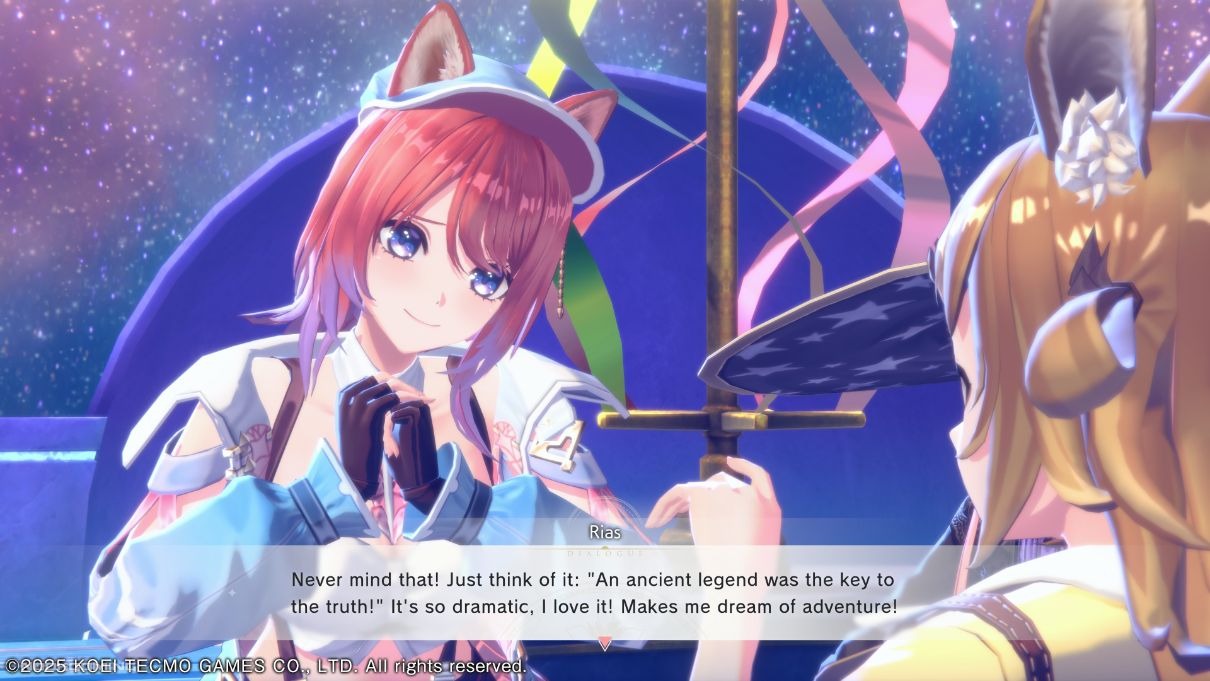
In relation to Atelier Resleriana: Forgotten Alchemy & The Polar Night Liberator, while The Red Alchemist & the White Guardian takes place in the same world, this is a separate story that takes place afterwards. The events of the gacha game are referred to and have a slight connection to the current story, but are not focused on. The protagonist of that game only appears a few times, if sometimes at key moments. It’s actually kind of a pity, as she’s a bundle of positivity, and it’s pretty cute to see her get excited about Rias learning alchemy.
Characters not appearing much is a key point too. Four of the six party members are from other titles and get quite a bit of screentime accordingly. Several other characters also make appearances in the story occasionally, including some fan favorites. However, most only get what are essentially cameos, with a short unvoiced quest to complete in exchange for items. A handful of the cameos are even from characters who’ve never appeared in Atelier titles which are available in English.
In short, there’s no need to play the other games before you play Atelier Resleriana: The Red Alchemist & the White Guardian. Those who have will probably have some added appreciation of the occasional scenes with characters from different worlds, like Ryza, Sophie, and Totori all chatting about silly things, but those who haven’t will likely enjoy them too.
That said, I still recommend Atelier Ayesha as the best starting point for those willing to dive in the deep end and Atelier Ryza for those who want a modern Atelier experience.
Chasing Legends
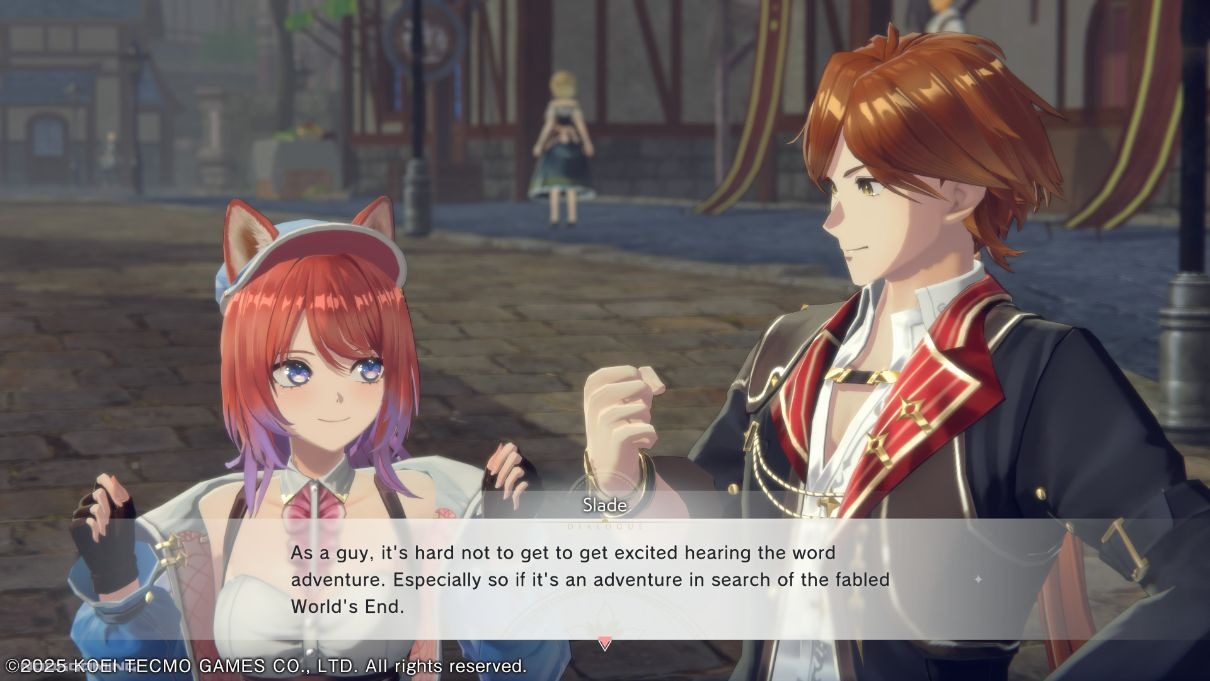
Atelier Resleriana: The Red Alchemist & the White Guardian focuses on two protagonists, Rias and Slade. Or at least it intends to. I found that Rias felt like the real protagonist, whose eyes we see the story through, while Slade was secondary.
Both recently returned to Hallfein, a town that is barely a step away from being in ruins after a mysterious disaster that occurred twelve years ago, where they lost people important to them. They’re both chasing the truth of what happened that day, and the town’s recent reopening has led them there.
While exploring some ruins, they run into each other and discover an Atelier (a word typically meaning workroom or studio, but also a place where characters do their alchemy in this franchise). Mana has been absent from this world for a long time, but Rias somehow senses that the cauldron here still contains some. Without knowing how, she somehow performs alchemy in a world where it’s now almost impossible. Not long after, they find a connection to a book in Slade’s possession, which is slowly revealing more information about the past as they explore small dimensions accessed through portals in the Atelier.
This sets them on a journey together to learn more about alchemy, the book, and just what happened in the past. All while working together with everyone to restore the town that they both love.
Past and Future
While the tone of the game is very lighthearted most of the time, the core of it is quite serious. Both Rias and Slade have lost people and have very different takes on how to move on from that.
Rias is an adventurous and energetic girl, prone to rushing forward before thinking. She has her eyes set firmly on moving forward and creating a better future. She’s positive and happy most of the time, if with more introspective moments on occasion. My first impression of her was that she feels a little similar to Ryza, perhaps being modeled after the protagonist of the most popular title in the series.
Slade, on the other hand, is a more serious guy who reflects on the past to the point that he feels stuck in it. He can come off as a little cold at first, but he soon warms up and always ends up helping Rias and anyone else who asks.
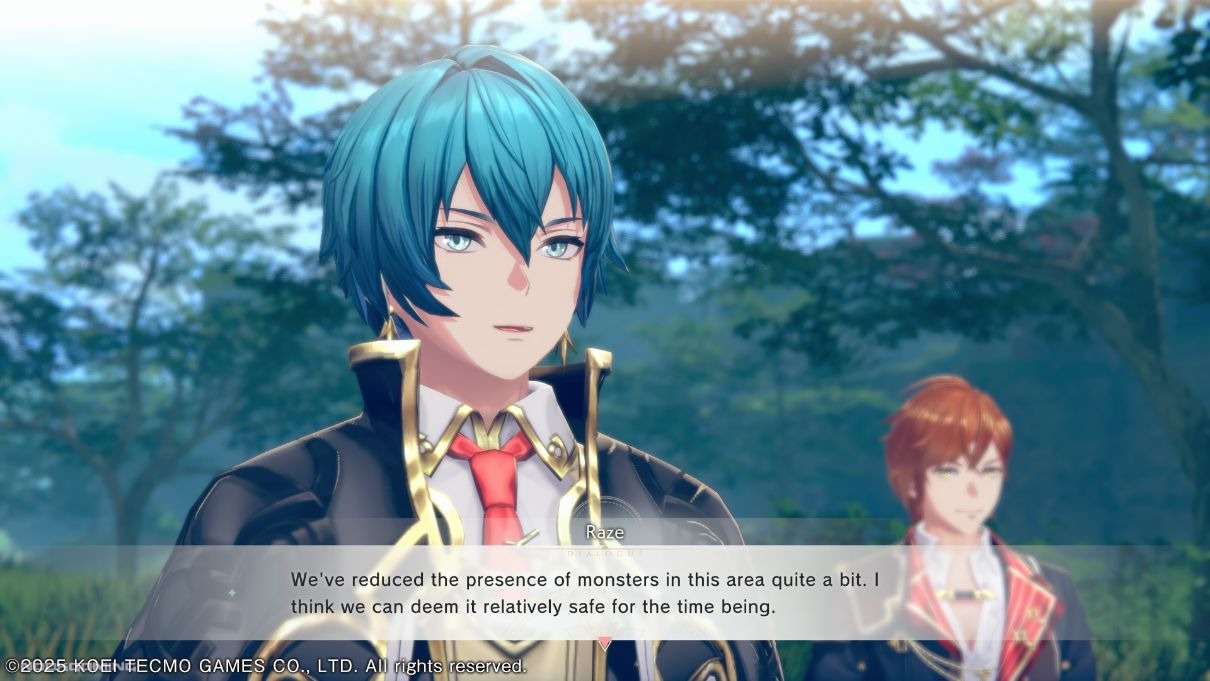
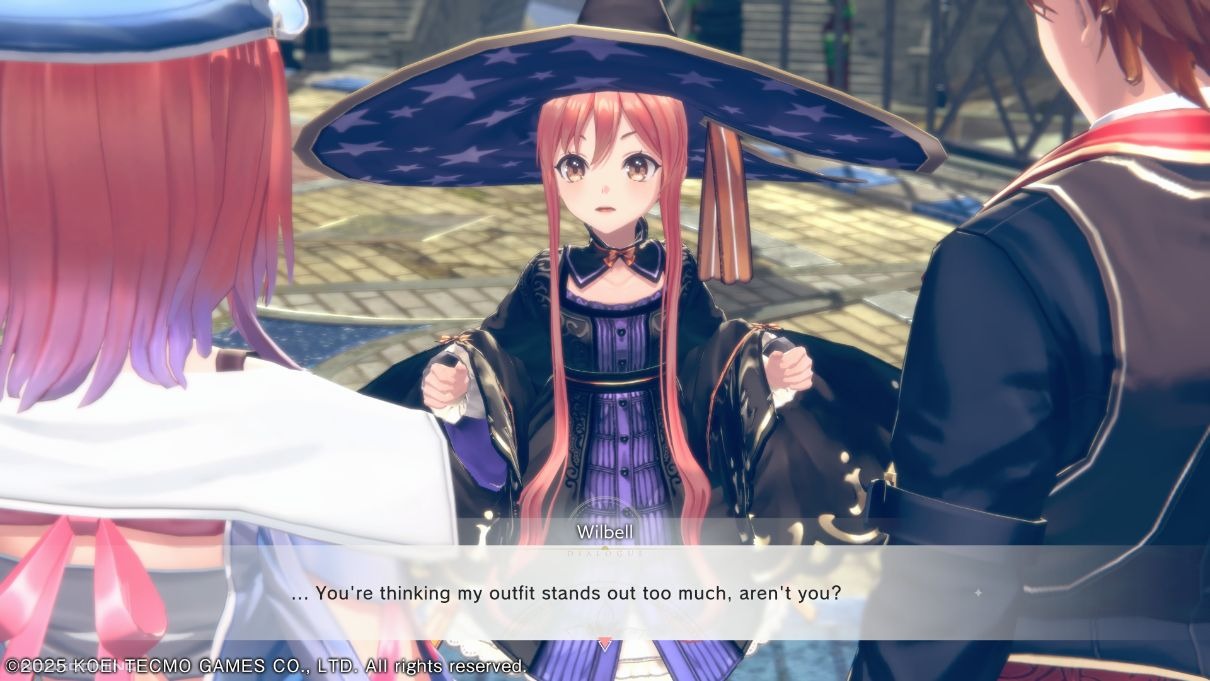
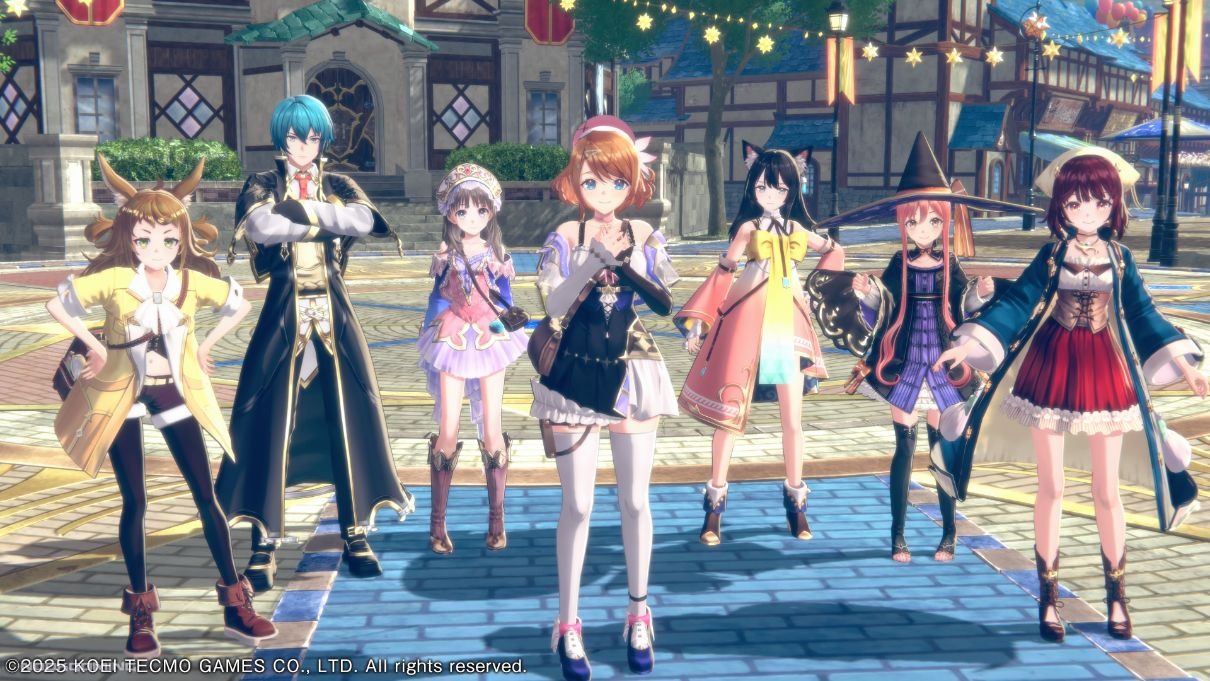
This makes for a pretty fun dynamic, where you get Rias rushing into things and a somewhat exasperated Slade having to deal with her. This is expanded even further when we get others joining the cast who often cause chaos in their own ways. Wilbell, Totori, and Sophie are all certainly oddballs in their own ways, while Raze acts as another more serious character for them to bounce off. The sheer amount of crossover characters with their own quirks adds to this, too.
The vast majority of the story scenes are very casual slice-of-life moments. You’ll find characters talking about baking cookies, teasing Rias and Slade about whether they’re a couple or not, or pointing out how Wilbell isn’t hiding that she’s a witch very well with the pointy hat (which Rias keeps trying to steal). These are some of the best moments in Atelier games, and they’re just as good here. It’s about getting to know the characters and enjoying these sorts of moments with them.
Still, it always returns to the pursuit of information about the disaster and the events that cascade from this. It ramps up the tension near the end and raises the stakes significantly. Some Atelier games are very laid back without much in the way of a plot, but this isn’t one of them. This title comes with a solid storyline, frequent additions of lore to the plot, and some mildly emotional moments.
Setting Off
Atelier Resleriana: The Red Alchemist & the White Guardian sees Rias and the rest of the party based in the town of Hallfein, but I spent much of the forty-hour runtime outside of it.
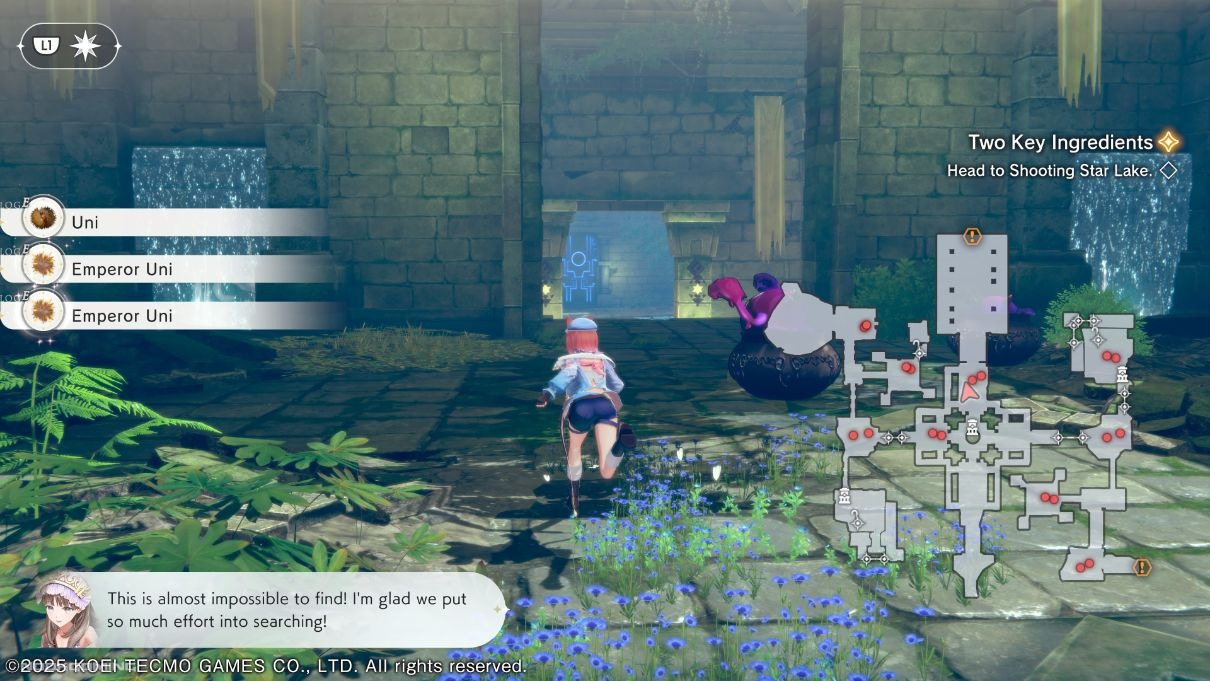
The primary experience of playing the game involves following the main quest, which reveals more of the story. This typically involves travelling through areas or dungeons while defeating monsters and gathering components to bring back to the Atelier.
The usual outing involves heading through a semi-randomized dungeon, which leads to a new area. Dungeons and areas are both fairly straightforward and quick to fully explore. There’s nothing complex about them, and the only thing that may leave you scratching your head is how to access some optional areas if you haven’t unlocked the correct wire action, which we have a handy guide for. The only notable exception is the final dungeon, which introduces some minor puzzle elements involving switches and, in typical JRPG fashion, is much longer than anything that comes before it.
When returning to Hallfein, there are plenty of additional slice-of-life scenes to trigger, and then it’s time to work on town restoration.
Restoring the town unlocks additional scenes, and it’s required to a point for the main quest too. This is done through donating money and items to the town to raise the level cap, then levelling it up through selling items at Rias’s shop and doing some sidequests. This is an important part of the game in terms of the story, but it feels like it was intended to be more important than it felt in practice. Most of the time, I’d already long passed the required goals by the time they were revealed. On top of that, the actual gameplay of the shop is just making some choices (several of which can be automatically selected, though I would recommend being careful not to sell anything you don’t want to), and then it’s over in a flash. In terms of the town management part, I only had trouble once, when a couple of the items required to raise the level cap were ones I didn’t have recipes for, so I had to puzzle them out first.

You’re an Alchemist Too, Rias!
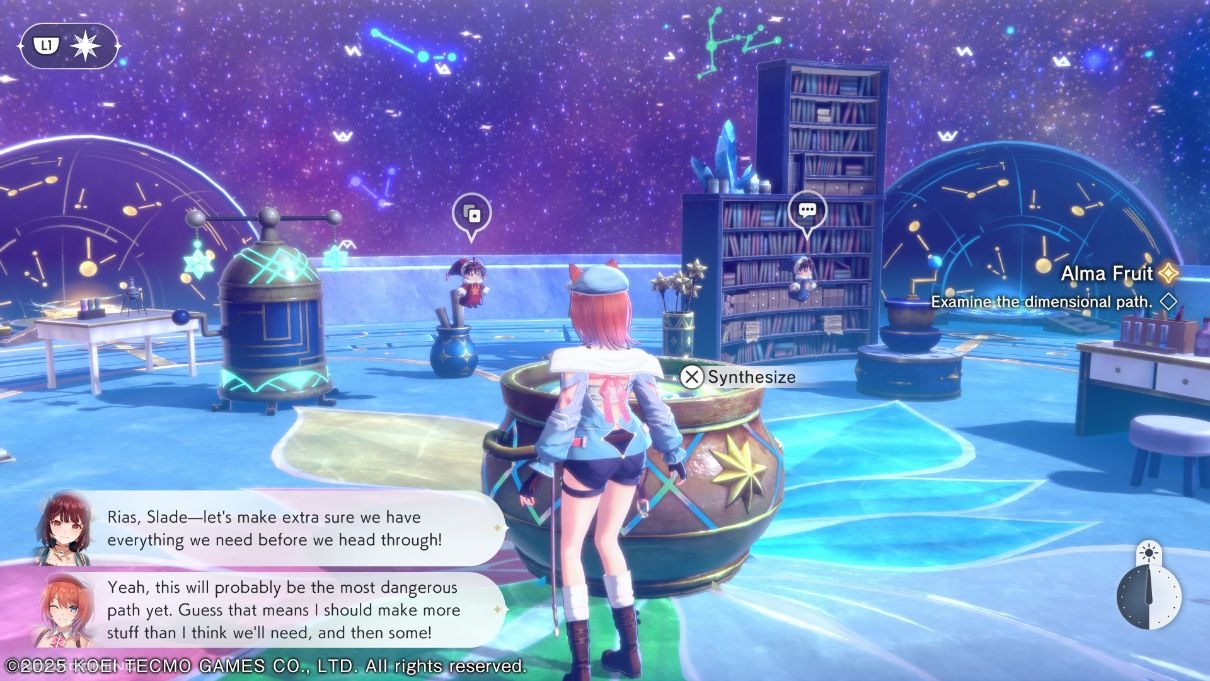
Alchemy is a large part of the gameplay in Atelier Resleriana: The Red Alchemist & the White Guardian, which I was happy to find, as it was far less important in the recent Atelier Yumia. How much you dive into the systems will depend on what you want to get out of it, but it’s in-depth, and you can create some incredibly powerful items if you master it. If you don’t want to dive in completely, a basic understanding is fine as long as you’re not facing the higher difficulties.
It took a while for it to click, and I’m sure I could dive in even further, but I really enjoyed how far the systems can go. It involves fitting item types into slots and matching item colors to transfer item traits, or purposely not doing so. Later on, more features get unlocked with ways to change colors, item types, and so on. You can also strengthen items through a different system, which works similarly. It can get to the point of synthesizing items to be used as components in a long chain of alchemy to get the perfect item. That all said, despite its depth, it never gets as confusing or complex as some of the systems in older Atelier titles. It’s still comparatively straightforward.
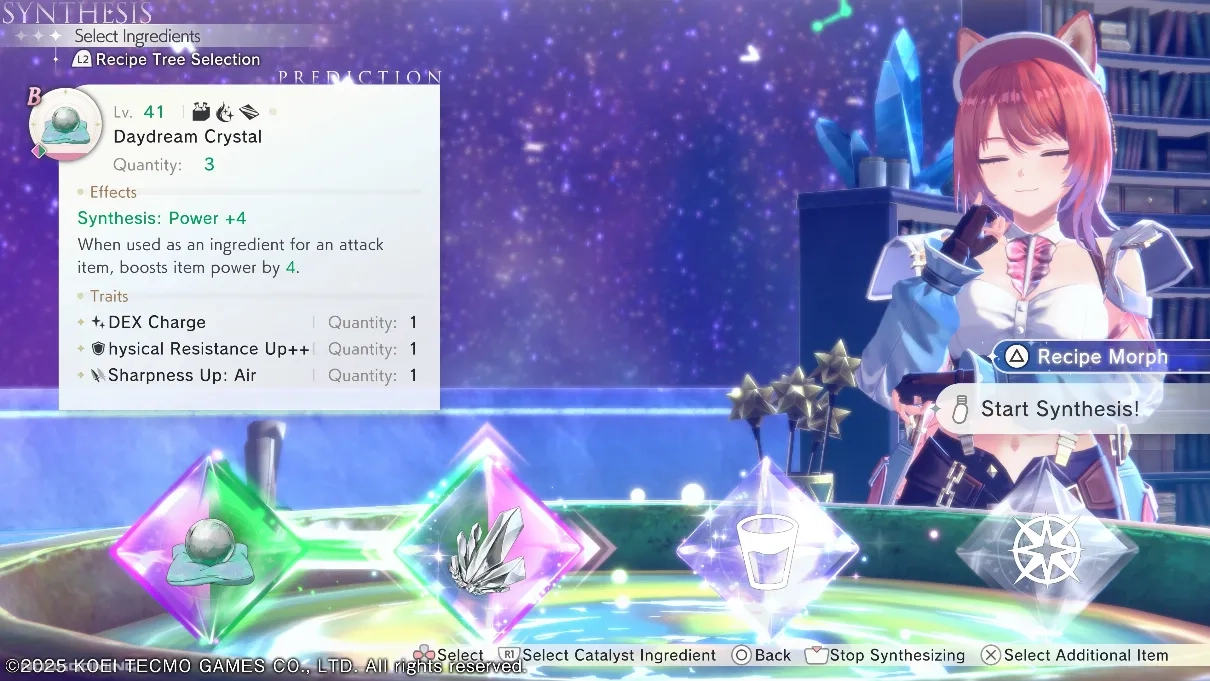
Item recipes can be discovered through alchemy itself, too. While recipe books are available in some cases, using specific items in certain slots of certain recipes can then morph them into a different type of item. This can work both to unlock new recipes and to create a long chain to transfer traits or level up an item. It always felt satisfying to unlock new recipes this way or create something powerful. Even more enjoyable is how items can turn out so different depending on how you create them, leading to new attempts when different items have been gathered.
That said, unlocking recipes can be both satisfying and frustrating. Some recipes can be unlocked through recipe morphing, but some are only found in books. These are not always easy to find, and you can be left needing a specific recipe or item at times, with very little clue on where to find it. It fits in with the ideas of exploration and the challenges of learning alchemy, but it did set me on an aimless search at least a few times.
Turn-Based Teams
The basics of combat in Atelier Resleriana: The Red Alchemist & the White Guardian are those of a standard turn-based battle system with elemental weaknesses/resistance, status effects, buffs/debuffs, and so on. It does, however, have some particularly nice features.
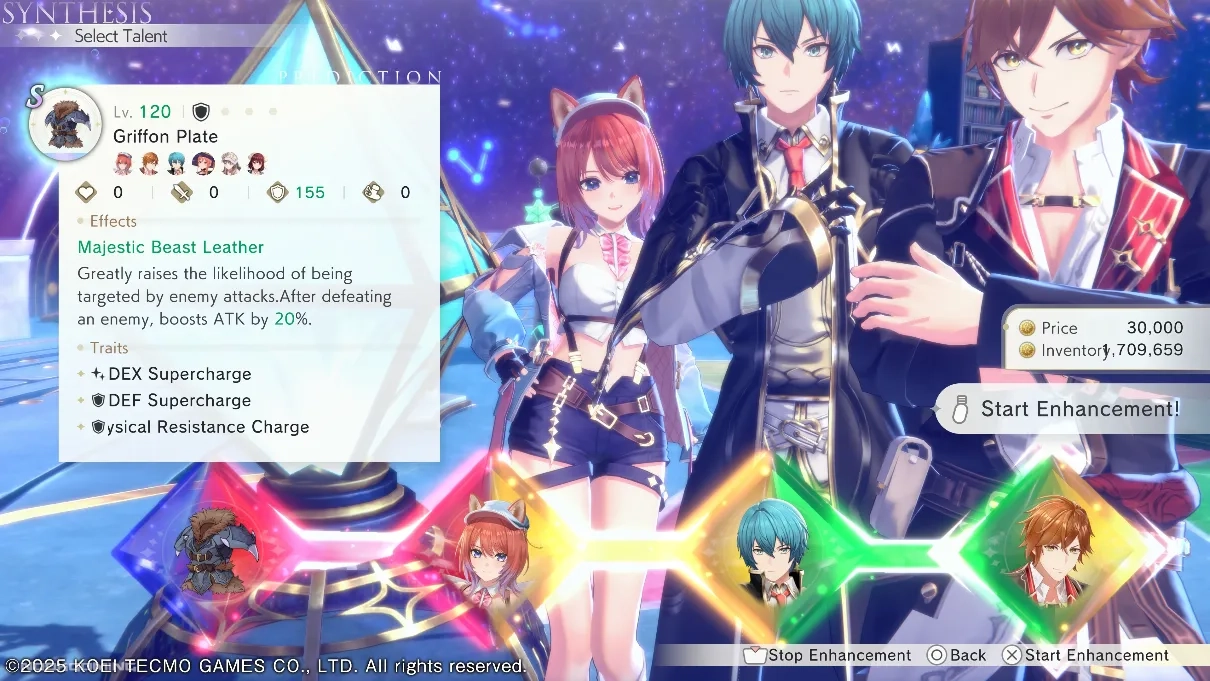
Alchemy ties in quite strongly here. Many of the pieces of equipment or items you use will most likely be created through alchemy, and as mentioned, these can be customized quite a lot. Want to make Slade take most of the attacks? As well as his taunt skill, you can put together armor that has increased enemy aggro as a feature. You’d also better build him some high-defense accessories to go alongside that, perhaps prioritizing defense over increasing skill power. Or maybe you wish to spec him out instead to boost his electric attacks and be able to regenerate the energy needed to keep shooting them off.
Guarding is another feature I thought worked well most of the time. Rather than a guard command for your turn, you need to press the button with the right timing as an enemy attack is about to connect. Perfect timing will even stop status effects. Unlike some games, it makes it clear when you need to press the button. Enemy attacks do have different timings and some are faster than others or provide less warning, but it always glows red at the best time. I do like this small mechanical skill-based addition to the turn-based system.
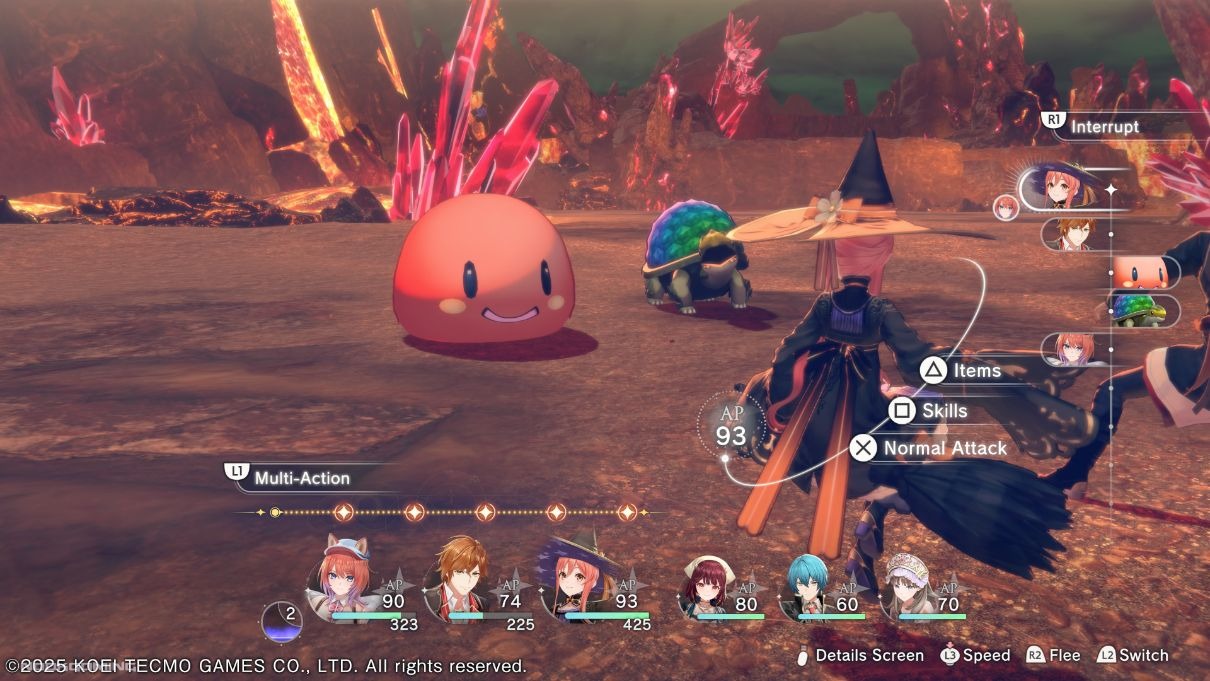
You have an active front line of 3 members, any of whom can be switched out at any time for any of the 3 members in the back line. This can be done by using up a turn or by involving them as part of a multi-attack, where you spend points accumulated during battle to have characters from the backline add their attacks in. While regular battles didn’t see me using this much, boss battles became much more interesting by switching characters often and needing to manage their resources to perform special attacks. Unfortunately, enemy mechanisms that would’ve made this more impactful (such as switching up weaknesses) were a rarity, but chaining together debuffs and attacks unique to each character and sending characters with lower health to the back lines temporarily was certainly worthwhile with bigger fights.
Fittingly, there are some abilities specific to using items. You can spend points of your gauge to interrupt a turn by having a party member use an item. This potentially adds some further options to your tactics. There’s also a feature about mixing items effects by having multiple characters use them together, but this isn’t something I really used. As much as you can customize the items here, I found them mostly useful in more of a support role to add into the mix occasionally.
I should note here that Atelier Resleriana: The Red Alchemist & the White Guardian has five difficulties, with one locked behind completing the game. The default Normal is very easy, aside from some occasional minor difficulty spikes, so I’d suggest starting on Hard and adjusting as needed if you want to engage with the combat system more. Of course, that won’t be for everyone. I find it fun, but Atelier is more about that laid-back experience for some people. You will likely also find it more difficult without engaging with alchemy much. You can create the most basic items, or you can create an item that almost fully heals the entire front and back row that you can use three times in a battle, then duplicate it and assign one to all six team members.
Pretty Pictures. Performance Problems?
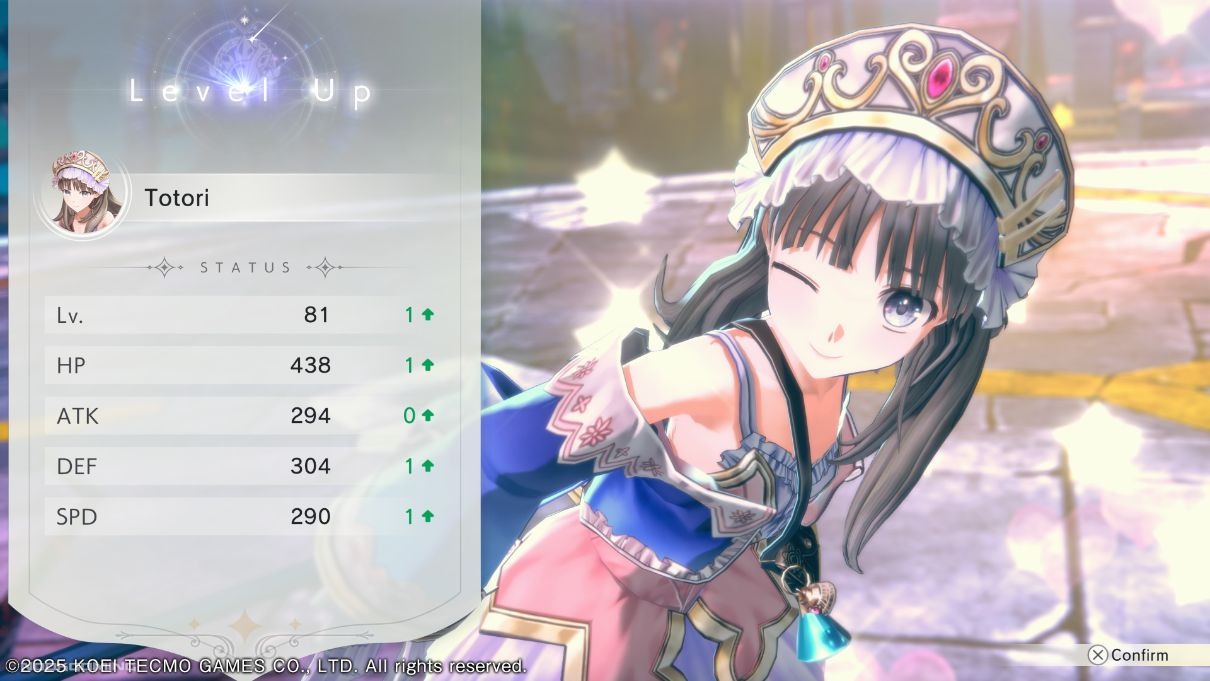
Atelier Resleriana: The Red Alchemist & the White Guardian looks great for the most part. The character design on the models is something I appreciate, even if they do lack a bit of detail, which becomes obvious in the close-ups. The animation used makes them really expressive.
It’s also quite interesting to see how characters like Totori and Ryza fit well next to each other, even though they’re made to fit quite different styles of art. A lot of the characters from the earlier PS3-era of Atelier fit a very cute aesthetic with frilly and detailed clothing and large eyes, while modern Atelier, including Atelier Resleriana, has shifted to more practical clothing and a focus on designs with sex appeal over cuteness. Jiggle physics are present here, and not just on Oskar’s stomach.
The game has about 30 (including variations) pieces of art spread throughout to help illustrate moments of the story. These were always nice to see pop up. Understandably, they mostly focused on important story moments or Rias and Slade, but it would’ve been nice to see some of the other party members. The message of every member of their team being important is often mentioned, but it doesn’t seem to extend to the artwork.
Performance is where I do have some complaints, beyond even the norm for an Atelier game. Playing on PlayStation 5, it felt like there was some slowdown, particularly in battles. While this isn’t the end of the world in a JRPG, it did seem to get bad to the point that I occasionally had difficulty hitting guard with the right timing. This seemed to be much worse after playing for quite a few hours, so while not ideal, I turned the PlayStation 5 off every couple of hours after saving and gave it a few minutes before continuing.
In terms of sound, an experienced cast of Japanese anime voice actors has been assembled. Most notable to me at least, was Aoi Koga, who plays an important character outside of the party. She’s perhaps most known for playing the titular character in Kaguya-sama: Love Is War. Daisuke Ono, who plays Raze, is also quite prolific, notably as Jotaro from the modern Jojo’s Bizarre Adventure anime. You’ll also hear some other mainstays of anime and games like Asami Seto and Marina Inoue. There is no English dub available.
The music is nice to listen to, as is typically the case with Atelier titles. It all fits the various locales and emotions of the scenes well, with plenty of uplifting pieces of music to accompany your exploration. It doesn’t have any real memorable standouts for me, but it’s all consistently good.
Verdict
Atelier Resleriana: The Red Alchemist & the White Guardian takes a step closer to some of the older Atelier titles with its more in-depth systems, yet it doesn’t move too far into the complexity that had many reaching for the nearest guide on alchemy.
It’s a fun adventure where you can dive in and experience everything it has to offer with some engaging gameplay, or just enjoy relaxing moments with some great characters. Whether you’ve played Atelier before or not, it’s worth picking up.
ATELIER RESLERIANA: THE RED ALCHEMIST & THE WHITE GUARDIAN IS RECOMMENDED

How to Unlock All Wire Actions Guide: Click Here
If you are looking for reviews of other Atelier titles, you can check those out here. Or, if you’re looking for a different longrunning JRPG series, check out our review of Trails in the Sky 1st Chapter.
Many thanks go to Koei Tecmo for a PlayStation 5 review code for Atelier Resleriana: The Red Alchemist & the White Guardian.

A gamer since the days of Amstrad and DOS and someone who has dabbled in a variety of professions. He enjoys a wide variety of genres, but has been focusing on visual novels and virtual reality in recent years. Head Editor of NookGaming. Follow him and the website on @NookSite.