Alongside the likes of Castlevania and Mega Man, Ninja Gaiden was a series famous for codifying the NES as being the home for a lot of tough-as-nails action games. Beginning life as an arcade game, Ninja Gaiden had a focus on precision combat and platforming against a barrage of unforgiving enemies and stage terrains. This focus remained after the series shifted to 3D in the early 2000s, with Ninja Gaiden (2004) and its sequel being seen as some of the best action games ever made. Since then, it has spawned a third game and several iterations of previous entries before going dormant for most of the 2010s. With the sudden but very much welcome surprise of a Ninja Gaiden 4 announcement, we’re first taking a step back with a surprise remake as well—Ninja Gaiden II Black.
The Best B Movie Ever
Ninja Gaiden games have never exactly been known for their great stories, being somewhat terse emotionally and mostly using the story as a means of getting Ryu Hayabusa to do some cool stuff. There was an attempt at doing more with that in Ninja Gaiden 3, but “there was an attempt” is about the nicest thing I could say about it. Ninja Gaiden II Black, however, is a straightforward remake and as such does not change the story of the original, which itself can be described as “Ninja Gaiden 1, but bigger”.
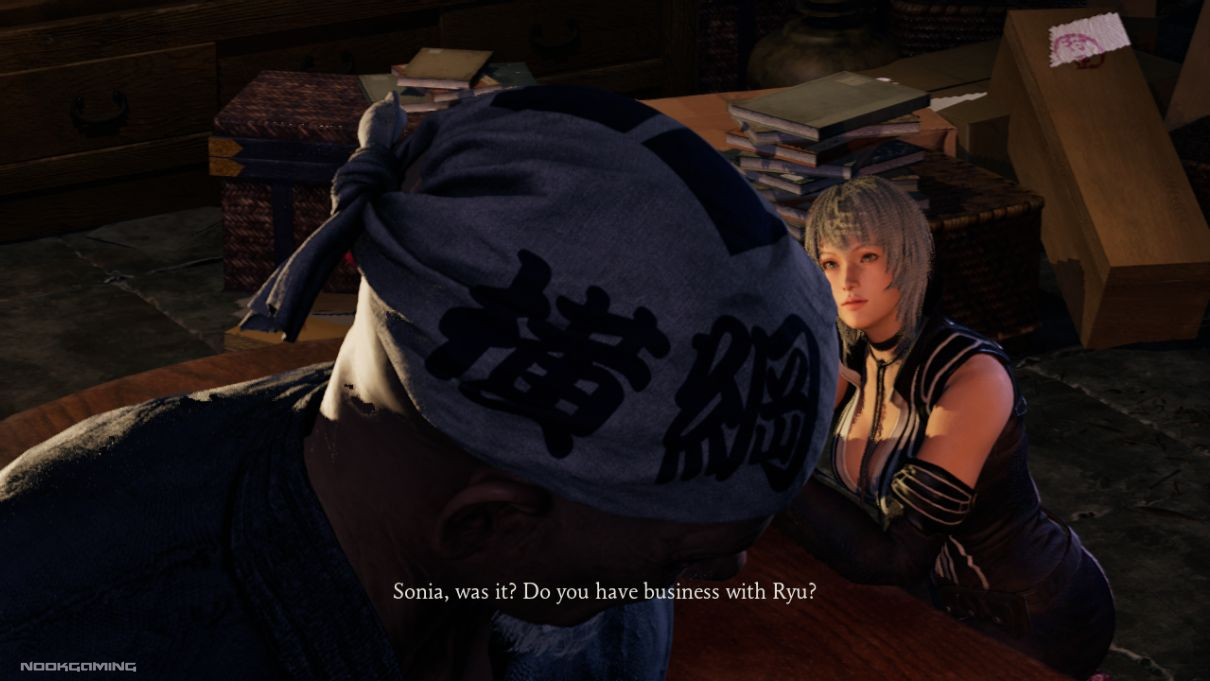
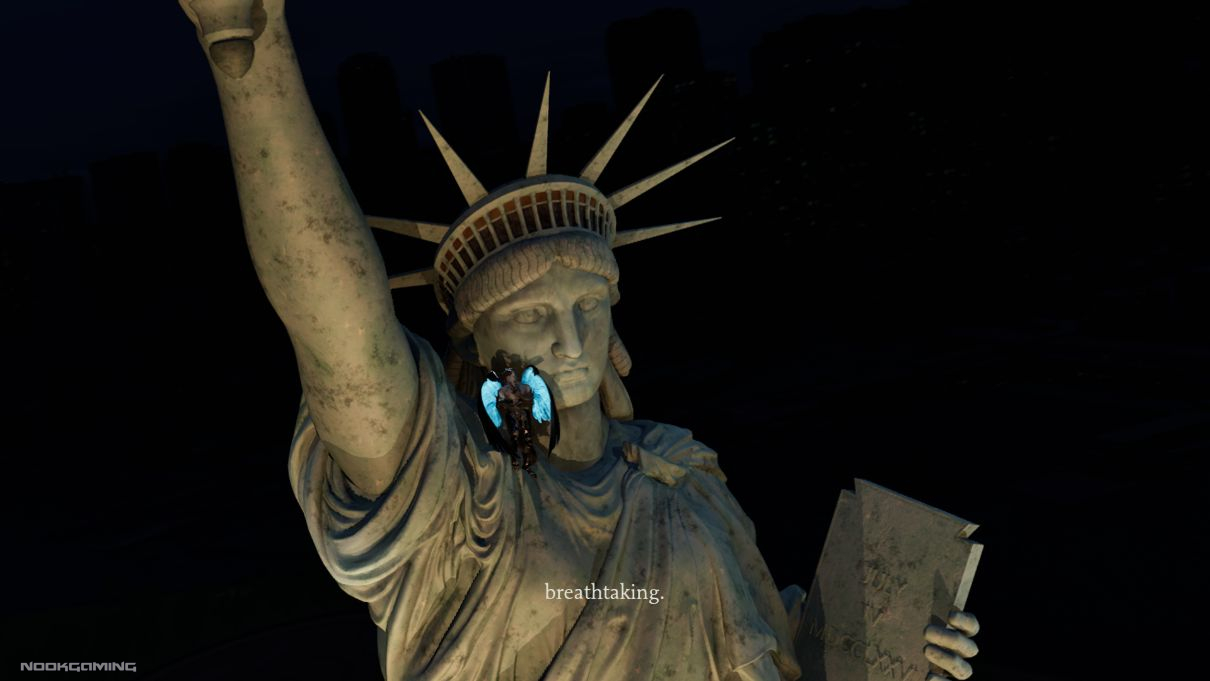
The Archfiend, whom Ryu slew at the end of Ninja Gaiden (2004), is on the verge of being resurrected by the Black Spider Ninja Clan. As rivals to Ryu’s Hayabusa Clan, they make the conflict quite personal as they set their sights on him and his entire village. Ryu’s father is attacked during the whole scuffle, and it’s not long after that he’s forced to follow the henchmen of the Archfiend in a chase that takes him around the world. Really, that’s nearly all this plot exists for: to get Ryu going to lots of places he might not otherwise. While it starts in a quaint Japanese forest village, he’s then sent to the likes of New York and Italy because that’s where he’s needed next.
That’s not to say that there aren’t elements that aren’t easy to like in earnest, such as Ryu himself. He’s stoic and follows the code of the ninja to the letter, not saying a whole lot or being impressed with much. It’s a fun contrast to the absolute lunacy of what tends to occur around him, such as fighting villains of the week who have over-the-top designs and spout platitudes regarding the sad state of mankind. I also like his dynamic with Genshin, one of the main antagonists, and how they have a sort of mutual respect for each other in spite of their differing views on the meaning of strength. It’s not mindblowing, but that’s easily forgivable when it’s a small part of a bigger package.
It’s hard not to love it when Ryu does some badass one-liner after lopping the head off of an over-the-top demon. Pretty much everything here is done in service of really enhancing the fantasy of being this insanely skilled ninja, minus the occasional breaks where you play as one of the heroines to get a glimpse of what’s going on elsewhere. It’s like one of those DVDs you rent for a weekend when you’re bored. I don’t go in expecting much, but what I get is surprisingly fairly memorable and competent in its execution.
Between Life and Death
At the heart of Ninja Gaiden II Black is a fast-paced action game all about committing to your actions and your mistakes hurting big-time. I conducted my playthrough on The Way of the Mentor difficulty, which is the hardest one available. Not unlike the original Ninja Gaiden on NES, it’s actually rare for enemies to deal a terrible amount of damage by themselves. Rather, what makes them intimidating is the number of you have to deal with, and how each of them is a massive threat until you do them in. Even as soon as the very first encounter, there’s a good chance you’ll get a Game Over if you’re not paying attention to everything. In a given encounter, expect to deal with six or more enemies at a time, many of which will come with projectile attacks that are perfectly happy to flank you from offscreen. More than just basic execution of your abilities, winning really comes down to having the awareness needed to dodge or block everything that comes your way. Of course, there are some Tips and Tricks to learn that help.
But what makes Ninja Gaiden so distinct in this department? Well, it really comes down to the gamefeel that ties all of its systems together. Most notably, it bucks a lot of contemporary action game tropes like parrying, perfect dodges, and animation cancels. While still fast-paced, everything you do is an action you must commit to. This includes attack combos, throwing projectiles, blocking, directional dodges, and even the arc you jump in. This lends a real sense of heaviness to your actions, and makes it a lot more rewarding when you fully master how everything handles.
Ryu’s kit is fairly simple: there are several weapon types (more on those later) that come with a light attack, a heavy attack, and a variety of combos that can be performed by pressing whichever attack types in the correct sequence. Some combos, such as Ryu’s famous Izuna Drop, can be performed using the same input sequence (in this case, a light attack, a heavy launcher attack, three light attacks in a row, and finally a heavy attack). On top of these, you can also do an Ultimate Attack, done by charging the heavy attack button until a purple flash appears around Ryu, in which case you can let loose and do an automatic combo that’s a guaranteed kill on most foes. However, because of the aforementioned enemy numbers, it’s not likely you’ll be able to safely charge up an Ultimate Attack most of the time.
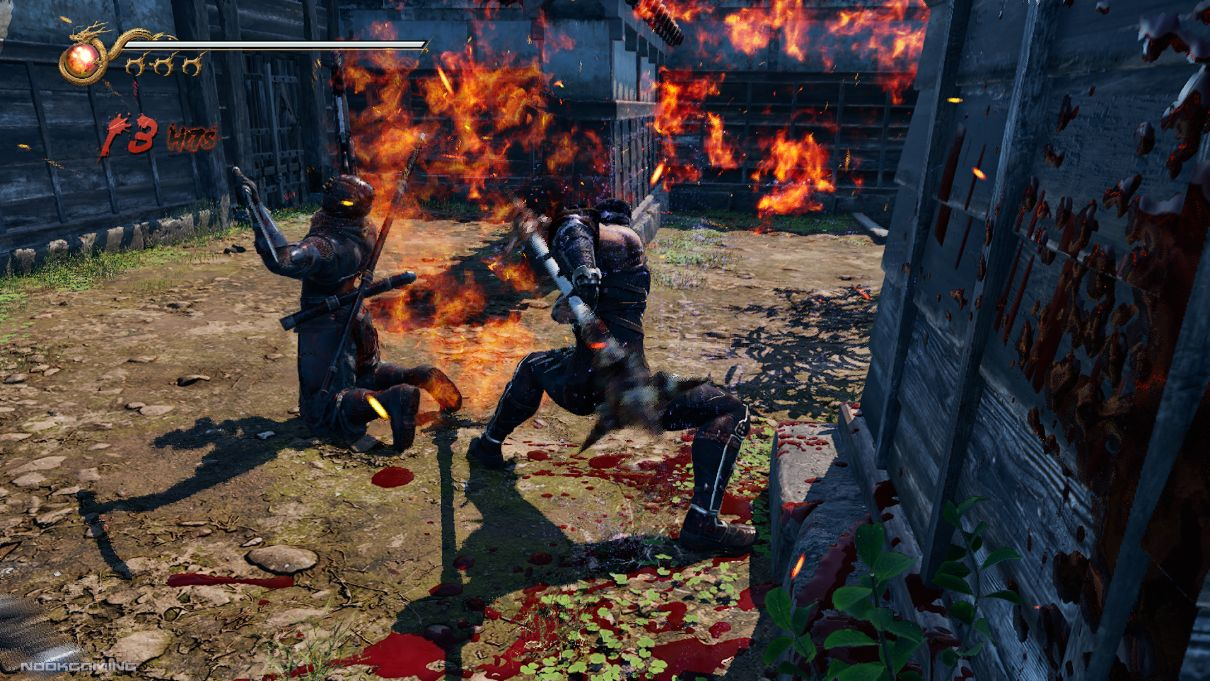
That is, until you factor in Essence, which each enemy drops upon being slain. Essence comes in three varieties: blue Essence heals you, red Essence recharges your Ninpo (essentially limited use elemental spells), and gold Essence acts as currency. However, dropped Essence can also be used to instantly charge Ryu’s Ultimate Attack by one stage, so it brings about a really interesting decision. Do you keep the Essence for potential long-term benefits, or do you use it for an Ultimate Attack in the hopes that you’ll mow down whatever is in front of you? This kind of split-second decision making is all around the combat in Ninja Gaiden II Black, and one of its best strengths. That’s before we even factor in what made this game really stand out from its predecessor.
A Smorgasbord of Weapons
Like in its predecessor, Ryu has the ability to delimb most opponents throughout Ninja Gaiden II Black. Delimbing an enemy weakens them, and depending on which limb has been cut off certain attributes will be much less of a threat. Cut legs result in them having to crawl, cut arms means they’re not as aggressive, and so on. However, delimbed enemies are still a massive threat, with many of them performing desperation attacks on Ryu if they get too close. Enemies who have lost their legs will still happily suicide bomb Ryu with explosive kunai if they can grab his legs, while enemies with one arm can still shank him from behind. While this allows you ways to route off which enemies need to be killed first, you also have another option introduced in the original version of Ninja Gaiden II: Obliteration Techniques.
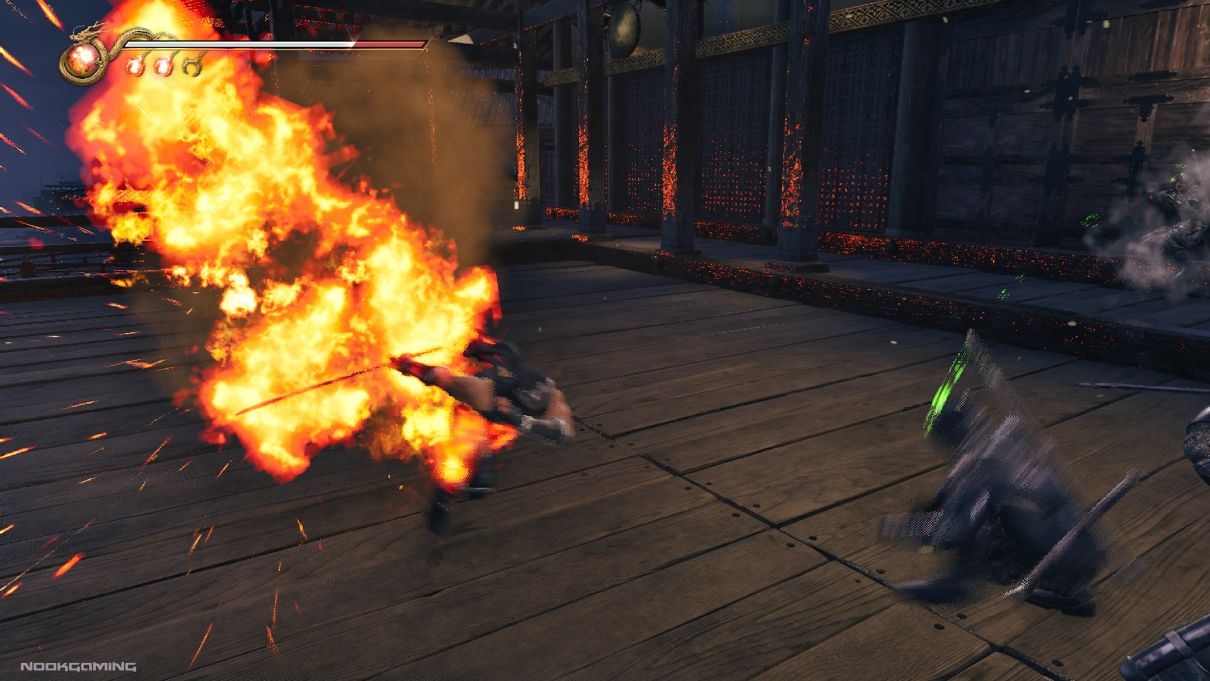
Pressing the heavy attack button near a delimbed enemy lets you automatically execute them with a short cutscene, similar to Glory Kills from the modern Doom titles. They’re fast and efficient, matching Ryu’s character well. They add another interesting option to play, and it feels incredibly good to just utterly beat down on whatever enemy types have been causing me grief. Getting lucky beheadings off with certain moves like the Flying Swallow (a jumping dash attack done with the default sword) also feels incredibly gratifying thanks to the sheer viscerality of it all. How successful you are in getting a delimbing off will depend on which enemies you’re fighting and which weapons you choose to use.
All weapons except for ranged ones like the bow and kunai can delimb an enemy, but some are better than others. The default Dragon Sword is, as you would expect, especially good at delimbing human enemies, but it has short range so it can’t do crowd control as well. The Lunar Staff, on the other hand, is a bludgeoning tool and is thus not as good as cutting limbs, but is great for dealing with bigger enemies like Fiends and hitting several opponents at once. There’s also Emma’s Fang, a massive greatsword that all but guarantees delimbing, but is slow and so should be used with caution. There’s also the Kusari-gami (a sickle and chain), which deals damage incredibly quickly and can rack up huge combo counts, but each hit is rather weak individually.
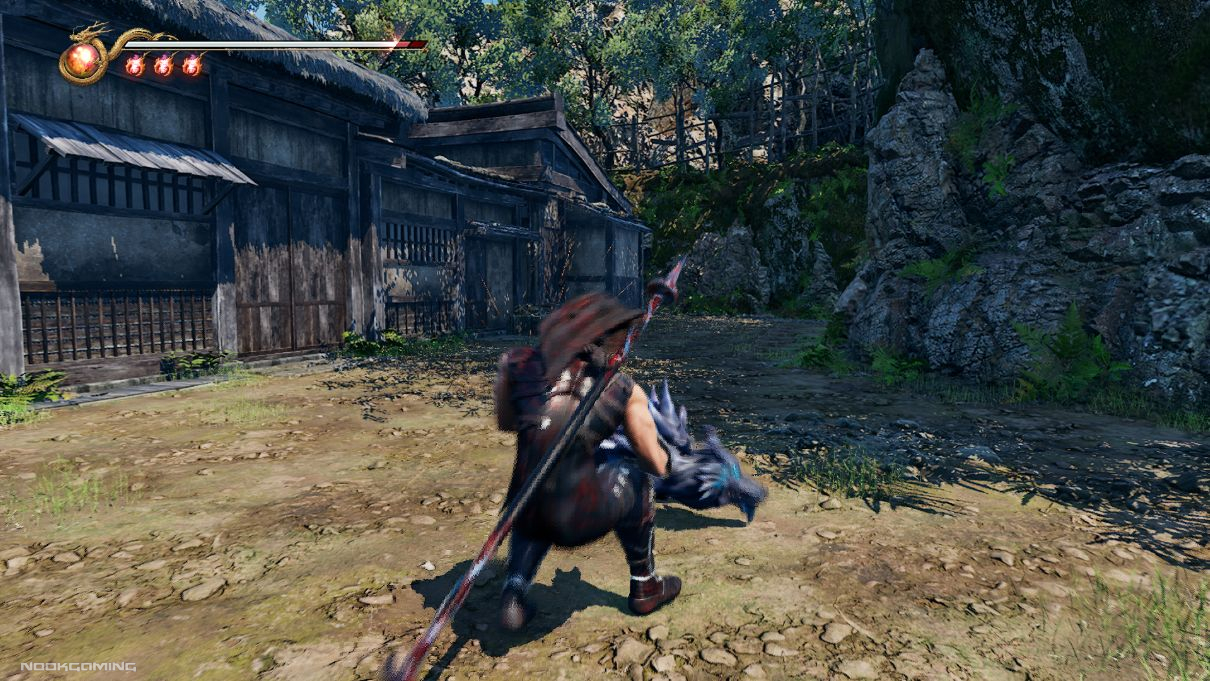
There are many more besides (such as claws, tonfas, a scythe, and so on), but suffice it to say that Ninja Gaiden II Black has got your back and then some when it comes to freedom of play. This when combined with the aforementioned difficulty curve and freedom of choice when approaching combat gives the game sky high replay value. Even despite having played both the original version of Ninja Gaiden II and its Sigma counterpart, I was nothing but enthralled to discover new techniques or apply new attack ideas.
Bosses and Version Differences
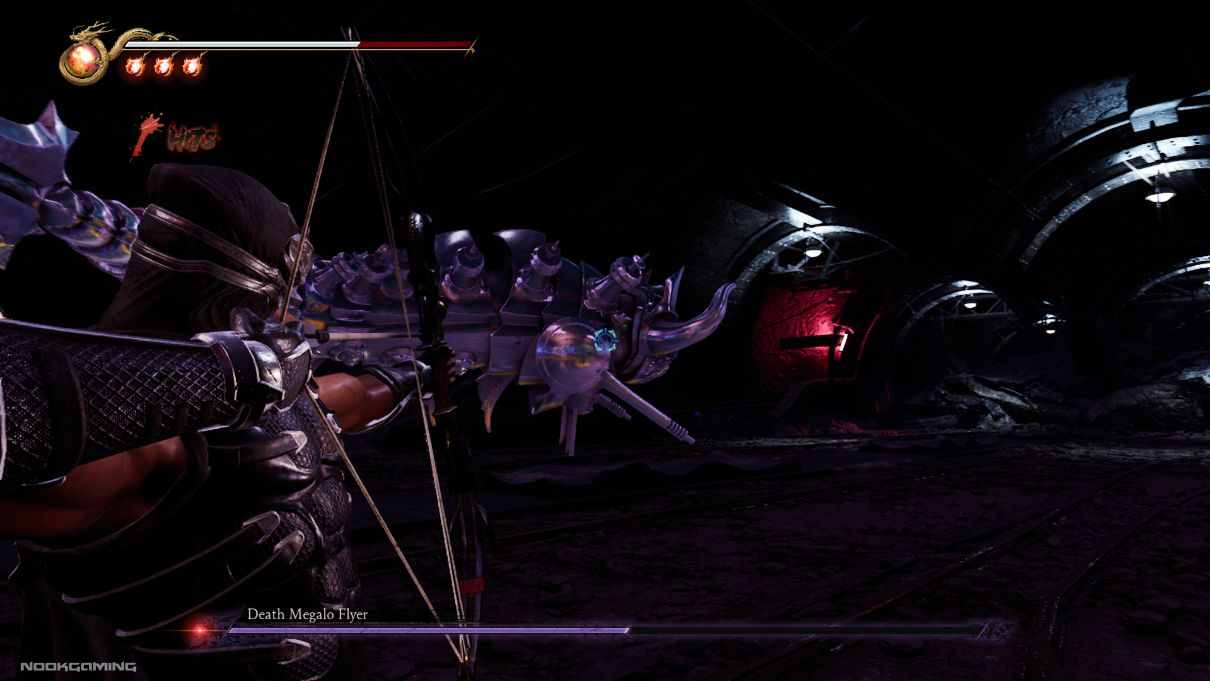
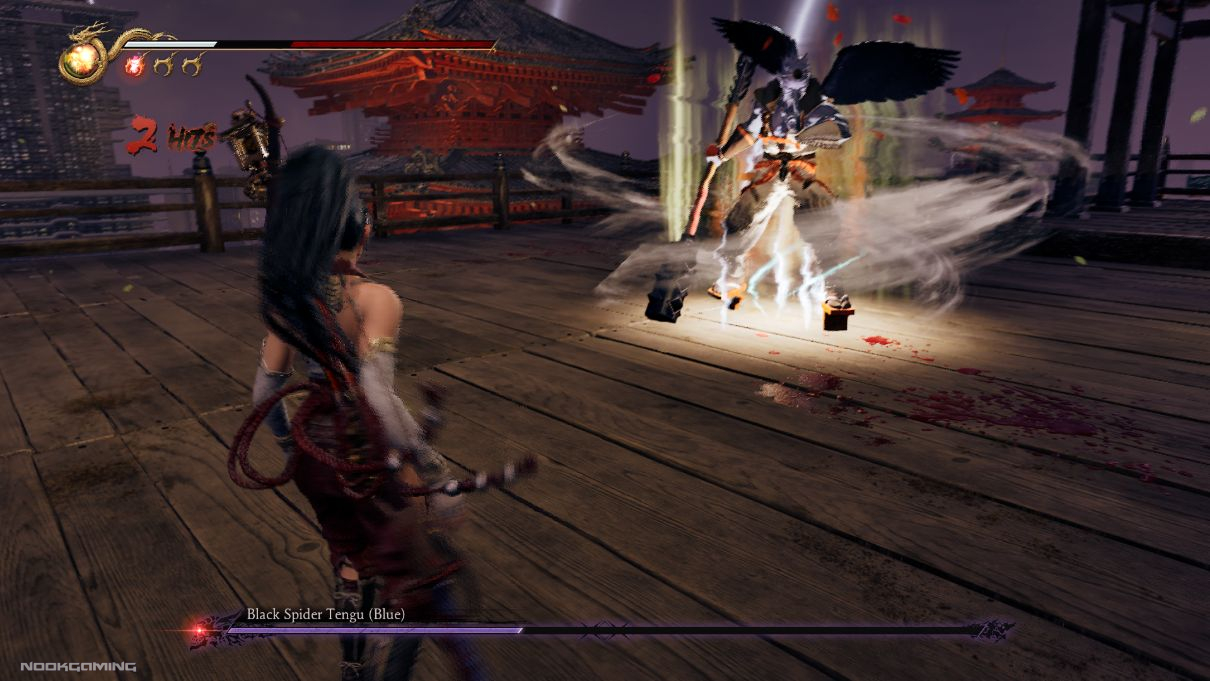
Capping off each main chapter of Ninja Gaiden II Black is a boss battle of…variable quality. While epic in their presentation, a concerning number of boss fights in this game tend to eschew the main strengths of combat during the rest of the stage. Many of these bosses cannot be comboed and usually have patterns that are rather obnoxious to learn, having highly damaging attacks that sometimes feel unreactable. The ones that are good and do adhere to the types of things you do in normal play are a lot more fun, feeling like bosses you’d see in Team Ninja’s later titles like Nioh or Rise of the Ronin. At the very least, the awful statue boss fights in Sigma 2 were mercifully removed.
On that note, it’s time to talk about version differences. While the subtitle II Black might imply that this version of Ninja Gaiden II is based more off the original game, it’s actually much closer to Ninja Gaiden Sigma 2. Sigma 2 featured a lot of alterations to the main game, most notably the enemy count. As the original game was a showpiece for the Xbox 360’s capabilities, it featured a dramatically higher enemy count that almost made it come off as a Dynasty Warriors-like game. It wasn’t quite as polished as it should have been as a result, but there was a sort of earnest insanity to it that really helped make it come together anyway. Sigma 2, on the other hand, featured a lower number of enemies that were generally made a good deal stronger across the board. This leads to Sigma 2 being the more polished, easy-to-grasp version between the two, but I’d always felt something was missing when it lacked the sheer lunacy of what the original game offered.
Take Chapter 10’s infamous staircase battle, where a climb up a simple flight of stairs is suddenly made incredibly memorable thanks to being barraged by a ridiculous number of enemies from all varieties. Sigma 2 cuts this down to a far lower, arguably more manageable number, but it just doesn’t quite hit the same. Ninja Gaiden II Black follows in the footsteps of Sigma 2, but it ups the enemy count just enough to feel like its own take on the game. The end result is a version that, while I am hesitant to call it definitive, manages to be an overall excellent take on the game. It does away with a lot of the worst aspects of Sigma 2, making for a more balanced overall experience, if one I wish still kept the more unhinged elements of the original Ninja Gaiden II.
This version also features a few extra playable characters, who are mostly from Dead or Alive. Momiji, Ayane, and Rachel all get a dedicated chapter where you play a remixed version of a past level with a new moveset. These are fine additions, not nearly as fun as the Ryu levels since you have only a fraction of the weapons and skills to work with, but fun by themselves and decent pace-breakers.
I Wish I Could Wall Run, Too
Between encounters with enemies, stages in Ninja Gaiden II Black are typically broken up via rudimentary puzzles and platforming sections that somewhat harken back to its days as a sidescrolling series. Like its original versions, II Black is a much more linear game than Ninja Gaiden (2004), with adventure elements and backtracking being downplayed dramatically in favor of more linear and cinematic elements. This might rub some players the wrong way, but given the much greater emphasis on combat this time around, I think it was the correct call.
That isn’t to say platforming doesn’t exist this time around, but here it’s used more as a supplement and to give players moments of calm before the next big battle. Ryu can wall run, wall jump, swing between poles, skip across water, swim underwater, and so on. Inevitability, none of these interactions are as deep as combat, but I don’t think they need to be. They last long enough for me to say that they successfully contribute to the mood of the game, but without distracting from their core elements. They also help to give each stage noticeably more personality than they might have otherwise.
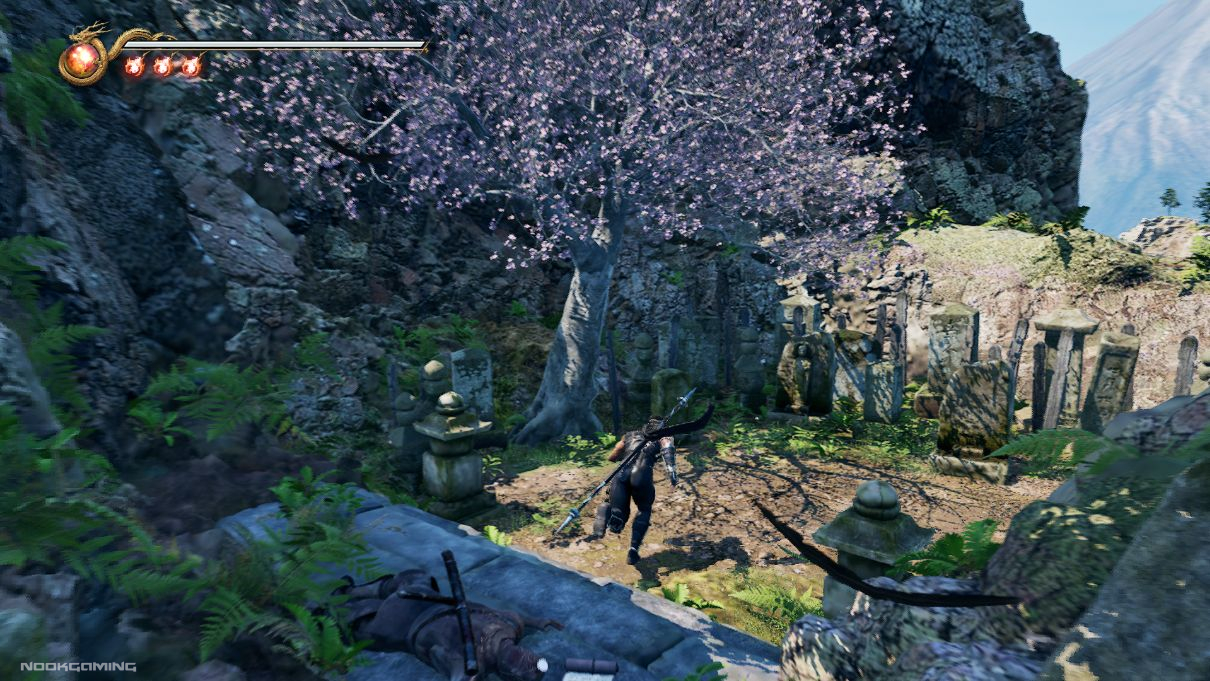
Platforming is like combat in that there is a sense of ever-present weight to it. Ryu’s jumps feel heavy and so committing to daring jumps feels really good when you can pull it off correctly. Doing wall jumps up elevator shafts or air vents has a real sense of oomph to it, owed partly by Ryu’s movements just being splendidly animated. The same applies to wall running; hopping from one wall to the next to continue your jog feels nice, and I feel like flowing water when I get things down pat. This also ties into the game’s explorative elements, which I broadly have the same compliments for.
By exploring and opening chests or looting corpses, you’ll gain a variety of items that will assist you in upgrading your weaponry or giving you permanent extensions to your maximum HP. Both of these are essentially mandatory if you play on higher difficulties, though it is worth keeping in mind that you have a limited number of upgrades for both your weapons and Ninpo which I do have some recommendations on how they can best be used. Having to choose how you want to round your weaponry out is a nice layer of choice too, though I wish there was a New Game+ mode to play with all of them fully upgraded.
As a Remake
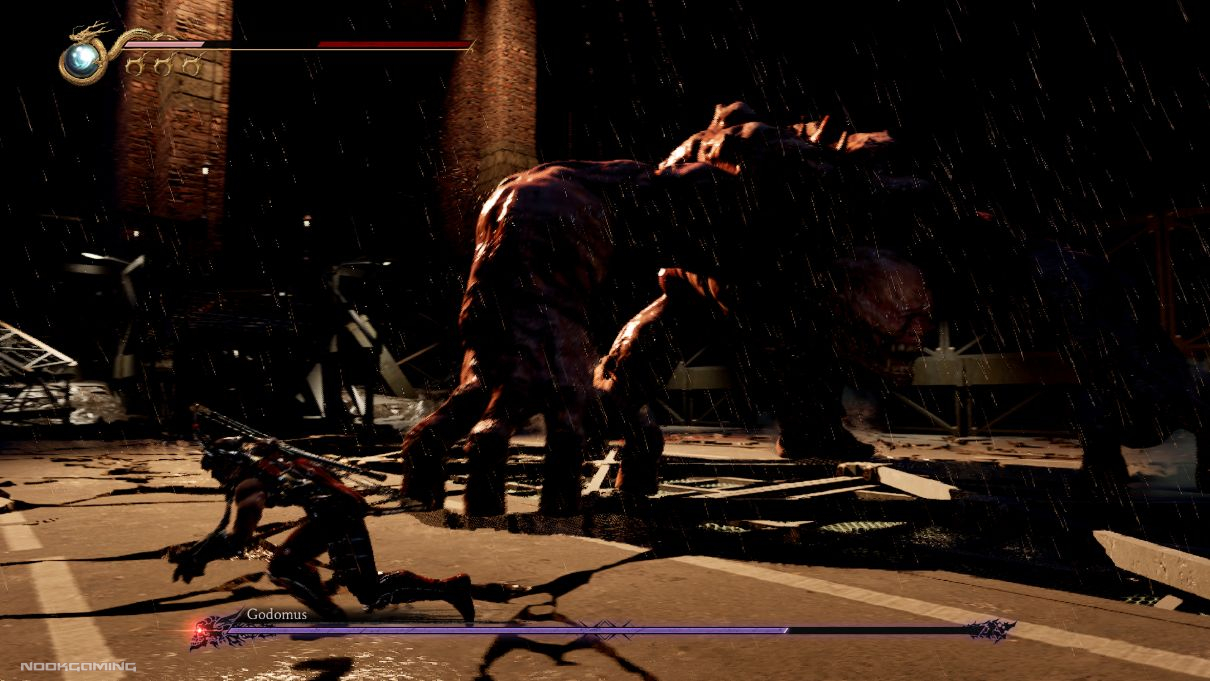
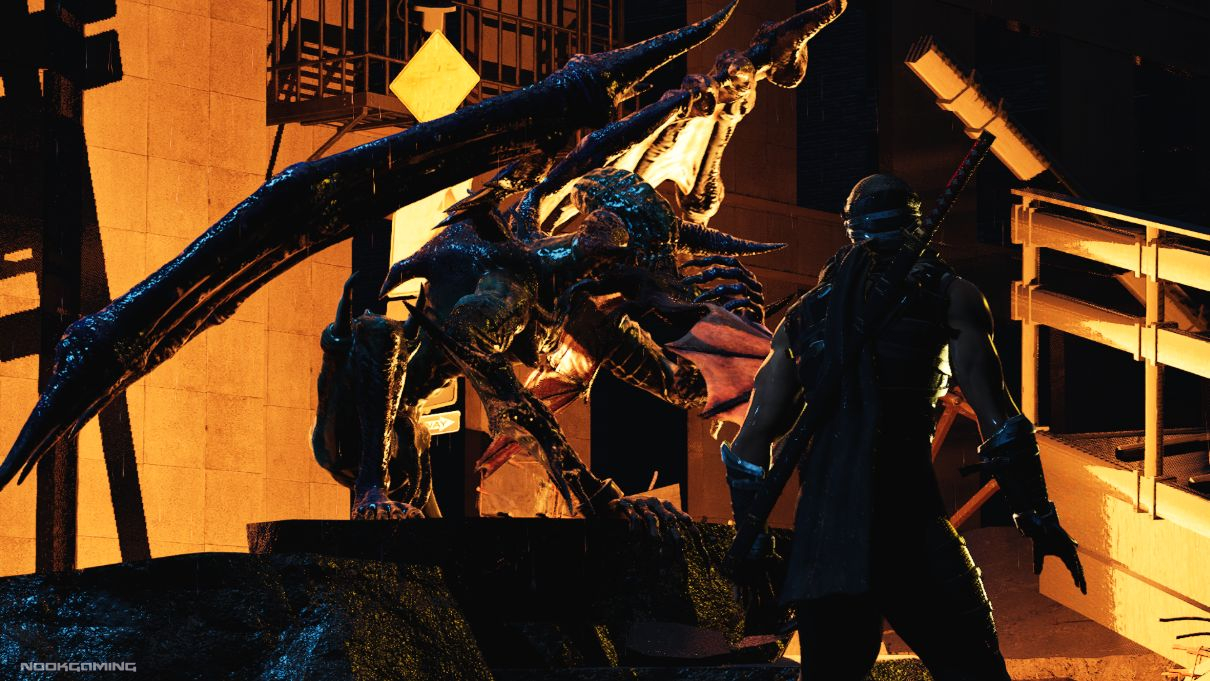
Ninja Gaiden II Black is mostly a rather straightforward remake. It reuses many of the original game’s assets, including voice lines, animations, and the storyboarding/scene direction. It’s been given a downright gorgeous facelift with Unreal Engine 5, and I have almost nothing but compliments for how it looks. Since the original game was set mostly in places seen in the real world, the higher rendering quality creates more faithful depictions of these places than what was seen originally. Model quality has also been bumped up considerably, with both environments and characters having far greater detail than before. This is all brought together by a much more sophisticated lighting engine, bringing the atmosphere together quite beautifully.
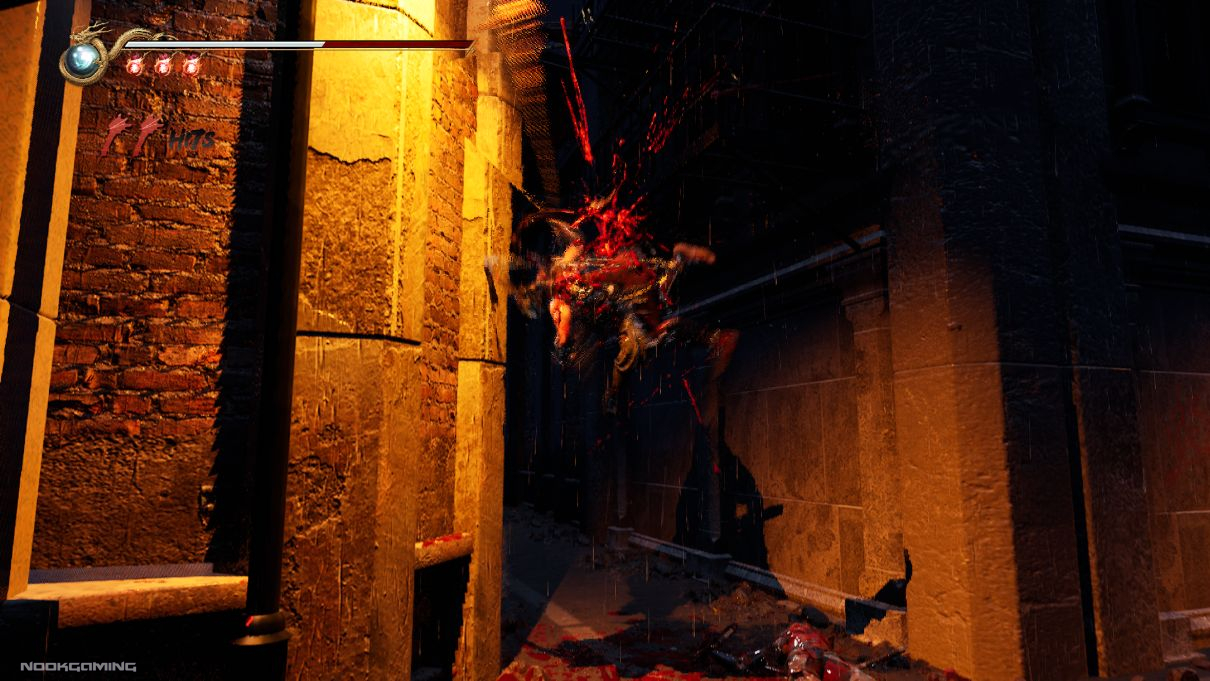
All of this is to say that the game looks quite good, but as a fan of the series since the original, it wasn’t the most important part to me. Rather, it’s the glorious return of the gore and dismemberment system that partly made the reboots so famous in the first place. For context, the original Ninja Gaiden II had quite a bit of gore, and it was what made its Obliteration Techniques pack quite a bit of punch. Prior to Nioh, it was easily the bloodiest game in Koei Tecmo’s entire library. One of the most irksome aspects of Sigma 2 was the conspicuous removal of this, with blood instead being replaced with a weird purple mist that makes the whole thing look like a badly censored version of the movie Kill Bill.
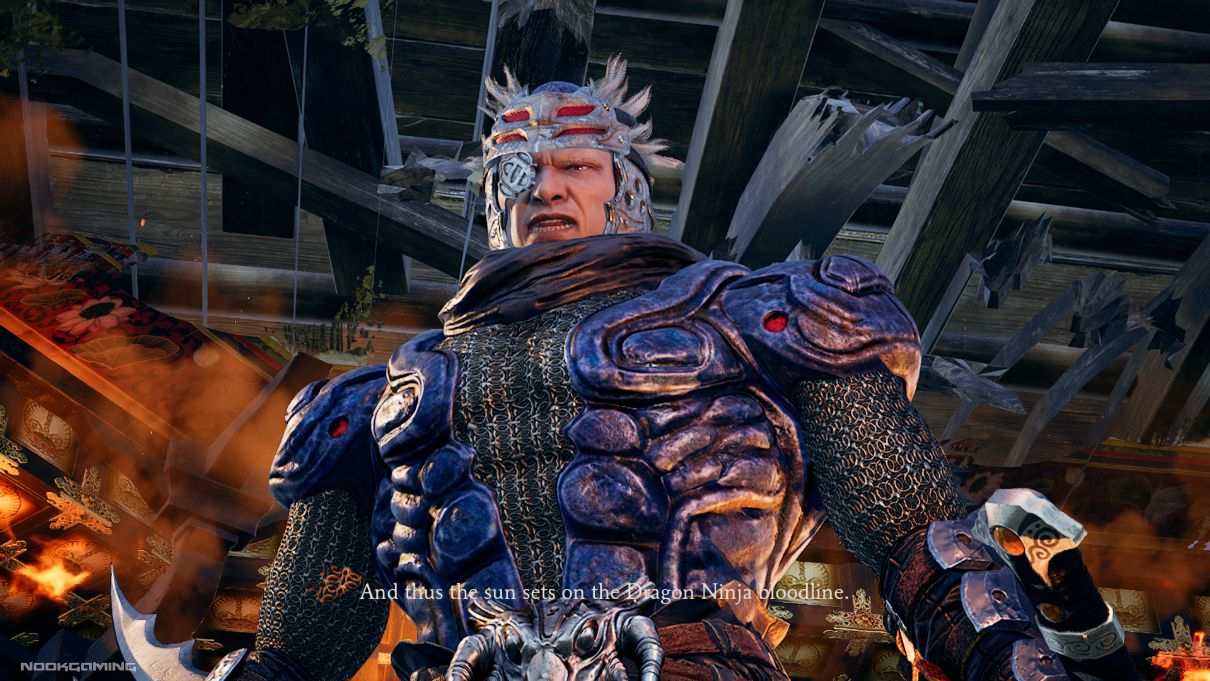
II Black doesn’t just fix this problem, it actually cranks the dial way up. It makes Ninja Gaiden II reclaim the title of Koei Tecmo’s bloodiest game, with streaks of red falling in beautiful patterns in ways that gives everything a wonderful sense of crunch. There’s also some new details added too, like character outfits becoming messy from the blood of victims splattering onto their outfit, and even being cleaned when you enter or exit bodies of water. It makes some of the more frantic parts of the game feel all the more visceral, elevating the fantasy of just being Ryu Hayabusa.
It also runs really well. My PC is getting older specs-wise, but despite the apparent demand of its graphics, it got the job done with ease. Even on high settings, it ran at a faultless 60FPS and load times were quick, with there being no shader compilation stutter, and shader compilation itself being very quick. There’s also excellently applied motion blur effects to give combat just that bit more oomph. Overall, this is an excellent package as far as facelifts go.
Verdict
Yes, Ninja Gaiden is well and truly back. Despite a few frustrations with the game not being as faithful as it could have been to the original Ninja Gaiden II, Ninja Gaiden II Black is still about as good as action games tend to get. A glorious facelift makes combat hit even harder, and some subtle but smart adjustments to balance and boss arrangements make it more exciting and less frustrating than its Sigma 2 counterpart. If you’ve heard of Ninja Gaiden but don’t know where to start, let it be here. You simply haven’t lived until you’ve Izuna Dropped an enemy’s head clean off. The original Ninja Gaiden Black is my favorite action game ever made, and I’m happy to say its sequel mostly manages to live up.
NINJA GAIDEN BLACK II IS HIGHLY RECOMMENDED

Enjoy Action? Why not check out Rise Of The Ronin?
Many thanks go to Koei Tecmo for a PC review code for this title.

A hobbyist who took up the pen to write about their favorite pastime: games. While a lover of many genres, Isaiah Parker specializes in Platformers, RPGs, and competitive multiplayer titles. The easiest way into his heart is to have great core gameplay mechanics. Self-proclaimed world’s biggest Sonic fan. Follow him @ZinogreVolt