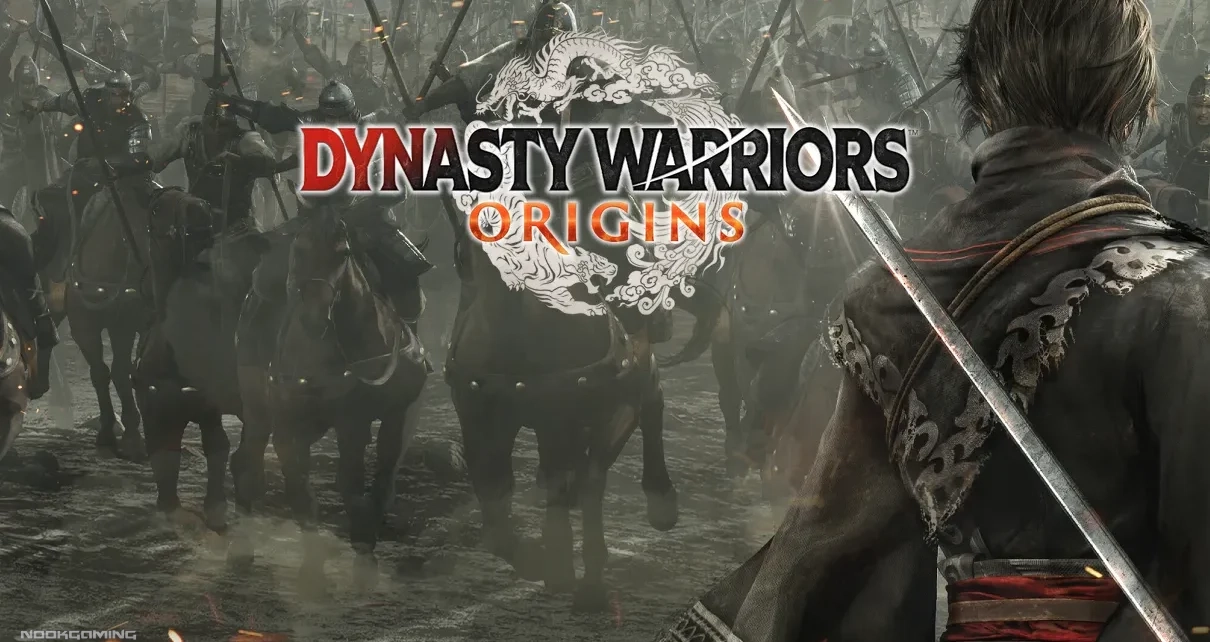
Once again, we revisit Koei Tecmo’s hack-and-slash take on Romance of the Three Kingdoms, this time titled Dynasty Warriors: Origins. This installment of the long-running series acts as somewhat of a refresh on the formula, significantly changing some of the mechanics, bringing a quite different feel to the game, and turning it into more of a big-budget experience.
Bringing Order to the Chaos
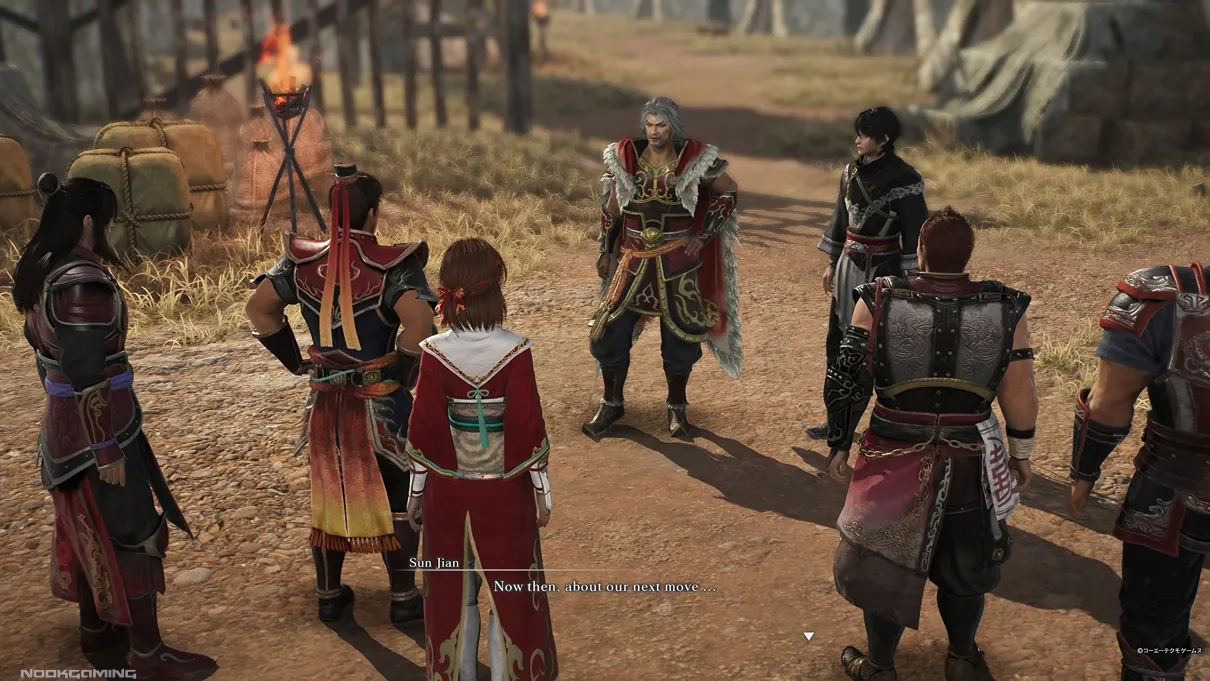
If you’ve played Dynasty Warriors before, or any of the other games based on Romance of the Three Kingdoms such as Koihime Musou, you’ll probably already have a general idea of the story. A group of peasants known as the Yellow Turbans rises up to fight famine and corruption, but they cause their own share of problems. It eventually escalates into China being thrown into widespread chaos, with rival warlords fighting to unite the land under their banner.
Dynasty Warriors: Origins diverges from this slightly by putting you in the shoes of the Wanderer, also known as Ziluan, along with whatever you choose to name him. It’s down to him to navigate these turbulent times and change the outcome of the ongoing battles.
While most of the story moments are related to the Romance of the Three Kingdoms story, Ziluan has his own story embedded within it. We learn that he’s an amnesiac with special abilities and part of a group called the Guardians of Peace whose role it is to choose heroes and eliminate those who would sow chaos. This occasionally ties into the main story, particularly in the opening chapter. It was interesting to see his story, but more than anything, it worked well to justify his role in the main plot.
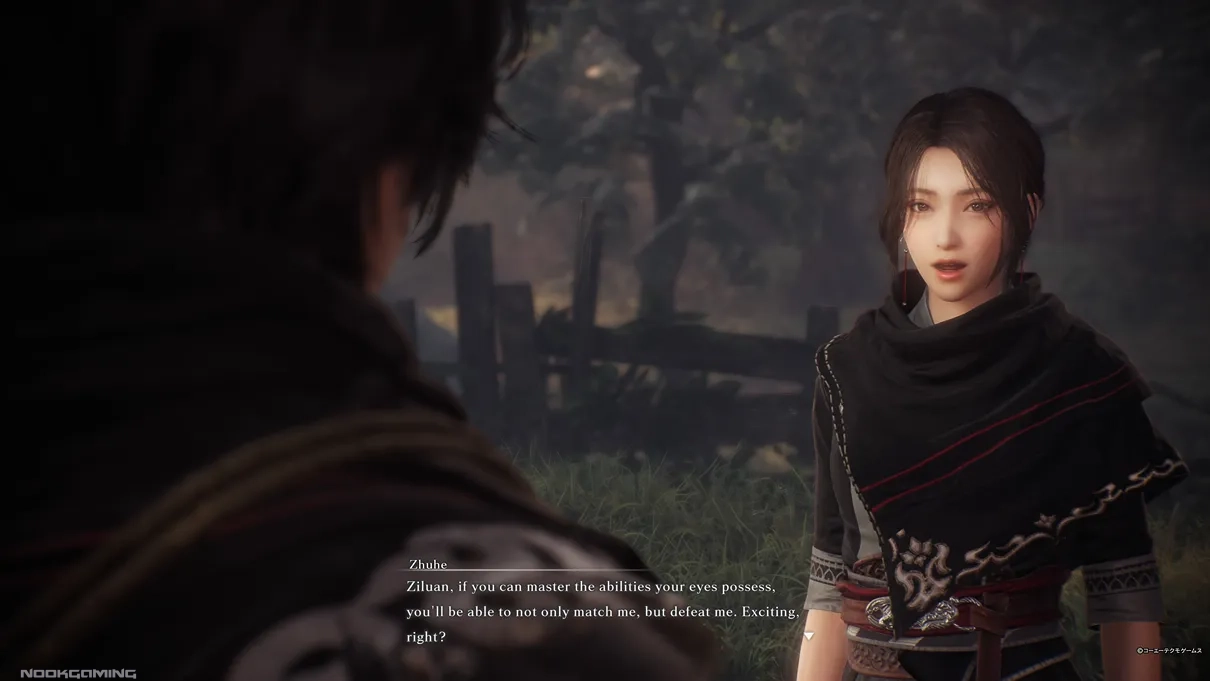
The first few chapters give you plenty of chances to work for different faction leaders. It works nicely as an introduction to both the setting and the main characters from each faction. Eventually though, you need to choose a hero to support in the quest to unite China, and you will clash with the others as you walk down that path.
While most of the story may be familiar, it’s presented through gorgeous cutscenes and voiced scenes, and it’s gripping enough between the presentation, sense of drama, and unique twists for Dynasty Warriors: Origins that it remains interesting throughout. Variations allow for six different endings too, with certain ones more suitable for coming back and playing after completion due to being locked behind some fairly difficult requirements.
Alongside the main plot are plenty of character events. You can unlock these as you go, and it gives you short scenes where you can converse with different characters, from the major to the minor ones. This brings with it a level of bonding with them, which can unlock cutscenes and important rewards. I found that the scenes themselves were their own rewards though, adding lighter character moments to those you may otherwise not see in the main story where everyone is more concerned about politics and battle. It’s a nice way to pad out the characterizations and add more relaxed moments. That and it provides a ton of evidence for the boys-love fans, with a lot of the wording seeming to lean that way.
Battles Across the Land
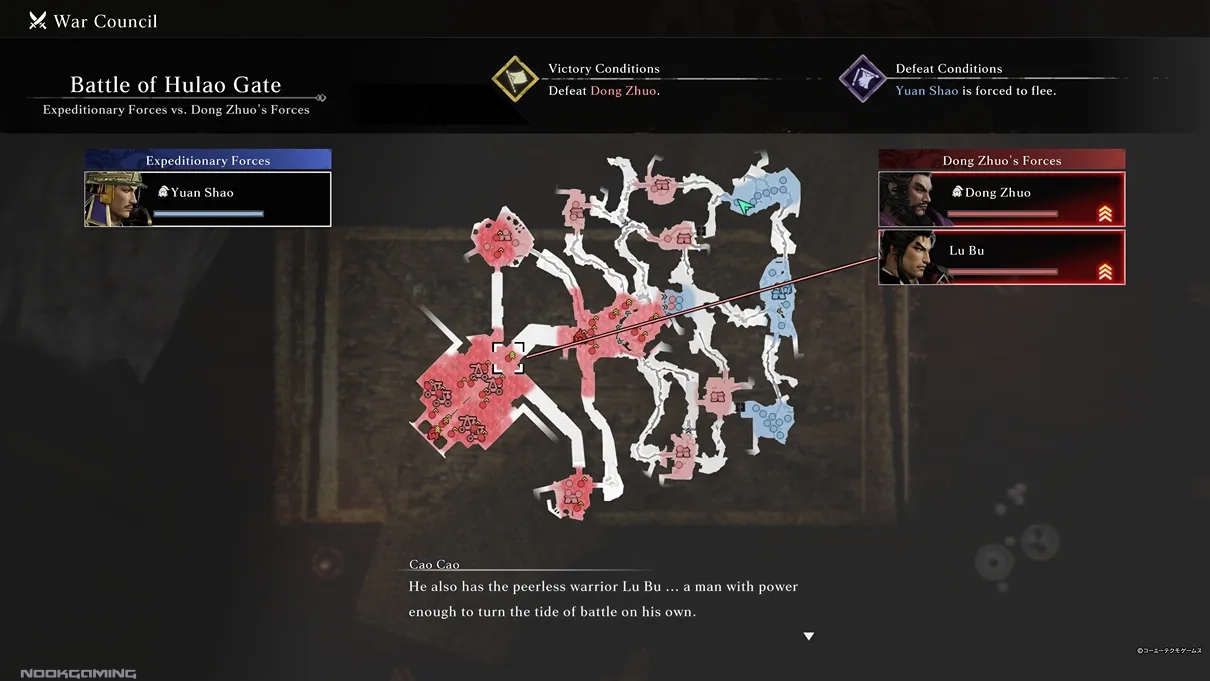
Story events, battles, and shops are all connected markers on a map of China, which you can roam across. You’ll sometimes also find the aforementioned character events here, as well as random battles, which help you to raise the ‘peace’ in areas, which in turn unlock events and bonus items. It’s a nice way to give everything a sense of scale, implement optional random battles, and offer little bonuses.
The battles themselves can range from large-scale situations that might take 20 minutes to play through to putting down a few bandits over the course of 2 minutes. Other than the smallest, most tend to involve taking down generals and conquering bases until you reach a certain point, which is typical of the series. Some mid-sized missions may instead have armies repeatedly taking over bases, making it a match to take over enough of them quickly, before the enemy takes any back. The variety is a nice way to switch things up.
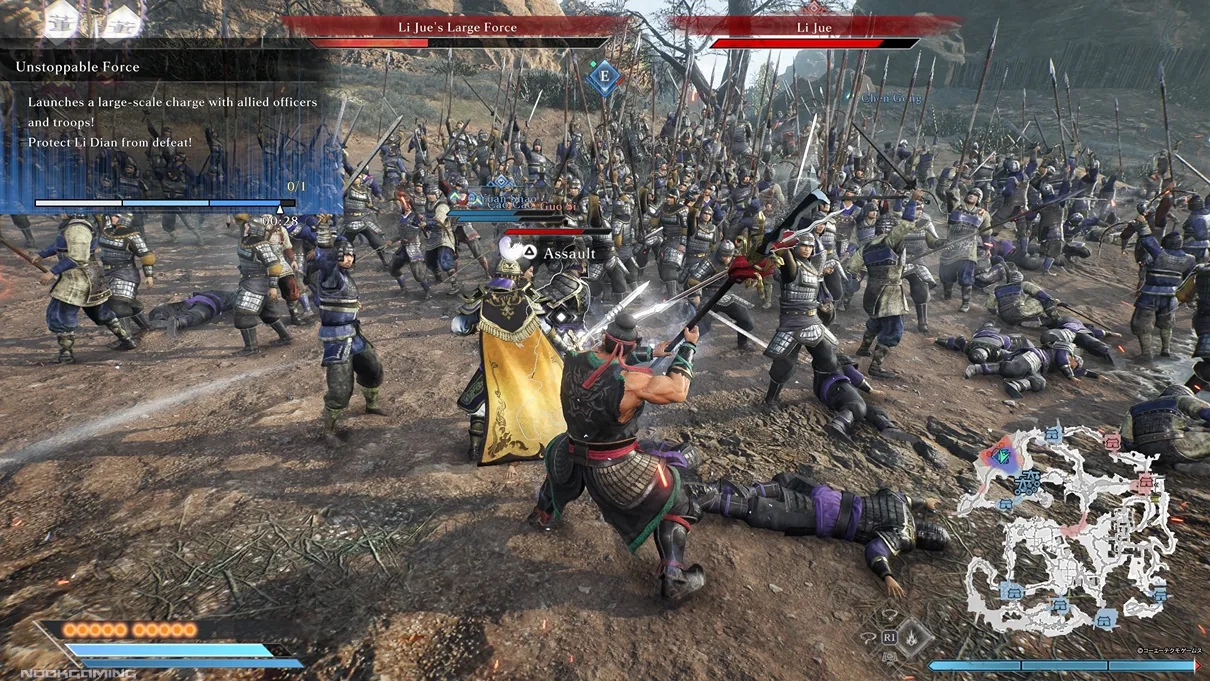
The biggest battles feel very grand in nature, with huge armies clashing, often resulting in a big showdown at the end where you need to break up an enemy force. There are often optional objectives to conquer certain bases, which then enable tactics such as ambushes and charges from your allies, and other short missions, such as taking down certain enemies before they prepare their own tactics. It does feel very satisfying to see hundreds of people all swarm on one general who might have been causing quite a bit of trouble until that point, or to stop a rain of arrows coming down on allies. It also adds in other factors to keep track of, like ally and enemy morale.
The way we participate in battles ties in well to the story. In most cases, while other officers are given strict orders to follow, we play somewhat of an independent force, with orders to do what we think is best and support the other forces. While this sometimes doesn’t make much difference, some bigger battles may have a few different potential routes to meet the final objective, and it adds to the sense of Ziluan being someone who acts to support.
What Do You Think This Is, Dark Souls?
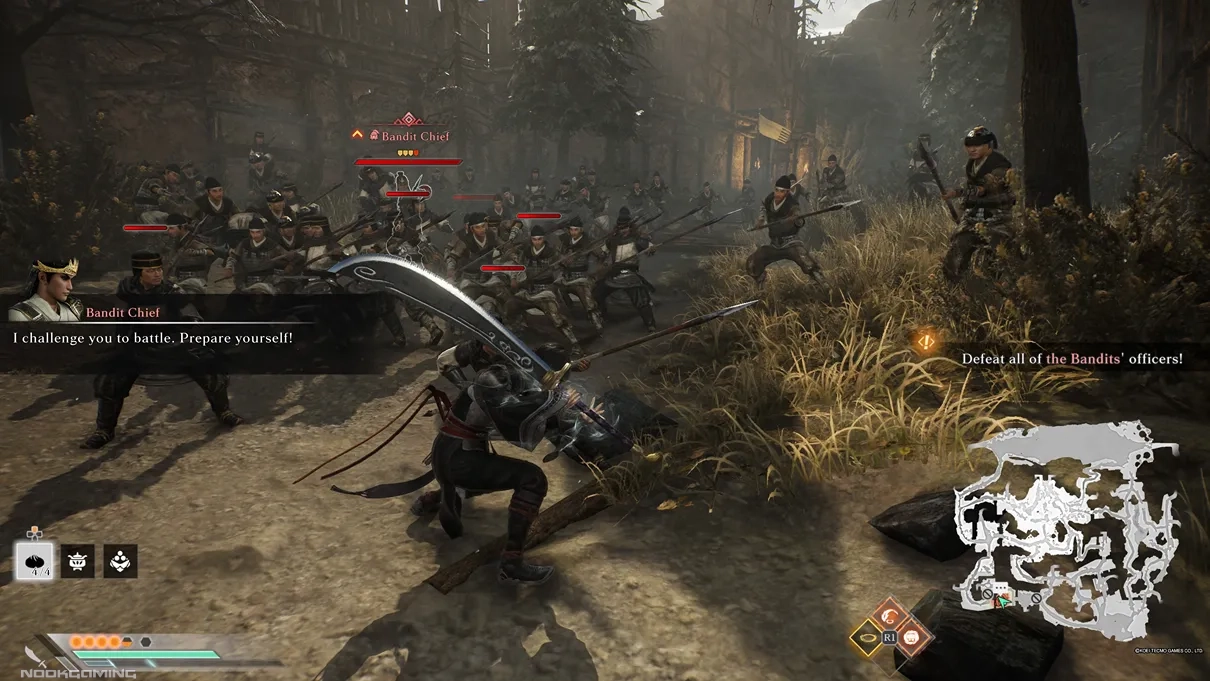
Outside of looking higher-budget and having a larger scale, the most obvious change in Dynasty Warriors: Origins from the previous games is how it feels to play. The older games were quite casual hack-and-slash titles with a sense of power as you fling enemies around, with their sense of challenge primarily based around enemies having higher amounts of health and damage output. Dynasty Warriors: Origins, on the other hand, still has plenty of hack-and-slash action where you send hundreds of enemies flying, but the difficulty and amount of technique required have both been significantly increased.
Enemy generals, even the weaker generically-named ones, require careful handling. You’ll need to dodge around them, block hits, and/or parry. Sometimes they’ll use special moves, which you need to avoid or use a special move to interrupt. Just comboing and throwing in a big Musou attack isn’t enough to take down generals on normal difficulty or often even beginner’s difficulty, even if you’re moderately overleveled.
Fighting generals is all about working to create those openings, then wearing down their health, all while avoiding taking too much damage. There is a reasonable amount of variation in how enemy generals fight too, since each of the 10 weapon types have their own set of attacks and ways to handle them.
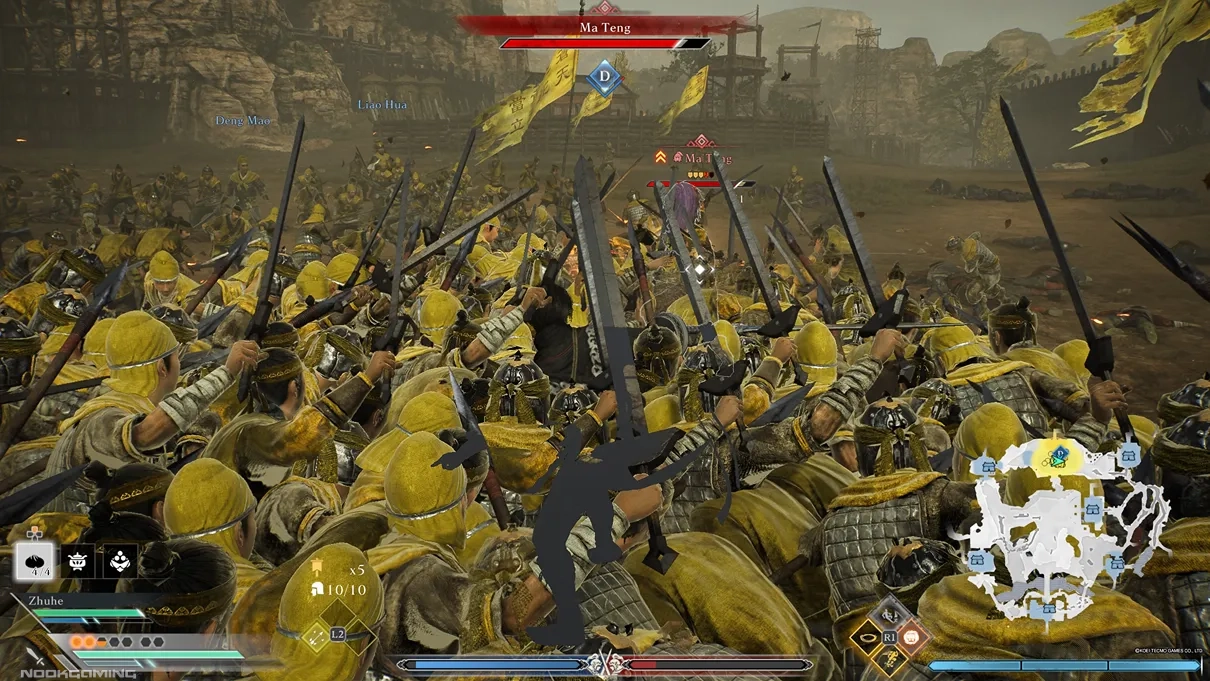
Luckily, over time, you unlock plenty of techniques to take them down. You can set yourself up to 4 battle arts per weapon type (with both weapons and battle arts able to be switched in-level via the options menu). These are special attacks, which range from straightforward wide attacks to take out crowds, forward-pushing attacks, interceptions, and even ones that look more along the lines of magic. Then there’s the big Musou attacks, an even bigger version of it when working with a partner, rage mode to throw out battle arts repeatedly for a short span of time, tactics you can command a small group of guards to perform, and more. Some of it is just learning the enemy patterns and whether a well-timed block or dodge is the best move to create an opening too.
While there are plenty of options to wear down enemies here, at the heart of it, it comes down to parrying and dodging, with the occasional intercept. And it’s incredibly fun and engaging. I say this as someone who loves the series and counts the far simpler Dynasty Warriors 8 Xtreme Legends among my most-played games, but Dynasty Warriors: Origins just feels the best game in the series by far when it comes to the combat gameplay.
Becoming a True Warrior
While player skill is paramount, unlocks also play a key role in progression in Dynasty Warriors: Origins. As you play, you can rank up, which is a fairly standard levelling system that increases your stats and allows you to unlock skill trees at certain milestones. Skills range from unlocking new Battle Arts, to increasing stats, to improving items, to new features such as gaining Bravery (the resource to perform Battle Arts) on performing perfectly timed dodges. That last one completely changed how I play after unlocking it, causing me to emphasize dodges far more than blocks.
The skill tree, as you may imagine, requires skill points to unlock said skills. While you can earn some of these by defeating enemies, most come from completing objectives set by warriors whom you meet by interacting with them via the map. These are generally along the lines of performing certain actions, such as defeating 100 enemies with battle arts for the staff or conquering 3 bases. Most are related to weapons, and worked well to encourage me to try out all the different weapons and switch things up when it came to smaller missions, or perhaps decide to take out a base with my gauntlets rather than my sword.
Weapons are a case of unlocking and earning them as you progress by either defeating generals who drop them or buying them in the stores. The strongest weapons are reserved for defeating specific enemies on the most difficult mode though, so they won’t come easily.
Cinematic Cutscenes and Battle Music
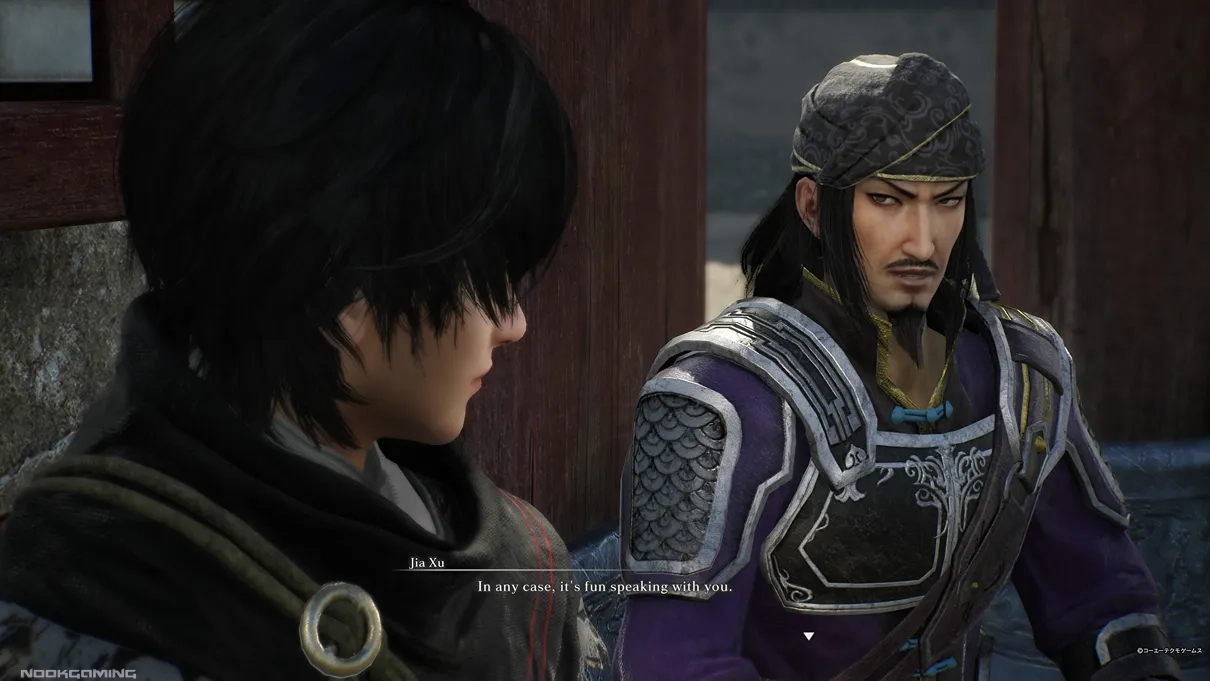
Dynasty Warriors: Origins has quite a few cutscenes throughout. The character models are incredibly detailed, with aspects such as the skin textures standing out. The armor designs are another highlight. It all feels very impressive for the most part. Occasionally, some less prominent textures weren’t quite as pretty, but these tended to be ones more in the background.
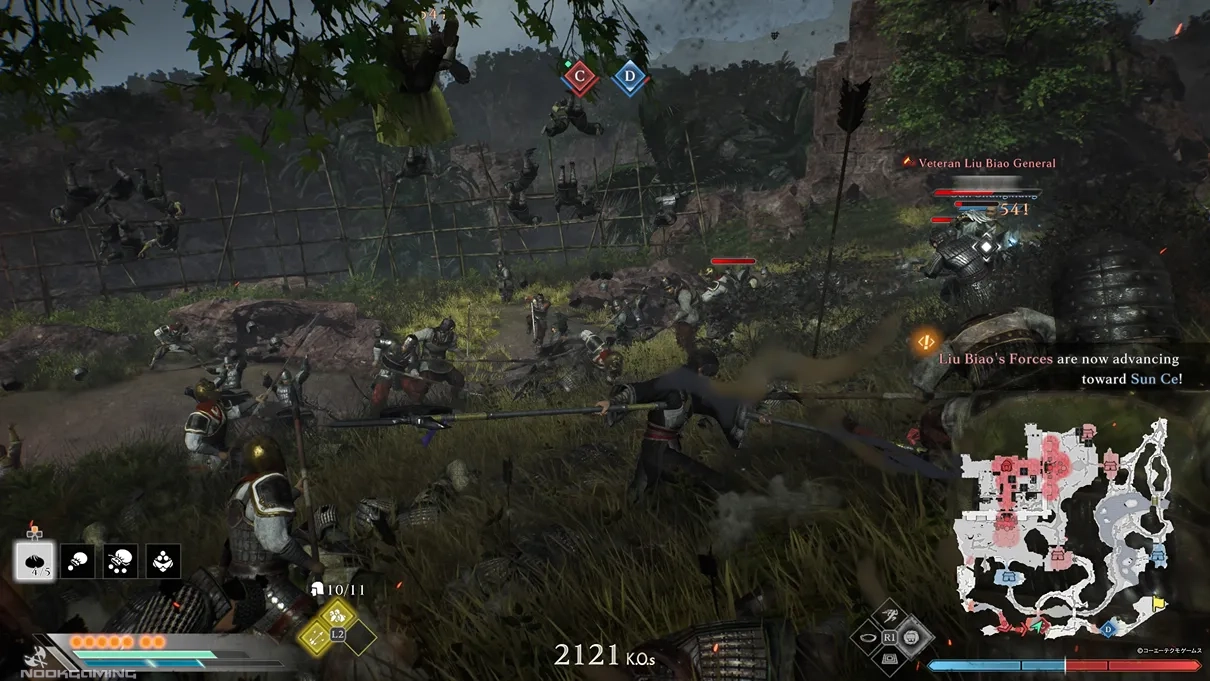
The gameplay is visually impressive too. Playing on the PlayStation 5, performance remained smooth for the most part, with very occasional dips. The only times that even happened were when hundreds of enemies were all rushing a single general.
The music includes a reasonably large soundtrack, with plenty of high-energy tracks to wipe out enemies to, along with others suitable for more serious story moments.
You can choose to play with Japanese or English voice acting. In English, I felt like the performances were a little stilted with pauses in unusual places, perhaps due to trying (and not always succeeding) to match the lip flaps. I played most of the game with the Japanese voice acting. It’s well-performed throughout and suited to the characters. If you want to play in Japanese, as a note, all the names are pronounced very differently, going off their Japanese readings instead of their Chinese ones. You’ll be running from Ryofu rather than Lu Bu.
Verdict
While I was a little skeptical of the new direction for Dynasty Warriors: Origins at first, I found myself thoroughly impressed after diving in. The more complex take on hack-and-slash combat kept me playing this for hours at a time, and the plot and character moments kept me gripped, even as someone familiar with the series and various takes on the story it’s based on.
And if you want more at the end of it, make sure to check out the expansion DLC, Dynasty Warriors: Origins Visions Of Four Heroes.
DYNASTY WARRIORS: ORIGINS IS HIGHLY RECOMMENDED

Dynasty Warriors: Origins Visions Of Four Heroes DLC: Click Here for the Review
If you are looking for another Warriors game of a different style, take a look at Warriors: Abyss.
Many thanks go to Koei Tecmo for a PlayStation 5 review code for Dynasty Warriors: Origins.

A gamer since the days of Amstrad and DOS and someone who has dabbled in a variety of professions. He enjoys a wide variety of genres, but has been focusing on visual novels and virtual reality in recent years. Head Editor of NookGaming. Follow him and the website on @NookSite.