Mado Monogatari: Fia and the Wondrous Academy is the latest installment of the Mado Monogatari (Sorcery Saga) series, a very long-running JRPG franchise composed primarily of rather cute dungeon crawlers. It’s the series the Puyo Puyo franchise originally spun off from (and eventually far outgrew), hence the presence of several characters and franchise iconography. But while Puyo has maintained a steady cycle of new international releases, this is only the second Mado Monogatari title released in the last couple of decades. And while it’s not technically the first to be localized in English, Fia and the Wondrous Academy is the first to do so specifically under the “Mado Monogatari” name. So let’s see if this window was worth opening again.
Well, How Did We Get Here?
To get this out of the way pretty quickly, you don’t need to know really anything from any of the other Mado Monogatari games (or Puyo for that matter) to follow anything in this game. While a few familiar faces from those franchises appear here, notably the iconic Carbuncle and several enemy types, this title is self-contained.
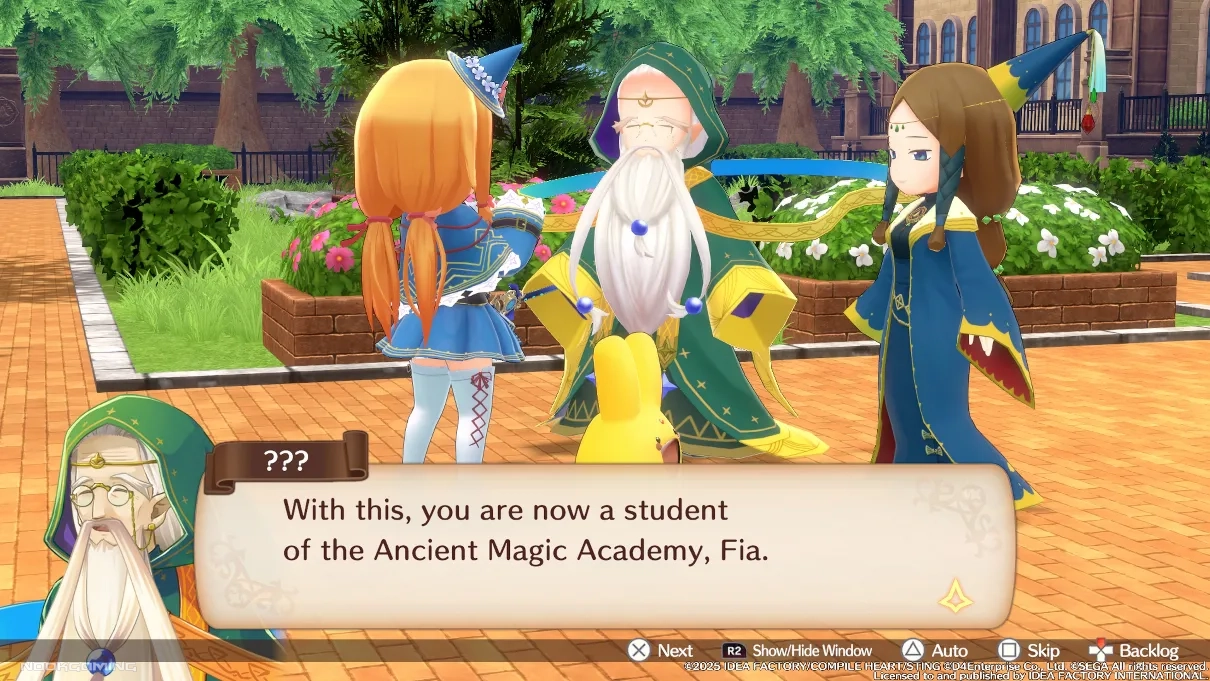
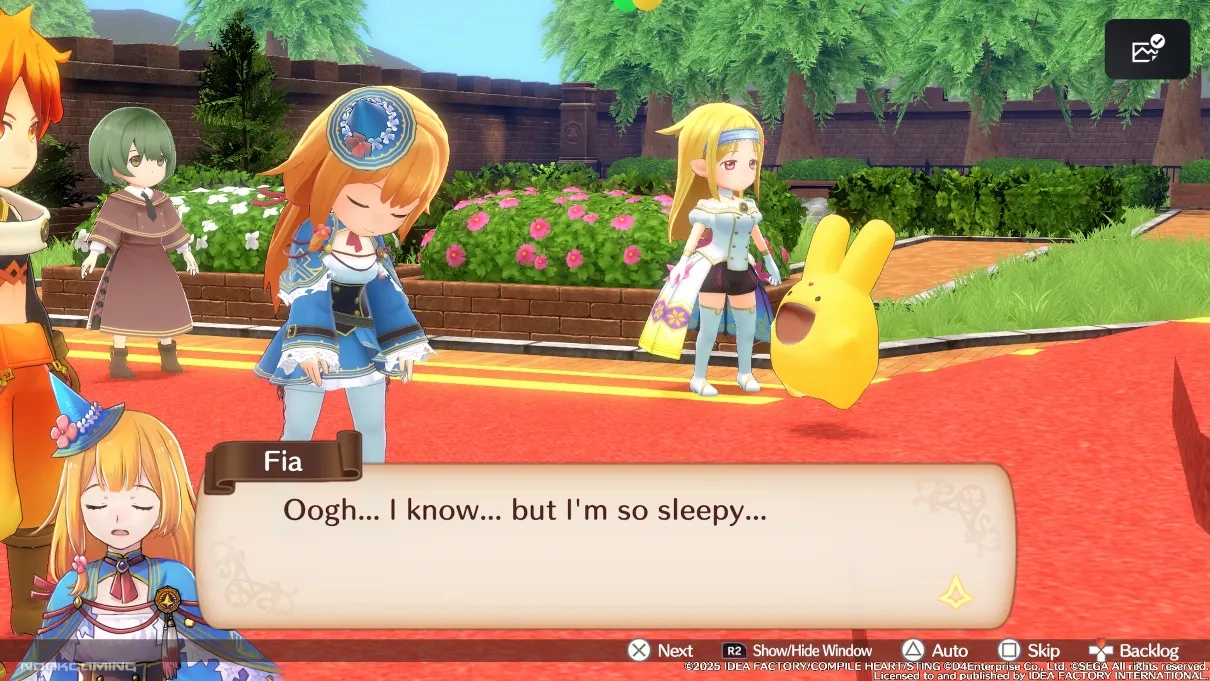
Mado Monogatari: Fia and the Wondrous Academy is quite a lighthearted experience of a game, made quickly evident by our protagonist, the titular Fia. She gains admission to the Ancient Magic Academy by the simple virtue of having dumb luck. Fia is a classic airhead: falls asleep in class, sometimes causes accidents, the kinds of stuff that quickly sets the tone of the story as rather silly and not that serious. She soon joins up with a band of eccentrics in her class: Will the wannabe hero, Leena the asocial smart wizard, Eska the flirtatious girl from a culture of strange dragon-beings, and the mischievous and enigmatic Totto. These five serve as the main party and core of the game. Get used to them because the overall cast is pretty small.
The game doesn’t particularly have much of a driving narrative running throughout, instead leaving most of its (rather basic and cookie-cutter) plot towards its back end. Instead, you mostly stick to the academy, with progression typically involving shorter subplots as you take exams to become a better mage. And when I say “stick to”, I mean that’s about all you really get, because this game is really compact. In an era of games eating up massive chunks of my solid-state drive, Fia and the Wondrous Academy took up all of 2.34GB of space on my console. It’s not just because the visuals look like they could pass for those of a PlayStation Vita game either.
Everyday
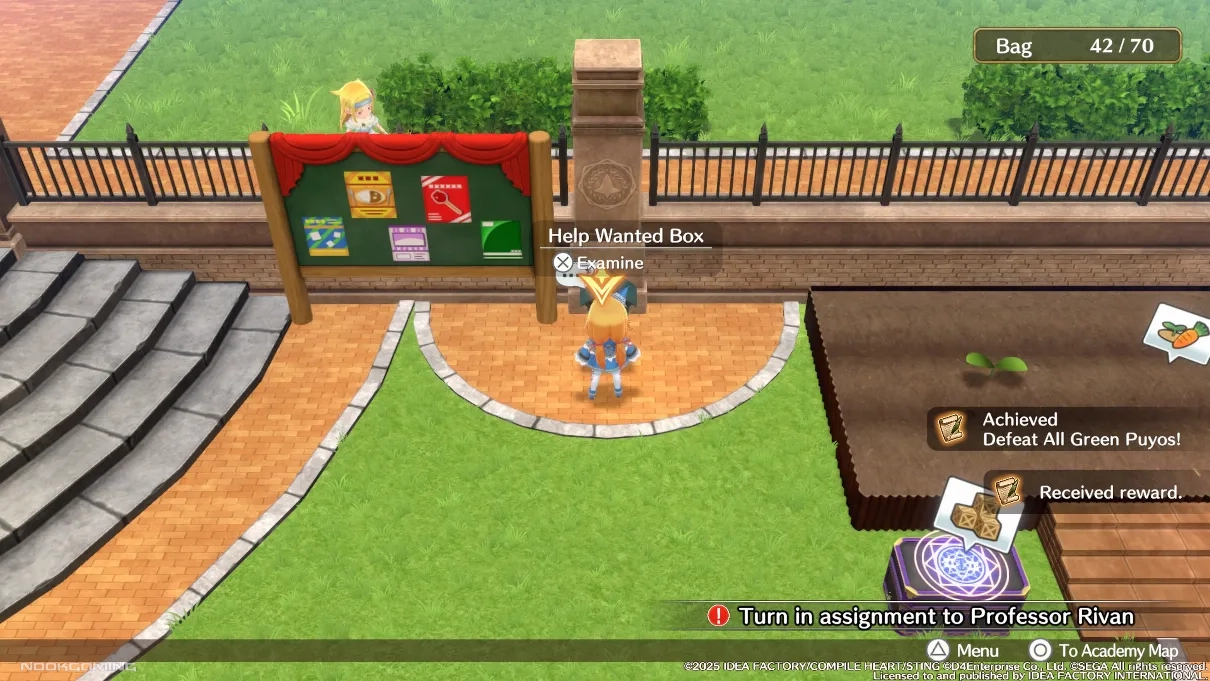
Mado Monogatari: Fia and the Wondrous Academy is repetitive enough to put a metronome to shame. Barring a handful of cutscenes and the dungeons (more on those later), the entire experience at Ancient Magic Academy is limited to around half a dozen screens. And that would be fine in theory. Plenty of games get away with sticking you in a limited hub world with which you spend most of your time, but it generally takes some extra spice to keep it interesting for an extended period of time. Alas, a Persona 3 this is definitely not. The academy itself is remarkably barren of anything beyond some basic facilities for simple activities (e.g., planting vegetables and catching fish) and the most essential of NPCs (namely academy faculty who you must talk to to advance the game, take quests from, or buy items from). There’s extremely little to offer a sense that much changes or develops here from the beginning to the end of the game, and it’s remarkably easy to forget you’re at a full-fledged academy because of how rarely you even see other students. There’s just nothing here to immerse you in academy life at all because there’s so little life actually here to engage with, which really drives home the mundanity of the experience.
The main core cast doesn’t really enhance the game much either. They have a few funny and cute moments here and there, but they largely don’t go far beyond their character archetypes. The tone of the game also makes it rarely feel like much is at stake. At times it plays on Fia’s dumb luck to literally move things forward, which makes it feel like something of a parody not to be taken seriously, but the characters aren’t quite endearing or funny enough to carry the entire game like this. Most attempts at anything resembling worldbuilding or lore felt quite shallow. About the only chapter that really stood out to me as at all memorable was the section of the game that dealt more with Eska’s background; she’s probably the most distinctly amusing character of the game, but that isn’t saying much.
Spinning the Wheel
It doesn’t get much better when we get to discussing the actual dungeon crawling and combat, which are somehow even more boring.
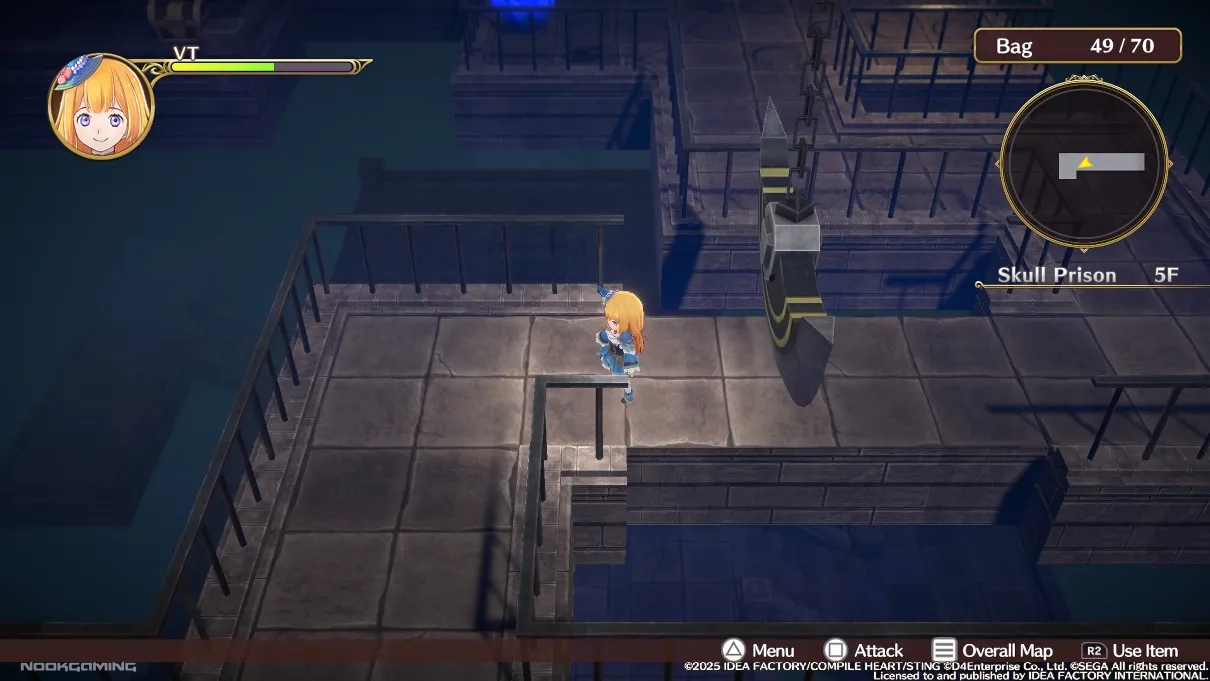
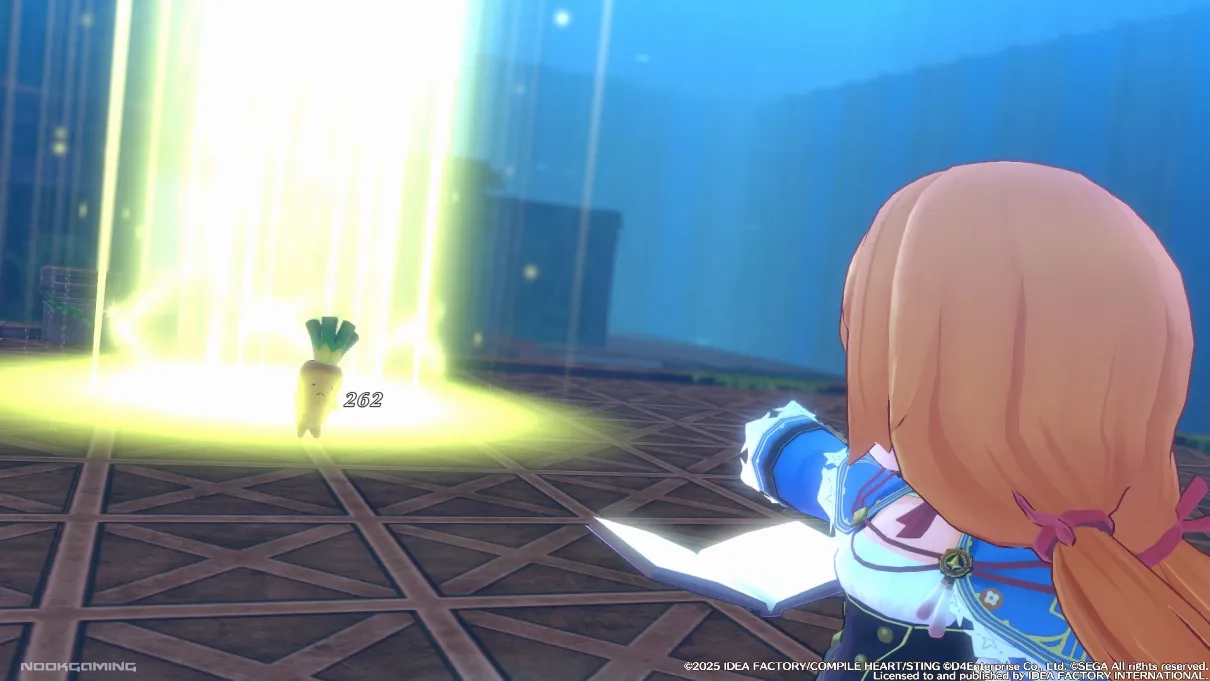
Mado Monogatari: Fia and the Wondrous Academy has you going to various dungeons for major quests. These dungeons adopt a “mystery dungeon” gameplay structure, meaning they’re procedurally generated, with pseudo-randomly placed items and enemies lurking each floor. Find the warp point to the next floor again and again until you reach the top. Alas, the way the game generates floors does nothing to add any variety to the gameplay experience, as the variation of floor layouts and hazards is quite limited. Later dungeons add some new enemy types and field hazard variety, but there are not many of the former overall across the game, and the latter do little to actually meaningfully add friction to the dungeon crawl.
The dungeons offer no tension whatsoever, in part because the game autosaves every floor, lets you manually save after each floor, and lets you set a checkpoint to warp out of the dungeon on boss floors. It really doesn’t feel like great use of the mystery dungeon mechanics. If you want, you can also use the “floor dowsing” item to view the map of the floor and then just load your autosave so you know where the exit is without burning an item. Because yes, the floor layouts are generated in such a way that they are consistently the same when you load your save. Not that I’d really want it to be harder though, because the experience of getting through dungeons is like watching paint dry.
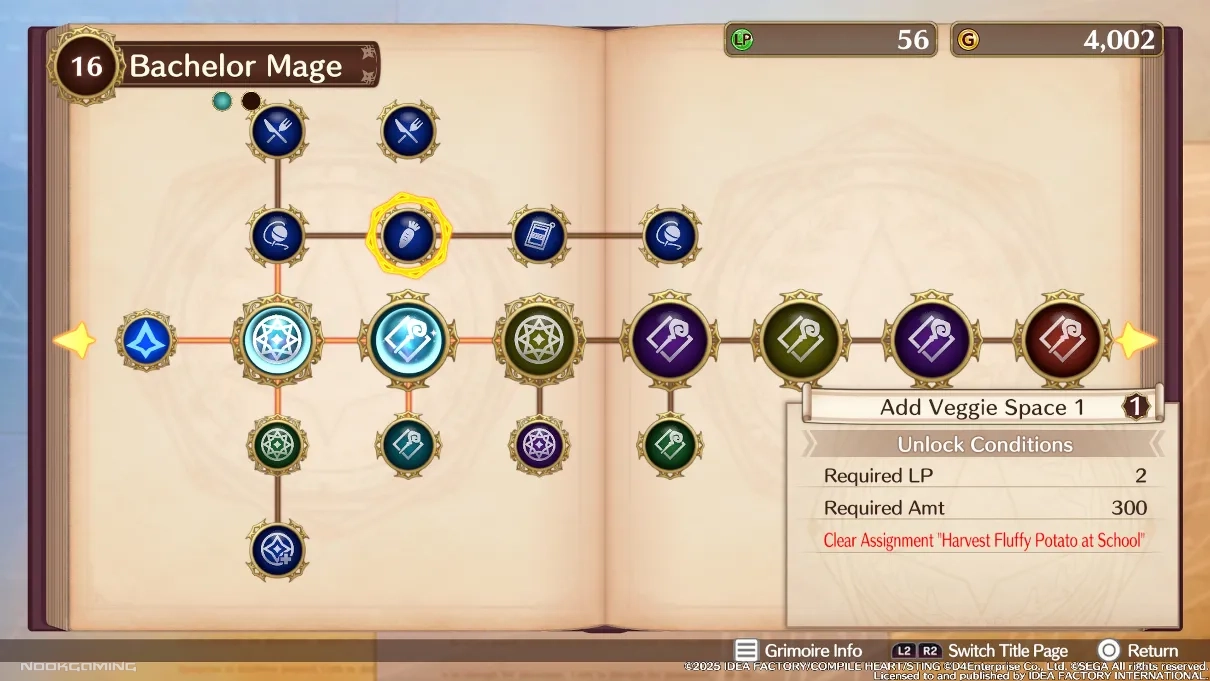
The dungeons make for a ludicrously padded progression system. The typical loop of each chapter will involve getting a required mission to climb a chunk of the dungeon, beating a boss and being forced to warp out, then going back to do a longer chunk of the dungeon from the beginning. Every dungeon requires multiple trips of increasing lengths, sometimes three in a chapter. On top of this, you will also need to be promoted to the next rank of mage a few times to advance the story, and doing so requires completing a certain amount of objectives in Fia’s grimoire. The prerequisite for most of these is doing a quest, and the majority of quests in this game will involve you going into a dungeon you’ve already been to in order to either fight something or collect something. In essence, you will almost certainly need to play through a significant chunk of every single already repetitious dungeon at least four times before you can really progress. Given none of them offer any real punishment or sense of tension you can’t just easily circumvent, my whole playthrough was just going through the motions.
Same As It Ever Was
It wouldn’t be so bad if the battle system was at all fun, which it unfortunately isn’t. Mado Monogatari: Fia and the Wondrous Academy’s combat loop tries to find an interesting middle ground between turn-based and action combat, but struggles to make either work and hurts for having both.
Because of the real-time element, it would be exceedingly hard to control all three characters you bring to battle at once, so you really only control Fia in combat the entire game. This doesn’t stop combat from being quite hectic, as you have to move around the arena to position for your attacks and skills. In addition, casting skills of certain elements grants you orbs, and it takes these orbs to activate special skills, which I found to be by far the most consistent source of damage. You are also limited to far fewer skills you can bring to a given battle than you actually will learn. I get that this is probably to prevent overloading the player with battle menus, but it limits your options in battle once it begins which makes for really repetitive boss fights. And those are supposed to be the big encounters; regular encounters are even more uninteresting.
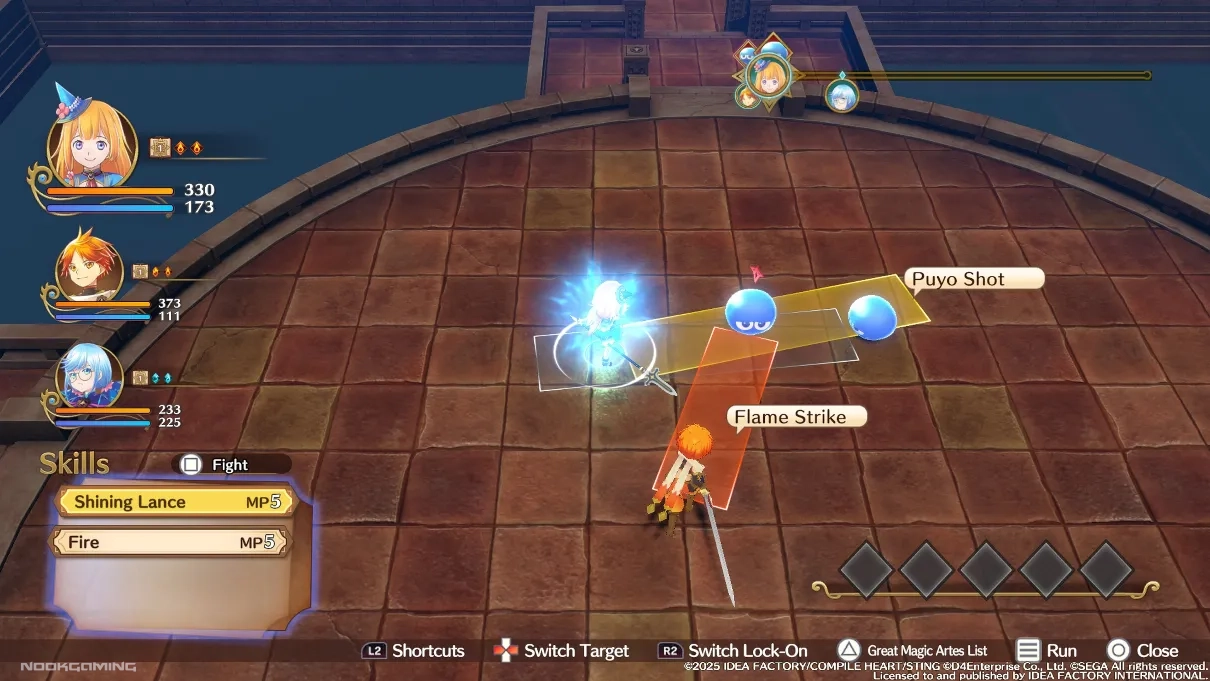
Trying to both move and use the menu at the same time just feels quite clunky. It is also one of many factors preventing the player from reasonably being able to follow everything that’s happening, given how much factors into battles. These include Fia’s position, enemies’ positions, the turn timeline in the top right, party members’ health and MP, the orbs you have, and what action you’re menuing towards next, all of which take up different sections of screen real estate. In spite of how many mechanics are on display in battle, bosses felt largely like stat checks and I could easily just play a good chunk of the game on auto-pilot, spamming heals with Fia (because I sure couldn’t trust my allies to be dedicated healers) and just outlasting things. This is especially the case with bosses, and the only reason I lowered the game’s difficulty off of Hard after a while was because of how boring regular encounters were no matter how much I tried to change things up to make them fun, since I eventually just got walled by pure numbers and did not want to fight more mobs.
The ceiling of this game’s combat feels a lot lower in practice than it should be with all the mechanics going on. You have remarkably little agency in battle once combat actually begins given that a lot of enemy attacks can’t really be dodged and you leave a lot up to your allies who tend to take a beating. There’s not a ton of oomph to the combat either as you just kinda keep doing the same motions over and over until things die.
Eyes and Ears
Production and presentation qualities tend to be places I find redeeming qualities in for less enjoyable games, but even here I find myself relatively ambivalent.
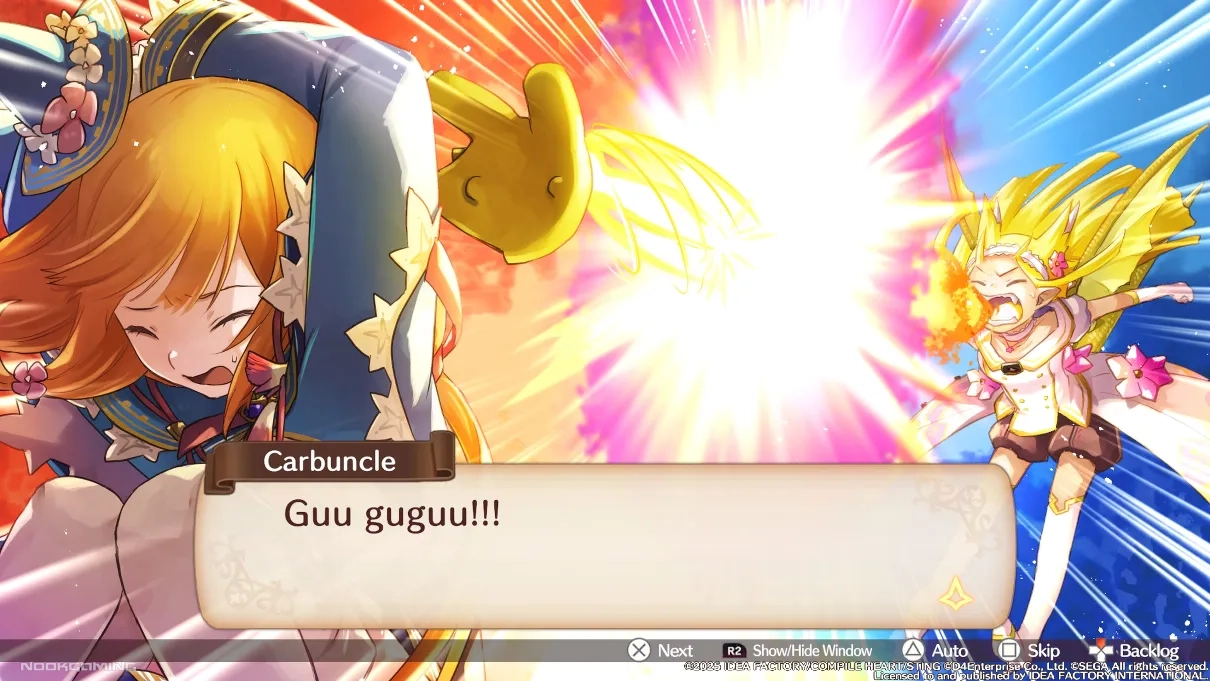
As mentioned before, this game looks more like it would fit more on a PlayStation Vita than a PlayStation 5. I don’t ascribe to the idea that a game needs to have mindblowing visuals as long as it has a consistently good artistic direction, but the visual aspect of Mado Monogatari: Fia and the Wondrous Academy is rather up and down. The unique CGs are cute and I like the character designs of most of the cast, even though the use of guest artists is pretty obvious when comparing certain character portraits. Some dungeons have relatively cool aesthetics, but I got so tired of seeing the same few screens in this game that any effect of such is tempered. The 3D models are pretty lifeless, which is most apparent when you have stuff like a character talking about dancing while their model performs some really neutered-looking animations.
I thought the dungeon and combat music was generally all right. If you’ve heard the soundtracks to the Puyo Puyo games, it maintains that sort of jovial tone that works pretty well for a more laid-back game like this. It also has a cute little intro theme that doubles as something of a leitmotif for Fia and the class. Comparatively, cutscene themes were pretty lackluster, and I got really tired of the exceedingly repetitive harpsichord arpeggio theme that plays in the Academy the entire game. The game is voice acted in Japanese (i.e. no dub), and it’s about what you’d expect a cutesy and silly game with anime goofballs and wacky support characters to sound like. It did still have occasional lines that were randomly much quieter than others though.
Verdict
There are maybe two kinds of people whom I can recommend Mado Monogatari: Fia and the Wondrous Academy to. The first is the type of Compile Heart fan who will play just about any cute, low-stress, and/or marginally charming moe JRPG on the market. The second is anyone battling chronic insomnia looking for a powerful soporific to help them get a good night’s sleep, because this game is a snoozefest. It functions, it’s cute, it has a couple of funny moments. Beyond that, it’s much too dull of an experience to recommend anyone spend the 25ish hours it takes to beat.
WAIT FOR SALE ON MADO MONOGATARI: FIA AND THE WONDROUS ACADEMY

If you would like to see more Mystery Dungeon games, you may be interested in our review of Shiren the Wanderer: The Mystery Dungeon of Serpentcoil Island.
Thanks to Reef Entertainment for providing a PlayStation 5 review code for Mado Monogatari: Fia and the Wondrous Academy.
Been playing games since my papa gave me an NES controller in the early 90’s. I play games of almost all genres, but especially focus role-playing, action, and puzzle-platform games. Also an enjoyer of many niche things ranging from speedrunning to obscure music from all over the world.