Beginning in 1989, SaGa has been around as a series for a long time. Known originally outside of Japan as the “Final Fantasy Legend” series until the cult classic that was SaGa Frontier on the PlayStation 1, this series has been love-it-or hate-it for JRPG fans ever since. Where will SaGa Emerald Beyond fall on this scale?
What Is A Witch Without Her Cat?
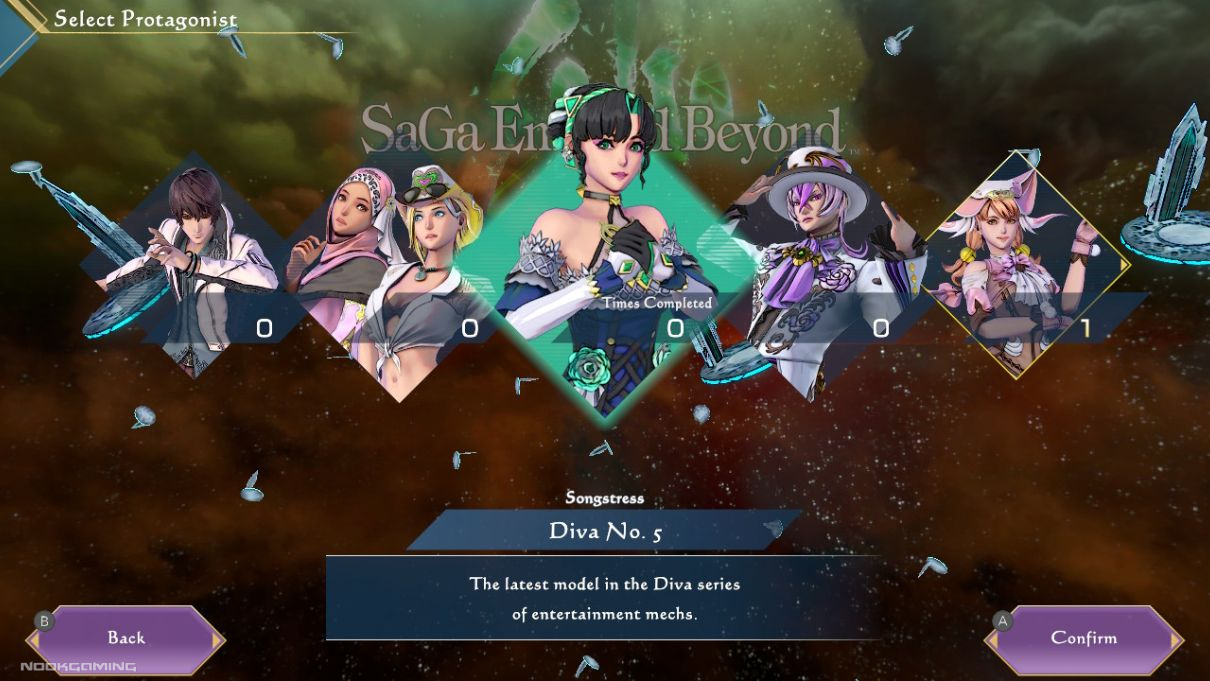
SaGa Emerald Beyond throws gamers right into the deep end with a selection of 5 scenarios. Tsunanori Mido has been tasked with trying to balance the worlds. Ameya is a witch who has her powers taken from her and has to balance finding her powers and gaining enough Mana to pass the Witch test allowing her to become a fully-fledged Witch. Bonnie & Formina are two cops who end up thrust into interdimensional events through work. Siugnas is a vampire king striving to get his realm back. Diva No. 5 is a singer who’s lost her voice and body. There’s quite a variety on offer here.
While the stories do overlap in some sections, this isn’t a JRPG cliché case of all the protagonists coming together to defeat a greater evil. Instead, this is five different tales that just happen to take place at around the same time using the Emerald Beyond dimensional gate to jump from dimension to dimension where you may come across the cast.
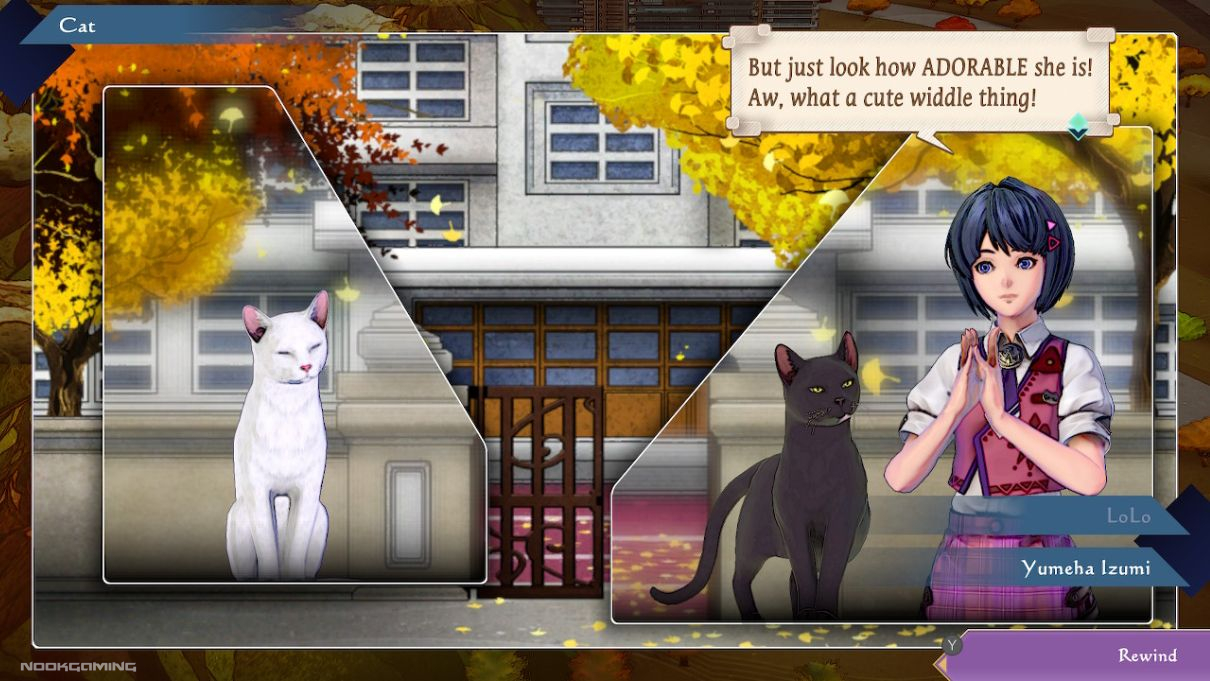
I say “may” because the game has a staggering amount of different routes you can take through the stories. Paths are usually locked by choices made in dialogue or via other obscure mechanics. As one example, in Ameya’s story, if you collect too many cats, you’ll lock yourself out of part of the story.
Choose Your Own Adventure
The characters and stories are all well-written and engaging enough to allow you to accept the sheer amount of strangeness going on in these five tales. I was chasing criminals through different dimensions (such as a steampunk world and a jungle world) in one, then trying to find my body and voice as a singer in another. Despite how drastically different all the stories are, they fit in snugly with the quirky nature of the SaGa franchise, gripping me enough to want to return and make different choices and see where that would lead me.
SaGa Emerald Beyond is the first SaGa game in the franchise to get a simultaneous global release. It’s worth bearing this in mind along with the theme of the franchise, which is discovery. For previous titles, we westerners have had the benefit of the game being truly figured out by the time it lands on our shores. As a result, there are many guides out there directing players through the more obscure aspects of the game. If you’re playing this around release like I was, you’ll find people still discovering new bits of dialogue and fights. I do not doubt that I’ve not seen everything despite my best efforts, but that sheer joy of discovering something new continues to keep me exploring more and more, even after completion.
Throw The Rule Book Out Of The Window
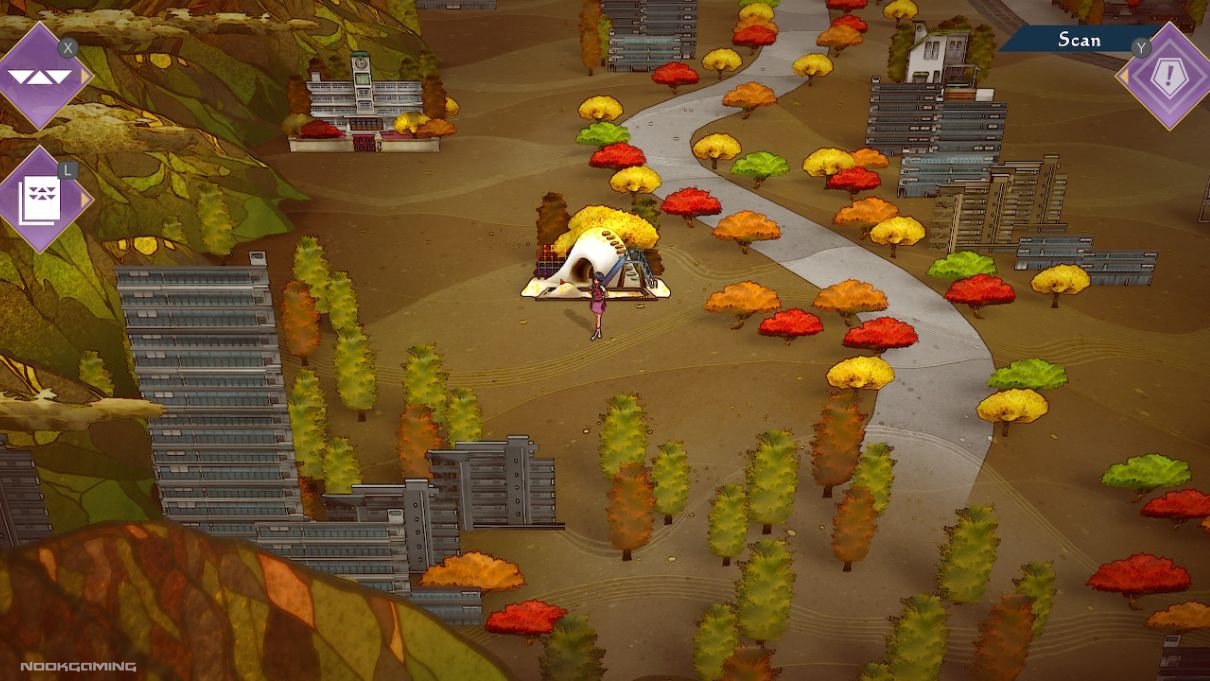
SaGa Emerald Beyond follows the gameplay formula of previous installment SaGa: Scarlet Grace, a game that ruffled the feathers of JRPG purists everywhere with its complete lack of dungeons or random battles. The most accurate way I can describe the way this game plays is that it has visual novel scenes for storytelling, is connected by explorable world maps, and has an addictive yet mind-boggling battle system which even after 30 hours of gameplay still feels like a complete mystery to me.
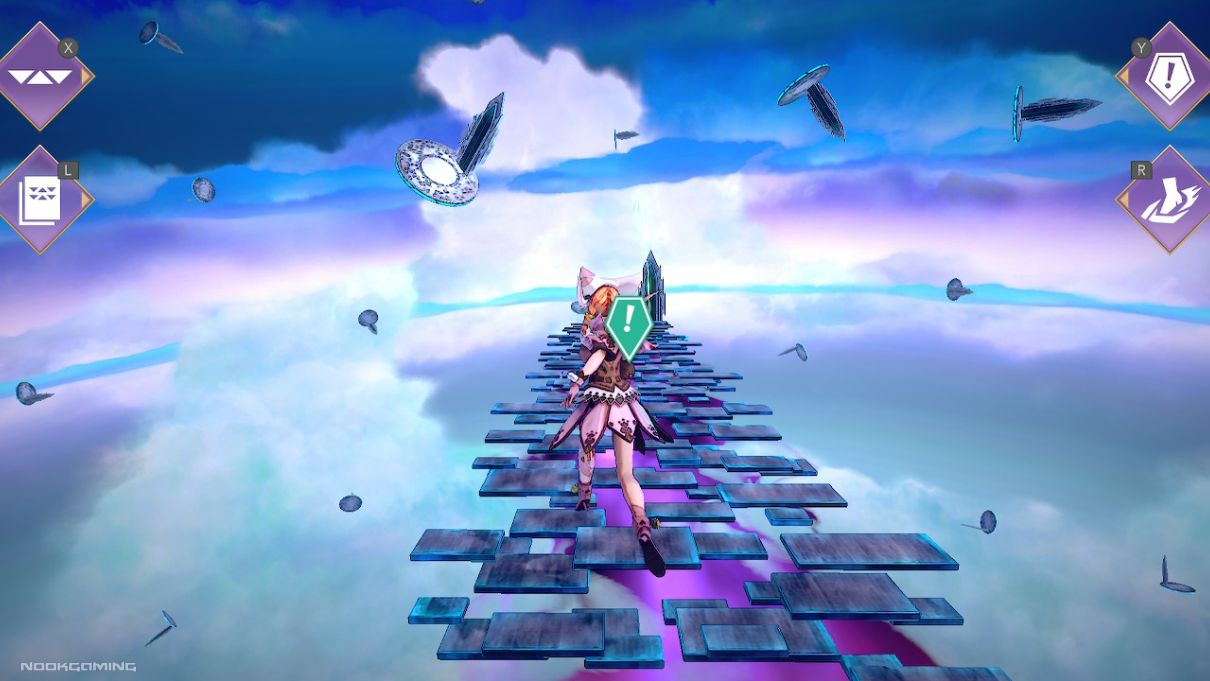
Exploration comes in two basic forms. The first is the world map where you hold the “Scan” button down and it directs you to points of interest in the form of colored squares; green progresses the story, red is for a battle, and blue is for side content. While you can walk around the map, these points of interest and the places to change areas are the only things you can interact with. The second is in the Emerald Beyond, where once again you scan and find locations in the same way, but the camera is in a third-person angle.
When you go to battle locations, like much of the rest of the game, it’s a case of discovering what you’re running into when you get there. You can only hope that you’ve set up your party in a way you can tackle it. It doesn’t help that even though health is restored after battles, there’s no way to heal during them!
There’s no shops and no traditional currency in the game, so your equipment options are limited to what you can find. All items are found either as part of a side story, in battle, or awarded to you by completing one of the many “Mr. S Trials” that challenge you to play in certain ways. Most items are used to upgrade the equipment you can find throughout the game.
Outside of battle, story, and exploring, you’ll spend the bulk of your time stuck into the in-game menus, adjusting your party layout, equipping the various skills, and tweaking until you are comfortable in battle. There are a few times when you can enter a battle that doesn’t progress the story, and these are ideal for a little bit of grinding to earn skills and trying to figure out if your party setup works.
SaGA: The Art Of War?
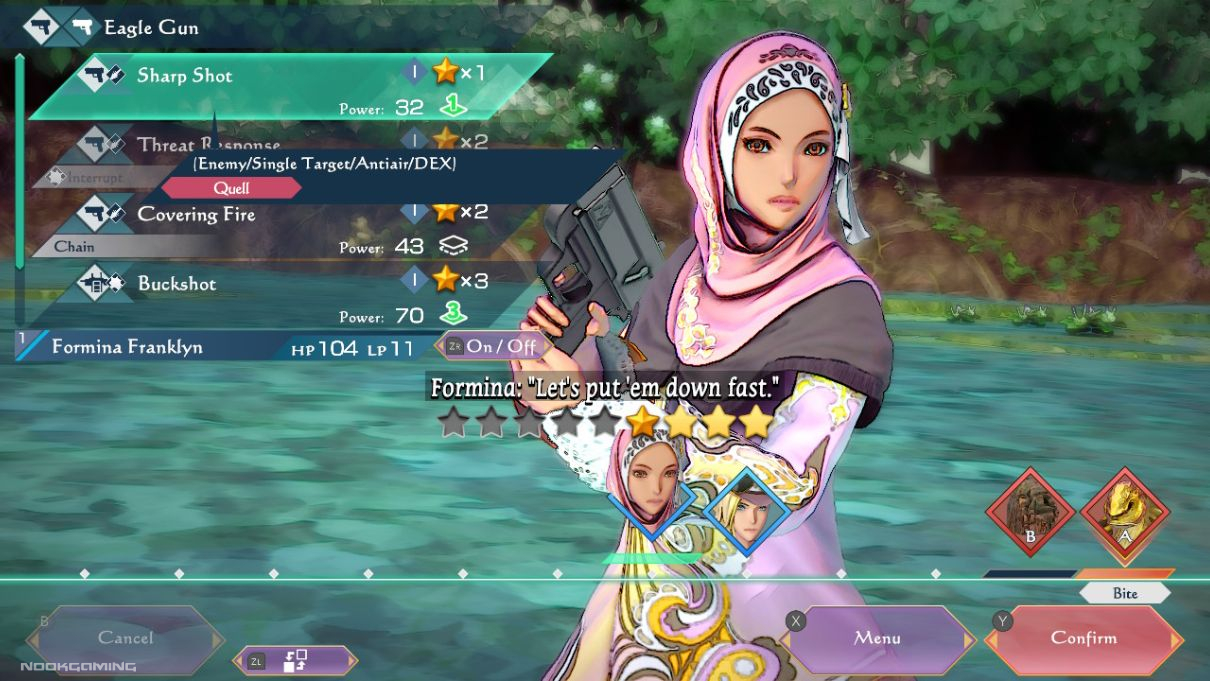
While I love the combat system, to say it’s complicated and riddled with nuance is an understatement. I feel zero shame in saying that while I have enough of a handle on it to have enjoyed and completed the game, I know I’m not getting the best out of it. I learn something new nearly every battle even at this point, which isn’t unusual for the SaGa series.
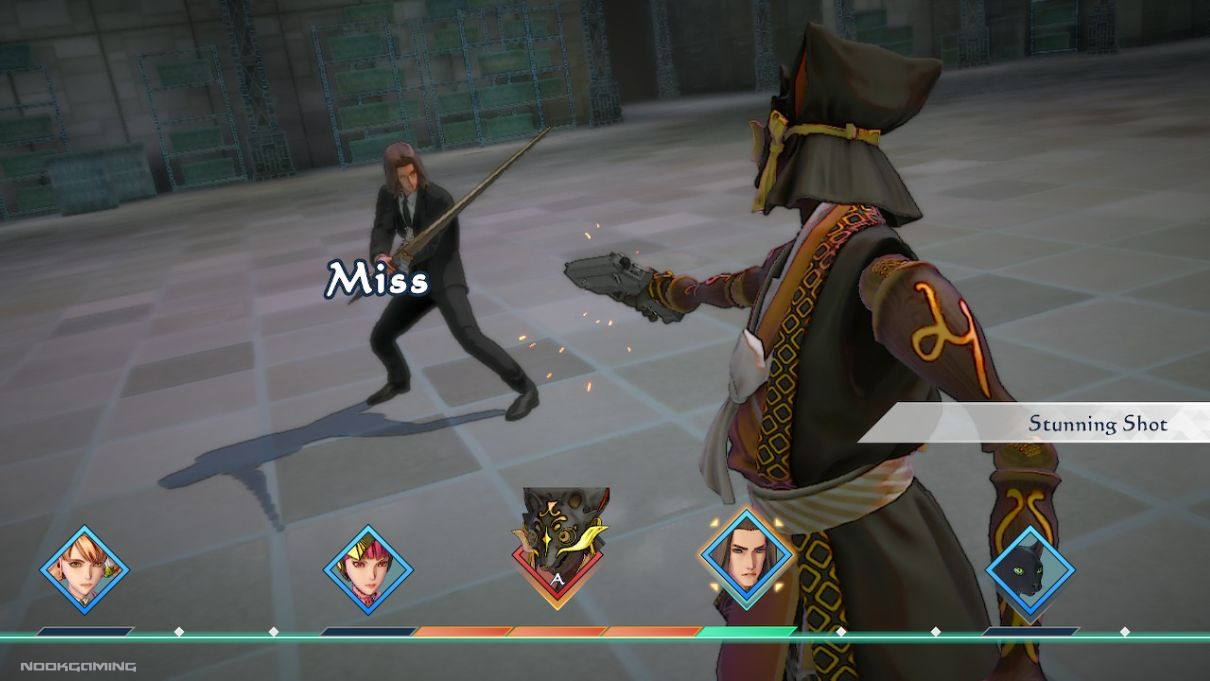
The combat system uses a timeline. You can see when both your own and enemy attacks are coming, and what they’re going to do. The crux of the combat is to build combos by having your actions come out together, and as such create a unique skill through these combos while breaking any combos the enemy has.
Each round of battle you build up Action Stars and these allow you to use your abilities. Each ability takes up a certain amount of time to use. It’s advised to learn this very early and figure out the best abilities to position characters to be close to one another and interrupt the enemy, either by using a stun move or just breaking their combo so the hurt that’s coming your way isn’t quite as deadly as it could be.
You’ll learn more skills in different ways depending on what your character types are. Human characters learn skills through the number of times they use a weapon, and it almost seems random when a lightbulb appears over their head and they bust out a new move. “Monsters” learn abilities from absorbing other monsters. Finally, Mechs get new skills from whatever equipment they have at the time.
When the fights go your way and your best-laid plans pay off, it’s pure gold and gives you that real big brain energy but the game can and will whoop you if you try to just phone it in. Should you be defeated or realize the battle isn’t going to swing in your favor, you can restart the fight at the cost of your character’s LP. LP are essentially “lives”, and should you run out, it’s game over. Fortunately, your LP returns every time you leave the dimension you’re in, and you can even find equipment to reward you with more for each win.
A New Frontier
The game has a fairly healthy tutorial to read through which is enough to get the basics down, but you may want to visit some guides to nail down the intricacies. As an example, I only found out how to tell if a move is effective or not against an enemy after completing this game.
How much you enjoy the ebb and flow of combat and figuring out how best to work the combat timeline in your favor is essential to how much you’ll enjoy the game. It’s half story and half combat, and if you aren’t willing to learn or experiment and just hope you can get through the game with grinding, then this isn’t going to be for you. I would highly suggest that you try the demo, even if this review makes SaGa Emerald Beyond sound good to you.
While the character stories differ in length, especially when choices are factored in, they roughly land between 7-10 hours each. Once you have finished one you can go over to the next story and carry over any items and skills learned. You can also restart the story you have just done with your end-game stats and try out a totally different route, which massively adds to the replayability of the game.
As an example of replayability, my first Ameya run ended in a couple of hours. The second time I went through, not only did I discover several different areas, but also more recruitable characters. I was practically drooling at the thought of what else I could discover in the other four stories.
A Beautiful Stone
In terms of presentation, SaGa Emerald Beyond is a beautiful mix of traditional high fantasy, sci-fi, Japanese anime/manga, and just pure unadulterated creativity from the people behind the SaGa franchise. They’ve created such a quirky and unique art direction that while it may not be Final Fantasy VII: Rebirth in terms of overall visuals, it still gives it a run for its money in terms of pure artistic direction.
Graphically, the game isn’t a powerhouse by any means. The world maps are mostly barren areas with 2D pop-up pictures of locations, creating an almost tabletop game look to it. The third-person exploration in the Emerald Beyond is a little nicer in that you get a closer look at the character models, but in terms of environment, it’s just a plain ethereal-looking area.
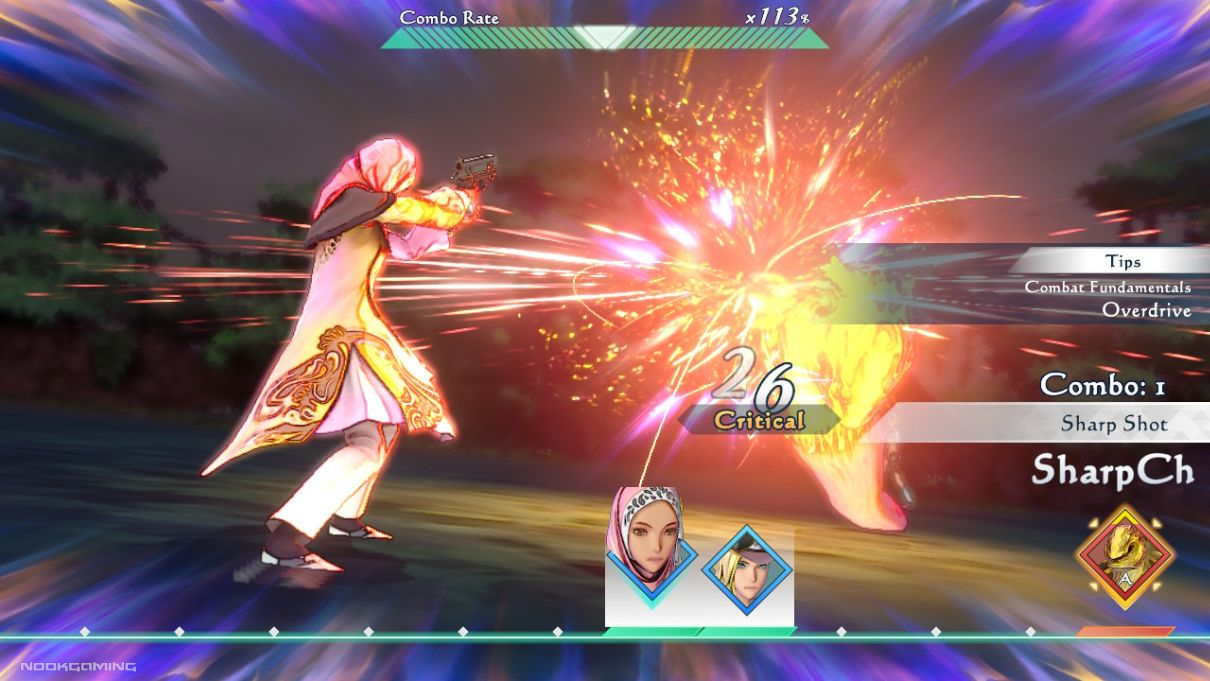
Battles look surprisingly elaborate. Each time you start, your party runs into battle together. Every attack is given its own animation on its own, even if it is part of a combo. The camera runs wild while this happens, and the characters love to pull poses to the point even characters from JoJo’s Bizarre Adventure would blush. It looks absolutely bonkers in the best way.
Verdict
SaGa Emerald Beyond is a curious beast of a game. The global release, demo, and marketing would have you believe this is going to be an ideal game for newcomers. It’s not. Making this your first SaGa title could easily put you off the franchise for life.
It’s a quirky and obscure adventure where many of its mechanics are hidden. It feels completely random at times and you’ll be hours deep into it before you feel semi-competent at the battle system. As much of a “JRPG” as this is, it’s not what most gamers would expect from a game of this genre at all.
The game requires a lot of attention, experimentation, and tolerance for confusion. It’s tough for me to suggest to anyone who isn’t familiar with SaGa Scarlet Grace. Even those of you coming from Romancing SaGa or SaGa Frontier might not click with this one. Like most of the franchise, this is one you’ll either love or hate, and the fact that there’s a demo will be invaluable here to many players.
SAGA EMERALD BEYOND IS RECOMMENDED

If you are looking for another JRPG, you might want to check out our review of Granblue Fantasy: Relink.
Thank you to Square Enix for providing a PlayStation 5 review code for SaGa Emerald Beyond.
Pride of utopia & greatest thing ever, I found the One Piece, Collected the Dragon Balls & won the Mortal Kombat Tournament in one night, it was quiet for me that night! Follow me on Twitter @powahdunk