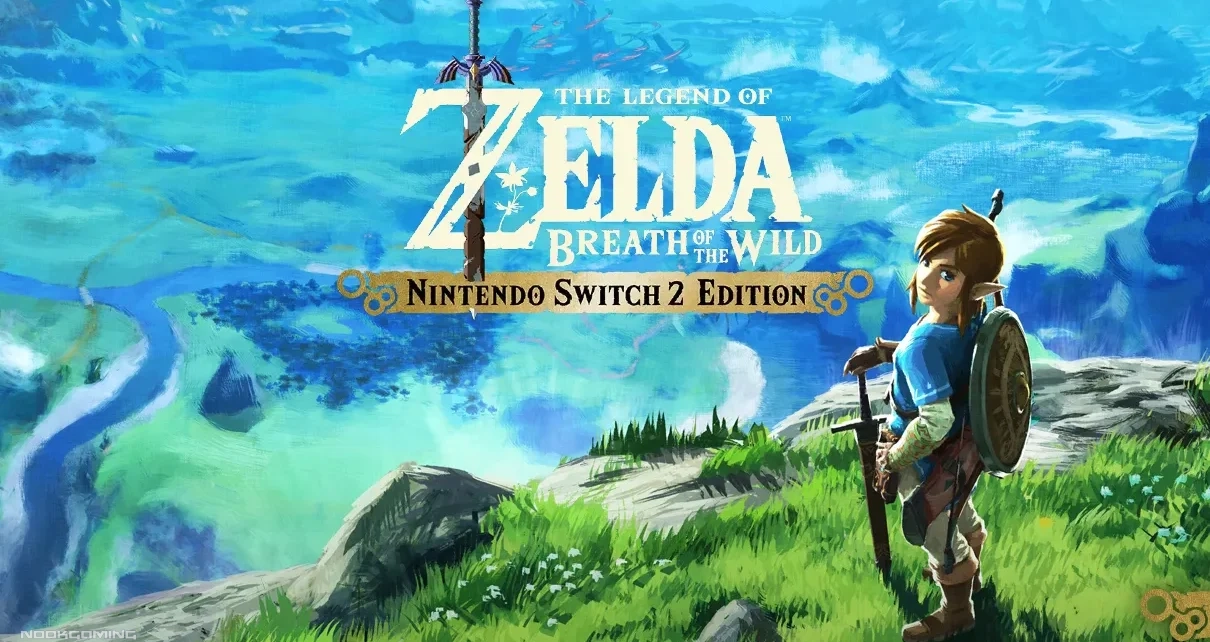
Nine years on from its original release on the Wii U and Nintendo Switch, there’s not much under the sun that hasn’t already been said about The Legend of Zelda: Breath of the Wild. It’s widely considered one of, if not the best open world game ever made, and in its wake many contemporaries look to it for inspiration. It also could be said that it spearheaded a new era for Nintendo as a whole, where their game design would become bigger, bolder, and more transformative than ever. I certainly agreed with that way back when, but what about now? With a new console comes a refresh of this beloved classic in The Legend of Zelda: Breath of the Wild – Nintendo Switch 2 Edition.
That Amnesiac Blonde Guy
The Legend of Zelda: Breath of the Wild’s story is a much more mysterious take on a fairly classic formula. It still involves the perpetually mute Link, Princess Zelda, and the reincarnated evil Ganon as one might expect, but there’s a big wrinkle this time in that the conflict involving the three of them already happened long ago. As it so turns out, Ganon got the drop on the entirety of Hyrule, a land which was already stagnating, and killed most of its population, including its king, several important allies, and even Link… Kind of. It just so happened that our friend Link here was only mostly dead, and he was revived in a process that took about 100 years. Now reawakened in a Hyrule that’s mostly ruins and nature, he sets out to reclaim his memories and set right whatever he’s able to.
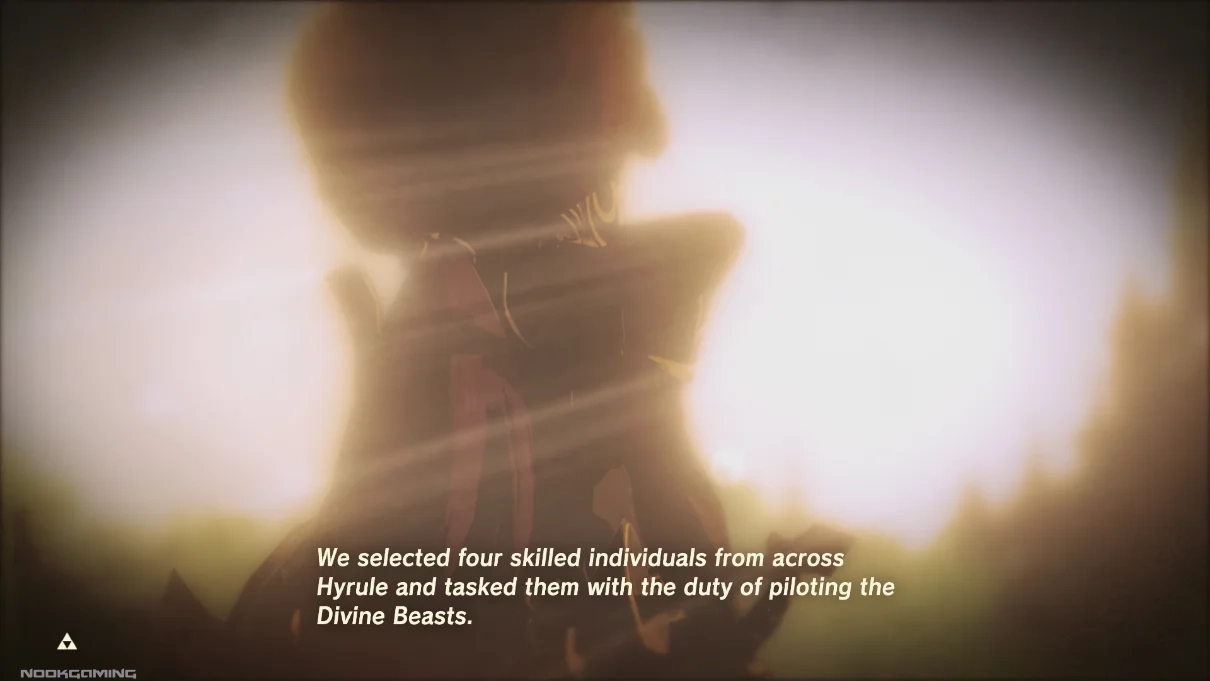
More than the dialogue and cutscenes, the ways the story is communicated through gameplay and art is captivating. You find out plenty about most of the major characters through exploration, which opens up dialogue or cutscenes that help deepen the context of what occurred in the past and what is occurring in the present. One of my favorite examples of this is with King Rhoam; while he’s a stern and seemingly unrepentant man in how he treated Zelda in the past, finding his diary in the present adds an extra emotional wrinkle that completely recontextualizes his behavior. This isn’t just great because of the story, but because of how the level design wordlessly conveys his feelings, too. His hidden feelings weren’t hidden just because they were kept in a diary, but because the player had to do some legitimate digging in order to find that diary, showing that he didn’t want anyone to find out how he truly felt.
This kind of storytelling exists all over Breath of the Wild’s iteration of Hyrule. From the many NPCs and sidequests to their diaries and ancient ruins that help to wordlessly convey what Hyrule might have been like in the distant past. 3D Zelda games have always been good at having a melancholic backdrop to its storytelling, but Breath of the Wild is perhaps the first game where it’s brought to the forefront. Save for brief action setpieces during parts of the main story where things really ramp up, it’s a surprisingly quiet and contemplative story about how people cope with failure and redemption. Hyrule’s fate 100 years ago isn’t just tragic because a lot of people died, but also because, the more you learn about it, the more you learn that what happened was also completely preventable. The most Link can really do for people after the fact is offer them a bit of peace, and I think that’s conveyed in a way that’s oftentimes quite impactful.
Go Anywhere
At the time of its release, The Legend of Zelda: Breath of the Wild was quite famous for how much of a clean break it was from its 3D predecessor, The Legend of Zelda: Skyward Sword. Instead of a linear game focused on curated puzzle-solving elements, Breath of the Wild instead forsakes this in favor of looking back at the very first Zelda game and expanding upon it. It’s an open world game full of mystery, where your directions are vague and you won’t know much about the landscape until you personally go out to explore it. Aside from the main story, the only guides you have initially are directions from NPCs, vague instructions, and your knowledge on the lay of the land. Guideposts don’t tend to come in the form of objective markers or in-game compasses, but instead things that denote landmarks or curious oddities about the world. It’s not perfect, and the world can come off as contrived in its own ways at times, but for how much of a jump it is compared to previous games, it’s an aspect I find easy to forgive.
The world of Hyrule itself is very well designed and fun to explore thanks to a persistent overlap of considered level design, Zelda’s trademark puzzle elements, and a newfound focus on survival elements like inclement weather and a dynamic physics system combined with a realistic (if still stylized for gameplay) chemistry system. Each element of the environment is a new tool for the player to toy with as they see fit, or it can serve as an obstacle that needs to be overcome. Grass can be cut down to find rewards like bugs and money beneath, or it can be used to start fires in enemy camps and set their wooden gear ablaze, and then that fire can be used to make updrafts that will let you climb to higher vantage points. Rain makes surfaces wet, making them difficult for the player to climb and making electric attacks more effective for both the player and whatever enemies they happen to fight. Volcanic areas actively hurt the player unless they’re wearing the right gear or using the right items, and they also make explosives go off instantly. The list of these examples goes on and on, but the impressive thing about them is that these mechanics are always present, and the game rarely takes shortcuts to achieve its naturalistic gameplay.
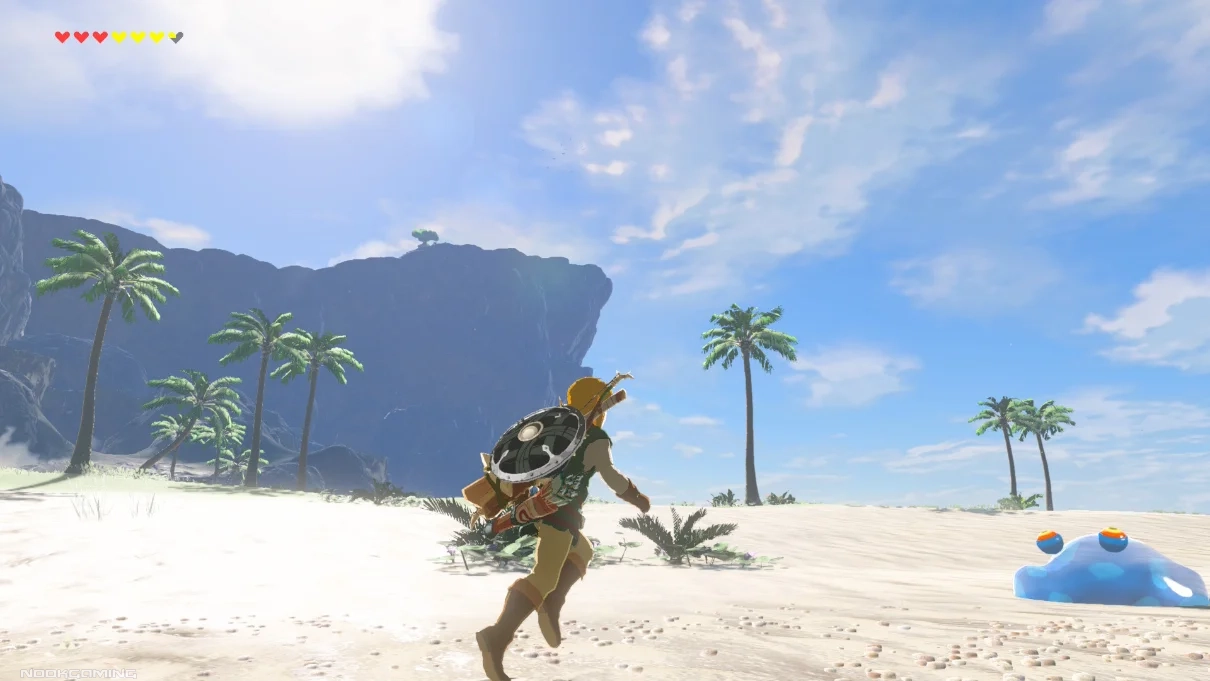
From the get-go, the game has a lot of trust in the player in its “go anywhere” approach, and instead of curated experiences like in the past, this is a game where the player is encouraged to use its impressively detailed and reactive gameplay to improvise and come up with their own solutions. This applies to puzzle-solving, combat, and even how much of the game they want to ultimately engage with. It says a lot about the game’s trust in the player that this is the first Zelda title to let you waltz into the final area and slay the final boss whenever you feel like it. I enjoy it too much to not do at least all of the main story content, but the fact that it’s possible at all says a lot about Nintendo’s commitment to ensuring the player has absolute freedom over their experience after the prologue. It even occurs in some smaller, but significant ways, like what order the player wants to tackle the main story dungeons in, how they want to cook their recipes, picking between stamina and health with Spirit Orbs, or even what kind of horse they want to ride for the game. It’s a remarkable shift from something that used to be so binary, and although the game suffers at times from giving the player too much freedom since its most interesting moments are also the most restrictive, it’s overall a tremendous accomplishment for the series at large.
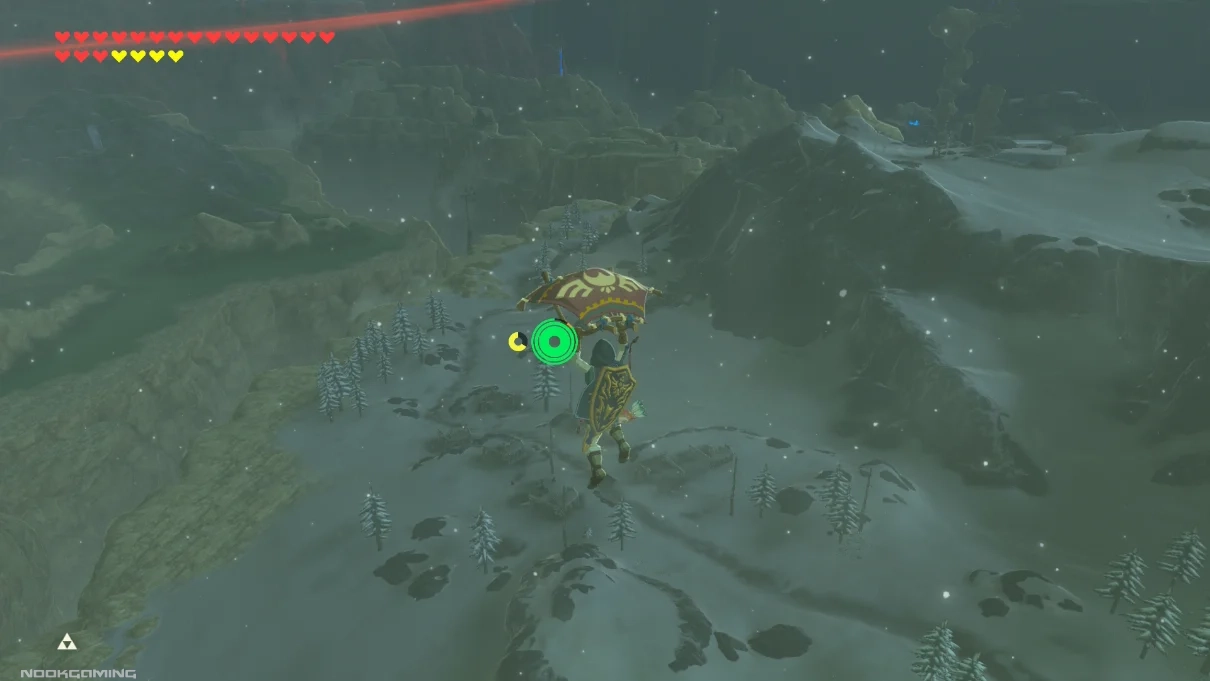
Still, when things align in ways that fully leverage what Breath of the Wild is uniquely capable of, it creates moments that are unforgettable. The battle with the corrupted dragon Naydra, surviving on Eventide Island, the encounters with each of the Divine Beasts, the One-Hit Obliterator challenge, and so on, all of these are moments where it feels like The Legend of Zelda is at its most fully realized. Even the less pronounced moments like surviving the harsh winter climate of the Hebra region or navigating the Lost Woods are actively elevated by the overhauls made to core gameplay, and it’s easy to get lost in the fantasy of it all.
Solve How You Want To
As mentioned earlier, one of the major shifts in The Legend of Zelda: Breath of the Wild’s design compared to previous games is its approach to puzzle-solving. Previous entries offered broadly smart, well-designed puzzles that offered one solution that was fun to figure out. Breath of the Wild flips this practice on its head, offering puzzles that now have open-ended solutions the player can choose to tackle however they wish. Rather than hitting a distant switch with a curated item like a Bow or Hookshot, the player is instead given four Sheikah abilities that have more broad applications in exploration, puzzle-solving, and combat. The first is remote bombs, which work on a cooldown timer and the player can now remotely detonate to deal with enemies or solve puzzles from a safe distance. The second is Magnesis, allowing the player to pick up or manipulate any metal items, including weapons, treasure chests and large doors. The third is Cryonis, allowing the player to make blocks of ice on any body of water for some much-needed defense, to make platforms to cross water, or to get to a higher vantage point when fighting enemies in a wet area. The last is Stasis, allowing players to freeze enemies and objects alike for a whole host of different effects.
Thanks to the aforementioned focus on physics and reactive gameplay, all of these Sheikah powers get a big workout over the course of a playthrough. Cheeky players fighting during a thunderstorm can move a metal weapon with Magnesis to draw a lightning strike to a nearby group of enemies. Stasis can be used to halt the momentum of an airborne object, causing them to fall straight down when they’re unfrozen. Cryonis can be used to bait enemies who rush headlong into the player, and bombs can be used to explode enemies straight off of a cliff. These examples are just a small taste of the potential each Sheikah power holds, and no matter how often I come back to this game, I always find some new way to take advantage of it to get a weird advantage in puzzles or battles. Be it using Stasis to completely cheese a timing-based puzzle or using Magnesis to make makeshift platforms to aid in exploration, Breath of the Wild’s emphasis on thinking laterally to create a solution is one I greatly appreciate.
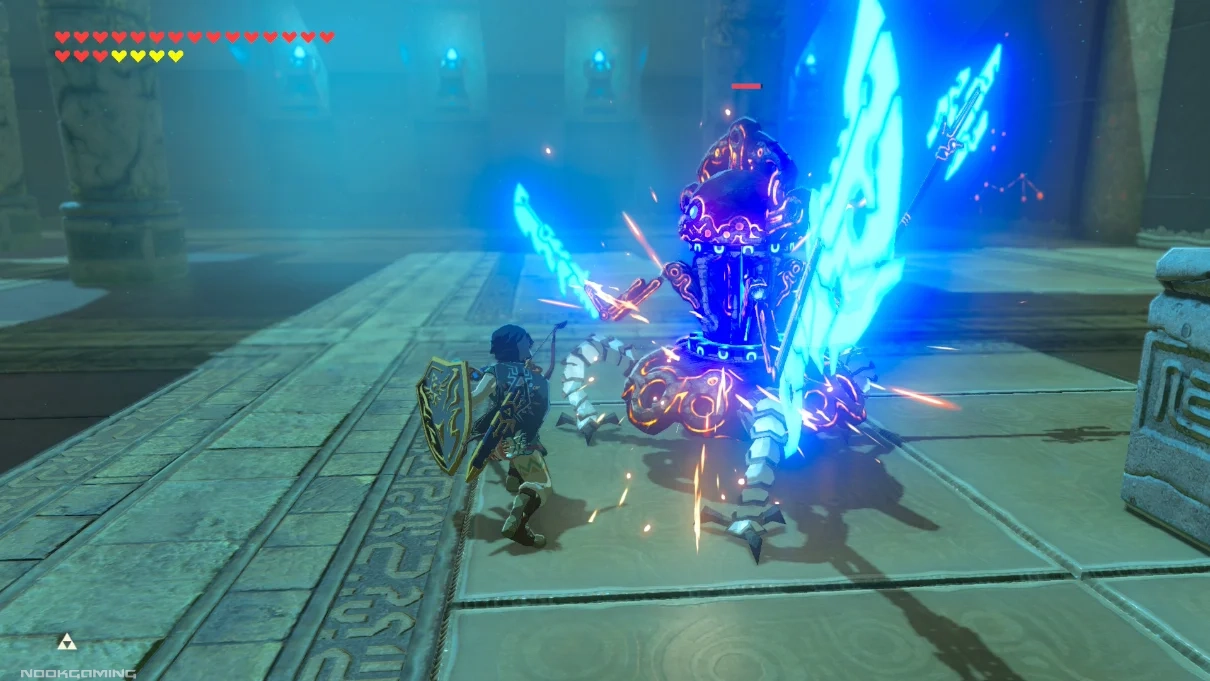
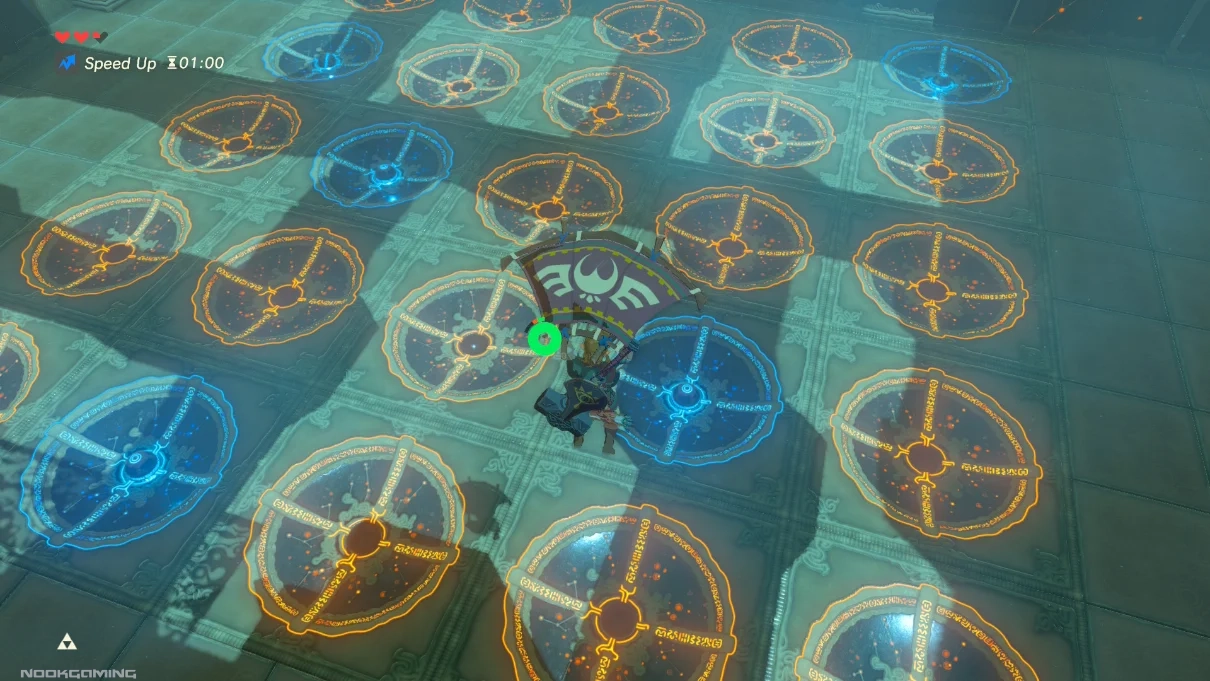
About the only reason this gets brought down is actually due to the aesthetics of puzzles outside of the main overworld. The various shrines that dot the world and the Divine Beasts suffer from the issue of the puzzle environments oftentimes being so clean and devoid of noise that the solutions can oftentimes be too obvious, and the fact that their aesthetics repeat can be somewhat tiresome visually. That’s not to say these don’t house great puzzles, for my money they’re actually more consistent than past 3D Zeldas, but it was clear that there was still some work to be done in fully realizing the potential of this new Zelda format. The overworld puzzles, on the other hand, are excellent, showcasing a great balance between artistry and good puzzle design.
Eight Years On
With the original release of The Legend of Zelda: Breath of the Wild on Nintendo Switch 1 and Wii U now well behind us, one of the most exciting things coming into this new version was seeing how much more powerful technology could serve to benefit it. Breath of the Wild was always a pretty good looking game, combining a watercolor style with a surprisingly advanced lighting system that complimented the game world well. This is in conjunction with the inspired art design of the towns, the uniqueness of each race and the way each named character has a distinct design, plus all of the little details like grass swaying in the wind, dust picking up, insects skittering about the place, and so on. Breath of the Wild’s incarnation of Hyrule, despite the irony of it being in shambles, is also the most alive it’s ever felt. This is furthered by the interactions enemies and NPCs have with the world, like running for shelter when it’s raining or running away in panic when being assailed by a bee colony.
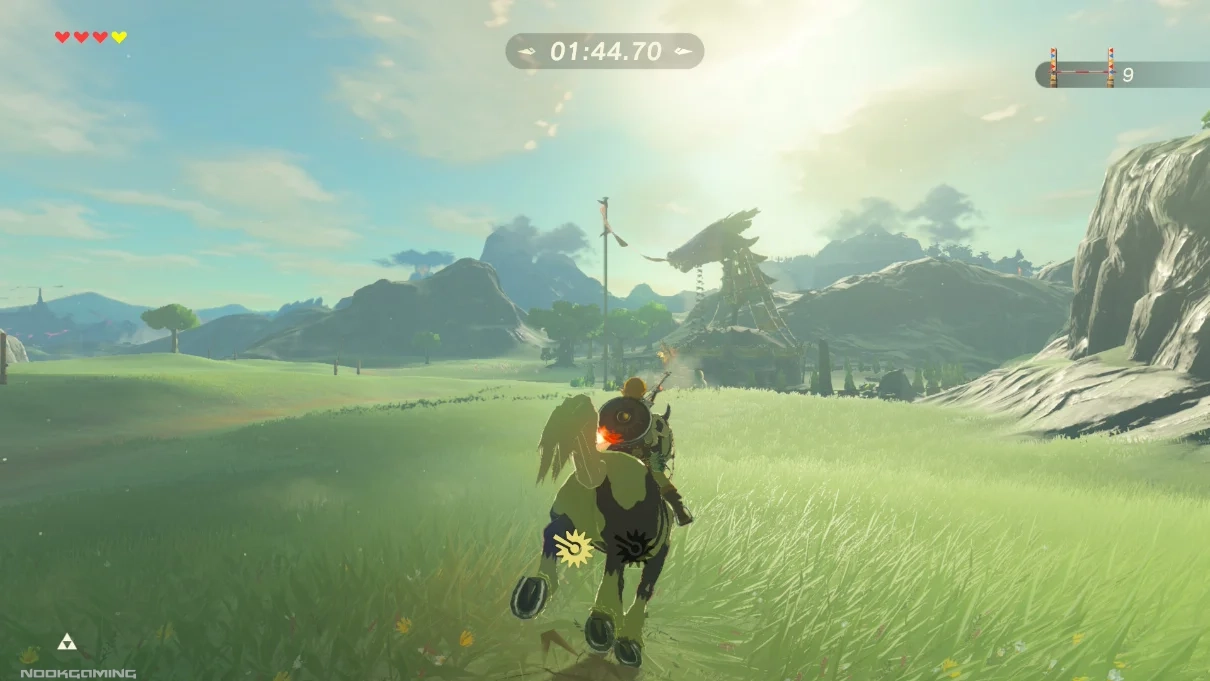
Yet the game was also punching above the weight of both consoles it had released on back in 2017. Now with this Switch 2 iteration, it’s seen a host of improvements that really let it shine. The color has a bit more pop, and resolution is far sharper, allowing for a crisper image with details that are easier to absorb and appreciate. Textures have also been given more detail across the board, adding yet more vibrancy to a setting that was already brimming with life. When comparing its looks to the original version, it’s like giving a dusty computer monitor a fresh wipe, and that’s before getting into the improvements made to moment-to-moment performance. What was originally a shaky-at-best 30FPS on both Wii U and Switch 1 is now a rock solid, smooth 60FPS on Switch 2. Even instances that were guaranteed to cause slowdown like using lots of explosives are buttery smooth now, and the infamously choppy Korok Forest also doesn’t miss a beat. While I never really posit Zelda as the sort of series that lives or dies by performance metrics, I would be lying if I didn’t say that this felt outright transformative.
Loading times are also another key improvement when compared to both the Wii U and Switch versions. Booting up the game is faster, as are load times when using fast travel, but this has the most impact on Shrines. Since Breath of the Wild’s world is largely seamless and devoid of load times, one of the things that tended to break the pace were Shrines scattered across the map. These were always separated by fairly long load times, which could harm immersion and in the worst case scenario, I simply ignored them because I didn’t want my current stride in exploration to break. I would sometimes just activate the shrine and then immediately turn around with a “I’ll deal with this later” mentality. Now that feeling is gone as of the Nintendo Switch 2 Edition. While entering Shrines isn’t completely seamless, load times are so brief that I don’t mind them at all. I can’t even take a peek at my phone with how fast its loading is now.
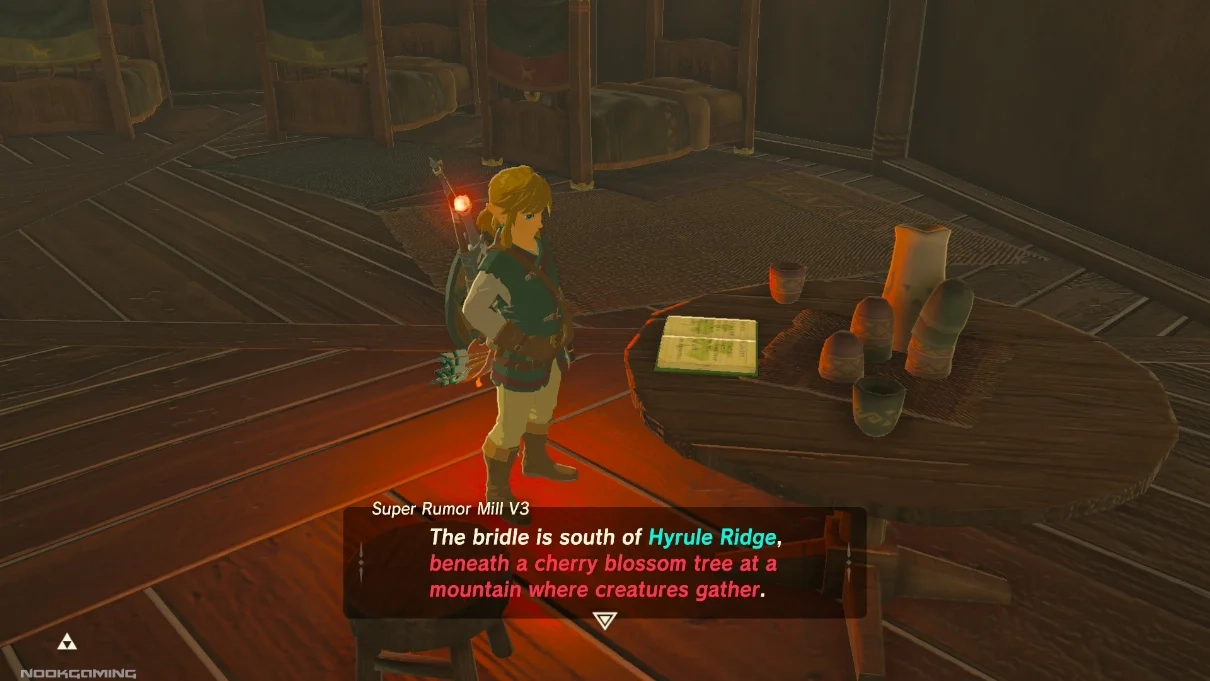
Lastly, there’s Zelda Notes, a smartphone companion app made to help with your journey in Hyrule. You can share items with friends using it, collect daily rewards that are mostly just trinkets and knickknacks, and you can use navigation to help in exploration or in tracking down certain items. I barely touched any of these since those are the sorts of things I prefer to do on my own, but what did become a consistent delight were the Voice Memories. Certain locations on the map will trigger voiceovers from Zelda, and she’ll go into detail about their supposed significance and share her thoughts on them. While I wouldn’t recommend listening to these as a newcomer since there are potential spoilers involved, it makes the game a lot more fun for returning players. Hyrule gets turned into a virtual museum of sorts, and Zelda’s characterization as a history buff makes for a charming tour guide. I also think it retroactively helps solve the game’s issue with rewarding the player, since it helps balance out the game’s issue with rewards being skewed towards extra stuff rather than more story and intrigue.
Verdict
There’s not much else I really need to say, is there? The Legend of Zelda: Breath of the Wild is one of the best games of all time, but now it’s even better than before. Even though I’ve spoken high praises about this game, I was surprised at how absorbed I found myself by what are simple, but damningly effective upgrades in performance metrics. Greater framerates and performance metrics in addition to the new Zelda Notes feature further unshackles it from its technical boundaries, allowing this beautiful iteration of Hyrule to breathe like never before. If, somehow, you haven’t played this game yet, it has to be here. Breath of the Wild is nothing if not required reading if you love video games, and while it’s imperfect in some ways, its legacy speaks to its achievements in so many important areas.
THE LEGEND OF ZELDA: BREATH OF THE WILD IS A MUST BUY

If you are looking for another Zelda title, check out Hyrule Warriors: Age of Imprisonment. Or, you can check out our review for Donkey Kong Bananza for another Nintendo title on Switch 2.

A hobbyist who took up the pen to write about their favorite pastime: games. While a lover of many genres, Isaiah Parker specializes in Platformers, RPGs, and competitive multiplayer titles. The easiest way into his heart is to have great core gameplay mechanics. Self-proclaimed world’s biggest Sonic fan. Follow him @ZinogreVolt