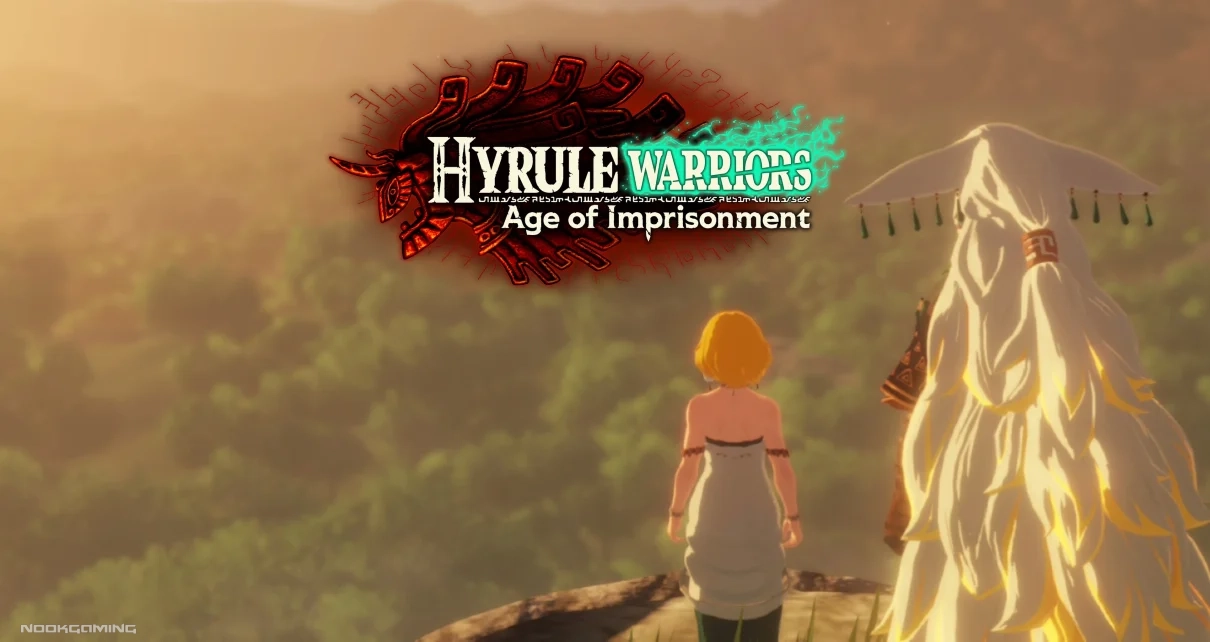
Set in the early days of the kingdom, Hyrule Warriors: Age of Imprisonment uses the formula of the Warriors/Musou series of games. You can hack and slash your way through the many battles of the Imprisoning War, taking back territory and aiming to slay the vile Ganondorf, along with millions of his disposable minions.
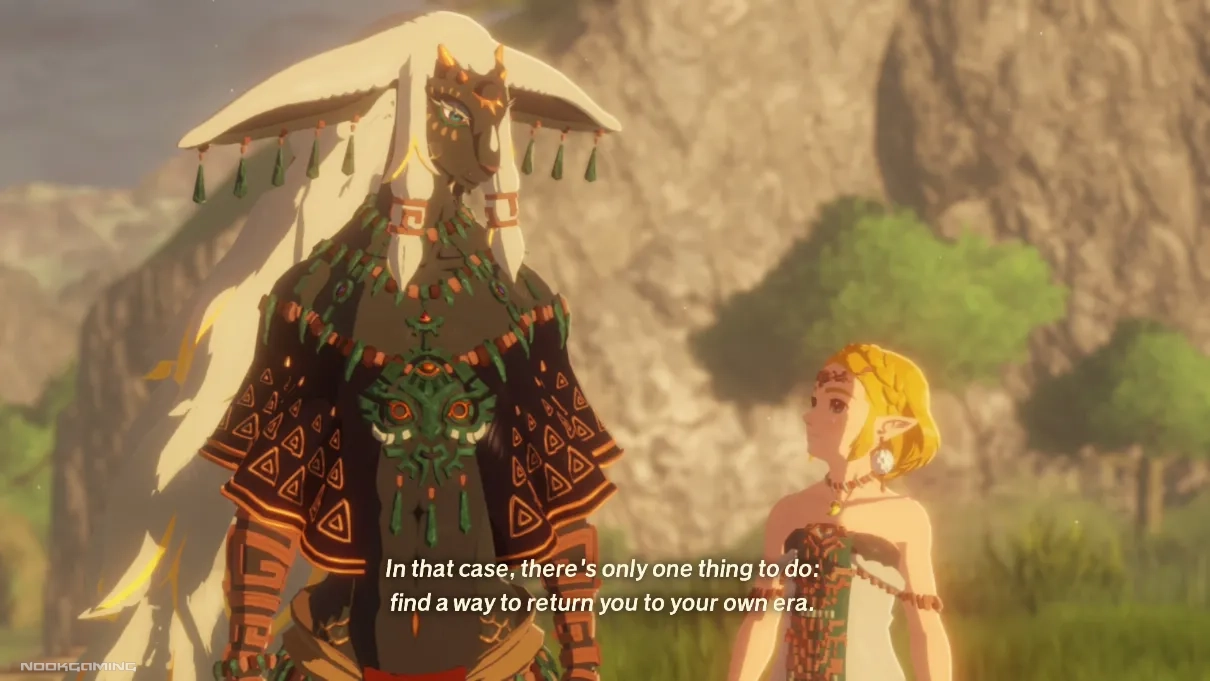
The First King and Queen
One thing that captured the attention of Zelda fans is that Hyrule Warriors: Age of Imprisonment is canon, unlike the Hyrule Warriors games before it. Some readers may be picking this up as their first Warriors game, having enjoyed The Legend of Zelda: Tears of the Kingdom and wanting to find out more.
Age of Imprisonment opens with Zelda accidentally traveling to the past, having been separated from Link. It’s here that she meets King Rauru and Queen Sonia, the founders of the kingdom of Hyrule. She’s soon taken in by the royal family, who want to help her understand what happened, and to learn more about her own powers over time while she’s there.
It’s still the early days of the Kingdom of Hyrule, so there’s plenty to do to make the land safe and a handful of ongoing conflicts to deal with. The clans who live in this land have their own issues to deal with, and we get to see a few highlights of these. Most of the story is from the perspective of Zelda and King Rauru, but there is quite a wide cast of characters who chime in with their own opinions.
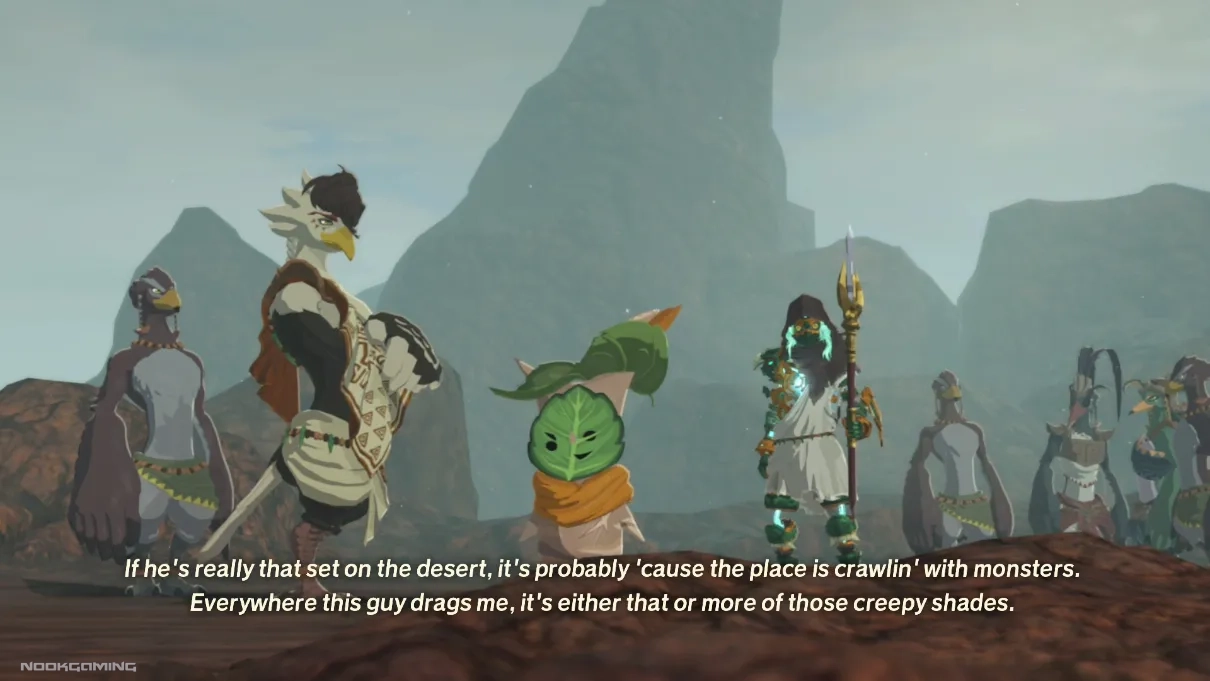
It does occasionally depart from this group to instead follow ‘Construct’ and Calamo. Construct is a recently awakened automaton that tracks down evil and slays it. He’s mostly green, never speaks, wields a sword, and Zelda seems to have a soft spot for him. Sound familiar? Calamo is a Korok with a rather annoying voice, and unfortunately, he speaks enough for both of them and at least acts as if he’s very self-interested in his quest to find a good place to set down roots and become a tree.
In terms of the overall plot, I can’t say that Age of Imprisonment stands out. It’s a fairly straightforward good-versus-evil story where everyone bands together to defeat the person who was obviously evil from the start (even if you’ve never touched a Zelda game). That said, there is quite a lot going on in the background, even if much of it doesn’t get explored in depth.
Throughout the story, there are a handful of dramatic events, one of which I didn’t expect at all. A couple in particular will probably leave some people questioning how things fit into the established lore, and I do wonder exactly what is going to happen to a certain character whose issue wasn’t resolved by the end of the story. But my enjoyment of the story primarily came from its execution and the interactions between characters rather than plot events. Little moments like seeing a character slowly come to trust another despite historical factors, or when Zelda took the chance to learn everything she could, were what kept me invested.
Musou Mayhem
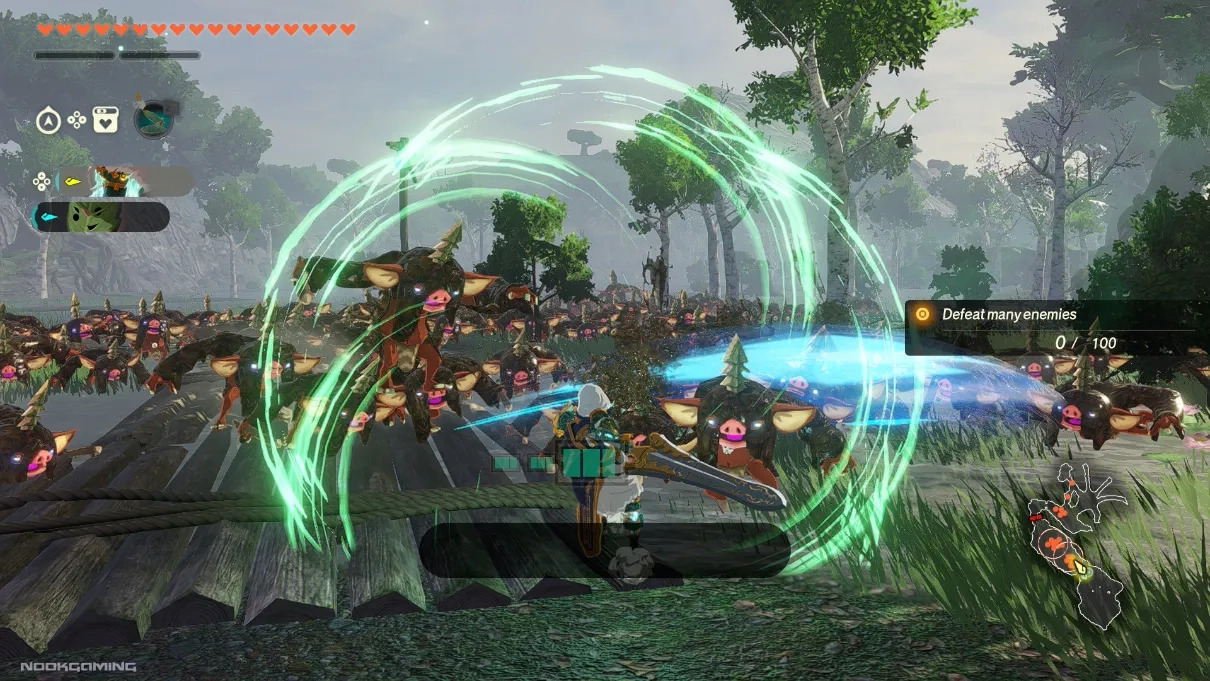
While the many cutscenes and dialogues at the beginning of the level frame the gameplay, most of your time will be spent in the hack-and-slash combat of the many, many levels available.
The combat has you running around battlefields to complete a variety of objectives. These are generally some variation of inserting the pointy end of your weapon into enemies until you clear that part of the battlefield and secure it as your own, or otherwise removing monsters from existence.
Warriors games do have a reputation of being a little mindless, but I don’t feel like it’s the case with Hyrule Warriors: Age of Imprisonment. There’s actually a decent amount of complexity to the combat. The standard hordes can be cleared away with a combo or two, but for bigger enemies, you’ll want to take advantage of elemental weaknesses, chances to interrupt their big attacks, and weak points. Otherwise, they’ll take an age to take down; they can do quite a lot of damage if you don’t dodge too.
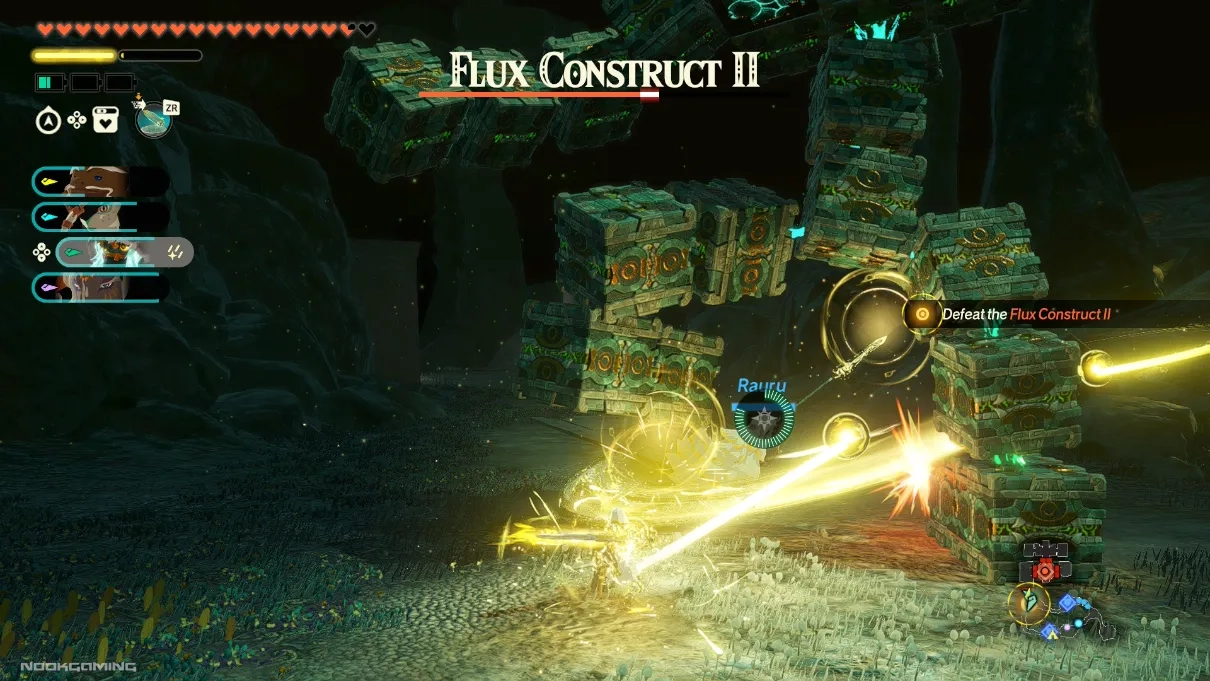
Elements are interesting to handle. While some of the system is fairly straightforward, there are a few peculiarities. Electrical-type enemies don’t seem to have a weakness for example, so other weaknesses need to be found in these cases. While I didn’t take advantage of it often, there are special techniques involving elemental combinations too.
You have multiple gauges to manage, including special attacks, sync attacks, and battery for devices, which allow you to use a wide variety of effects. Even sync attacks have quite a lot to them, where you can get very different effects based on which other character you pair up with.
Switching characters is encouraged too. Each mission has set characters that you can switch between. Each character has different advantages and feels different to play, with their own unique mechanics, weapons, and speed. It’s often helpful to make sure you’re using the water-elemental character Qia when fighting against mud-covered enemies or even just lining events up so you can chain specials on a boss one after another. For the sake of speed, you can even order certain characters to go to the next objective while you deal with the current one, then switch over. The only downside is that they’re not helpful in actually completing objectives such as taking over bases, despite their orders.
The combat is just sheer fun. There’s much more to it than you may expect. That’s not even touching a lot of the additional features that support it, such as setting up camps for bonuses, additional in-battle quests, and hidden items throughout levels to find. There’s a great sense of pacing throughout too, as more and more abilities and features slowly unlock throughout, whether it’s extending combos for characters or additional devices and abilities. There are even a few flying combat sections to shake things up on occasion.
Is This an Empire Game?
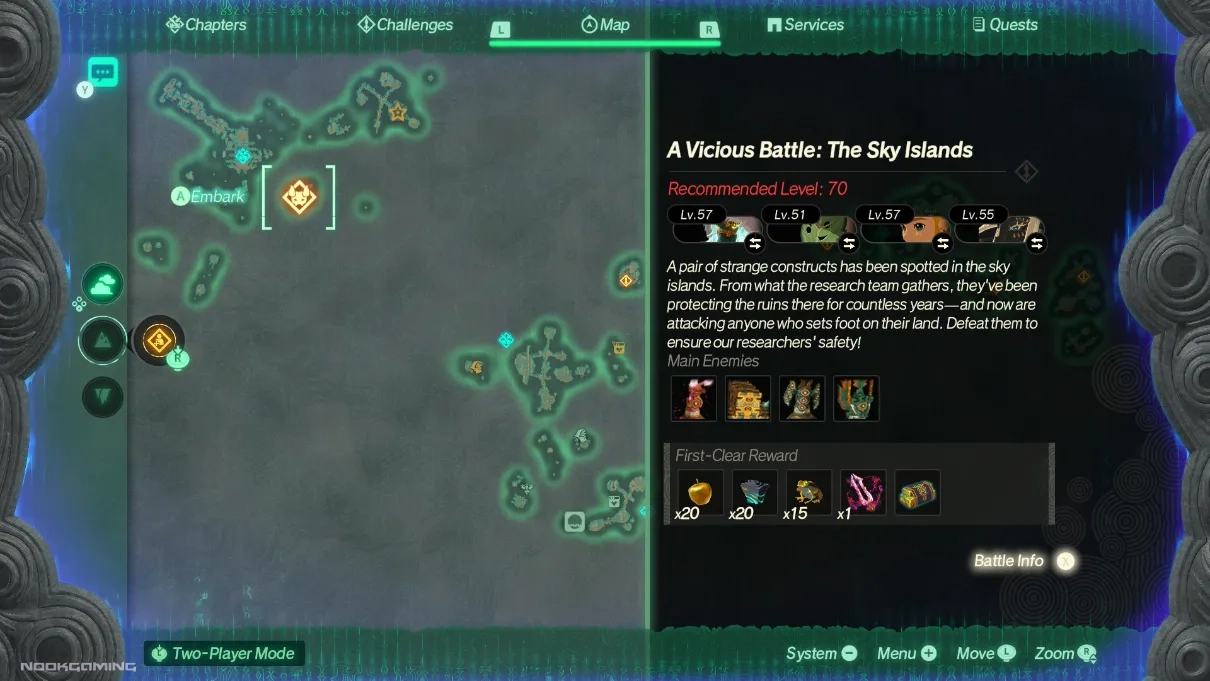
Not long into the game, Hyrule comes under the control of the forces of evil. You’ll find yourself choosing missions from a map of Hyrule, slightly reminiscent of the Dynasty Warriors Empires games. While not quite the same, part of your mission here is to recover territory and occasionally defend it when enemies try to take it back. Otherwise, it’s just choosing missions and quests from the map.
You can try to speed through the 28 story-related missions, but there are hundreds of optional quests to find here, many of which you’ll likely end up doing along the way to make sure your characters are up to the task. Some are shorter battlefield missions, while others are delivering items. In both cases, these let you unlock optional characters, character upgrades, additional features, and an occasional bit of extra story. As you proceed through the missions, both story-related and optional, further ones unlock.
This is also where you’ll find weapon modification. You can upgrade weapons with items that you find and attach special abilities. If you want to, you can optimize these further by matching certain types. It is worth noting that a lot of this doesn’t fully unlock until later though, and the resources needed aren’t exactly common, so you’ll need to be completing a lot of those optional missions to get them. I was nearing the end before I managed to raise my weapon limit the first time, and the second time was during post-game. That said, post-game is probably where you’ll need the best weapons. Several new missions open up, with some extremely high-level enemies to deal with.
Smooth Swordplay
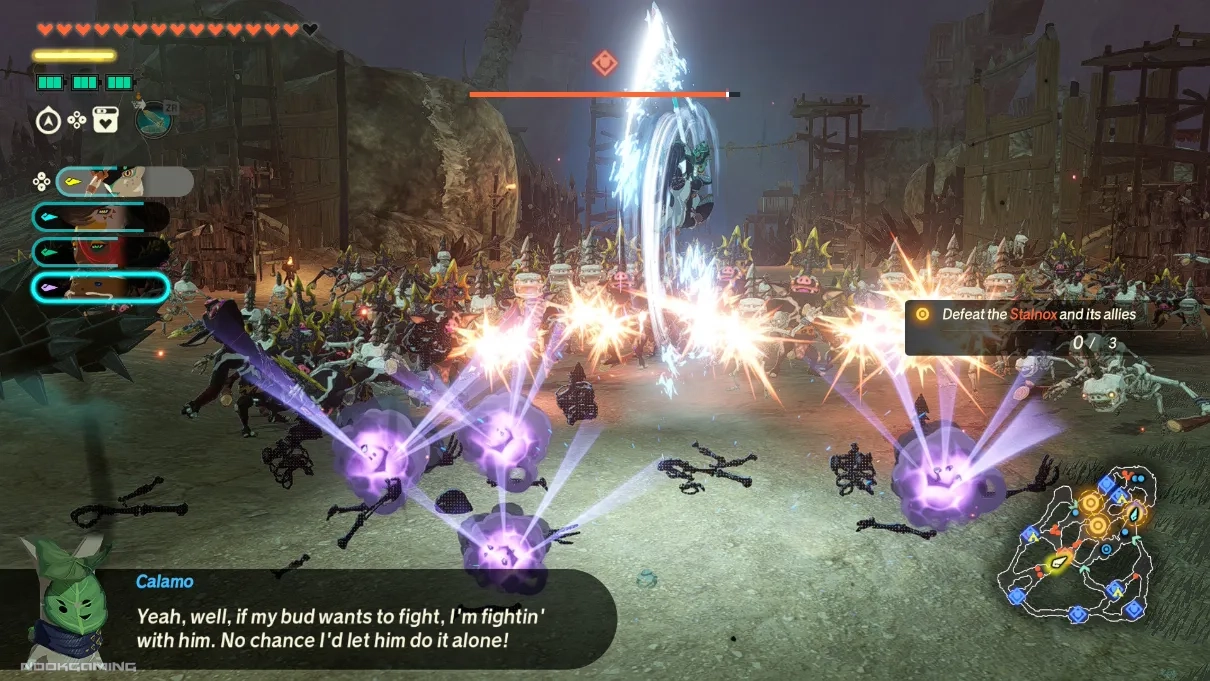
Hyrule Warriors: Age of Imprisonment is exclusively available on the Nintendo Switch 2, which is probably a good thing considering how poorly its predecessor ran on the original Nintendo Switch. Fortunately, Age of Imprisonment runs incredibly smoothly both in handheld and docked modes. I’ve not noticed any sort of slowdown during active gameplay. Cutscenes did have a moment or two where they didn’t feel quite so smooth on occasion, but these were mostly fine. The smooth performance is despite a significant amount going on, with tons of enemies on screen at a time.
The graphical style didn’t suffer for this either. While it’s certainly rather stylized and not overly detailed like some games, the cel-shaded style looks wonderful. There’s certainly plenty of visual effects when it comes to battle to complement it too, with elemental attacks, ribbons of light, and burning enemies all over.
Verdict
Whether you’re new to Zelda, new to Warriors, or a veteran of both, Hyrule Warriors: Age of Imprisonment is a joy to play. With surprisingly deep combat for a Warriors game and an incredible amount to unlock, it’ll keep you playing for hours on end.
HYRULE WARRIORS: AGE OF IMPRISONMENT IS HIGHLY RECOMMENDED

If you are looking for another Warriors title, check out Warriors: Abyss. Or, you can check out our review for Donkey Kong Bananza for another Nintendo title on Switch 2.
Many thanks go to Nintendo for a Switch 2 review code for Hyrule Warriors: Age of Imprisonment.

A gamer since the days of Amstrad and DOS and someone who has dabbled in a variety of professions. He enjoys a wide variety of genres, but has been focusing on visual novels and virtual reality in recent years. Head Editor of NookGaming. Follow him and the website on @NookSite.