
Returning to their original naming convention, Utawarerumono: Past and Present Rediscovered is the sequel to the Utawarerumono prequel spin-off Monochrome Mobius: Rights and Wrongs Forgotten. This new title by Aquaplus adopts the same turn-based JRPG format used by the previous title, but with expanded features and numerous quality-of-life improvements. It continues the story of Oshtor, Shunya, Mikazuchi, and Munechika as they fulfill their new obligations as members of the Yamatan leadership while trying to find a way to resolve the Arva Shulan crisis.
Previously announced by Aquaplus to be the final game release in the Utawarerumono series, I have a lot of feelings and expectations going into Utawarerumono: Past and Present Rediscovered as a long-time fan. There’s a certain melancholy knowing that this is effectively the end of the series; the installment effectively seals the deal for the series’ worldbuilding and the story of its beloved characters. To see such a recognizable title in the visual novel scene finally be put to rest makes me feel a little bit lonely, but there’s still a certain satisfaction knowing that it can’t be continuously marred by spin-offs that appeal to nostalgia while delivering subpar products. In any case, I’m hoping that the game’s conclusion does justice to the plot that was set up in the previous game, Monochrome Mobius, and addresses how it plays into the overall canon of the main trilogy. I’d hate for it to leave a bad, final taste for the fans, after all.
With all that being said, it’s time to join Oshtor and the gang once again as they adventure throughout Yamato to protect their people from new threats that seem to be looming in the horizon.
Note: Due to being a direct sequel of Monochrome Mobius: Rights and Wrongs Forgotten, this review of Utawarerumono: Past and Present Rediscovered will contain spoilers for events that happened in the previous game. It is recommended that readers play the prequel first before continuing to the next sections.
The Next Verse for the Legendsung
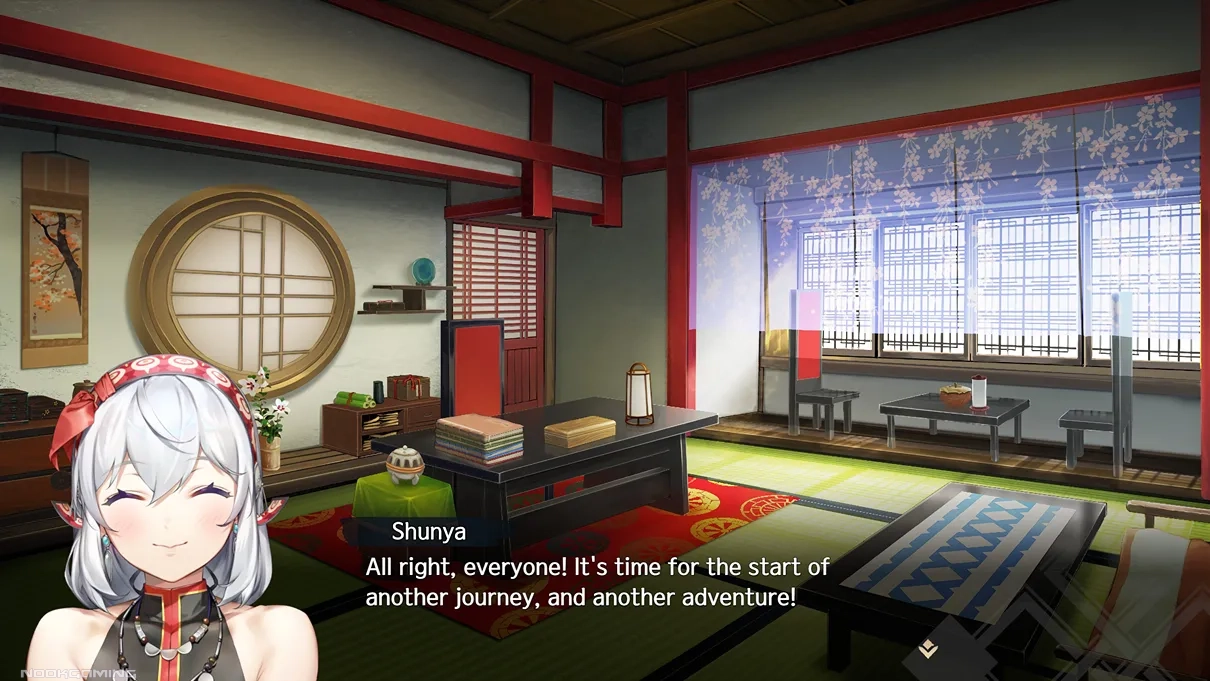
Utawarerumono: Past and Present Rediscovered continues from where the first game left off, where Mikazuchi and Oshtor are appointed as Imperial Guards of the Left and Right respectively after Arva Shulan’s attack on the Imperial Capital of Yamato. In the aftermath of their fight against Mayacowl, the two Imperial Guards have been kept busy with various missions that have sent them all over Yamato. Halu has been taking care of Shunya, who remains unconscious with no clear signs of waking up, while Munechika has returned to Izumo to support changes within the city as a result of the Pillar of Stars being destroyed. With Arva Shulan now isolated from Yamato, the country has finally freed itself from the looming threat of another invasion.
This period of calm, however, would not last forever. One day, a series of mysterious events began happening in Yamato. The ancient ship in Ashiwara suddenly began to display signs of operation, the Pillar of Stars was slowly being regenerated by an unknown force, and monsters were becoming more aggressive around Ennakamuy. Bound by duty to investigate these strange circumstances, Mikazuchi, Munechika, and Oshtor each attempted to resolve these issues individually. Although geographically apart from each other, one common element tied all three incidents together: a strangely cartoonish monster appeared on the site, accompanied by a vision of Shunya. With only that to work with, all three warriors began their journey back to Tabari Cave in Ennakamuy to seek the truth behind the strange events.
As their paths reconverge onto the place where the girl sleeps, the wheel of fate turns once more.
Sometimes It’s More Important to Listen
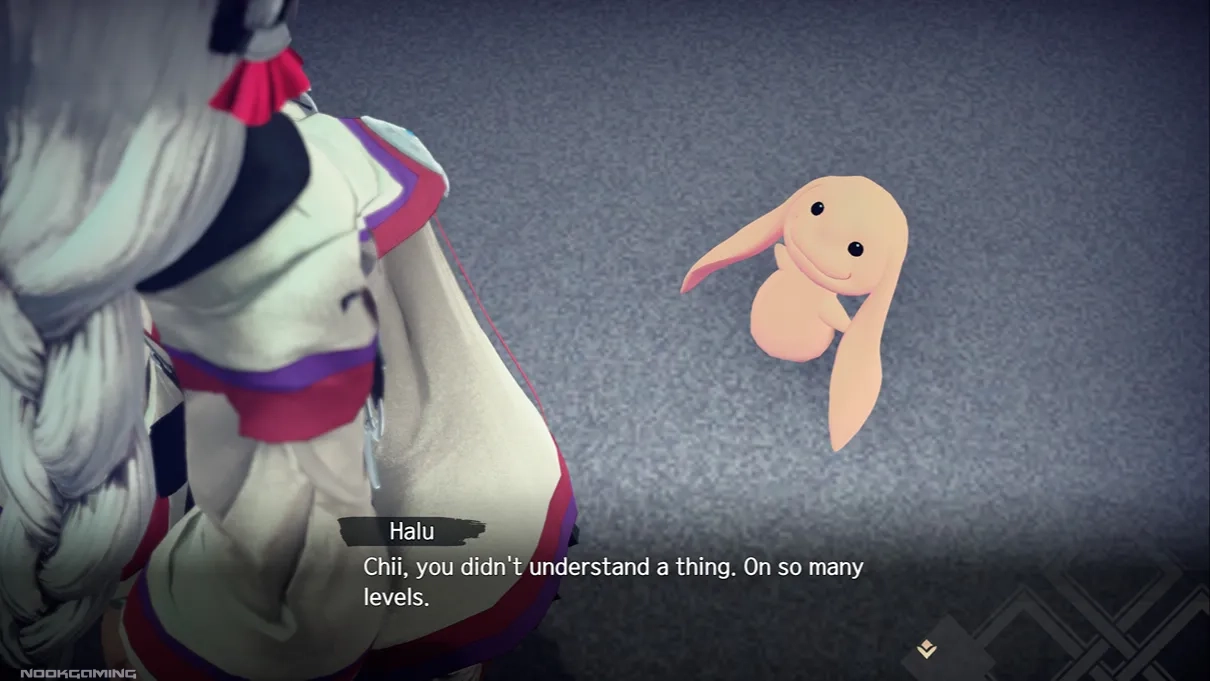
Similar to most of the games in the series, Utawarerumono: Past and Present Rediscovered follows a familiar format of expanding the coverage of its setting through a persistent story quest with plenty of slice-of-life elements sprinkled throughout. This eventually segues into the main conflict in its science-fantasy story during the last few chapters of the game, which I feel can make or break the title. Interestingly, compared to the first installment, they put a lot of emphasis on establishing background details in the plot early on through consecutive cutscenes, with a few battles here and there to remind you that it is still a JRPG. To better contextualize this, I spent most of the first three hours of my playthrough just reading through dialogue like it was a visual novel. There were only around five fights during the entire length of that sequence, which honestly improved the flow of those introductory chapters.
Since most of these early events happened in areas that players are already familiar with, the heavy use of cutscenes during the first few hours of the game provided an opportunity for the exploration segments to mostly take place in newly introduced areas. It alleviated a bit of the early tedium associated with going to and from places of interest, which helped me appreciate the story content a little bit better. The length of time they dedicated to exploring the members of the party reuniting with one another was also very much appreciated, especially after a four-year gap between this and the prequel. Overall, these give the early part of the game a pretty strong hook for readers to remain interested in the story.
Express Your Feelings While You Can
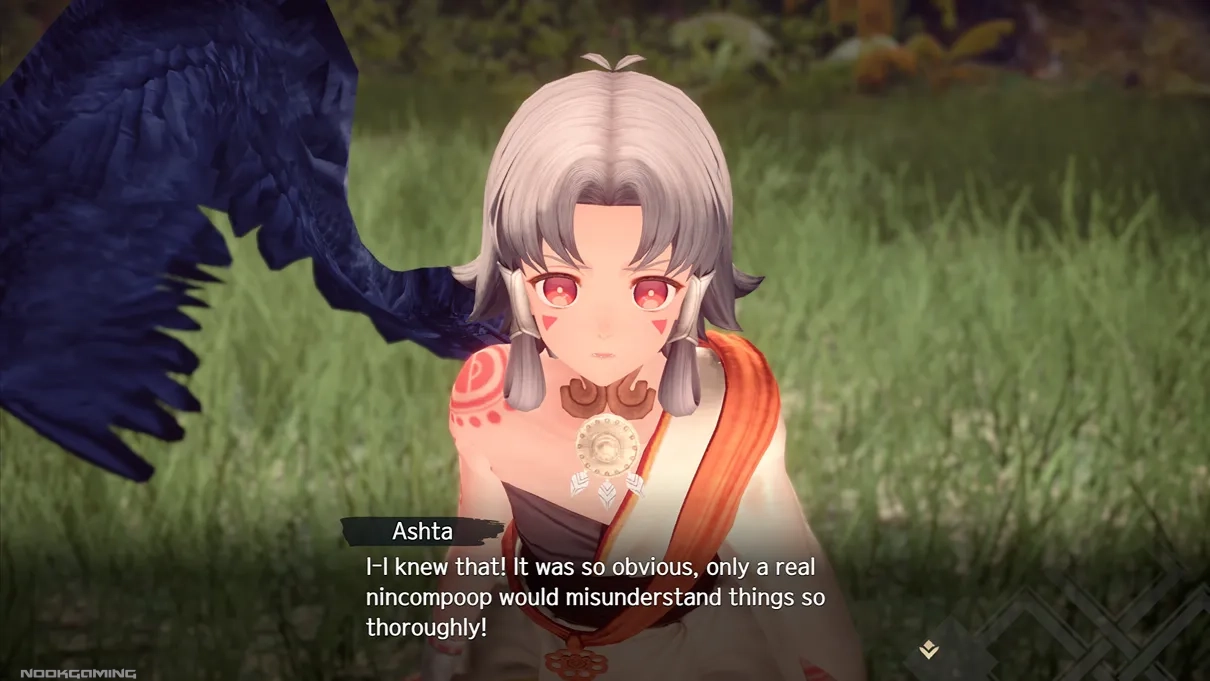
While Arva Shulan is the main subject of interest for the spin-off series as a whole, it’s not until much later that the country is featured in the plot once again. Instead, Utawarerumono: Past and Present Rediscovered spends a large portion of the midgame exploring some of the remaining major Yamatan settlements and tying the party’s experiences there together with a continuation of the individual members’ character arcs. Reemerging themes from Monochrome Mobius, such as family, responsibility, inherited will, and purpose, remain consistently featured in character-focused cutscenes. Most of them were enjoyably heartwarming, with very satisfying conclusions for characters such as Mikazuchi, whose arc is supported by a strong, relevant ensemble cast. There are disappointing ones as well, such as Munechika’s, whose arc falls short because of a general lack of focus on her in the story, but their resolutions make sense given the context of their future characterization.
The last third of the series delivers on the initial premise and provides answers for most of the questions that remained after the ending of Monochrome Mobius. A lot of the mystery underlying Shunya’s origins and Arva Shulan’s motivations are unearthed, with a lot of lore tidbits from the main trilogy being expanded upon due to their relevance to the spin-off series. While the trove of information presented was generally interesting for fans of the series in general, I felt like it was a bit of a shame that the stakes of the story remained low for the protagonists up until the final sequence. It made sense narratively that the situation was serious and needed urgent addressing, but it didn’t feel like it was being reflected in their dialogue, their actions, and the presentation of the game. Regardless, I did enjoy my time reading the story, and despite being a prequel to an already existing series, it didn’t feel out of place in the overall progression of the series’ plot. It’s a very satisfying end to a spin-off title.

Enemies Ripe for the Picking
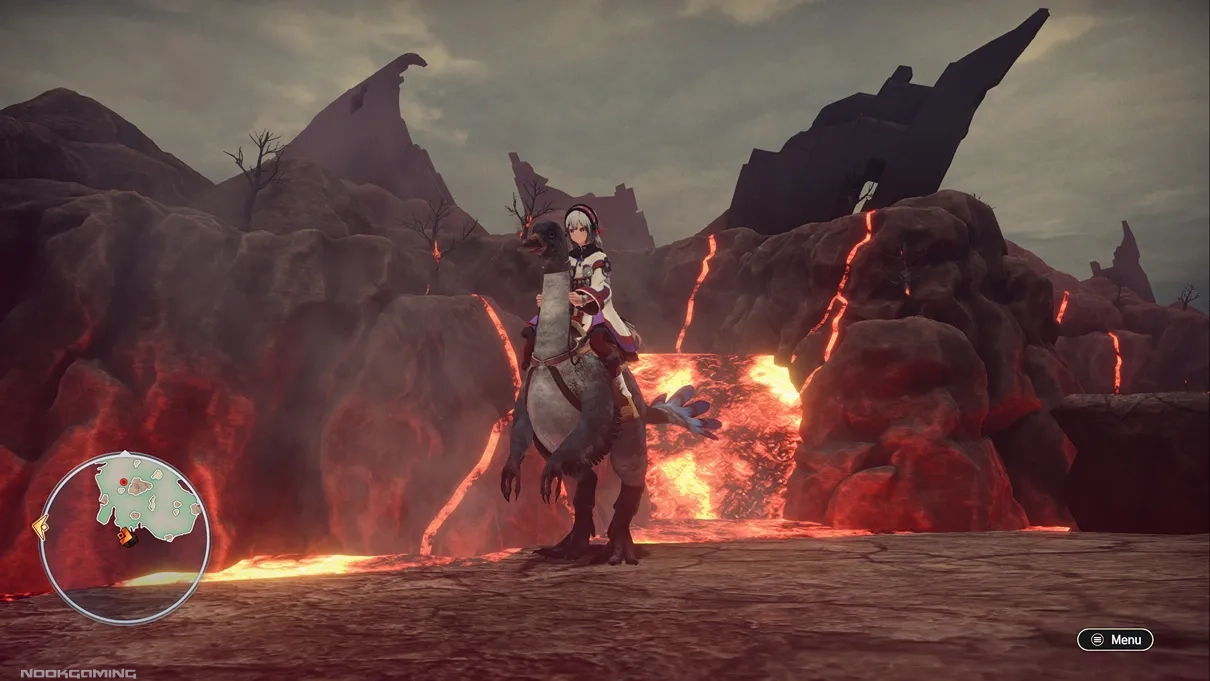
Utawarerumono: Past and Present Rediscovered’s gameplay is split into two major segments: exploration and battle. The exploration segment in the game takes place in a sprawling open world area depicting Yamato, where characters in the party can engage enemies by attacking them or running them over with their mount. Depending on the level difference between the party and the enemy, engaging them preemptively can result in a quick kill, which rewards experience, gold, and loot to the player without having to actually fight the enemy. Littered around the map are treasure chests, which can hold some valuable items for progression, and shrines that can heal your party to full before engaging an area or story boss. In contrast to the visual novel, it’s a great way of revisualizing what the country would look like beyond what was previously described to me as a reader.
Ironically, however, this exploration segment also ends up being the biggest weakness of the game. For a narrative-driven title such as the Utawarerumono series, the amount of padding this segment added to the overall playtime ended up being detrimental to the preservation of the story’s momentum, and by extension, my own immersion in it. Compared to the previous installment, it does eliminate a lot of glaring problems the segment had, such as the lack of fast travel, level grinding as a necessity to achieve quick kills, and the lack of clear direction for story progression. Now, you can access a world map anywhere that you can use to teleport to towns or waypoints, quick kills are now unlocked by beating a specific number of enemies or an area boss, and the path to the next story checkpoint is now marked by a long segmented red arrow that’s hard to miss.
Land Changes with Time
All these changes make exploration honestly less of a chore to do now. With the addition of a zoom-in feature for the minimap, clear indicators for special encounters, and an improved gathering system, it felt incredibly simple for me to just walk into a new area, defeat like four enemies, and then go along my merry way. The introduction of a world map, which uses an incredibly well-done depiction of Yamato and Arva Shulan as its background, made traveling between key areas a breeze to do now. And thank god they decided to do that, because this installment had sixty-five (65) total waypoints to unlock!
It is a shame that some areas from the previous game that weren’t exactly relevant to the story anymore, such as the Raven Trials, were ultimately downsized into a glorified boss room, but I think they were good changes nonetheless. Aside from common intersections such as the Yamato and Rushupu Highways, the change in structure for previously existing areas allowed me to have more time to enjoy the newer maps, as I wasn’t held up by content that I had already experienced beforehand. There is still, however, a lot of nothing within the areas themselves, but I feel like that’s an inherent problem that open-world games usually face anyway. Regardless, I felt like this iteration of the exploration segment was an improvement over its predecessor, which is always good for a sequel title.
Three Rings and a Dream
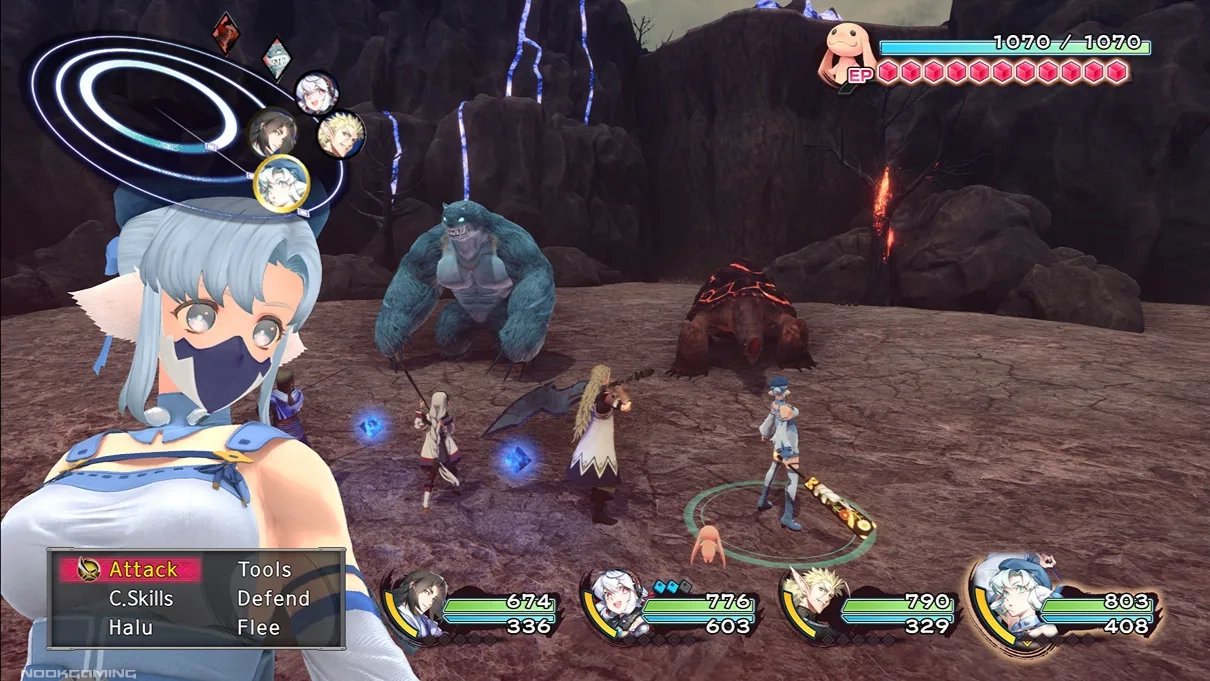
Moving on to the battle system, Utawarerumono: Past and Present Rediscovered inherits most of what Monochrome Mobius previously established. It retains the turn-based approach to a JRPG, with the characters having the option to normal attack, use a skill, use a consumable item, defend, summon Halu, or flee. The party members have an expanded set of skills compared to the first game, although they still more or less fall under the same niche or function with the bare minimum in terms of flexibility. The turn order still revolves around the notorious triple ring system, with units in the inner circles having shorter turn intervals compared to those in the outer rings. Managing these rings alongside morale, which was previously called stagger, remains the key to winning a lot of the more challenging fights in the game. Unfortunately, with limited options to actually manage your morale stat, it becomes a hard requirement to overcome for encounters where you might find yourself underleveled.
Departing from the first game’s design choice to pay homage to old school JRPG systems, Utawarerumono: Past and Present Rediscovered introduced a lot of quality of life improvements in the form of information visibility that I very much appreciated as someone who played on a higher difficulty. The most important change is probably the introduction of a status screen, which presents key information such as turn order, current buffs and debuffs in the encounter, and elemental resistances. This introduced an actual strategy component to the gameplay, so instead of blindly guessing what kind of resistances the enemy would have based on their appearance, I could finally plan skill sequences depending on who I want to put forward as the main DPS given the situation at hand. The morale bar, which was invisible in the previous game, adds much-needed context to figure out how the battle is currently going. It finally feels like finding myself in a bad situation is me being punished for my mistake rather than a result of an unlucky hit, since the information makes most of the risks preventable.
The Best Defense is a One-Shot Offense
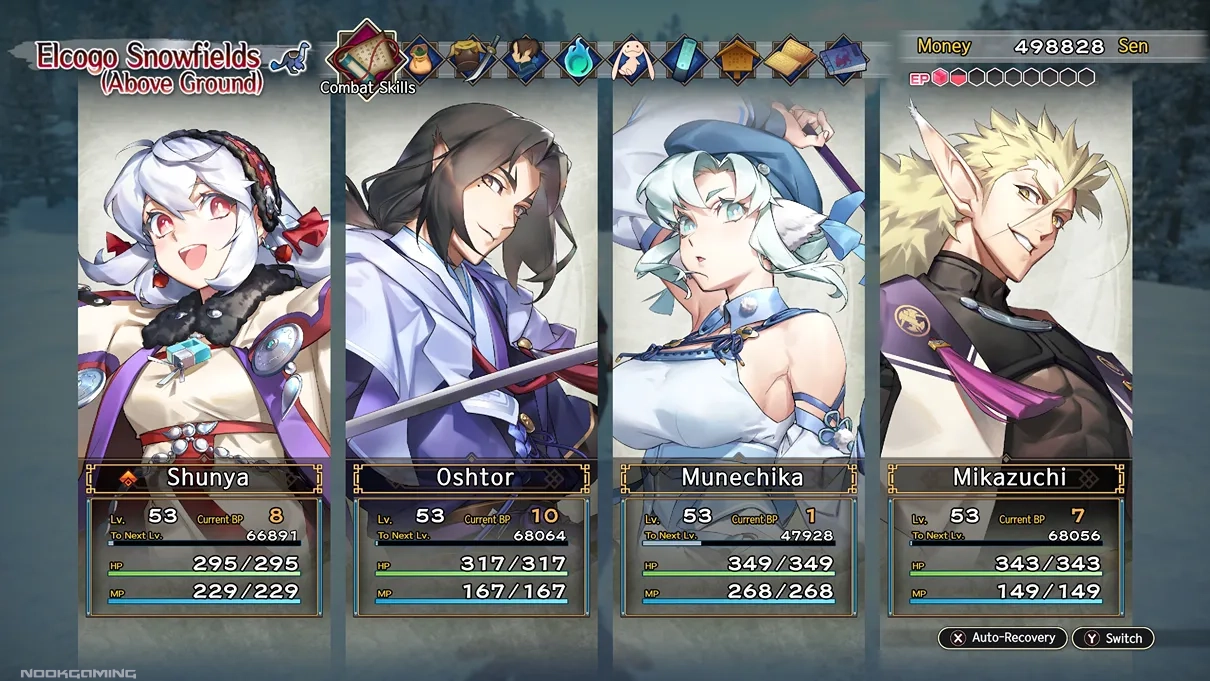
For character progression, leveling up still gives bonus points, or BP, that you can use to raise stats up to a maximum of fifty (50) times. With the exception of Morale, a character’s stats still function the same as they did in Monochrome Mobius. I love the freedom they give you when distributing the BP for your characters. It allows me to employ a playstyle that revolves around my preferences, at least until the point where everything becomes maxed. In a way, it makes the gameplay experience a little bit different for everyone, which is pretty cool as a concept. This also now extends to how you use your consumables, as finally, they allow you to hold a maximum of ninety-nine (99) of each item. That’s enough to save even Pashpakur!
Lastly, equipment and Halu’s progression remain largely the same as with the previous installment. Invest in both of them, gain access to stronger equipment or skills, and steamroll old enemies with high power vindication. The only major change they made is that they introduced new item types and segregated them into those that are usable for equipment, and those that are usable specifically for upgrading Halu. This does make it a bit more challenging to fully complete some stuff, as mats are now exclusive for one upgrade side, but it does help eliminate the artificial difficulty of choosing which mat to use, as the only consideration necessary now revolves around which item type is boosted for a particular upgrade level.
Visually Polarizing, Musically Excellent
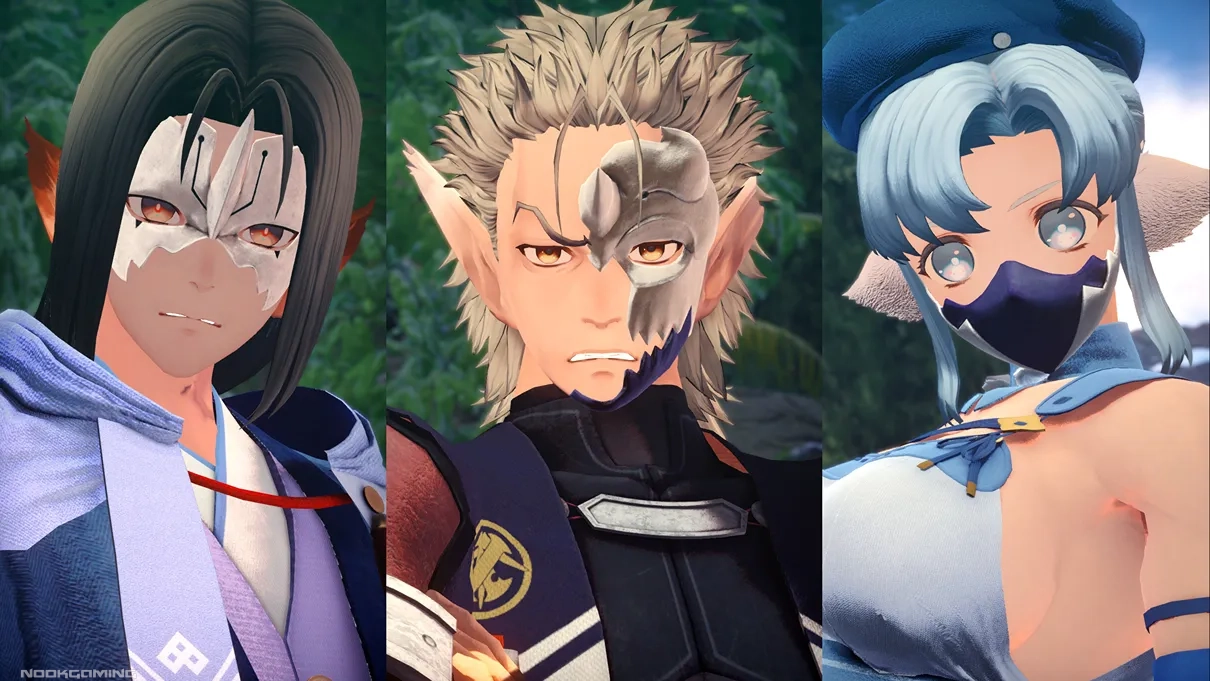
Utawarerumono: Past and Present Rediscovered finds itself in a weird position between having an anime aesthetic while trying to emulate lighting reminiscent of games with designs that lean more towards realism. As a 3D game, for how well-made the different world areas were, it felt a little bit weird how lackluster some aspects of the character models were. To mention some, a lot of character parts clip into each other during simple actions such as walking, and even telegraphed movements in cutscenes and skill animations aren’t exempt from this. The textures applied to the character models, which felt like they were meant to simulate shadows, feel a little bit off due to remaining static even with changing light sources. As a result, in particular cutscenes, the mismatch in colors between a character’s face and their limbs becomes very apparent when held against the light. The NPCs did get improved upon since the previous game, but they are still a little bit jarring to look at when put side by side with the main characters’ models. I do think that the final result is aesthetically pleasing enough to look at, but these little details end up making it feel a little bit less polished than what I’d hope for, given the price tag.
On the other hand, their selection of music for the game was every bit excellent. Boasting an impressive total of one-hundred eleven (111) tracks, there’s not much left to want from what the installment already offers. Each area has a dedicated track associated with it, with many more left over as a healthy selection for various situations and subtle differences they might want to introduce. Having gone through the entirety of the game, I can say that the game’s musical score is great overall. I enjoyed listening to most of them as my ambient tracks during exploration, and they were great accompaniments for pulling at my heartstrings in emotional scenes. If there’s one thing I would have liked to add, it would be more variations for the generic battle theme itself. It gets a little bit old after a hundred or so encounters.
Verdict
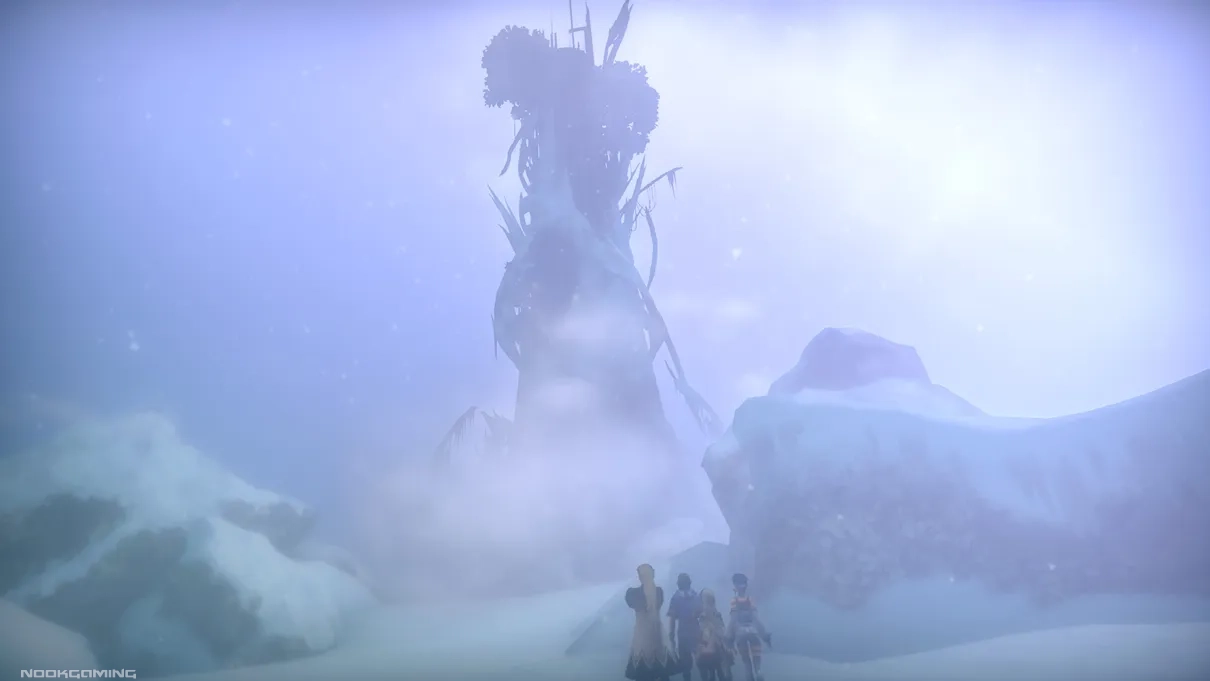
Utawarerumono: Past and Present Rediscovered is a satisfying end to Utawarerumono’s spin-off series. With a battle system that screams old-school JRPG and an exploration segment that lets you journey through the expansive territory of Yamato, it improves upon the Monochrome Mobius experience to better present the series that fans have known and loved in an alternative way. Although I do have some gripes with the pacing due to its departure from the visual novel format and the compromise in quality of its 3D models, it was still a pleasant experience journeying with Oshtor and the cast in this final title. It’s a little bit hard to recommend to people who aren’t already fans of the series due to how dated the system feels and its direct references to the main trilogy, but it’s definitely a must to pick up for people who are already familiar with the previous titles.
As a final message, please do play the main trilogy first before picking up the two-game spin-off. Utawarerumono: Past and Present Rediscovered is a title full of love with multiple odes to iconic scenes and memorable characters of the series, and it would be a shame to miss out on all the subtle references they included in the story. As the years continue going by, I hope more people get to experience the games as we finally finish it off after a 22-year long run. Thank you, Utawarerumono!
UTAWARERUMONO: PAST AND PRESENT REDISCOVERED IS RECOMMENDED

If you are looking for another JRPG, check out Wayblazer Dämmerung. Or if you’d like to see more articles about Utawarerumono, check out our look at Utawarerumono: Prelude to the Fallen or Utawarerumono: ZAN.
Many thanks go to Shiravune for a PC review code for Utawarerumono: Past and Present Rediscovered.

Visual novel reader that wishes there were more than 24 hours in a day. Gacha victim, TCG enjoyer, and VTuber simp. Still trying to live happily.