The original Xanadu game was released nearly 40 years ago, and is one of the most important games in developer Falcom’s history. While it’s had some games here and there since then, it’s since fallen to the wayside among their catalog in favor of Ys and Trails. Tokyo Xanadu is the latest game in the series and is now nearly a decade old with a sequel on the horizon. It returns to the portable format with the Nintendo Switch iteration of Tokyo Xanadu eX+. So how does it hold up?
The Part-Timer, His Friends, and Monsters
Somewhere in the Tokyo metro rests the fictional city of Morimiya, our setting for Tokyo Xanadu. Morimiya is currently undergoing several strange incidents relating to people suddenly disappearing as if spirited away. This isn’t caused by ghosts; rather, strange rifts in reality called Eclipses open up and steal people away. These Eclipses lead to a realm called the Otherworld, inhabited by monsters called Greed. Our protagonist, high schooler slash part-timer Kou Tokisaka, is one such victim of the Eclipse phenomenon.
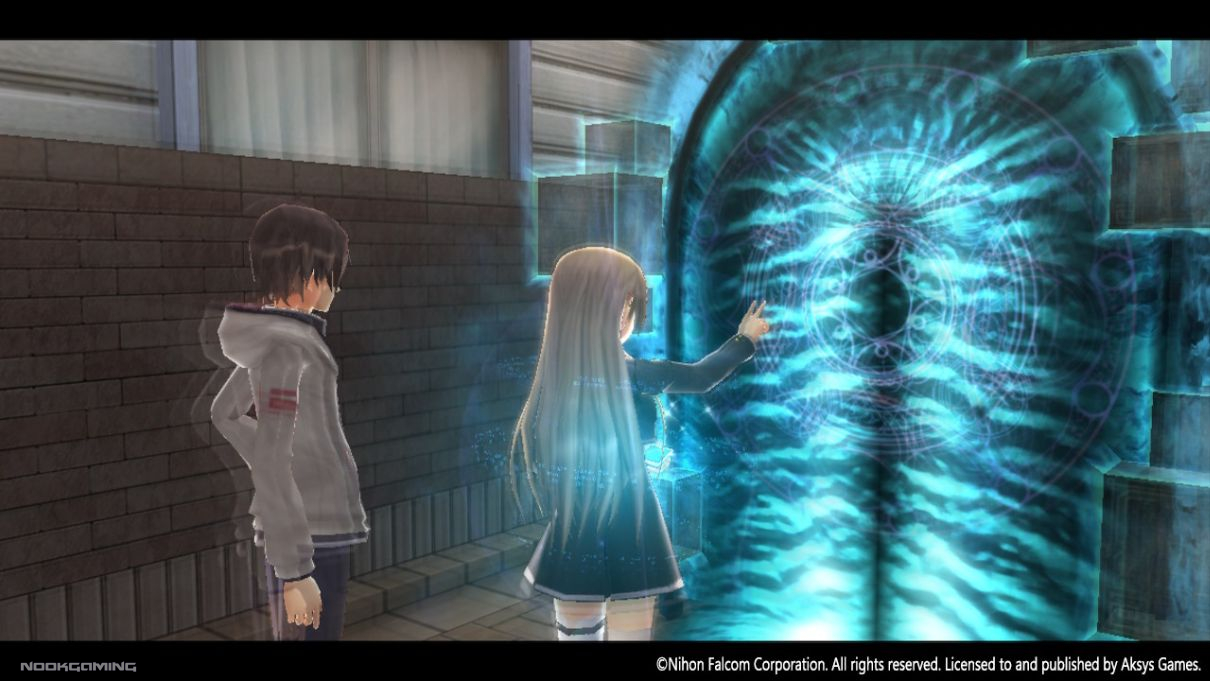
Kou is luckily equipped to handle the task, as he is a Wielder, someone with the power to use a Soul Device. Soul Devices are essentially weaponized manifestations of a person’s will or subconscious, and they are the only thing capable of hurting Greed. With this new power of his, Kou slowly rallies to fight against the Greed, determined to stop any catastrophe they might otherwise cause. Kou is, however, a newbie to a conflict that has existed for far longer than he’s been alive. So it’s up to seasoned veterans like Asuka, Mitsuki, and several supporting characters to help explain what the exact nature of the Otherworld even is.
Positives first, I really like Kou as the main protagonist. He’s pretty vanilla, driven solely by the desire to help people who need it, but this is backed by lots of charisma making this desire feel earnest. It also helps that despite his desire to help, it never feels like he’s the one solely running the show. He has a lot of agency, but more often than not he’s a supporting member in a story that’s focused on several others.
All around, I do like nearly all of the party members and a good amount of the supporting cast too. I unfortunately found Asuka Hiiragi to be the weakest party member in spite of her deuteragonist role. Her backstory was pretty generic and she kept secrets for so long that I didn’t really feel much gratification when she finally opened up. Her dynamic with Kou is also one of the plainer ones in the game. She’s emblematic of all of my issues with the game’s story, which we’ll get to later.
Luckily, the other main characters pick up the slack. There’s Shio, the macho upperclassman with a heart of gold despite his rough exterior; Mitsuki, the mysterious and elegant student council president with a simply ridiculous number of powerful connections; Rion, the idol with a massively entertaining ego; and finally Sora and Yuuki, first-years with problems of their own.
Lots and Lots of Talking
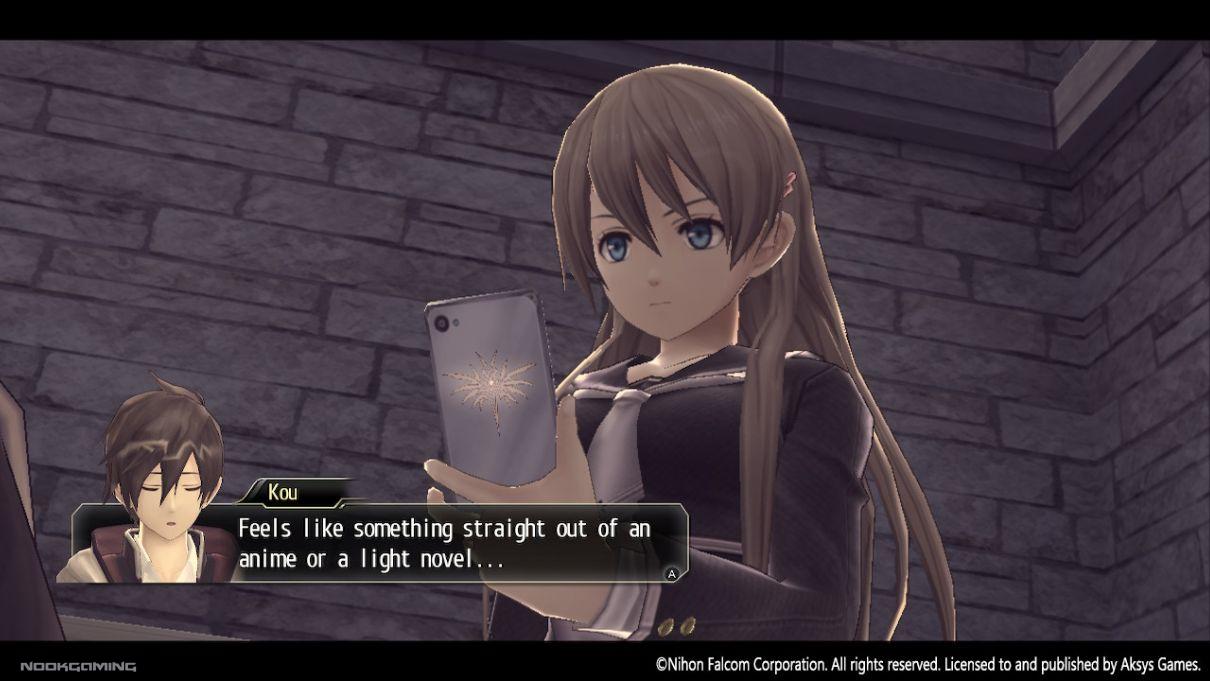
Relative to the script’s enormous size, I’m left with the sense that the story had little to truly communicate. Early on, Kou flat-out says that the story’s premise sounds like something from an anime or light novel. I don’t bemoan that self-awareness at all, but in hindsight, it felt almost like punching down when the game didn’t earn that. If you’re reading this and thinking that the premise is generic, it is. Despite all of the posturing the characters (especially Asuka) do about how complex the world seems, it’s really not. There are technically meant to be a lot of rules, terminologies, and different factors at play, but I was never left with the sense that this actually mattered most of the time.
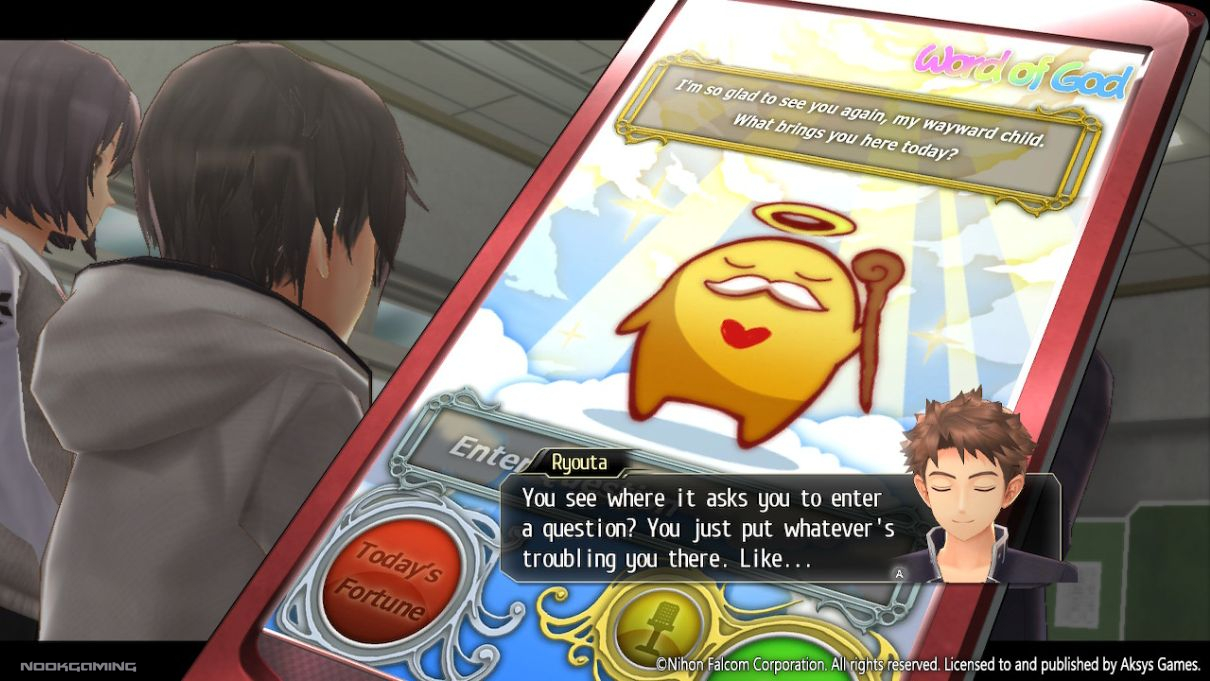
Perhaps this is done in the interest of making the world feel bigger for future sequels, but it’s at the cost of dragging down what’s happening in present tense. Conversations are stuffed with vague promises that things are going to get more complicated later, but “later” never really came. There are plot twists, but there are never any upsets that actually twist my understanding of the story. With this in mind, having to sit through so much ineffectual lore got frustrating after a while. I’m left nodding my head as I pretend to care about the implied significance of Character A being from Faction B as if that matters much.
So much time is spent explaining the setting’s mechanics when I just don’t think that’s necessary, at least not to this extent. It’s not even consistent with its own rules at times. At one point in the story, Asuka uses an amnesia spell on Shio and it doesn’t work on him. At first, I thought this was simply the result of him having a strong enough will so as to override it, but that’s not the case. It’s later established that it didn’t work on Shio because he was a Wielder who hadn’t yet awakened to his power… But this doesn’t make any sense, because this exact scenario occurred twice before and the spell did work. I’m not one to harp on what I feel are ultimately minor plot holes, but this is a good example of why Tokyo Xanadu’s eagerness to over-explain itself works against its own interests. This is, despite all of the dialogue and terminology, a very by-the-books story that’s trying too hard to present itself as more clever than it is in practice.
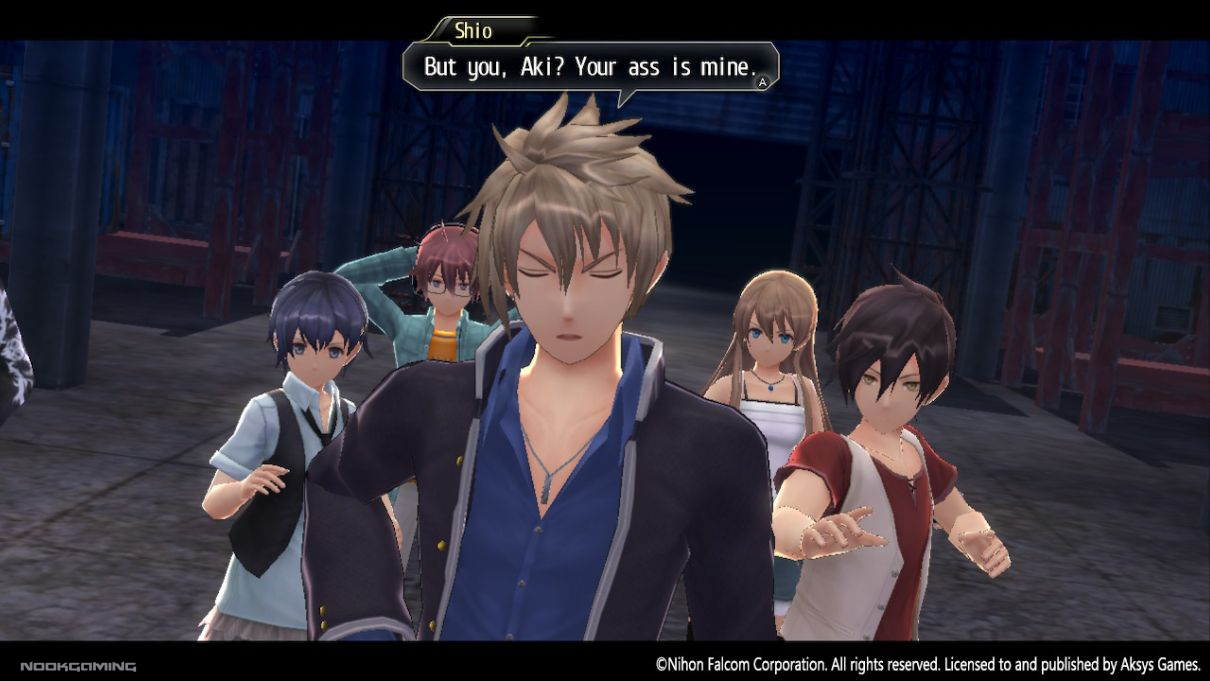
Not helping matters is that most chapters are laid out in the same way. Each follows a predictable cadence, and by midway through Chapter 3, I had a good grasp on how things would play out. A new mystery occurs that’s caused by a Greed and a new party member is involved, an investigation takes place, and the new member joins just as you set off to defeat the culprit. It accidentally makes parts of the story feel more trite than intended, and I wish the story wasn’t so keen on saving almost all of its surprises for its climax. In the long run, that really hurt how much I wound up enjoying it. As I said before, I really like the characters, I just wish they weren’t stuck in such a weak plot.
Side Gigs
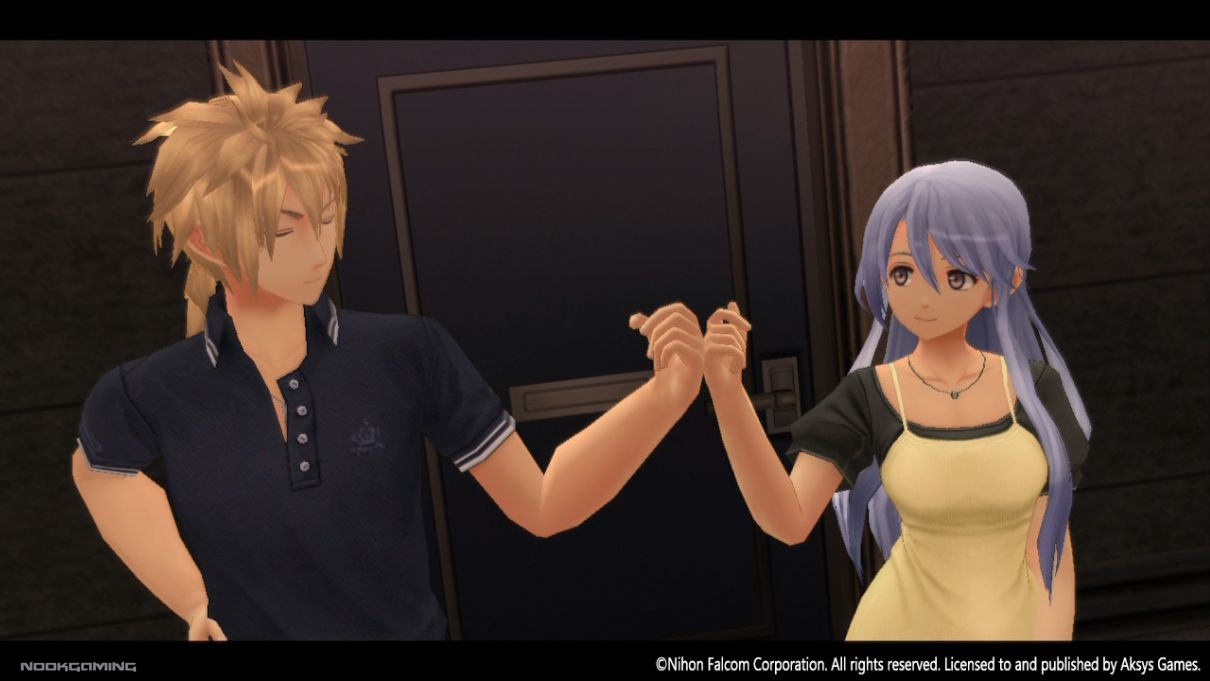
Where the writing starts to pick up again is in the Side Stories, little vignettes that take place after almost every main story chapter. These typically follow the escapades of one of the main characters, usually not long after they’ve joined the party. Sometimes it will even swap to characters who are a long way off from being properly introduced in the main story, adding some intrigue. Side Stories are a good change of pace, showing how the characters are developing in more subtle ways after the conclusions of their introductory chapters. These are equally as formulaic as the main story chapters, but feature writing I feel is much better thanks to solid pacing and conflicts that feel more interpersonal.

Side Stories also typically focus on dynamics we don’t get to see as much of in the main story but are implied. Kou isn’t a central character in any of them, so it leaves their dynamics some much-needed breathing room. The issue I have with the Side Stories is that these were clearly made separate from the main game. They feature strengths that I really wish had meaningfully carried over into the main story, and they also highlight a particularly damning issue with the main cast.
Character relevance tends to fall off pretty hard after their respective chapters have concluded. Mitsuki and Asuka are just about the only ones besides Kou who manage to stay relevant for most of the runtime. It runs into the same issues I have with the Trails series at times, where it feels like party members only talk to remind the player that they exist at all. Trails-isms are all over the place in the game’s story, and even some terminology (and a whole character!) is brought over to supplement things. It kind of strips Tokyo Xanadu of some identity, but this issue unfortunately doesn’t stop at just the story.
Trails of Xanadu
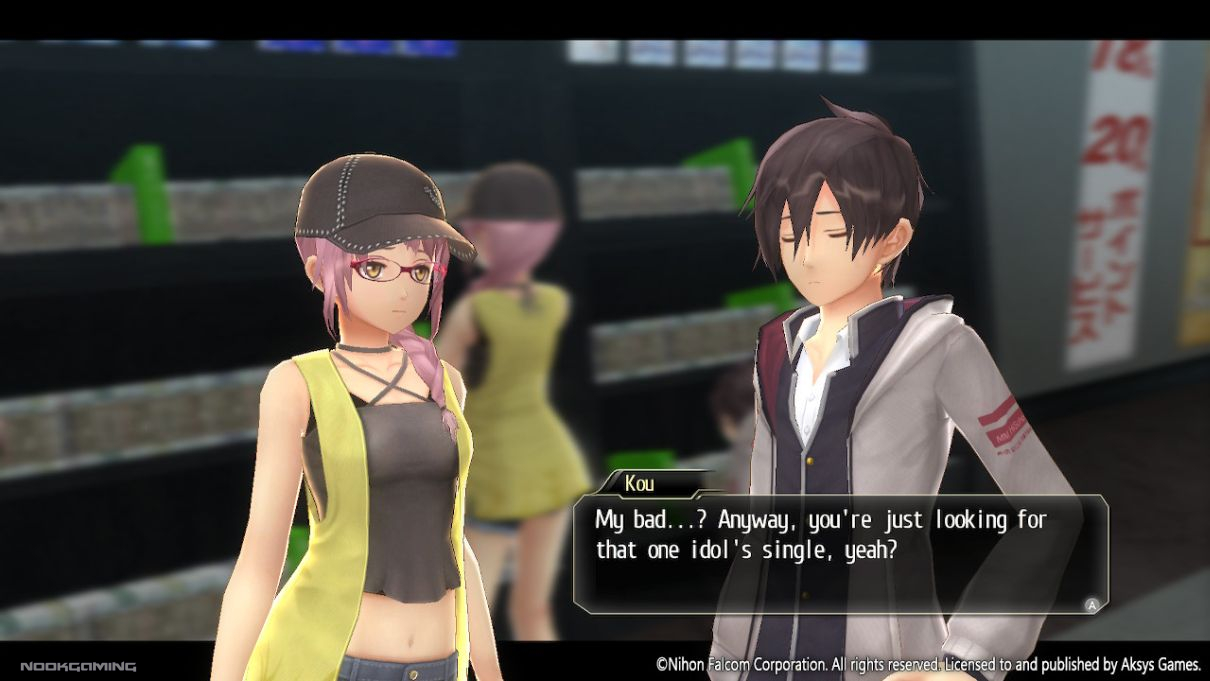
During parts of the story where you have free time, you can go across Morimiya and visit various different places. This includes parts of Kou’s school, different parts of town with different shops and activities, and lots of people to talk to. Every NPC in this game is their own distinct character with their own history and little developments. It features a surprisingly comprehensive log on every character, constantly updating as you find out a little more about everyone. There are also regular quests and hidden quests you can engage with, raising Kou’s social stats that are important later on. On top of this, you also have a limited amount of Affinity Shards, allowing you to hang out with characters in Bonding Events.
If you’ve played your share of Falcom games before, you might now be thinking: “Wait a second, isn’t this just Trails of Cold Steel?” Yes, it is. The basic structure is a blatant copy-paste of the first two Cold Steel titles, even down to borrowing most UI elements and lifting certain mechanics from it. At first, I thought this was simply its way of paying tribute to it, but before long it felt outright shameless. It doesn’t stop at the aforementioned character (Towa) being essentially copied over from Cold Steel and made a prominent character, or Trails characters cameoing elsewhere. It also includes minigames being ripped from those games down to the letter.

This wouldn’t be so bad, but it also means that several flaws from those games are brought over too. I already didn’t like Bonding Events in Cold Steel or Trails to Azure, and it has all of the same problems here. A lot of character details are senselessly locked behind these, and the only way you’ll be able to see them all is by playing the game more than once or looking them up online. Neither of these is ideal, and this artificial limitation meant that I cared about some characters less than I ought to have.
The generic story setup was bad enough, but this over-reliance on Trails’ formula risks destroying Tokyo Xanadu’s sense of identity. It’s still there, but it’s nowhere near as strong or unique as it could have been and I’m not convinced that the cost was worth it. Considering how unique the older Xanadu games were in comparison to Falcom’s other projects, it’s especially disappointing.
Combat and Level Design
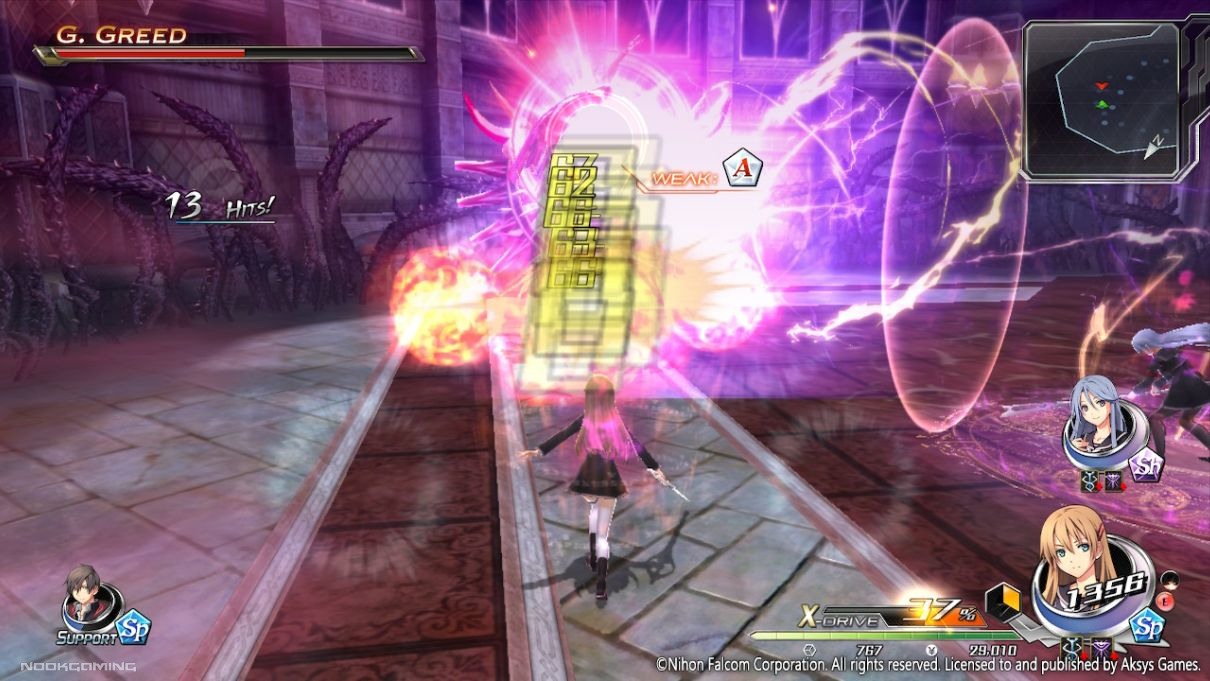
Tokyo Xanadu’s typical gameplay will have you running through some sprawling mazes with some fairly standard Action RPG combat. It feels like a mixture of The Legend of Nayuta and a standard beat-em-up game, with there mostly being an emphasis on keeping up a long combo through attacking enemies and breaking destructible stage elements.
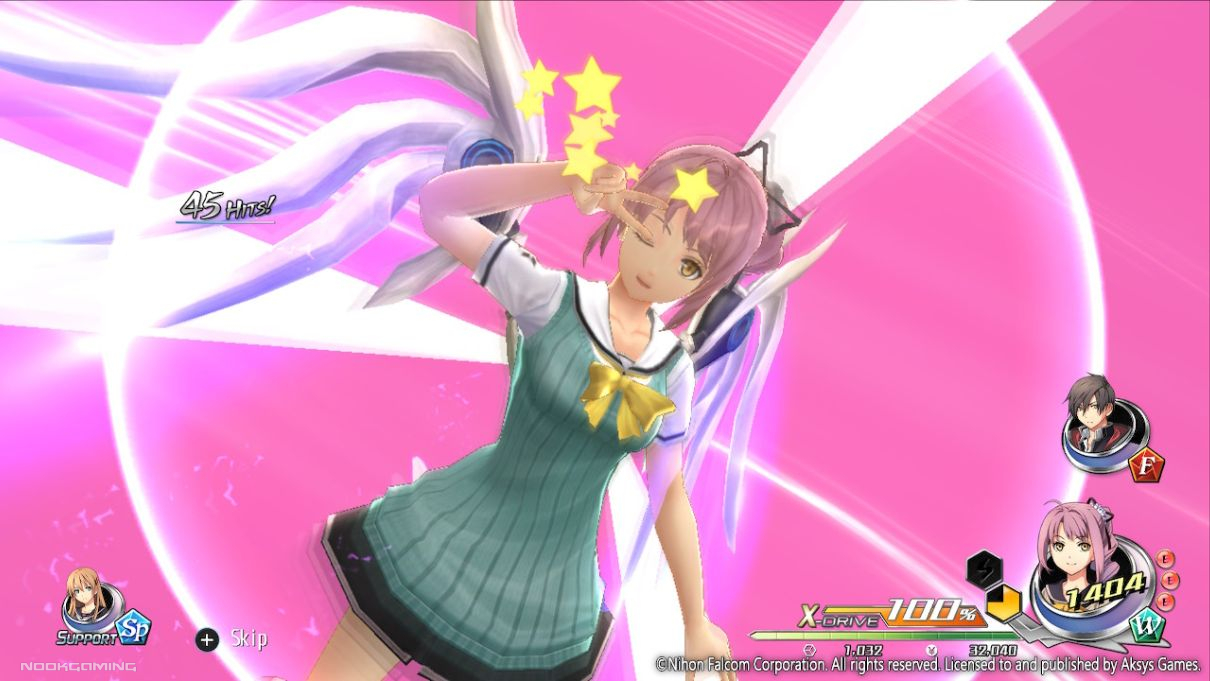
Each character comes with a fairly distinct feel. Kou is the all-rounder with decent and good damage output, while Asuka is quicker but does less damage overall. Shio is slow as dirt but hits like a truck, downing even the strongest enemies in relatively few hits. Sora is a fast glass cannon, while Mitsuki, Yuuki, and Rion are all more focused on dealing with enemies at a distance. Every character comes with a basic physical attack string, a projectile, a charge attack, and two aerial attacks. You additionally have X-Strikes and EX Skills, which grant temporary invincibility and can deal massive damage. Everyone also comes with an element, which dictates the damage type done to enemies in a sort of Rock-Paper-Scissors style.
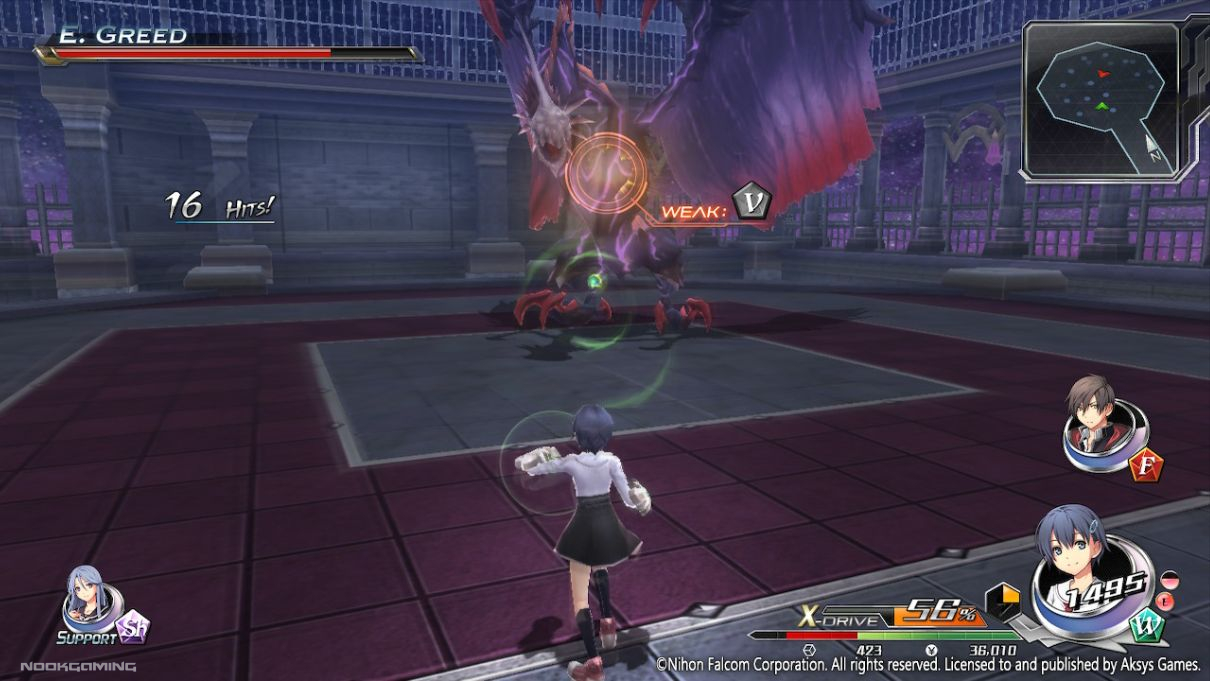
It’s a decently fun combat system, but it’s woefully lacking in variety. There aren’t many distinct enemy types and there are a lot of recolors for both regular enemies and boss fights. There are also not enough level gimmicks to shake things up, with most areas just feeling like basic mazes and not much else. What little light puzzle-solving there is is nice, but there’s not enough of it to go around to make much of a difference. It would make a great system if the game were about 20 hours shorter, but as it stands it didn’t really hold my interest relative to its length.
To offset this, the teambuilding is fairly decent. You have a system quite similar to Orbments from Trails, where you can add and swap out various Elements to change attributes of your characters. This can include things like faster run speed, doing damage to specific enemy types, changing that character’s attribute, and so on. It’s not deep, but it did incur a degree of decision-making that was pretty fun.
Game Balance and Difficulty
The issues with the combat system start to rear its ugly in Tokyo Xanadu eX+’s latter stages. As I mentioned before, I don’t really think this kind of combat suits a game of this length. Not helping matters is that this game’s idea of upping the challenge usually just involves throwing more stuff at the player to deal with. Bosses start fairly strong, if simple. Their patterns are reasonable to read and if you know what you’re doing, they can go down fairly quickly. The same absolutely doesn’t apply to the later fights, especially the Grim Greed boss battles. They have monstrous health bars and erratic attack patterns that aren’t fun to fight through.
Later parts of the game see enemy health bars jacked up to pretty obscene levels. The game tries to offset this by giving the player more tools to work with, but these are usually only ever in the form of more X-Strikes and EX Skills. Damage numbers go up thanks to this, but the fun goes down. It’s really a combat system that needed to be trimmed down and focused. When I started seeing bosses become regular enemies and vice versa, it was hard not to roll my eyes at how things had worn thin long before I reached the credits. Unfortunately, in both story and gameplay, Tokyo Xanadu eX+ didn’t have nearly enough going on to justify its playtime. I played on the second hardest difficulty, and I kind of regret that now due to how long things took.
Switch Performance and Music
The biggest change coming into the Switch port of Tokyo Xanadu eX+ is the re-edited English localization. I never played the original version so I can’t speak about how good or bad the old one was, just that this one is pretty good. There are some editing oddities and typos I found throughout my playthrough, but I would overall say that about 99% of the text is rock solid. Aksys’s work here just about reaches the caliber of Falcom’s other recent localization endeavors. Everyone speaks in a unique cadence and dialogue is generally quite well-written. For what it’s worth, despite my grievances with the game’s story, the English dialogue at least smoothed over a few cracks and kept some of it entertaining.
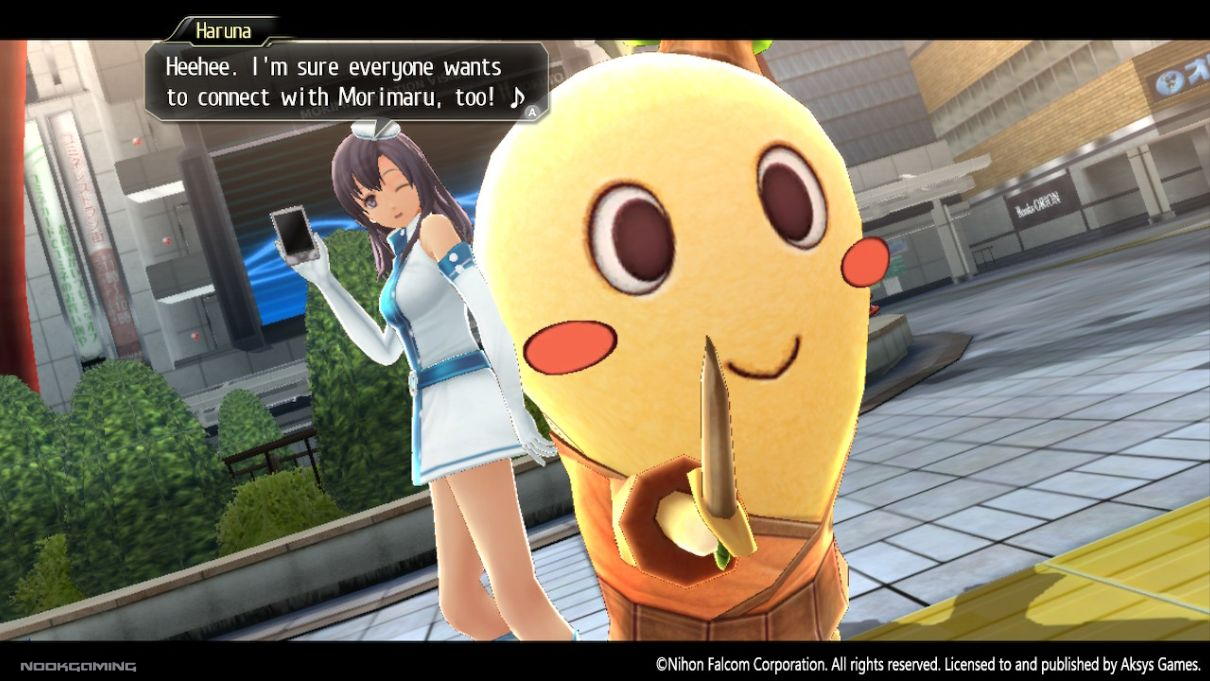
As for performance, this is a solid porting job of the original version. Tokyo Xanadu was originally a PlayStation Vita game, so don’t go in expecting visuals that will blow you away. For what it’s worth, it’s much better looking than Falcom’s other Vita games, featuring fairly well-modeled characters and enemies. The environments of the Otherworld are colorful and abstract too, so it’s never boring to look at least. This version runs at 60FPS as well. It’s not faultless, but I found that it almost always ran smoothly during combat, which is where it matters most. While load times are also nil, I’m disappointed that this isn’t a full-resolution game in docked or handheld play when it looks like it ought to be. At the very least, all of the DLC from the previous versions are included at no extra charge here.
Lastly, there’s the audio. Disappointingly, this game lacks an English dub. The Japanese voiceover is pretty good, but it also does that thing that every Falcom game does where a character’s voice will inexplicably go silent partway through a conversation. It’s jarring and it occasionally kills the mood of some scenes. Thankfully, the music in general is fantastic. This is one of the best soundtracks that Falcom has ever produced, which is saying something considering their generally high pedigree. It takes on a more contemporary feel that fits the modern setting, but the music can take on lots of different tones based on what’s happening in the story. I don’t really have much to say other than that it’s all great.

Verdict
Tokyo Xanadu eX+ is still an alright game in spite of its myriad problems. It simply had no business being as long as it was. Its story wasn’t nuanced or interesting enough to warrant the length, and the gameplay didn’t evolve nearly enough for that either. Its over-reliance on the format laid out in Trails of Cold Steel strips it of some much-needed identity, leaving parts of the game feeling hollow and lacking in impact. Compared to Falcom’s other works, it’s a little baffling seeing just how little originality it has. To speak positively, when I’m engaged with its best aspects, like the slice-of-life storytelling, the music, and some of the combat, it can be pretty fun. I’m definitely excited to see what they do with the forthcoming sequel, and that has to count for something.
WAIT FOR SALE ON TOKYO XANADU EX+

Purchase: Humble Store (PC Steam)
If you are looking for another recent Falcom RPG release, you might want to check out our review of The Legend of Heroes: Trails Through Daybreak. For another JRPG, check out our review of SaGa Emerald Beyond.
Many thanks go to Reef Entertainment for a Nintendo Switch review code for Tokyo Xanadu eX+.

A hobbyist who took up the pen to write about their favorite pastime: games. While a lover of many genres, Isaiah Parker specializes in Platformers, RPGs, and competitive multiplayer titles. The easiest way into his heart is to have great core gameplay mechanics. Self-proclaimed world’s biggest Sonic fan. Follow him @ZinogreVolt