Harmonic Reflections, the latest visual novel from Laplacian, first released in English back in July, albeit with significant controversy. The original English translation was via DMM Game Translate, a service that uses AI machine translation with human supervision. While Laplacian was forthcoming about this, as well as the fact that Adobe Firefly was used to assist with background assets, negative feedback about both the quality of the translation and the role of AI in the process led to Laplacian commissioning a second, human translation of Harmonic Reflections. This is the version of Harmonic Reflections that I played. I didn’t play the original translation and so don’t plan to compare the two or comment further beyond the context provided here. If you’re interested in a deeper dive into the process that led to the retranslation of Harmonic Reflections and Laplacian’s thoughts on the role of AI in their work more generally, NookGaming recently interviewed Ono Wasabi, CEO of Laplacian and author of Harmonic Reflections, here.
Daze of Future Past
Harmonic Reflections is a short visual novel that tells the story of Mozumi Aruto’s last summer of high school. Aruto was once an aspiring pianist, but an event in his past led to him losing the ability to hear the piano. Now without much direction, Aruto throws himself into supporting his younger brother Tokio, a rising piano prodigy, through working a number of part-time jobs.
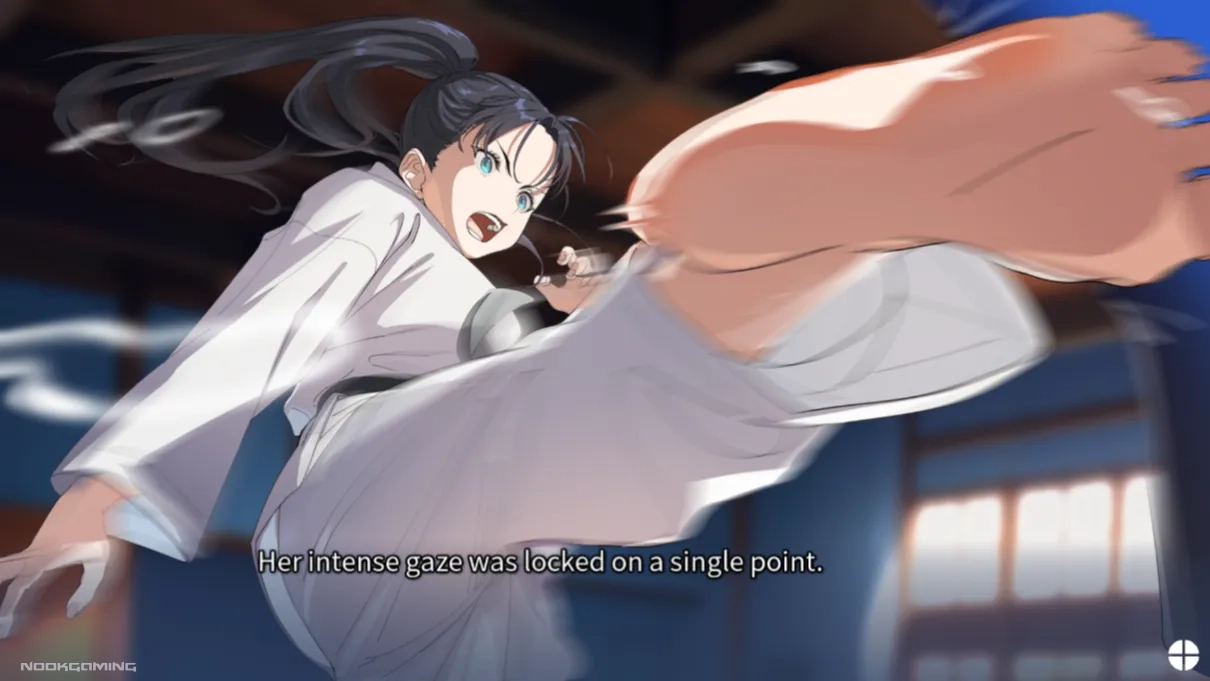
Providing the opportunities Tokio needs to develop, like lessons with experts and travel for competitions isn’t cheap, and Aruto’s father passed away a while back, leaving only him and his mother to support the family. However, you quickly get the sense that Aruto immerses himself in work as an emotional anaesthetic. He neither remembers what led to his current state nor seems to have any interest in knowing. Aruto’s relationships with his friends are similarly vague and static. There’s Tachibana Eri, the karate club member and girl Aruto likes. While she seems to like him back, she routinely denies being his girlfriend and their relationship exists in some transient space between friends and lovers. Aruto’s other friend is the upbeat Andou “Anjie” Jirou, who Aruto comfortably chats with at school but otherwise keeps at arms length.
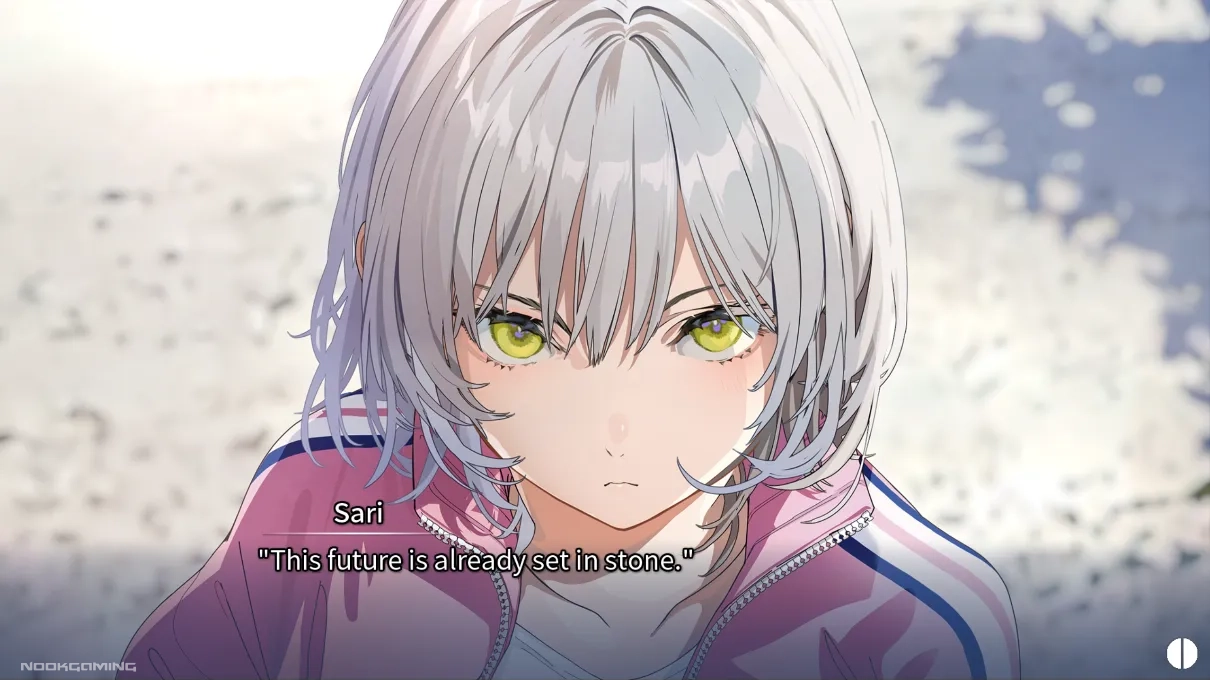
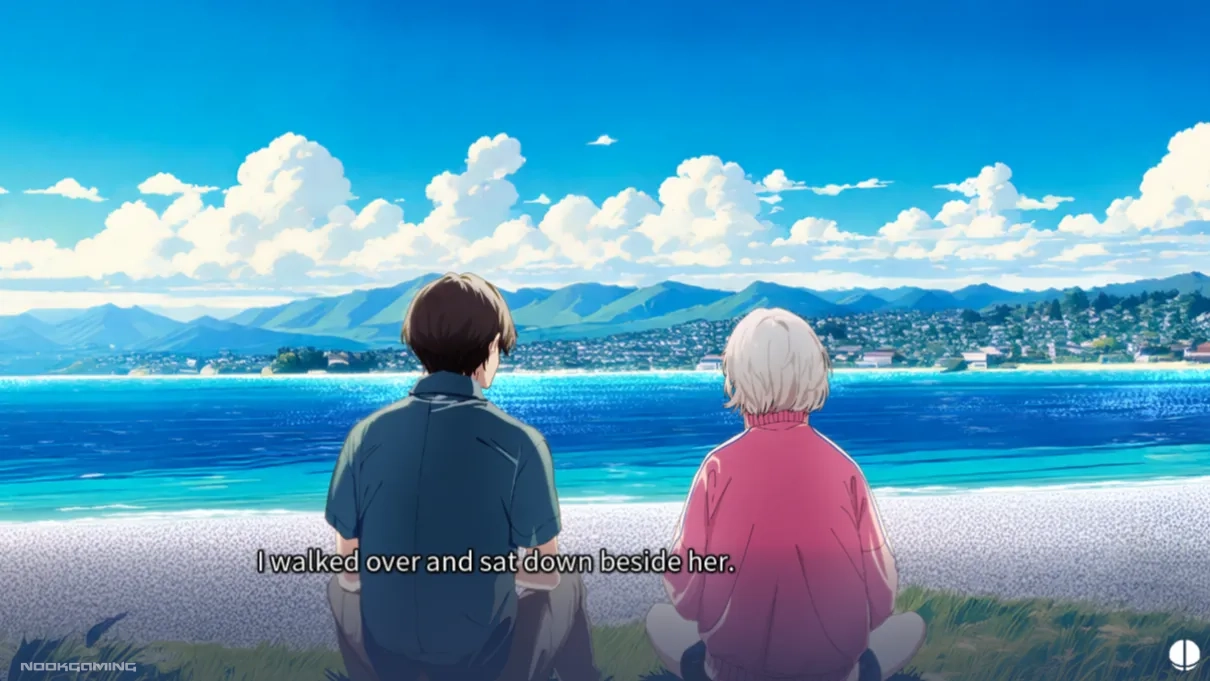
Everything changes when on the day of the school festival a mysterious white-haired girl in a tracksuit travels from Nagano and asks Aruto to be her guide for the day. The girl, Amane Sari, reveals to Aruto that she has memories of the future, that these memories are the key to unlocking his past, and that one day he will play the piano again. While naturally skeptical, Aruto also feels compelled by the quiet confidence radiating from the otherwise gruff and reserved Sari. She invites Aruto to come to Nagano for the summer, and promises to lead him to the future in her memories. Aruto could find any number of reasons to refuse, but in the end finds himself in Nagano, drawn by the small flicker of light shimmering through the haze of his existence.
Summertime Sadness
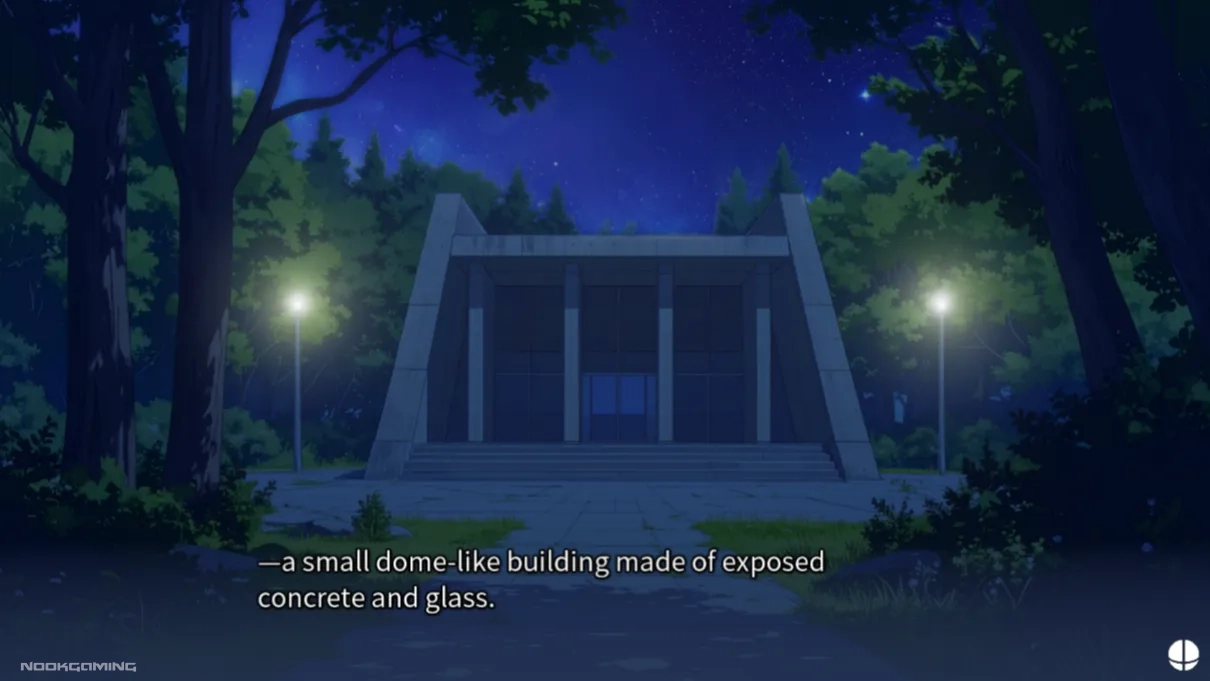
My favorite thing about Harmonic Reflections is the way it establishes and maintains a quiet, contemplative atmosphere. From the title screen, the music ponders a simple piano theme, underpinned by a churning current of minimalism that persists for most of the game. The art, while of course anime-esque, is less stylized and more grounded than that of many other visual novels I’ve read. Characters are more proportioned, with smaller eyes and more prominent facial shapes, while the backgrounds have a surprising amount of detail and realism, perhaps in part a result of the process of basing many of them on real places in Nagano. And everything is a little bit glossy and reflective in a way that evoked for me the feeling of nostalgia for a simpler past one might feel seeing the sunlight through the trees in the isolation of a quiet grove.
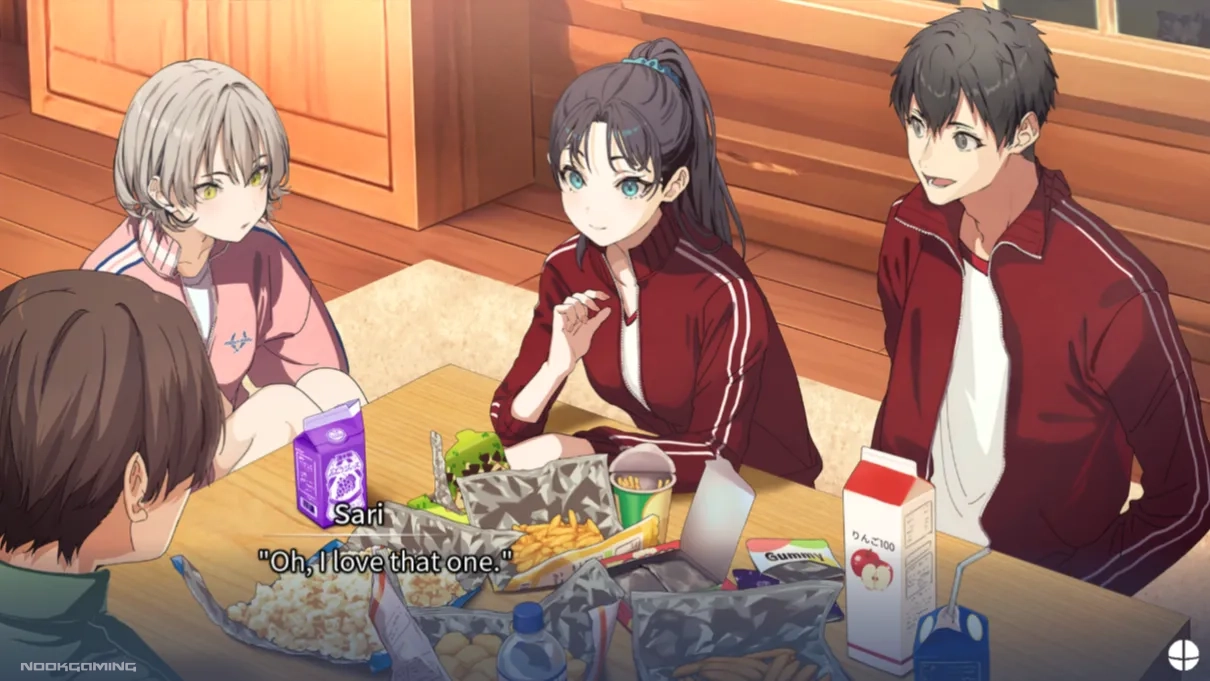
The characters also blend seamlessly into this quiet mood. Harmonic Reflections is often understated, both in its prose and its voice acting. It’s devoid of the kind of zany comedy skits where the VAs might lean into overacting. Characters often speak tentatively and dance around what they really want to say, reflecting the tenuous relationships holding the group together and the haze obfuscating Aruto’s past. Sari is in some ways blunt and confident, but often speaks in riddles and sometimes seems stuck in the same way as Aruto. Eri is outwardly cheerful and social, but also guarded, hesitant to vocalize her dreams or define her relationships. Even Anjie, who seems at first like the classic easygoing male friend character, shows a great deal of tact and nuance.
The characterization ultimately works great to facilitate drama that is grounded and human. It’s easy for a dramatic story to fall into the trap of building up contrived obstacles for the characters to overcome for the sake of the excitement that comes from the tension and release, but upon retrospect feels unnatural and unsatisfying. Harmonic Reflections instead holds its bearing and crafts a dramatic story that is both affecting and feels true to its setting and characters.
A Leaf on the Wind
Unfortunately, Harmonic Reflections takes things too far in making Aruto himself overly passive. While Aruto is at the center of the story, much of the time it feels like he’s simply letting his friends, especially Sari, lead him along while he trusts blindly and doesn’t think much about things. While Aruto is numb at the start, it would have been nice to see him gradually come out of his shell and assume more agency in Sari’s plot, which is ostensibly about him anyway. Even if the story doesn’t allow for Aruto to lead the action most of the time, he could be a more active responder, questioning himself and others, reflecting thoughtfully on his experiences, and ultimately opening himself to more intimate relationships with his friends. There are moments where Aruto does do these things, and they’re among Harmonic Reflections’ strongest. It’s just a pity there aren’t more of them.
I also thought Harmonic Reflections took a bit too much time to get to the point. While a slower pace works well with its atmosphere, in a 5 hour visual novel there’s only so much time you can spend on the buildup and slice-of-life without compromising the main parts of the story. There’s foreshadowing throughout the early parts of the story, but Harmonic Reflections doesn’t start to really dig into its central mystery until past the half-way mark, and as a result the big reveals are all compressed into the last act. It also doesn’t help that the middle of the story detours to a substantial subplot focusing on Eri, one which I actually liked on its own merits but compounded the pacing issues at the end. I would have liked more time for Aruto and his friends to process the reveals piece by piece. After all, it feels like seismic stuff from someone who forgot his past. Instead, while Harmonic Reflections’ climactic scenes are touching and well-written, it all swells and recedes so quickly that it dulls the impact.
Just the Two of Us
Harmonic Reflections has two main heroines: Sari and Eri, and might seem like it’s headed for a love triangle. There are routes for both girls, although they have most of the story in common and you’re locked into Sari on your first playthrough. In the end though, Harmonic Reflections doesn’t lean too much into this angle, and isn’t primarily a romance in general.
There are romantic moments. You pick a love interest after all, and part of that choice means an ending that sees those relationships through. However, Harmonic Reflections is foremost the story of Aruto facing up to his past. I think it works better that way though. Outside of one fanservice scene that felt out of place, Harmonic Reflections doesn’t concern itself excessively with building up Sari and Eri as cutesy or objects of desire or indulge in lovey-dovey scenes in a way that would distract from the main plot.
The UI and extra features in Harmonic Reflections are also on the minimalistic side, though here it’s less of a positive. The keybindings are nonstandard. For example, escape hides the textbook rather than pulls up the menu, while spacebar and enter both advance the text. There is a diagram of keyboard shortcuts available from the quick menu, but there’s no way to change them, which I would have liked to do. The extra features are limited to a CG gallery and music player.
What it has as far as extra features goes is standard, but I would really have liked a couple of short epilogues here as well. The ending scenes are weighty and final, but also abrupt in that we don’t see anything about how the characters move past the moment. Though to be fair, it’s a big ask for a short, sleek visual novel like Harmonic Reflections.
Verdict
Harmonic Reflections is a refreshingly grounded drama with thoughtful characters and an appropriately contemplative atmosphere. It could have been more impactful with a stronger protagonist and more developed climax, but it’s worth the read if you’re in the market for a short, focused visual novel.
HARMONIC REFLECTIONS IS RECOMMENDED

If you are looking for another visual novel, you might want to check out Tales from Toyotoki: Arrival of the Witch. We have also covered a wide variety of visual novels both originally in English and localized from Japanese, which you can check out here.
Many thanks go to Laplacian for a PC review code for Harmonic Reflections.
A veteran of Oregon Trail and Battletoads, Wes has been playing and talking about games for as long as he can remember. He’s down to try almost anything, and he especially enjoys games with gripping narrative experiences.