Hollow Knight had quite a humble genesis, but steadily it grew into quite a tour de force among indie games. The long-teased expansion-turned-sequel Hollow Knight: Silksong raised an inordinate amount of hype during its prolonged development cycle, with Team Cherry relatively mum on developments until suddenly announcing a release date in 2025. At the announced moment of release, multiple storefronts struggled to even function as hundreds of thousands of gamers were trying to swipe their digital credit cards to purchase the game, something completely unprecedented for indie games.
While there was a rush to get the game for the gaming public and press alike, a lot of the buzz around Hollow Knight: Silksong came about early and in a reactionary way. Instead, I personally felt it best to cover the game with a more holistic review after completing it all the way through. Team Cherry took their time, and so shall I. Truth be told, my opinion towards the original Hollow Knight was one of ambivalence rather than reverence, as I had significantly more issues than highlights to share until relatively late in my Dream No More ending playthrough. Silksong was announced to star fan-favorite Hornet, and the promising initial trailers had me hopeful that the game would deliver for me where Hollow Knight seldom could. Thankfully, it did not disappoint me in spinning a more exciting yarn.
I’m Hornet, and This is My Favorite Bug on the Citadel
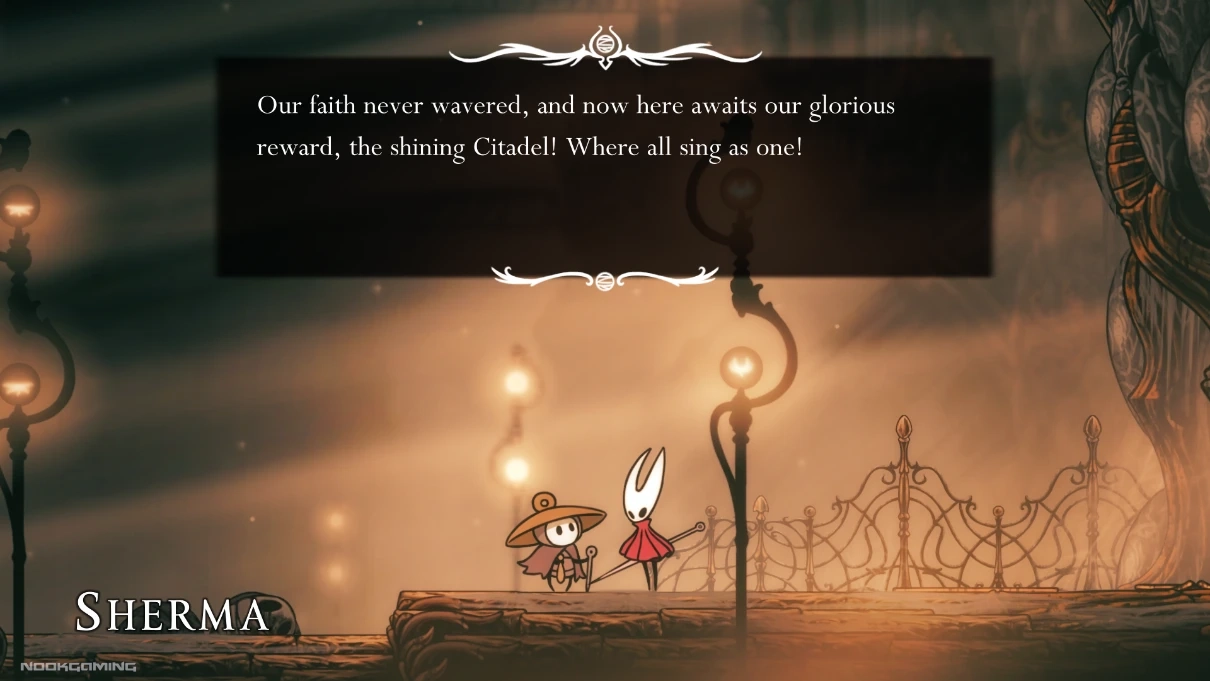
Hollow Knight: Silksong stars Hornet, the second-most important character of Hollow Knight, who despite the name is definitely not a vespid. While Silksong does provide some details of who Hornet is through its text, for the purpose of knowing who and what this horned lady is it’s generally advised that you have played through the first game beforehand, especially because this game openly spoils Hollow Knight at points. Unlike the silent Knight of that title, she has a more defined personality, converses with the beings she interacts with, and even has an audible voice (albeit one that speaks in Hollow Knight’s made-up tongue, and one which can be turned off if desired). While generally stoic and fairly low-nonsense, she’s hardly what I’d call boring. There are plenty of facets of her personality on display, such as her kindness as well as occasional moments of both silliness and wistfulness. She also just oozes coolness with her distinct cloaked appearance and acrobatic animations.
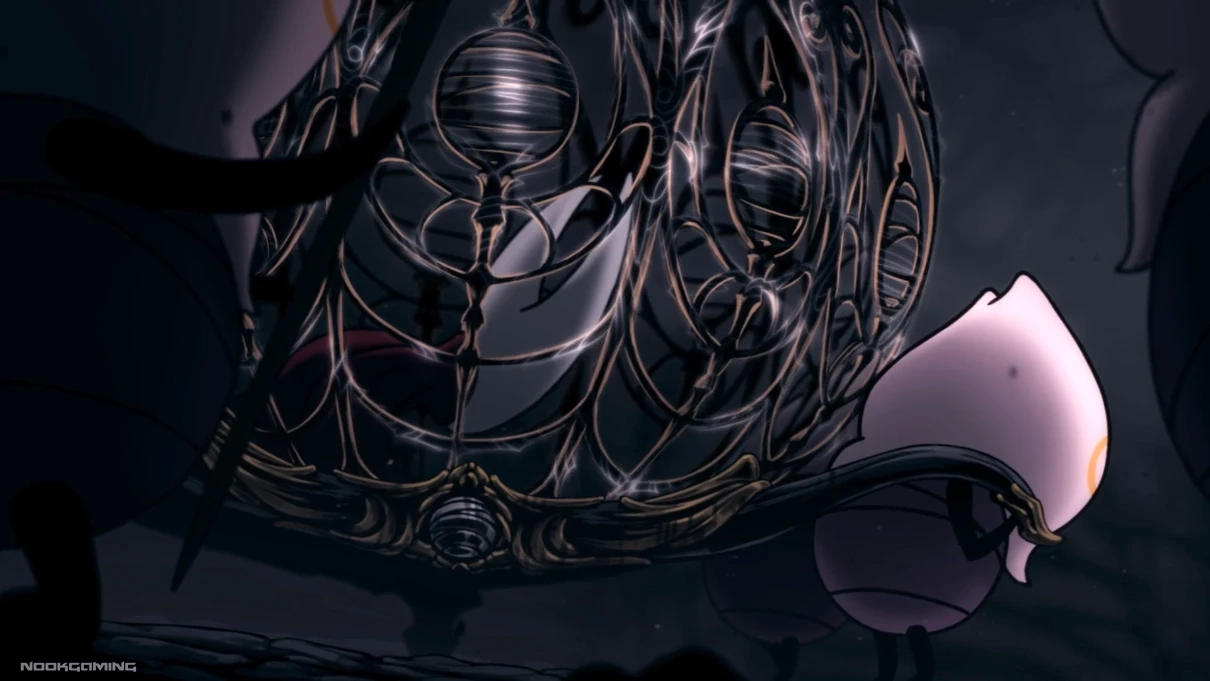
At the beginning of the game, Hornet is kidnapped and taken to the land of Pharloom, a land where a sect of religious bugs seek out and migrate towards the holy Citadel atop the region. Of course, many strange things are going on and Pharloom is showing signs of its own form of corruption, similar to yet distinct from that which hit the land of Hallownest in Hollow Knight. Hornet breaks free from her cage while in transit, and now seeks to resolve many of the problems of this new and strange land, both to save it and to make sure she is never threatened again by whatever led to her being held captive in the first place.
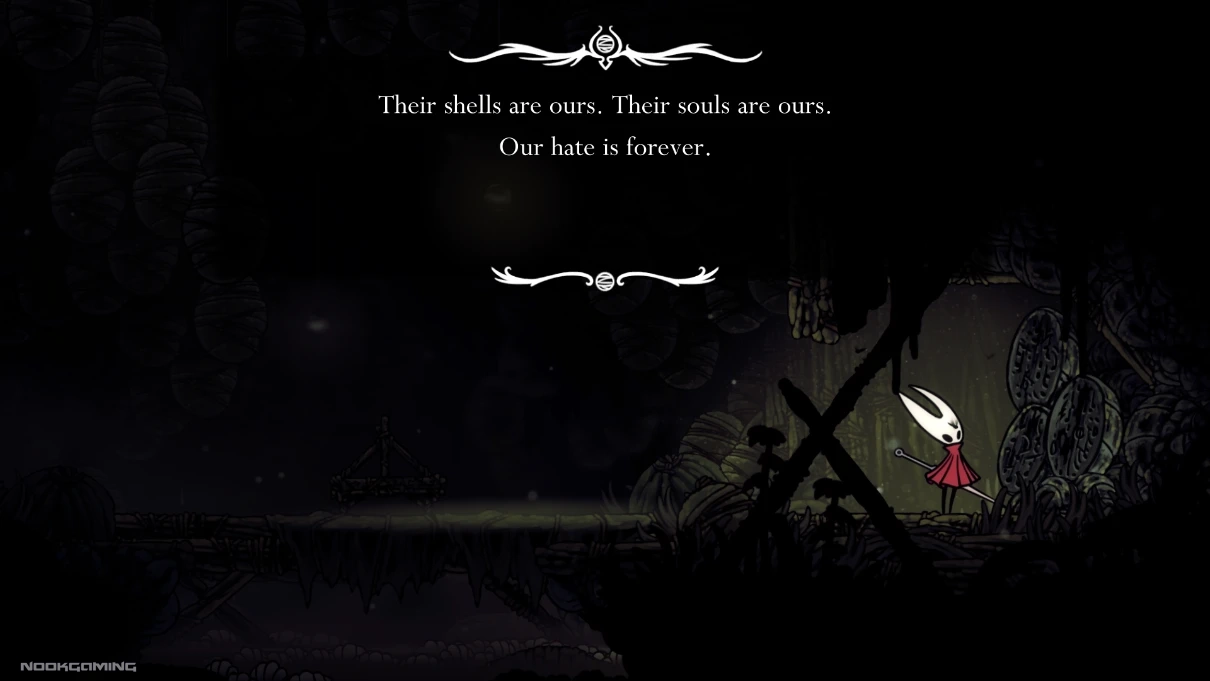
Silksong is not an especially dialogue-heavy game with its narrative, even if having a talking protagonist tends to lead to more conversation this time around. There’s enough to get the main components of the story just by playing through it as you start to uncover what’s wrong with both the Citadel and the residents of Pharloom as a whole. Additionally, a good amount of supplementary detail comes from context based on the areas you go to, as well as reading along with the inscriptions and writing left behind throughout. All this offers a clearer and more evocative picture than the main story. The plot itself of Silksong is nothing I found particularly spectacular, but I liked a share of the concepts and certain narrative developments. It’s a game that I felt was more immersive as a holistic experience, with the plot being a supporting component rather than an especially driving one.
You get a fair bit of additional world and character building from following along with all the optional content, the various texts you can inspect along the way, and even reading Hornet’s passages on enemies in her journal. All this is a neat way to really flesh out a story like Silksong’s, providing its share of mysteries and intrigue without potentially bogging down the lengthy runtime via extended cutscenes. It also helps that Pharloom is a bit more populated by non-hostiles compared to the much more ruinous Hallownest, as there are more NPCs to interact and follow along with in this game.
So Is She a Spider, or What?
Hollow Knight: Silksong maintains an ostensibly similar vibe as its predecessor with a gorgeous hand-drawn world while maintaining a similar artstyle and aesthetic. By far the biggest difference to Hollow Knight: Silksong as a game is in the form of the character you experience the game through. Hornet’s recurring boss fights as an opponent in the first game were memorable for the ways in which she uses her needle and silk to smack the player into next week. Giving the player control of Hornet this time around meant developer Team Cherry had to find ways to translate various aspects of Hornet’s pre-established kit into being a fun character to play as while feeling true to what made her so memorable to begin with. The initial trailers for the game compelled me to be excited for the sequel mainly because Hornet just looked like she had the potential to be more fun to play than the somewhat slow, plodding Knight of the first game. Fortunately, they succeeded beyond even my highest expectations.
Hornet is damn fun to play as for nearly the entire game. Even from the outset before she gets any unlockable abilities, I enjoy her default mid-air divebomb attack and her snazzy animations. There are multiple unlockable combat styles in the forms of crests, to which you can affix tools to provide yourself with various perks. Some tool slots are devoted to exploration and resource perks, while others offer you abilities in combat, adding additional depth. Crests themselves also can alter your combat moveset altogether, offering meaningful change in playstyle.
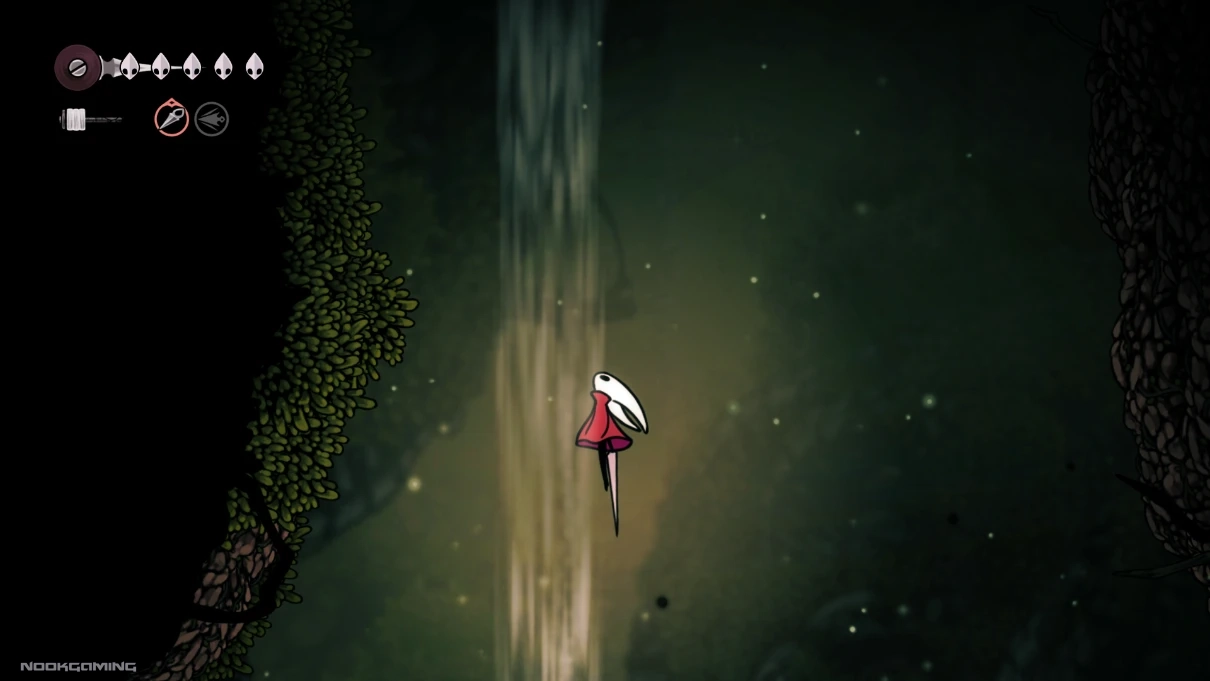
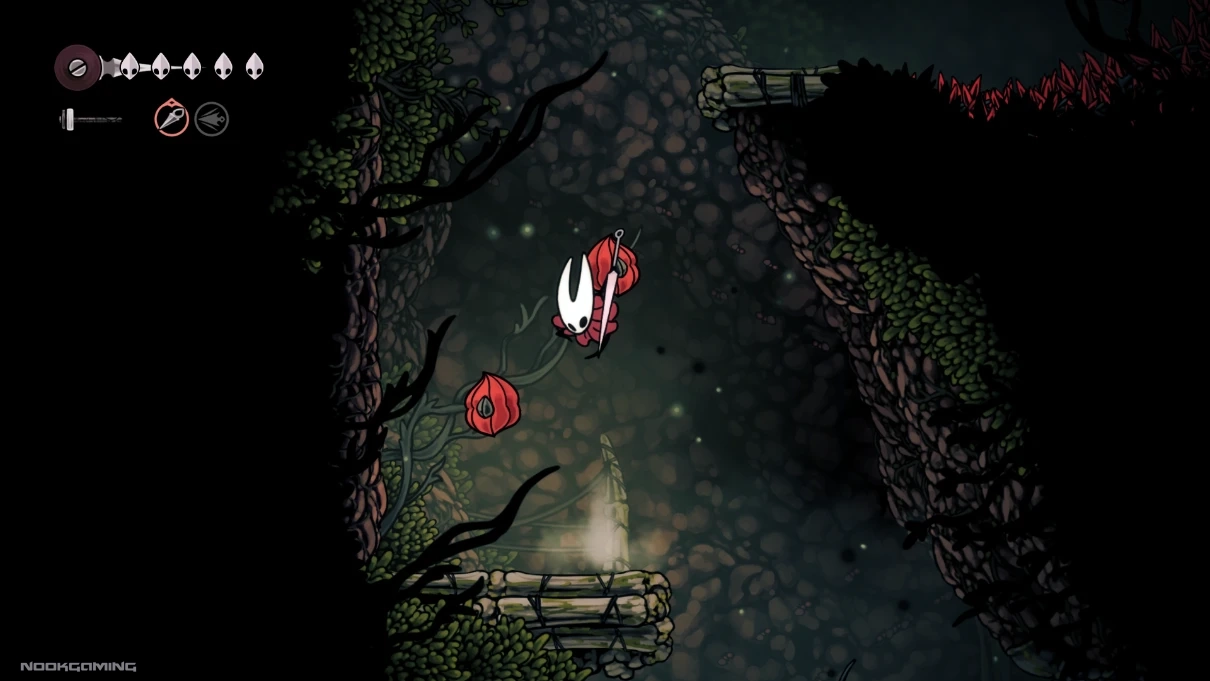
She also unlocks abilities rather quickly, including a sprint button tied to her dash button. Movement as Hornet is a noticeable step-up from the Knight’s toolkit in terms of feel and the expedited rate at which you get the good stuff, hitting the metaphorical high notes much quicker. It helps that the stages are well-designed to accommodate your new abilities. While the maps in Silksong are absolutely fraught with hazards and peril, they are quite fun to navigate through most of the time. They felt consistently created with intention, not just in their concept and aesthetics but also in the overall game-feel in how Hornet (i.e. the player) interacts with them.
Come Hell or Bilewater
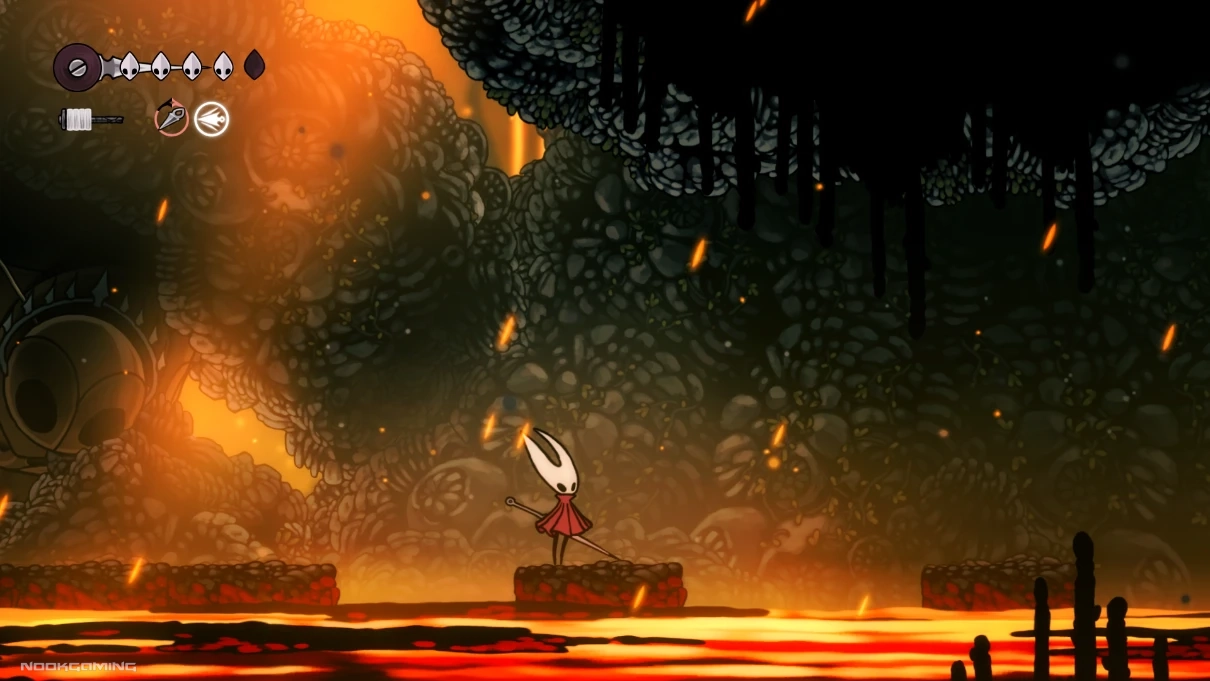
Like its predecessor, Hollow Knight: Silksong is an utterly massive game, with dozens of large, sprawling maps to explore. It makes for a rather time-consuming game to complete fully due to just how much there is to do. This time, however, between the improved movement options and general design sensibilities, I felt the game flowed together more cohesively throughout, even despite the occasional geographical oddities like a cold mountain biome atop a desert atop a jungle biome. It doesn’t generally take as long to get from point A to point B, even if there’s more places to see in Silksong.
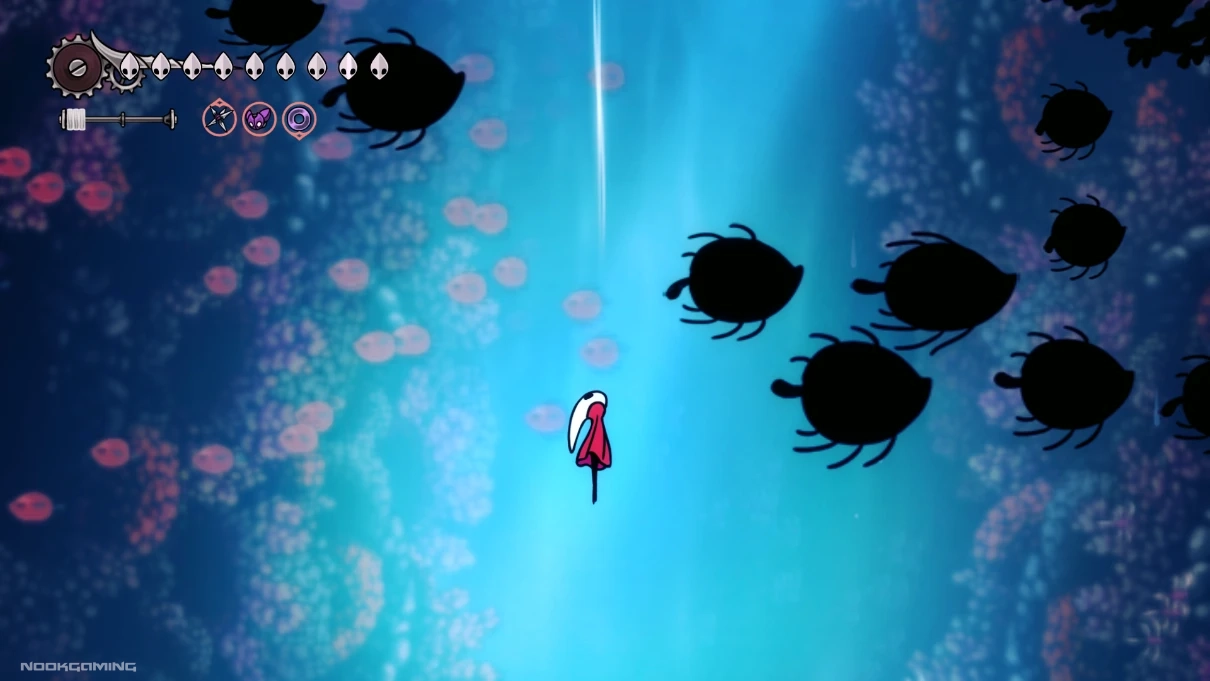
The zones tend to be a bit more colorful; while both Hollow Knight games have their share of dark and confined areas, there’s not as much grey and obsidian to the color palette in Silksong. So many of the areas in this game are memorable in one way or another, whether it be for their appearance, their layouts, or their gimmicks. This is aided by how much more engaging platforming there is throughout, an aspect of Hollow Knight I found to often be lacking.
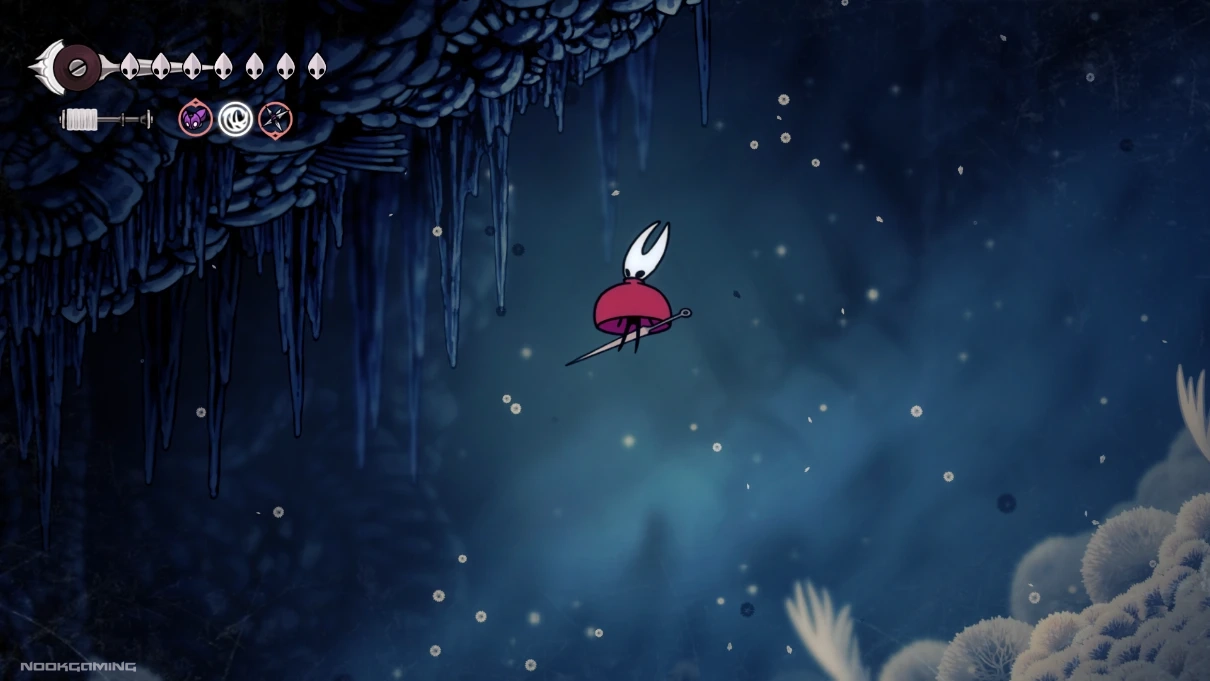
I really cannot overstate just how utterly stunning these hand-drawn backgrounds are. Seriously, there was a moment where after I climbed up to reach the main objective of Mount Fay, I found myself just floating back down, momentarily in awe of both the landscape and the sense of accomplishment of the climb. Hell, even the most disgusting areas of this game are still pretty striking.
The sense of awe to the environments and experience as a whole is helped by the absolutely superb musical accompaniment provided by returning composer Christopher Larkin. While music was one of the stronger aspects of Hollow Knight, Silksong yet again receives a one-up with an even better, more captivating score full of gorgeous string and key orchestrations. To pick a couple of examples, I especially loved the way the track for Cogwork Core used the sound of a ticking clock as a percussion accompaniment to the piano and strings orchestration, as well as the sheer sorrowful tones found in the theme of the repugnant Bilewater.
It’s a Bug AND a Feature!
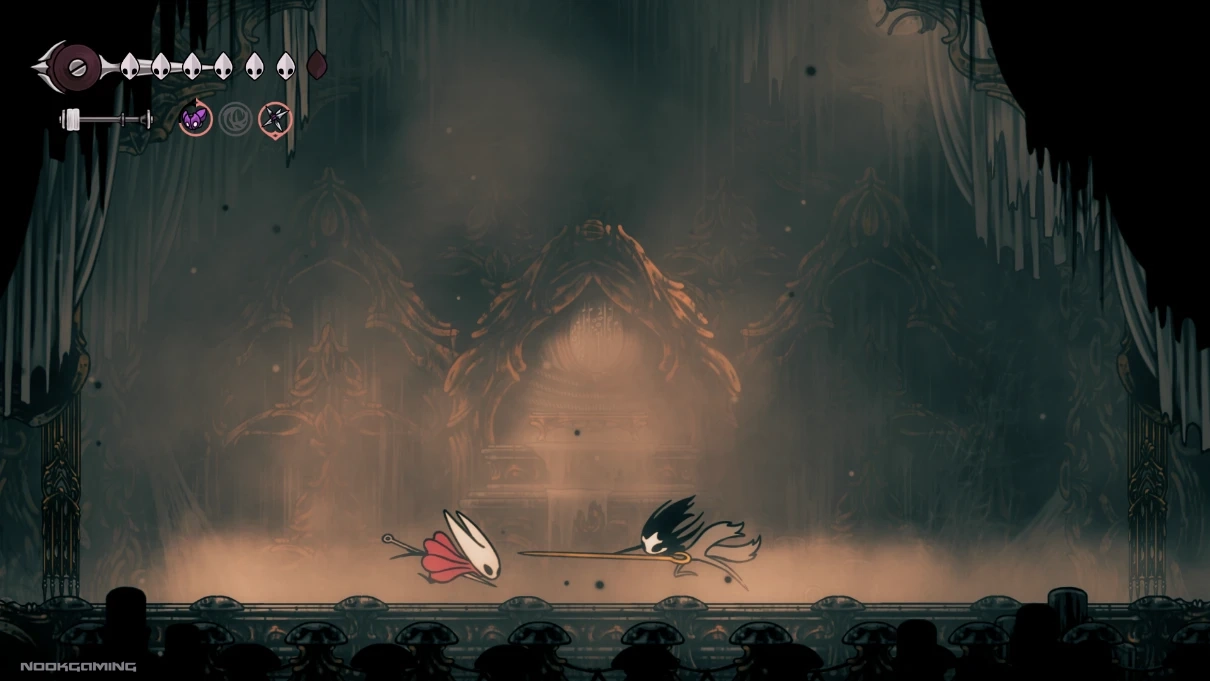
Hollow Knight: Silksong does not mess around with its difficulty. This game asks a lot of the player, with numerous tough combat and platforming sections to conquer throughout. Certain zones of the world are particularly nasty and aggravating. And while Hornet’s extremely fun toolkit helped make even the most dreadful areas still surprisingly enjoyable to play, I can’t describe Silksong as anything less than an uncompromising test of both skill and patience.
The game also features dozens upon dozens of boss fights. Fun though many of them can be, it’s likely that at least a few will serve as a roadblock for a long period of time.
For many players, the difficulty on display is part of the appeal, and to an extent I respect that this game is unapologetic in what it’s going for. However, the game lacks difficulty settings and feels as if its difficulty was tuned with the expectation of the player having beaten the original Hollow Knight, so it’s definitely not going to be for everyone.
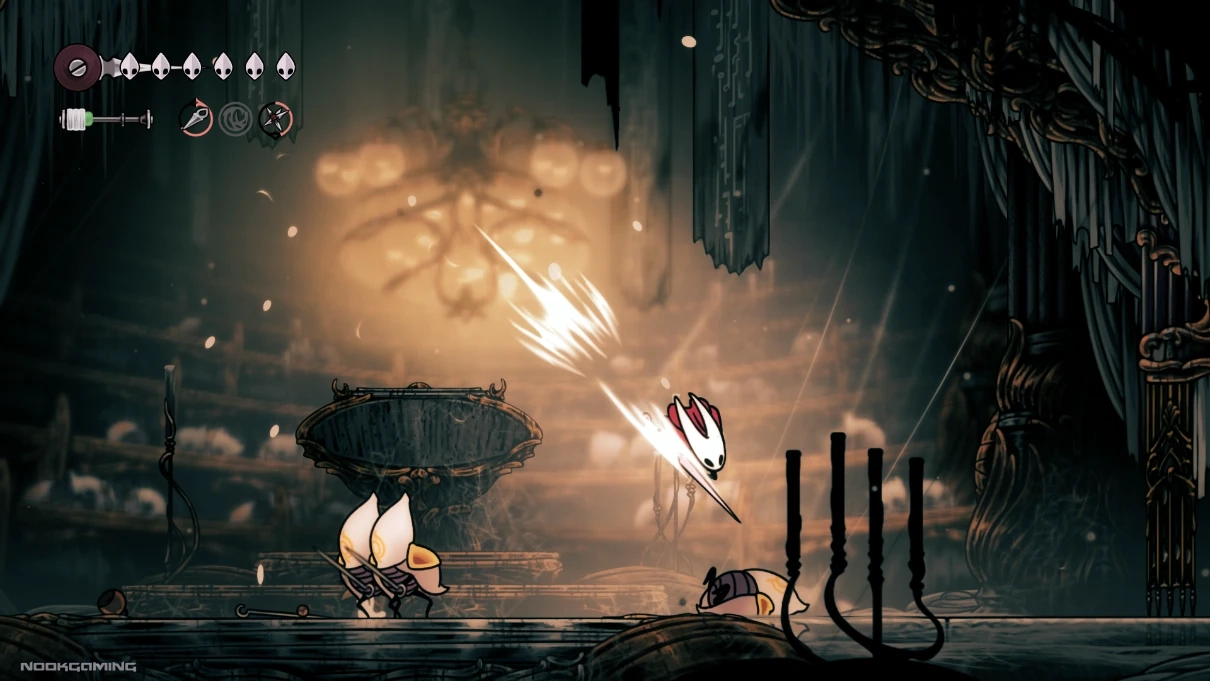
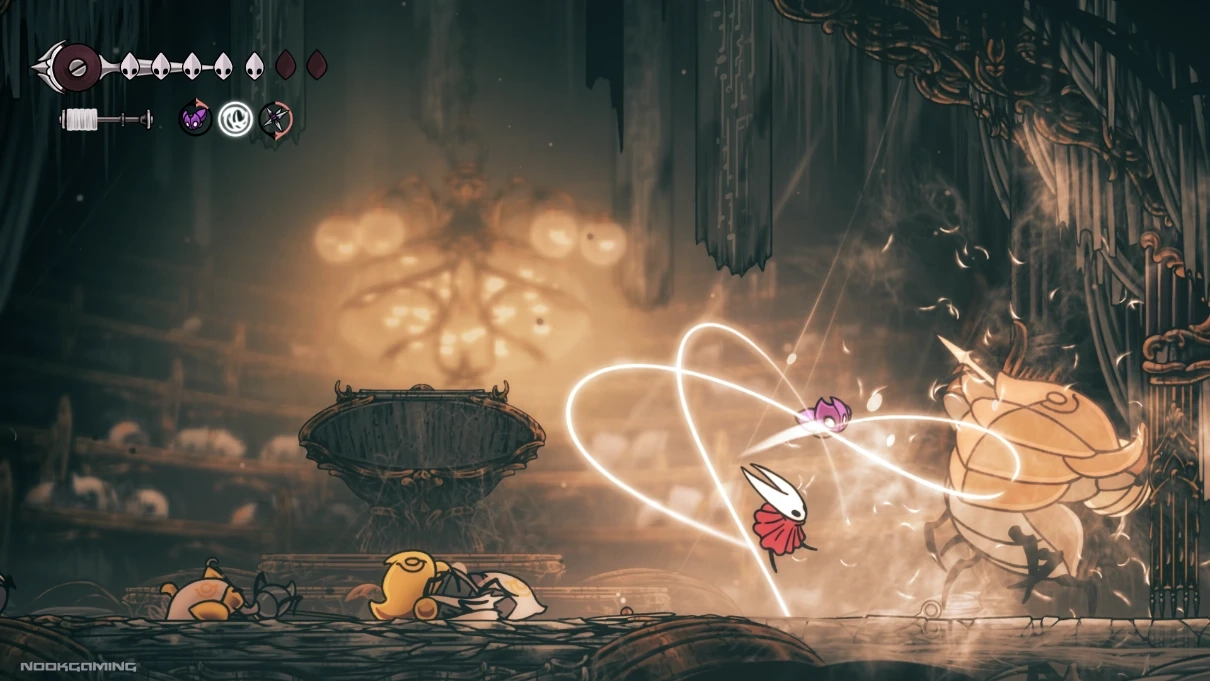
While Hornet has a wealth of tools and abilities to complete her treacherous journey, she is something of a glass cannon. Unlike the previous game, many enemies in Silksong (and nearly all bosses) will frequently deal two ticks of damage instead of one. As your starting health is five, you’ll spend a significant chunk of the game effectively always three hits away from death, which is liable to happen a lot for many people.
Like with Hollow Knight, the main means to replenish health will usually be from hitting enemies to fill a gauge (Hornet’s Silk in this game), although in this game you need quite a few hits to get enough and you heal three health at once rather than one at a time. If you get hit while in the healing animation, the healing will be cancelled and you will lose your silk, so you can’t just use it willy-nilly. Silk is also a resource for using many of your special attacks, so there’s this constant engaging sense of risk-reward to how you get those hits to replenish silk and whether you use said silk for offense or healing.
The Tragic Tale of Tantalus 2.0
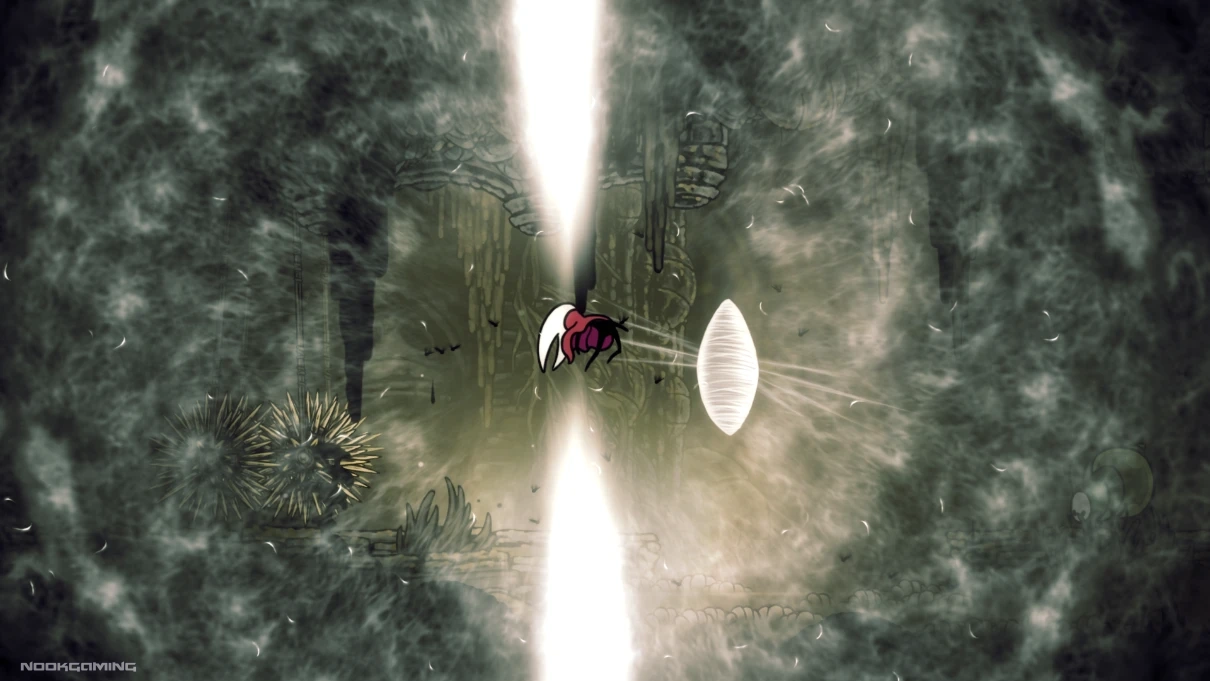
There are almost no free meals around in Hollow Knight: Silksong, and the game will often tantalize you for not having things. Like with the first game, and unlike almost every other Metroidvania ever made, you need to equip the compass tool to even see your place on your map. You need to spend in-game currency (either shards or rosaries) for just about everything, from new tools to tool ammo to upgrades to even most benches (the game’s heal/checkpoints) and fast-travel points. Shards are needed to replenish her combat tools, and these deplete very rapidly, preventing you from ever spamming tools despite how useful they can be. Rosaries are the scarcer “money” resource of this game, and just like geo from the previous game, when you die, you need to return to the spot of your death to get them back. If you die during the journey back, they disappear for good. This mechanic appears in quite a few other games and under a few names, but the one I encounter most regularly is “corpse run”, as it naturally involves running back to retrieve your corpse.
Now, I get the idea behind this mechanic is to encourage players to value their life and add suspense via risk of potential punishment. However, I despise corpse runs like this due to how actively they undermine the sense of reward for accomplishments if you can just lose your hard-earned rosaries trying to recover them. I also feel they’re an even poorer choice for a sprawling 2D Metroidvania because the mechanic actively discourages exploration in a genre where exploration and deviation are typically a strength. If you want your rosaries back, you have to tread the same ground you just walked all the way to where you died, often with little room to deviate, creating a repetitive cycle. This is especially made worse by how big and spread out the game’s maps are, and not having rosaries means you’re in quite a pinch for trying to make tangible exploration progress due to the inability to afford many of the benches or fast-travel points without those precious rosaries. Bosses also don’t have a retry button, forcing you to run all the way back from your last bench to the boss to try again. These can sometimes be very lengthy runs where you can very easily die just trying to get back to the boss who killed you, creating another pretty annoying feedback loop.
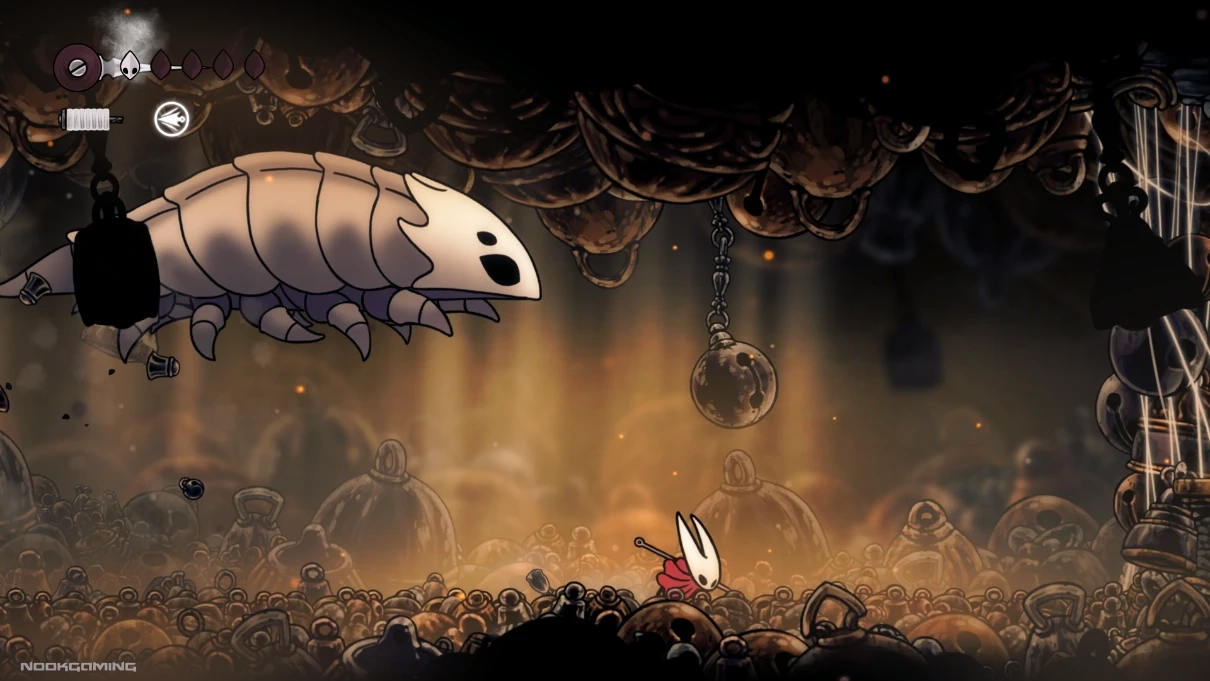
I don’t have quite the disdain for the mechanic in practice in Silksong as I did in Hollow Knight at least. In that game, you lose much of your soul gauge until you returned to the place of your last death, which limited your capacity to heal or use specials. Here you revert to your default silk capacity and only lose whatever bonus max gauge you’ve acquired until you recover your cocoon, making it less punishing to go without. There are also a lot of shops that will put your rosaries into a necklace for a fee, effectively serving as a banking system where you can access your stock at any time. Still, these only make me feel like the mechanic is borderline pointless tedium to keep including.
While corpse runs are more likely to be a polarizing mechanic, there are still some areas of this game that I think far more obviously were done to be annoying without a good reason. For example, new crests auto-equip themselves, taking the place of whatever crest you had on which de-equips all your tools until you reach a bench. Normally you can just hit save-and-quit at any point in this game to effectively save warp to the last bench you rested at, but new crests intentionally set your warp point to wherever you found them which is generally not particularly near a bench. Silksong has a whole host of these little design foibles that feel like they’re annoying on purpose, to the extent that I find them harder to defend than those other mechanics that I personally dislike but can see the idea behind.
While most issues I have with this feel like a result of deliberate design decisions, one unfortunate minor misfire that feels more like an error comes in the form of the Clawline ability. It’s honestly a really cool one in theory, allowing you to fire your needle forward and dashing to it, but it’s quite finicky in how it targets objects and the way it uses silk makes certain areas annoying. Also, just to throw this out there, while the game has been receiving its share of patches to thankfully fix actual bugs of the computer variety, I’m much less a fan of the regular rebalancing for buffs and nerfs that Team Cherry has been applying to the game since release.
Bend But Don’t Break
My gripes with some of the game’s systems aside, I actually quite enjoy the difficulty of Hollow Knight: Silksong overall. Even if I found it a harder game overall than Hollow Knight, I was usually much less frustrated with it due to the various improvements in design and the wealth of options available between both the tools and the crests. If something wasn’t working, I could either try to just get better at it or try a different approach, meaning I never felt like anything was beyond what I could do. It’s a lot easier to deal with difficulty when I’m enjoying myself, even if the choice of punishment for failure isn’t my favorite.
Silksong offers an immensely satisfying experience to overcome the hurdles of, to the point of feeding that “one more try” sense of addiction a good hard game can offer. Even many of the toughest boss fights become these beautiful and elaborate dances to play through and improve your skills on as you learn how to deal with each new pattern. Most things feel fair; when I died, it felt like it was usually my fault, even if the margin of error was as thin as any of Hornet’s threads.
There are still a few unfair moments in the game that feel almost like pranks designed to slap the player. However, on occasion they fill a neat narrative purpose (charging for single-use benches in an area where that makes thematic sense), so I can be a bit more forgiving in those instances. Many of the other ones I just found funny. The one exception is the Rite of Rebirth, which is one of the most evil acts of trolling I’ve ever seen a game developer do.
By and large, my issues with the difficulty come from the points at which it felt like the game was testing me almost needlessly, padding the run time through the use of corpse run mechanics and extended boss runbacks. If nothing else, the game already has plenty of mods for making it easier or harder (at least on PC), so if it truly is too much for you, there are still ways to reach the end.
Verdict
Hollow Knight: Silksong asks the player to meet on its own terms. It’s completely unashamed of itself or the challenges and warts of the experience it offers. Even its strongest supporters will likely say that it pissed them off at some point or another. It revels in its own excess to the point of hubris at times, and most of its issues feel like a consequence of said hubris.
Yet underneath it all, I think Silksong is one of the most triumphant sequels I’ve ever played. It leans into a great many of the strengths of its forebearer while improving on so many areas, all without sacrificing the trademark ruthlessness of Hollow Knight. Silksong combines excellent action and platforming into one of the most salient, gripping, and addictive platformers I’ve ever played.
HOLLOW KNIGHT: SILKSONG IS HIGHLY RECOMMENDED
If you like platformers with a ton of action, you might also want to check out our review of Shinobi: Art of Vengeance.
The reviewer played Hollow Knight: Silksong on PC.
Been playing games since my papa gave me an NES controller in the early 90’s. I play games of almost all genres, but especially focus role-playing, action, and puzzle-platform games. Also an enjoyer of many niche things ranging from speedrunning to obscure music from all over the world.