Iwakura Aria is a mystery visual novel originally released in Japan in 2024 by MAGES., a company well-known for their work on the Memories Off series and the Science Adventure series (Chaos;Head, Steins;Gate, Robotics;Notes, Anonymous;Code, and more). Set in the summer of 1966, it follows an orphaned teenager as she gets acquainted with the inhabitants of the Iwakura Mansion and the secrets that lurk within it. The game features many choices with multiple possible endings and an exploration minigame. The English version, both for Steam and consoles, was released by publisher PQube on August 14, 2025.
Iwakura Aria is honestly a breath of fresh air when it comes to releases from MAGES. Although the company is famous for creating the well-loved SciAdv series, there has been a lack of releases from them since those titles outside of expansions of pre-existing series, or a collaborative effort with other developers or anime IPs. It’s become a sort of identity for them, one I’m glad they’re at least trying to break out of with this visual novel’s release. I like seeing companies dip their toes into something new every now and then, so unsurprisingly, I’ve been pretty excited to read this.
With a whole new kind of setting, an unfamiliar artist, and a relatively short runtime, what kind of story and themes do they have in store for the readers? Will the quality of their work still be the same even with a new IP like this? Let’s open the mansion’s doors and get to know Iwakura Aria for ourselves!
Economic Miracles, Individual Struggles
Iwakura Aria follows the story of Kitagawa Ichiko, a woman reminiscing about a fateful summer she experienced 33 years ago. Orphaned from a young age, Ichiko spent most of her life to that point at the orphanage. While some families had shown interest in adopting her as their own, they fell through due to issues she encountered while staying with her foster parents. Dejected and unappreciated, she jumped from one job to another to try to earn her keep as the orphanage became increasingly frustrated with her lack of productivity. However, she rarely stayed in one job for long, as her experiences in the workplace drove her to despise adults and society. Amidst a Japan that was experiencing a massive boom in its economy, Ichiko’s sole refuge was her pencil and sketchbook.
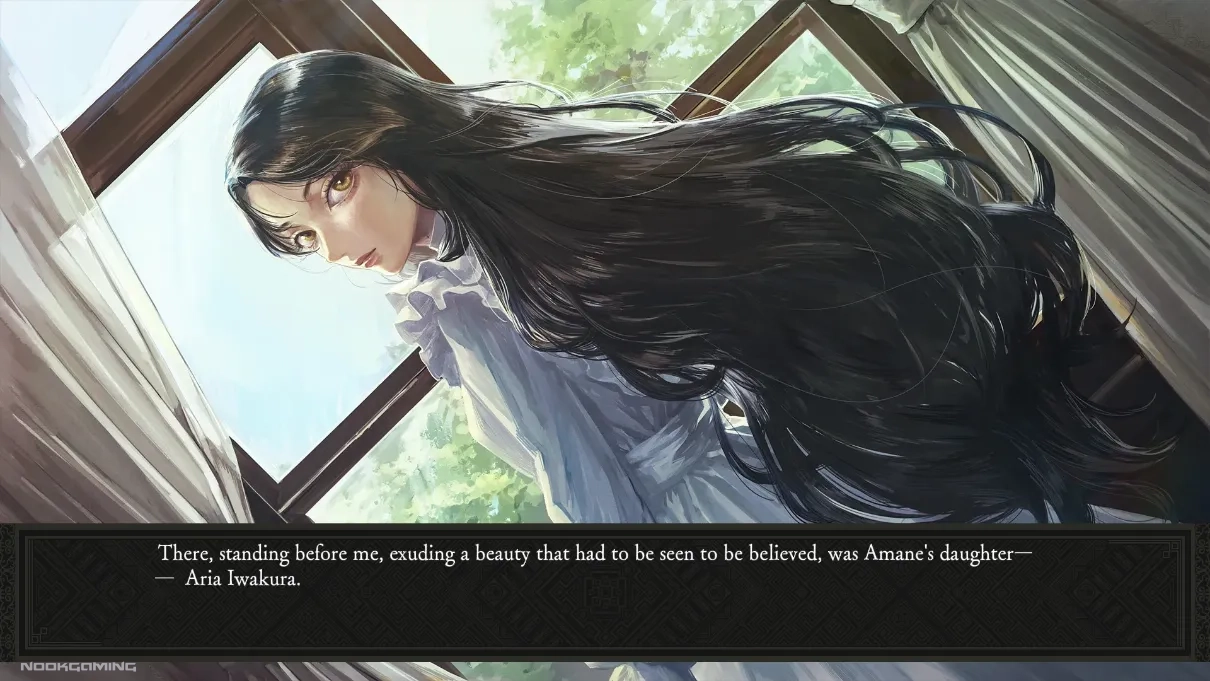
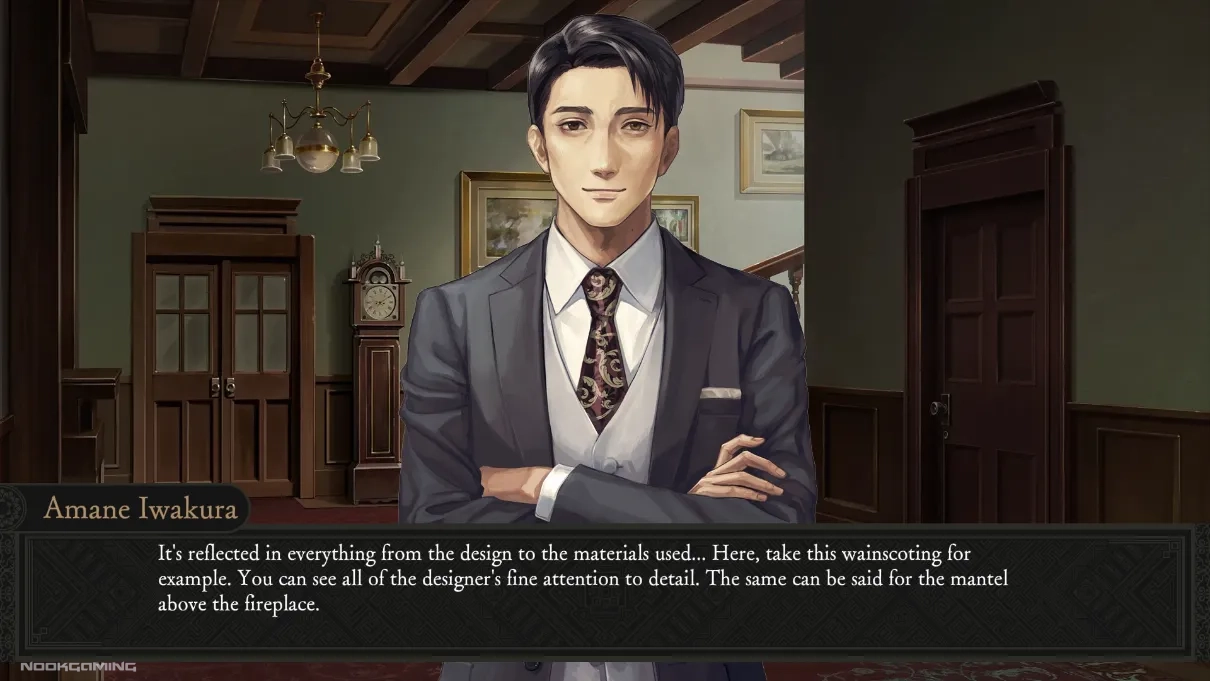
One day in June of 1966, as the orphanage hosted a garage sale to make ends meet, they assigned Ichiko to one of the sections to help with selling their items. Having discovered her knack for art a few days prior, they pushed her to sell one of her creations to contribute to maintaining the orphanage. Ichiko was utterly convinced her work wasn’t worth anything, so her surprise was palpable when a well-dressed man approached the stall to look at her drawing. He introduced himself as Iwakura Amane, a wealthy man who ran a trading company. Upon hearing Ichiko’s plight, he invited her to his estate to work as a maid for his daughter, Iwakura Aria. Cautious but curious, Ichiko accepted and departed for the mansion the next day.
Two women living two very different lives find their destinies intersecting one fateful summer as Ichiko steps through the Iwakura Mansion’s front door for the first time. This is her and Iwakura Aria’s story.
Ruby, Emerald, and Sapphic
The story of Iwakura Aria revolves around the experiences of the titular character, narrated through her encounter with the sixteen-year-old Kitagawa Ichiko as she lives in the mansion together with the Iwakura family. It features five chapters in total, with ten possible endings that the reader can achieve through choices scattered throughout the game. Most of these endings prematurely end the plot, making the overall flow still feel largely linear. The choices leading to the various endings mostly make sense given their context, but some do feel like a long shot because of how mundane the decision point is relative to the whole plot. Additionally, there are six side stories that get unlocked as you go through the game’s content. They are accessible through the game’s EXTRA menu.
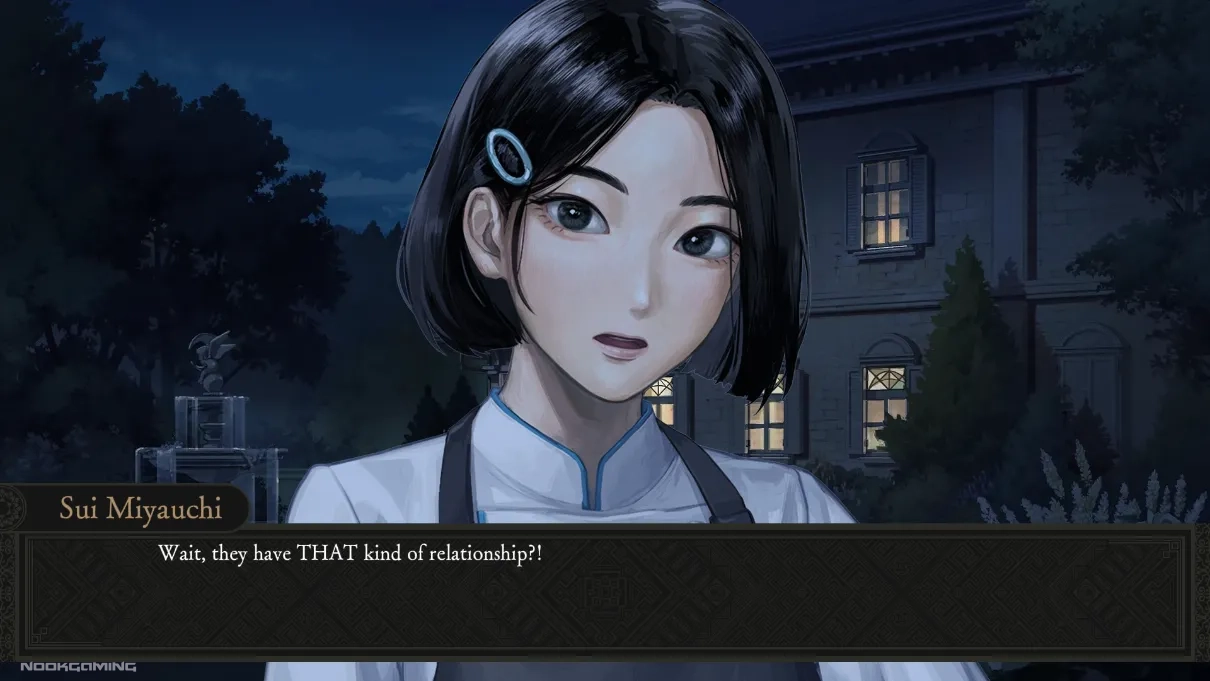
In terms of flow, Iwakura Aria feels like a multi-layered, slow-burn mystery story. It lays out a bunch of story elements that point to various possible outcomes for Aria’s plight, but the main twist related to that is revealed early on in the story, specifically during the halfway point. For the remainder of the narrative, it doubles down on its strong sapphic themes, focusing instead on the relationship slowly developing between Aria and Ichiko that feels strangely out of place amidst the overall plot. It felt somewhat dissonant seeing them flirt like normal people and then shifting hard into the mystery aspect a few minutes after, I’ll admit. It does this multiple times throughout the story, which can throw some people into a loop. Be careful of being sucker punched by sudden romance.
Eyeing Out the Finer Details
As a short visual novel, Iwakura Aria mainly revolves around four characters, with two of them being potential romantic interests. Of the four, three of them are given most of the spotlight in terms of characterization, with Aria herself being the center of the entire mystery. Although the cast is regrettably small given the visual novel’s runtime, it feels like a solid decision in terms of making a cohesive plot to employ only a select number of characters to drive the plot. Because of this, it makes a lot of the events and their resulting decisions feel a lot more character-driven instead of being a result of the greater setting’s progression. But does the game give ample time to explore the character’s motivations properly?
The short answer is yes. For the most part, they give enough characterization and depth to Aria herself to make the setting, conflict, and resolution make sense. Their use of her role in the mystery, her identity, and the people around her makes the underlying themes of the story very tangible. The use of Ichiko as the story’s narrator is pretty effective as well in establishing their contrasting yet related experiences as women in their differing social classes. Although frustrating, Ichiko’s indecisiveness, hesitance, and sometimes bold demeanor are reminiscent of teens her age, which makes the story’s progression feel understandable and grounded. This focus on the two, however, does make Iwakura Aria more of a sapphic story than it is a mystery/suspense title. A lot of the initial elements are lost as the story’s focus transitions into their relationship, turning the underlying mystery into a sort of obstacle that they need to overcome for love.
One contributor to this is probably the vagueness in how they establish the remaining character backgrounds. Although the other characters are great fits in terms of the overall theme, they end up feeling more like afterthoughts because of how details elaborating on their part of the story are mostly found within the side stories. This lack of focus on them diminishes the value of the conflict in which they play a central role, contributing to the mystery plot being pushed to the background. Coupling this with a pretty anticlimactic ending, it’s sure to be a bit of a disappointment for those who dive into Iwakura Aria looking for a great mystery plot.
It’s quite ironic that the game falls flat in that regard because throughout most of the narrative, what Iwakura Aria does well is subtlety. The narrative uses a lot of subtlety to hint at story elements and themes without directly mentioning them, creating opportunities to maximize their impact on the reader by encouraging them to empathize with Aria and Ichiko. Despite this, the mystery is pretty on the nose. It’s a little bit vague on the specifics during the first chapter, but as you approach the midpoint of the story, it’s honestly barely hidden. At some point, you’ll just be waiting for them to reveal it themselves in the text.
It’s Basically a Museum!
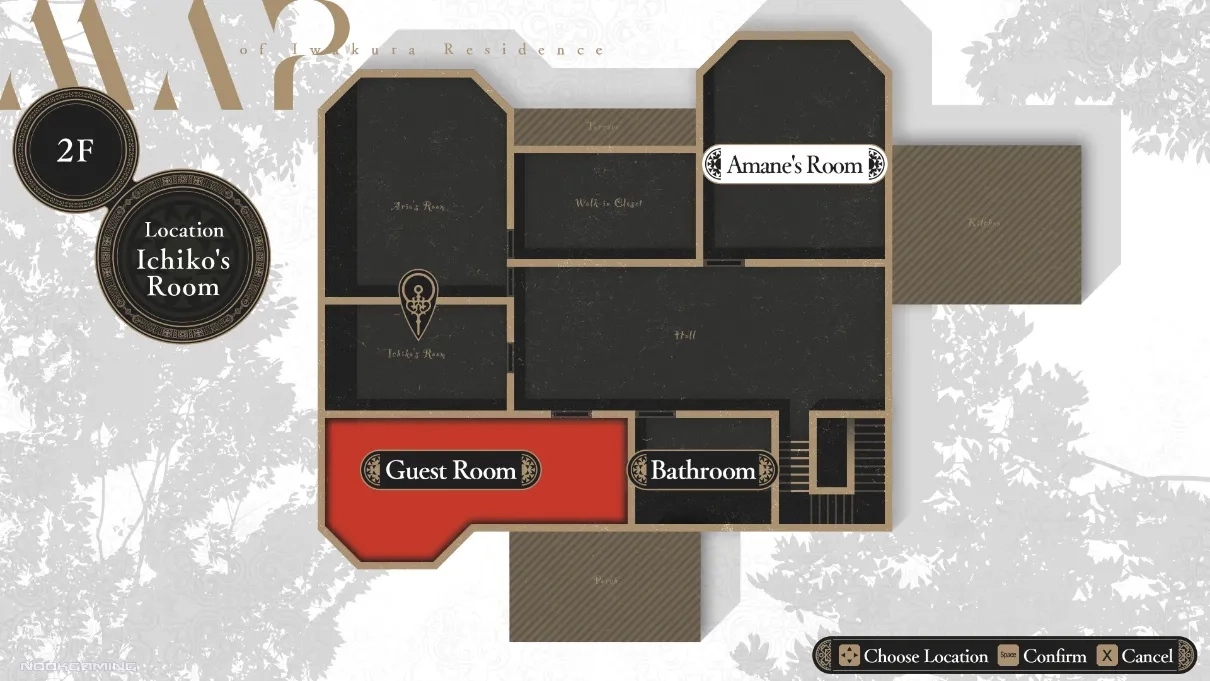
One of the key features that Iwakura Aria mentions a lot in the marketing is its exploration minigame. Playing as Ichiko, there will be certain sections of the story where the game brings up a map of the current floor of the Iwakura Mansion. Within this map, there will be rooms that Ichiko can enter and investigate to advance the plot. Overall, it’s a cool feature that does make the experience of reading the game feel a little bit unique, but it gets old fast because it doesn’t really have an impactful role in the story. It’s interactivity for the sake of interactivity. It could have easily been a set of choices similar to your standard visual novel, which Iwakura Aria implements anyway.
A good thing about the minigame is that it doesn’t force you to guess what the correct room to enter is; the room necessary to advance the plot is immediately highlighted in red and they won’t let you quit the minigame without having gone to that room. Having the option to minimize your engagement with this section is very important, as it decreases players’ frustration over being forced to use trial and error for the correct room.
I do find it a missed opportunity though; there are a bunch of details that they include about the mansion in the miscellaneous options, such as sightlines to and from the room. These details could have easily been used by the game’s mystery aspect to better integrate the minigame into the player’s investigative process. Instead, they’re at most entertaining blurbs.
The Two Sides of Beauty
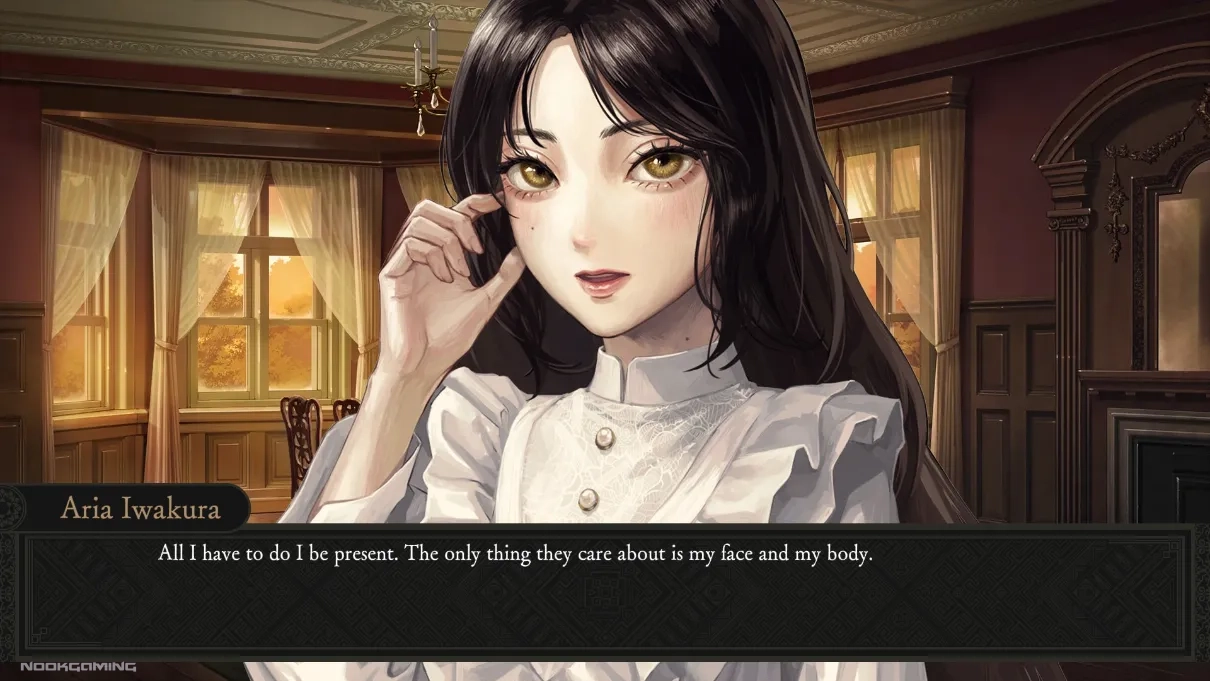
Moving on from its mystery portfolio, what Iwakura Aria actually excels at is its incorporation of core themes relevant to the experiences of women of the time. Set during the Shōwa Era smack dab in the middle of Japan’s miraculous economic boom, it reflects on women’s roles within society as the country transitions into modernization after the great losses and changes introduced during post-war efforts. Ichiko has a strong voice when it comes to fighting against figures that oppress her, and Aria, while compliant to societal expectations of her, becomes increasingly aware of what the people around her value as she molds her own self-worth. Their use of the mystery as a vehicle to discreetly deliver a sensitive message is easy to understand, and honestly, is still very relevant today.
Moreover, Ichiko’s talent for art was handled as a story element quite well. Her journey as a painter, from sketchbook to canvas, served as a nice parallel to her own views of the world and her relationship with Aria. The narrative challenges the common notion of beauty for the main cast, and eventually, is answered and realized through Ichiko’s actions in the last chapter. Although the resolution is rather simple considering the overblown mystery and the latent themes, the journey to that realization is incredibly meaningful and consummated through Aria and Ichiko’s interactions. Besides the lackluster ending, I think Iwakura Aria is a great character-driven story with a lot of tasteful subtlety.
But that’s Forbidden Love!
Iwakura Aria is an all-ages title; there aren’t any explicit scenes depicted in the visual novel, but the characters frequently make allusions to the act. Ichiko is probably the biggest offender in this regard, as she frequently ends up thinking of scenarios that involve some sort of sexual gratification when it involves Aria. Beyond merely being fanciful bursts of lustful feelings, however, the game incorporates sexual themes as something relevant to expectations forced upon women and their roles in society. It doesn’t shy away from depicting uncomfortable scenarios within these lines of thought, and as such, might not be suitable for people sensitive to topics such as violence and sexual abuse.
This, of course, ends up with a rather unsavory depiction of men in general because of the protagonist’s role as the story’s narrator. The story is set in a time of ongoing modernization and portrays a romantic relationship between women, after all. For those who might be unwelcoming to criticisms of established gender roles, Iwakura Aria’s narrative might leave them a little bit offended. But if you’re able to get past that, there’s a rich well of subjects mentioned within the visual novel for both self-development and discussion with your peers. Just make sure to read it with an open mind!
Art and Music
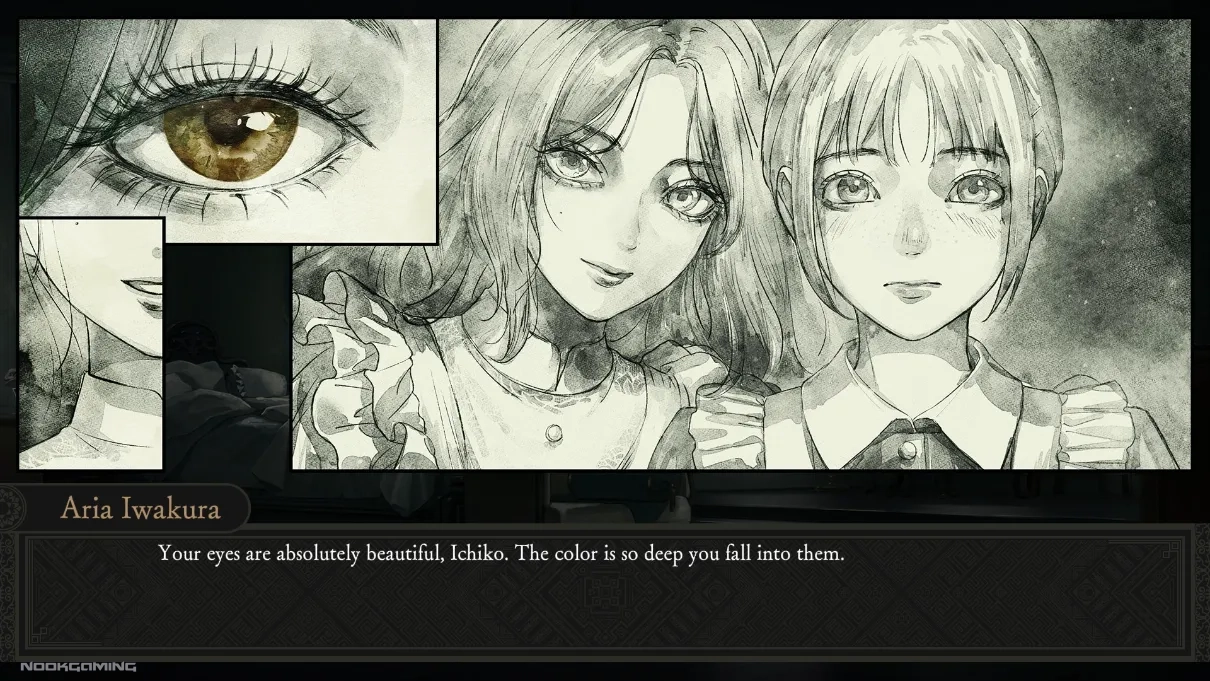
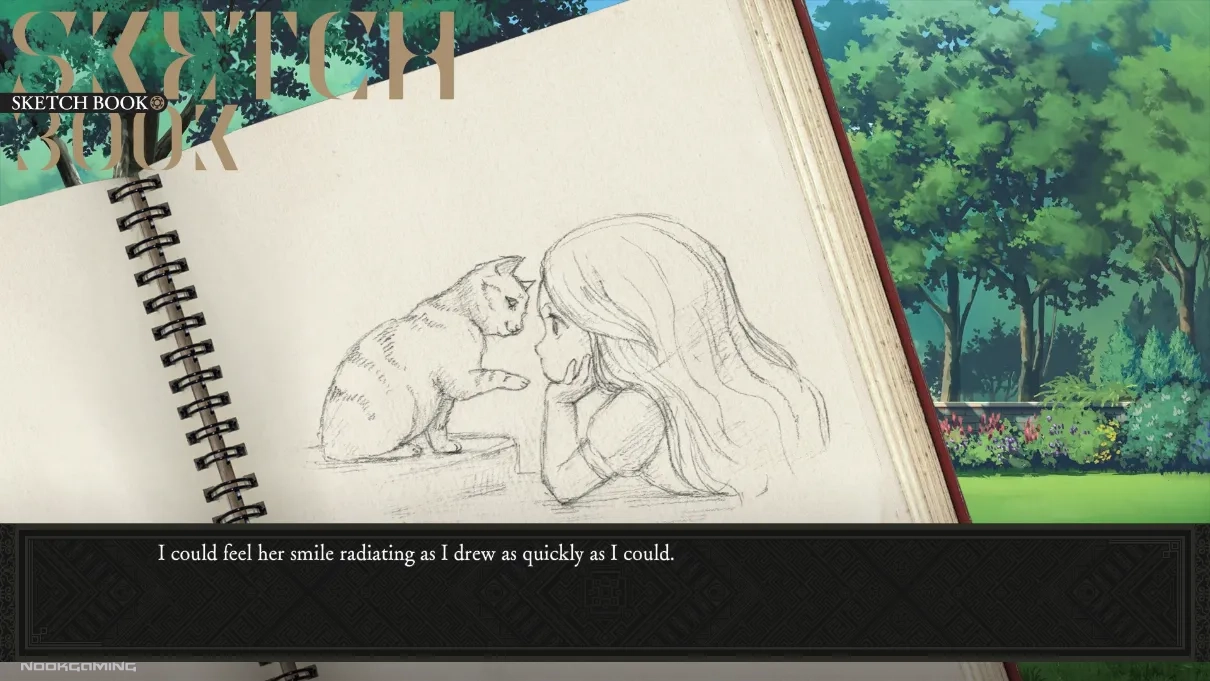
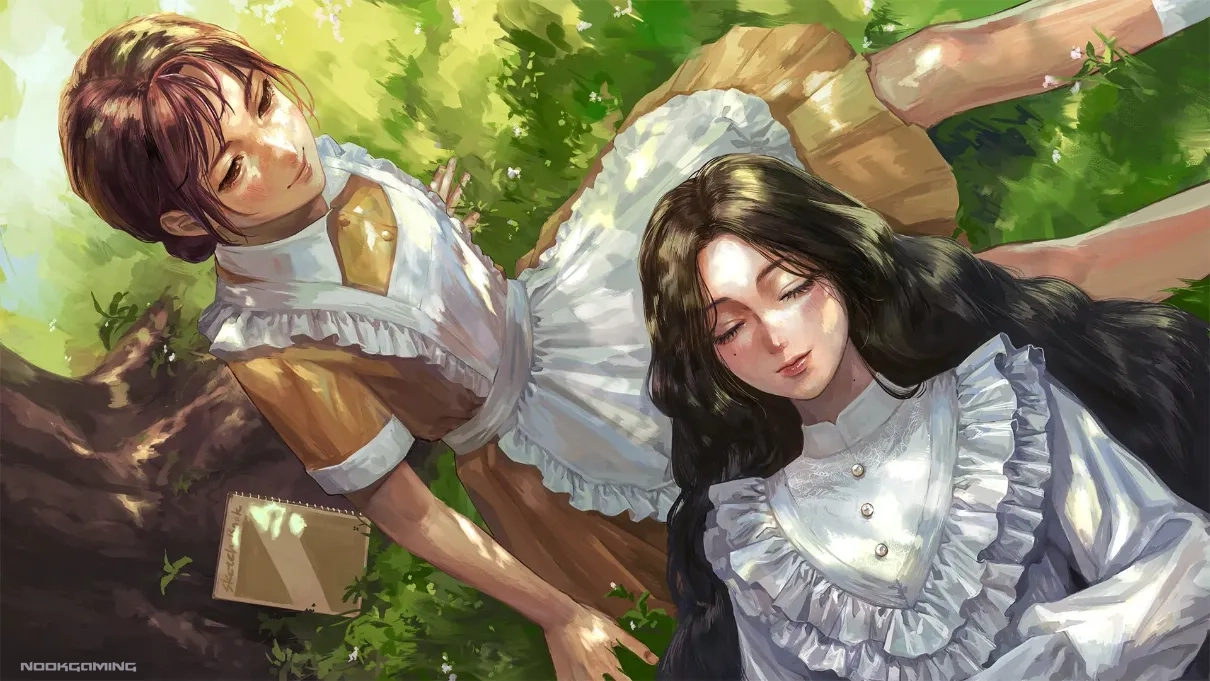
Iwakura Aria features a total of 14 unique CGs in the gallery, not including miscellaneous visual assets such as comic panel-like sequences and the sketchbook contents. The gallery only includes the full art CGs, so collectors who want to take a screenshot of all the artworks in the game will need to pay extra attention to the assets as they show up during the playthrough. The concept art of the game is by 100 Nen, with graphics being handled by Nakada Fumi (known for the Famicom Tantei Club series). When I saw the game for the first time, what struck me was their decision to make use of a realistic style to draw their characters. Looking at each character sprite in the visual novel gives a faint sense of staring at a portrait, one you might find hanging in a museum. Instead of the big, bubbly eyes we’re used to in otaku culture, we’re left with the familiar-looking eyes reminiscent of your annoying neighbor. It’s a little bit uncanny to look at, given the medium, but it fits the 1960s western mystery vibe of the game really well. I quite like how refreshing it looks.
As mentioned earlier, the game also makes use of Ichiko’s artistic journey as a parallel to her own worldview and how it changes throughout the story. She goes from sketching to painting on a canvas, which is reflected in the kind of coloring they used for the characters and the miscellaneous art itself. The art direction they used for the sketching events makes use of sound effects that mimic how a pencil glides on paper, and the mystery sections that exclude Ichiko employ black and white panels styled similarly to comics to emulate a distanced point of view. Overall, it’s a very creative take on presentation, one that makes the game a lot more pleasant to look at.
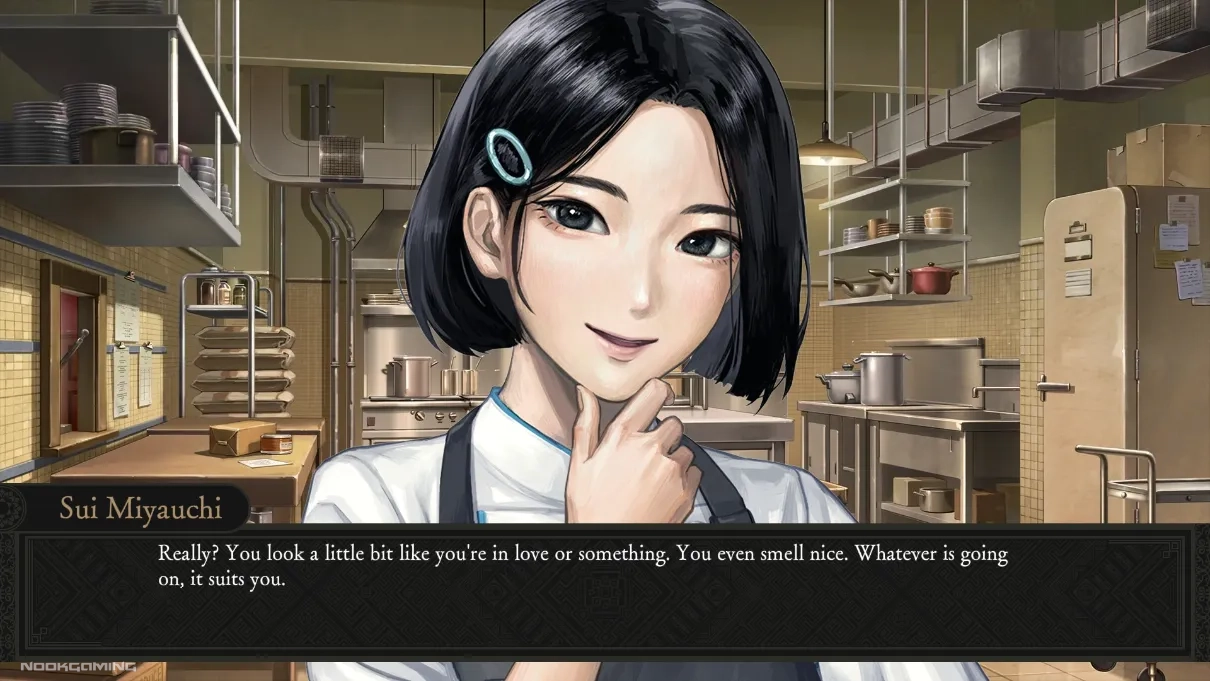
One thing I found lacking, however, was the amount of CGs and sprites used in the game. There are only four characters with sprites, with all the other characters not even having a stand-in for when they are part of the conversation. It makes Ichiko’s interactions outside of the other three characters with sprites feel largely empty, a missed opportunity to maximize space to create a solid feeling of presence in the scene.
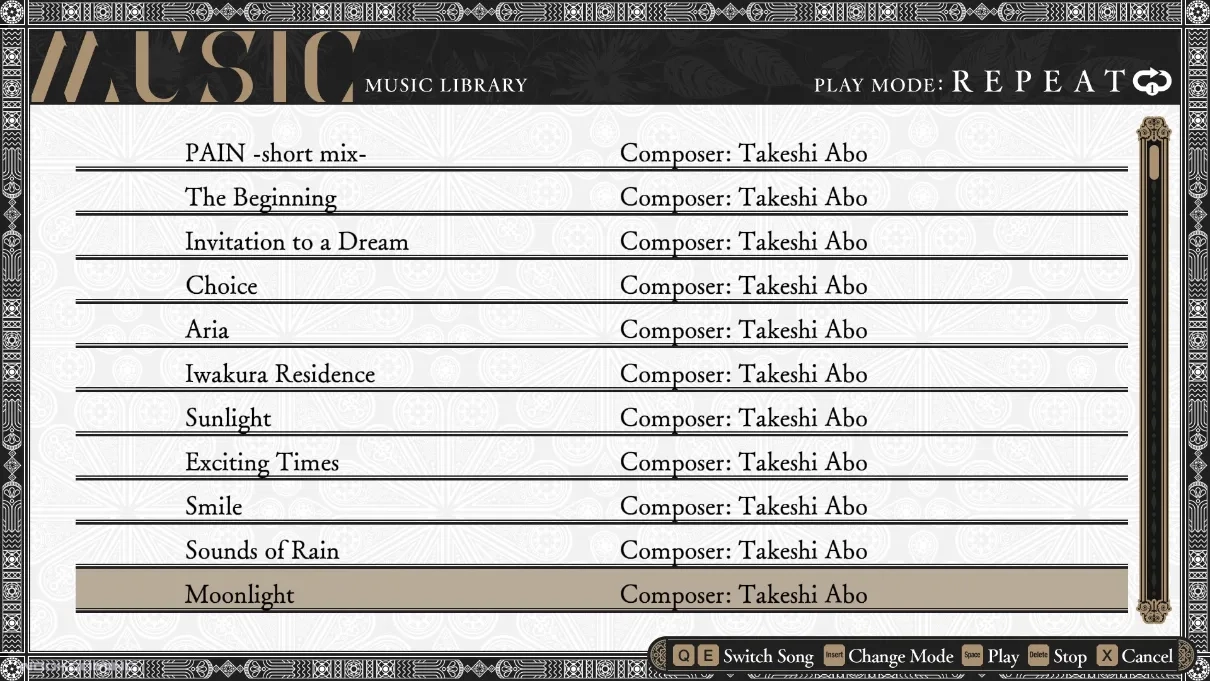
Iwakura Aria’s lineup features twenty-seven unique tracks that make use of a combination of string, wind, and percussion instruments to create an overall atmosphere that is equal parts relaxing and somber. Given the premise of the game, there are a bunch of menacing tracks as well that evoke feelings of foreboding and danger. The composer for the game is Takeshi Abo, known for his works under the MAGES. Label (notably the SciAdv series) and KID before them. For standout tracks, I felt that Choice, which is largely a suspenseful track, did its job really well. The use of repetition to mimic the slow and constant passage of time and clear vocals to generate a sense of impact makes it quite an amazing track to listen to as the scene changes into a significant one. Overall, the setlist of the game is very good; I did not find any of the tracks out of place in the scenes in which they were played. They’re excellently made as well! Finally, shoutout to the main track PAIN; even without context, the way that the progression of its notes mimic that of a story that’s particularly moving.
Verdict
Iwakura Aria is a sapphic mystery visual novel that features themes of womanhood, violence, and sexual abuse. Set in a society going through modernization, it brings together people from different walks of life to create a message that cuts through social upbringing and age groups. Heavily character-driven, the game’s narrative is moving and highly relevant even today. It employs subtlety skillfully in the presentation of its topics, emphasizing introspection and reflection in garnering insights about its subject. It’s a great title to read if you want to generate discussion amongst your peers about women’s experiences.
Although written with a strong thematic base, it falters quite a bit in the mystery department despite its premise being anchored on that very aspect of its story. Readers who are mainly interested in the suspense of its underlying plot may find themselves dissatisfied with the shift in focus near the middle of the visual novel. In terms of Aria as a character, however, the game makes great effort to unravel multiple layers to her character, making her development very endearing to experience through Ichiko’s own context. Perhaps with a stronger cast to solidify the story’s grasp on its mystery, it could have had a stronger union between its romance and mystery elements.
With a cast of main characters that are easy to empathize with given their struggles, Iwakura Aria paints a good picture of how love is, in a way, equal parts joy and pain. It shows how tearing down the barriers between people can be challenging, yet rewarding in its conclusion. Fans of sapphic romance will find themselves well at home in the title as it validates their unique experiences. Just be a bit careful with your pacing; it’s a slow burn, so don’t feel the need to rush like how this game ended!
IWAKURA ARIA IS RECOMMENDED

If you are looking for another visual novel, you may enjoy Lilja and Natsuka: Painting Lies. We have also covered a wide variety of visual novels both original to English and localized from Japanese, which you can check out here.
Thank you to PQube Games for providing a PC review code for Iwakura Aria.

Visual novel reader that wishes there were more than 24 hours in a day. Gacha victim, TCG enjoyer, and VTuber simp. Still trying to live happily.