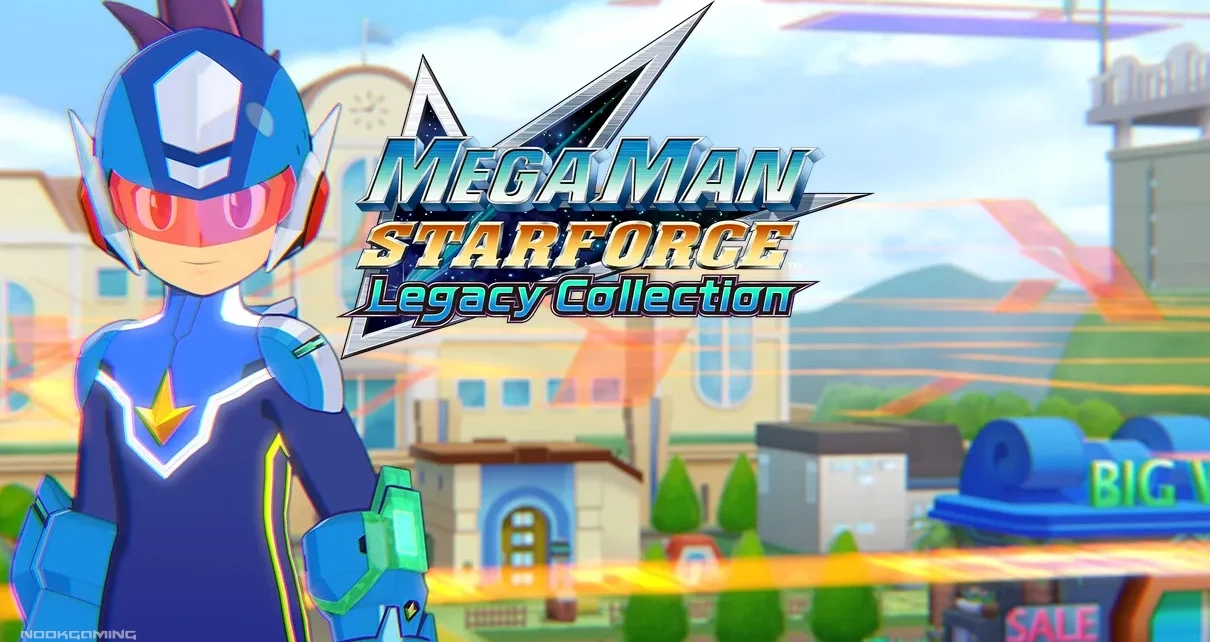
The Mega Man Star Force subseries came at a time where the public’s perception of Mega Man had long since been flagging due to the sheer saturation of games. As such, Star Force didn’t get to thrive as much as its predecessor subseries Battle Network, receiving only half of the games that it did before going dormant. Star Force 3 in particular was a bitter last hurrah for the series, as it came just before a wave of cancellations hit the series, including another sequel and several anticipated projects. Mega Man went dormant after that, making only a few comebacks in the form of more sequels to the Classic series. In the time since then, several collections featuring each subseries have been released. A few years ago, we had Star Force’s predecessor series get a collection, and now, we finally get Mega Man Star Force Legacy Collection to round out the RPGs on modern platforms.
From 200X to 220X
It’s been more than 200 years since the events of Mega Man Battle Network, and its old cast has since faded from time. In that interim, mankind’s technology has evolved rapidly. Cybersociety and a reliance on “Net Navis” have since been replaced by a society that now relies on a hyper-advanced form of radio communication. “EM Waves,” as they’re more commonly referred to, can do it all, from broadcasting TV to messing with one’s brain to make them more focused, and in the second and third games even materialize entire objects and living beings. However, it’s thanks to this reliance on a new form of technology that familiar problems emerge. EM Viruses, beings that cause problems and malfunctions in technology, are on the prowl and constantly need to be stopped. This is where our new main character, Geo Stelar, finally takes the stage.

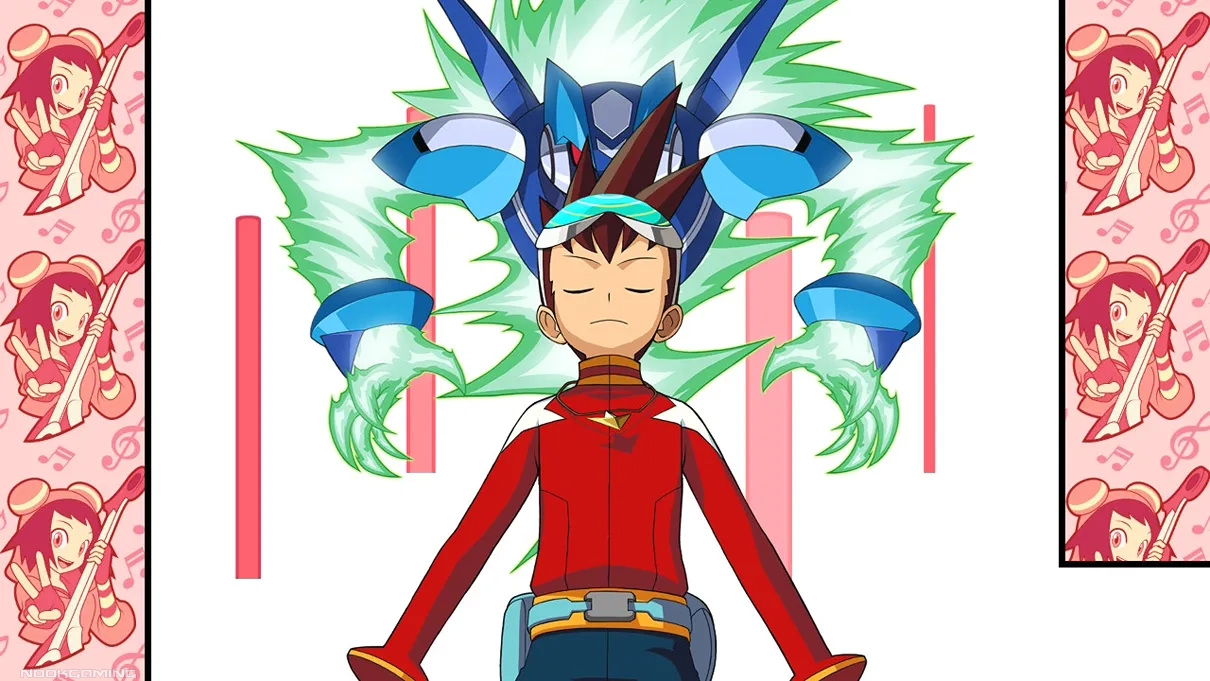
Geo is interesting in that he’s the first purely human iteration of Mega Man the series has ever seen. He’s also the opposite of the previous protagonist Lan Hikari in most ways. While Lan is outgoing, overconfident, and always up for a challenge, Geo is the opposite in every sense. Geo is mild-mannered, a bit of a coward, and someone who prefers to avoid social interaction at all costs. At the start of the series, he’s also a shut-in plagued with guilt over his father, who’d gone missing in space three years prior to the start of the series. Thanks to an encounter with a rough-and-tumble alien named Omega-Xis (called “Mega” for simplicity), Geo is forced out of his stagnant comfort as he has to stop an alien invasion from destroying Earth. A tall task for one kid, but thanks to the other main cast, he’s got some help. There’s Luna Platz, a haughty rich girl who develops into someone kinder and gentler thanks to Geo’s influence and her own experiences (and whom correct people would call “best girl”), as well as Sonia Strumm, a singer who connects with Geo thanks to their shared grief over absent parents (and whom incorrect people would call “best girl). Star Force 2 also introduces Solo, a rival to Geo’s ideals, while Star Force 3 introduces Ace, who serves as a sort of big brother figure to him.
It may have taken 20 years at that point, but Geo is also the first version of Mega Man to go through some honest-to-goodness character development, evolving from a cowardly shut-in to a geek who swallows down his fears to save the day. When Geo’s portrait changes from a constant frown to a bright smile between the first and second game, it feels especially earned. Even Star Force 2, which has a lot of narrative problems mostly pertaining to its main plot having nothing to do with the unresolved mysteries from the first game, still feels better written than any of the Battle Network games thanks to a greater focus on earnest character drama. While it’s fair to say that parts of the writing can come off as heavy handed, it’s never without a point to make either, so the end result is still broadly quite genuine.
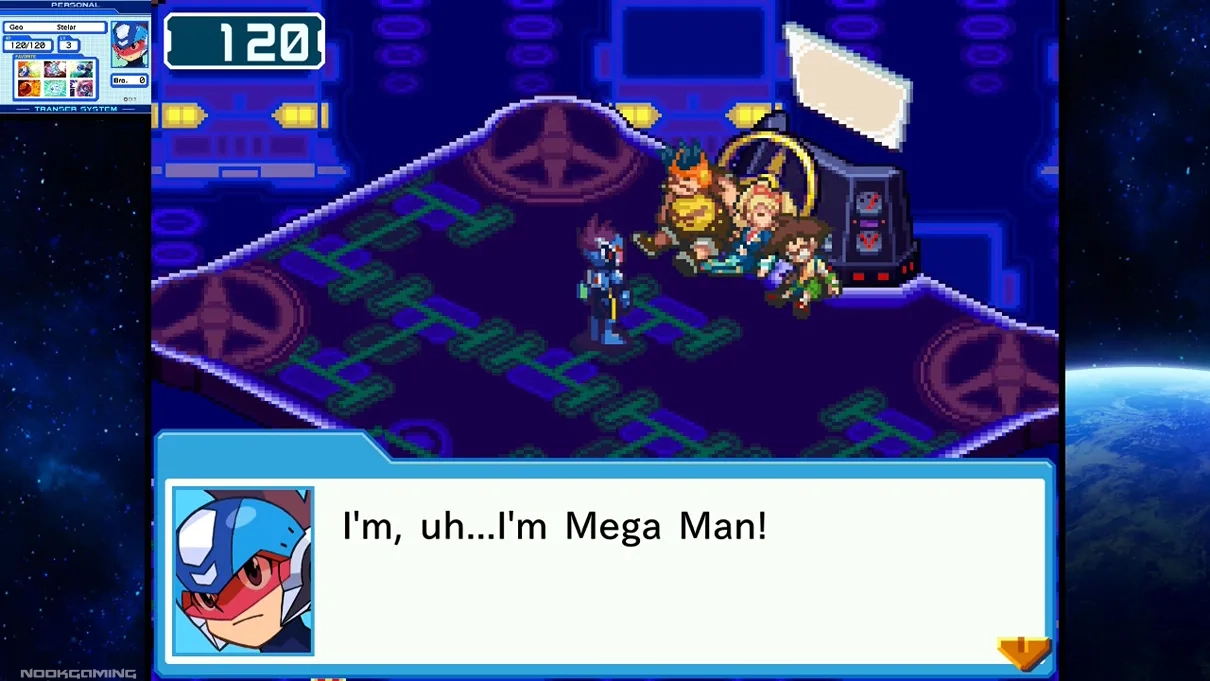
If Mega Man Battle Network was your typical monster of the week styled Saturday morning cartoon, then Star Force is closer to tokusatsu shows like Kamen Rider or Super Sentai, where steady character drama is neatly folded into the action. To give an example, the first major arc of Battle Network 1 involved the evil organization hacking ovens to explode, meanwhile the first arc of Star Force 1 involves a character wanting revenge over a minor incident that snowballed into them fearing that they’ve lost their place in the world. Another arc later on involves a teacher caught between his duty to provide for his family while trying to maintain his ideals as an instructor guiding youth. It’s not deep, but it is personal and relatable, playing into the themes and ongoing story quite nicely.
It helps that, like Battle Network, Star Force is one of the few Mega Man storylines to see a proper conclusion. While the ending to the third game is still perfectly open-ended for a potential fourth game (one can only dream), it satisfyingly wraps up all of the mysteries presented in both the first and second games in a nice bow. Elements from both of the prior games re-emerge in major ways, making the whole series feel connected and whole in a way that other branches of the series sometimes lack.
Mighty Morphin’ Mega Man
Like Battle Network before it, the Mega Man Star Force series is split between two primary gameplay models. There’s the human overworld, where you navigate human spaces as Geo to talk to NPCs, figure out puzzles, and interact with objects to find extra goodies. While Geo is Mega Man, he enters the Wave World, where you can battle in random encounters or against bosses and navigate the otherwise invisible roadways above the human locations. Each game has its own spin on this idea. In the first game and second game, Geo can only transform at designated “Wave Holes”, which appear as vortexes when Geo has his Visualizer equipped. In the first game, Mega Man is solely relegated to traveling the Wave Roads above the human locations, while in the second game he can freely walk between both Wave Roads and human areas, but cannot interact with human characters and certain objects. The third game twists this further, allowing Geo to transform anywhere and navigate Wave Roads through terminals spread across each real world map, and allowing him to access new areas through navigating Noise Worlds, which grow more dangerous the further you progress.
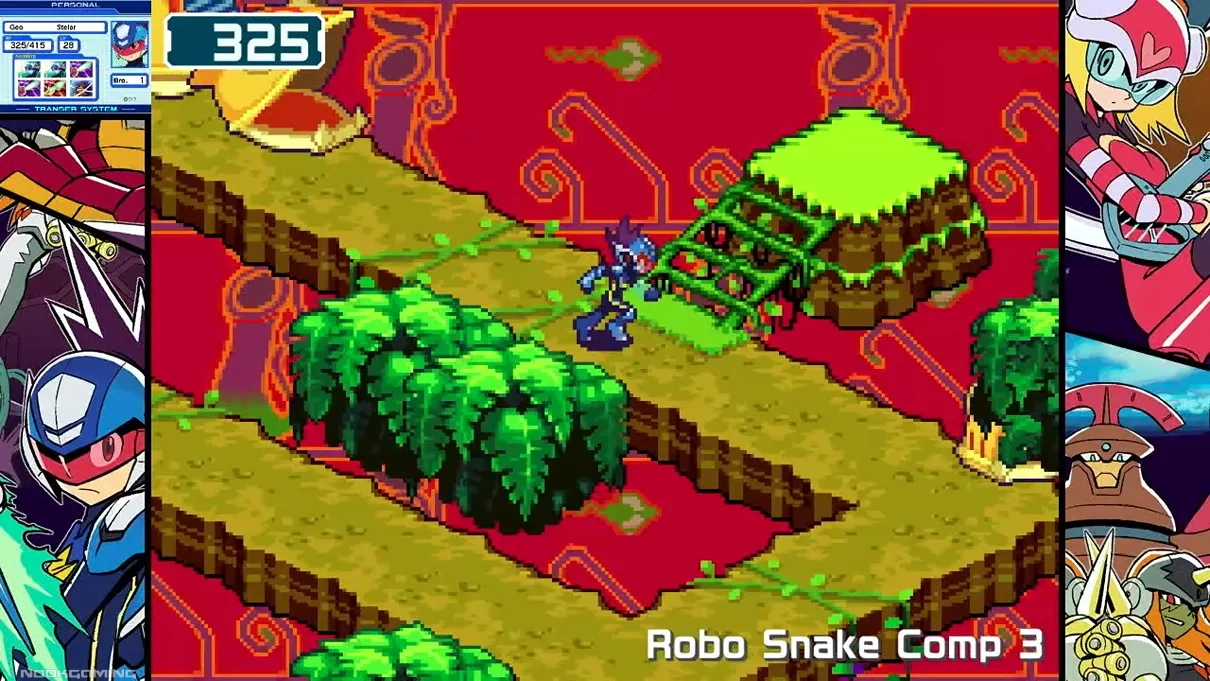
The end result is something similar enough to Battle Network, but each game toys with the ideas, allowing for broader puzzle-solving and more interesting map navigation than its predecessor series. I like all three iterations of the idea since they provide a distinct feeling of progression for every outing. Star Force 1 is fun because trying to find out how to interact with a real world object from the wave roads can feel rewarding, Star Force 2 is fun because it integrates exploration of both worlds at once, and Star Force 3 is my favorite because of the unexpected elements and danger it throws at the player via the Noise Waves.
It’s also here where the fantastic progression system of Star Force comes into play, which works much the same as it did in Battle Network. Rather than grind for level ups, the player instead grows stronger through the acquisition of stronger battle items and slowly gathering expansions to their HP. Battle Items like cards and accessories can be gathered through completing sidequests and efficiently defeating enemies, while others and HP expansions can be gained through checking everywhere on the overworld and buying them from NPCs you find on occasion. It works to brilliant effect, demanding the player’s full attention if they really want to become stronger.
As another carryover from Battle Network, players will deal with dungeons that have specific gimmicks before they take on a boss. These usually have something to do with the boss character, like having to answer rapid fire questions when dealing with a hostile takeover of a school or wading through garbage while at the garbage dump. It’s a nice translation of 2D Mega Man gameplay, where you always get a tricky stage before doing a proper boss fight. I would broadly say Star Force is a lot more consistent than Battle Network in this department, with none of the games featuring “that one segment” that annoys me enough to give me pause on replaying them in the way some Battle Network games did.
From the Left to the Right
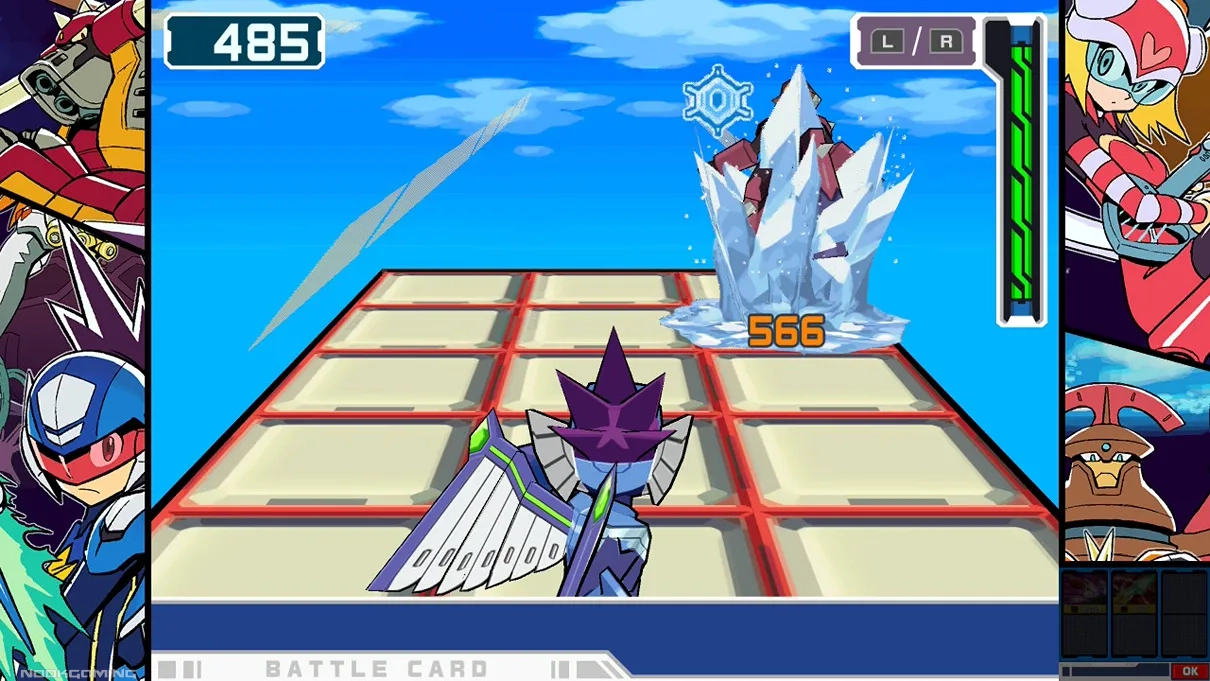
Mega Man Star Force’s gameplay is a total overhaul of the gameplay present in the Battle Network series. What was once a battle system where you fought using a vast array of attacks in a 6×6 grid where you practiced careful timing to dodge, counterattack, and perform combos is now something that on the surface appears simplified. Star Force still uses a grid system, but now you’re confined to just three spaces in the far back and the camera is now set straight ahead. Enemies are far faster, and you now also have access to a shield at all times. Battle Network staples like Counter Hits, the Custom screen where you pick out your next Battle Cards (this game’s version of Battle Network’s Battle Chips) at timed intervals, and the ranking system all remain to spice things up.
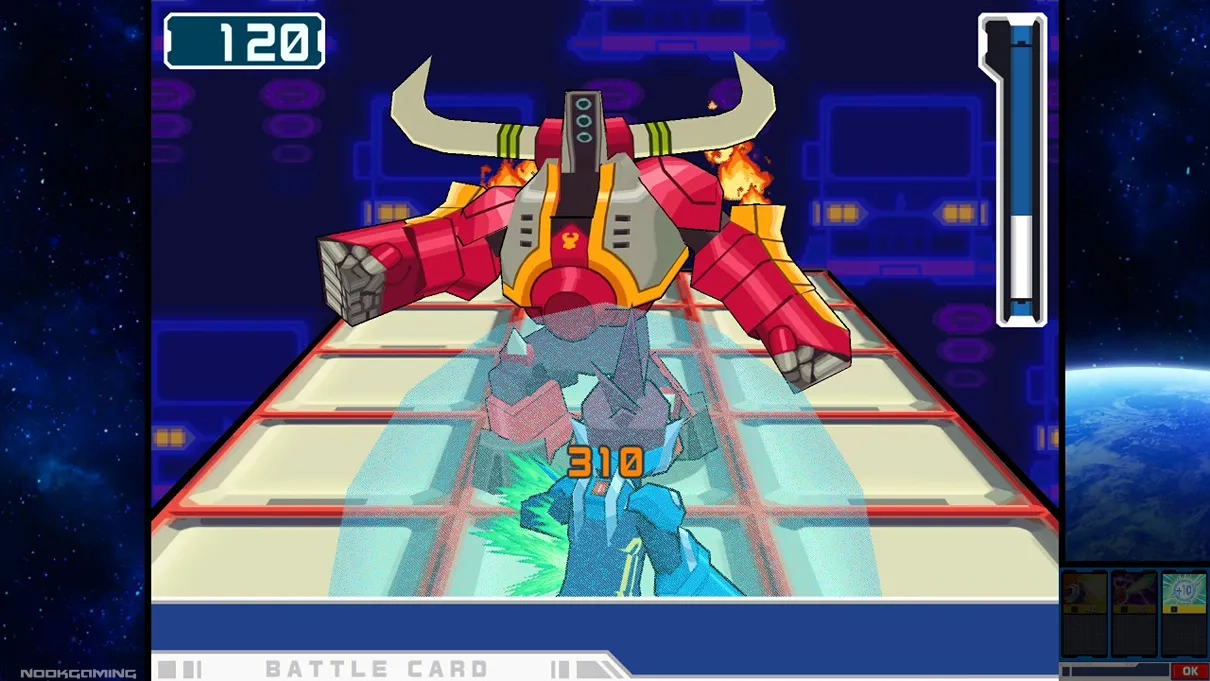
While this might appear to be “Battle Network, but in 3D,” the practical result is actually something more like an elaborate version of Nintendo’s Punch-Out!! Players will pay close attention to enemy patterns, dodging and weaving left and right, blocking at the right time, until they can unleash a counterattack just before their enemy strikes. This core gameplay doesn’t change between games, and in fact the first two games remain quite similar outside of a different transformation system and suite of enemies. Star Force 3 mixes it up with the introduction of the Noise system, which is a percentage-based system that will allow players to take on powerful transformations, access far stronger Battle Cards, and ignore enemy invincibility at the cost of taking damage over time. This combined with far more aggressive enemy design in general lends Star Force 3 an addicting, breakneck battle system that feels like the proper evolution of the previous two games.
It’s a lot of fun thanks to great enemy and boss design, and while I think the first game is a little too easy for its own good, the second and third games ramp things up in a way that makes things more interesting. Bosses are much tougher and more aggressive, and both games feature more in-depth transformation systems. Star Force 3’s Noise Change system in particular resembles the Style Change system of the second and third Battle Network games, where the transformations “seemingly” happen at random and are dependent on your playstyle. Overall, while I wouldn’t say that Star Force as a collection manages to hit the peaks of Battle Network’s gameplay, Star Force 3 in particular makes a case for being the greatest Mega Man RPG as a whole. Back on DS, it was one of my favorite RPGs for the platform, and here it’s even better thanks to a smattering of improvements.
As A Remaster
The biggest hurdle the Star Force series had in being bundled into a collection was undoubtedly the fact that these were games made for the DS, and made fairly extensive use of that fact too. While this is not Mega Man’s first outing with porting over DS games (that would be the ZX titles as part of the Zero/ZX Legacy Collection), Star Force’s use of the touch screen and dual interface was a lot more involved. In the first game, the touch screen was used for things like solving puzzles, pulsing into objects by tapping on them, and more. In all three games, the touch screen was used for selecting Battle Cards, while the top screen displayed the action itself. Thanks to an especially effective remastering approach, the games manage to play very smoothly on one screen. While the unused screen is always displayed in the corner, it can be enlarged with the press of the trigger, while the games will also always smoothly adapt to the relevant screen when playing. Playability is also improved thanks to several modifiers and enhancements, like a run button for the overworld and an option to adjust the encounter rate, the latter of which is a godsend for Star Force 2. While I’m a purist and chose not to use it, I think this addition is big enough that it might make the difference between a newcomer completing the second game or not.
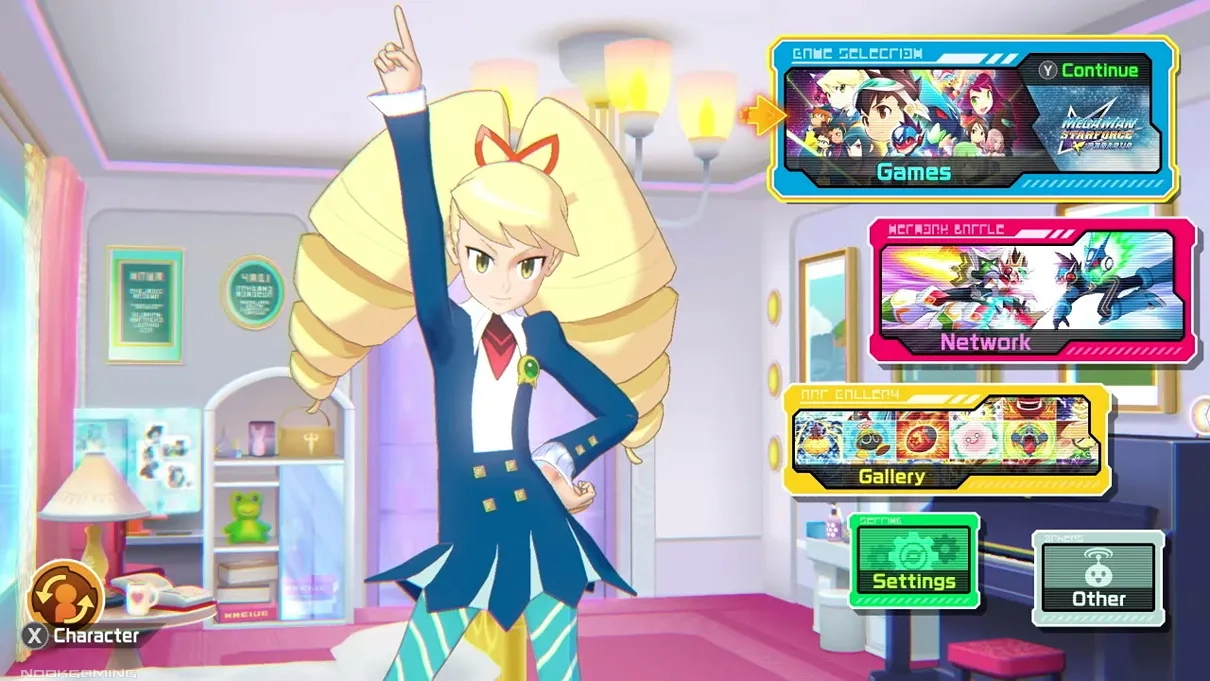
In addition, all 3D graphics in battle have received higher quality textures and now render at a high resolution, while also running at a smooth framerate. Battle Cards and character portraits have also been redrawn into high quality versions, looking especially great on HD displays, though the option for the older versions are there. Like the previous two collections, there’s also very little input latency, a godsend when playing at the breakneck pace of these games. Further modernizing the presentation is the addition of new battle and overworld lines for all three games. Star Force 3 already had this (as well as Star Force 2 in the Japanese release), but the lines have been re-recorded across the board to keep consistency with other games in this collection. Sweetening the deal is that every major character is reprised by original actors in both languages, great news for me since I think Jason Spisak is perfect casting for Geo. The menu features in general are quite good, with the interactions being even livelier than the previous collection thanks to multiple menus featuring several prominent characters throughout the Star Force series, each of whom get quite a few interactions.
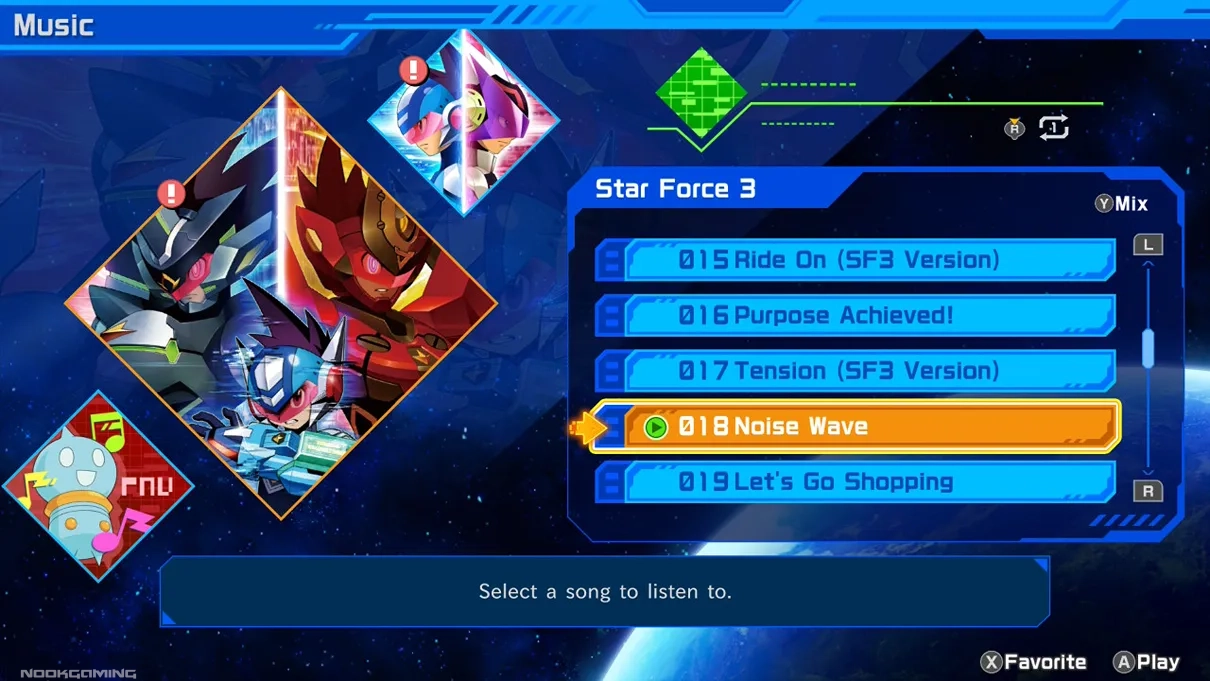
Adding onto this is the addition of new soundtrack options for all three games, featuring higher quality instrumentation like synth and live guitar. While there’s sure to be debates over which versions are better, I’m quite happy with all three soundtracks. While I think Star Force 1 and 3 sound better on DS, they’re still very good here, meanwhile Star Force 2 (which is my favorite soundtrack of the trilogy) gets elevated to being one of the best soundtracks in the entire Mega Man franchise. I’m a particularly big fan of its remix of the Wave World theme. Critically, you can use the old soundtracks and even mix and match which tracks you want to use where in-game according to your preference. These can also be listened to in the game’s extensive Sound Test feature, where you can listen to tracks while also scrolling through its art gallery that contains high quality concept art, promotional illustrations, and even some never-before-seen artwork.
The main bugbear I have with this collection’s presentation has to do with text rendering in the English versions. As a carryover from the DS versions, text in all three games rarely fills out the entirety of the text box, usually only occupying the top left half of the text box instead of all of it. This was conspicuous even back on the DS’s low resolution display and smaller font, but it looks downright bizarre here. It says a lot of the staggering quality of this collection that this is pretty much the only complaint I can think of. While the actual value proposition of Mega Man Star Force Collection isn’t quite as good as its predecessors, it makes up for this in the sheer effort put in through bringing up those three games to the best of its ability.
Verdict
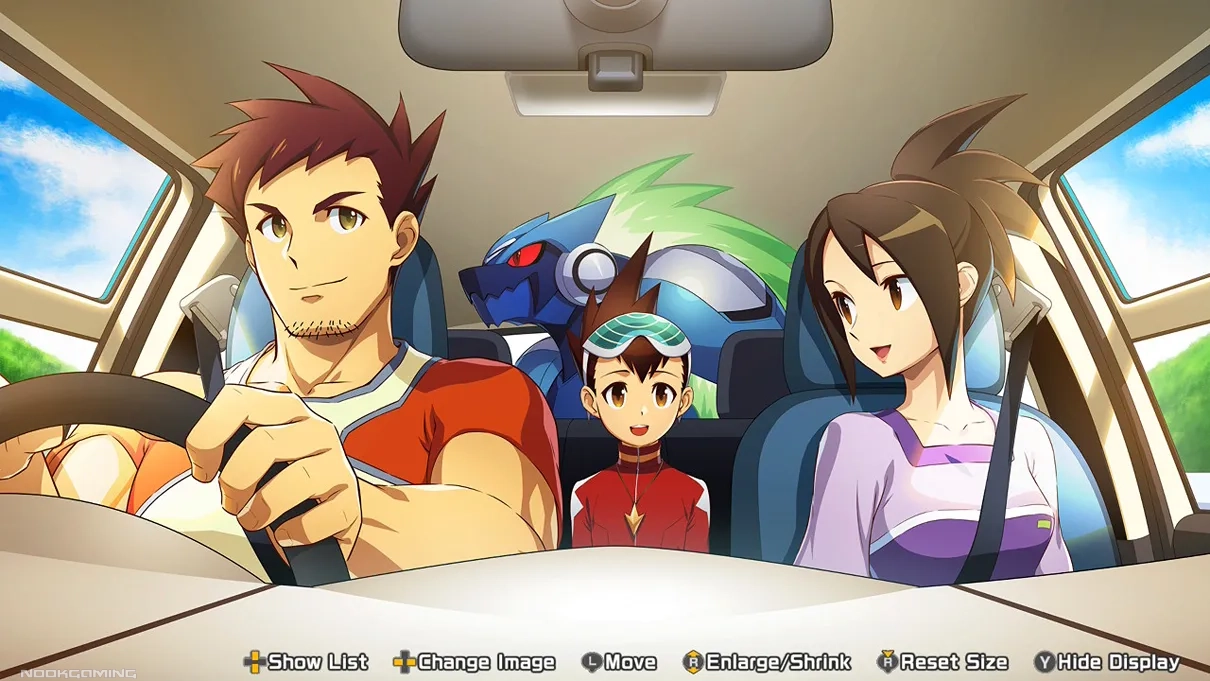
It’s impressive to think just how far the Legacy Collection branch of Mega Man has come since that original package with the first six Classic Mega Man games. What were once competent, if somewhat safe and boring, compilations now feel like proper celebrations of Mega Man’s diversity and rich history. Mega Man Star Force Legacy Collection, to my delight and surprise, is perhaps the collection that best exemplifies this. Even despite the series being more lowkey and less popular than its big brother on GBA, Capcom still saw fit to give it the royalty treatment. While it’s certainly debatable whether it’s the best collection in terms of the actual games on offer, I would go to bat and say this is the best collection they’ve ever done in terms of tender loving care.
The improvements to presentation, including sound and drawing quality, makes each game feel like it jumped a generation ahead. Considered gameplay tweaks that were thankfully made optional helps to also smooth over frustrations of the original games, especially in Star Force 2’s case. A suite of artwork, online features, and bonuses all around makes this the best way to experience these games, even accounting for changes made to accommodate the transition to one screen. It helps that these games are, foundationally, all a lot of fun in their own ways and feature writing that far surpasses the Battle Network series in terms of character writing, meaningful theming, and a grander sense of emotion. Star Force 3 in particular is one of the very best games in the entire Mega Man franchise, being the peak of the series’ gameplay while also offering a very strong narrative conclusion to the whole package. If this is the quality Capcom will be moving forward with in their Mega Man collections, then the Legends series is in great hands.
MEGA MAN STAR FORCE LEGACY COLLECTION IS HIGHLY RECOMMENDED

If you are looking for another JRPG, check out our review of Dragon Quest VII Reimagined.
Many thanks go to Capcom for a Nintendo Switch review code for Mega Man Star Force Legacy Collection.

A hobbyist who took up the pen to write about their favorite pastime: games. While a lover of many genres, Isaiah Parker specializes in Platformers, RPGs, and competitive multiplayer titles. The easiest way into his heart is to have great core gameplay mechanics. Self-proclaimed world’s biggest Sonic fan. Follow him @ZinogreVolt