Menhera Farm is a 2025 indie simulation title by developer Sugar Star. It uses a mix of stat management and rhythm gameplay of sorts in your quest to raise combat dolls and save the nation.
Looking for more unique and quirky Japanese games? ZenMarket, who have kindly sponsored this article, list plenty of physicals of retro and other physical Japanese games, along with other Japanese goods. They’re an import service that focuses on helping to order items from Japan, consolidating packages to keep the delivery costs down, and sending items worldwide. We’ve given an overview of our experience with their service and how to use it in a previous article.
Protect The World!
When I started Menhera Farm, I imagined it would involve a rather thin story primarily used to move the gameplay along, and maybe with some cute scenes with the dolls and their master (the player). I was both right and wrong.
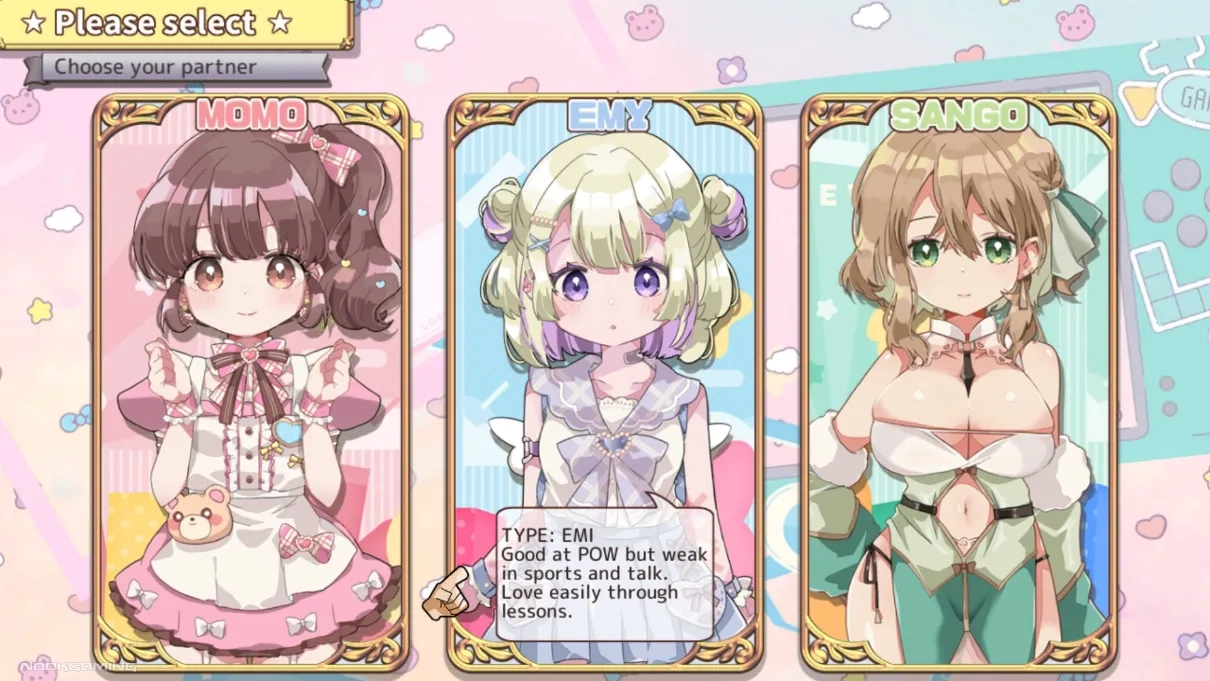
The main plot is quite minimal. You choose one of three dolls (Momo, Emy, or Sango), and you’re told to train her up for combat to fight off some mysterious invaders. As part of this, you need to fight other dolls to win the right to command the defence against this unknown threat. Essentially, you need to defeat the champion of a rank to progress the story and fight the invaders.
It starts innocently enough, with somewhat friendly competition between the player who works with PomeDog and the Pomeranista Duchy and the Munchkin Church Kingdom’s NekoPope, who, as you can imagine, is a cat dressed up like the Pope. He’s kind of obnoxious, but it’s dogs, cats, and some cute dolls. It should all be pretty nice, right?
Soon enough, hints that something strange is happening start to appear. While I won’t spoil the story, what I will say is that it completely goes off the rails. I was so bewildered at the scenes after defeating the final boss, I was wondering what I had just read. It didn’t help that it introduced something major at the end and left it unresolved.
A story where this happens isn’t necessarily bad, but I don’t think Menhera Farm came even close to pulling it off well. That each set of main story scenes were so short and without much happening was a big part of why. The buildup just wasn’t there, and it felt like it accelerated far too dramatically.
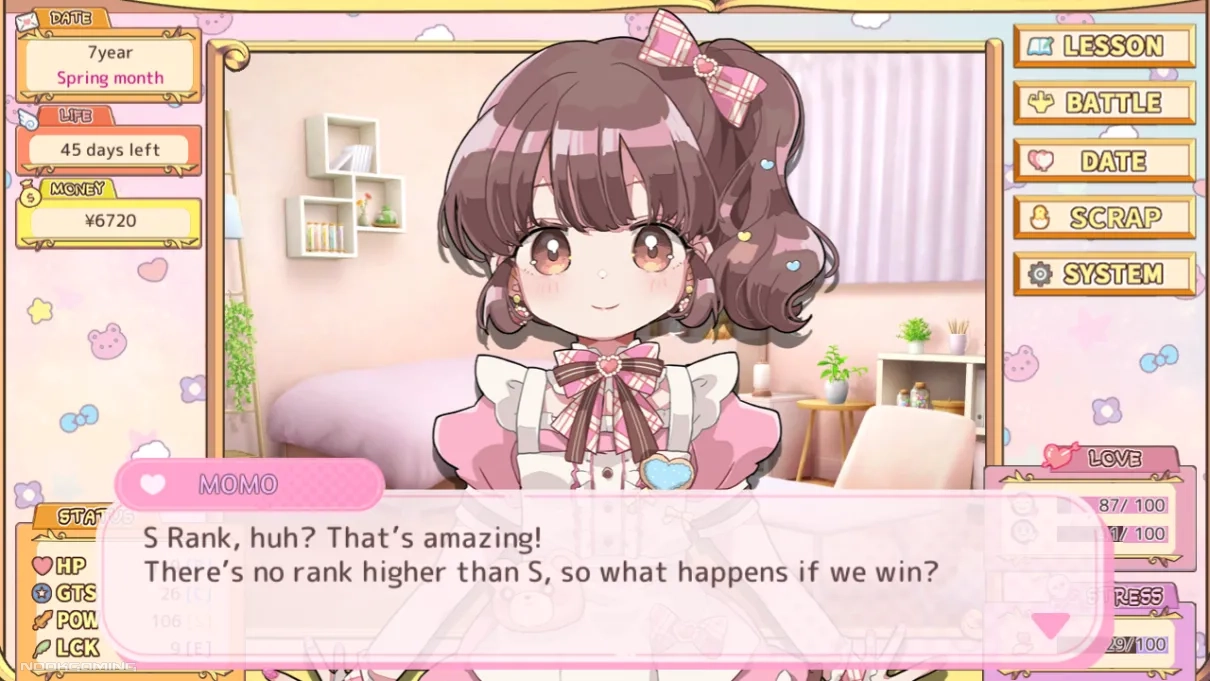
I should note that I’m well aware of what Menhera means. That part of the title just didn’t really seem relevant to what happened with the plot or most characters.
Defeating the final boss technically isn’t the ending. Each doll has their own endings. This was also less than satisfying. They’re short, and I was left feeling like even the happy ending for a doll didn’t really matter or significantly differ from their normal ending.
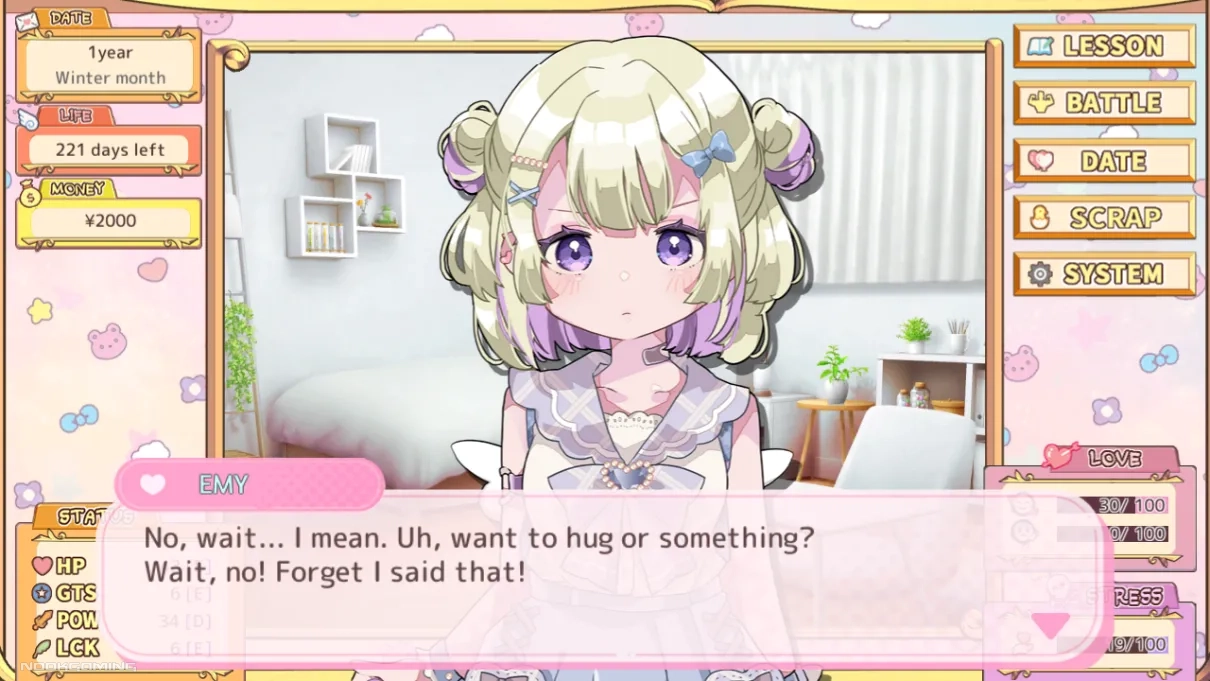
I have been fairly negative on the story so far, and that is my overarching feeling on it, but I should say that it’s not all bad. As a gameplay mechanic, you can go on dates with the dolls, and it includes some of those cute scenes between them and the player. They’re short, but nice to read. Some of the moments in the earlier parts of the story are amusing too.
Raise Your Doll
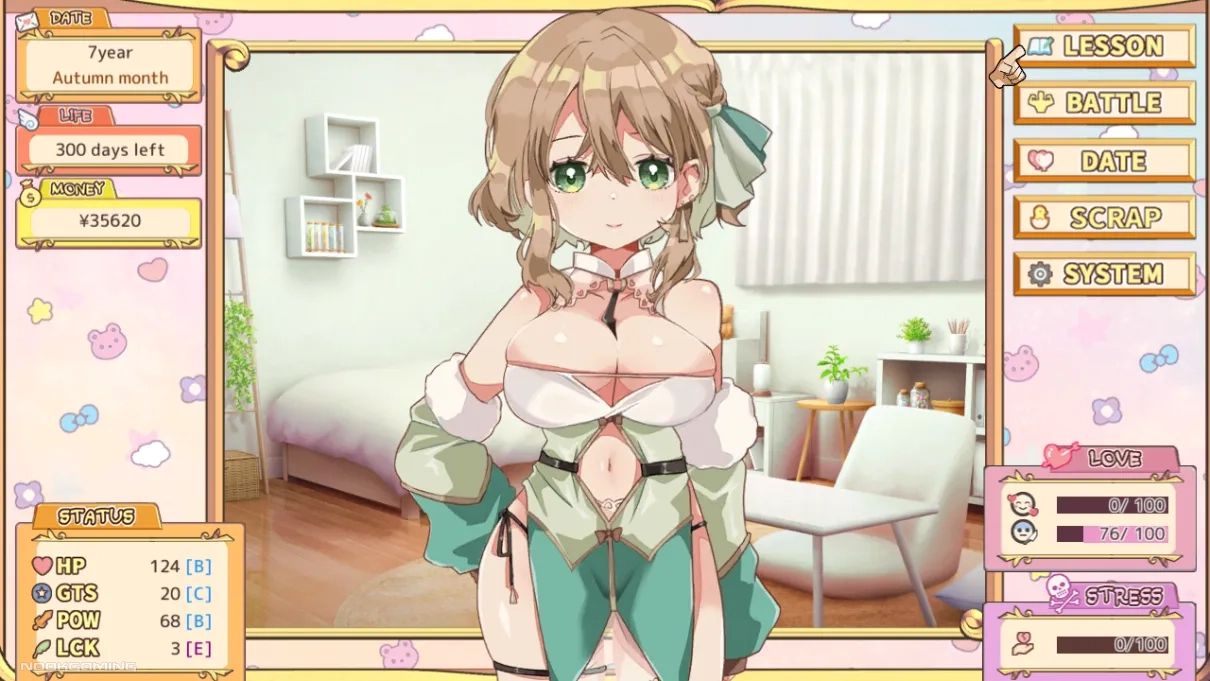
After choosing one of the three dolls, it’s down to you to raise them. This means raising their four main stats, making them love you, and keeping both their hatred and stress down. Each doll is slightly different in which stats raise quickest and how.
You raise stats by choosing lessons to put them through. Each raises different stats, with ones unlocking later on that raise them more in exchange for a drop in another stat. This does, however, stress them out and can even have worse consequences at times.
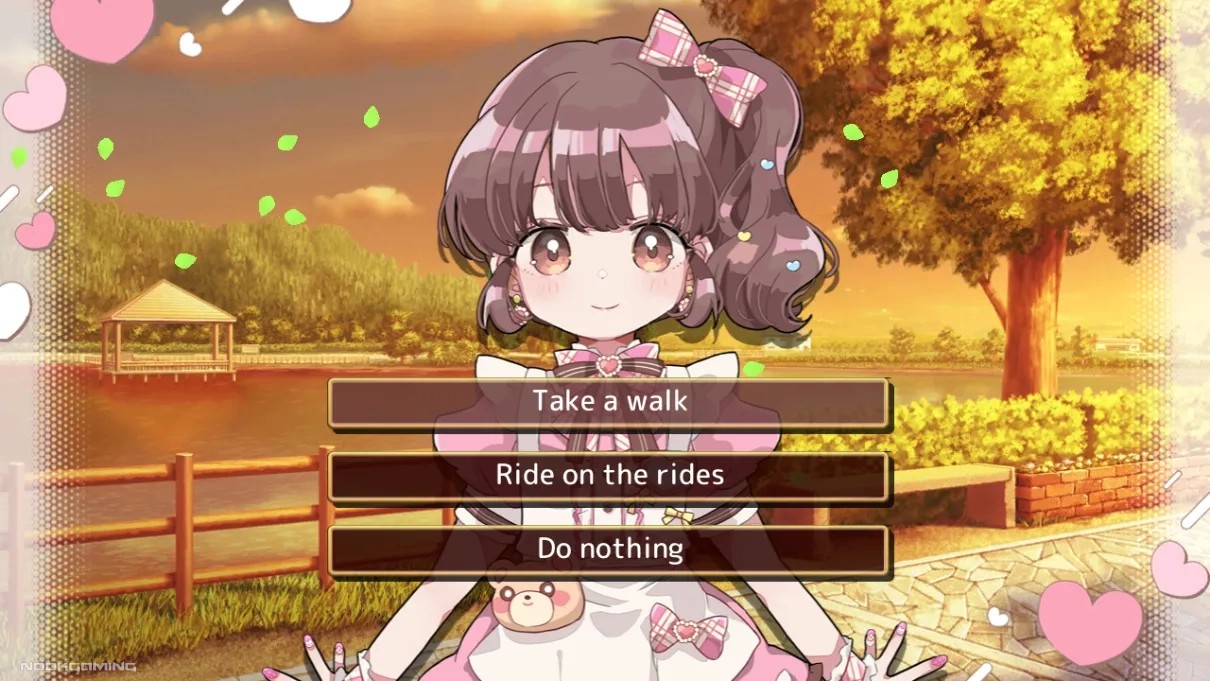
You need to manage the stress by taking them out on dates. There are a variety of locations to take them to, with most costing money. These events are very brief, though you can unlock some longer segments with more dialogue and CGs and by chance can run into other characters. There are dialogue choices too, which is nice to have, but they don’t affect the stress reduction, even when the dialogue makes it seem like you made a bad or particularly good choice.
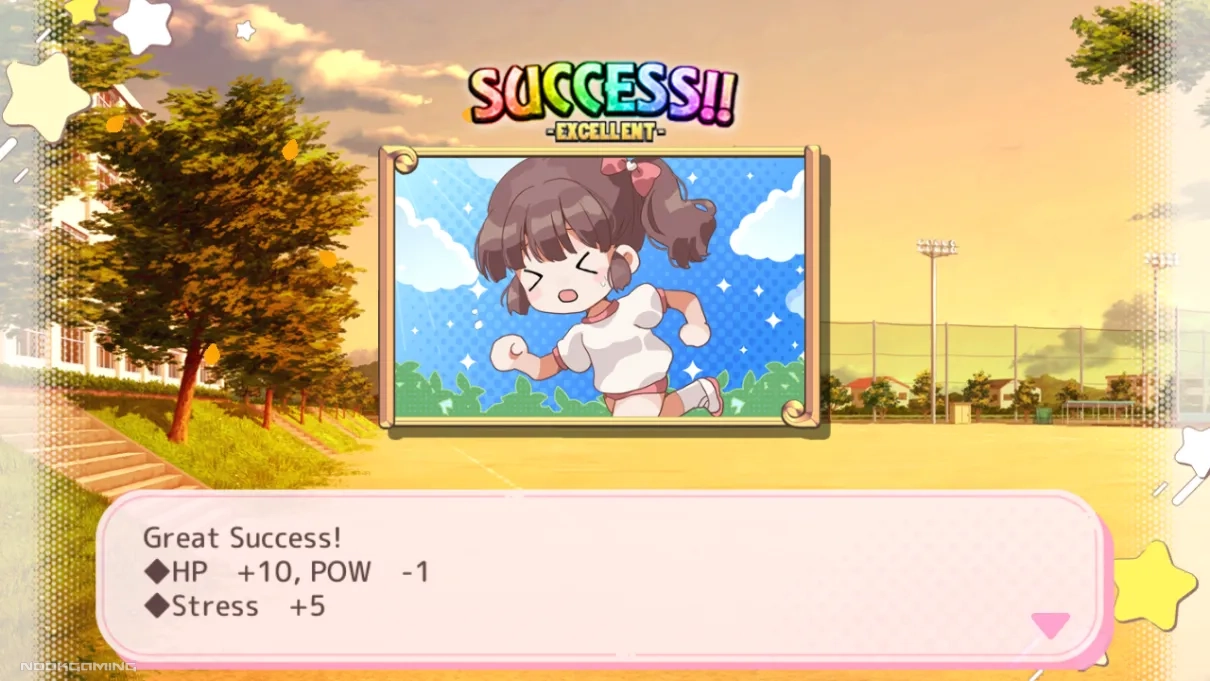
Managing their stats through these two systems works quite well. It also links in with battles, as they’re the main way to earn money for those dates.
Of course, it’d not be fun if there were no challenge element to the management, so it introduces a time limit. You theoretically have 300 days before a doll’s lifespan runs out, and lessons may go particularly well or fail, leading to some randomness in how much you can manage to improve your stats within this time. One element I thought worked particularly well was that stress actually decreases your lifespan, practically using more than 7 days of it per week, so that adds to that balancing act of spending time increasing stats or spending time and potentially money to keep stress down.
You can, after a point, actually scrap your doll’s current body and reset the lifespan, while retaining many of the points earned (if redistributed). This does add a significant amount of permanent hatred however, so you can’t do it often. This is nice as it lets you experience most scenes with all three dolls without a restart. It doesn’t quite work storywise though, as it’s described as carrying across memories, and they remember certain plot-related events, but they act as if it’s the first time meeting you or working.
These features all need to be used to make sure you have not only the skill, but the stats needed to clear the ranks and defeat all the invaders. While I do think parts could have been done better, I did have a good time with this element of Menhera Farm.
Rhythm Battles
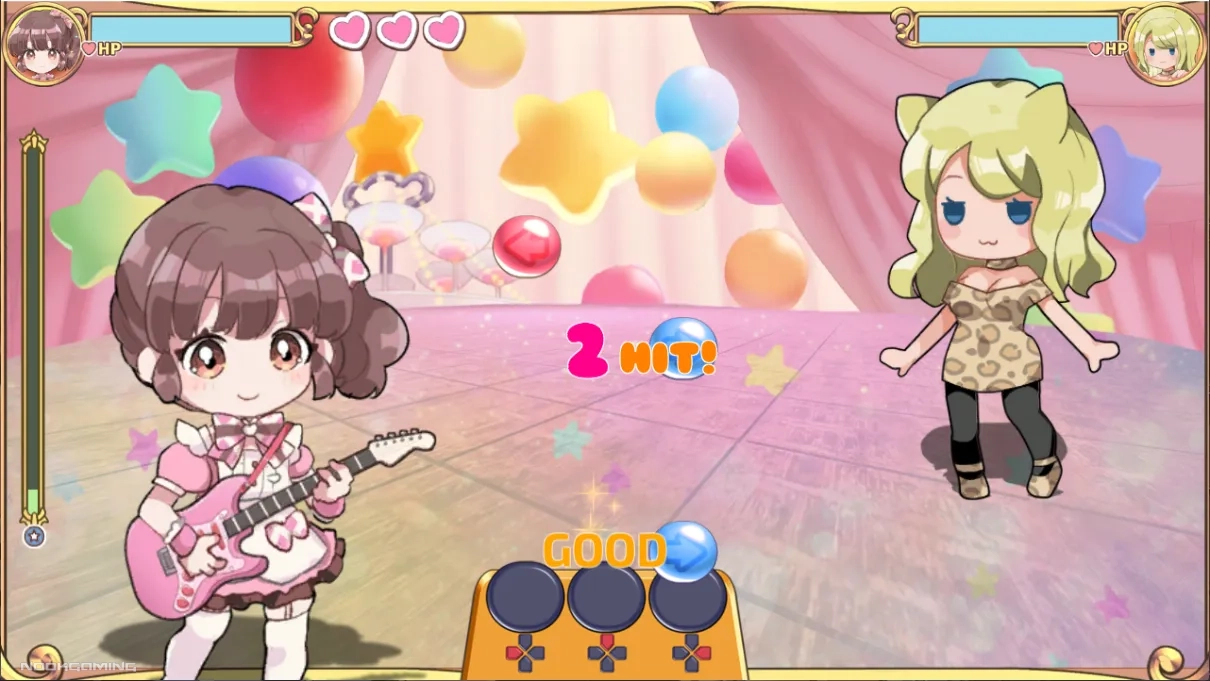
The battles in Menhera Farm are based on timed inputs, but heavily influenced by stats.
In terms of the gameplay itself, it’s fairly simple. Spheres come falling down, and you need to press the relevant key, left, up, or right, as they reach the bottom. You don’t get any complicated patterns where spheres will be coming down at overlapping times and most of the time, there aren’t many coming down at once and they’re fairly evenly spaced. The only real difficulty is when they come down at high speeds, when speed occasionally suddenly varies unconnected to the music, and when quite a few do come down close to each other on more difficult levels.
You can’t memorize patterns, as unlike many rhythm games, the falling sphere’s order is random, so pressing the button with the correct timing will require reaction speed instead. They’re not timed to the music either, so some may not consider it a rhythm game as such.

Those who enjoy rhythm games may find it too simple, but it’s fun enough to play without thinking too much about it. As someone who doesn’t play games like this too often, I found it easy enough after a little practice, outside of a few specific rank-up battles. That said, while it was easy overall, in a way, it’s also fairly unforgiving. Timing isn’t too strict, but you’re only able to miss a small number of times, even when increasing HP to a high rank.
I found the way it links into the simulation gameplay quite interesting. Essentially, at the end of each set of falling spheres, you get to attack the opponent. How much you can damage them, if you can use a special attack, and how much energy you have to keep trying is based on these, as is how many spheres you can miss during rounds.
It was pretty satisfying to repeat battles later on after training my doll further, then seeing how much easier things got. Between increasing my own skill with the rhythm gameplay so I missed less and seeing enemies get blown away in one or two rounds instead of three, it made progress clear.
Language and Other Issues
Menhera Farm, unfortunately, does come with quite a few issues. Do remember that this is a very low-cost indie Japanese game, and set your expectations with that in mind.
English, Korean, Chinese, and Japanese languages are all included. While I can only speak about the English translation, it’s always understandable and often fine, but there are certainly some parts that certainly seem off. Either some phrasing in the dialogue occasionally stands out as unnatural, or something in the system along the lines of ‘the 3 week’ instead of ‘ the third week’ pops up sometimes. I also noticed at least one untranslated line when a character succeeded in swimming training, and the increase in stats showed up in Japanese.
In more annoying issues, the game only partially works with a mouse. The main menu for the simulation elements doesn’t let you click on options, but dialogue choice pop-ups do. I ended up using just a keyboard the entire time.

Money and saving aren’t handled particularly well. In the first place, there’s only one save slot and no confirmation dialogue. Money also seems to save separately to the save file, leading to issues like spending money on a date, but deciding to load before that and still missing the money. It can work as an exploit in the opposite direction as well.
While it’s a kind of specific situation, the game also has issues with audio looping and not stopping background music when switching to other windows when using full screen. Most people likely won’t find this to be a problem.
Menhera Farm really isn’t the most polished release, even as indie games go. But I will praise that they do have an English translation at least.
Adorable Dolls
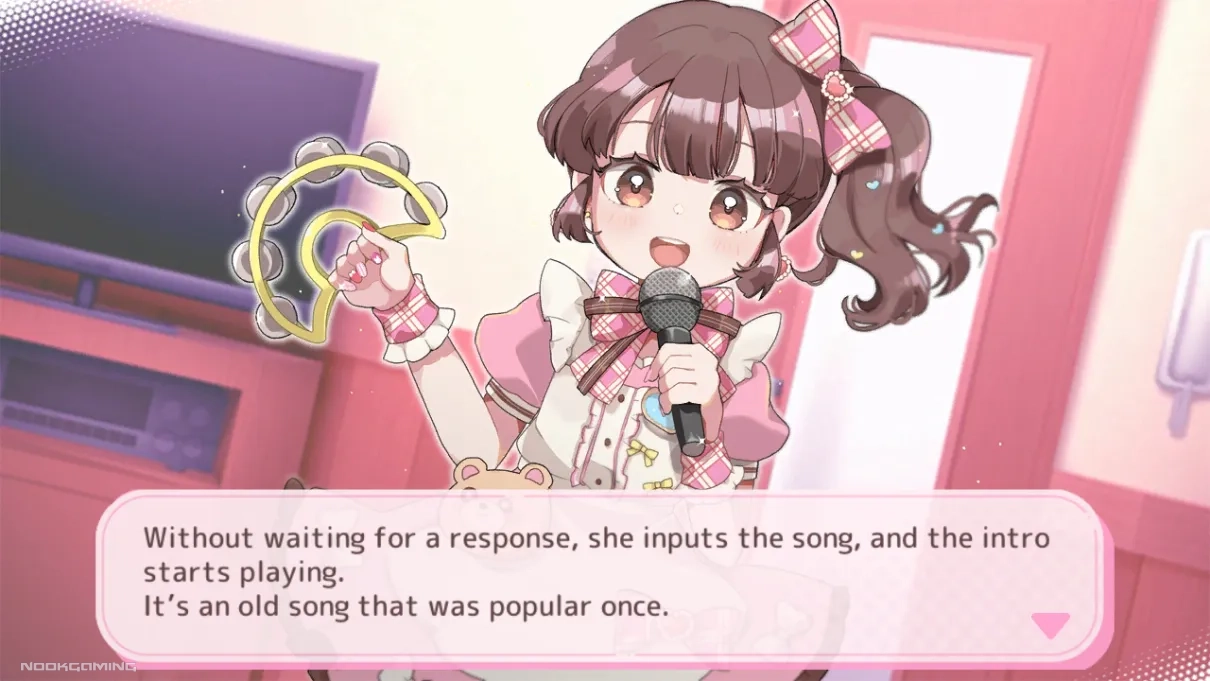
Luckily, one thing I can be almost entirely positive about is the artwork. Menhera Farm. The designs are cute, the artwork looks great, and there’s quite a lot of graphics considering how low-budget a game this is. It even slightly animates the characters, though it feels a little too much like it’s distorting the body occasionally.
I should note that this is an all ages game. It doesn’t get more lewd than seeing Sango’s clothes struggling not to burst. Momo, Emy, and the other dolls that appear lean more into a cute look than sexy.
The music is nice and upbeat too, fitting the gameplay and cute aesthetic of most of the game.
Verdict
Menhera Farm is a rather mixed title. The story and scenes with the characters have some nice moments, but it’s rather baffling when everything is taken into consideration. The simulation gameplay has some pretty great elements that link in well with the rhythm battles, but there are certainly letdowns there, too. Technical design issues pop up on occasion too.
On the less conditionally positive side, it’s very nice to look at and does quite a lot for such a low-budget title. It was fun enough to spend an evening going through the different characters and completing it. While I can’t give it an outright recommendation, I don’t find myself regretting the purchase. It’s perhaps a game to pick up when you’re looking for something a little different, as long as you don’t mind dealing with some oddities and issues.
WAIT FOR SALE ON MENHERA FARM

Purchase: DLSite
Thanks again go to ZenMarket for sponsoring this article. If you’d like to import any goods from Japan, please consider checking out their service and don’t forget to use code NOOKGAMING when signing up for 800 Yen worth of ZenPoints toward delivery.
If you would like to see more rhythm games, you may be interested in our review of DEEMO -Reborn- or Space Channel 5 VR.
The writer played Menhera Farm on PC.

A gamer since the days of Amstrad and DOS and someone who has dabbled in a variety of professions. He enjoys a wide variety of genres, but has been focusing on visual novels and virtual reality in recent years. Head Editor of NookGaming. Follow him and the website on @NookSite.