Following their generally successful Zero Escape trilogy, Spike Chunsoft decided once again to partner with director and writer Kotaro Uchikoshi to create another mystery adventure game. This manifested in the form of 2019’s AI: The Somnium Files. This title is a murder mystery game with elements of sci-fi, loads of drama, and a rather wild tone and sense of humor.
The ABIS Stares Back
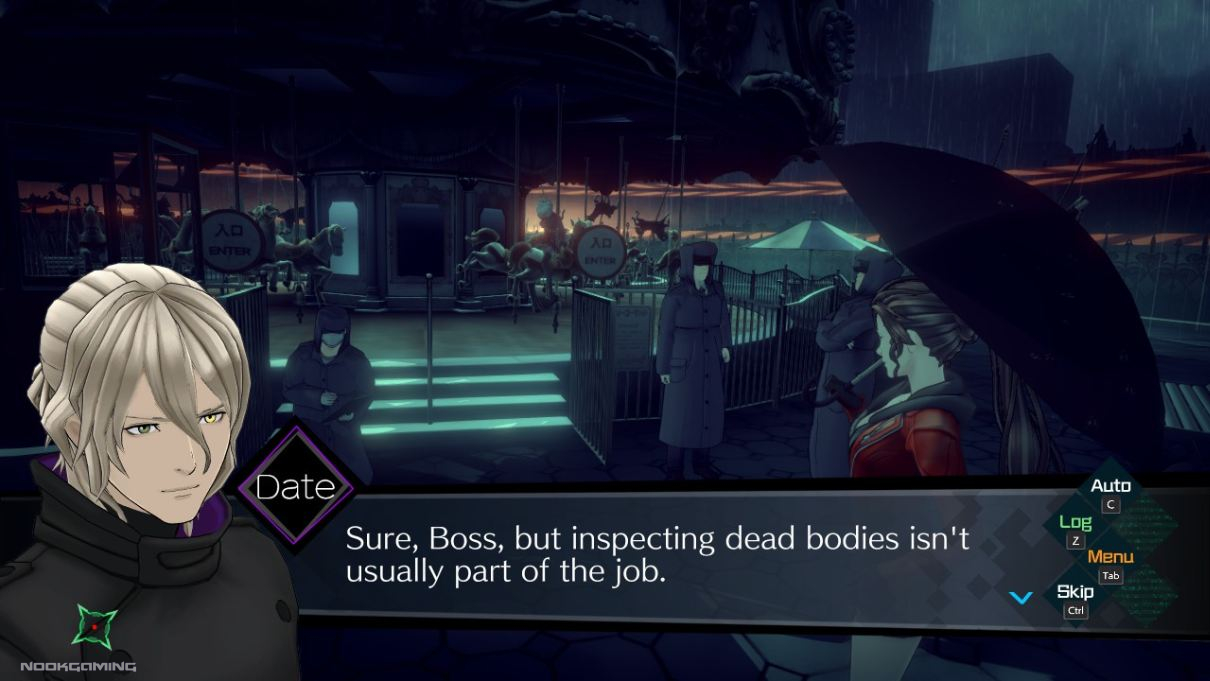
The story of AI: The Somnium Files gets started in a hurry as our detective protagonist Kaname Date is investigating a strange murder scene. A deceased woman—an old acquaintance of Date’s named Shoko—is tied to a carousel horse with one of her eyeballs missing from its socket. Inside the center of the carousel he finds a witness: Mizuki, a now-traumatized 12-year-old girl who happens to be Shoko’s daughter. This immediately presents itself as a very important and personal case for Date, due to his connections to several people directly or indirectly involved in the case as well as its strange copycat nature related to a serial murder case from six years prior which also featured a killer with a similar calling card.
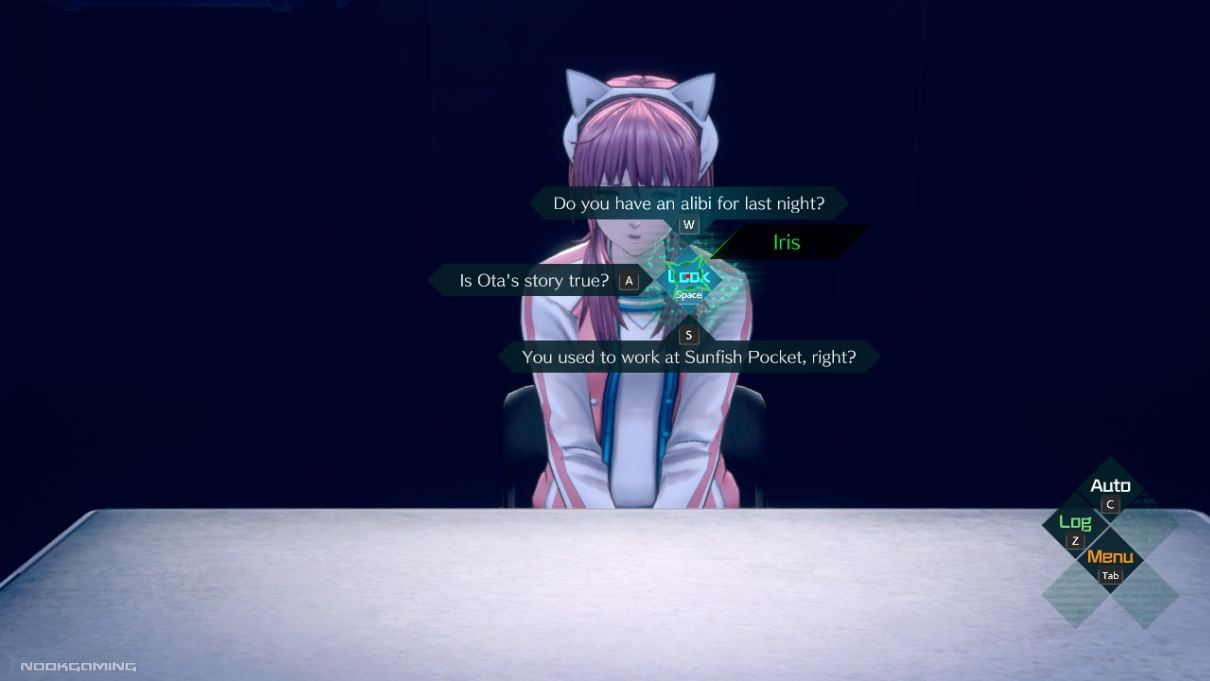
Date is something of a secret agent from a special police squad known as ABIS (Advanced Brain Investigation Squad). While certified as a detective, his specialty lies in performing “Psyncs”, a procedure involving a highly specialized machine that allows one to peer into the dreams of potential suspects and individuals believed to be hiding something. He is aided in his duties by his eyeball-shaped artificial intelligence buddy/assistant Aiba, a cybernetic supercomputer (and total goober) who usually resides in his eye socket and communicates directly with his brain via a receiver in his retina.
The main story involves a series of branching paths and the series of events that follow this strange murder. As is common for Uchikoshi-penned stories, you get a web of plot threads that weave into more plot threads, with all manner of off-the-wall plot twists that turn everything you’ve come to know about the story on its head.

Check Everything
AI: The Somnium Files is mostly a point-and-click adventure game. Throughout your investigation, you will visit many locations and encounter plenty of people with connections to the murder plot.
Much of the dialogue happens by clicking a character and asking them relevant questions, as well as examining your surroundings. This is streamlined in such a way that it will allow you to move to a new location to advance the story when you’ve finished all you need to do in a particular location at that time.
With that said, half of the fun of AI: The Somnium Files comes from just checking as many objects and icons as the scene has. While the game has plenty of thrills, suspense, and drama, it’s also quite often very comedic in the way characters talk about mundane observations. The banter between Date and Aiba as they investigate various objects and exchange quips in response is often quite delightful and regularly had me busting up laughing, even when it began from just checking very innocuous-looking objects. This isn’t even getting into the various characters along the way, which I’ll get to later. The game also thankfully tells you when you’ve investigated something enough that it stops offering new text.

6 Minutes, Date!
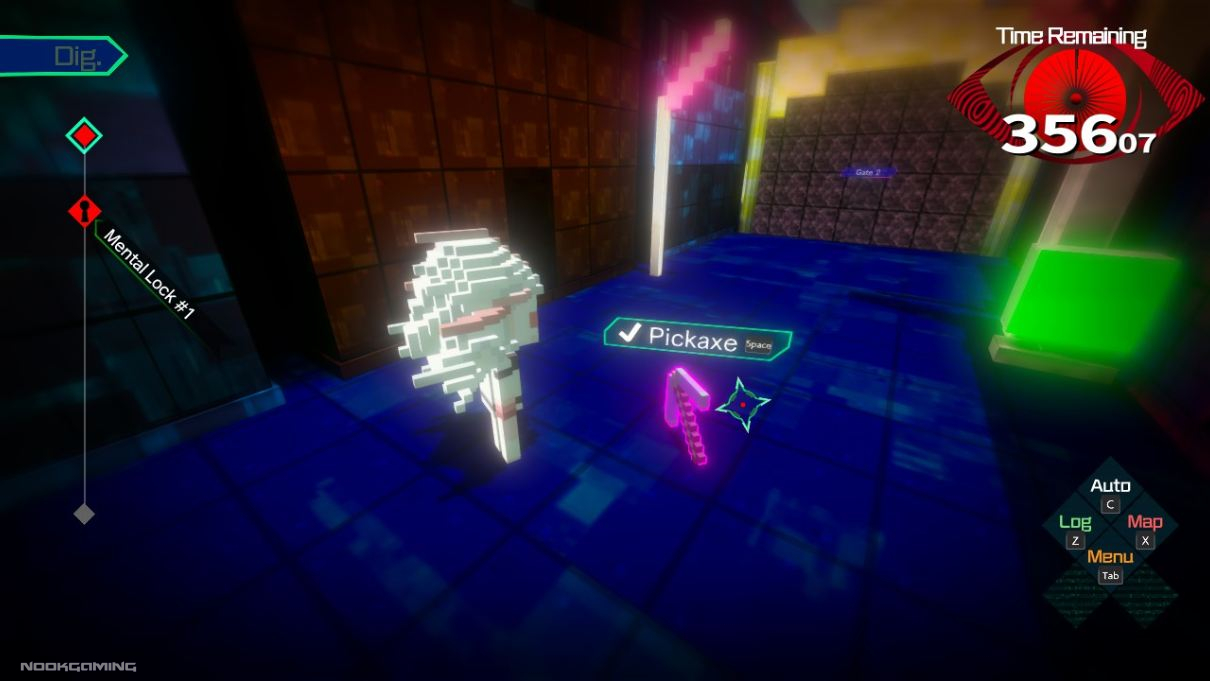
Since some nuts are harder to crack than others, at certain points you will need to enter into people’s dreams to learn more about what someone knows…or occasionally adjust something in their psyche (for the better, we are supposed to be the good guys). Their dream psyches manifest in the form of Somniums, which take the form of setpieces and facilities through which you try to unlock the mysteries hiding in their brain. And as anyone who has ever had a few dreams in their life can tell you, dreams can get very weird.
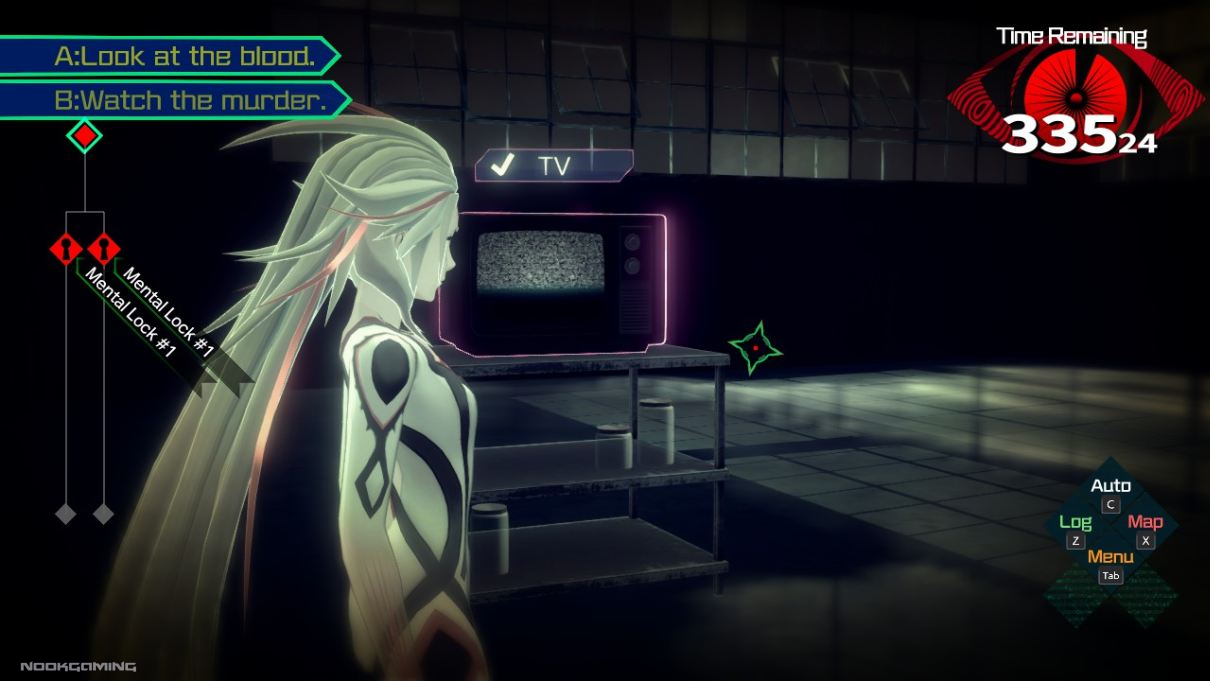
Similar to Spike Chunsoft’s Zero Escape series, Somniums operate kind of like escape rooms, where you’re meant to find one important clue or object and lead it into another before finally coming away with what you need. In these puzzle setpieces, you play as a more anthropomorphic form of Aiba and investigate your surroundings. Each Somnium has a supposed deadline of 6 minutes, although that time is deceptive and operates more as a resource. The timer only really counts down when you’re moving, and every action you perform will expend an allotment of your remaining time. As you perform certain actions, you’re given what are called TIMIEs, which usually operate like a lifeline that can reduce the time expenditure of certain actions (although there are also red TIMIEs which force an increase in time cost of those actions).
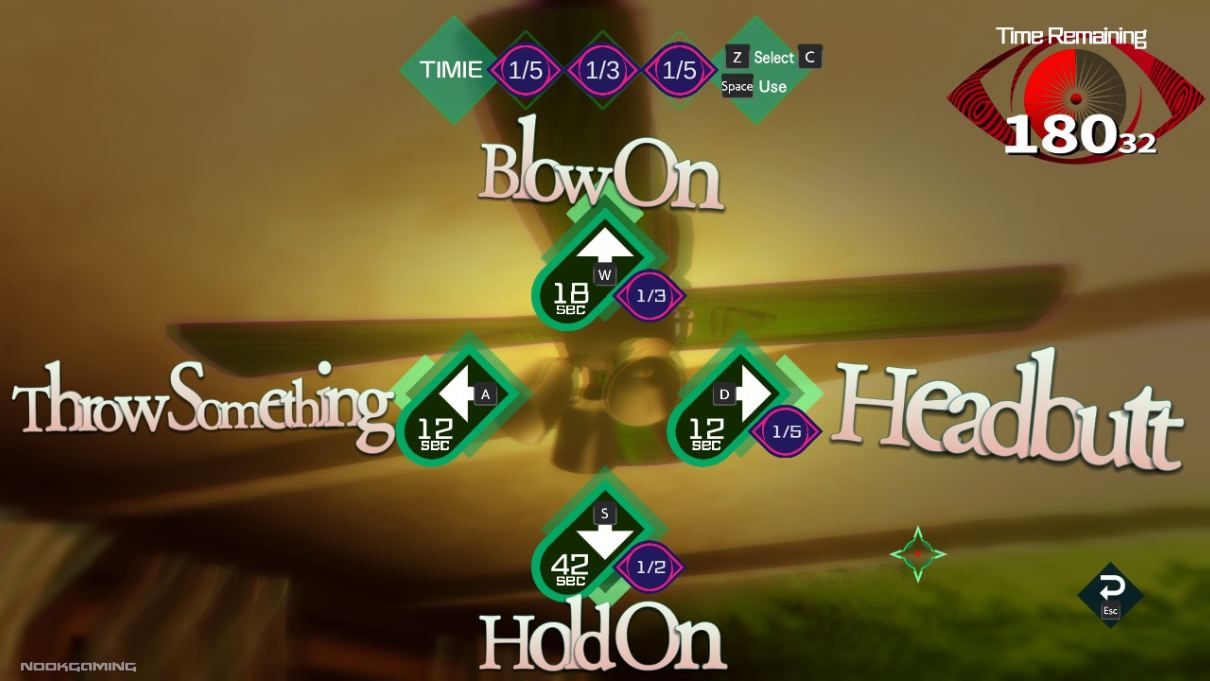
Because these are dreams, things often don’t operate on conventional logic. As a hypothetical, while you often get expected options like “open the door”, you might also get more humorous options like “kick the door” or “smell the door” or even really weird ones like “eat the door”. While the humorous options are usually just an amusing waste of time, they occasionally are what it takes to make actual progress.
To be clear, I genuinely like the Somniums. The surreal setpieces they offer lead to some really inventive and clever sections of the game that can be quite fun to experience, to say nothing of the hilarity that may ensue. Some Somniums also still have something resembling an inventive theme; for example, one Psync involves a character with an aggressive personality, so you’re often rewarded for picking options that are more aggressive and punished for picking passive options. Somniums also are often where the banter between Aiba and Date is at its best, to say nothing of how silly certain characters can appear in their own psyches. The Somniums also have quite a lot of variety to them and are used in interesting ways, especially the final one which is an all time “oh snap” moment for me.
Still, these puzzles can feel very much like trial and error to play through. It’s fun witnessing the wackiness that can occur, but if your goal is progress, it can at times feel incredibly arbitrary and illogical what progresses you to the next section of the puzzle. The timer adds some element of friction, but it can be annoying if you either A: want to see everything silly that can happen but run out of time, or B: are trying to make your way through the puzzle but run out of time. Thankfully there is a checkpoint system that allows you to try again after opening certain locks in each Somnium, though you have a limited number of checkpoints per Somnium and they record how much time you had left when you opened each lock. Most Somniums are at least pretty easy, although there are a couple tricky ones.

Whiplash
AI: The Somnium Files is many things all at once, resulting in a story that has numerous and occasionally sharp tonal shifts. While there’s plenty of drama and suspense, a bulk of the story in between the two is either lighthearted or over-the-top comedy. There is a lot of dialogue pertaining to the primary investigation here, but a lot of what helps you to explore the cast of AI: The Somnium Files is observing how characters interact with Date and one another.
Date himself can be a downright unhinged dork at times. While a compassionate individual with both a professional and cunning side and an ultimate goal of justice and protecting people, he is also incredibly horny. AI: The Somnium Files has a ton of sex jokes all throughout its script, and while Date is not the only one with the lascivious character trait, he is the one who we see it in most given he occupies the player’s perspective. While funny sometimes, it can be a bit awkward to read through in spots. It also at times puts him at odds with other characters, notably Aiba who finds this side of him to be rather depraved given she has a neural connection to his mind. This isn’t his only type of humor at least; he also makes his share of rather bad jokes and puns, but these are sort of endearing in that kind of “dad-joke” way.
If you enjoy sexual humor, AI: The Somnium Files can be genuinely funny at times. Sometimes it made me laugh, others it evoked a side-eye reaction from me. Thankfully the humor of AI: The Somnium Files is plenty varied even without its more perverse whimsy. The story also usually manages to serious the hell up whenever the stakes are raised or whenever a tense or emotional moment comes about, usually keeping the dissonance from being outright disruptive.
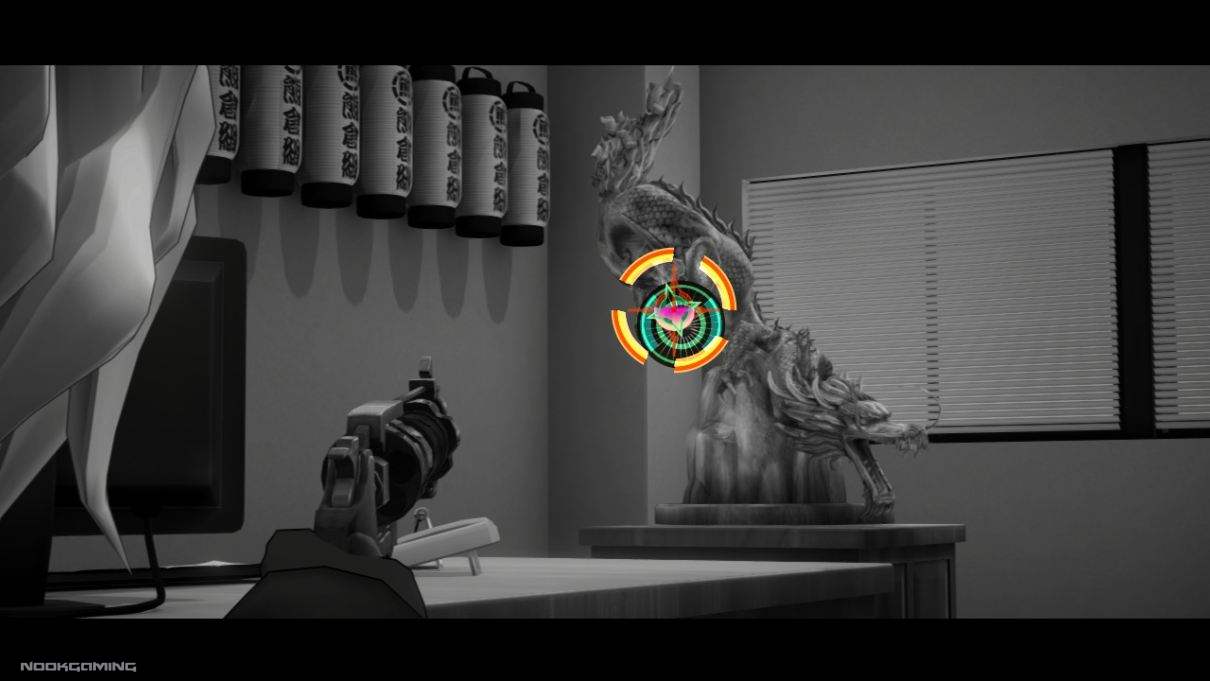
The big exception, however, is the game’s action scenes. At certain times in the story, there are life-or-death scenes involving guns and/or other weapons which will feature brief quicktime events that you can end up getting a game over for failing. While these in theory should attempt to be suspenseful, they’re often lacking for proper choreography and instead go the route of being downright Looney Tunes-esque. While I usually dealt with the ebbs and flows of AI: The Somnium Files’s tone, these scenes had enough dissonance to jettison my suspension of disbelief out of the experience, and were generally my least favorite parts of the game. While there thankfully aren’t too many of these scenes, I found them to be a rather groan-inducing part of the game that you just kind of have to put up with if you don’t find them funny.
The Dad Who Stepped Up
While the grand mystery of the story of AI: The Somnium Files takes a lot of twists and turns and is ultimately the focal centerpiece of the game, a lot of love was put into its cast of characters along the way. One of AI: The Somnium Files’s strengths is in how it integrates each member of its cast meaningfully into the story and gives many of them scenes that go a long way in humanizing them.
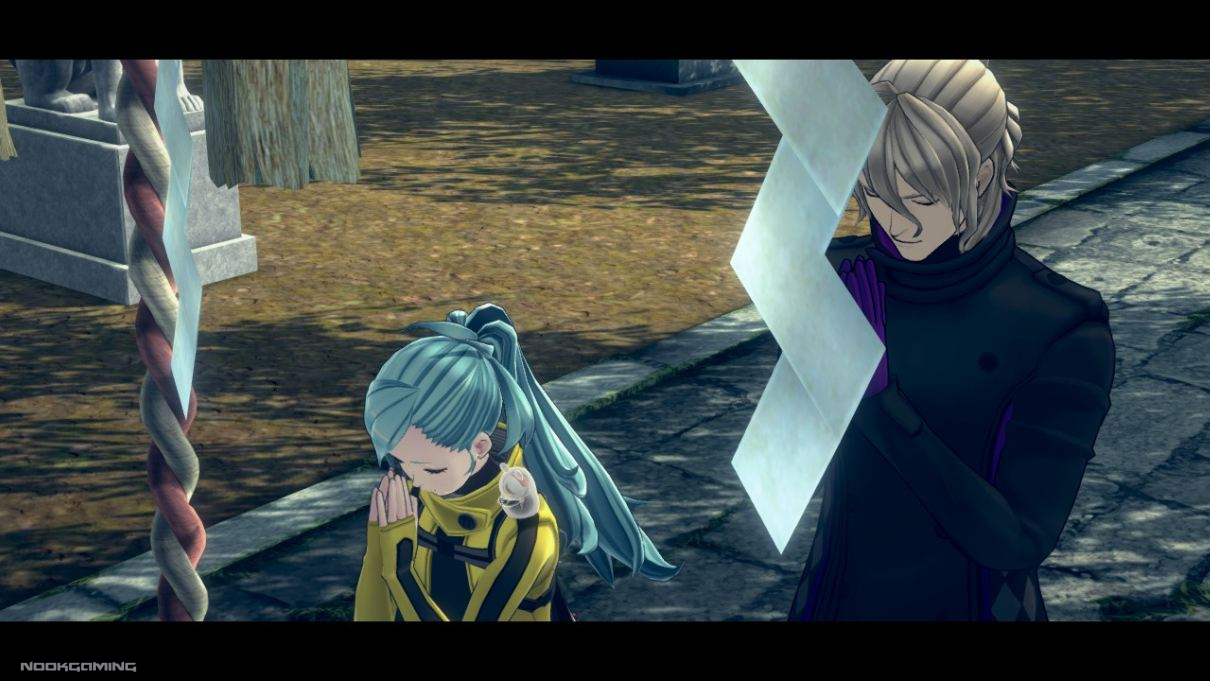
For as much as I love the banter between Date and Aiba (which is often an alternating straight man/funny man archetype), the relationship between Date and Mizuki is perhaps the single most emotionally compelling plotline in the game. A key part of Date’s connection to the first victim of the story is the fact that Date serves as something of a somewhat reluctant godfather figure to Mizuki. Her mother Shoko was often quite cold (if not outright abusive) to her, and her father Renju is often rather neglectful due to being preoccupied with running an entertainment talent agency. Date maintains a friendship with Renju, but even he is frustrated with the neglectful way he and Shoko have treated Mizuki, which eventually leads to Mizuki living with Date. Although her parents are pretty poor in their treatment of her, she nonetheless experiences her own share of cognitive dissonance upon witnessing the murder of her mother, as would be expected for someone her age.
Date has his flaws as a father figure, but he genuinely shows far more care for the preteen girl than her so-called actual parents. The two make for a wonderfully imperfect pair given the circumstances that put them together, and the core of their relationship really elevates AI: The Somnium Files in terms of how it adds emotional depth. It helps that the two also have their own fun banter and are each fun characters in their own right, given Mizuki directs that typical moxie of a rebellious and sassy preteen towards Date as the closest thing to a dad she has in her life.
Simply put, I adore these two whenever they share a scene. They both have their share of baggage to work through and watching their relationship over the course of the game is a highlight.
The Tangled Webs We Weave
Although our main man, his roommate, and his cybernetic eyeball make up the nucleus of the cast, there are also plenty of side characters to fill out the rest of the cell.
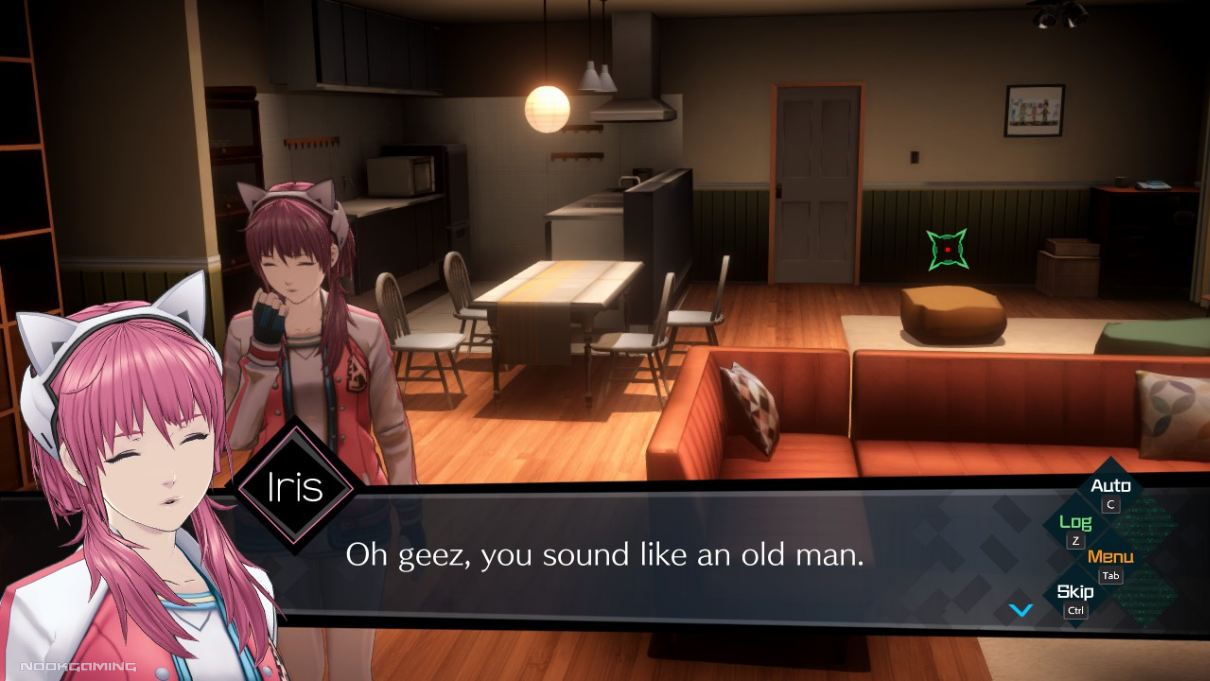
Alongside Date and Aiba in the center of the game’s box art is a girl named Iris, a very close friend of Mizuki who is signed to her father’s talent agency. Iris is something of an idol/streamer/internet personality with a rather bubbly personality, though she has her share of genuine and serious moments. Her friendship with Mizuki works well, as they have their share of similarities that make their relationship work well. Her interactions with Date are pretty fun given she can be something of an airhead with an occasional streak of savvy, though she noticeably has something a bit off about her. A lot of spoilerific details involve her that I can’t get too into. While I like how she fits among the cast, she has a tendency to be something of a plot device character which I feel can hurt her narrative role at times.
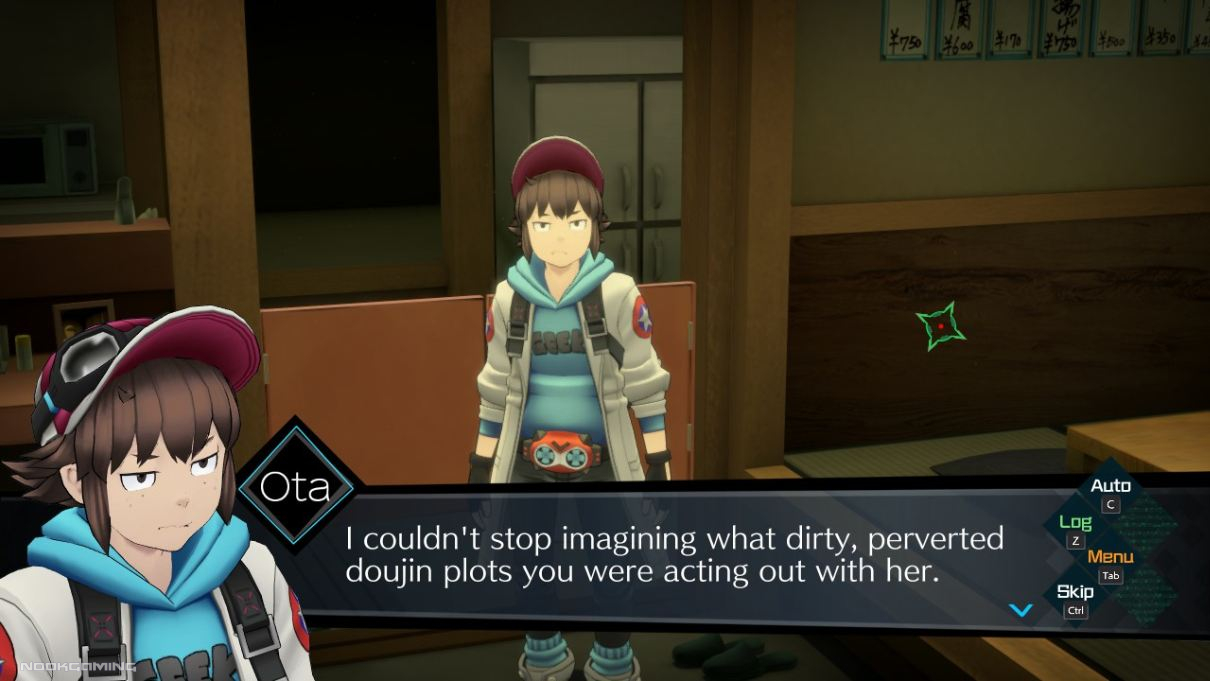
Iris has her share of fans, one of them being a geek named Ota. Ota and his mother Mayumi both end up involved in the story in several different ways. I honestly expected I was going to dislike both of them entirely, but the writing puts a lot of effort into really making them work in the story. Ota fancies himself something of a hero, but he’s kind of a terrible son in a lot of ways, and Mayumi at times comes off as a problematic parent. Still, the route of the story that focuses most on these two’s personal story was a real surprise with a genuinely emotional conclusion, one of my favorites in the game.
There’s also a share of more minor but still interesting characters. A regular confidant of Date’s is his boss, an older woman with a perhaps lewder side than even his. There’s Iris’s mom Hitomi, who is a total sweetheart with a surprising amount of involvement in the story and who gives a bit more emotional weight to several other characters. There’s also a share of amusing joke characters, such as the Kumakura yakuza family who frequently get involved in part because the head of the family is also a fan of Iris.
I can’t talk too much about antagonists for obvious reasons in a mystery plot, but I genuinely like the way a lot of details around them are handled. There are some interesting aspects to the mystery of it all, but they also play a big part in some of the most edge-of-my-seat dramatic scenes I’ve seen in an adventure game.
The Suspense Is Killing Me
The patented style of Kotaro Uchikoshi-penned titles is one where plot threads are constantly stacking on top of each other and you get plenty of foreshadowing. This is further enabled by the fact that the game features several different branching paths you can take to collect its various endings based on different choices you make during certain Somniums. Several routes lead you to answers to some questions, but not before making you ask even more questions. And while I don’t think the flowchart structure is always to the benefit of this title, it is nonetheless fun piecing together the story and seeing the way things pan out and pay off.
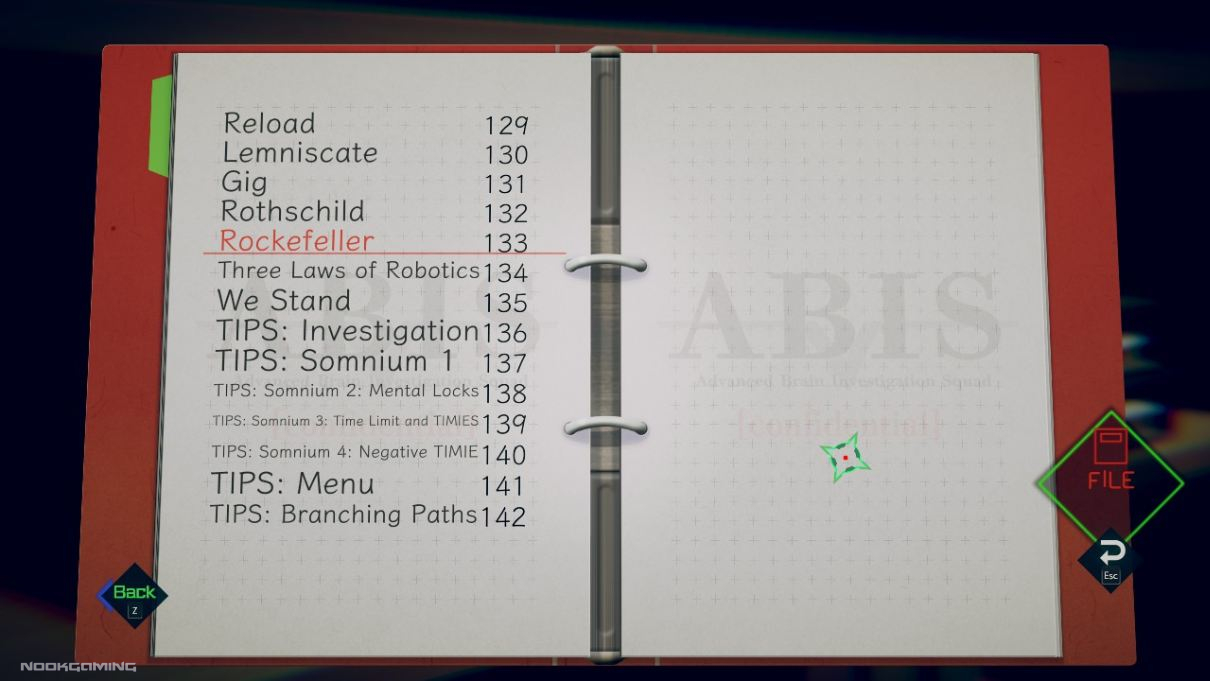
Thankfully, AI: The Somnium Files moves at a relatively brisk pace to keep things interesting, clocking in for me at about 25 hours for all endings despite me constantly checking everything. Uchikoshi’s works often bring in a combination of sci-fi, pseudoscience, and whatever things he seems to find interesting, which can lead to occasional long or even bizarre tangents or metaphors. While there are a few of those here, they’re kept in check. There’s a share of odd concepts or references to external works here and there, but the less essential ones can be read about in the game’s TIPS section (which also contains fun little bios of each of the characters that flesh them out even more) so as to not disrupt the flow of scenes too much.
AI: The Somnium Files rewards you for paying attention as details that get brought up once early on come back much later in often very satisfying ways. It helps a lot that I cared about much of the cast along the way, as it’s very easy for a suspense-heavy story to fall flat if you don’t have any investment in whom the events of the story are happening to. I think if you come at the story with a bit of suspension of disbelief and the ability to just kind of roll with stuff like the action scenes, you’ll find a mystery that’s a ton of fun to solve.
That said, there are still a couple of cracks that keep it from being truly airtight. A key story element that leads to AI: The Somnium Files’s grand conclusion never gets much of a good answer on why it worked. There’s also the occasional logical inconsistency or incongruity, e.g. character might do something that directly contradicts a previously established premise almost immediately after without explanation. I’m not particularly interested in picking apart plotholes, nor do I think they prevent AI: The Somnium Files from being a story of immense thrills and compelling emotional scenes, but it has a share of spots that still nag at me long after I finished the game. Some details get addressed in the sequel, however these don’t feel like they were intentionally set up to be a sequel hook, which makes that feel like a retcon bandaid.
Eye on the Ball
AI: The Somnium Files is a 3D game made in Unity, with generally pretty constant motion. At times, certain animations and expressions can look a little uncanny, but for the most part it maintains a decent appearance throughout. The Somniums in particular have spectacular visual direction and a wide spectrum of visual ideas that really bring out the sense of being inside someone’s dream and all the weirdness that the concept might entail. Some of the more complex choreography is lacking (especially in the action scenes), but most everything else is well done.
Character designs were handled by Yusuke Kozaki, most known among gamers for working on the designs of No More Heroes as well as Fire Emblem: Awakening and Fates. Many of his designs for the game have some cartoonish qualities befitting of a game with the sorts of humor that AI: The Somnium Files has, but without ever truly crossing the event horizon of being unable to be taken seriously. Each character casts a unique silhouette and often maintains identity through the color of their costume, and several of them have very noticeable distinctions (e.g. Ota having noticeably more anime-esque eye shape and pupils) which often reflect aspects of their personality in their design.
Sound of Madness
Handling music composition for AI: The Somnium Files is Keisuke Ito, most known for the scores of Spike Chunsoft’s Mystery Dungeon games, particularly Pokemon and Shiren the Wanderer. I’m very fond of the work he and the sound team did with this game. Each of the game’s various character motifs communicates a lot about their respective personalities, and the music found in various Somniums tells you a lot about their respective character’s mental state while also pulling you into whatever theme the current setting is trying to convey. The two variations of the tune titled Psyncin’ in the VaiN are absolutely bone-chilling and leave you completely on edge knowing that whatever the heck you find in that Somnium, it will not be good. Conversely, Psycin’ in the MOUNTaiN is a beautiful piece of music that conveys the peaceful nature as well as some of the latent sorrow within its subject. There’s a lot of variety and it’s absolutely beautifully directed. I also have to mention that the credits theme is…one of the most out-there things ever put in a video game of this sort.
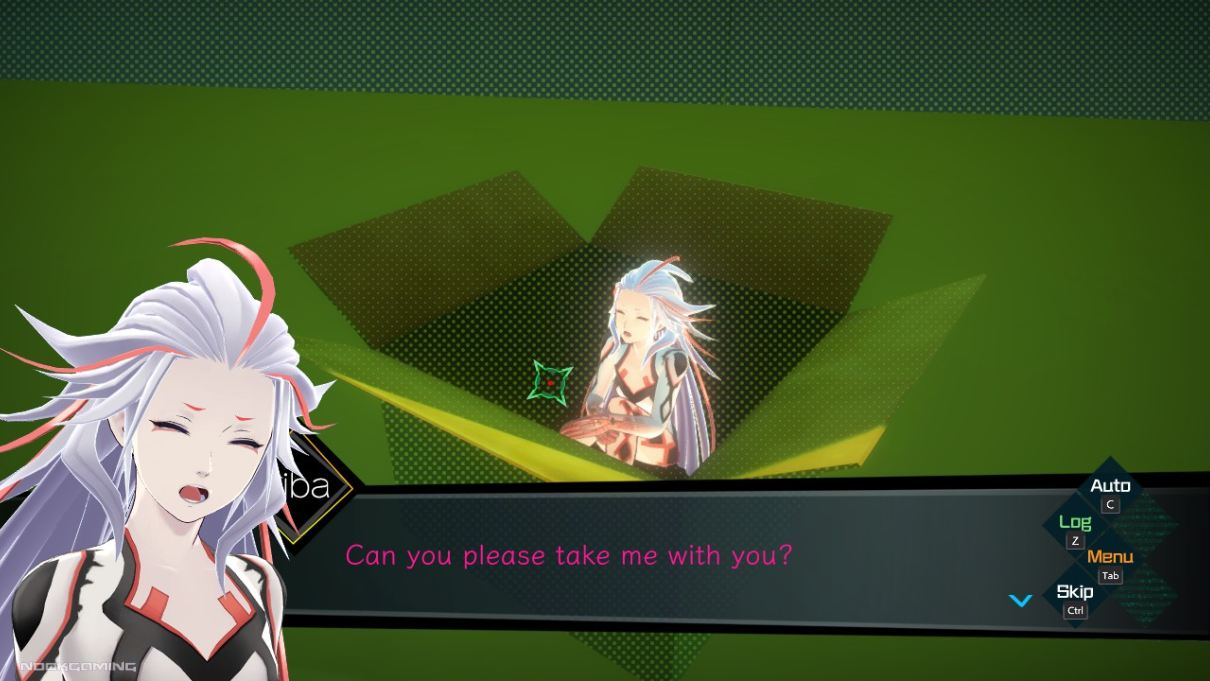
The voice acting is also a strong suit of this game. As someone who played my first playthrough with the English dub, I can’t tell you how often I wished to be a fly on the wall watching a voice actor record their lines for this game, particularly some of the funnier things Greg Chun recorded for Date’s lines. Whether you experience Date and Aiba’s banter with Chun and Erika Harlacher’s voices in the English dub, or go for Tarusuke Shingaki and Akari Kitou’s voices in the Japanese voiceover, the voice acting is a riot for their comedic bits. The entire cast did a great job with this game. Most of the serious scenes are done well too. There’s a particular standout scene near one of the most tense routes of the game that, without giving too much away, required some genuine chops from the voice actors of a particular character, and boy did they deliver in both languages.
Verdict
AI: The Somnium Files became one of my favorite adventure games through its combination of inventive concepts, great use of sound and music, a thrilling mystery, and a strong emotional core that made me care about the characters the story was happening around. It’s delightfully weird, often to its benefit and occasionally to its significant detriment, but it’s unabashed in what it is. It has its rough edges in places, but it was made with a lot of love in spite of its limitations. It’s compelling and hilarious, but most of all it’s immensely rewarding to play through.
AI: THE SOMNIUM FILES IS HIGHLY RECOMMENDED

If you are looking for another visual novel, you may enjoy Love, Elections, and Chocolate. We have also covered a wide variety of visual novels both original to English and localized from Japanese, which you can check out here.
AI: The Somnium Files was reviewed on PC.
Been playing games since my papa gave me an NES controller in the early 90’s. I play games of almost all genres, but especially focus role-playing, action, and puzzle-platform games. Also an enjoyer of many niche things ranging from speedrunning to obscure music from all over the world.