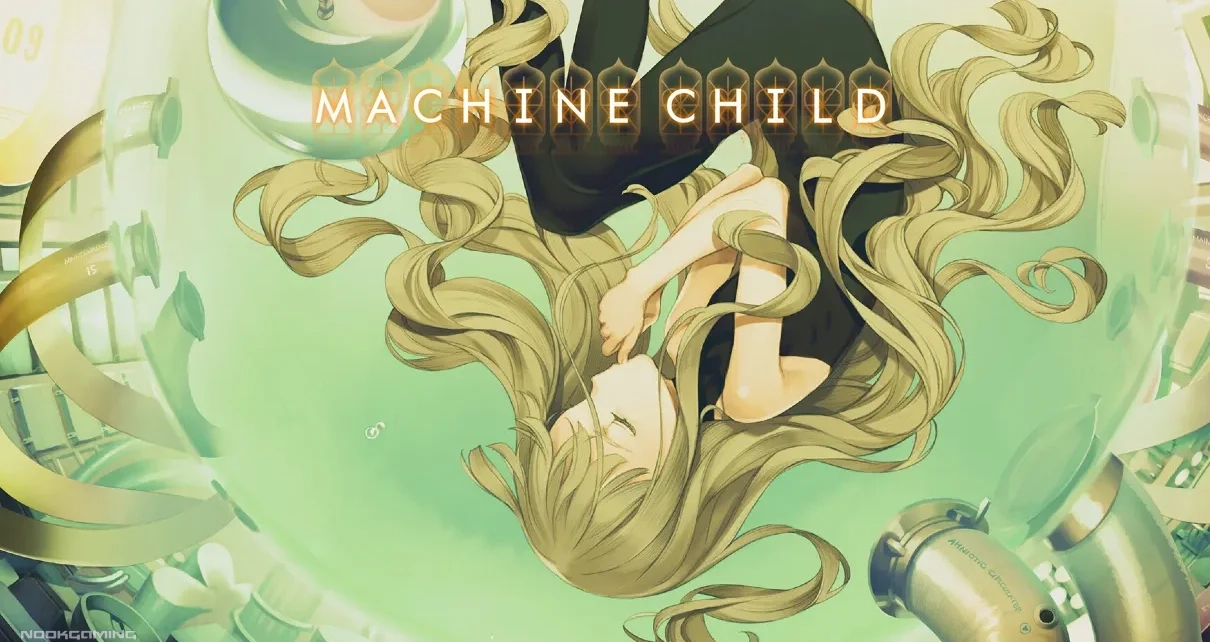
Machine Child is a raising sim visual novel produced by the artist Ooyari Ashito under the circle name Shoujo Kishidan, initially released in Japanese in 2025 and released internationally in 2026. The protagonist must raise one of several heroines as their daughter, providing them the opportunity to grow and blossom into their own person through different kinds of interactions. The game makes use of a schedule-based system that measures progress throughout “weeks” with stamina as a limiting resource, encouraging careful planning and familiarization to achieve specific in-game goals.
As a player who usually strives for 100% completion when going through different kinds of games, hearing about Machine Child being a raising sim visual novel instantly caught my attention. I’m a fan of grind-heavy games because I like the feeling of accomplishment that comes with attaining goals in general, whether they’re in-game missions or goals I set for myself. If it’s incorporated within an overall coherent story, even better. While there are multiple examples of games within the genre that implement a similar format in various ways (such as Beat Blades from Alice Soft and the relatively recent Sickly Days and Summer Traces), there’s a sort of balance that I feel needs to be there between the gameplay and story to keep the title engaging enough for multiple playthroughs. Whether or not they’re able to achieve that determines whether the game ends up being fun for the most part or just mostly annoying.
Assuming that Machine Child delivers on that potential, with a scenario that demands proper planning and consideration, how much effort are you willing to go through to ensure that your daughter gets a proper upbringing? It’s time to get those planners out and play the role of a doting parent as we construct our ideal Machine Child!
This review is primarily based on the full content version, which can be bought on JAST USA directly, along with a look at the censored Steam version for comparison purposes. As a note, you can upgrade the Steam version by using the full content patch.

Fatherhood as a Form of Maintenance
You play the role of a nameless protagonist who lives alone on an island with your daughter of choice. As the years pass by, you personally witness her growth into a fine young lady with various interests, preferences, and a burning curiosity towards things unknown to her. Although it still feels like yesterday that you were thrust into the position of suddenly caring for a child that wasn’t your own, the time you’ve spent together has been a great opportunity for your personal growth. It has been incredibly heartwarming to teach her various things and guide her through her early years, but there’s only so much you can do for her as a single parent. Eventually, she will have to seek out experiences for herself as she moves out of your nest. And as her father, while bittersweet, you need to be strong enough to support her journey as she blossoms into her own person.
Finally, the bells ring. It’s time for you and your daughter to move to the city of Maldia, where she will encounter different kinds of people, learn from her experiences, and make her own decisions. Your Machine Child is growing up, and it’s up to you to help her make the most out of it.

Words are an Automaton’s Weakness
Machine Child takes you along the premise of raising an artificially created child to become a proper member of human society. As the child’s father, you are given the task to basically make a schedule for your kid of who to meet, what work to do, and how they should ultimately develop as a person. Given this, the overall story of the game ends up being very segmented; each unlockable event will give either a closer look into the person of interest, the general situation within the city, or opportunities for your chosen daughter to create her own insights about specific subject matter. By the end of the story, she should essentially be primed to achieve one or multiple possible fates for herself as a character, depending on the connections she was able to build and the skills she was able to learn throughout the year. As long as you’re able to create an efficient way of engaging the gameplay loop, it is entirely possible to view all the endings for one heroine within one or two playthroughs.
While this is great news for completionists, from a narrative standpoint, it greatly undermines the presentation of the chosen daughter’s journey of growth. Because you can essentially do everything at once as long as you manage your stamina well, the storylines across characters and sectors within the setting blur together due to how short each event is. To put it into perspective, most events in a playthrough will take at most a minute to read and will only vaguely be related to each other. That’s not a lot to latch on to! Additionally, the dialogue is very surface-level as well, so most of the decisions or realizations resulting from an exchange feel cheap and orchestrated. The scenes don’t feel like convincing building blocks for the daughters’ respective character arcs, which killed my own motivation to become emotionally invested in their journey. To give a better idea of how this plays out, we need to take a look at how the text is integrated into the overall gameplay loop first.
How Do You Measure a Year?
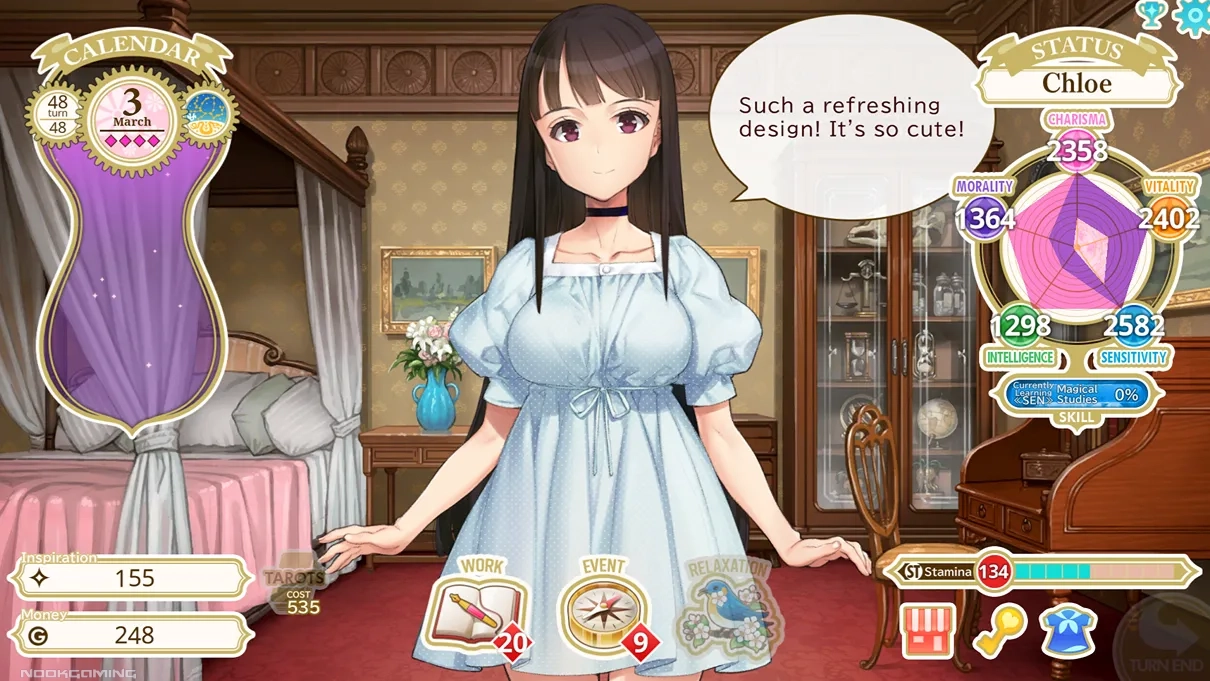
Machine Child makes use of a simple raising sim system where you are given a finite amount of resources, or stamina in this case, to schedule various activities within a week that contribute to your daughter’s overall growth as a person. This growth is measured through five specific attributes, namely Charisma, Vitality, Sensitivity, Intelligence, and Morality. Depending on how high each attribute is, you get additional bonuses from each event that positively influences her overall development by making it easier to learn skills. These skills serve as prerequisites for specific communication events, eventually leading her to one of seven possible endings. There are a total of forty-four (44) skills your daughter can learn within a playthrough’s forty-eight (48) week (roughly a year in-game) deadline, incentivizing good decision-making through proper sequencing to unlock as much content as you can each run.
Interestingly, instead of a growth system that uses fixed stat amounts per activity, Machine Child makes use of an RNG system that randomizes the final amount gained per attribute after each work, training, or communication event. This is presented via a slot machine that rolls prizes during the results screen, which honestly, is a pretty adorable design choice. The type of attribute that will be increased and the possible range of values is indicated using icons on an activity’s landing page, making it easy to discern what their contribution is to the current playthrough. To help smoothen the process even further, there are various activities that provide beneficial effects and utility items available to purchase through the in-game shop using gold earned from working. The effects range from simple stamina replenishment to rigging the slot machine mechanic to increase the number of possible bonuses gained from end-of-activity rewards, making it easier to learn core skills for story progression.

Overall, the gameplay loop is endearingly simple. Most of its aspects can easily be understood by players because of visual cues such as the color they’re associated with, but even disregarding that, there are a lot of available quality of life options that soften the repetitive process by skipping over small animations to save time and indicating which scenes have yet to be viewed by the reader. The character relationship sheet, their associated faction’s reputation system, and the event map for character endings are also easily accessible through in-game references, which makes planning a lot more convenient. It doesn’t require a lot of brainpower, making it a pretty enjoyable pick for a relaxing gaming session. There are, however, some aspects of it that I wish were a little bit different to make the system a little bit more interesting or easier to navigate.
For starters, the five attribute system, beyond serving as flat increases to stat gain and skill learning modifiers, do not actually do much in terms of developing the heroine as a character. No matter how much charisma your daughter may have, her interactions with other characters will be unaffected, retaining the same text that previous iterations of the event have had. The game acknowledges this by labeling these as “common events”, which means that regardless of the daughter chosen for the run, the same lines will be used. It’s a little bit disappointing to be missing variations in this specific aspect of the game.
Another frustrating thing I encountered was the limited number of communication events you can view at a time. Despite having well over thirty (30) activities to choose from, I can only choose amongst the first seventeen (17) or so that are listed, which inadvertently masks other events that might be inaccessible after a certain point in the playthrough. It’s a little bit annoying for completion, especially since the game does take the time to provide you with an overall look at how many events you’ve yet to view through the Gallery. I wish there were a way to view another page of activities, or at least, filter the currently displayed list better.

Parts and Pieces of One’s Life
Returning to the original point regarding the story, because of the relatively flexible progression system Machine Child has, the narrative feels more like a collection of short, adorable events featuring simple interactions between your daughter and the people around her. So if you’re looking for an engaging, consistent story to read from your next visual novel, then this title probably shouldn’t be your first choice. It’s a raising sim first and foremost, with lots of small sections featuring short dialogues serving as flavor text for progression. There are barely any stakes, making the game seem more like a comfy feel-good product that you pick up just to pass the time. Almost no commitment necessary!
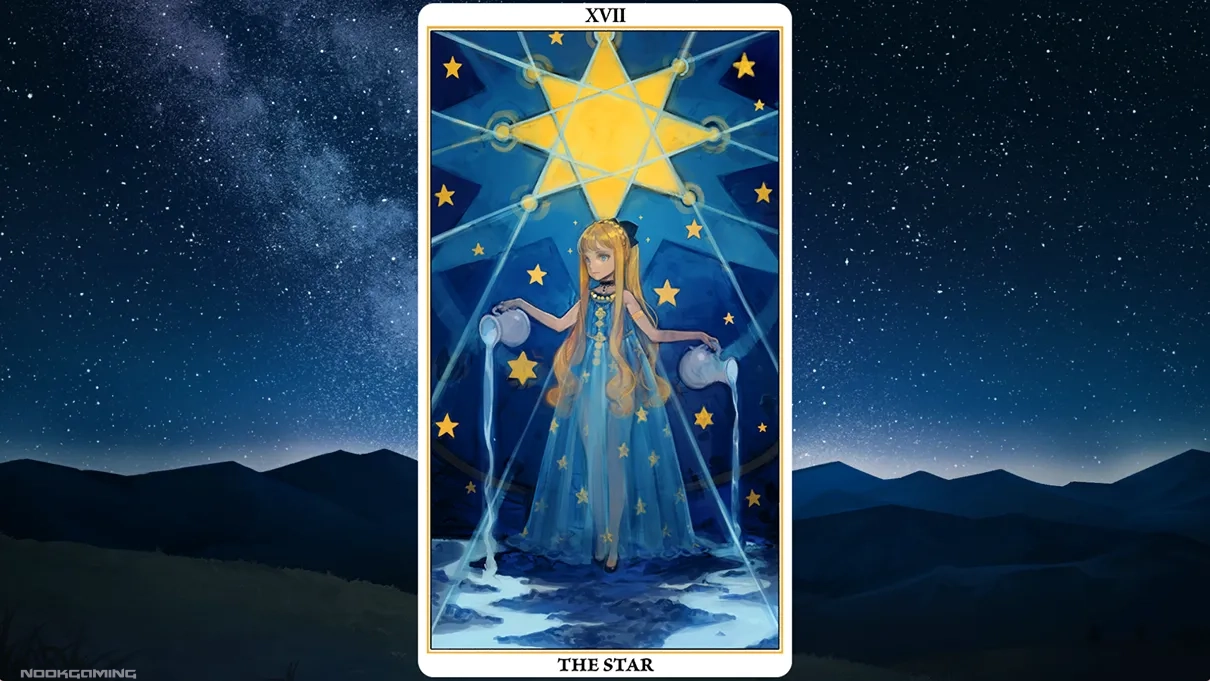
Despite this, there are aspects of its narrative progression that I felt were really good decisions to implement design-wise. Regarding each ending, there are a set of events players can read that form a short, coherent storyline detailing your daughter’s journey towards one of her possible fates. Although the main gameplay loop is full of random, unorganized communication events that you can choose to engage with at your own leisure, the ending-specific events are straightforward and consistent with the prerequisite events’ themes. To further characterize this, each ending uses a specific Arcana as its motif, with accompanying quotes that feed into that path’s main theme. It does end up feeling largely shallow because of how short the actual route’s text is, but it still is able to present the end of your Machine Child’s journey in a pretty cinematic way, almost as if you’re going through an album of memories. Ironically emotional given the game’s narrative shortcomings.
This does present a particular question: if not the story, then where does the satisfaction or accomplishment mainly come from when progressing through the game?
The Girl, the Father, and her Wardrobe
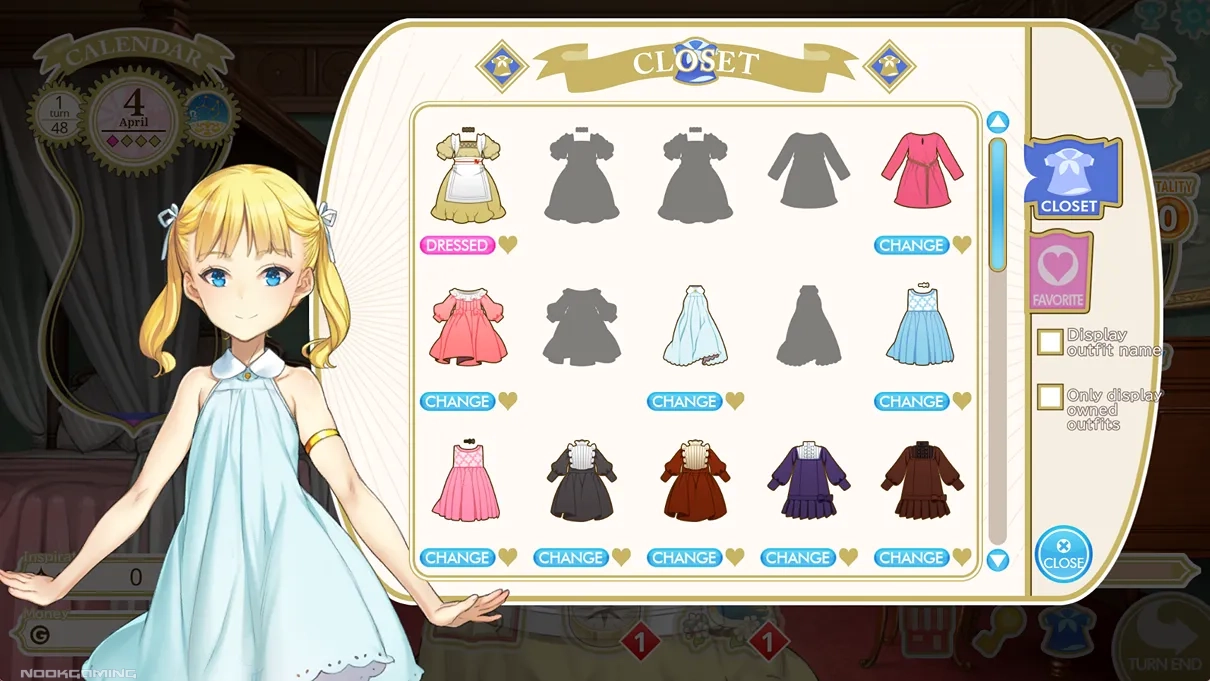
There are probably two main drivers for people to continue playing Machine Child: achievements, of course, and clothes. Going into the game, one of the most interesting sales pitches it had was the ability to freely choose which outfit your daughter should wear as she engages in the activities you prescribed to her. These outfits can range from anywhere between a proper sundress you wear to Sunday mass to swimwear that seems like it got produced during a global cloth crisis. Funnily enough, while some events do put you into a specific set of clothes to preserve the atmosphere of an encounter, choosing to make your chosen daughter wear these outfits during her activities almost makes her look like an exhibitionist from the player’s point of view. If you want to immerse yourself within the game’s setting, choose your fit carefully!
It is a bit disappointing though, that aside from the outfits sold in the shop, the only way to procure more outfits is to luck out on boutique tickets from the reward screen’s slot machine or to meet criteria that trigger events that unlock secret clothes. Both are incredibly annoying to set as a goal within a playthrough because of the general lack of information or the random chance associated with it. Without an internal saving mechanism, it feels pretty unrewarding to repeatedly do trial and error, which is honestly pretty bad for encouraging replayability. Add that to the unskippable transition screens, and it becomes a pretty big time sink with not much to offer in terms of returns after a heroine’s first playthrough. If there were an in-game way to know which ones are missing and the criteria necessary to meet them, it would make the game a whole lot better.
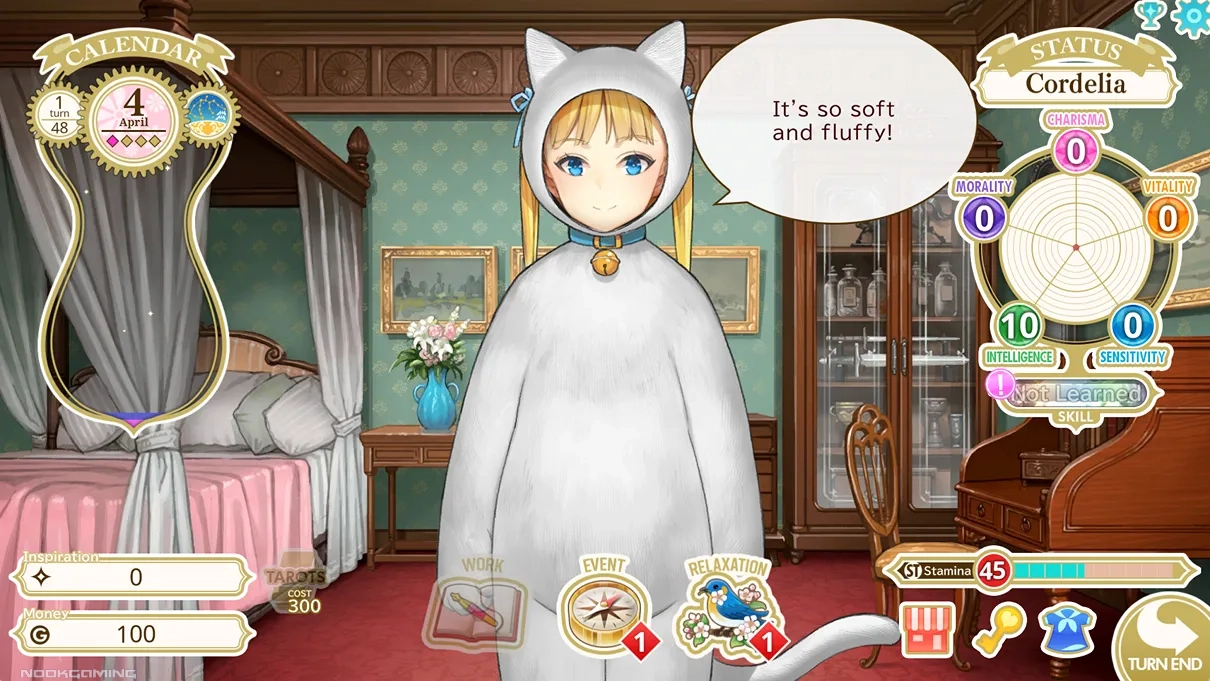
As an aside, the outfits are also the main difference between the game’s censored version on Steam and the full uncensored version on JAST. A lot of the original outfits are actually pretty skimpy, and given that there are multiple shots where the heroines are almost fully naked, it’s understandable that there would be an alternative version available in the market for people who prefer less skin showing. If you like animal-themed outfits, you might want to play the censored version instead, as most of the content remains intact anyway, despite the obvious change in the girls’ wardrobe. But for the intended experience, definitely get the full version! Witness the full depth of Ooyari Ashito’s artistic prowess!
Art and Music
Machine Child has a total of 47 CGs spread across its cast of heroines. Most of them are unlockable through specific types of events and the unlockable endings within each playthrough. Additionally, the game also has a total of 201 unlockable outfits, which makes sense given how heavily they’re featured as part of its main appeal. Machine Child is produced by the group Shoujo Kishidan, a label associated with the well-known artist Ooyari Ashito. Their distinctive art style and approach to drawing cute heroines makes their work easily identifiable through titles such as Little Witch Romanesque, Eiyu*Senki, and the recently released Lilac. Alongside the very impressionable designs of the daughters, the realism that they employ when designing background characters bleeds into the attention they give to details in outfits, which I feel this particular title features really well. It is, however, a little bit disappointing that the other characters you meet throughout the story do not have sprite variations. It makes the game feel a lot more static than I’d like it to be.
As for the music, I really like the vocal adlib style they made use of for the background tracks. It creates a very lively atmosphere for the game, which honestly, given that it’s a story about raising your kid, feels incredibly fitting. There are multiple tracks that make use of the style while featuring soft, jovial high notes, which are pretty comfortable to listen to even on loop. My only critique is that the actual number of unique tracks that play across the game feels very limited; after a few playthroughs on the same character, you begin to notice that Machine Child only really shuffles through a small selection of music. It’s not exactly unpleasant, but having a few more songs to use would greatly reduce the generic feeling most of its events have.

Verdict
Machine Child is a raising sim visual novel that features a cast of cute daughters that readers are given the opportunity to dote on as they accompany them through a critical year of personal growth. The game, through its simplistic gameplay and easy-to-understand mechanics, offers a relaxing time should you give it a try. Although I find the narrative too segmented to properly appreciate its implied continuity, the mini-episodes that lead to any of the heroine’s seven possible endings were concise and weirdly emotional despite the very limited format in which the text is implemented. But for most of the game, the text feels too shallow in its progression that it’s a little bit hard to enjoy, despite the relatively interesting social dynamics it tries to discuss.
When it comes to visual presentation, however, the game is well supplied with beautiful art from Ooyari Ashito housed within an adorable UI layout that just oozes cute. There’s also a healthy mix of fashionable and skimpy outfits for each heroine that are exciting yet equally frustrating to try to collect until completion. This pretty image does come at a cost, however, as many of the cute screen transitions related to the gameplay loop do artificially increase the length of every playthrough. It makes it a little bit unappealing to continuously replay, especially considering that missing items might be gated behind unpredictable RNG mechanics.
If you like grindy raising sims that mainly revolve around cute girls doing cute things regardless of whether or not there’s an overarching storyline, then Machine Child might be a game for you. The in-game achievement list and available outfits make for a good challenge, whether it be to figure out the most efficient way to unlock everything or simply help you to stay sane as a minor mistake costs you your entire run. Just be careful about its lack of a save system; it’s pretty easy to lose hours of progress by misclicking important buttons. Not all button prompts are created equal, after all!
WAIT FOR SALE ON MACHINE CHILD

Purchase: JAST USA
If you are looking for another title with simulation gameplay, you may enjoy Galaxy Princess Zorana or Forestia ~Farm Life in the Country~. We have also covered a wide variety of visual novels both original to English and localized from Japanese, which you can check out here.
Many thanks go to JAST USA for a PC review code for Machine Child.

Visual novel reader that wishes there were more than 24 hours in a day. Gacha victim, TCG enjoyer, and VTuber simp. Still trying to live happily.