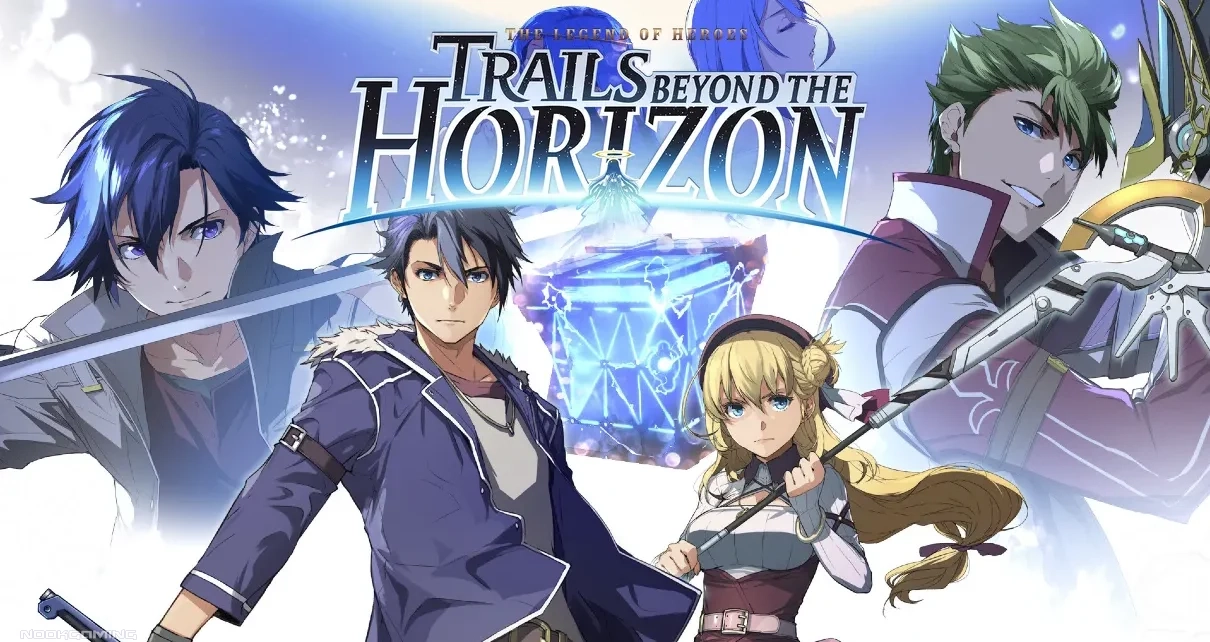
The latest of Nihon Falcom’s Trails series to be localized is finally here! The Legend of Heroes: Trails Beyond the Horizon (Eiyuu Densetsu: Kai no Kiseki) is the third Trails title of the Calvard arc of the games. This title seeks to build towards a bigger, grander chapter that’s been coming together over the previous few Trails games.
What’s In The Box
The Legend of Heroes: Trails Beyond the Horizon is another installment that brings back characters from previous arcs to share the spotlight with the current arc’s main crew. I usually do my best to refrain from spoiling series character reappearances, and while I’m still keeping them at a minimum here, it’s hard to do so completely when a couple of them are on the cover of the game. There won’t be explicit plot spoilers here of Daybreak I and II nor Horizon itself, but I will mention a couple of peripheral details tying several games of the series into Horizon, as well as talk about mechanics.
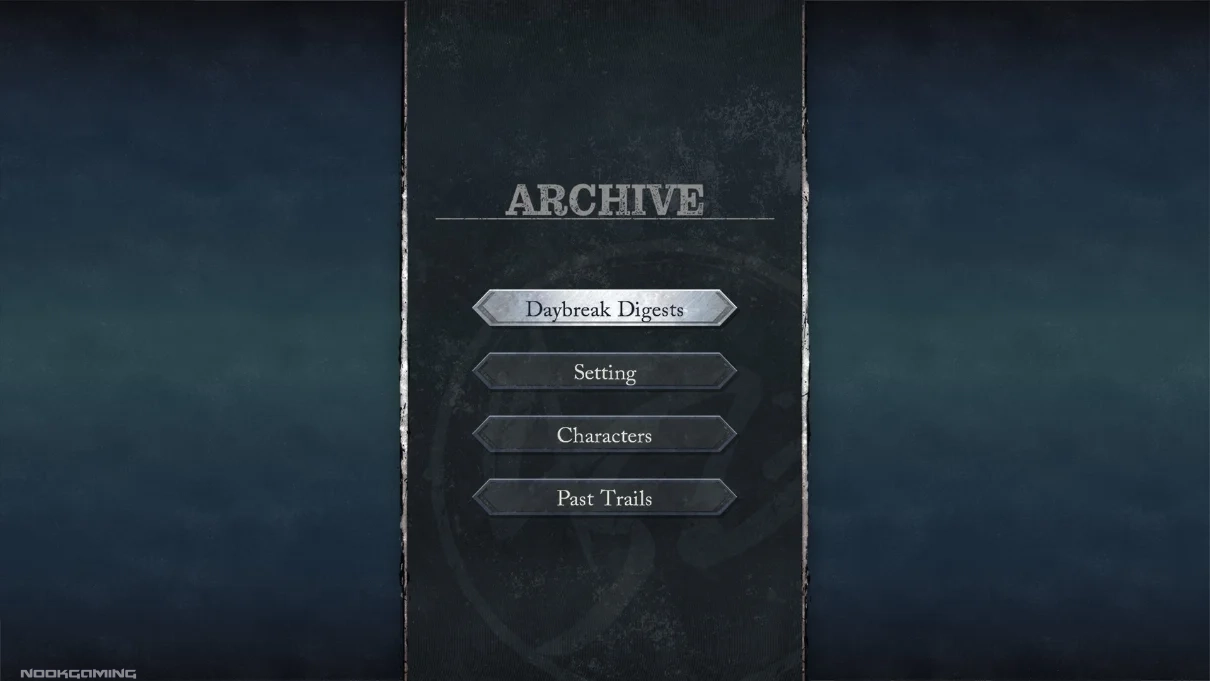
This game is happy to spoil the events of the previous two Daybreaks as well as various parts of the series. It has the usual archive full of info about the world, synopses of previous games, some short videos on the stories of Daybreak, and brief bios of the main crew. All told, it’s not a lot, and probably better serves as a refresher for veterans than a tool to catch newbies up to speed. But it’s there if you want it. If you decide to take the twelve-game leap from Sky 1st Chapter to this, expect it to be very jarring for many reasons.
Calvard, Take 3
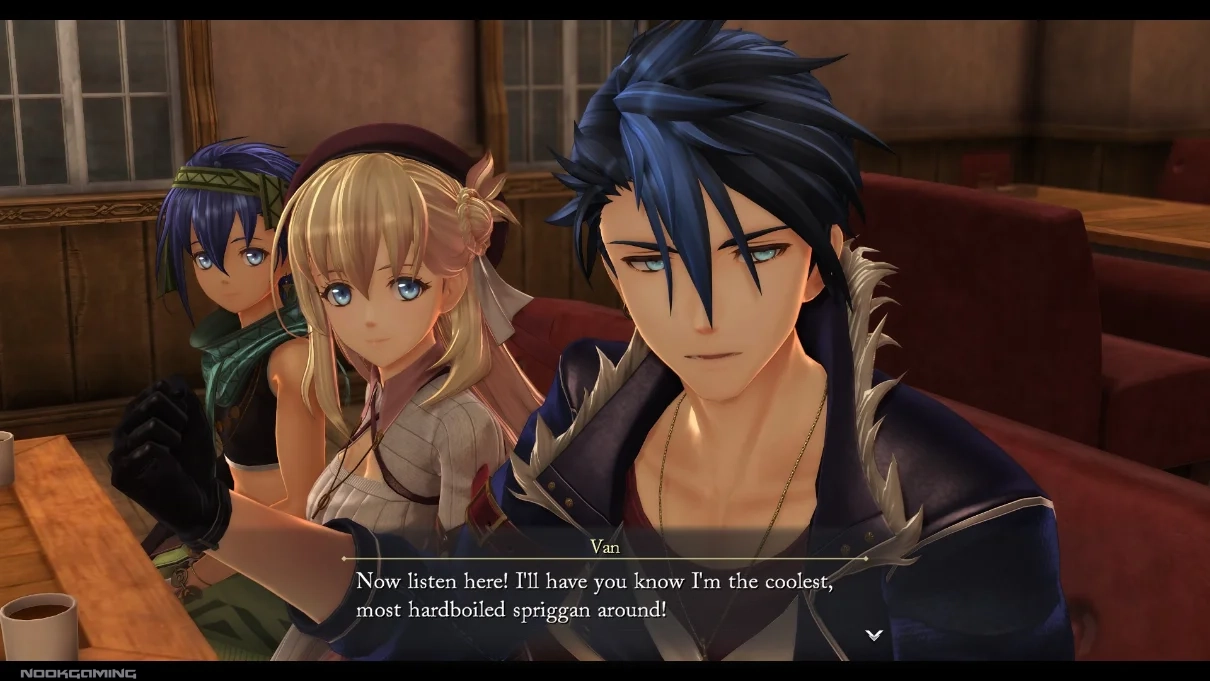
Once more, you primarily take the role of Arkride Solutions, a company headed by the car and sweets-loving uncle Van Arkride, who takes on jobs that operate in more of a grey area than the police or the series’s recurring NGO Bracer Guild. You go around various parts of the country of Calvard (especially the capital of Edith), solving complicated and strange jobs. If that sounds like the same thing as the last two games… you’d be correct. Despite not being a Daybreak title in name, Horizon largely functions like one, especially given that it looks and feels the same and runs on the same engine.
The Legend of Heroes: Trails Beyond the Horizon takes place over a rather condensed period of time due to an impending grand event, namely the launching of a rocket into space. This launch is scheduled not far from a fated point in time referenced at several points in the last few games, which means a lot of the game is centered around that day. In spite of this, so much of the experience of playing through Horizon is the same old, same old. Frankly, as someone who has played through all fifteen games in this series to this point (if we count Ys vs Trails in the Sky and the Sky 1st Chapter remake), this is some of the most stale it’s ever felt. The tone of the game doesn’t really match the condensed timeline throughout its first couple of acts, and you’d be forgiven for mistaking many of Van and co.’s sections for parts of Daybreak II or even Daybreak I if you removed the nameplate. For as long-winded as previous Trails arcs could be at times, they never quite got to the point where three games in a row felt so similar for so much of their runtime.
Usually, I have quite a bit of praise for the members of Arkride Solutions, as they make for a pretty fun bunch. And while they still have plenty of banter and enjoyable scenes, they start to feel a little bit stagnant in Horizon, with several members having most of their development in the previous two titles. Risette and Agnès get a bit of time in the spotlight here, and while these are welcome and especially necessary for the former, they don’t move the needle a ton on how I feel about either character. There’s also one relatively new “addition” to Van’s team in this game, but her plotline feels a lot like a rehashing of one that we’ve seen in some form two (arguably three) times in this series already, with said characters also all appearing in this game beside her. She also lacks that truly definitive scene the others had that made me resonate with their characters, so like a great many parts of Horizon, I just feel they already did it better.
Knight and Bishop
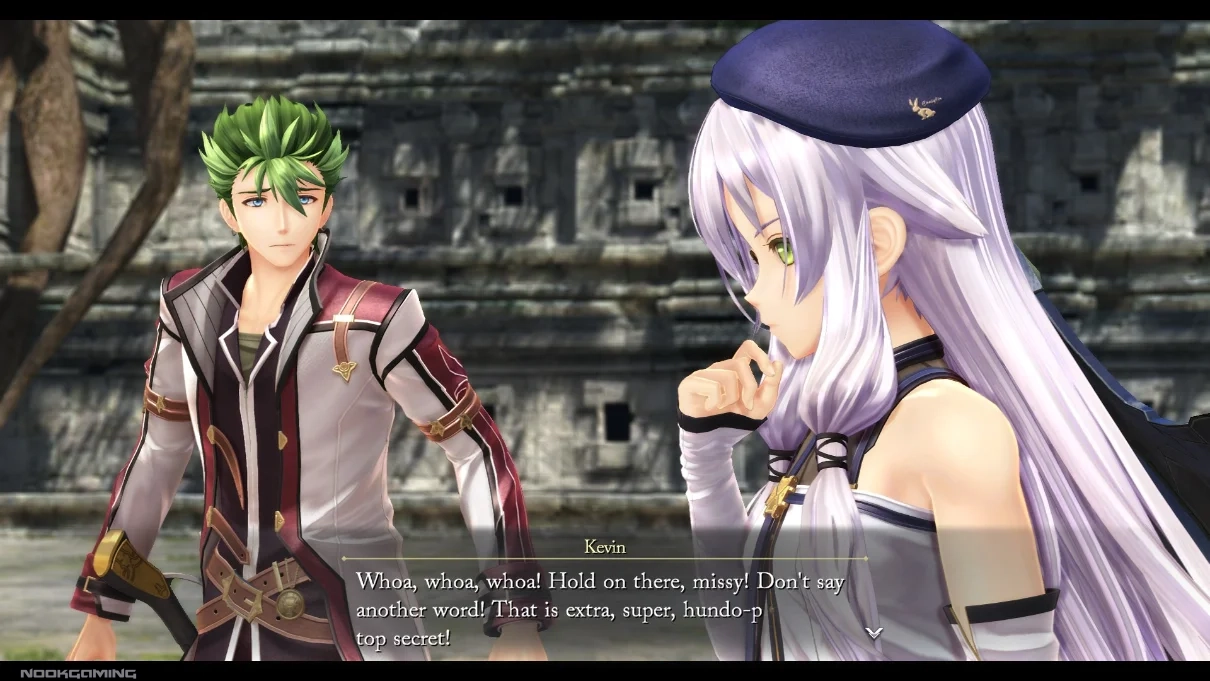
Similar to Trails into Reverie, The Legend of Heroes: Trails Beyond the Horizon features three main parties you switch between, each off in separate parts of Calvard. These other two are led by two protagonists of series past: the somewhat shady elite priest Kevin Graham and the famed hero of the Cold Steel games Rean Schwarzer.
I can’t say I’m especially fond of them splitting the game up like this for a few different reasons, particularly on the Rean side. Regardless of how I feel about him as a main character, there are a share of issues with his appearance in the game. Rean and company have each had a rather exhausting five games at minimum to this point, and while there is a bit of enjoyment in watching them all live their adult lives long removed from their student days, they really don’t bring much else new to the table. It feels more like fanservice than a substantial boon.
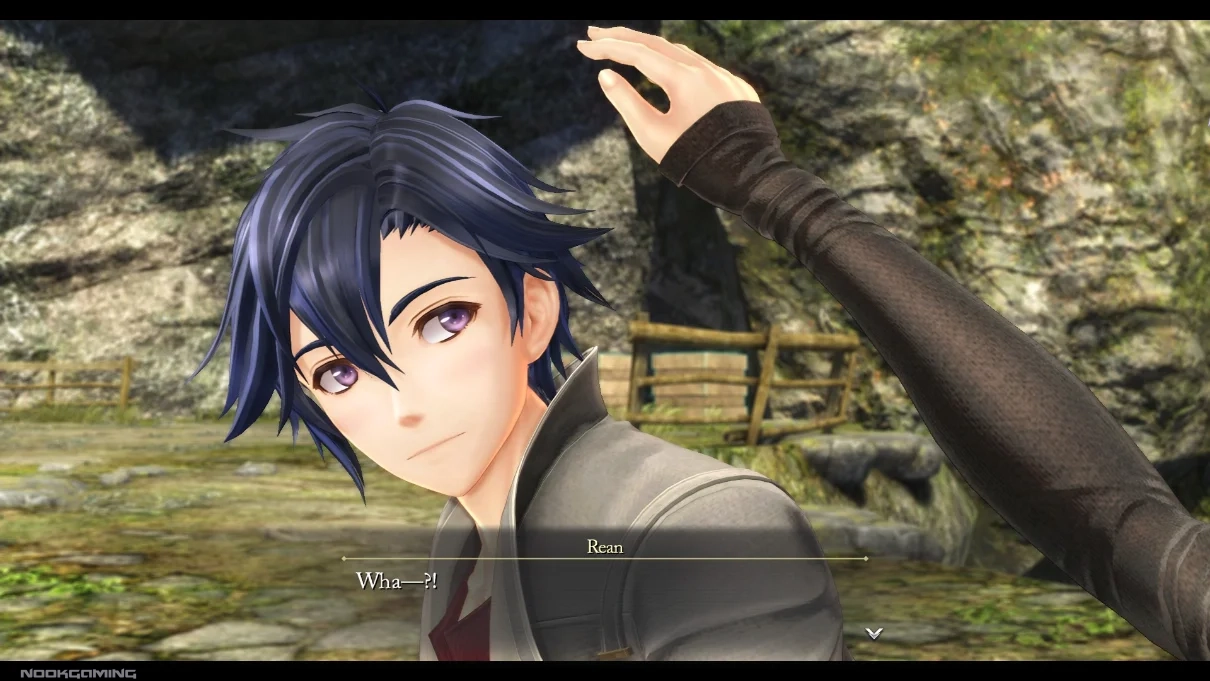
There are several areas in which they feel quite out of place, such as with a few side quest choices. This game also feels like it has to operate be agnostic of what you did in previous games in many spots, which is unrewarding as a series fan. A perhaps amusing example is how much the decision to have player-chosen romance options in Cold Steel looks worse in hindsight, given that several of Rean’s romance options are in Horizon and the story operates unaffected by the choices you might have made in those games, even in scenes that feel like they have potential for a tender moment.
Bringing Kevin back makes a bit more sense on paper, as he’s been one of the least explored protagonists thus far, and he fits a touch better into the narrative conceptually. He shares much of his story with the crew of Team C (aka the Picnicking Front) from Trails into Reverie, and they’re fun as always… when they’re there. Alas, this group ends up with less overall screen time than the other two despite having some of the most interesting pre-Act 3 scenes. There’s also a share of dialogue that feels like it somewhat undercuts Kevin’s character development, and the presence of the Picnickers doesn’t add as much to the game as I would hope for, despite still having their amusing banter and their more shaded pasts.
To Battle
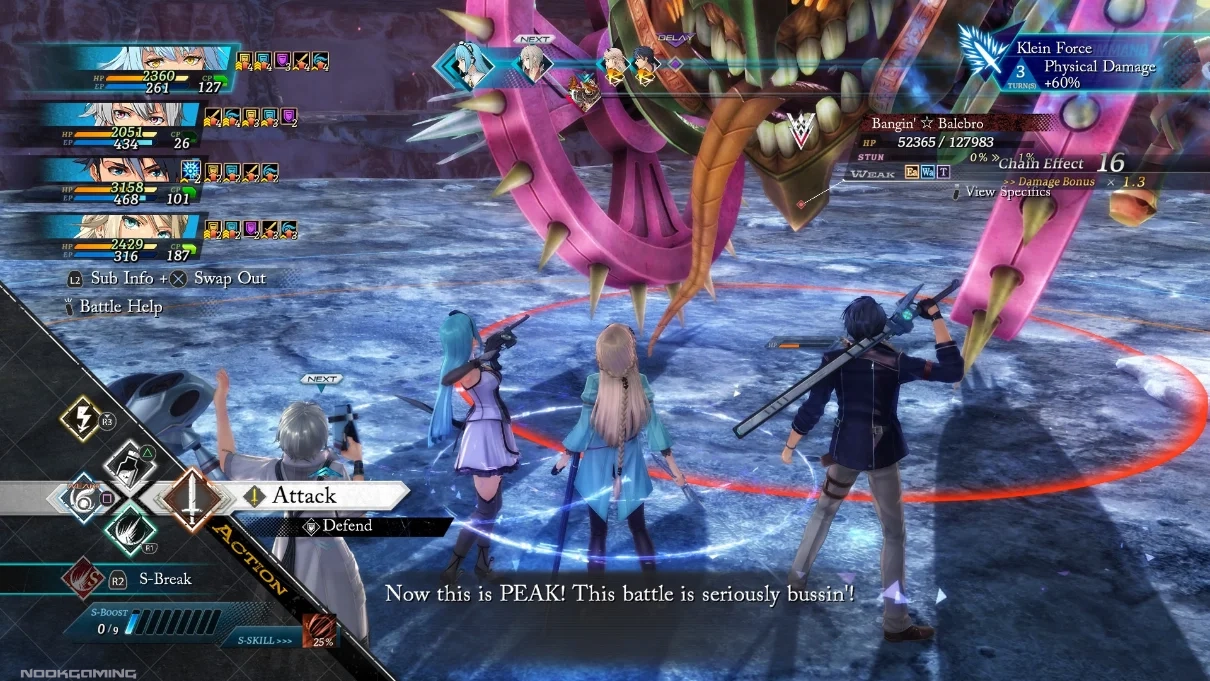
Combat in The Legend of Heroes: Trails Beyond the Horizon is like that of Daybreak I and II. You alternate between Field (real-time action) and Command (turn-based) combat, with most bosses being the latter. Like with the rest of the series, you have arts (elemental magic) and crafts (special skills), each of which use their own resource (EP for arts and CP for crafts). You can also build up the Boost meter by attacking enemies and getting hit, which allows you to use special S-Crafts for 100 craft points. These can interrupt the turn order and raise your maximum Boost gauge for the current battle. Enemies can be stunned for a few turns to take additional damage, and boosting enables EX Chains for even more damage.
There are a few additional mechanics to combat this time around, some minor and some major. Even with these additions, I still find Field combat just feels like a poor man’s version of what you’d find in Nihon Falcom’s other Action RPG offerings such as Ys. Though you have more options now than you did in the first Daybreak, the mechanics feel barely a hair more engaging than simple button-mashing. Most encounters are very easily avoided, so enemies on the overworld seldom pose a significant inhibitor to progress in any way.
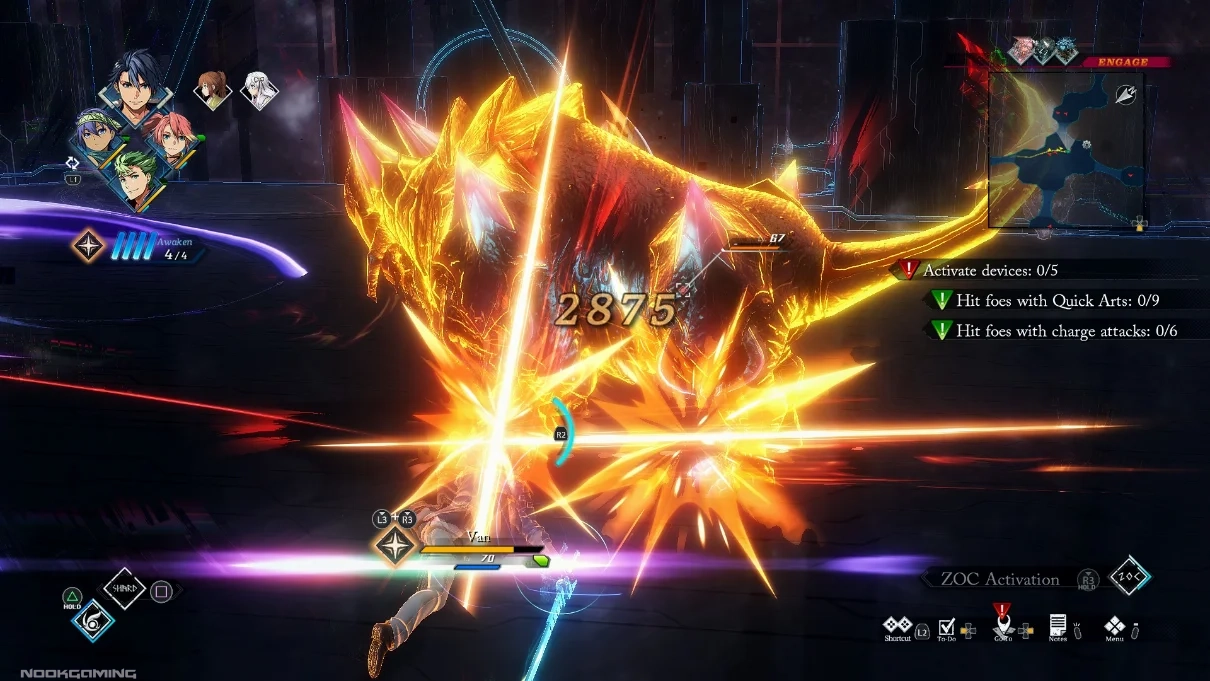
In Field combat, you can temporarily slow down time for a bit with a mechanic called ZOC, something which sounds cooler than it is to actually play with. Some characters can activate an empowered state that allows them to mindlessly shred through even the more powerful enemies on the field at the cost of your Boost gauge, a resource that already doesn’t have much other purpose in Field battles. Even if you end up getting knocked from a Field battle into a Command battle by a non-boss enemy and end up getting a game over, hitting the “retry” button after wiping just heals you back to full in these cases, so there’s not really any stakes to this part of combat.
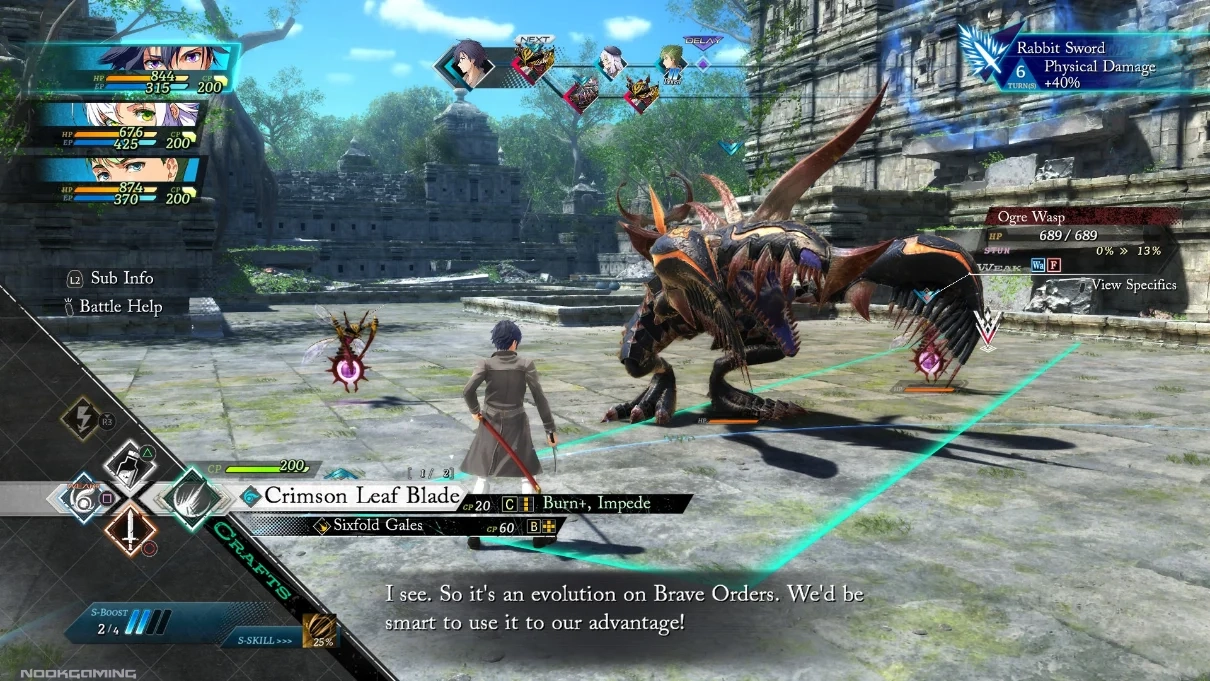
Command battles are the way most boss fights happen, and I still find them generally more fun than Field battles. There’s a new mechanic called BLTZ which augments your characters’ actions in battle, though these seldom altered my battle strategy. ZOC can also be used in Command battles by burning some Boost meter for an extra action on your current character. It’s an interesting mechanic for which I found plenty of use in a variety of situations that didn’t feel entirely game-breaking. Though I think much of the reason I didn’t use it more is because there’s a more potent use of Boost besides ZOC and arguably even S-Crafts: Shard Commands.
Orders and Commands
Shard Commands are just Brave Orders from Trails of Cold Steel III through Reverie by another name. During your turn, you can give your squad a buff that lasts for a certain amount of party actions that doesn’t cost a turn to activate. These are as much the same sort of game-warping feature creep as they’ve ever been, completely centralizing the game around them in a way that just isn’t all that fun. Even on Nightmare difficulty, the game simply does not feel like it pushes back very often when you can reduce incoming damage by 70% to 90% for effectively the entire battle, in most instances. By using the Boost meter rather than their own resource like Brave Orders did, you can keep Shard Commands up simply through attacking and being hit (which at 90% damage reduction is usually for very little damage).
The vast majority of instances where a boss actually posed a threat were because the boss was able to perform an Anti-Command (a lingering debuff that overrides your active Shard Commands). Using another Shard Command overrides these (at the cost of more Boost meter), so it sometimes just came down to turn order luck whether I would be able to quickly override the Anti-Command in time to respond. This might make for a nasty surprise once in a while, but the frequency of this mechanic makes boss fights considerably binary between bosses that do and don’t have Anti-Commands. The ability becomes less interesting when bosses frequently put you in a sort of tug-of-war when they have a button that disables a core mechanic of the game. The very rare bosses that were tough even with Shard Commands active who didn’t keep shutting them off were fun, but these were few and far between.
Even if I didn’t dislike Shard Commands or the Brave Orders they replicate, the mechanic feels like it’s become simpler here than in the previous titles. The vast majority of them are just percentage increases to damage, reduction of incoming damage, or an increase in speed. There’s less variety than there was even when they debuted in Cold Steel III, despite how powerful they are, which further leaves their inclusion feeling half-baked.
Grim Adventure
The Legend of Heroes: Beyond the Horizon doesn’t have quite as much side content as some previous entries, which is a touch disappointing. Staples like fishing and cooking are there, and you can play in one of the few casinos in gaming history that is actually rigged in favor of the player. There’s nothing standout or elaborate like Pom Pom Party however, and even the basketball minigame from Daybreak II is only kind of there.
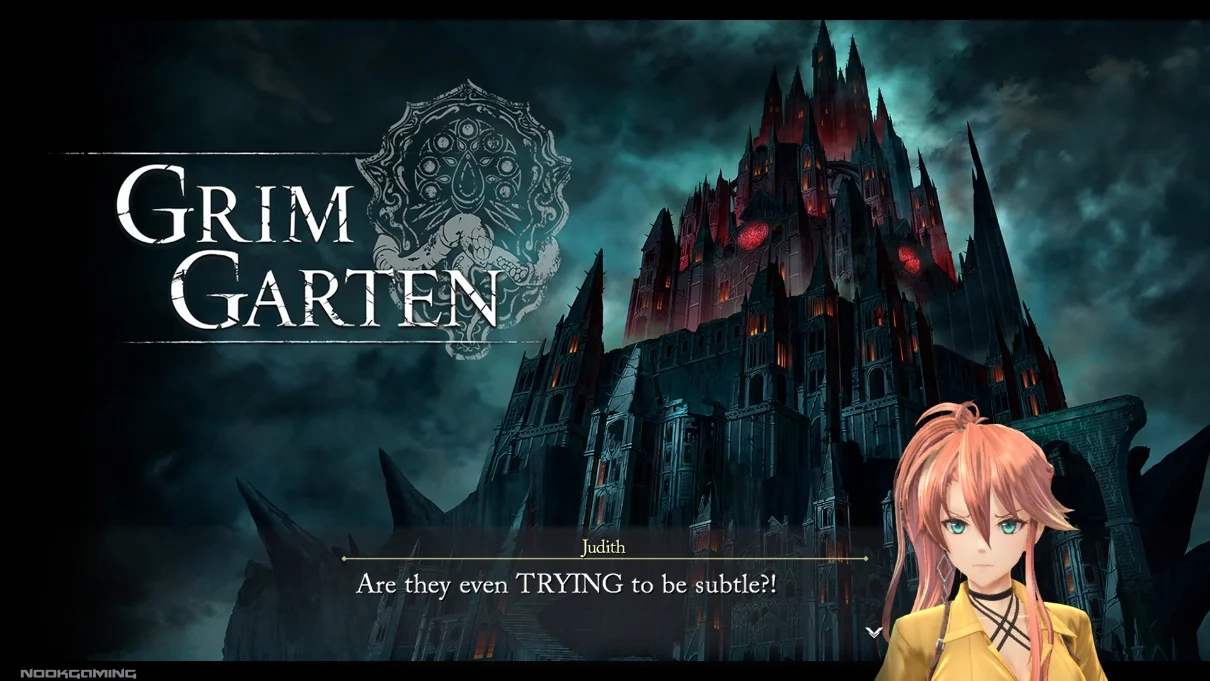
The big piece of side content for this game is the Grim Garten, which you have to do some of during the story of early on, but is largely optional the rest of the way. This area is a more spooky-themed version of Marchen Garten from Daybreak II… which was itself a weaker version of True Reverie Corridor from Reverie, which was a variation of Phantasma from Trails in the Sky the 3rd, to really reinforce how frequently this idea has been done. It’s been a bit more streamlined, but its segments largely play the same as Marchen Garten. At least it follows the True Reverie Corridor inasmuch as you can see various little fun interactions between party members of different groups whenever you go in, and it lets you mix and match party members from different groups to explore areas and fight enemies to earn shards.
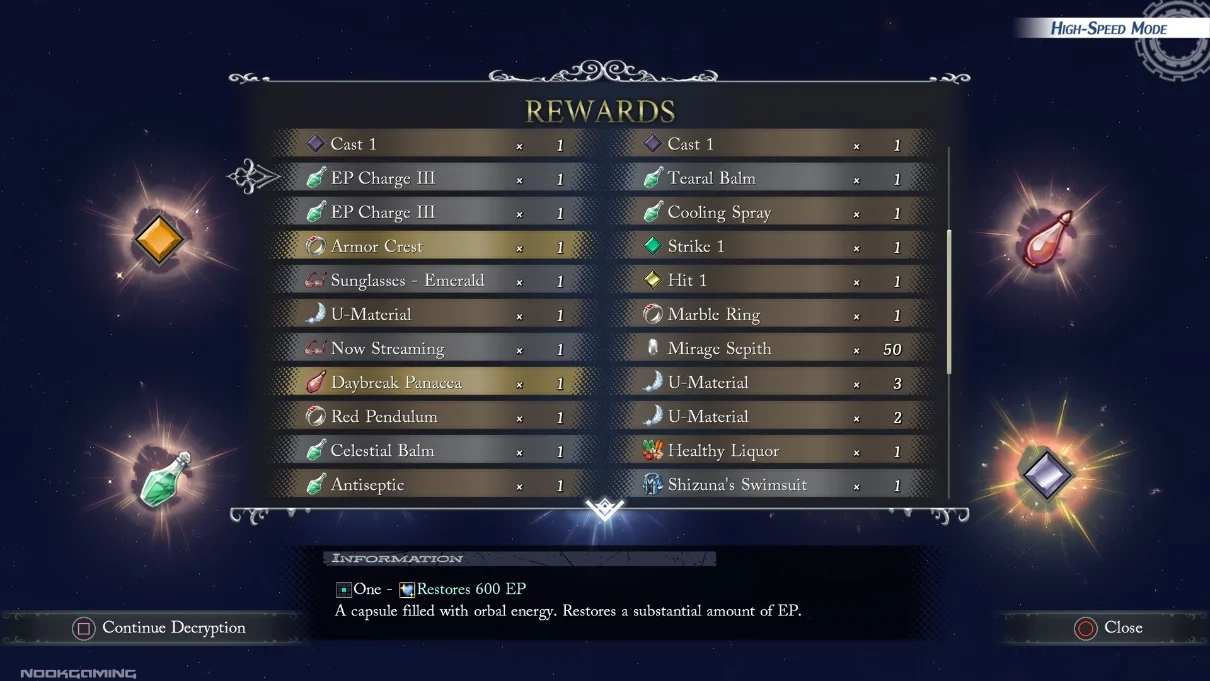
You can once again exchange shards you find for a randomized pile of rewards, though like Reverie it tends to just load up your inventory with weak stuff you’re never going to look at instead of rewards that actually feel especially earned. It can also, however, give you fat stacks of items that are sometimes far ahead of the curve, such as dozens of revival items that restore more HP than your party will likely have for at least ⅔ of the entire game.
Like with the two Daybreaks, Horizon also has a number of bonding scenes (called Connection Events) with the supporting cast that you can witness while running around the various towns. In previous games, you wouldn’t be able to view all of them in a single playthrough without reloading a save, but the Grim Garten can give you items that let you watch missed connection events. It’s quite nice that they let you do this because many of the best and most emotionally compelling scenes in the entire game are found in these Connection Events, and now they’re no longer missables. Frankly, I’m surprised some of these were even optional given how important they are to certain character and story events. There’s also a share of side story memory scenes you can unlock in the Garten that reveal details about certain peripheral characters, somewhat like those of the Doors in Sky 3rd and Daydreams from Reverie. These fill in a few gaps, but mostly focus on characters beyond the main party and aren’t as in-depth as games past.
Brass Tacks
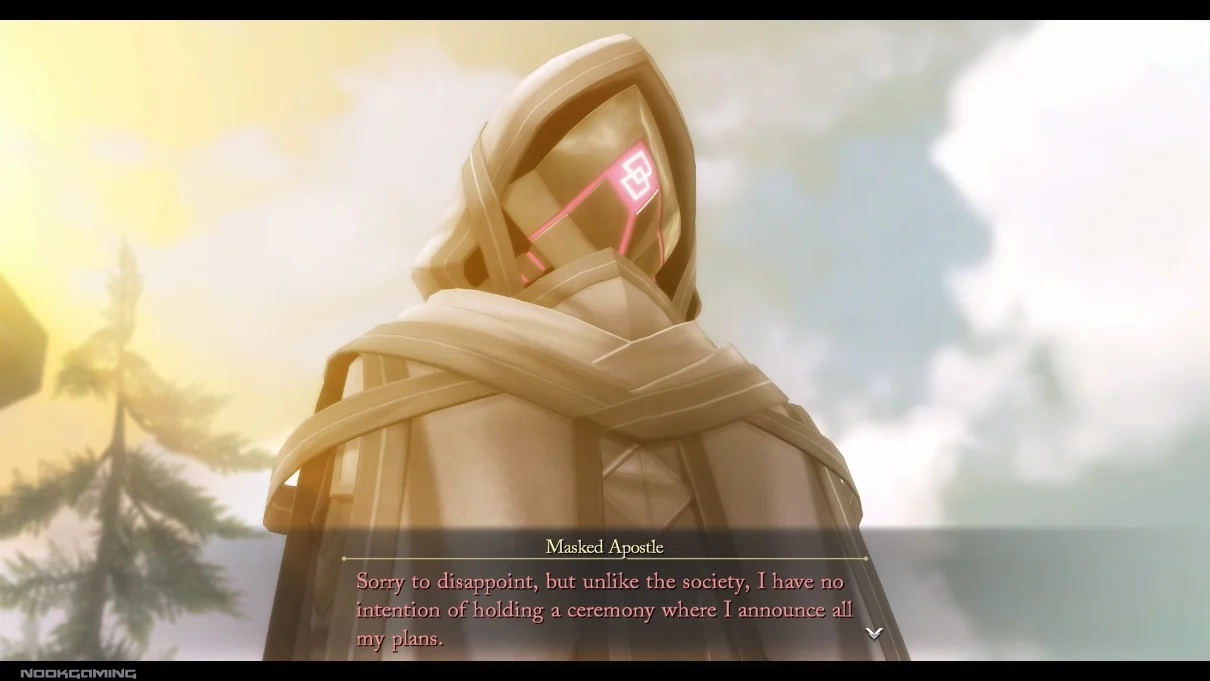
With an important event looming over The Legend of Heroes: Trails Beyond the Horizon, one would hope that things would finally get moving forward in the overarching plot, especially given how little progress was made in Daybreak II regarding the series’ overarching narrative. Sadly, this game takes probably an act too long to actually get there. There’s a lot that still brews in the background, the most interesting of which is the threads of a major conspiracy that seeks to shake up the foundations of the entire series, but you’re otherwise given little more than breadcrumbs of this until the game’s third act. Until that point, there are a lot of the same ideas you’ve come to expect if you’ve played this far. Oh noes, mind control/cults/masked villains, haven’t seen that several times over! And that’s not getting into the new villains of existing factions offering little of interest beyond their respective boss fights.
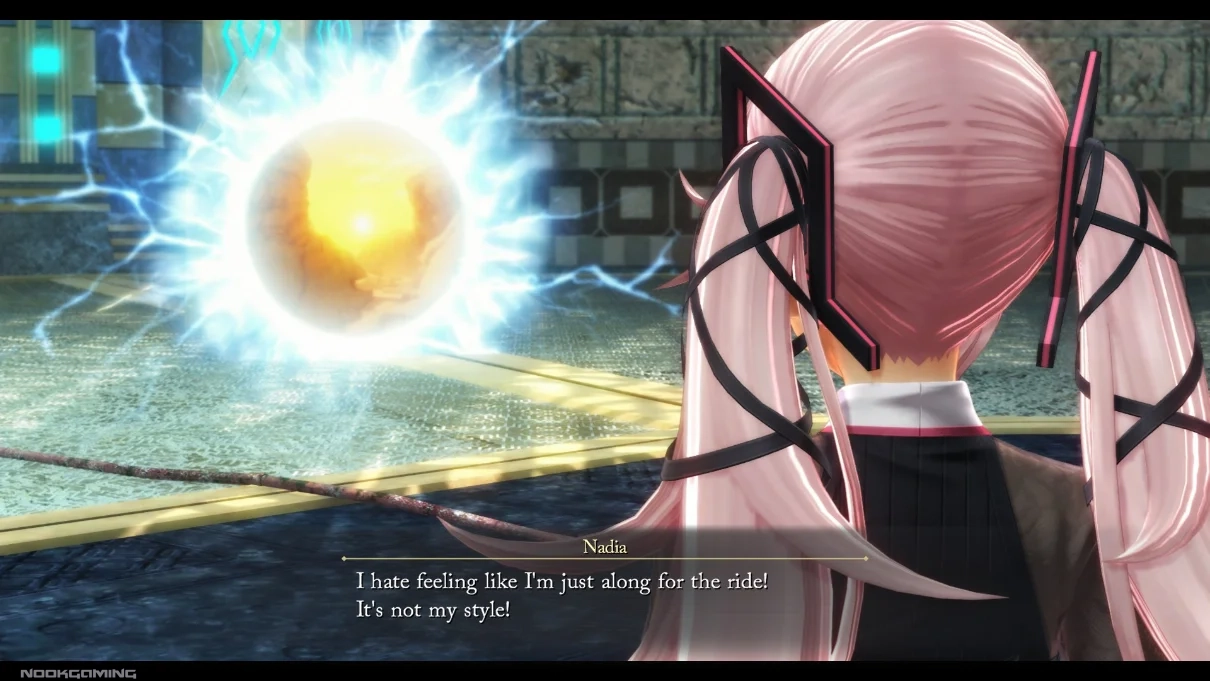
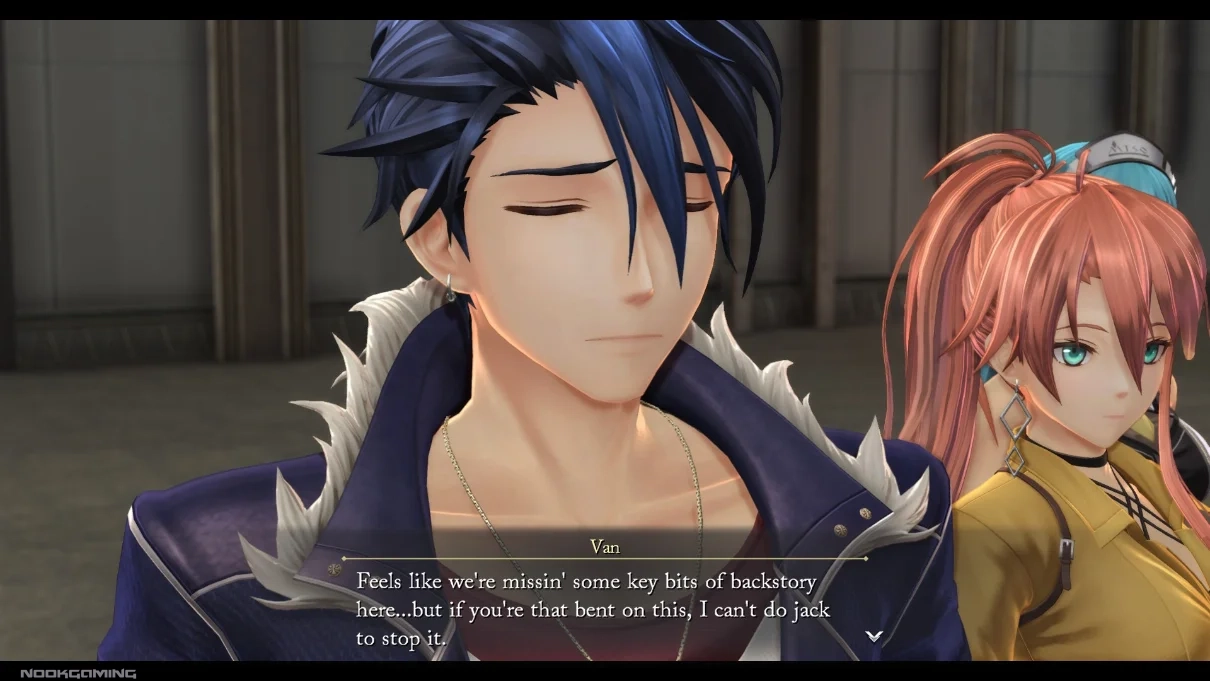
The narrative struggles to be convincing or compelling regarding either the scheduled launch or the buildup to when it happens. A whole bunch of characters clearly know something about what’s coming, but they’re not going to let you in on any of it until the designated time, no matter how much Van asks. Many encounters with villains in the early acts boil down to them introducing themselves, you fight them, and then they leave after they hint at or reveal upcoming plans. This has admittedly been a problem in even some of the series’ best entries, but it’s practically a running joke at this point, and the villains of this game have less to offer than maybe they ever have otherwise. Speaking of bad series trends getting worse, I don’t think I’ve ever felt like as much of a passenger while playing a Trails game as I did with Horizon. Less happens in this game as a result of the actions taken by the main characters than in any game in this series.
In cases where I’m not fond of the main story of a Trails game, it’s often the combat, the characters, and/or even the vibe that help salvage the experience. Unfortunately, I don’t think any of those aspects succeeded this time. I found myself more unimpressed with even a lot of the moment-to-moment writing found in things like sidequests and party banter than I have at any point in this series. There’s a surprising amount of dialogue that just made me roll my eyes, and I’m not just talking about the character who spouts 2020s internet slang every third word like a third-rate, terminally online vtuber. The music just isn’t anywhere close to as gripping as it used to be with this series, outside of the usual handful of standout tracks. I also even ran into a couple of repeated cutscene and boss fight softlocks on the PC version which forced me to tinker with settings and even lower the difficulty just to bypass them and be able to continue the game, something which I’ve been told by at least one other individual happened to them too.
But Wait, There’s More!
What really sticks the dagger in for me is that this game is yet another “build-up game”. When it does get the ball going, The Legend of Heroes: Trails Beyond the Horizon raises the scope of the series farther than ever before, with some absolutely seismic twists and turns, but not a lot of answers. It’s hard to give my exact thoughts on them, given how spoilerific the late game is, as well as the fact that there are matters that aren’t going to be resolved until at least the next game. But to keep it brief, I’m left with more questions than answers, and feel more ambivalence than anything. It takes dozens of hours of Horizons runtime to get there, not to mention all the hints and buildup lingering from previous games, all to leave the player hanging yet again.
Some decisions made me start to feel Falcom is beginning to undermine the series’s most memorable events thus far in that chase to reach new heights of ambition and scope. For all its grandeur, it did little to actually get me any more invested, as my reaction was a lot more “sure whatever” and not much “no way!”. And while I can’t quite judge what is yet to come, the narrative shortcomings of the latter half of the Cold Steel arc have already made me less optimistic that Falcom can actually stick the landing with the lofty aims they’re setting once more. Until we get to what Horizon is building towards, I can’t just give it a pass for the here and now, and certainly not with all of its shortcomings it already has.
Verdict
More so than any of the slow burns this series has to offer, The Legend of Heroes: Trails Beyond the Horizon feels like an endpoint that they unfortunately had to build an entire JRPG to get to. The road to get there is forgettable, and the ending left me with a somewhat bitter taste that made it not feel as worth it as I’d hoped, even as a series fan.
So much of this game consists of recycled ideas and stories that were either done substantially better in previous games or that have been done so often that they’ve become stale. While Trails games have their commonalities, they usually mix things up enough between games such that they’ve yet to feel this outright repetitive. Even during the slow parts, rarely have I been so downright bored as I was playing this game at several spots, especially before Act 3. It’s not completely devoid of highlights, but they don’t quite make up for its deficiencies when it comes to the experience of playing this game.
The Legend of Heroes: Trails Beyond the Horizon just doesn’t have a whole lot I found as fun or enjoyable as I’d hoped, even when compared to the more outwardly flawed entries of the series. Combat is less enjoyable and the cast of characters largely felt like they were going through the motions. The story has a lot of shakeups once it gets going, but increased scope does not mean an increasing worth of investment. It seldom offered much that truly stuck with me for good reason. I’ve been patient with this series, but my patience only goes so far when it drags its feet just to arrive at the conclusion it does.
WAIT FOR SALE ON THE LEGEND OF HEROES: TRAILS BEYOND THE HORIZON

If you’d like to check out the previous games in the series, here are our reviews for Nihon Falcom titles. If you are looking for another JRPG, you should check out our review of Tales of Graces f Remastered.
Thanks to Reef Entertainment for providing a PC review code for The Legend of Heroes: Trails Beyond the Horizon.
Been playing games since my papa gave me an NES controller in the early 90’s. I play games of almost all genres, but especially focus role-playing, action, and puzzle-platform games. Also an enjoyer of many niche things ranging from speedrunning to obscure music from all over the world.