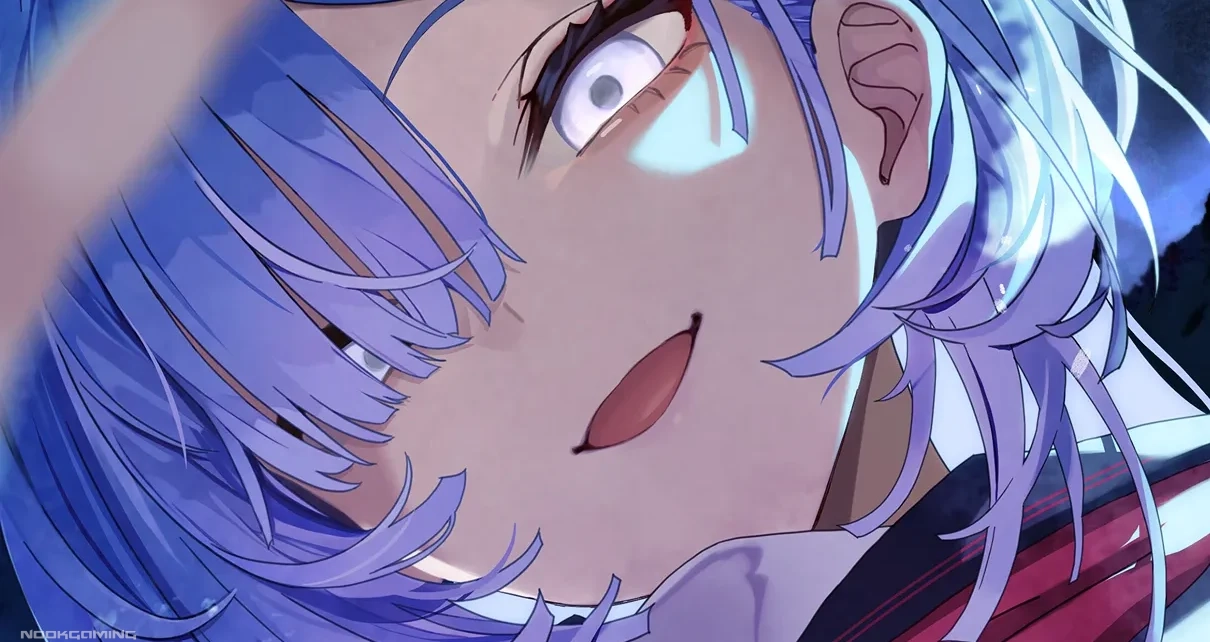
Visual novel developer Laplacian recently released Kugayama Shiori’s Death Diary (Kugayama Shiori no Shinizama Techou). The project was directed by Hayashi Ryousuke, who has worked in various capacities on titles for Laplacian titles such as Cyanotype Daydream and The Future Radio and the Artificial Pigeons, along with titles from other developers including Chronobox and Waning Flowers of a World Eternal – The Rainbow Appears After Flowering Rain.
Described as a mystery visual novel where horror meets occult comedy, Kugayama Shiori’s Death Diary offers a unique experience. Hayashi Ryousuke has kindly agreed to an interview with NookGaming to share some of his thoughts about working on the title.
Can you tell us about your role at Laplacian and specifically as the director of Kugayama Shiori’s Death Diary?
Simply put, I’m a generalist who puts materials provided by our specialists (writers, artist, composer, and designer) into a single game experience.
Specifically, I handle nearly every part of the process, excluding creative asset production and promotion. My duties involve script implementation, directing/timing the execution, and publishing.
Although my title on this project is director, in practice, I am an “engineer and jack-of-all-trades”—someone who ensures the gears mesh correctly. My responsibility is to maintain balance across the entire production while holding final responsibility for the quality.
Can you tell us a little about the inspiration behind Kugayama Shiori’s Death Diary?
It wasn’t born from a specific external influence, but from one focus—an obsession, if you will: to make this story as compelling and complete as possible.
I simply refined each scene one by one, making incremental improvements through script adjustments and direction. I wanted to maximize every single moment, finding ways to make what’s on screen even 1% better. The game simply turned out that way as a result.
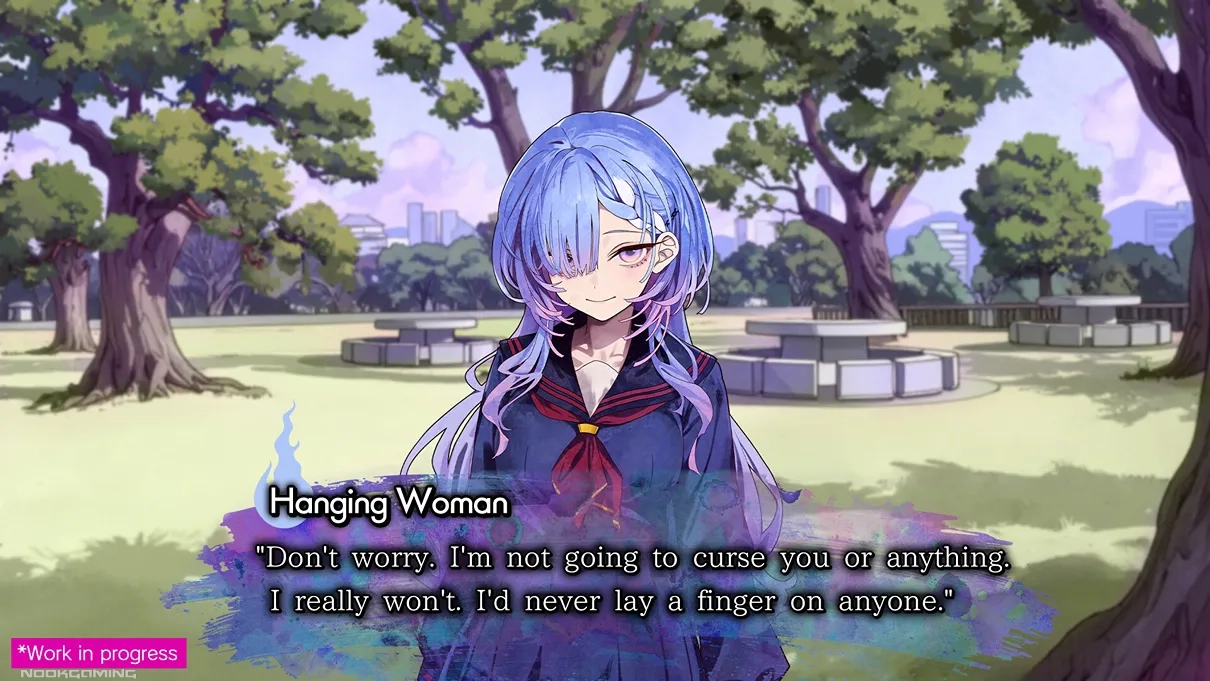
You worked closely with Kazuki Fumi on the core framework. How did you translate Fumi’s original concept into a functional game loop that keeps players engaged until they reach the final ending?
My role was to elevate Kazuki’s original concept into the best possible experience on screen.
I personally restructured elements in-studio to optimize pacing and directed the voice recording sessions to match those adjustments. I continued fine-tuning right up until release to perfectly align the passionate performances with the timing of the direction.
I believe this consistent fine-tuning of the story, performance, and direction as a unified whole is what kept players engaged until the very end.
While scenario writer Kazuki Fumi is an industry veteran who has worked on a number of notable visual novels, I believe this is the first time he has worked with Laplacian. Can you tell us a bit about how this collaboration arose and the experience of working on Kugayama Shiori’s Death Diary together?
There were two reasons we invited Kazuki Fumi:
First, we wanted to challenge ourselves by working on a style different from our previous works.
Second, we wanted to raise the team’s overall development capabilities by collaborating with a writer from outside our usual structure.
I held his past work in high regard, so I personally approached him. Since this was our first time working together, refining the project into its ideal form was a difficult process filled with many challenges.
However, it was precisely through this process of trial and error that we were able to explore the best possible form we can achieve right now. We intend to build on this experience, further refine our work, and deliver it to an even wider audience.
Admittedly I haven’t read the entirety of Laplacian’s catalogue, but black comedy is not something I’d associate with the Laplacian titles I have read. Do you feel the black comedy elements in Kugayama Shiori’s Death Diary are a shift in genre/tone compared to Laplacian’s past works? What led you to want to work on a visual novel with these elements?
We don’t think there’s a specific flavor or genre that should define Laplacian. Our style only felt consistent because all of our previous works were written by Ono Wasabi. As for me, I focus only on taking what I find interesting and shaping it into its most optimal form.
In this case, black comedy just happened to be the approach that made it most compelling. It wasn’t something we set out to do from the beginning. It was a result we naturally arrived at after refining the work to achieve its best possible form.
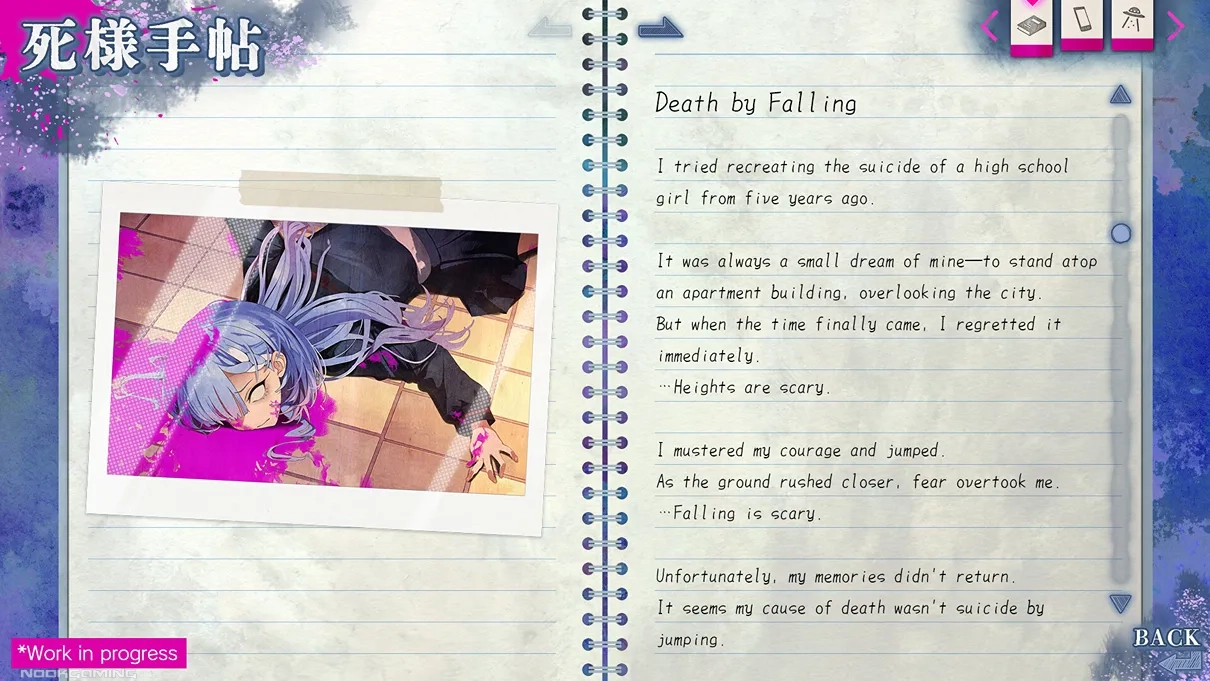
Kugayama Shiori’s Death Diary includes quite a lot of choices and endings, especially considering its length. How did you balance the multitude of choices and endings with the need to keep the player motivated to reach the final ending? And what makes this type of gameplay work well for the story?
The design of the choices and the structure of the branching paths were laid out by Kazuki whose work allowed the story to be experienced from multiple perspectives. I trusted that framework and focused on implementation and direction, putting everything into ensuring that no matter which ending players reach, the experience feels as strong as it can be.
I wanted to create a level of immersion beyond just passive reading. By repeatedly allowing players to choose their own fate and witness the outcomes, I wanted to create an experience where they could feel responsible for the journey, ultimately maximizing the emotional impact of the final ending.
With HARMONIC REFLECTIONS and Kugayama Shiori’s Death Diary it seems that Laplacian is currently releasing shorter ~10 hour visual novels compared to longer past titles like Future Radio and the Artificial Pigeons or Cyanotype Daydream. Does this represent a shift in focus for Laplacian going forward or do these shorter visual novels simply happen to be the stories Laplacian wants to tell right now?
Rather than a shift in direction, it was more of a strategic alignment—finding the common ground between perceived player interests, Laplacian’s long-term growth, and our own creative vision. From our perspective, large-scale titles carry significant risk, and given the modern player’s busy schedule, longer doesn’t necessarily mean better.
We are currently looking ahead to a major project titled Isomerica, so compact works like this one also serve as important milestones. They help us refine our technical capabilities and strengthen our developer’s foundation toward that flagship project.
Of course, regardless of scale, our priority is to deliver each title as the best possible experience it can be. Rather than being bound by length, we aim to release works at the scale and pace best suited to each creative challenge.
Now that the project is complete, what is the one specific detail in the game’s production that you are most proud of, but that players might not notice?
There is no greater satisfaction for me as a director than the player enjoying the game from start to finish without ever consciously noticing the seams.
I poured a great deal into reweaving Kazuki’s sharp, externally developed concept with our direction and the voice actors’ performances into a single, seamless experience—overseeing the process on-site.
The countless subtle adjustments—like the timing of text display or sound effects at key emotional moments—might never be consciously noticed by players. However, I believe it is precisely this kind of meticulous, behind-the-scenes work that creates the highest level of immersion without disrupting the story. My role may not be flashy, but I have strong confidence in the overall feel it produces.
Thank you for taking the time to answer my questions. Before we finish the interview, is there anything else you’d like to say to the English-speaking visual novel community regarding Kugayama Shiori’s Death Diary?
In the past, we received some critical feedback regarding the quality of the translation in one of our titles (Harmonic Reflections). For this project, however, we worked with an exceptionally capable localization team led by our translator, Robert Roy Dela Serna, approaching every single line and nuance with meticulous attention to detail.
Our team worked closely with Robert’s to refine the localization and ensure the intended nuances and enjoyment are conveyed accurately across the language barrier.
We have no intention of catering to any particular audience, but we spare no effort in delivering the best possible experience to those who choose to engage with our work. We invite you to experience this “Death Diary” for yourself—crafted together with a localization team we trust.
Thank you to Hayashi Ryousuke for talking with us on behalf of Laplacian and Robert Roy Dela Serna for arranging this interview and translating. Please check out their titles such as The Future Radio and the Artificial Pigeons and Cyanotype Daydream -The Girl Who Dreamed the World-.
You might also be interested in our Interview with Ono Wasabi (CEO of Laplacian) on AI Translation, Industry Challenges, and Future Plans.
Want to check out more visual novels? Why not check out our review of Welcome to Cafe Lumière! ~A Dragon Girl Concept Cafe~? We have also covered a wide variety of visual novels both original to English and localized from Japanese, which you can check out here.
A veteran of Oregon Trail and Battletoads, Wes has been playing and talking about games for as long as he can remember. He’s down to try almost anything, and he especially enjoys games with gripping narrative experiences.