Karigurashi Ren’ai: Living on Borrowed Love (often stylized as Karigurashi Renai) follows ASa Project’s usual formula, mixing absurd comedy and romance with cute oddball heroines. Originally launched in 2018, Kagami Games has brought this title out to international audiences almost a decade later.
This review is based on the full version, with the adult patch. You can see how to install this and how to access the various routes in our walkthrough/guide.
Sharing Space
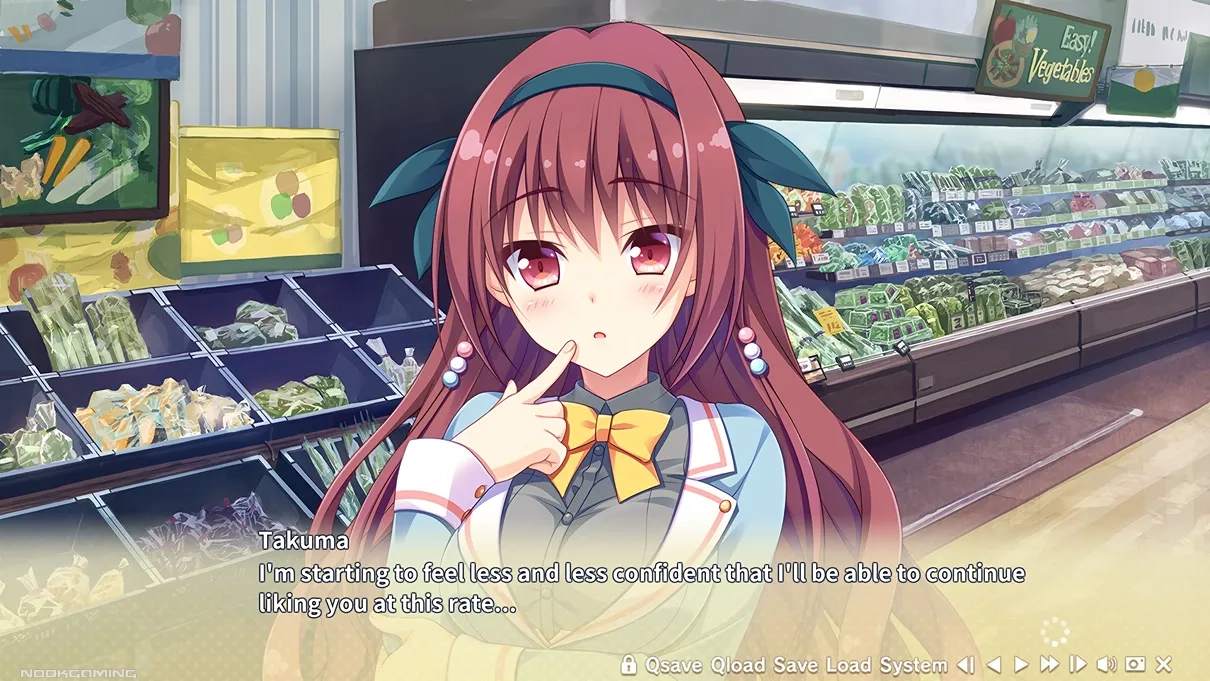
Visual novels by ASa Project tend to be ones that people love or hate due to their over-the-top comedy and their sometime unusual premises to spark romance. Karigurashi Ren’ai: Living on Borrowed Love is no different. Takuma (or Takkun as he’s often called) returns to the town where he used to live ten years ago, having arranged to live in his old house. This doesn’t work out; he arrives to find it in ruins, and his family is less than helpful when he calls. He’s got nowhere to live and far less money than he’d need to pay a deposit and rent somewhere. Fortunately, he’s kept in contact with one of his old childhood friends. After a few issues and comedic misunderstandings, she and his other three childhood friends decide to have Takuma live with them on a rotation system while he figures things out. It’s a cohabitation comedy.
While this certainly isn’t the first time that ASa Project has explored the idea of having the protagonist live with multiple heroines (the recent international release of Ren’ai 0 Kilometer and the as-of-yet-unlocalized Puramai Wars come to mind), the rotating system adds a new spin to it. One of the most amusing parts in this take on the idea is that the main heroines all have very different living situations and, in most cases, families to contend with.
As Takuma spends more time with the heroines and their families, they slowly begin to grow interested in each other as more than childhood friends. In turn, this starts to create conflict and escalate bickering. Still, the tone remains comedic throughout, and it’s mostly character-centric, without really delving into any serious drama or plot.
Joining Families
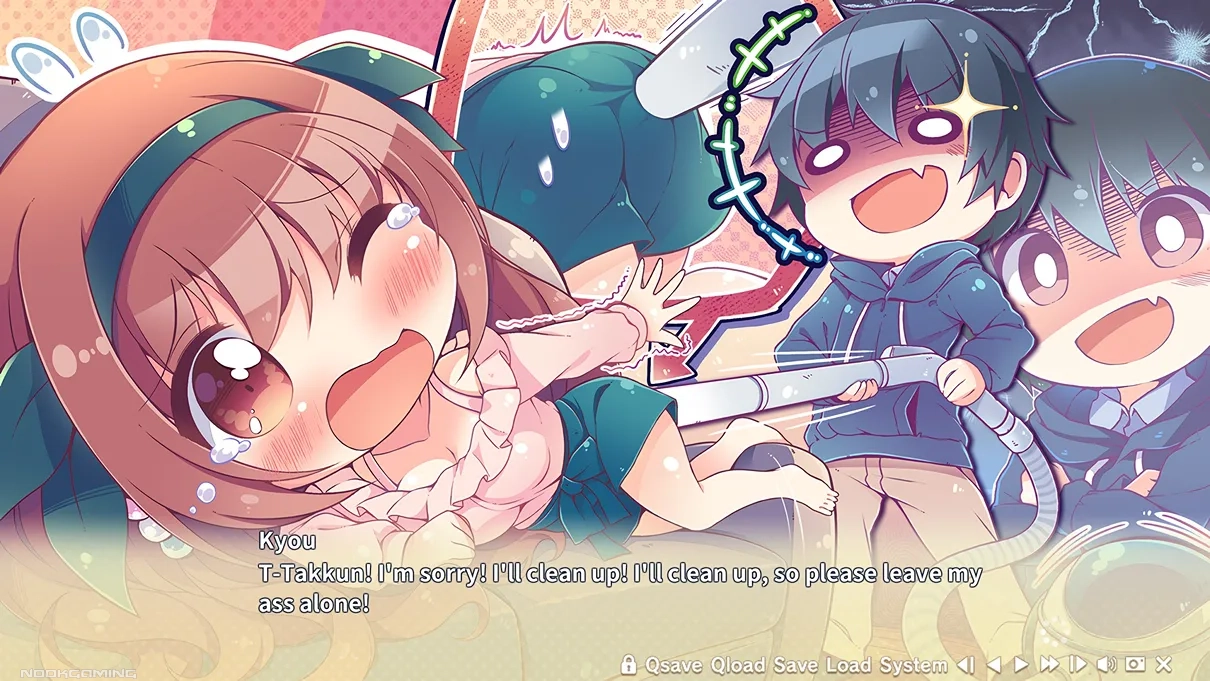
The childhood friends are a rather mixed group. Kyou tries to come across like a playful big sister, but she’s incredibly lazy at home, to the point of barely moving. Her mother is even lazier than she is, and her father wants to marry her off and is willing to do anything to make it happen. Living with Kyou is like taking care of someone who won’t do anything for themselves, and much of her route involves Takuma attempting to deal with her laziness. There’s quite a bit of exasperation on Takuma’s part here, to the point that I sometimes had the impression he didn’t like much about Kyou aside from her voluptuous body, and even the more flirtatious moments sometimes sounded harsh.
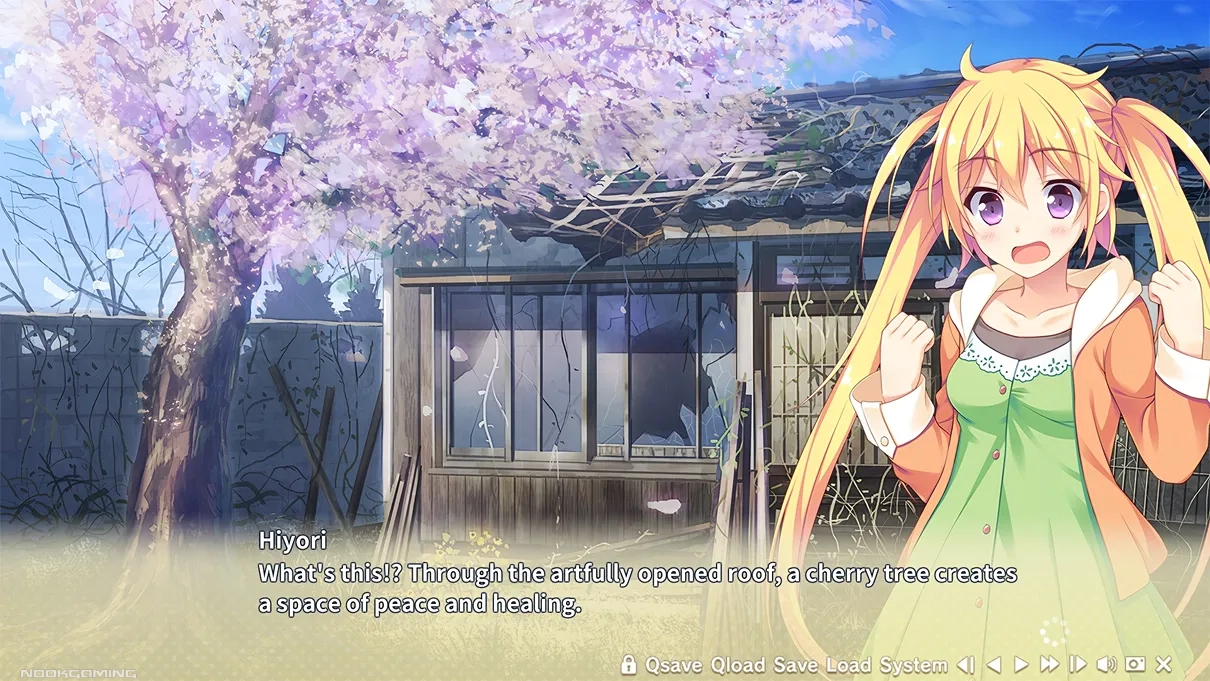
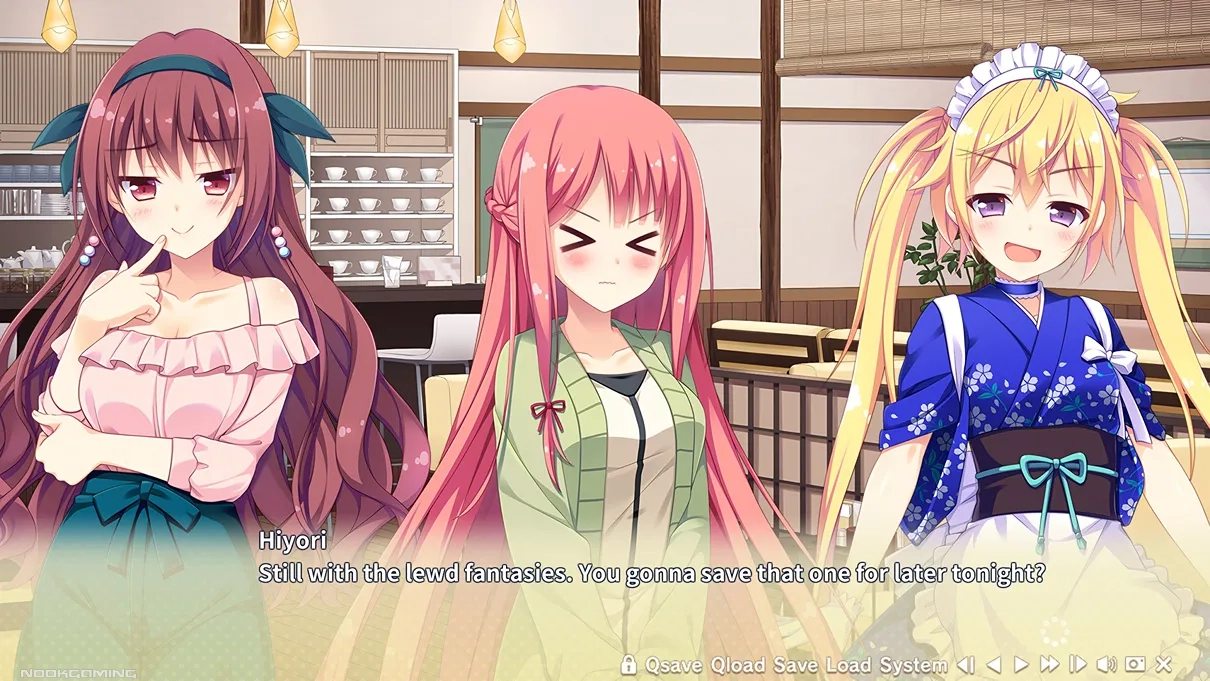
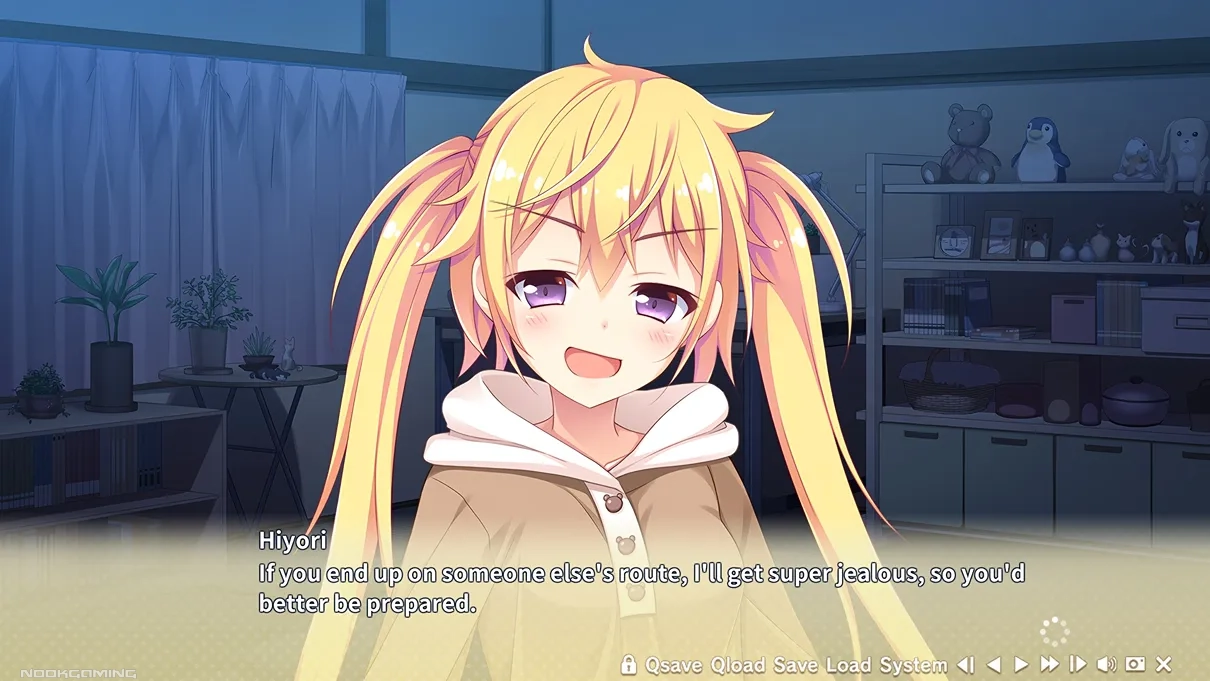
Hiyori is an absolute goofball who will go along with anything fun, but shows her more subdued and serious side when dealing with her mother, Miyori, an overly excitable widow who wants to jump Takuma. Still, she does show some sweetness and love for her family behind it. They both live and work at Miyori’s teahouse, where Takuma also finds a part-time job. There are plenty of silly moments here that I enjoyed, and while Hiyori is the heroine who leans most into the comedic aspect, you can find hints of gentler moments about family too.

Rito starts off harsh, but is probably the one who acts the sweetest by the end. She lives alone, which offers a different cohabiting dynamic. Her route leans more into the feel of a newlywed couple and domestic life together, with talk about sharing chores and buying furniture. Rito can be very cute and needy, but her route is probably the route I found the most romance-focused.
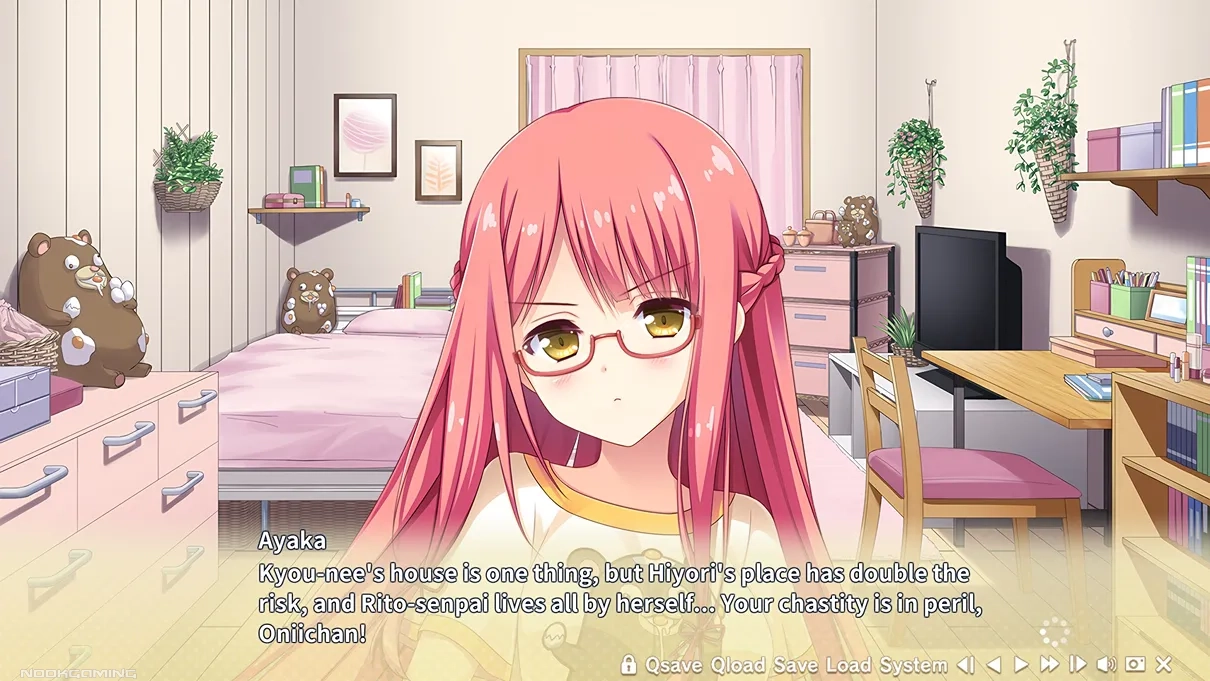
Ayaka acts sweet on the surface and easily wins Takuma over by treating him as a big brother (she’s always wanted one!), but she has her manipulative moments, along with plenty of sharp remarks for the other heroines (especially Hiyori). She’s also actually a closet pervert. Her family is dysfunctional, to put it lightly, and wants Takuma to leave to the point that staying feels like it puts his life in danger. This shifts in an interesting way over the course of her route, with Ayaka handling both family and friends in a way I didn’t expect.
The variety on display ends up making each shift between homes feel quite different. Whether it’s dealing with Kyou’s pushy parents, the awkwardness of being alone with Rito, or the other situations, each offers quite a lot of humor. Miyori’s constant desperate flirting was probably the highlight for me. Beyond that, whenever the heroines get together, there’s plenty of comedic bickering, less-than-subtle insults, and other banter, even as it shows them as friends (more or less). The other heroines don’t disappear when a route begins, and they often don’t completely give up either.
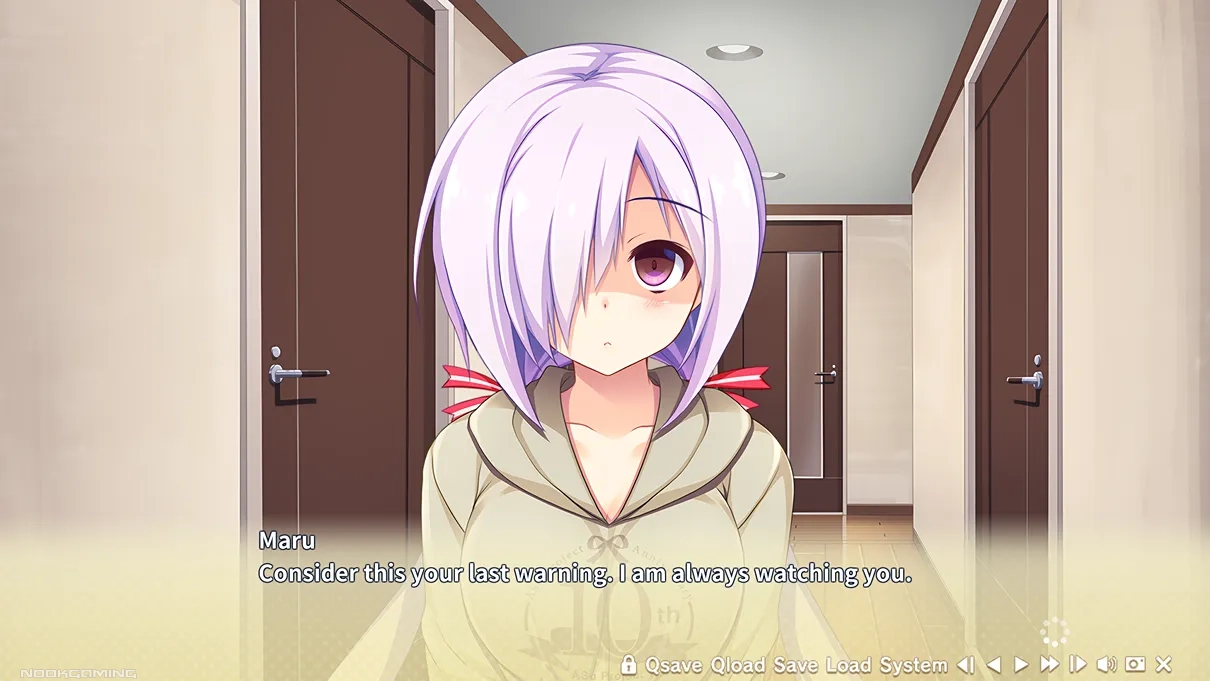
There are two sub-heroines too. Maru is Ayaka’s younger sister, who is dangerously obsessed with her and thinks she can do no wrong. Spitting on Takuma is her standard greeting. Fortunately, he’s into that. She acts as a looming threat during many of the scenes with Ayaka, but has her own short route. Nanako is Ayaka’s friend from the same year, who gets oddly attached to Takuma and keeps stealing his food. Her route is fairly minimal in story, and doesn’t even have a clear ending scene that ties things up, unlike the others.
Both of the sub-heroine routes focus more on the H-scenes than anything else, but Maru’s tied into her previous scenes with Ayaka more, while Nanako’s felt like it came a bit out of nowhere.
Localizing Comedic Writing
Much of the humor in Karigurashi Ren’ai: Living on Borrowed Love, similar to other ASa Project titles, tends to rely on wordplay, references, occasional fourth-wall breaks, and general absurdity. For the most part, this comes across well enough, but I felt it didn’t always work, and it sometimes stood out for it.
Sometimes wordplay jokes end up as non-sequiturs due to a related or rhyming word not coming across in the English translation, which makes the joke either not work or perhaps not be as funny. On top of that, some of the references that would likely make a lot more sense to a 2017 Japanese audience might be more than a little obscure for English-speaking visual novel fans in 2026. I noticed a number of instances where the localization kept these fairly close to the original rather than replacing them with a more contemporary equivalent. As well as that, occasionally some jokes or references were more direct translations just didn’t work and sometimes didn’t make sense at all. Opinions vary on the best way to handle these situations, but it does add a level of unapproachability for many fans to those small moments.
As a note, while it was well-written for the most part, I also did notice quite a few more instances of typos and unusual phrasing in Karigurashi Ren’ai than the two previous English releases by Kagami Games, LOVEPICAL-POPPY! and Putrika 1st.cut:The Reason She Must Perish, both of which were incredibly polished. This does refer to the state as of release day, and I would expect it to be patched later.
Childhood Friends Become Adults
Karigurashi Ren’ai: Living on Borrowed Love contains 28 full H-scenes, with Kyou and Ayaka having 6 each, Hiyori and Rito having 5 each (with one of Hiyori’s perhaps not counting as it’s more of a make out scene), and Maru and Nanako having 3 each.
The majority of the H-scenes are relatively vanilla, at least by genre standards, but some do get a bit kinkier than usual. Maru’s in particular leaves vanilla behind and goes into a somewhat darker area, even if it’s taken without too much gravity.
All scenes are without mosaics. All of the revealed details are drawn well enough.
Graphics and Sound
The international release of Karigurashi Ren’ai: Living on Borrowed Love is a Full HD Remaster, boosting the original 720p resolution up to 1080p, and it looks great. The art generally all comes across as high quality. Everything looks good in terms of style and detail. The character sprites have certain expressions that particularly stand out as fitting the comedic tone too.
There are quite a lot of CGs throughout the approximately 20 hours of reading time. Including both regular and H CGs, there are 74. That isn’t counting the 10 additional CGs in the super-deformed style.
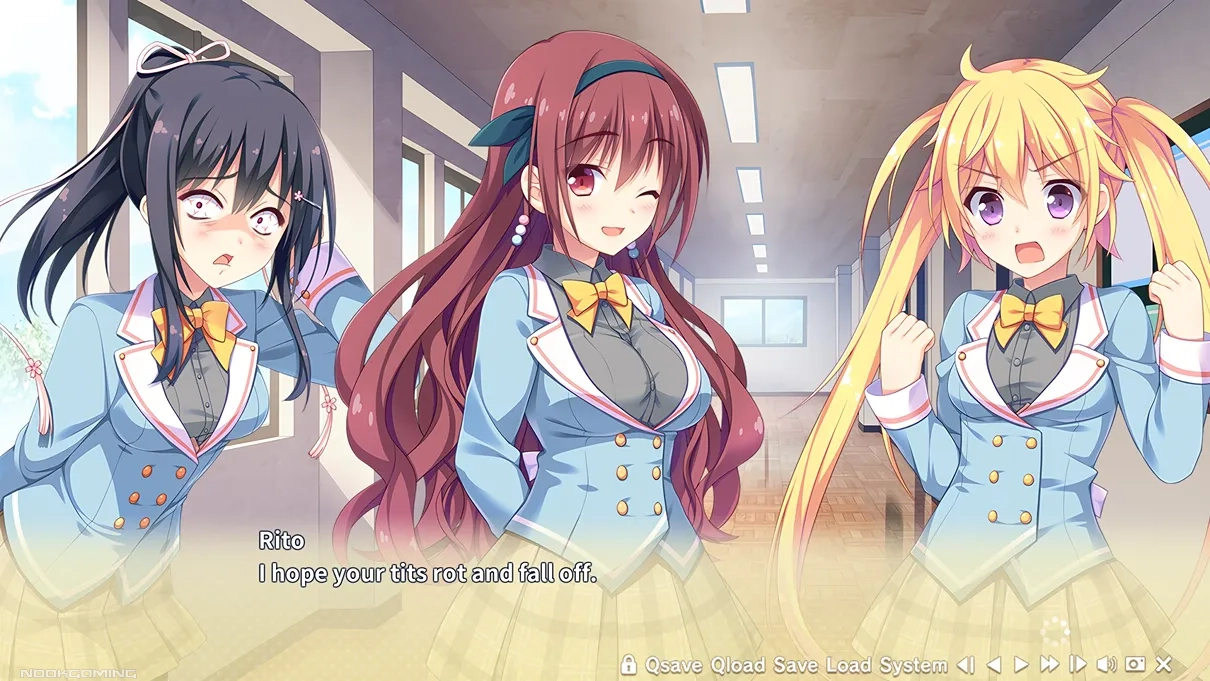
I do quite like the character designs for Karigurashi Ren’ai: Living on Borrowed Love, though some stand out more than others. Kyou certainly gives off the big sister impression, even if it’s a false one. Hiyori’s charm point (as she notes herself) is her messy hair, which goes in all directions, matching her chaotic nature. Ayaka looks like the pure little sister that she pretends to be, which makes it stand out even more when she shows an evil expression. Perhaps Rito doesn’t stand out much, but she’s cute regardless.
For music, there are 25 background tracks, with each heroine having a track of their own that fits their character well, and tracks fitting the mostly upbeat and comedic tone of the story. The voices all fit well too, and plenty of well-known voice actresses are included in the cast list as the heroines, including those who’ve played heroines in titles such as Nukitashi, Riddle Joker, Otome Domain, Clover Day’s, and Making Lovers.
Verdict
Karigurashi Ren’ai: Living on Borrowed Love is full of comedic situations and amusing bickering between the cast. While the jokes don’t always land, it’s certainly plenty of laughs overall. The home rotation premise was used particularly well to keep things constantly changing throughout.
KARIGURASHI REN’AI: LIVING ON BORROWED LOVE IS RECOMMENDED

Walkthrough/Guide: Click Here
If you are looking for another rom-com visual novel by ASa Project, you might want to check out Ren’ai 0 Kilometer, or if you’re looking for something with a different spin on the genre, check out our review of Death Match Love Comedy. We have also covered a wide variety of visual novels both original to English and localized from Japanese, which you can check out here.
Many thanks go to Kagami Games for a PC review code for Karigurashi Ren’ai: Living on Borrowed Love.

A gamer since the days of Amstrad and DOS and someone who has dabbled in a variety of professions. He enjoys a wide variety of genres, but has been focusing on visual novels and virtual reality in recent years. Head Editor of NookGaming. Follow him and the website on @NookSite.