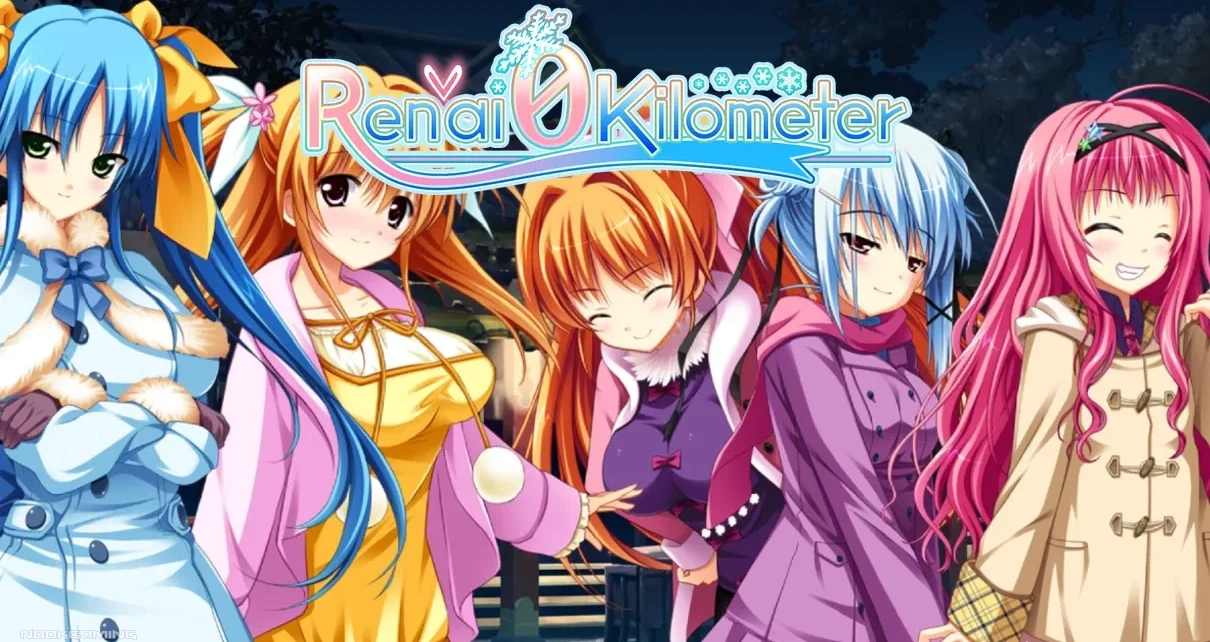
Just what is family? Ren’ai 0 Kilometer explores this idea using the absurd premise of two neighboring families temporarily trading members. Kyouichi from the all-male Yazaki family is sent to join the all-female Kinomoto family, while Sayuka is sent in return to the Yazaki home. How will Kyouichi handle his childhood friends suddenly becoming his temporary sisters in this situation set up by their whimsical parents? And how will Sakuya handle her long-time crush suddenly getting closer to her sisters?
Ren’ai 0 Kilometer by ASa Project originally launched in 2011, making it the oldest title from the developer with an international release at the time of this review. Fifteen years on in 2026, it’s been brought to us in English and Chinese by kawaiinium, a relatively new publisher whose only prior release to date is Tayutama -Kiss on My Deity- and its fandisc.
This review is based on the full version, with the adult patch. You can see how to install this and how to access the various routes in our walkthrough/guide.
Embers of Romance
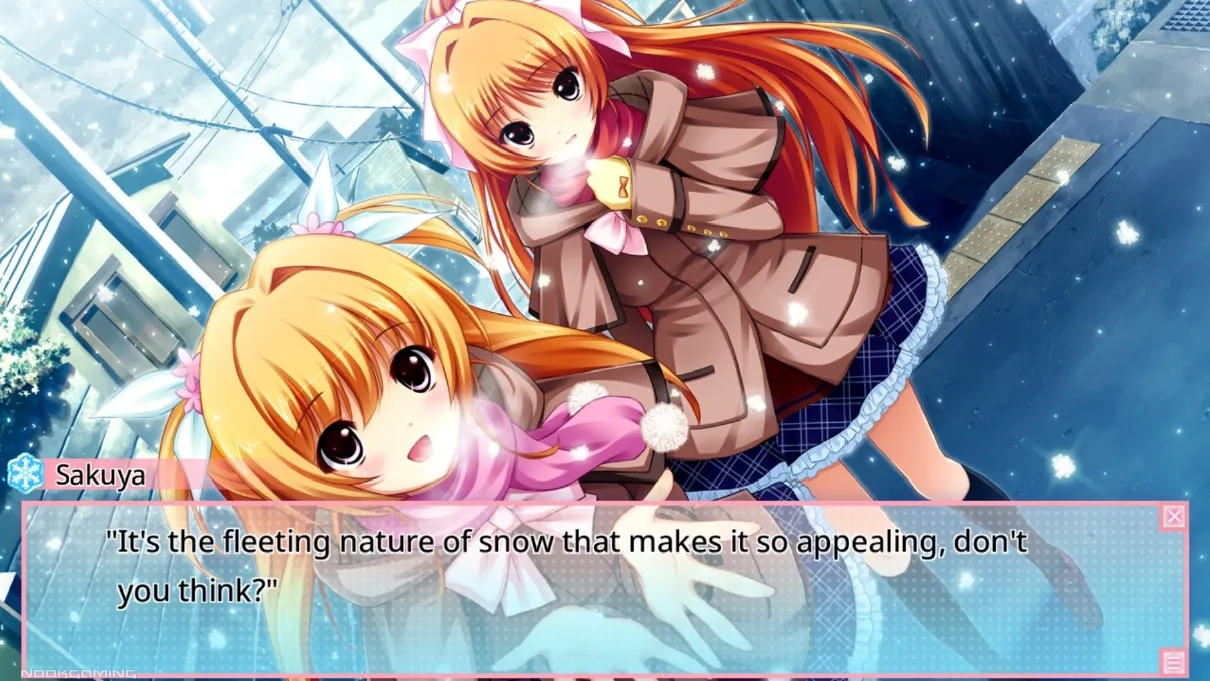
The Yazaki family and the Kinomoto family have always been close. They’re both single-parent households with children of similar ages, so it’s no surprise that the young Yazakis grew up playing with the Kinomoto sisters. But perhaps the closest of them all are Kyouichi and Sakuya. They’ve been friends for what seems like forever, and while she hides it behind angry outbursts, it’s clear to everyone but Kyouichi that she likes him more than a friend. Despite this, she’s never made a move, and nothing has happened between them.
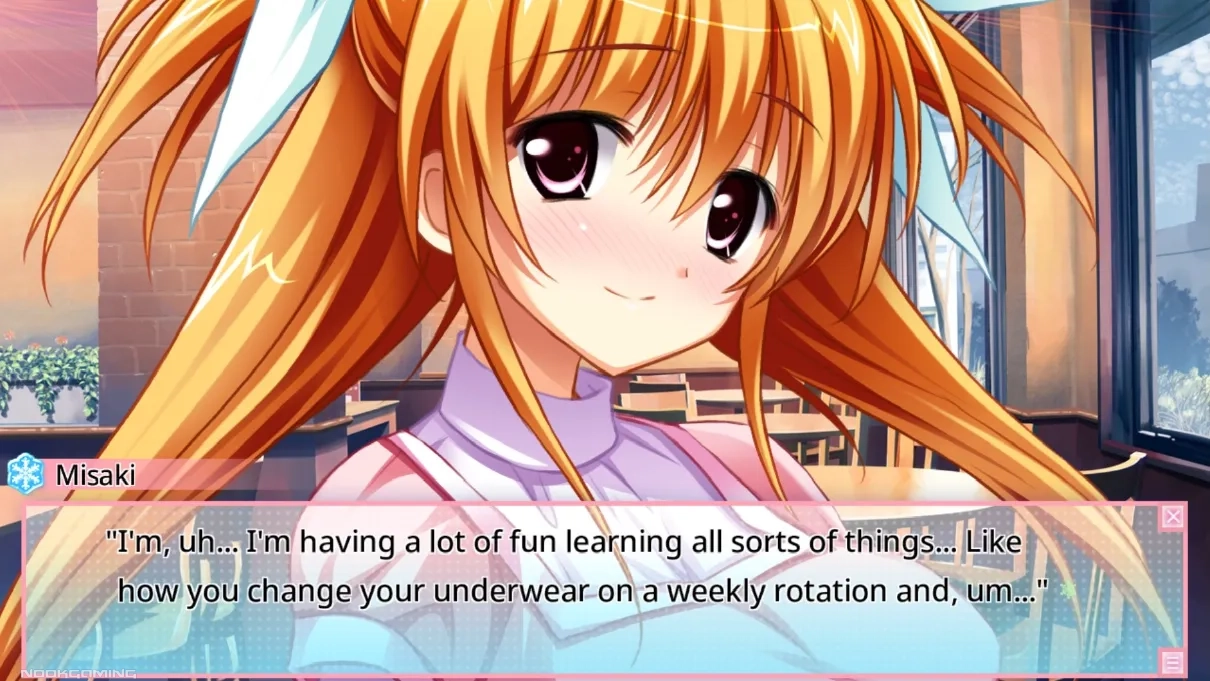
Then, when their parents come up with this family member swap idea, so they can each experience having a son and a daughter, it sparks a change. Sakuya’s quieter twin sister Misaki has always liked Kyouichi too, even if she hasn’t been as obvious about it. With them now living under the same roof and having a chance to get closer without the louder Sakuya, she’s not going to hold back anymore.
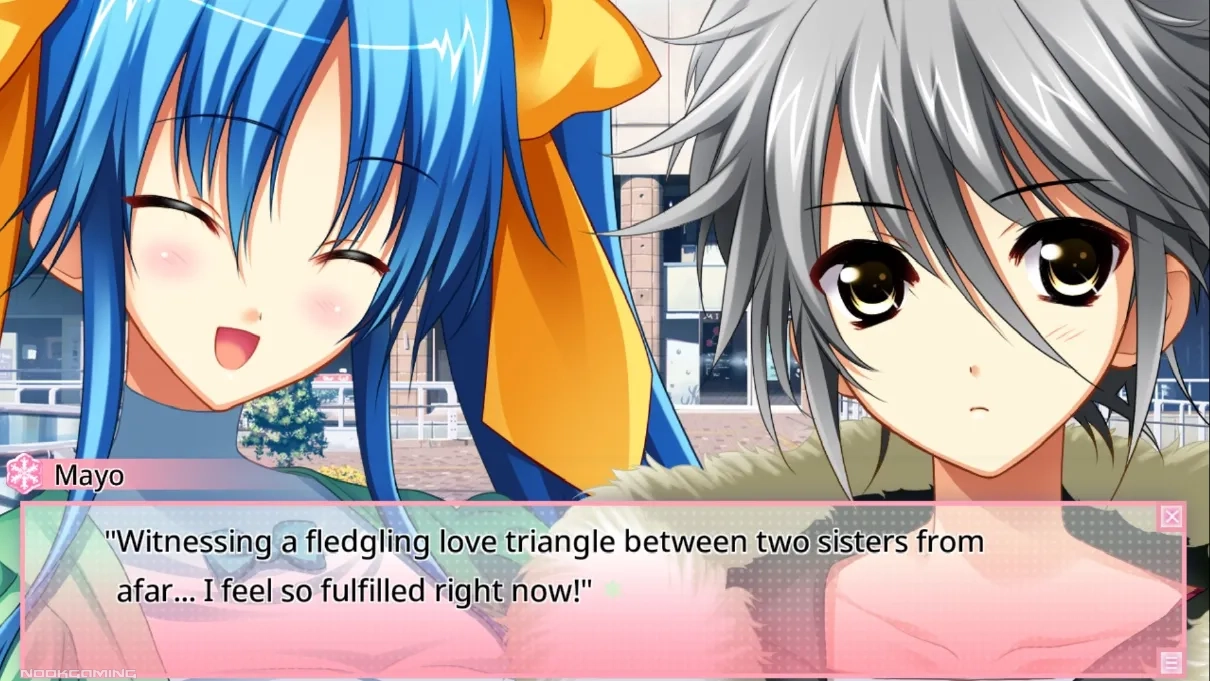
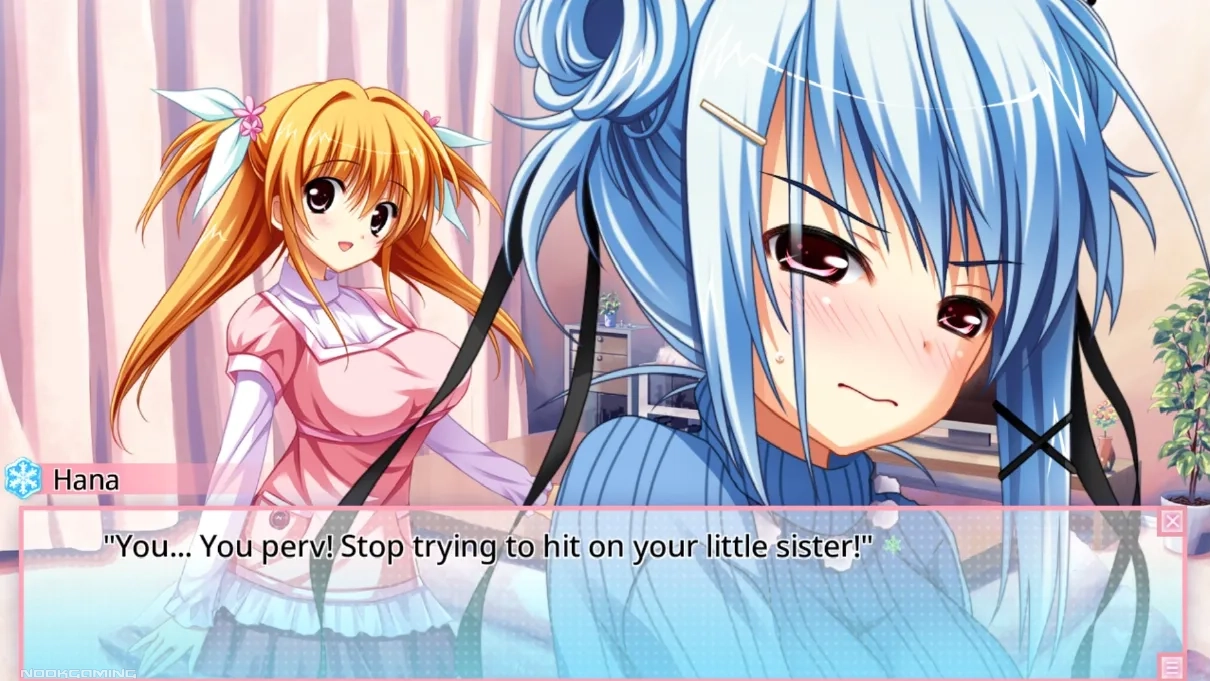
The other sisters have their own thoughts on the issue. The eldest Mayo gives the impression of being the sensible type and is predictably against the idea at first. The second-youngest Nokia is energetic and all about having fun, so she’s all for having a new older brother. The youngest Hana doesn’t seem to like him (or anyone other than her sisters) and isn’t exactly welcoming. But with them living together, they get to know each other better, and feelings change or come to light over time.
Whether it’s familial love or romance, Kyouichi’s relationships start to change. But unknown to him, these close-knit sisters are about to find themselves with some complicated feelings and the occasional dramatic conflict.
The Newest Kinomoto
Much of the common route of Ren’ai 0 Kilometer consists of Kyouichi adjusting to his situation and learning more about the Kinomoto sisters. There are plenty of silly bits along the way, like Nokia running games that scare everyone off, or Nokia being a pervert with the personality of a middle-school boy, or basically Nokia’s entire existence in the common route for the most part. The others certainly have their share of oddities though, with there being more than there appears at first to the seemingly-serious Mayo, Sakuya causing herself problems, jokes at Misaki’s expense, and Hana getting in more than her fair share of biting-but-humorous insults. There’s certainly plenty of laughs here.
Each sister gets their own short arc where we get to find out a little more about them and perhaps get a serious moment to peer below the surface of their character. That said, in line with the other ‘Renai’ ASa Project titles, the tone is mainly comedic, with unusual situations, a joke never far off, and the occasional fourth wall break. The story opens by having Sakuya throw a TV at Kyouichi after he sees her naked, with his brother pointing out that he only survived due to being the protagonist, to give an example of the tone.
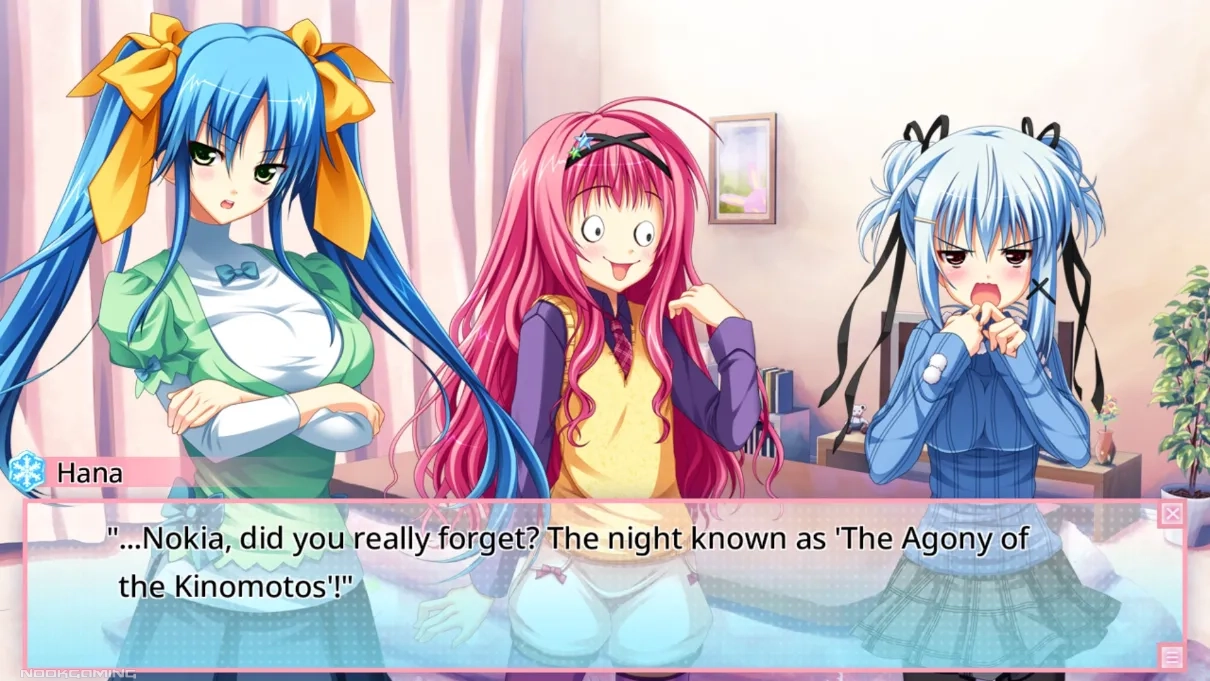
While the situation is somewhat ridiculous and the story is comedic overall, the idea of becoming family temporarily is played quite seriously, at least after everyone gets on board with it. There’s certainly an adjustment period, but they end up treating each other as siblings to a point, which makes the development of romantic feelings by more than one person even more awkward for them. Interestingly, there’s more reservation about Kyouichi having feelings for his temporary sisters here at times than you’ll find even in some visual novels with blood-related heroines.
The sisters are all shown to care for each other deeply, even if it’s not always apparent, which drives part of the central conflict in many routes. Sakuya and Misaki both like Kyouichi, and the sisters know it. Should they support one of them? Leave it alone? If one of the others likes Kyouichi, how should they handle it? Familial bonds are shown to be incredibly important in Ren’ai 0 Kilometer, and there’s certainly drama alongside the jokes. While things remain light for the most part, I think it handled this well, and the general comedic tone made these moments all the more impactful.
I should also note that while the story mostly focuses on Kyouichi and the Kinomotos, the Yazaki family certainly isn’t left out either, and they’re tied together closely with the Kinomotos. Their bonds and support of Kyouichi are just as important, and one facet of the story I really appreciated was that each of Kyouichi’s brothers was involved in a heroine’s route. The uptight Shin works closely with Mayo on the student council, the delinquent Yura can only be handled by Sakuya, and Honda gets along with his fellow pervert Nokia.

Does Fake Family Count As Being a Siscon?
I enjoyed all of the heroines’ routes, though some were better than others. Sakuya and Misaki share quite a lot of the start of their routes, and I’m mixed on which one feels like the main heroine. Sakuya certainly feels like it based on being the one sister who doesn’t live with Kyouichi, who likes him from the start, and has a slightly different structure. Still, certain events in Misaki’s route also make her feel just as important to the story, if not more so. Both had interesting subplots that came with their own surprising reveals, drama, and moments of bonding.
In terms of the overarching story to her route, Hana’s felt quite weak. Certain aspects were a little jarring with how suddenly they happened, even with a little lead-up and hints along the way. I wasn’t too fond of the ending either, though I did like that it was non-standard. That said, the route provided plenty of Hana’s acerbic attitude, some rather cute moments, and a level of character growth. While the route itself felt the weakest, Hana ended up as my favorite heroine due to her personality, and her route certainly provided plenty of fun times with her.
Mayo’s route was an engaging exploration of her feelings, which she didn’t understand herself. This progresses particularly well as we see the situation slowly changing. It also includes a particularly sweet but subtle moment between Nokia and Mayo, and a strong focus on the oldest’s feelings towards her younger sisters.
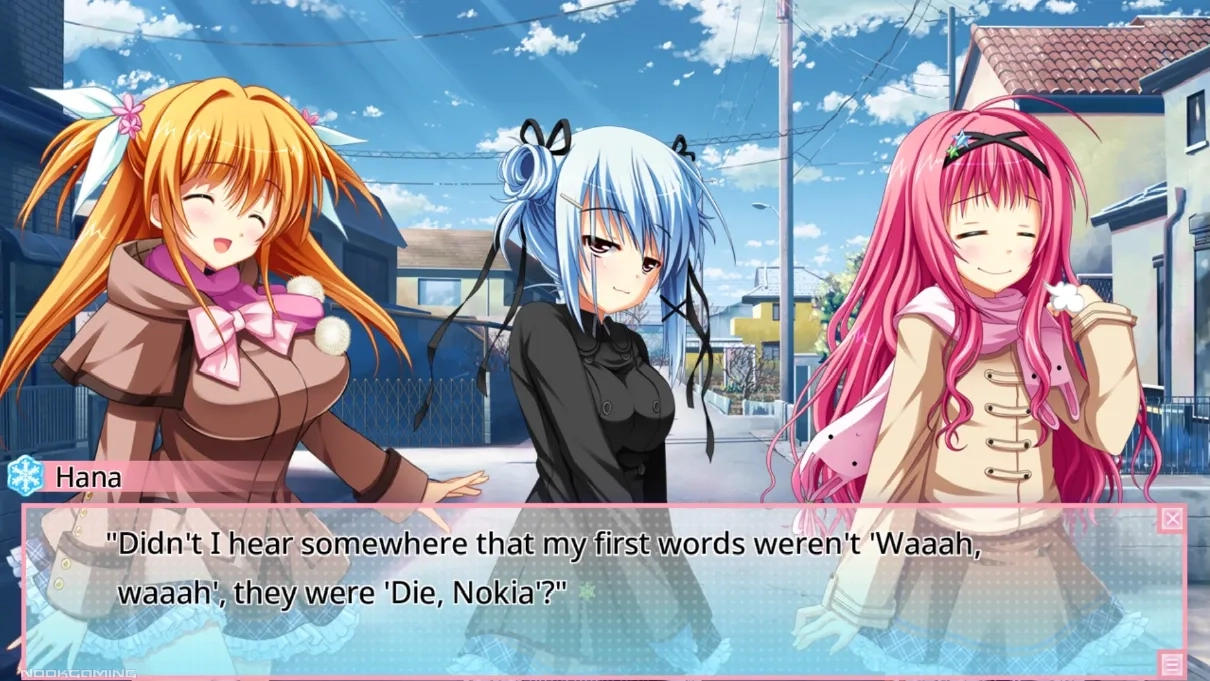
Nokia’s route was almost nonstop laughs at first, which was needed since the story covers a particularly sad topic and is certainly fitting for the jokester of the bunch. The route turns serious at points and one point in particular reframes a lot of Nokia’s behavior, which made things fall into place. A new character appears during Nokia’s route, and she’s used particularly well to reinforce the message that the route tries to get across.
All in all, the routes work well together, each covering different aspects of the mutual history between the families or other issues. While Sakuya was lacking in appearances in some routes due to her living separately, overall I enjoyed seeing routes including the other sisters and often one of the brothers too instead of purely focusing on the one heroine. However, I did feel like one thing was notably a pity: The lack of a Hai route.
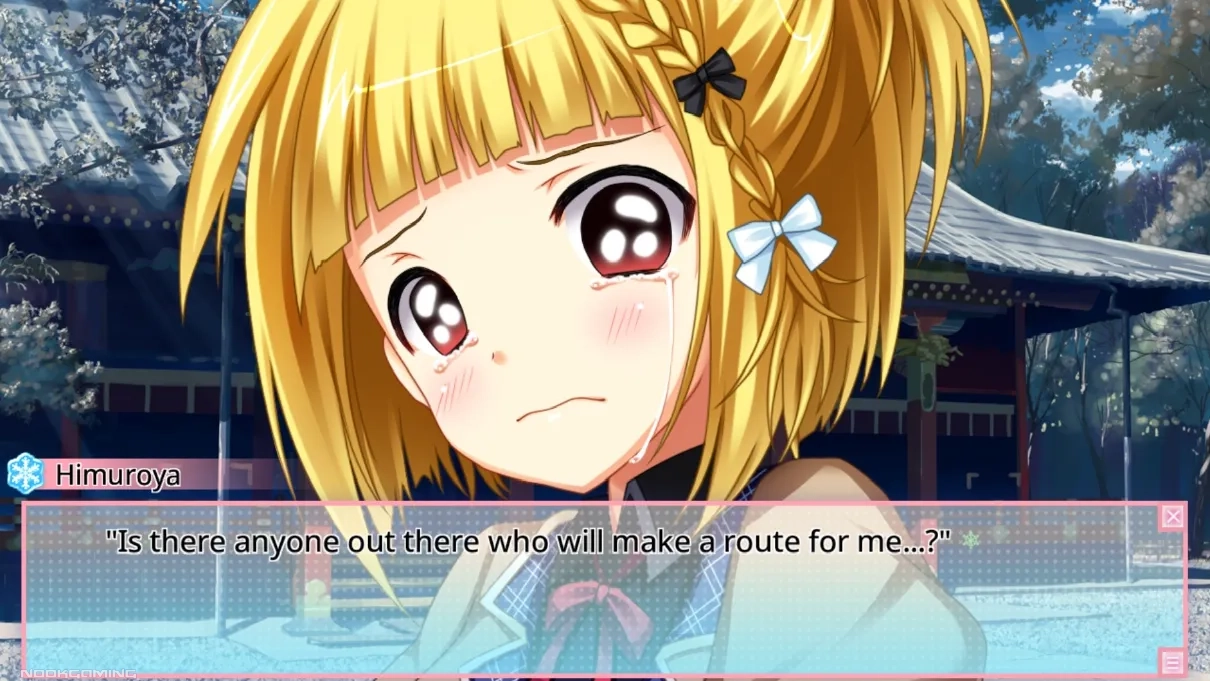
Hai Himuroya is a goofy pervert, a shrine maiden, a classmate, a close friend of Kyouichi’s, and all around a fun character. She very clearly likes him, making constant approaches and getting in Sakuya’s way at times. We find out a little more about her during Misaki’s route, and I came out of it really feeling like she should’ve had her shot too. She, along with a few other heroines, actually did get a route in the PSP/PS Vita version, but unlike (admittedly unusual) cases like Mashiroiro Symphony HD’s Sana Edition, this particular release isn’t a full remake with those console routes added. It’s not unexpected, but it’s a shame.
No Sister Sandwiches Here
Each heroine has three H-scenes each, for a total of fifteen between them. In all but one route, it follows a fairly structured approach of having two scenes happen quite a while into the route, then another happens near the end. I do typically prefer that the intimacy isn’t rushed into after starting the route, so I thought it worked well, though the first and second scenes generally could’ve been more spaced out.
The content itself is more or less standard for the type of visual novel, with fairly vanilla scenes for the most part, only leaning somewhat slightly into fetishes. All but one of the sisters is quite large-chested, so emphasis is placed on that in several scenes.
Mosaics are retained during the H-scenes.
Graphics, Sound, and Release Quality
Unfortunately, while Ren’ai 0 Kilometer has a fun story and characters, it is let down by a few things. Some of them are perhaps to do with the age of the visual novel, while others are more about the quality of the release.
In terms of style, I like how Ren’ai 0 Kilometer looks for the most part. The characters are all distinctive, Nokia has some ludicrous expressions, and most things look good. I’m not a fan of the school uniforms looking like they’re made out of tight-fitting vinyl to highlight the chests, but aside from that, the clothing designs are nice too, particularly the winter clothes.
The animation feels quite a bit rougher than the newer ASa Project titles, which isn’t too surprising considering the age, but it does stand out in 2026 when characters suddenly appear instead of sliding in. The production quality as a whole just feels a bit cheaper too, with black backgrounds sometimes used when there isn’t an appropriate one, minor characters being unvoiced, and a lack of sound effects to underline narrated moments like a slam of hands on the desk. Even the cat meowing was unvoiced, which is slightly amusing since the voice actress for Utamaru the cat from Da Capo voices Hai. I’m sure that she or someone else could’ve made a few cat sounds.
The user interface and engine aren’t exactly great either. It’s inconvenient to use and not laid out well, with non-standard controls in a few cases and all menu items hidden, unlike the original release. There’s no exit button in the settings menu or title screen or access to a top bar menu, so you need to switch out of full-screen mode or use Alt+F4 to exit. Full-screen mode, which itself leaves a slight border around on three sides instead of being a ‘true’ full screen, is behind a button simply titled ‘Display Mode’. If the window isn’t in focus, the sound stops, which is a pain for dual-monitor users. Saving and loading is slow, including ‘quick saving’. Generally, the settings are fairly bare-bones. On top of that, the window became unresponsive when I was playing a couple of times.
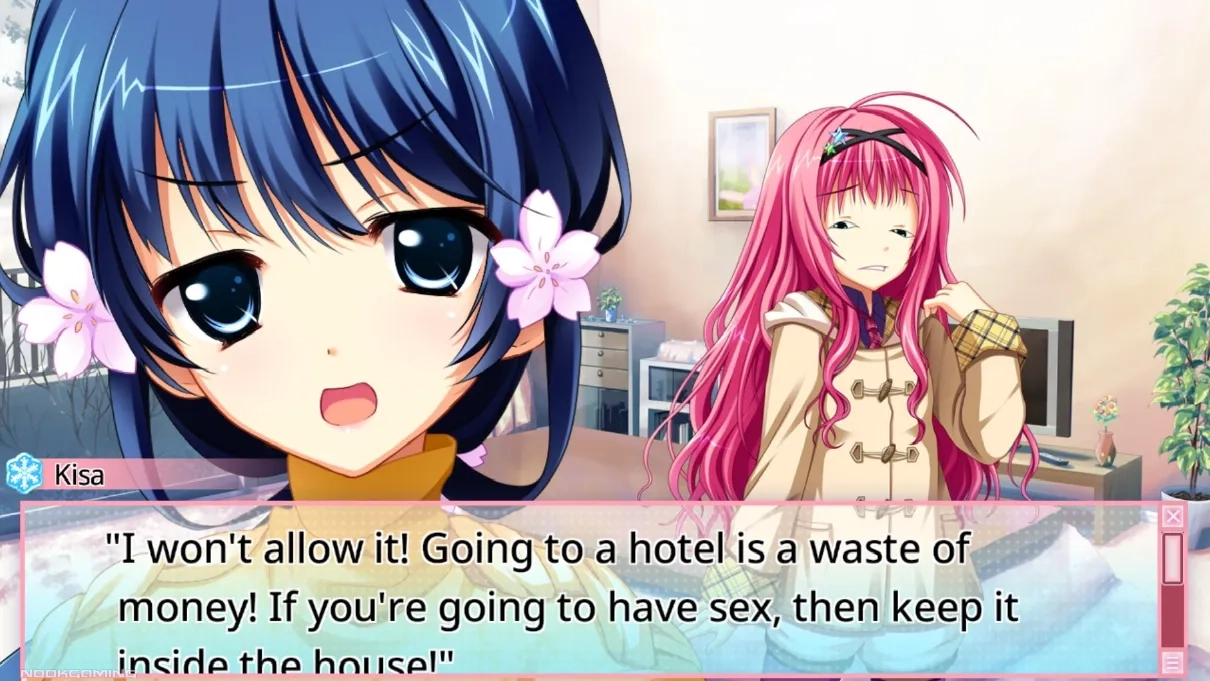
On occasion, the text is too long or large for the textbox. Instead of conveniently making the text smaller, this is handled by having a scroll bar appear in the textbox so you can scroll down, which interrupts the reading experience a little. And while it’s certainly still a good read overall, there are more than the average share of typos, grammatical errors, and other little mistakes.
Aside from the issues mentioned, the sound is certainly good enough, with some nice backing tracks that work well with the scenes. The voiced characters are all performed well by their voice actors too, who are mostly an experienced cast, with several having played main heroines in other titles such as Mashiroiro Symphony HD -Love is Pure White– (and the previously mentioned Sana Edition), Café Stella and the Reaper’s Butterflies, Marshmallow All the Way Home, Making*Lovers, and more.
Verdict
While full of comedy and amusing situations which are enjoyable in their own right, Ren’ai 0 Kilometer has some moments where we get a real insight into the characters and their relationships. It’s an interesting look at the bond between sisters, the forms that familial love can take, and the odd bit of drama to spice things up.
The visual novel itself is quite dated in some ways, and the modern release of it by kawaiinium certainly has some issues that I would’ve liked to see ironed out. Despite this, it’s still worth experiencing.
REN’AI 0 KILOMETER IS RECOMMENDED

If you’re interested in the latest of official visual novel releases in English, check out our review of Lovepical Poppy. We have also covered a wide variety of visual novels both original to English and localized from Japanese, which you can check out here.
Many thanks go to kawaiinium for a PC review code for Ren’ai 0 Kilometer!

A gamer since the days of Amstrad and DOS and someone who has dabbled in a variety of professions. He enjoys a wide variety of genres, but has been focusing on visual novels and virtual reality in recent years. Head Editor of NookGaming. Follow him and the website on @NookSite.