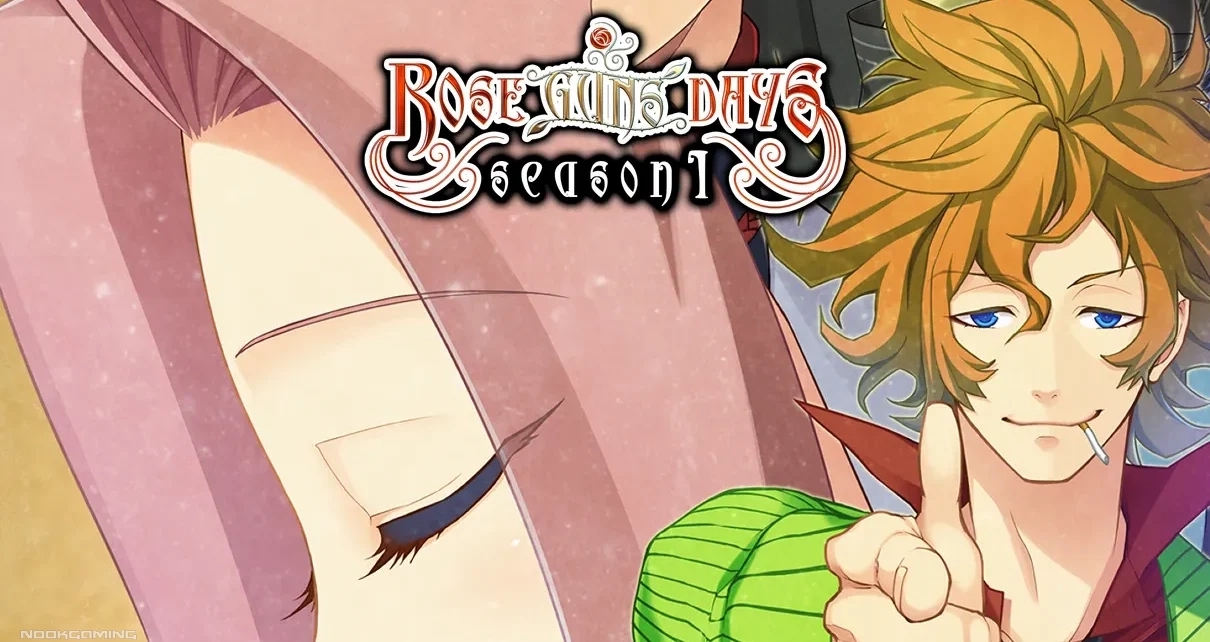
07th Expansion made quite a name for themselves thanks to the immense success of the When they Cry series (particularly with Higurashi and Umineko) back in the 2000s. However, Rose Gun Days, their first work to not feature the words “no Naku Koro ni” in the title, remained something of a comparatively obscure curiosity internationally, mostly known to the developer’s more hardcore fans. So it came as quite a surprise to me to see it suddenly start to get an official English release in 2026. Rose Gun Days is an episodic release, with the first set of chapters being titled Rose Gun Days -Season 1-. This series of visual novels deviates from their at-the-time typical flair of mystery and horror, and is instead something of an action-oriented drama with a tinge of crime and noir.
Although I am something of a fan of Higurashi in particular, I’ll admit I’ve not kept up with 07th Expansion’s releases, so I’ll admit I am rather new to the Rose Gun Days titles going into this review.

Muddy Photo
Although they would become a pretty well-known name in visual novel circles, 07th Expansion’s earlier works were generally doujinsoft titles, and Rose Gun Days is no exception. Their production is very DIY. Although MangaGamer published this release in 2026 and have ported it to Unity for modern systems, Rose Gun Days -Season 1- keeps relatively close to its original 2012 release in many ways. It maintains a 4:3 aspect ratio, has pretty minimalist settings, and lacks voice acting. Similar to Higurashi, Rose Gun Days uses distorted photographs with added filters in place of drawn backgrounds as well. Unlike most releases of Higurashi and Umineko, it uses an ADV presentation style (text boxes at the bottom) rather than the NVL style (text covering the screen), though its story is still presented linearly without player choices. There is a sort of minigame for action scenes here, though it’s fairly superfluous and can be disabled outright.
Their style is still noticeably relatively hobbyist. Although they had found success with their previous work, Rose Gun Days maintains a creative ethos of doing a lot with a little that I personally quite appreciate. While this might not be appealing to those particularly interested in higher production value, it has its charm. The sound design and solid musical score also do a good job filling the soundscape even without voiceover, with many composers who made 07th Expansions’ earlier work so captivating back for this project (including dai, pre-holder, and M.Zakky, alongside several others).
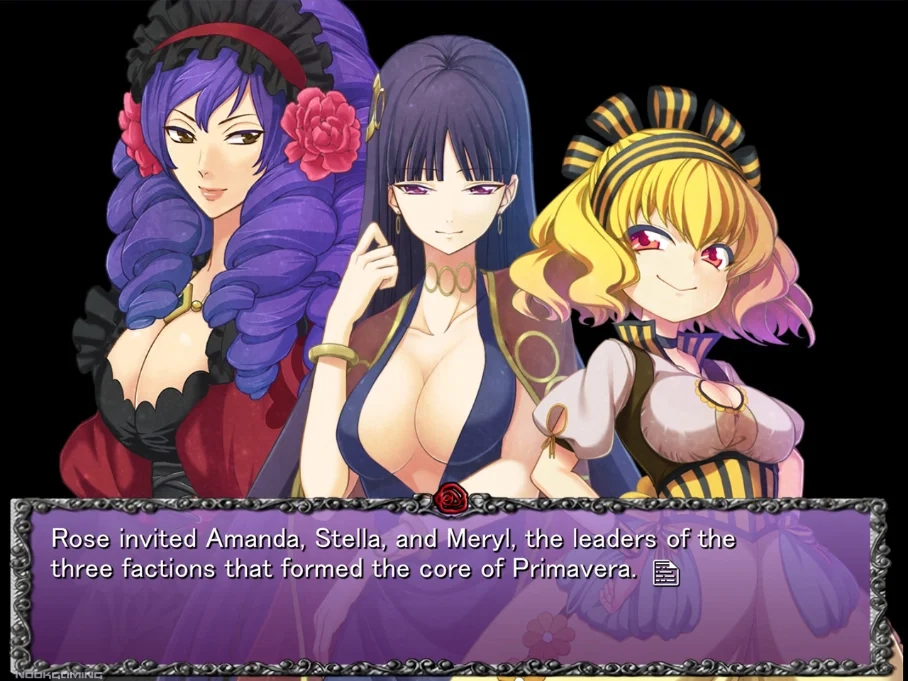
The one thing I will get out of the way on the presentation end that I did find somewhat jarring though was the character sprites/portraits. Rather than director Ryukishi07 doing all of the character art like he did in the original releases of Higurashi and Umineko, Rose Gun Days -Season 1- alone features more than half a dozen artists on its character designs, and it’s very noticeable in the differences between characters in eye shape, shading, etc. Ryukishi07 still does a fair amount, and his style can charitably be called “endearingly amateur”. It’s expressive, but noticeably limited in several ways, which can be masked somewhat when he’s doing most of the designs, which is not the case here. Given that the majority of primary characters in Rose Gun Days are done by many other artists, several of whom worked on the Higurashi and Umineko manga adaptations, his designs in particular stick out a bit more in not-so-great ways. Most of the character art across the cast is still solid and pretty expressive, although there’s definitely a share of variance between artists.
Regardless of production value, at the end of the day, the main appeal to visual novels comes down to whether or not they can spin a tale worth remembering.
Spring Winds
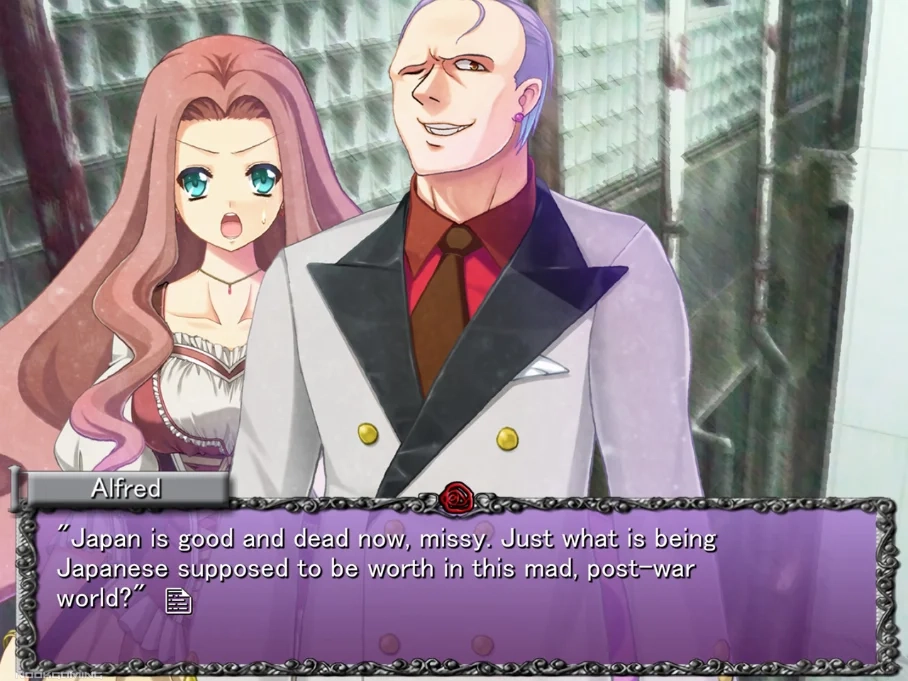
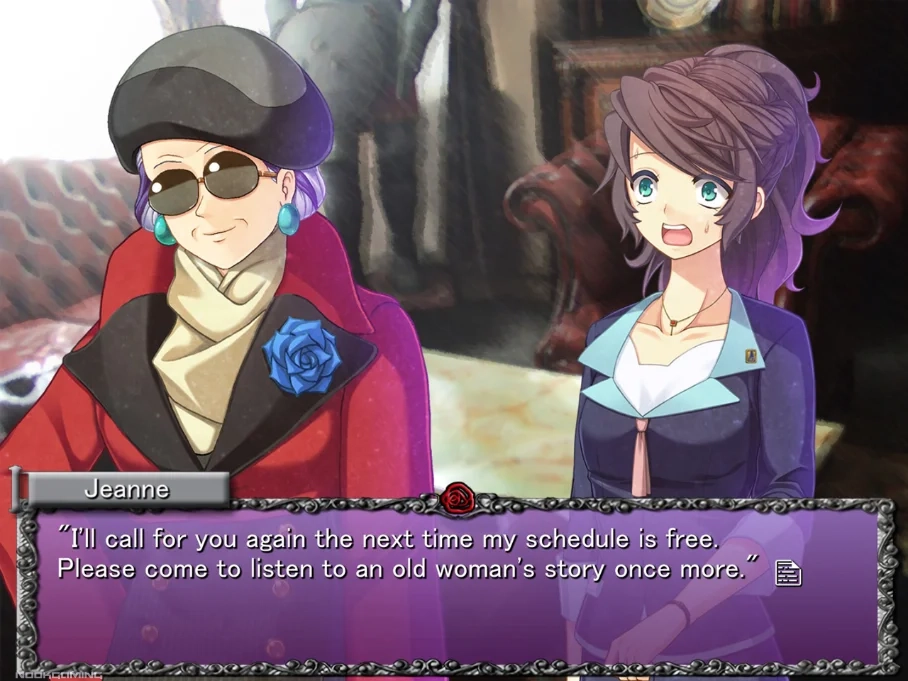
Rose Gun Days -Season 1- takes place in an alternate history where the events of World War II happened quite differently. Following Japan’s defeat, the United States and China become joint occupying powers who treat it more as their own territory. The Japanese identity quickly becomes rather suppressed, as English and Chinese become the dominant cultures and languages. This makes it incredibly difficult for the residents and war survivors of Japan, who are pushed to adopt Western or Chinese names, and often can speak neither language, struggling to find work as a result. As is common in situations like these, the murky situation leads to a share of both unorganized and organized crime across Tokyo. Much of the story is told as a series of retrospective tales by an elderly woman named Jeanne in the year 2012 to one of the few part-Japanese reporters she can trust to be impartial about it.
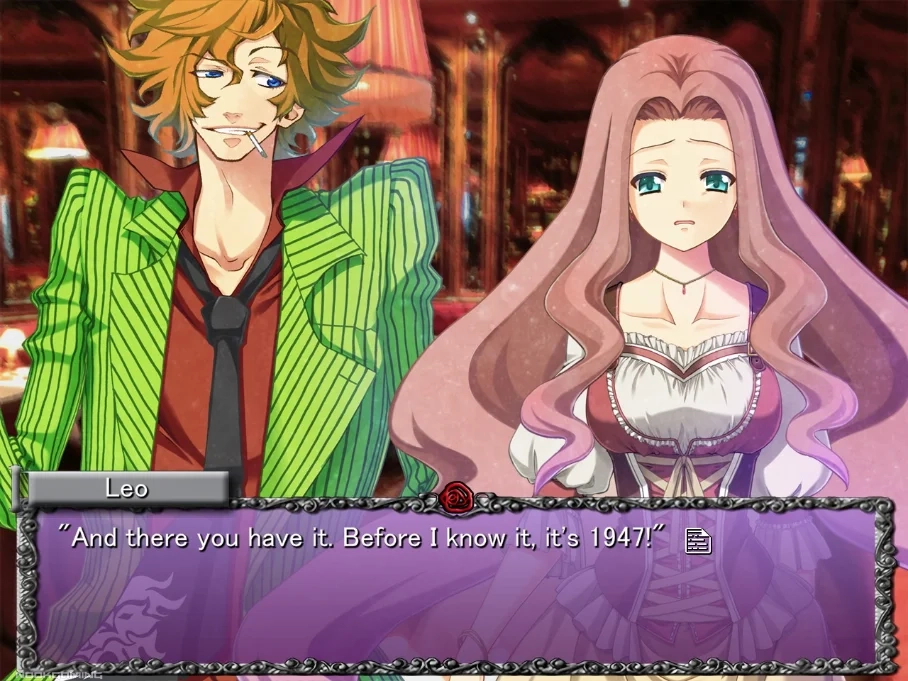
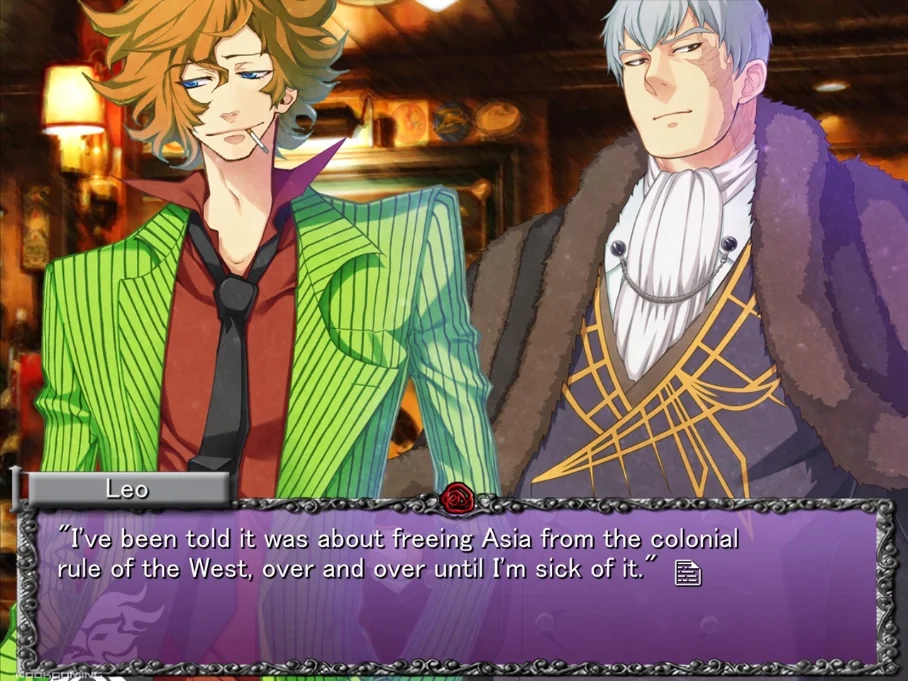
Most of the actual events we see take place in 1947, a few years after the end of the war. The two main protagonists are a sly war veteran with a cigarette perpetually poking out of his mouth named Leo Shishigami, and a woman he runs into named Rose Haibara who operates a nightclub. After Leo helps deal with some thugs threatening her, Rose hires him to be a bodyguard at her club, the Primavera.
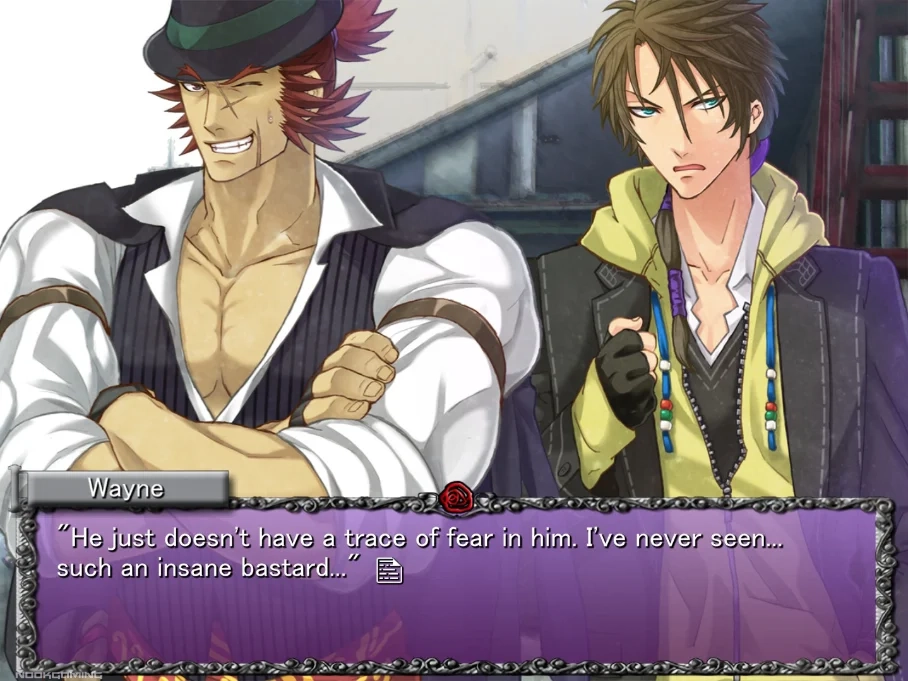
Here we meet the rest of our main cast, which consists of other bodyguards (Cyrus and Wayne), hostesses (most notably Meryl and Stella), as well as Primavera’s treasurer (Richard). Rose makes for a bit of an unexpected protagonist, as she’s a very optimistic, too-nice-for-her-own-good figure who tries to help others around her even though she’s the figurehead for a less-than-wholesome business. Despite most employees there (both hostesses and bodyguards alike) getting involved in far dirtier work than her, many of them look to her as a beacon of hope with a dream and goals admirable enough to fight for. Leo swears loyalty to her initially after she’s basically the only one to hook him up with a decent paying job, but he finds meaning in her goals as a way to hopefully pave a better future.
The story of Rose Gun Days -Season 1- deals a lot with both national and interpersonal politics that underpin basically the entire narrative and reflect the darker side of this version of Japan. A lot of characters deal with the sense of being second-class citizens within their own country, and much of the backdrop to the story involves how organized crime popped up as many Japanese became desperate to find protection, wages, and a sense of identity and belonging. Japanese businesses struggle immensely to get what they need to operate, given that the Americans and Chinese control most of the supply chains and operate cheaper, furthering the downward spiral. There’s also a share of divide between the sexes, given how many men were veterans of the war, while many women resorted to hostess and prostitution work (often for the pleasure of wealthy non-Japanese men) to be able to earn enough to get by. Even Primavera has its own share of interpersonal politics, as many of those there struggle to figure out how best to operate the day-to-day both safely and in the interest of Rose’s noble but at times naive ambitions, with her effectively being given the leadership title of “madam” because the club would fall apart if anyone else held it.
A Catch
There’s a lot of intrigue to the backdrop of this story. At its best, the picture painted by the setting and the way the characters operate can be quite engrossing. There’s a lot of interpersonal politicking going on as different factions work around one another and the various conflicting forces at play. There are some interesting themes here about things like belonging, pride, identity, community, and the like, but also dealing with the consequences of one’s past and making difficult choices. We see the struggles that come with post-war power vacuums and the way heavy discrimination pushes the disenfranchised toward desperation. While 07th Expansion has occasions of tugging on themes beyond just the scope of the stories they tell, I find Rose Gun Days to be an attempt at a fairly more mature and personal story than their previous works.
It works to an extent, though there were a couple of points that I felt I kinda had to just roll with, stuff that is admittedly beyond the scope of this review to really deep dive into, but which nonetheless rubbed me a bit oddly. It handles female characters a bit inconsistently for example; a couple of them feature plenty in the action scenes, and the tone is surprisingly sympathetic towards sex workers at spots, but it also has more than a fair share of painfully cliche “damsel in distress” scenes to advance the plot. As well, knowledge of how the real-life World War II conflicts between China and Japan actually played out makes some of the themes of this story hit somewhat weirdly, given the rather patriotic narrative theming. That isn’t to say there’s a lack of nuance in perspective here, and this is somewhat of a setup-driven story, so I’ll reserve full judgment until I get to later releases. Still, within the scope of reading Season 1, it did nag at me a bit.
Progress
The actual progressing narrative of Rose Gun Days -Season 1- takes place over several chapters, though it can take a fair bit to get going. The first few chapters have multiple instances of similar events, such as multiple confrontations with the same mafia and multiple kidnappings (and subsequent rescuings) of women from sleazeball sex-pest types. It really isn’t until about the final third of this set of episodes that things really start to get interesting and the suspense actually starts to feel convincing as the main cast starts to get genuinely tested, both for their convictions and their ability to fight back against the stronger forces threatening them. It gets to be quite tense and enjoyable, it just takes a while to get there.
Part of that has to do with the main cast. There are really only so many ways they can show Rose being a wide-eyed idealist in this bleak setting, or Leo being mister bantering bodyguard who effortlessly takes down everyone he comes across as they do for a decent portion of the narrative. Leo has something of a war-related backstory that informs his direction as a character, but it’s not especially thoroughly explored in Season 1. The rest of the cast is fairly ensemble, with nobody really getting the spotlight for long enough to really get that strongly attached or much sense of who they are beyond the surface.
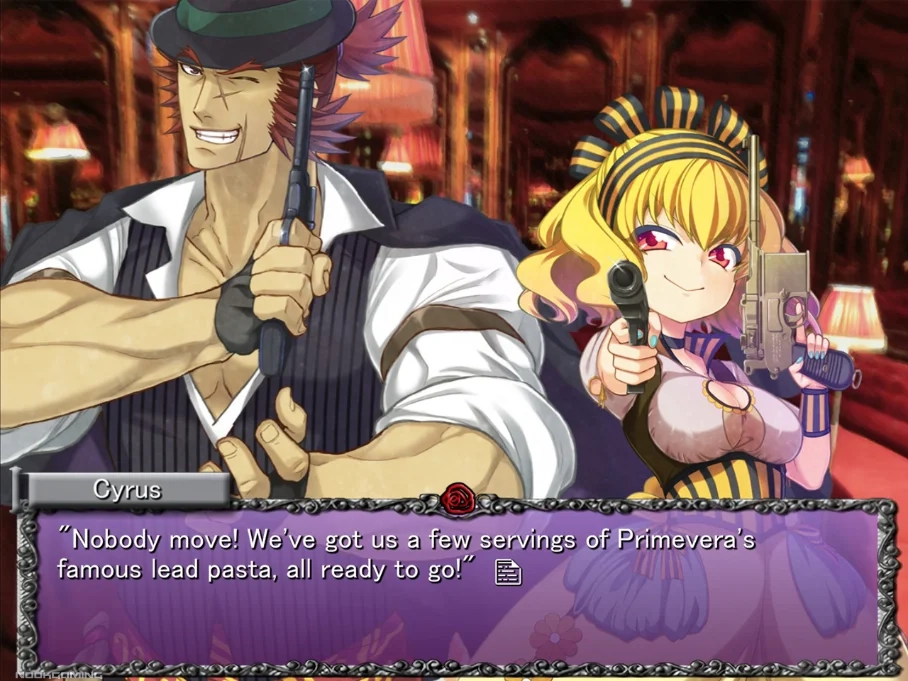
That’s not to say the cast isn’t at least entertaining to an extent. They often play off each other better than they stack up individually. You get some glimpses into who they are as people in a lot of the more minute interactions, such as when they’re hanging out, playing cards, drinking, etc.
It is admittedly somewhat tough to assess 07th Expansion works solely by their opening entries, given that they tend to change course pretty considerably by the time you get to later installments. There’s a lot that has been teased but not yet fully explained or delivered on, and Season 1 in particular ends on something of a cliffhanger. A good share of the dialogue here is laid on fairly heavy-handedly as well, lacking much in the way of subtlety as the story tries to establish its five Ws of who, what, when, where, and why.
The Reading Experience
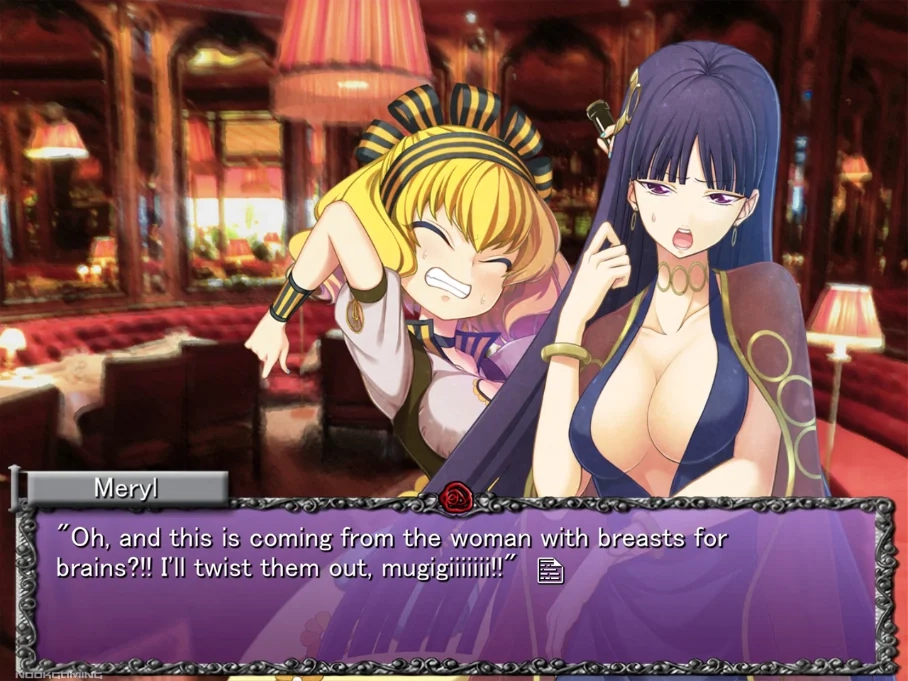
From what I can tell based on the credits, Rose Gun Days -Season 1- is an official edit by MangaGamer with a basis in an older translation done by Witch Hunt, who did a lot of work translating various 07th Expansion titles back in the day. The translation maintains honorifics, and while translations that use them primarily for Western names tend to read a bit weirder to me as an English speaker, they make a lot of sense to include in a story focused on Japanese characters who don’t exactly have Western names by choice. I do have some minor gripes here and there though with the text, like certain odd onomatopoeias and vocal sounds (see the above screenshot), as well as some bizarre anachronisms like the use of the term “loli” in a setting decades before it was established.
I tend to read visual novels on my somewhat lower-end laptop, and don’t know if it’s a matter of optimization or the port to Unity, but I found performance on my laptop was surprisingly poor despite it being able to run plenty of visual novels made and released in the 2020s just fine. My desktop worked just fine; this is just something to be aware of if you read visual novels on older or weaker hardware.
Verdict
While there’s plenty to like, Rose Gun Days -Season 1- makes for a bit of a bumpy start to this series. There are the makings of a compelling, thrilling, and thought-provoking political action-drama here, but it takes awhile to hit its stride, by which point it feels like it is already setting itself up for its next season. It’s an enjoyable and worthwhile read for what it is, though it’s not fully realized just yet and has some cracks along the way.
ROSE GUN DAYS -SEASON 1- IS RECOMMENDED

Purchase: Click Here
If you are looking for another visual novel, you might want to check out Eve of the 12 Months. We have also covered a wide variety of visual novels both original to English and localized from Japanese, which you can check out here.
Many thanks go to MangaGamer for a PC review code for Rose Gun Days -Season 1.
Been playing games since my papa gave me an NES controller in the early 90’s. I play games of almost all genres, but especially focus role-playing, action, and puzzle-platform games. Also an enjoyer of many niche things ranging from speedrunning to obscure music from all over the world.