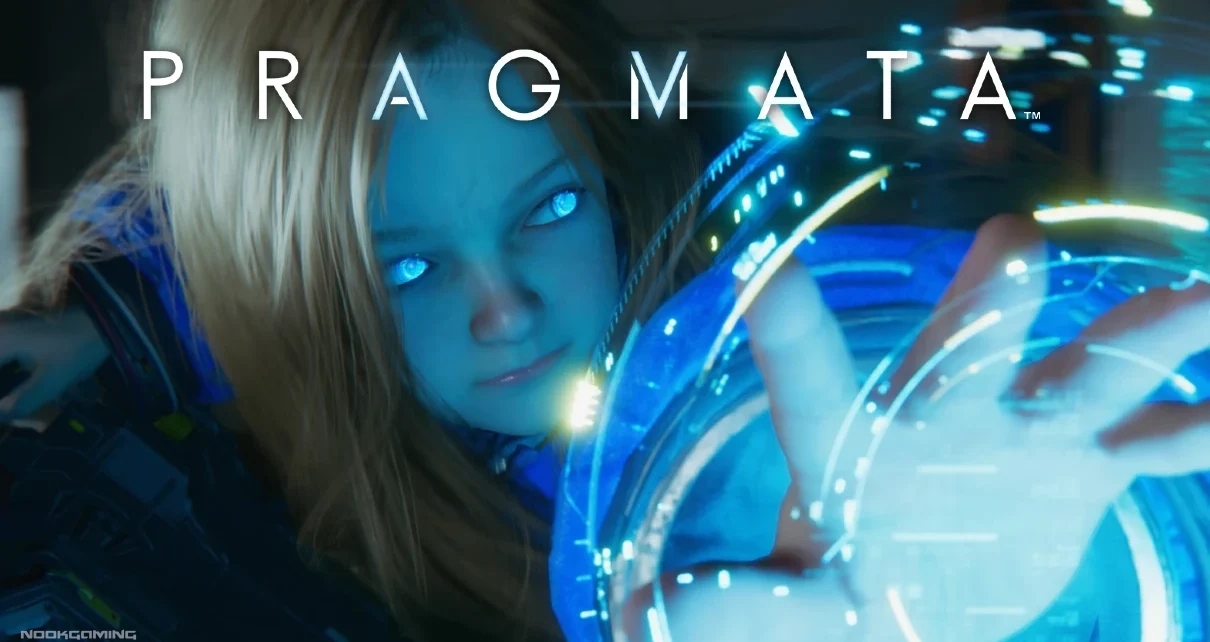
After years of shifting release dates, Pragmata has finally landed. While delays are never welcome, there is a certain sense of timing to Capcom launching this sci-fi action-adventure title just as humanity completes its first crewed lunar flyby in decades. Let’s just hope that the events of Pragmata stay in the realm of fiction.
Sci-Fi Turned Survival
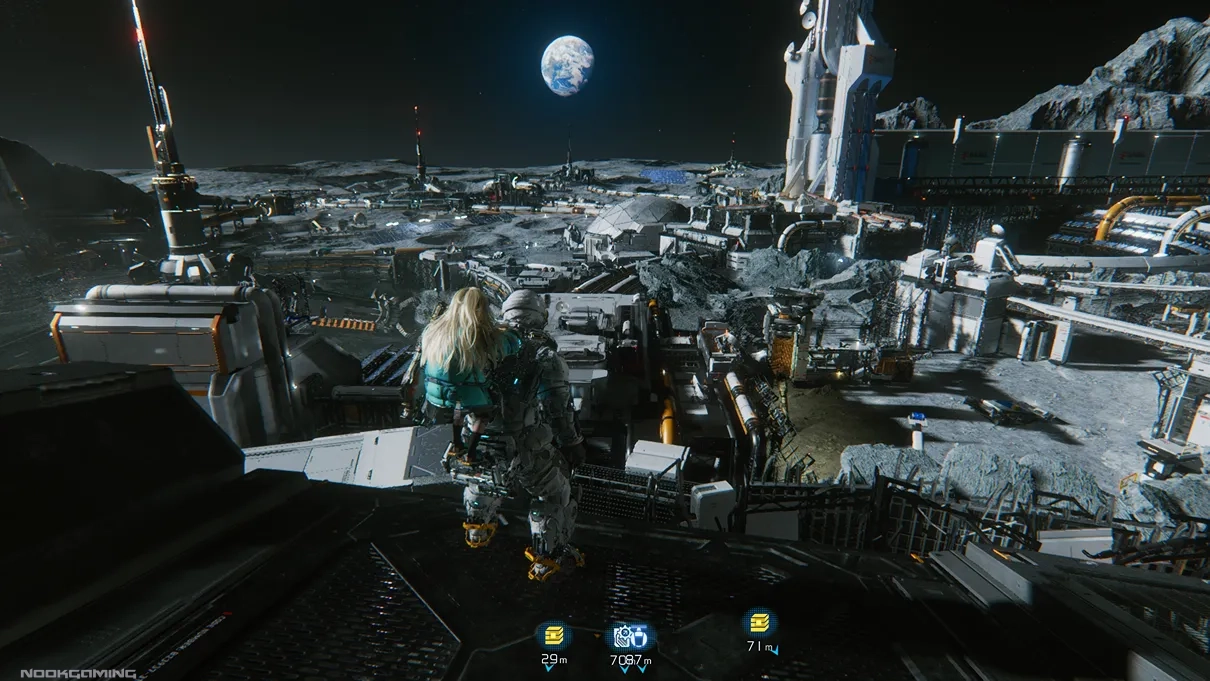
Pragmata opens with a crew of four approaching a station on the moon, marveling at the technological wonders created with Lunafiliment, a material made with Lunum, a mineral only found on the moon. Delphi Corporation has discovered how to use this to 3D-print almost anything, including additional 3D printers. They’ve been sent there to investigate and enact any necessary repairs after communications with the station were lost. But they soon find that no one is there to greet them. When a moonquake strikes and the silence turns into the sound of robots, their team of four is quickly whittled down to one. This is no longer a repair mission, but a survival one for the engineer Hugh.
By chance, Hugh was hurt, but found by a Pragmata, a child-like state-of-the-art android, whom Hugh dubs Diana, in lieu of her overly long model name. She heals him and uses her abilities to help him fight off the robots, though she has no idea why they’re attacking or what happened to the humans.
This begins their adventure of trying to make their way back to Earth, battling against the robots controlled by the station’s AI administrator, IDUS, along the way.
In terms of cutscenes and major plot events, Pragmata is fairly light on these and mostly backloaded. Much of the time spent playing Pragmata is making your way through various sections of the station and being blocked by IDUS’ lockdown. Instead, it tells much of the story of what happened through environmental storytelling, finding files, and recordings left behind by the researchers who worked on the station. Then, as it nears the end, it hits with a touch of intrigue, a rather somber backstory, and some emotional moments. While the shift in storytelling style was a little jarring, I feel it worked well, particularly due to the themes of the game and many of the small moments revolving around the idea of fatherhood and family.
Dad Space
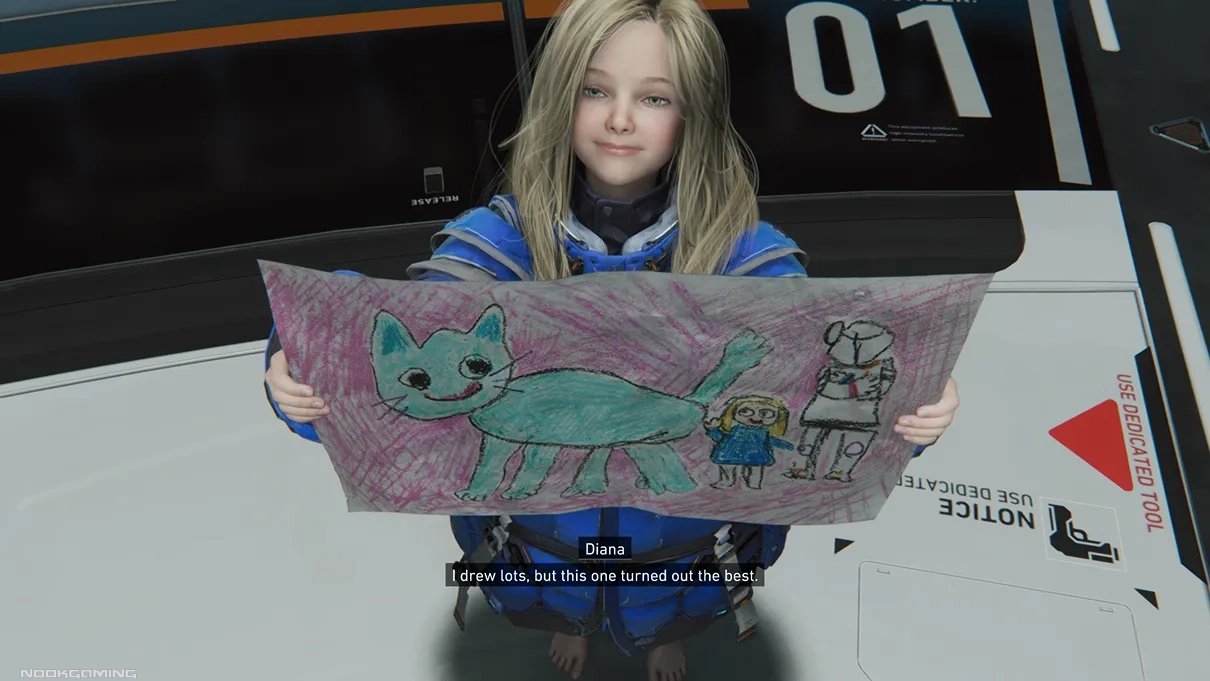
While the objective of Pragmata is to escape the station and return to Earth, I found that much of the charm of the title revolved around how it explores the relationship between Hugh and Diana, as well as the wider concept of family. Diana is an android, but she acts very much like a young child who knows nothing about the world and is excited anytime she encounters anything new, while Hugh fits into a concerned fatherly role.
Many of the quieter moments of Pragmata involve an inquisitive Diana asking questions about life on Earth, things she sees on the station, or even mimicking Hugh’s behavior. Despite her robotic nature, she seems very human, even if she doesn’t always understand concepts like the sadness surrounding death at first. Her questions and lack of knowledge serve as a catalyst for Hugh to open up about his own upbringing as an orphan, letting us learn more about his thoughts on the idea of family.
The familial relationship between the two is quickly established, perhaps in part due to them being tied together to survive. And to make it clear, this isn’t only a case of Hugh protecting Diana; Diana’s abilities as an android are needed just as much as Hugh’s skill with a gun, and while Hugh occasionally needs to provide reassurance, they both understand that.
Grids and Guns Gameplay
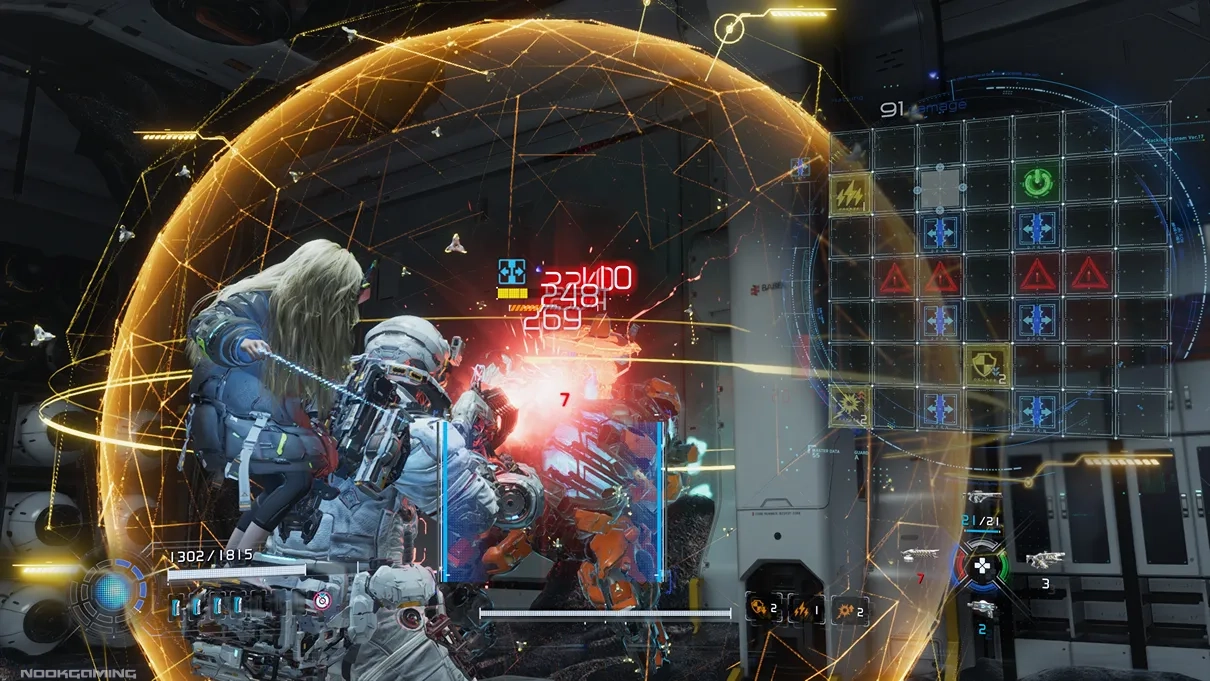
Pragmata uses a fairly unique mix of hacking by navigating grids and engaging in shooting combat, while moving around to dodge. Diana needs to hack to open an enemy up for attack, then Hugh needs to take them down with his guns. Multitasking while controlling both Hugh’s movement/shooting and Diana’s hacking is both incredibly engaging and underpins the idea that they’re a team, working together to survive. Even if Hugh is the one you’re moving, you are effectively controlling both characters as a single unit.
Combat feels rather easy at first with only a few slow and lightly armored enemies at a time, but around the midway point, it starts to feel more hectic. Avoiding environmental hazards, faster and more varied attacks, and higher enemy numbers are thrown into the mix.
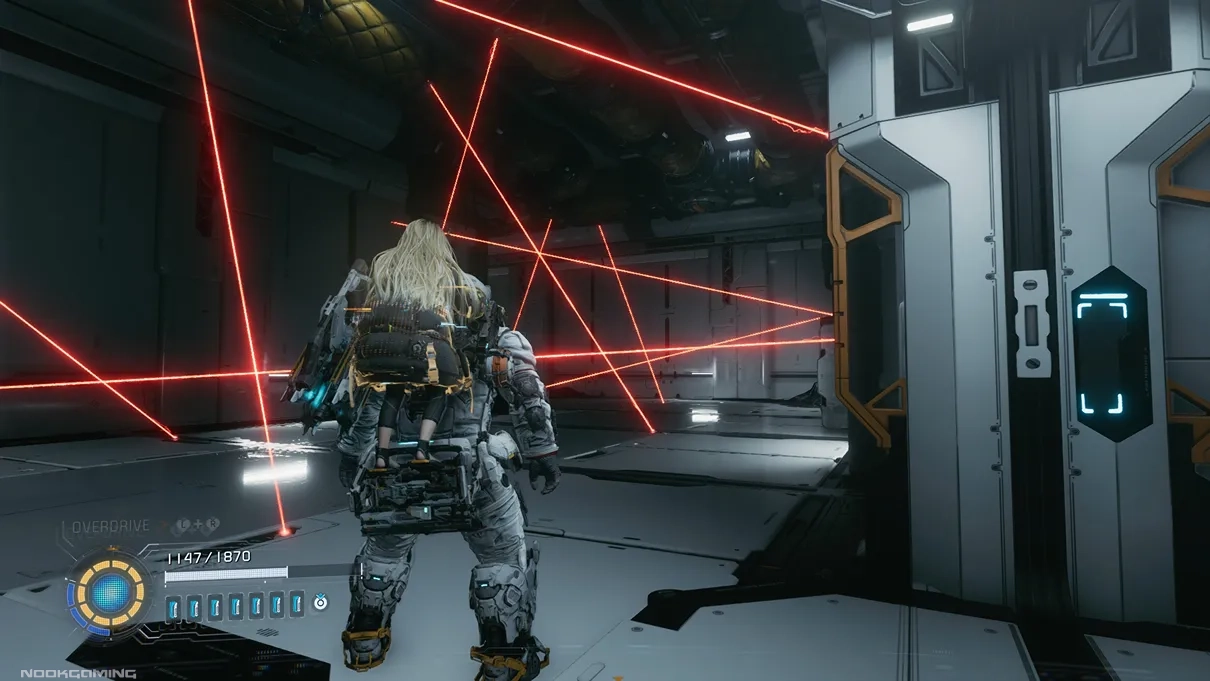
As you progress, quite a few features get added and the tactical side of gameplay becomes more apparent. Hugh picks up a variety of weapons; because they have low ammo capacity and often perform far better in specific circumstances, quickly deciding what to use and when to swap makes planning a must. Diana’s hacking grid adds a number of special nodes throughout, which have powerful effects on the enemy, such as additional damage, freezing them, or having them attack allies. You only have a few of these, as they’re limited and collectible, much like ammo. Choosing to navigate the grid to choose the best node (or even avoiding the limited ones completely to save them for more suited enemies) takes quite a lot of focus too, all while trying not to get hit, which stops the hack. You can also find occasions where you might be able to hack a missile flying toward you or an environmental hazard to take out the enemy, which adds to the excitement.
Even if combat gets hectic, I never found it unmanageable while playing the main portion of the game. That said, there are some additional challenges, which do ramp up the difficulty. And for those who want more of a challenge, there is a post-game episode that unlocks a little additional story, and a New Game+ mode. Beating the game unlocks Lunatic difficulty too. For those who do want to take it easy though, you can choose to play on Casual instead.
Exploring a Linear World
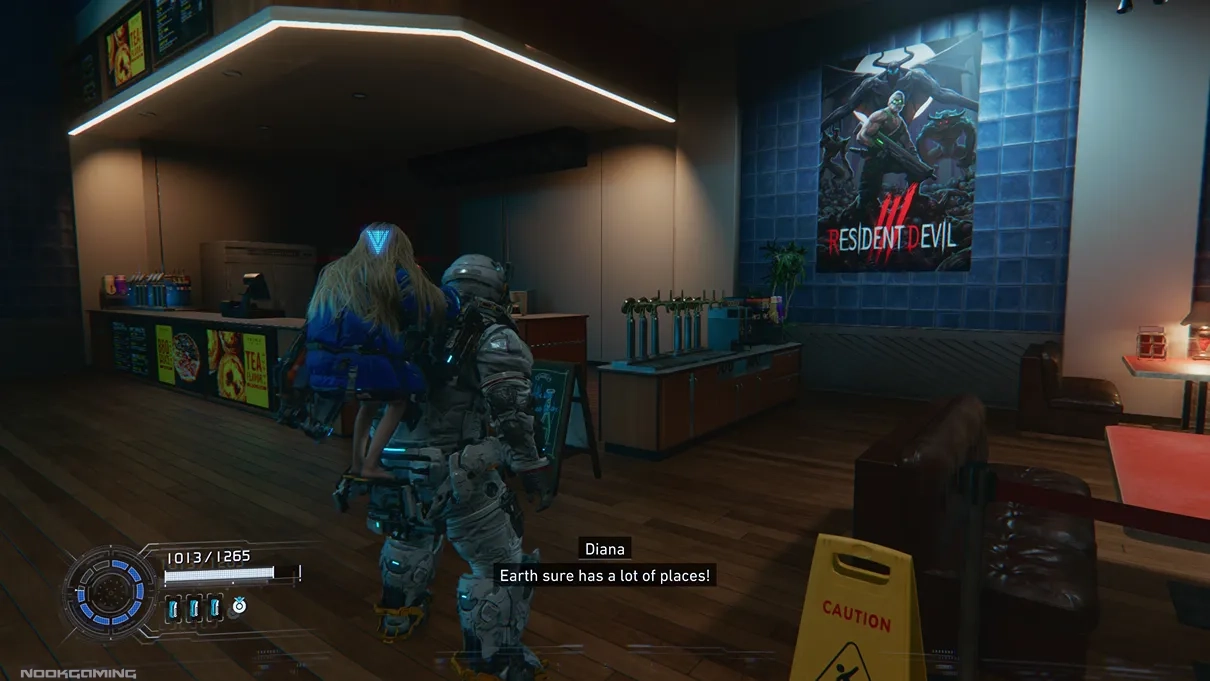
When you’re not fighting IDUS’ robotic army, most of your time in Pragmata is spent making your way through mostly linear sectors. I hope you enjoy the classic gameplay loop of coming across locked doors and then running along paths to find the switch to unlock them, because there’s plenty of that throughout the entire game. There’s even one point where you have to find switches to unlock a door to get to another switch for a door.
The puzzle elements are fairly straightforward. Most of them are just finding switches and the occasional raising or lowering of platforms, but slightly more complex ones come up on occasion, such as moving boxes around. It’s more often the optional elements that require more thought than the parts required to make your way through the main game.
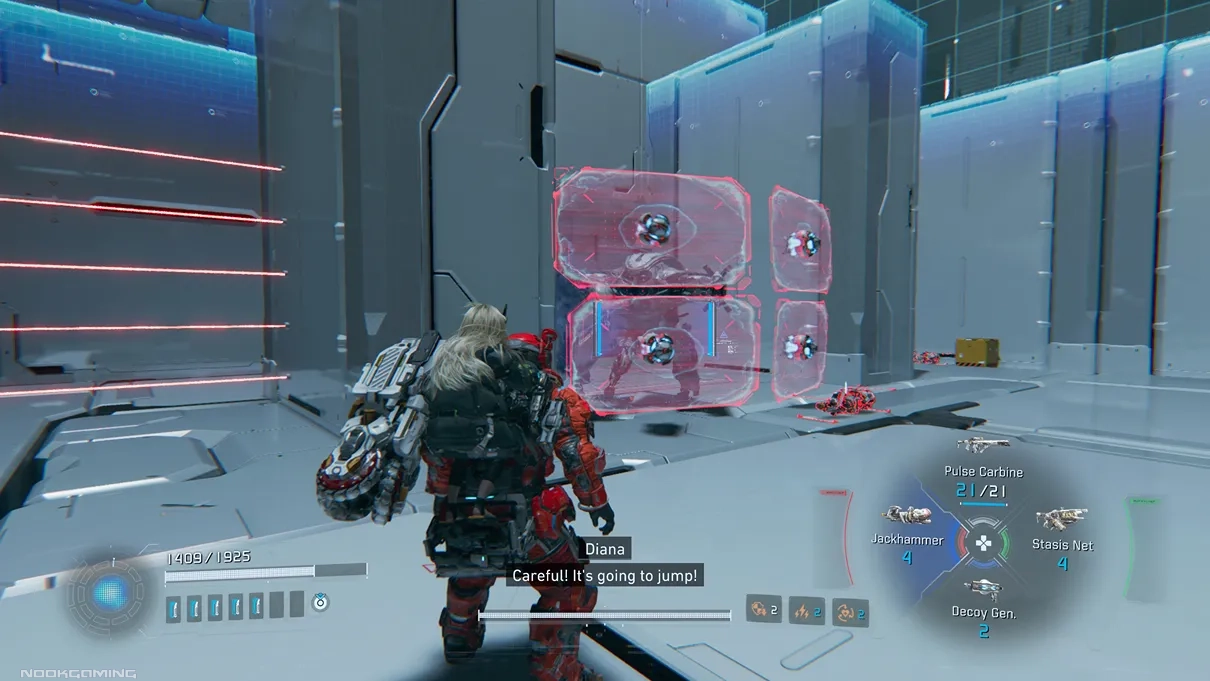
While the game is mostly linear, that’s not to say there isn’t room to explore. Pragmata features quite a lot of optional collectibles, mostly used to power up Hugh and Diana. Some of these are slightly off the beaten path, and while you never need to stray too far, they might be a room or two away, or require dropping down from a higher platform onto a slightly hidden one, or solving a puzzle. In some cases, you might need to backtrack too, if your current abilities can’t clear an obstacle just yet.
Beyond the optional items found by exploring, you can unlock simulated mission challenges accessed through the hub too. Some of these not only provided a real challenge, but also some great rewards.
Even if the main story of Pragmata has you mostly following a linear path, I found a lot of value in trying to figure out how to access some of the hidden-away rewards, finding files in rooms I may not have needed to go into, and completing the extra missions. It helped to elevate the experience. Plus, speeding through only the main story would have probably seen me finished within 10 hours, rather than the 15 it took me in total for my initial playthrough.
Human-Like Androids and a Desolate Moon
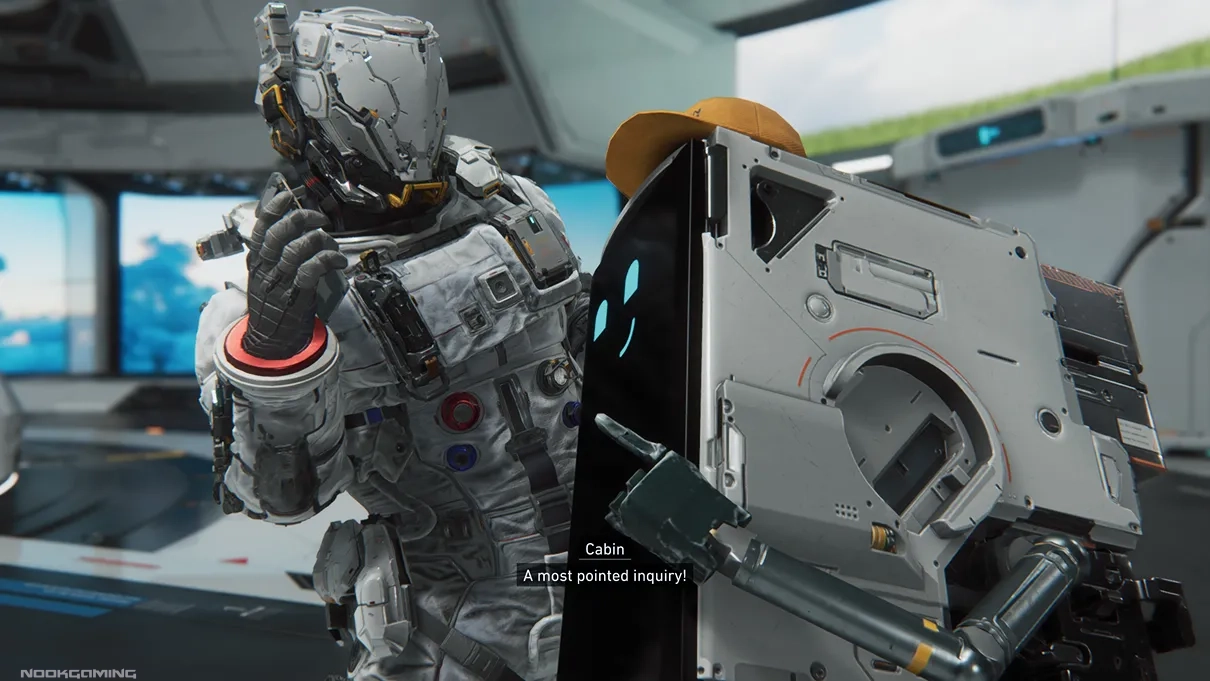
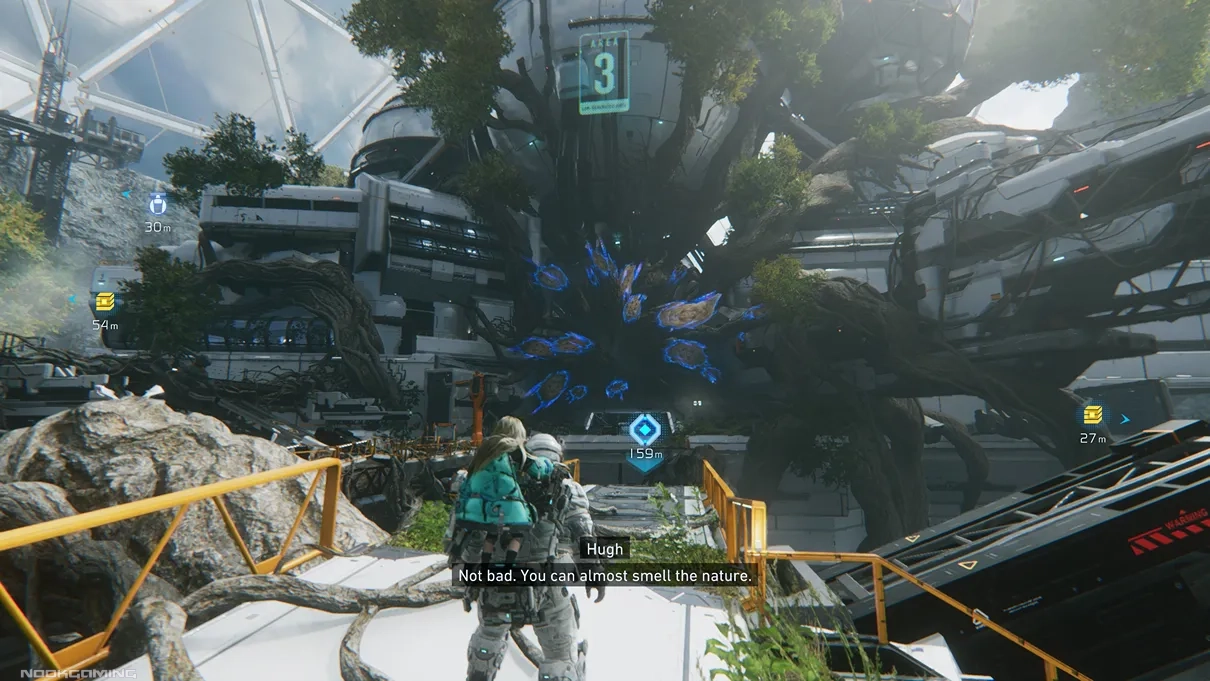
Much like Resident Evil Requiem, Pragmata uses the RE Engine. It both performs and looks great, in my experience on the PlayStation 5. The world is incredibly detailed, and it accurately creates the feeling of being in a sci-fi moonbase. Pragmata has a relatively small world, but the positive trade-off for that is the sheer amount of detail they put into the environment.
I was slightly concerned at first that Diana would create the uncanny valley effect, due to the more realistic approach to her appearance. Fortunately, I didn’t end up feeling this way. Between the design, the realistic way she moves, and the voice acting, she comes across as feeling very real. Hugh was less of a concern, as he most often is seen in a bulky space suit with his visor down, but I should note that his voice acting was also praiseworthy, helping to create an emotional experience.
Verdict
Pragmata was well worth the long wait. It delivers a fun and unique hybrid gameplay experience, which ties into the emotional journey between Hugh and Diana, their growing familial connection, and their reliance upon one another. The way the multitasking gameplay mechanics tie into their bond works brilliantly.
While this is a rather focused and linear experience in some ways, there remains plenty of detail to explore for those willing to dive in.
PRAGMATA IS HIGHLY RECOMMENDED

If you are looking for another modern action game, check out our review of Romeo is a Dead Man.
Many thanks go to Capcom for a PlayStation 5 review code for Pragmata.

A gamer since the days of Amstrad and DOS and someone who has dabbled in a variety of professions. He enjoys a wide variety of genres, but has been focusing on visual novels and virtual reality in recent years. Head Editor of NookGaming. Follow him and the website on @NookSite.