Last Command is a 2022 indie title by CreSpirit and No Stuck Game Studio from Taiwan. As someone who was a big fan of CreSpirit’s hit title Rabi-Ribi, I was eager to see what else they would publish in the years following its release, so the announcement for Last Command had me rather intrigued. It was especially enticing to me because they had already successfully put out a personal favorite that used bullet hell mechanics in an interesting way, and that similarly makes for one of the selling points behind this game. With the release of Last Command’s B-Side Story DLC, I figured it’d be a good time to tackle this cute-looking, deceptively difficult game.
What a Concept
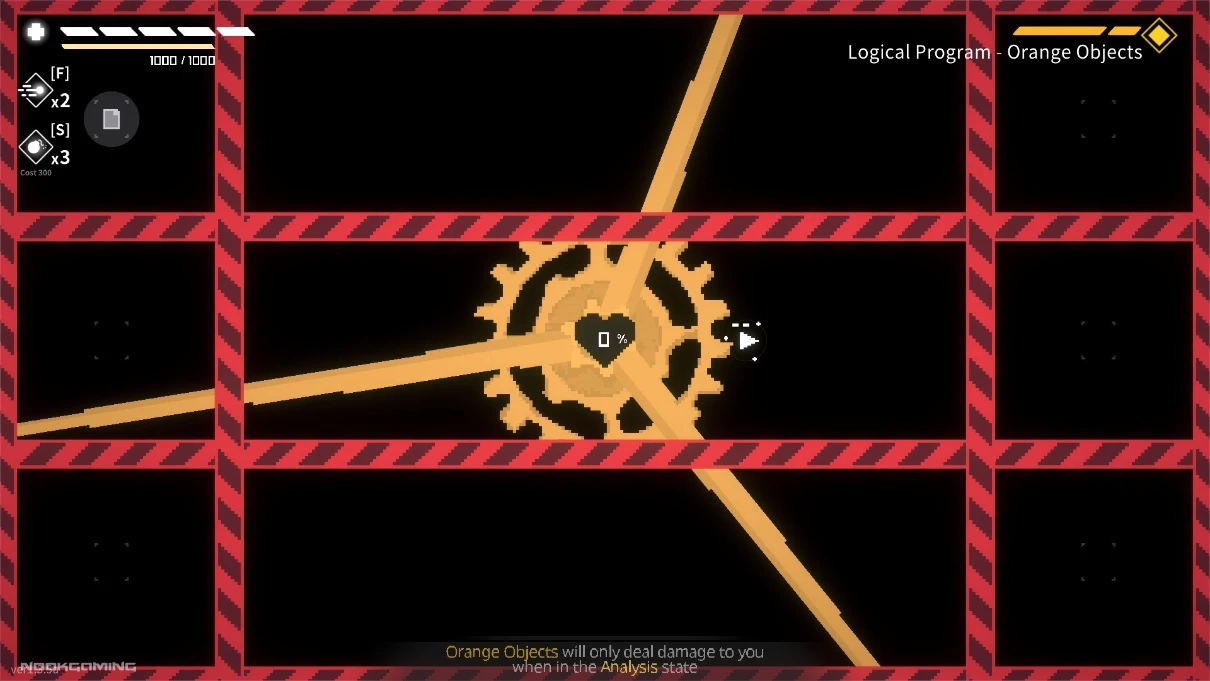
The simple pitch for Last Command is four simple words: “Snake meets Bullet Hell”. If you’ve ever played the extremely old game Snake (sometimes called Python or Blockade) on a computer, phone, or calculator, it borrows much of the core concept; you move around as a snake-shaped character at a fixed speed in four directions, running into objects on the screen and “eating” them to make your snake get longer. Now imagine that, except you’re fighting against bosses who shoot a whole bunch of colored bullets and objects at you, which you have to dodge as well. As you eat more (or pick up “Data” in this game’s case), your snake gets longer and has a bigger hitbox, but you can actually fire off some of your segments to deal damage to the boss. Collecting enough Data allows you to enter “Overclock mode”, which gives you several bonuses and encourages you to play a bit riskier by having a longer snake rather than firing data off the second you grab it. This game is something that can take a bit to fully explain, but it’s something that immediately clicks and makes sense when you see it in motion.
Thankfully, the mechanics of Last Command are relatively simplified to feel a bit more comfortable to actually work with. Like with many bullet hell titles, you have the ability to hold down a button to go into a sort of “focus” mode (called “Analysis” mode in this game), which shrinks your snake down to a hitbox of one segment and lets you have much more finely-tuned movement in eight directions. When firing your collected Data at a boss to deal damage, it takes a brief delay to actually fire, but the bullets home in on the boss without you having to aim. You also have a health bar rather than damage resulting in a 1-shot kill, and there are a few (albeit limited) ways to replenish health. Most boss encounters have at least one checkpoint midway through with the option to continue partway through the fight with replenished health should you die after reaching it. You also have the ability to dash up to twice with the tap of a button, which gives you some invulnerability frames and can get you out of a jam in a hurry, although it has a modest cooldown.
I’ll get a bit more in-depth on this game’s more specific and unique mechanics later, but in short, Last Command is a title that feels remarkably fresh for what it is. It combines two of the oldest genres of game (snake and shoot ‘em up) into something that feels surprisingly modern. While indie titles like Undertale and its successor Deltarune utilize some degree of borrowed bullet hell mechanics as a way to spice up their RPG combat system (and thus sort of end up as the de facto closest comparison I really have for this game), Last Command feels like it takes the idea to its logical extreme.
Command?
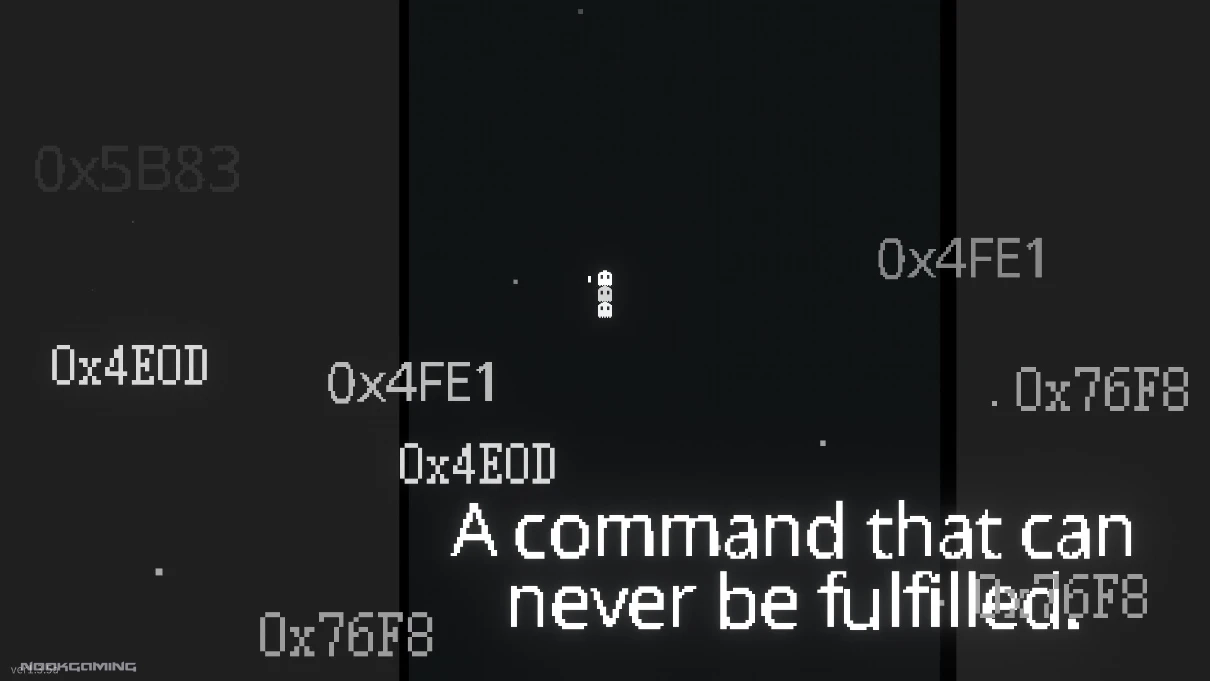
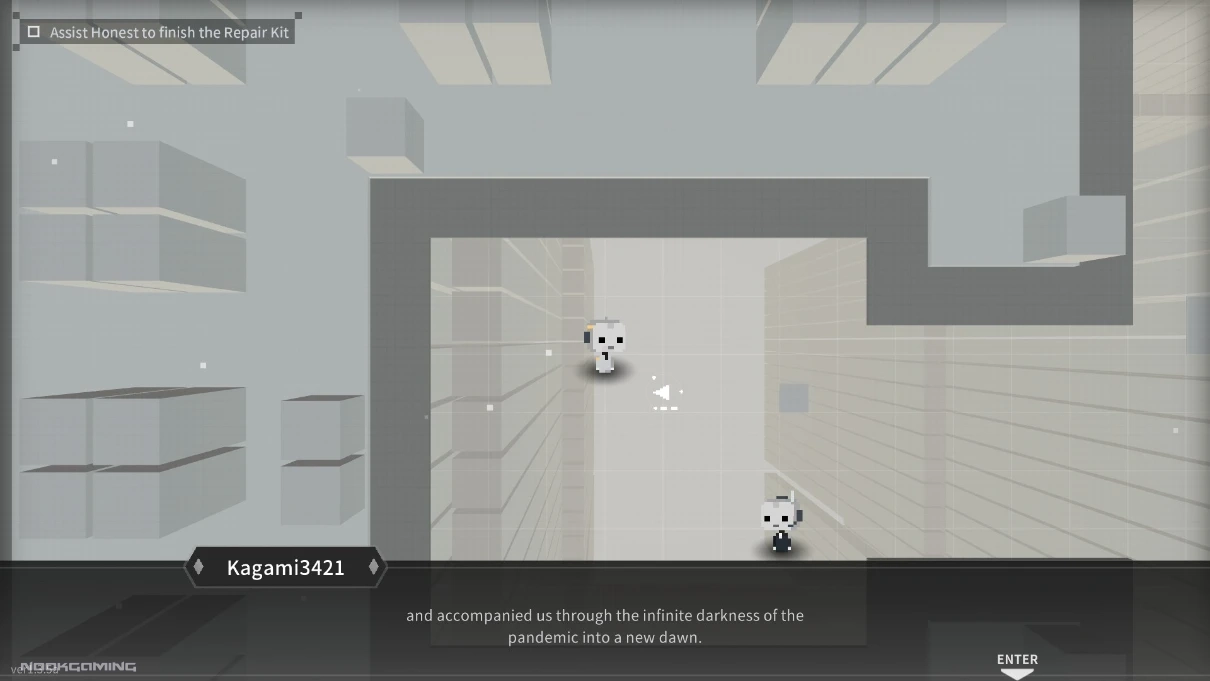
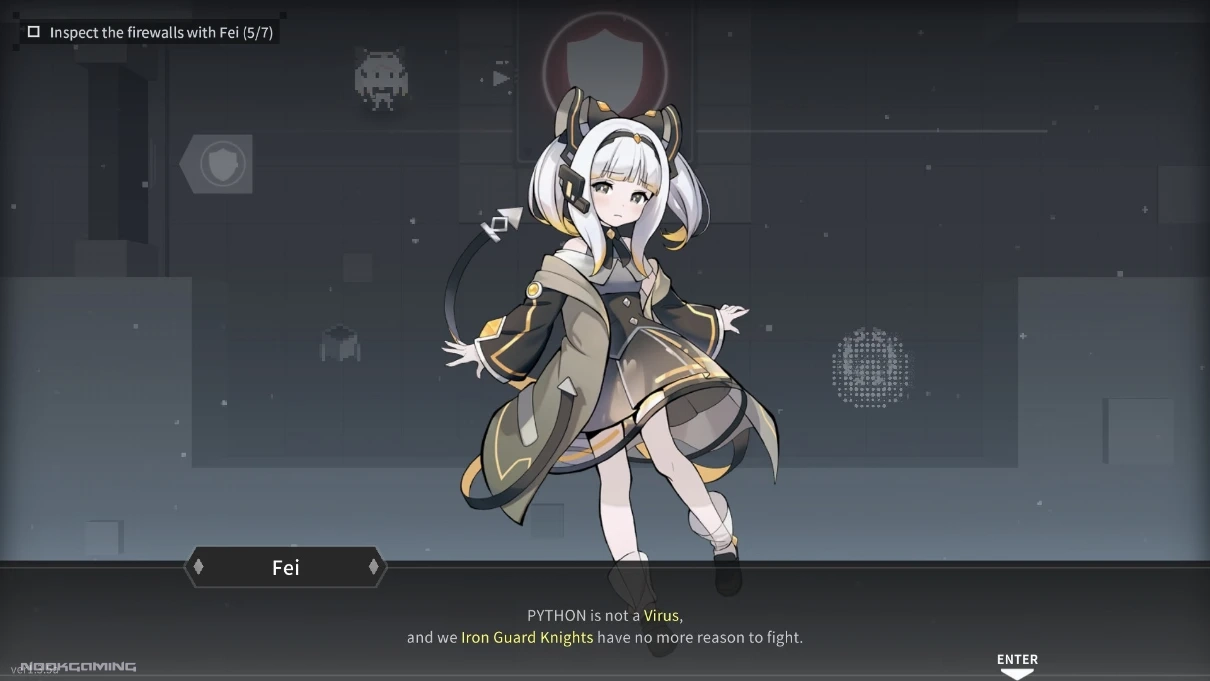
Last Command takes place in a digital world, far far off into a speculative post-apocalyptic future. You take the role of a program named PYTHON, a silent protagonist shaped like a 1-bit snake who adventures around this digital world and interacts with programs that happen to still be left. Along the way, you come across a Support Program who guides you through parts of the game, and later a girl (program) named Fei, who calls herself an “Iron Guard Knight”. In this world, all programs are assigned a “Last Command”, or their main purpose and ultimate goal. As PYTHON does not seem to have one, Fei decides to tag along as she can no longer remember her own, and thus she finds solidarity in seeking each other’s purpose.
Unfortunately, not all is well in this digital world for the programs who populate it. Although viruses were supposed to have been eradicated, strange things are going on. PYTHON and Fei are initially attacked by Fei’s former comrades, and the two of them have to escape to one of the hub cities, Circuit City (not to be confused with the electronics retailer) to start to figure out what to do next.
Last Command presents a fairly interesting enough backdrop, one that has a slightly melancholic vibe in its tone due to the nature of its world, but which does so a bit matter-of-factly rather than explicitly cynically. Fei also sort of works as a bit of an upbeat anchor keeping the game from being depressing. You can piece together a fair bit of its worldbuilding through talking to NPCs and reading logs, which I’ve grown relatively fond of in games. The nature of the game being in a computer world also means that it’s self-aware that it’s a video game and skirts the fourth wall accordingly, but it’s not particularly done for humor nor done insincerely or half-heartedly.

Alas, story is one of Last Command’s weaker areas. There isn’t a ton of characterization (nor many characters with enough screentime to begin with), and a couple characters just feel woefully underdeveloped. A lot of the story beats are quite predictable, and the writing isn’t especially compelling. Some of this can be attributed to a rather weak localization, as the game feels translated/localized at a level below that of a native speaker, and could have used a more thorough editing pass. The game has received a few updates in the years since launch which have fixed some more glaring text issues, but there’s still a share of awkwardly worded sentences that ultimately don’t do the writing any favors.
That’s not to say the game is without its moments here and there. There is still something there with its world, and there are a couple really neat parts towards the end. I won’t spoil it too much, but there’s a part of the game where you can really feel what the developer was going through in making it. Much of the programming, design, story, and concept of this game was done by a single person (who goes by Dinaya) who spent several years working on it. The section was not especially subtle, but I found it interesting all the same as an expression of how much a creator can put into a work.
.Exe(cution)
Most of the exploration of the world in Last Command outside of its boss fights is mainly for narrative purposes, with only a few light puzzles to solve here and there. While the game isn’t technically what I would call a “boss rush”, bosses are the heart and soul of the game, and where you will likely be spending most of your playtime. And in this department, Last Command doesn’t just hit it out of the park, it hits a grand slam into the upper decks.
It’d be one thing if bosses were the standard “rain swaths of bullets on the player” fare of bullet hell games. And sure, much of the enjoyment of this game is still going to spawn from the familiar satisfaction one gets from dodging attacks and learning patterns. However, there are a ton of really cool interactions with the bosses in this game that feel refreshingly well-conceived. As you progress, you encounter different bullet and projectile types, which are color coordinated and have different ways to deal with them. Combat is largely in greyscale and uses color to inform the player of valuable information; red is always deadly, blue requires you to not be moving, purple can be dashed into to clear, and yellow only damages you when you’re in Analysis mode. Bosses constantly use these in inventive and unique ways, sometimes even turning your understanding of the game’s mechanics as a whole on its head.
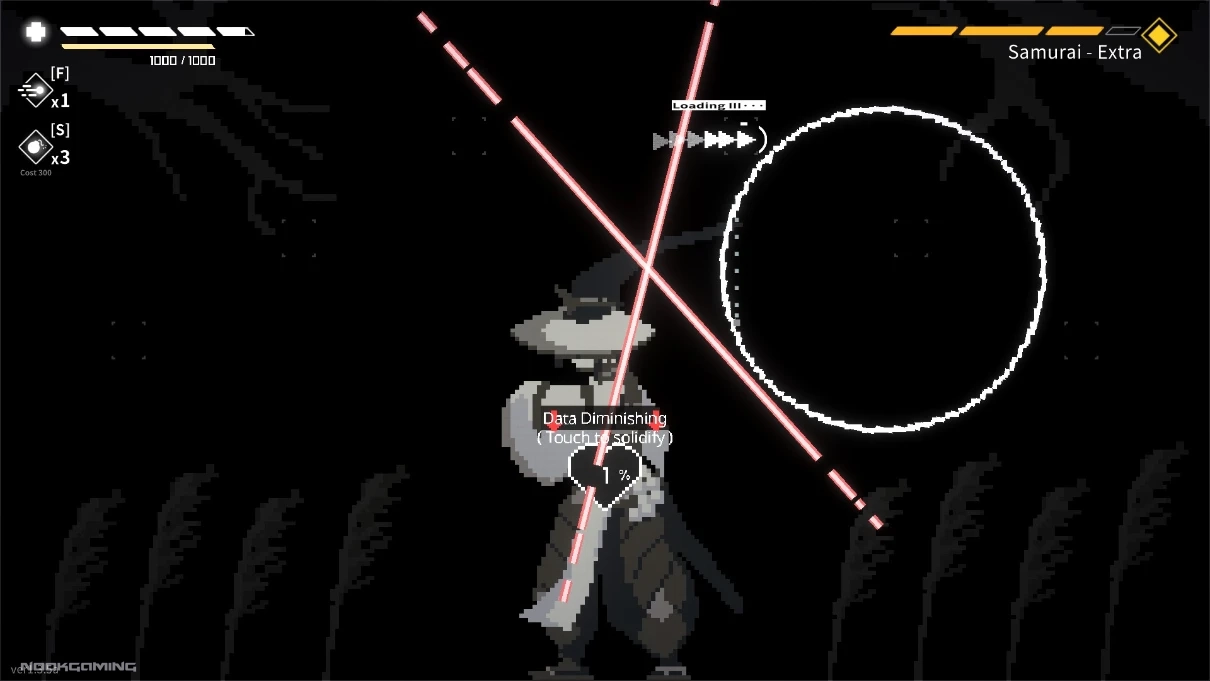
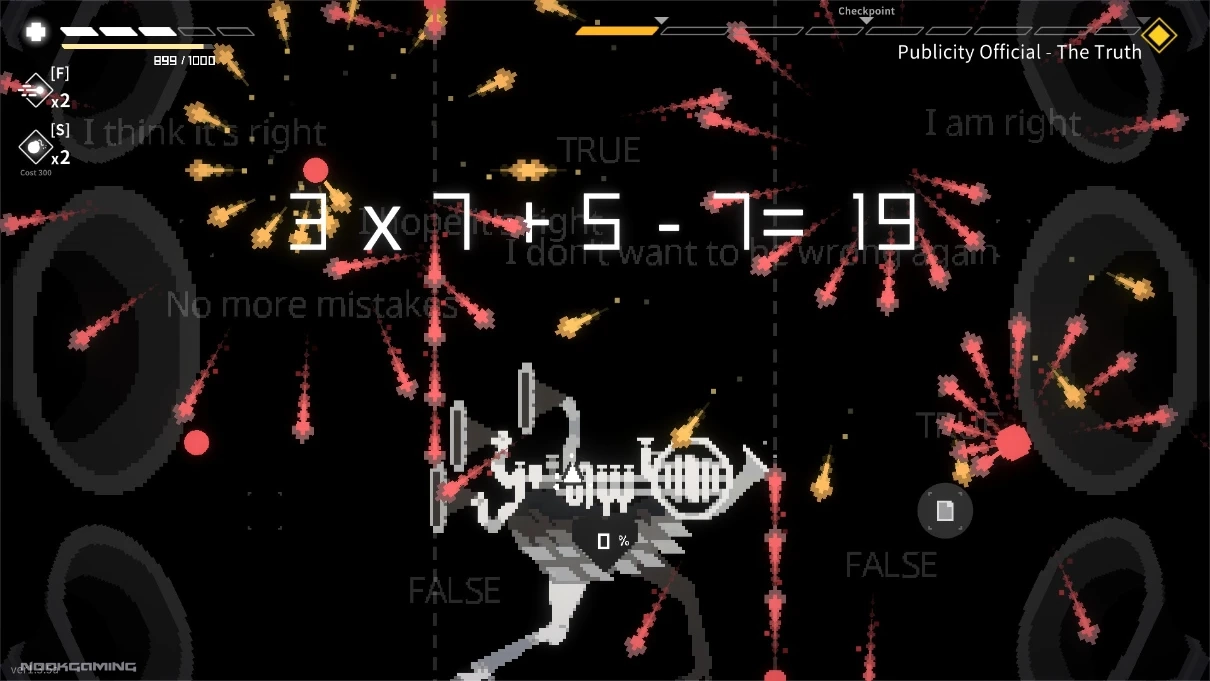
The amount of times a boss did something that left my jaw agape with its creativity was far beyond what I expected when I first purchased this title, and a lot more than one might think a game with this graphical style could offer. A lot of them fit a sort of theme, such as a samurai or a plant boss, with attacks that reflect their concepts in very fun ways. Sometimes things even get a bit silly, like a boss whose attack requires you to literally do quick maths to dodge its attacks. But it’s always imaginative and never repetitive. Mechanics are frequently iterated upon, with new applications to established concepts that regularly make me go “man that’s so clever!”
The accompanying soundtrack to each boss boosts the hype factor further. This game had three main composers (Luminash, Shiou Hsu, and Ninko), and they did a terrific job across the board. The boss themes typically go with the theme of the fight and match the level of tension of the story leading into it, and they’re often just banger tracks in general. To this day I still have several boss themes from this game in multiple of my music playlists, with Hime.exe and myLittle.patch being veritable standouts.
The Thrill of Victory
There are four different difficulty options (Story, Standard, Expert, and Nightmare) to pick from, each one escalating boss damage, health, projectile speed and volume, and tightening the screws on several of the game’s niche mechanics more and more. Difficulties higher than Story reduce the number of continues you have on bosses once you get past the first checkpoint to three, meaning three deaths will force you to start back at the beginning, preserving some of that arcadey shoot ‘em up feel. I’ve dabbled with all four difficulties, but did my first playthrough on Expert, which I’ve found to be a rather sharp increase from Standard.
The bosses on higher difficulties can make for rather daunting challenges, and are immensely satisfying to overcome. It helps that the majority of situations still feel pretty fair; failure usually feels like my own fault of insufficient execution or strategy as the game gives you plenty of tools to work with. The game’s difficulty curve is largely pretty smooth, getting reasonably harder with each chapter of the game, although a few people I’ve talked to about this game tend to find a different boss in particular that walls them longer than others. Thankfully, you can always lower the difficulty, as the game’s achievements simply check whether you cleared individual bosses on certain difficulties rather than your entire playthrough.
The game offers an equipment system (called Modules), which you find scattered in the world and aid you considerably in boss fights, which further augments the fun. You have the ability to equip up to three passive Modules to give yourself additional bonuses in combat. Many of these are suitable to particular playstyles, if not outright playstyle-altering entirely. Some are better suited towards certain bosses than others, so it’s a good idea to mix and match. Modules are color-coded based on the type of perk they grant, and certain combinations of colors yield additional bonuses. You also have one slot for an active Module, which you can activate at the press of a button to perform actions like dropping a delayed high-damage bomb, an EMP to clear nearby projectiles, or gradually heal yourself. Figure out which tool works best for you, they all have something to offer.
Verdict
Last Command is a master class in taking an idea to its creative limit. The game’s concept of “Snake meets bullet hell” is simple yet surprisingly novel, and it constantly demonstrates new ways to incorporate additional twists on its ideas. It has its share of limitations in narrative areas and an unfortunately weak translation, but it makes up for that with some brilliant, inventive combat and boss design, which is where you’ll be spending most of your playthrough. The game became one of my favorites of 2022 from the sheer number of times it managed to do something that impressed me and left me awestruck in spite of its seemingly humble exterior.
LAST COMMAND IS HIGHLY RECOMMENDED

If you are looking for another indie game, you should check out our review of NanoApostle.
The writer played Last Command on PC.
Been playing games since my papa gave me an NES controller in the early 90’s. I play games of almost all genres, but especially focus role-playing, action, and puzzle-platform games. Also an enjoyer of many niche things ranging from speedrunning to obscure music from all over the world.