MAMIYA – A Shared Illusion of the World’s End is a visual novel series released internationally back in 2021 by independent developer Kenkou Land under the publisher Fruitbat Factory. The series is a solo project by Kokoroten, the only member of Kenkou Land, who serves as scenario writer, artist, and programmer. The publisher describes the title as a dark visual novel that features themes of existential dread in an apocalyptic world.
MAMIYA is something I rarely hear about within my visual novel circles. I recall the name as something I’ve heard of in passing, but I hadn’t felt a strong urge to pick it up largely because no one was actually telling me to do it. However, after looking at its synopsis and preview, I got really excited to read it. The game has incredibly gorgeous artwork and a plotline that sounded sufficiently mysterious, yet intriguing enough to keep one’s attention. It felt like I might be finding hidden treasure on an island people seldom come across!
But is it actually all that good? Let’s find out by diving headfirst into the madness that is MAMIYA.
Note: This review features the first two episodes that were available in the original 2021 release of MAMIYA, FallDown and DownFall. DoomsDay Dreams, the second installment in the series that serves as MAMIYA’s third episode, is sold separately and listed as DLC on this title’s Steam page.
Beginning from Loss
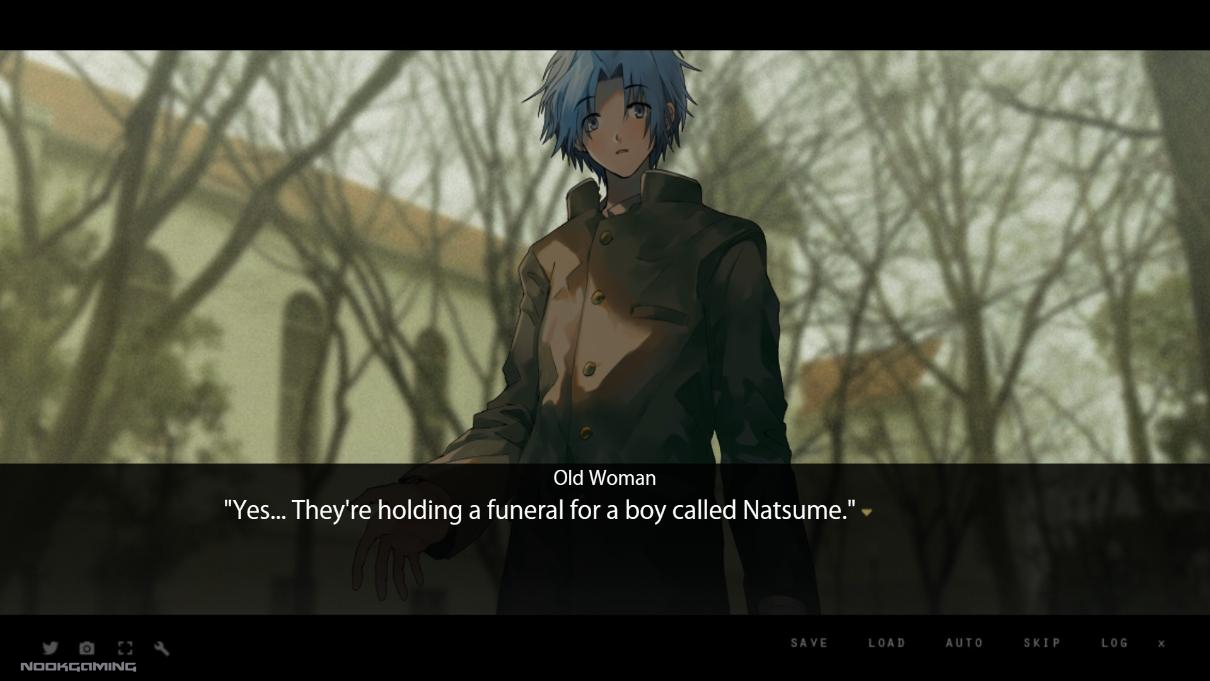
MAMIYA – A Shared Illusion of the World’s End’s story starts with the funeral of a character named Natsume, a 17-year old high school student who disappeared one day and came back already cremated. With no actual information available to the attendees surrounding his death, people can only speculate about the reasons that led to his unfortunate demise. Among the funeral attendees, there are four in particular that are given focus: a dark-skinned youth named Kikuchi Ryou, Natsume’s sensitive classmate Toujou Minato, a rough-looking adult known as Morichika Haruki, and the gigantic middle schooler Suou Keito. Although essentially strangers to one another, they grieve for someone who was once a friend they had in common.
After the ceremony ends, with no real interaction with each other, our four main characters leave the funeral behind them. Little did they know, however, that their association with each other ran deeper than just their relationship with Natsume. In this year when the end of the world was prophesied, these four men will separately encounter a being that continuously haunts them with the knowledge of their hearts’ inner workings—the ever-present MAMIYA.
MAMIYA of the Heart
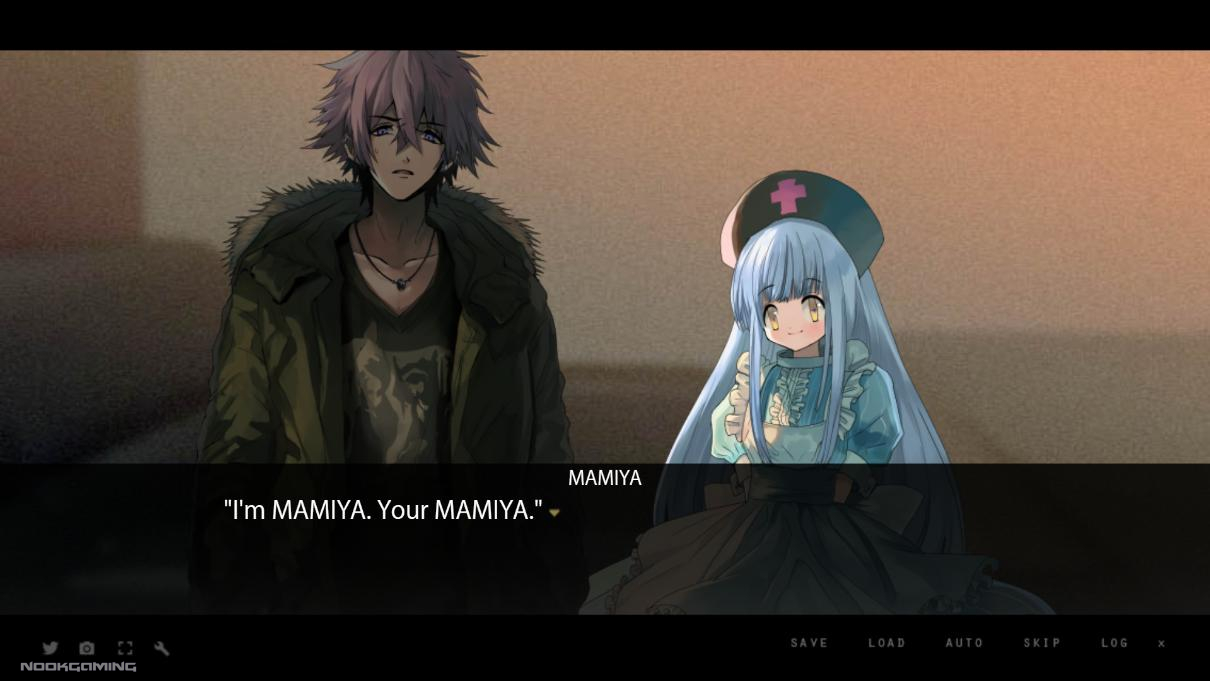
The next part of the visual novel features separate scenarios for each of the four main characters. In these scenarios, they struggle with their own personal problems while dealing with the aftermath of losing Natsume. And in every one of them, the focal character encounters a being known as MAMIYA, an existence that, regardless of what they’re doing, can only be perceived by them. In essence, they function like a hallucination, only really being sensed by the people who are chosen by MAMIYA.
As the story progresses, each character faces an emotionally-heavy dilemma rooted in their struggles. During critical junctions, MAMIYA appears to serve as their pillar of emotional support. With accuracy that almost feels impossible coming from another person, MAMIYA dissects their dilemmas and helps them come to a conclusion about the matters of their heart. The decisions they end up making, however, point them to a path that eventually leads them to their death.
A Three Episode Saga
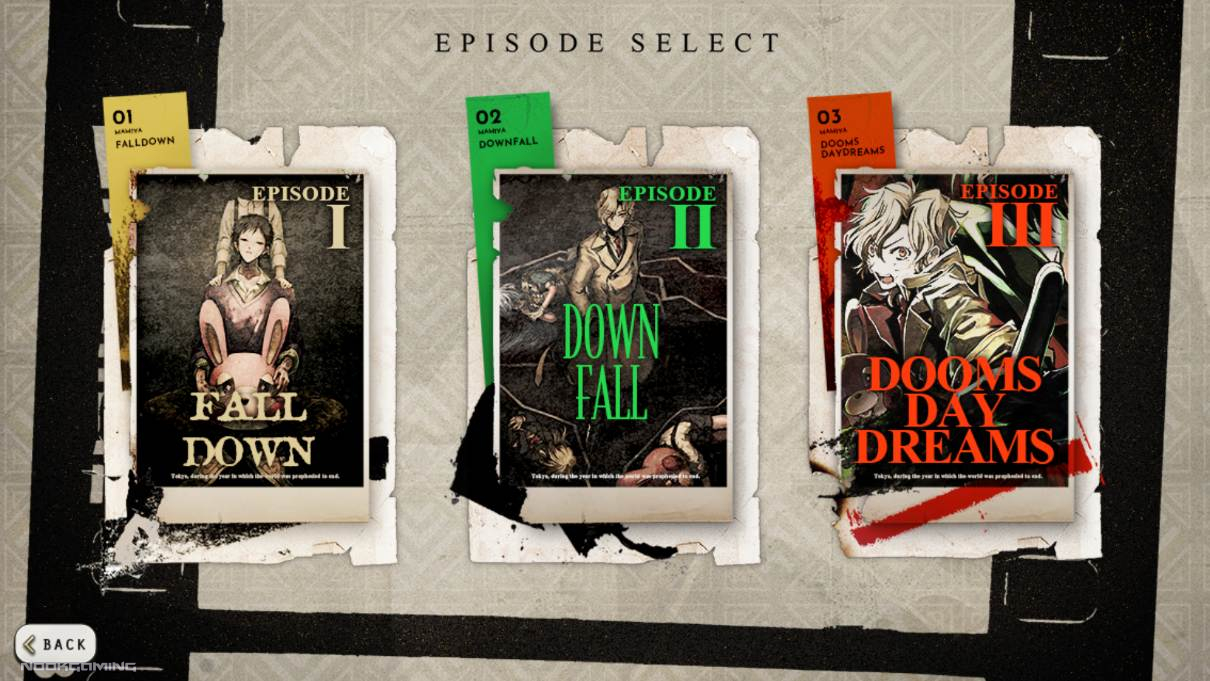
MAMIYA’s story structure can be a little bit confusing. The visual novel is structured into three separate parts titled FallDown, DownFall, and DoomsDay Dreams (which was released separately in 2023). Each of these episodes feature a particular point in the overall mystery’s timeline that revolves around the four main characters, with DownFall adding an additional cast of four more later on.
One part of what I found interesting about MAMIYA is the dualistic nature of each episode. While all of them are related to each other, there’s an overall theme within each episode that you can identify as well. Each episode has a self-contained scenario that stays consistent throughout its length while contributing to the overall exposition of MAMIYA’s mystery. For the sake of the review’s cohesiveness, I’ll discuss my thoughts about each of them within the section on their respective episodes.
Falling Down into the Rabbit Hole
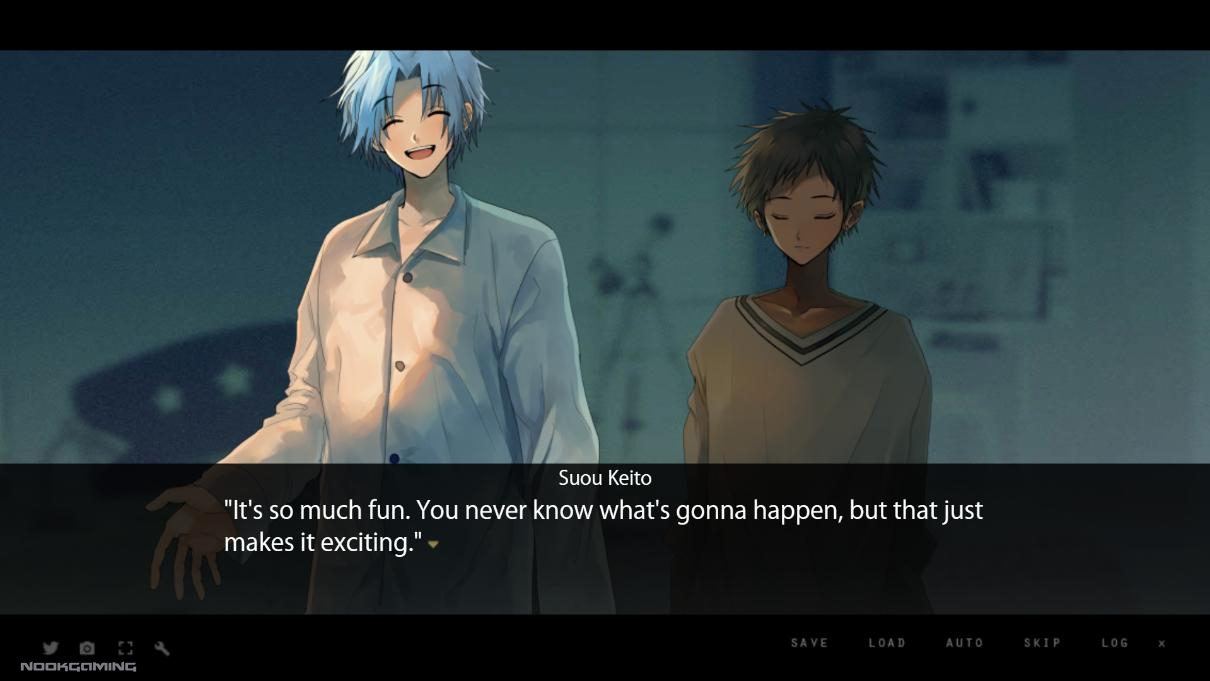
The first episode, FallDown, revolves around the four characters who attended Natsume’s funeral. Reading this first part of the series felt like a hit-or-miss introduction that had incredible strengths in its ideas, but didn’t necessarily result in a good payoff.
A lot of the character struggles in this arc cover really sensitive topics; themes of insecurities, longing, and hopelessness all resonated throughout the text and the character interactions. They’re strong subjects that have the potential to hit the reader with massive emotional impact because they’re relatable and very relevant today. But with all the care it took in forming a narrative that preserved the overall mystery, the end product turned out incredibly vague at times that I felt like it missed its own point, if there was any.
Additionally, the amount of time dedicated to each character’s arc was sometimes not enough for the issue it was trying to tackle. While FallDown was engaging as separate scenarios, when taken as a whole, the journey to the episode’s ending felt a tad too unrewarding due to these issues. Sure, it builds up its mystery using multiple characters, but each scenario’s ending feels like it doesn’t carry its stakes and tension over to the next. In a way, it feels like a slow burn story that’s also too fast for its own good.
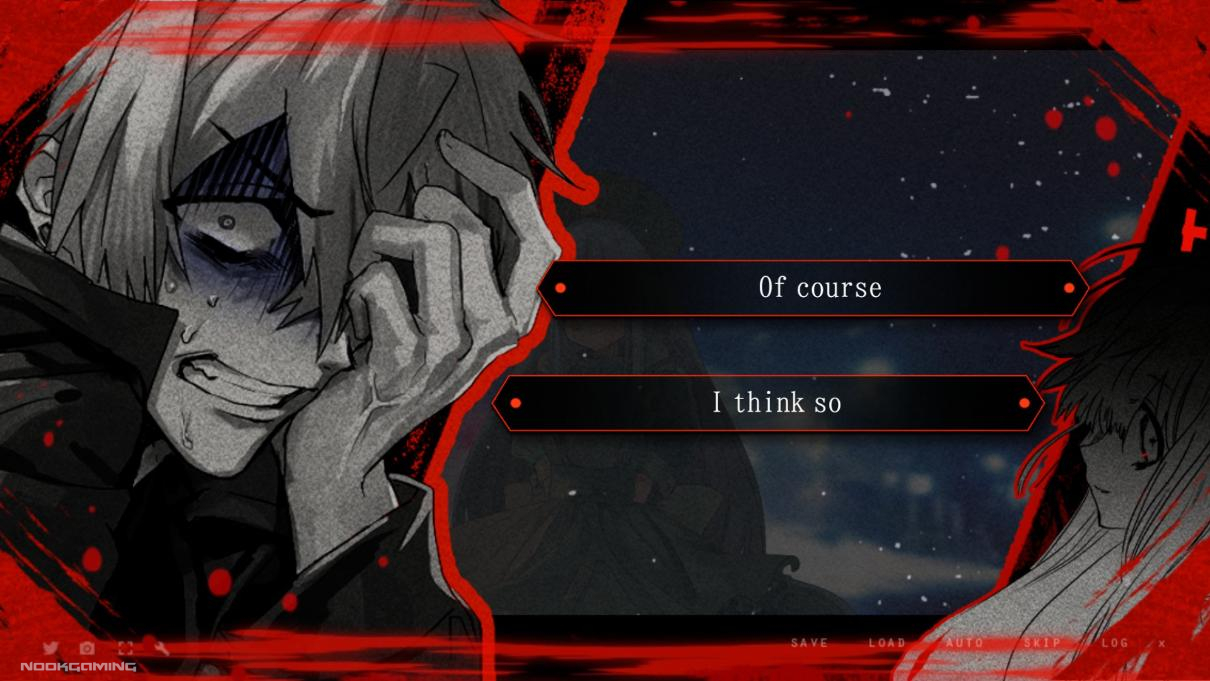
Now, in terms of its strengths, I loved the use of the enigmatic character MAMIYA as a symbol of characters’ current well-being. In each scenario in FallDown, the characters metaphorically “fall” deeper into their own struggles. The worse the situation gets, the stronger MAMIYA’s presence is in the story. It’s an effective way of not only introducing the mystery behind MAMIYA, but the despair that accompanies each character as they fight against their issues.
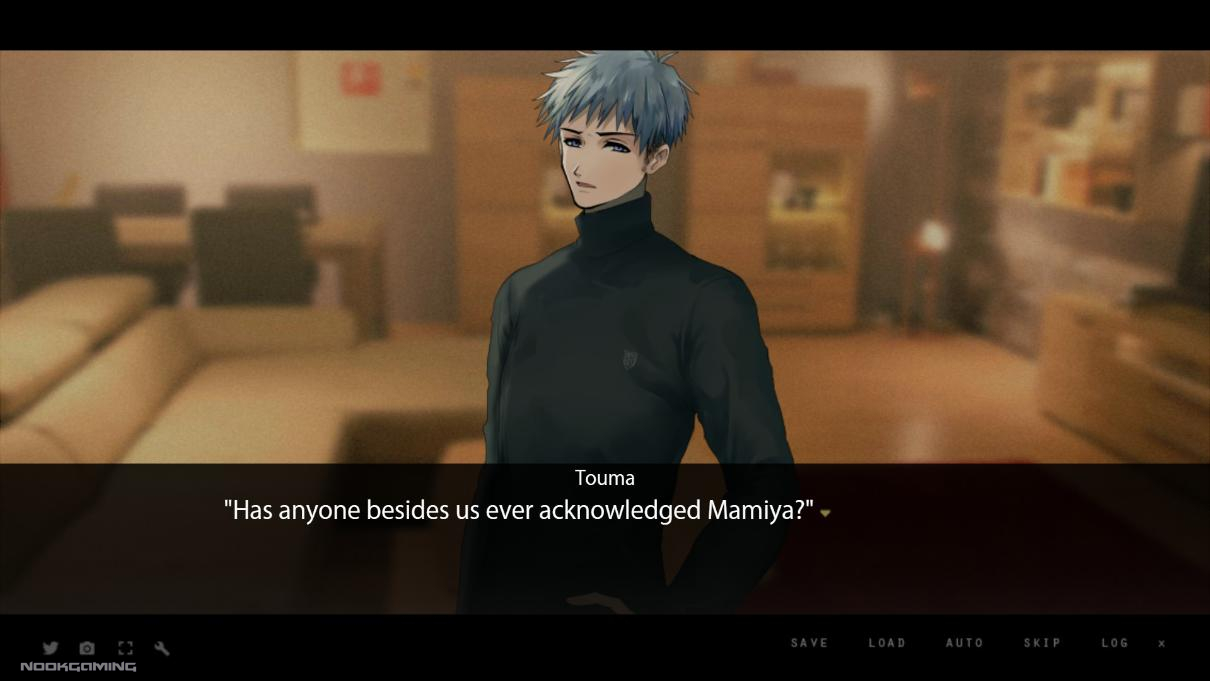
The use of colors also does a good job of presenting a sense of hopelessness. The visual and musical choices that accompany these struggles are symbolized well by MAMIYA, making for an incredibly engaging read in terms of presentation and how it engages with its reader mentally. It does its “dark” elements that serve as the backdrop of its slice-of-life scenes really well.

The Downfall of the Illusion
The second episode, DownFall, features an entirely new protagonist who takes up the challenge of solving MAMIYA’s mystery. This episode introduces a whole new perspective on FallDown’s chain of events and introduces additional context that helps flesh out the setting. Specifically, we’re given another set of characters that have also encountered MAMIYA in some capacity and had been changed by the experience. This approach makes the episode feel fresh and rekindles the intrigue from the first episode’s ending.
To be honest, compared to FallDown, I felt like DownFall was a lot better at building up its overall exposition as it inched towards the climax. Each chapter felt meaningful in terms of progression, an aspect which I thought was lacking in FallDown. We’re also fed enough details to invest in the featured characters, leading to stakes that feel significant and have more weight. I found myself caring more about the four main characters from the first episode as their personalities and motivations are given more spotlight in the new scenarios they have in DownFall as well. While the sensitive themes are still present, it doesn’t feel like they were shoved aside for the sake of preserving the mystery behind MAMIYA in this episode.
My biggest gripe with this episode, however, was its new protagonist. Although understandably naive because of the kind of character they are, I feel like a lot of the decisions they make aren’t compatible with the themes found in certain character arcs. I found myself a little bit confused, perhaps even frustrated, with how they resolved some plot threads. It felt like these resolutions missed the heart of the problems of the conflict, like a cheap cop out. It’s similar to the problem I had with FallDown regarding the pacing of each scenario. Because it goes so fast, the themes that need more focus and attention to detail end up being portrayed shallowly, even with its narrative use of MAMIYA.
A Bookish Illusion
As a whole, MAMIYA isn’t just a visual novel that discusses dark themes under the veil of mystery. I think its greatest strength is how creative it is in terms of how it structures its narrative. I called it a little bit confusing a while ago because MAMIYA, despite its multiple endings, actually feels like a linear story. Yet despite that, the narrative it employs doesn’t necessarily go in a straight line. As I read through more chapters, I felt more and more like I was witnessing an unfinished story being written. If I were to describe it in a word, I’d say it’s very ambitious in how it made its flow very dynamic.
MAMIYA – A Shared Illusion of the World’s End tackles ideas of subjectivity and objectivity, playing with them using the enigmatic character of MAMIYA and its central characters. In a world where only they can perceive the being called MAMIYA, the cast is forced to acknowledge one of two possibilities: subjectively, others’ perception of MAMIYA is irrelevant because MAMIYA exists to them and that’s what matters, or objectively, MAMIYA is a manifestation of a problem within themselves. Whichever one they pick and whether it leads them to self-destruction or to growth was a joy to anticipate while reading.
Art and Music
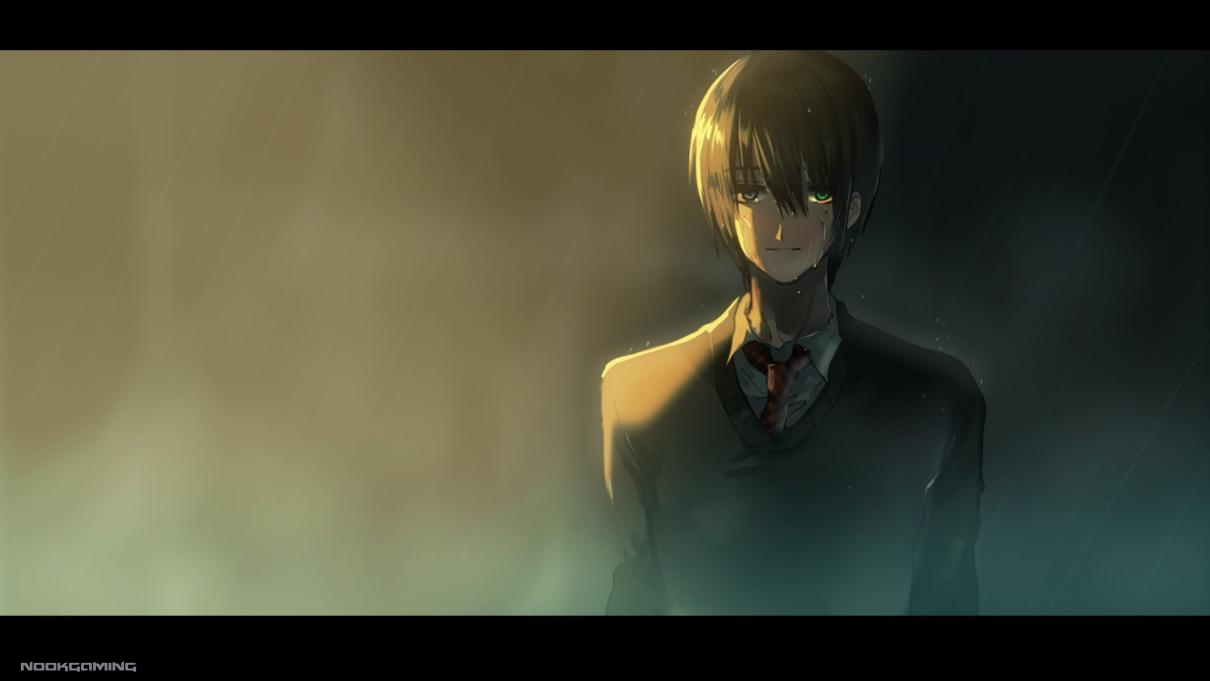
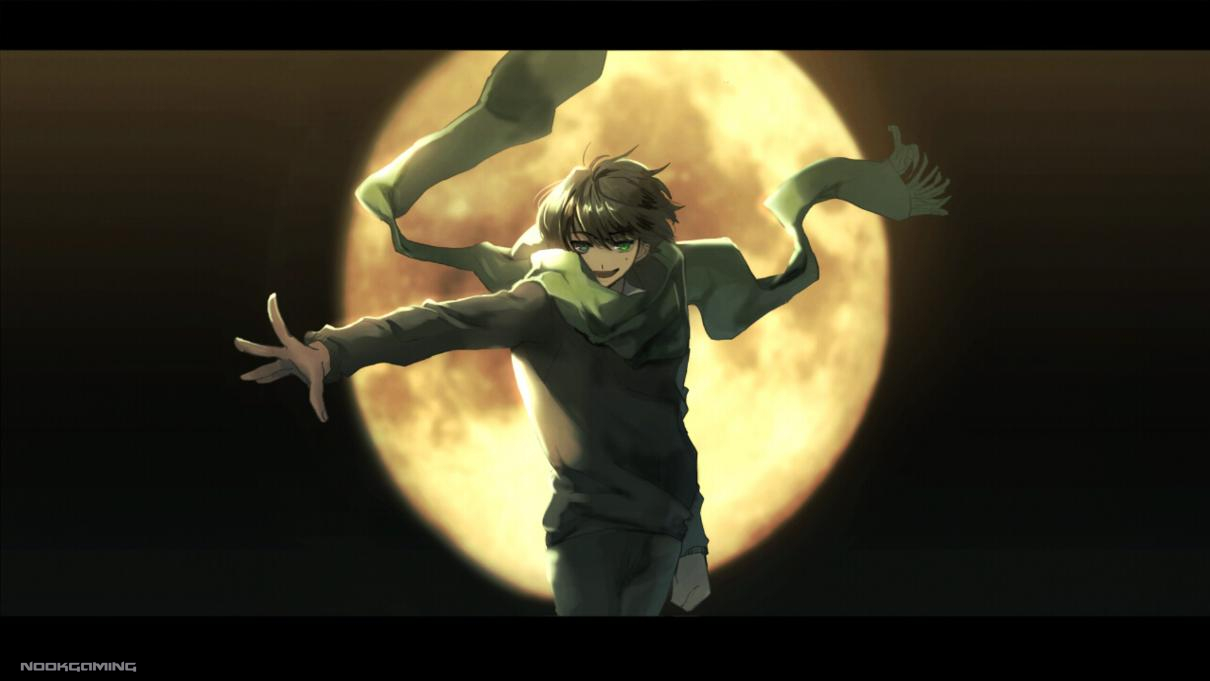
If there was any doubt, let me reiterate: MAMIYA’s art is incredible. The visual novel features a total of 72 unique CGs, with some variations. Considering this was a solo project, being able to pull off the game’s ambitious writing while delivering nothing less than stellar artwork blows my mind. There’s no slacking in the artwork either—its use of shadows, varying levels of saturation in its colors, and faces full of expression make MAMIYA an incredibly visually attractive visual novel. The art fits well with the dark and melancholic atmosphere that its text endeavors to create for the reader.
This doesn’t even include the assets and effects used for different aspects of the final product, such as cut-in portraits for the story’s branching points, the shifting art on the title screen, and the various character sprites. I couldn’t find any immediate fault in the art direction Kokoroten decided to employ in the visual novel, and it all just feels cohesive as a product. Putting it all into perspective, the fact that it works so well leaves me with high praise for what Kokoroten was able to do in a solo project.

As for the music, MAMIYA only makes use of royalty-free tracks. You’ll find multiple instances of music you’ve most likely heard outside of this game being played at some point in the story. While the use of familiar music might be jarring, the tracks are in no way out of place in the visual novel itself.
MAMIYA’s soundtrack features a total of 74 tracks across the first two episodes. Personally, I didn’t even notice there were this many tracks while I was reading because of how well it was integrated. Even though some of the songs had vocals in English, I never felt they picked a track ill-fit for the featured scene. Despite not being made exclusively for the game, each royalty-free track works well with the sections they accompany.
Verdict
MAMIYA – A Shared Illusion of the World’s End is a good example of a story that’s not afraid to break convention in its story progression. As a dark mystery title, it pulls readers into its fantasy world by using tension well enough to submerge you in the thrilling search for the truth behind MAMIYA. The text is full of anticipation as it leads you through a narrative that’s linear, yet feels ever-changing in direction. With incredible art and well-placed tracks, it’s hard not to get immersed while reading it.
However, despite a strong overarching conflict, MAMIYA feels lacking when it comes to its internal character arcs. The themes each character represents are poignant in meaning and incredibly relevant to today’s reader, yet it feels like they miss the point in multiple places due to rushed pacing and an overreliance on particular tropes. Resolutions for their individual issues don’t feel particularly rewarding due to a combination of both a lack of focus on the conflict’s resolution and the unnatural set of decisions the protagonist makes as the story gets closer to the climax. It leaves the arc feeling shallow, with a payoff that hardly carries over across different character scenarios.
If you’re looking for a good indie title that’ll give you a unique adventure, I’d definitely recommend MAMIYA – A Shared Illusion of the World’s End. Even with all its flaws, I believe the experience itself is still worth a try with all the work Kokoroten put into both its scenario and art. It’s a title full of passionate storytelling, and it translates well into the ambition you can feel while reading it.
MAMIYA – A SHARED ILLUSION OF THE WORLD’S END IS RECOMMENDED

Purchase: JAST USA
If you are looking for another visual novel, you may enjoy The Shell Part II: Purgatorio. We have also covered a wide variety of visual novels both original to English and localized from Japanese, which you can check out here.
Many thanks go to Fruitbat Factory for a PC review code for MAMIYA – A Shared Illusion of the World’s End.

Visual novel reader that wishes there were more than 24 hours in a day. Gacha victim, TCG enjoyer, and VTuber simp. Still trying to live happily.