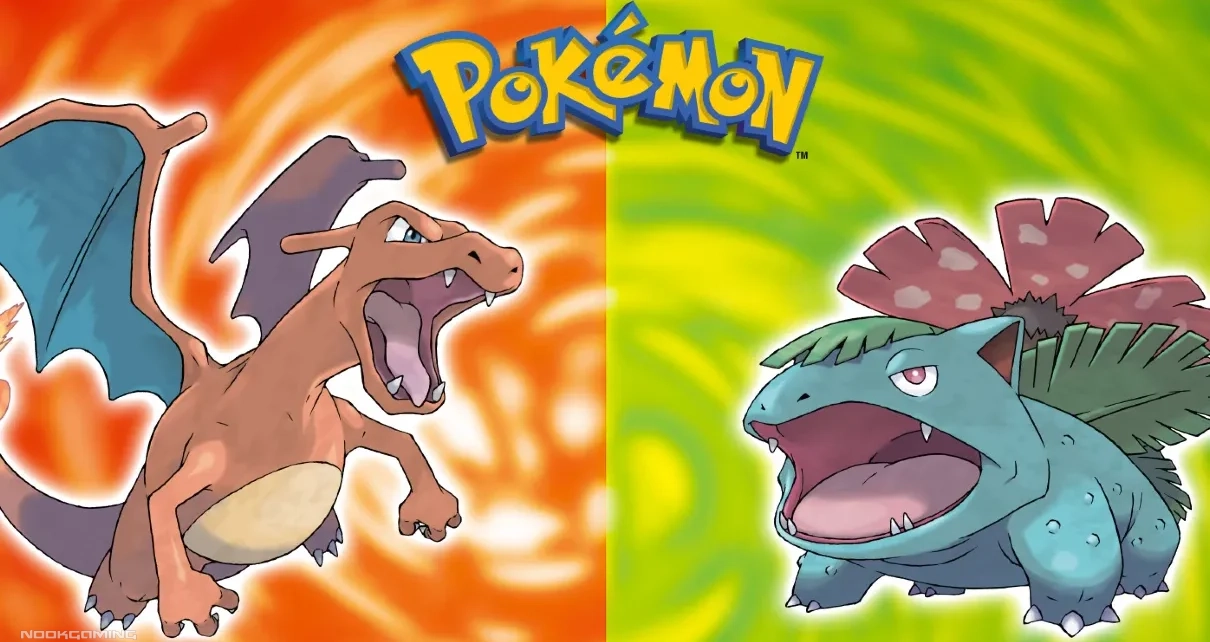
Pokémon is currently undergoing a lot of change. The ninth generation of the series has brought the series into an open world format with Pokémon Scarlet and Violet, while Legends: Z-A brought the series into full real-time gameplay. While we’ve got more than a year to wait until the next game in the series further evolves things, instead we have a look-see into the series’ past with a set of re-releases to mark its 30th anniversary. Pokémon FireRed and LeafGreen were the first in a long line of remakes, though of course this is of the very original Pokémon Red and Green that spawned the franchise a long time ago. With more than 20 years behind it, how does it hold up?
First Steps from Pallet Town
Being remakes of the very first Pokémon outings, these games are naturally quite a bit simpler than future games in setup and story. As a trainer from Pallet Town, you grab a starter Pokémon (your choice of Bulbasaur, Squirtle, or Charmander) and set out to wrangle up more monsters both to fill out your team to do battle with as well as fill out the Pokedex. Along your journey, you’ll engage in relatively simple turn-based battles with either catchable wild Pokémon or Pokémon owned by other trainers like yourself. Taking advantage of rock-paper-scissors-style type advantages, players will work their way towards defeating their rival, defeating the villainous gang Team Rocket, and collecting Gym Badges in their journey to become Champion. At the time, it was a unique RPG for how its bestiary was effectively its core selling point, and still to this day, the gameplay loop of exploring, capturing, and battling remains a great one.
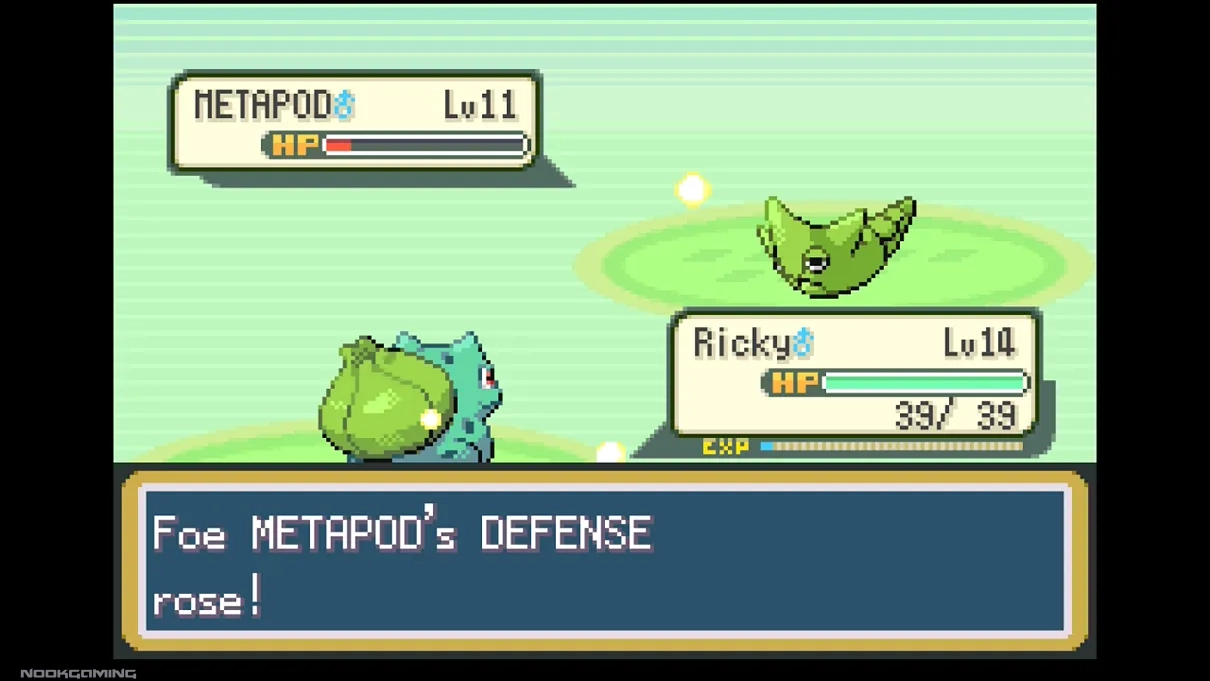
But those are all things that Red and Green accomplished way back in 1996, so what do FireRed and LeafGreen bring to those original experiences? Outside of visual and musical changes, the big changes occur not in an expanded roster but rather in expanded mechanics. While there are more granular changes in the form of Effort Values (EVs) and Individual Values (IVs), the big changes mostly come in the form of type rebalancing and Ruby and Sapphire’s at the time new features like Abilities and Natures. Psychic-types no longer completely run the show like in Red/Green/Blue/Yellow, and there are now Steel-type and Dark-type attacks to consider. There are more changes besides, but the key additives really are the aforementioned. While Pokémon has shuffled through many mechanics over the years, like Mega Evolution, Z-Moves, Dynamax, and so on, I always felt that the Game Boy Advance and DS games struck the best balance in being simple to understand but compelling enough to experiment.
Diglett’s Cave, for instance, suddenly becomes a lot more perilous thanks to Diglett and the much higher-leveled Dugtrio now having Arena Trap, meaning players cannot flee unless they’re using a Flying-type or a Pokémon with the right ability. Other Pokémon also require more strategizing to defeat. Elite Four member Agatha has a Haunter and two Gengars on her team, who are a cinch to take down in the original with the Ground-type move Earthquake, but here are more challenging because they have the Ability Levitate, which makes them completely immune to Ground-type attacks. In battle, some Pokémon like Gyarados become even better thanks to packing abilities like Intimidate, which lowers the enemy’s Attack upon switch-in. It’s a great splash of strategic consideration during battle, especially with the Elite Four.
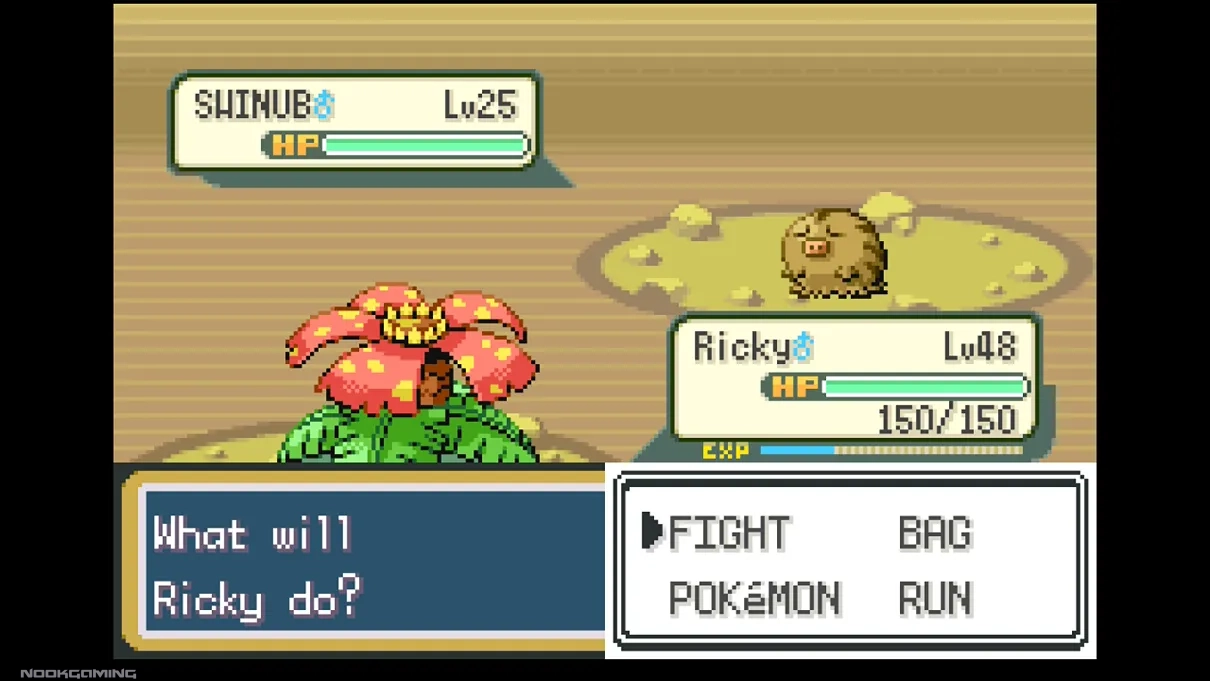
While FireRed and LeafGreen are by no means difficult RPGs, I think the battle system has just enough going on that you still ought to pay attention to things. This includes how much EXP you get, since the old school experience system facilitates regular switching out of Pokémon to ensure nobody falls behind. Whether this is better or worse is going to depend on player preference, but I think for players who are more familiar with the newer titles, this offers a distinguishing characteristic from the newer games.
Old School Adventuring
Perhaps the best part about exploring Kanto is the put-together of its level design. While it’s not an open-world game like Scarlet and Violet, it gives a sense of openness by adhering to an old-school RPG philosophy similar to games like Dragon Quest III. That is to say: you’re left to your own devices, but you’re met with a lot of roadblocks, and the way forward is never explicitly told to you. Instead, finding the way forward involves jumping across different points of the map and talking to people so you can find out what goes where and how to get from Point A to Point B. Talk to a stranger in one town and you might find out that the Snorlax blocking your way to the Cycling Road that leads to Fuschia City can be awakened with an item called the Poke Flute, but it turns out it’s in the possession of a man named Mr. Fuji, who’s being held captive in a tower where a restless spirit blocks the way forward. Then it becomes a task of finding the right item needed to fight that spirit, which may involve a big encounter with Team Rocket where it too is hidden away and requires some searching from the player to find.
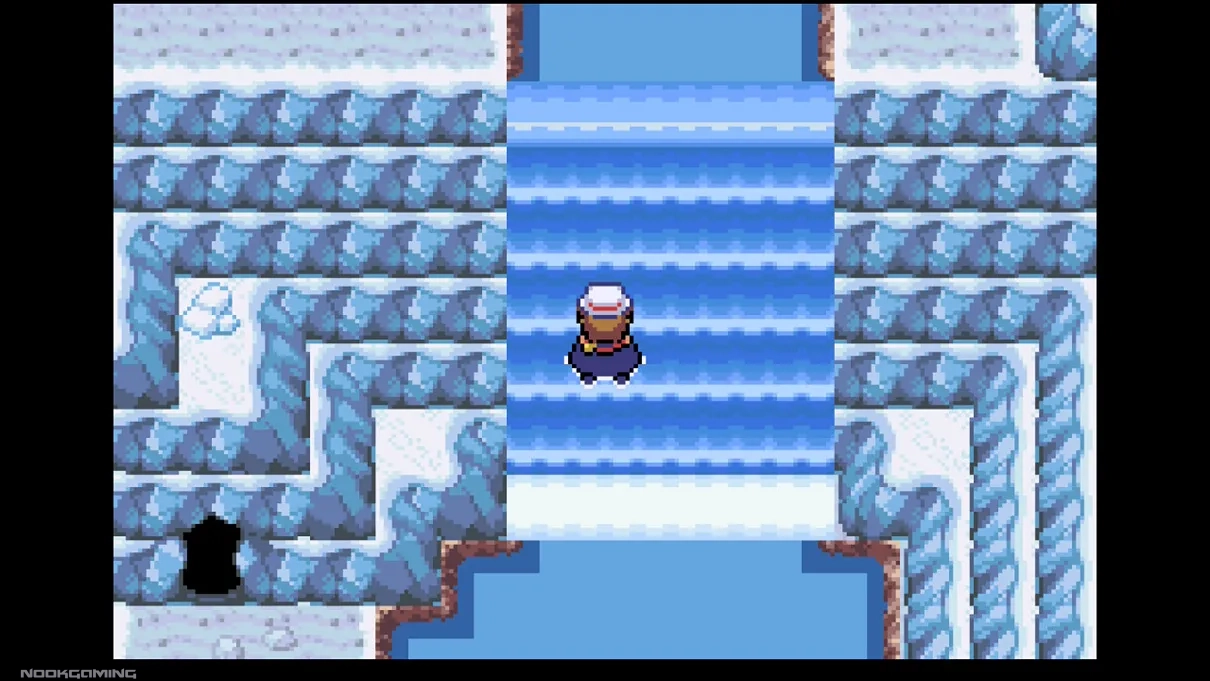
A really strong sense of fantasy is provided thanks to the simple choice of letting the player figure things out for themselves, and letting them reap certain consequences they might not expect. Rock Tunnel is a particularly famous example of being a brutal and unforgiving dungeon for players who rush through things and don’t pay much attention, but it is much better (if still challenging) for players who explore and catch enough Pokémon to get the HM for Flash, which makes it much smoother to navigate. It’s also great because it gives you a great sense of choice in the game’s second half. While Pokémon naturally imparts a strong role-playing element since you have an unprecedented amount of choice over how you fill out your team, what pushes Kanto over the top is also the choice in destination.
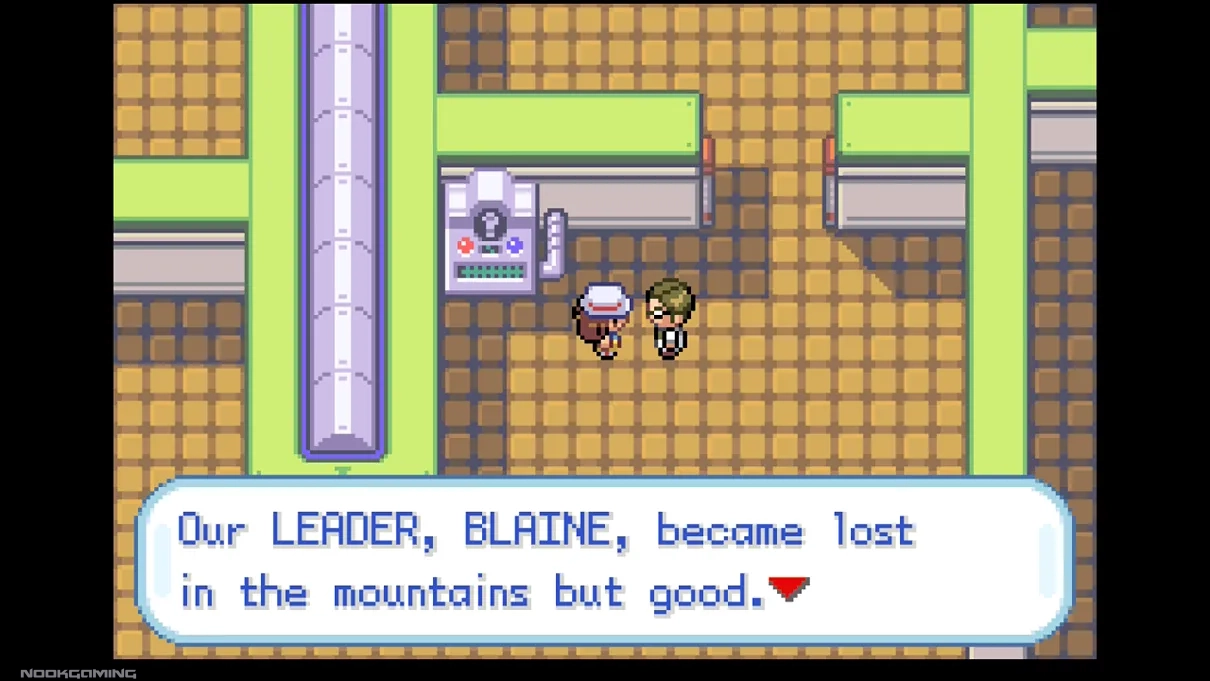
This also makes it so that revisiting Kanto can be fun simply for its own sake, complementing Pokémon’s already superb sense of replayability. It’s not just enjoyable because I change what Pokémon I use on my main team or pick a different starter, but also because I learn certain tricks or decide to do certain things in a particular order. It’s not just a sense of freedom, but also that sense of trust in the player that makes Kanto so fun to revisit over and over again. For example, in this playthrough, I opted to catch all of the Legendary Birds before taking on Silph Co., one of the very last major dungeons in the main story. I instead detoured to Cinnabar Island by taking the sea route south of Pallet Town, where I entered the Pokémon Mansion and obtained the Secret Key to battle Blaine. This is all well before I fought Sabrina or did Silph Co., allowing me to basically steamroll both.
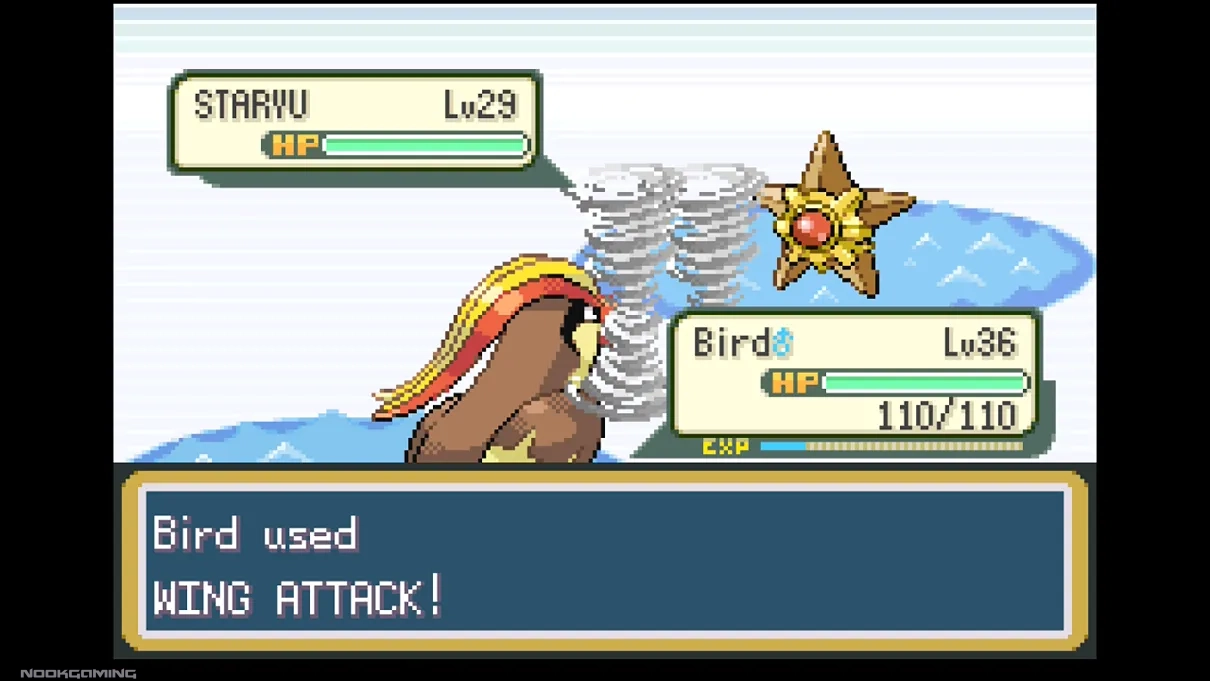
It goes to show what a simple, but powerful distinction having a choice in destination can do while also understanding how smartly implemented roadblocks can enrich the journey. While a pure open world is fun in its own ways, there’s something to be said about how that “Aha!” moment feels when you get an item that has new explorative implications. While Pokémon kept to that idea for a time, I think in many ways Kanto still showcases the best balance of it. You’re not held up too much in the jargon of HMs, nor are things ever overly linear or lacking in friction.
Faithful to a Fault
In some especially bizarre attempts to remain faithful to those original outings on Game Boy, Pokémon FireRed and LeafGreen have some strange design quirks that might leave players wanting for more. For starters, until the player finishes the main story, they’re locked solely to using Pokémon originating from Kanto. It also results in some downright questionable things like Golbat constantly trying to evolve into Crobat, only to not be able to solely because Crobat isn’t a Kanto Pokémon. You can also forget about trying to evolve Eevee into either Umbreon or Espeon, since they too were introduced in Johto and not Kanto. Given how much Pokémon’s gameplay had evolved between the Game Boy and Game Boy Advance, even in 2004, it smacked as a real missed opportunity to not capitalize on that and make the region even richer than before. More specifically, the main story completely lacks Dark-type Pokémon, and the only Steel-type Pokémon for its entire duration is the Magnemite line.
So while I have somewhat mixed feelings on the fact that the game deliberately bucks some features and all of the Pokémon that came after it, at least until postgame, that doesn’t stop it from being an excellent game because Red and Green were already great games too. It’s perhaps fair to say that it’s a standout game because it precisely leverages its own dedication to keeping things simple and faithful, while also using the new mechanics and rebalances introduced in the second (Gold/Silver/Crystal) and third (Ruby/Sapphire) generations to simply make the gameplay more interesting than before.
Thankfully, its excellent postgame at least fully subverts this. While the first three of the Sevii Islands that you visit during the main story are nothing too crazy outside of a dungeon featuring Moltres, it’s the ones you visit after obtaining the National Dex that really cranks up the fanservice. A lot of Pokémon from Johto and a small handful of Hoenn Pokémon can be found here, and it’s also here where players will gain access to things like Trainer Tower, Pokémon breeding facilities, and a short postgame storyline for these games to connect with Ruby and Sapphire. There are some new dungeons that lift gimmicks from Ruby and Sapphire, such as the fragile ice floors in Icefall Cave or the Braille puzzles in Dotted Hole. These, combined with some lovingly remixed tracks of Johto themes, give the Sevii Islands what was, at the time, a sort of “Best Of” feel for the series at that point.
What’s Here and What Isn’t
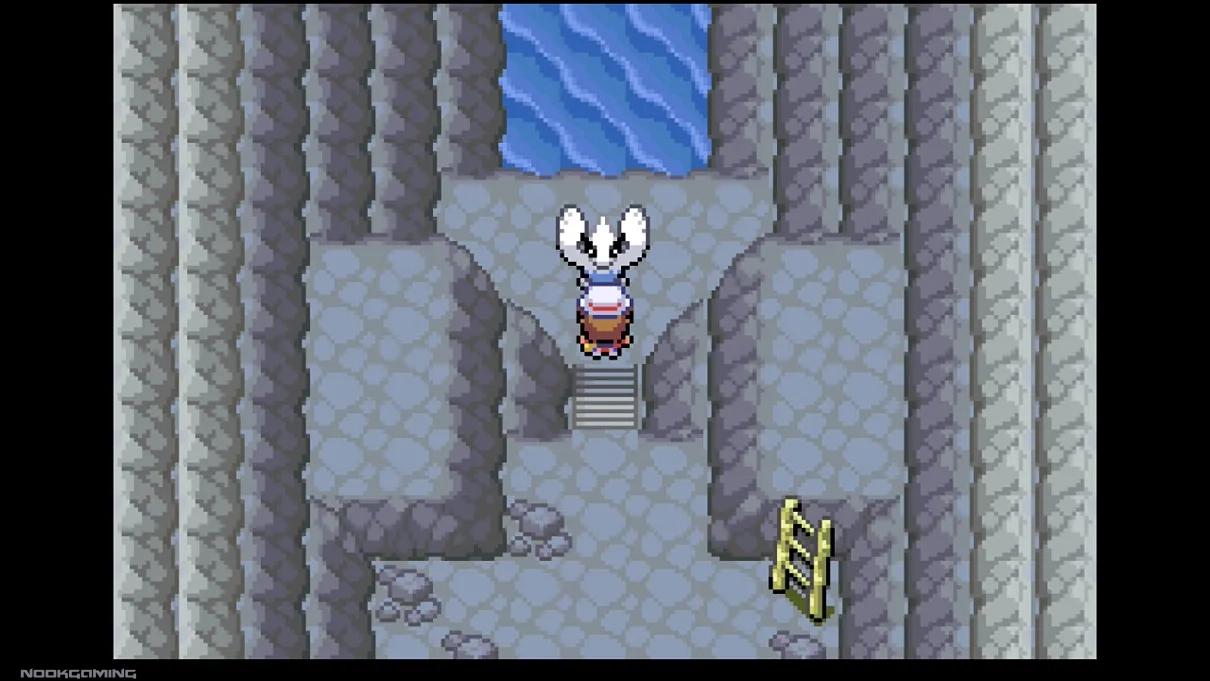
Positives first, the Switch editions of these games smooth over some frustrations you might experience when playing on cartridge. For starters, the infamous bug where the Legendary Beasts, Raikou and Entei, would use Roar and effectively delete themselves from the game was fixed here. Now you no longer have to worry about saving and reloading your game if they happen to do that. You’re also given an infinite number of chances to catch static legendary encounters if you happen to screw up, simply by exiting and re-entering an area. Best of all, timed event items such as the Aurora Ticket (giving you access to Lugia and Ho-Oh encounters on Navel Rock) and the Mystic Ticket (giving you access to an encounter with Deoxys on Birth Island) are automatically granted to the player upon defeating the Champion for the first time. It makes for a more complete-feeling experience, and I hope they do the same thing for future re-releases.
Elsewhere, this is one frustrating re-release. For starters, despite having the same basis as the Switch’s GBA Online app, these re-releases eschew some of GBA NSO’s best features. Perhaps most bafflingly, this includes a total lack of online communication features, with only wireless play being available. Especially annoying when some of Kanto’s most iconic Pokémon like Gengar, Machamp, and Alakazam need to be traded with other players in order to get. This also makes completing the Pokedex a bigger pain than it ought to be, since players won’t have access to certain version-exclusive Pokémon without trading. This means that if players want access to these Pokemon and other communication features like minigames, they’ll have to either own another copy of the game on another Switch console, or they’ll have to conveniently know someone nearby who owns another version. Neither is anywhere close to ideal, and I can’t really fathom why such a decision was made other than to maintain parity with how the GBA versions functioned.
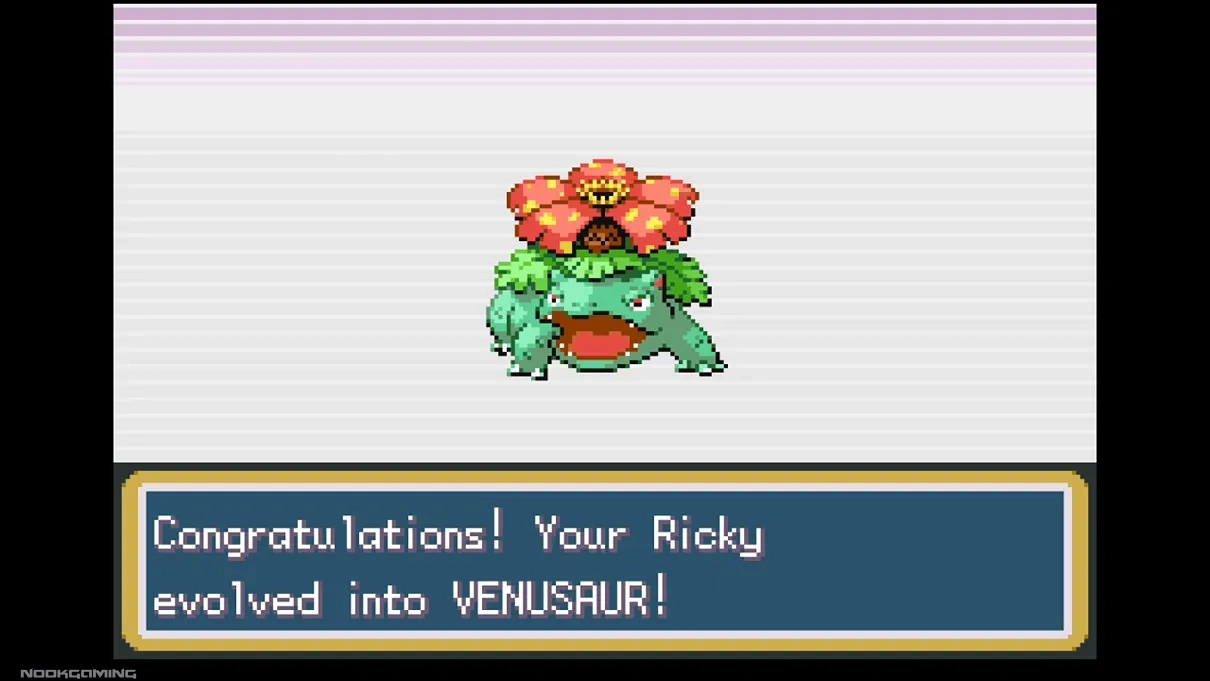
What’s also not forgivable is the lack of GBA Online’s superb screen filter and color corrections that made every game pop on the Switch’s screen or on a television. In FireRed/LeafGreen, you’re only getting the full, raw pixels and colors here. While it looks fine, it’s simply not as appealing as what I know GBA games can look like on Switch. These glaring omissions turn what should be a slam-dunk re-release into a simply good re-release that’s rather frustrating.
Verdict
Pokémon FireRed and LeafGreen are clean-cut distillations of why the series has endured in the eyes of millions. The tried-and-true gameplay loop of exploring, catching, and battling is in a beautifully simplistic form here. With little written narrative and simplified visuals, my mind is allowed to wander and craft a story of its own. It makes for an especially striking contrast and compliment to Switch titles like Legends: Z-A or Scarlet/Violet. While it’s hard not to argue that these Switch conversions are a little too no-frills for their own good, you’re ultimately still left with a Pokémon game that’s extremely fun to revisit again and again thanks to its open-ended world and the broadly engaging layout of Kanto. Full stop, these are deeply charming and easy recommendations.
POKÉMON FIRERED/LEAFGREEN IS RECOMMENDED

If you would like to see more JRPGs, you may be interested in our review of Monster Hunter Stories. You can also check out our reviews of other Pokémon games.
Many thanks go to Nintendo for a Nintendo Switch review code for this title.

A hobbyist who took up the pen to write about their favorite pastime: games. While a lover of many genres, Isaiah Parker specializes in Platformers, RPGs, and competitive multiplayer titles. The easiest way into his heart is to have great core gameplay mechanics. Self-proclaimed world’s biggest Sonic fan. Follow him @ZinogreVolt