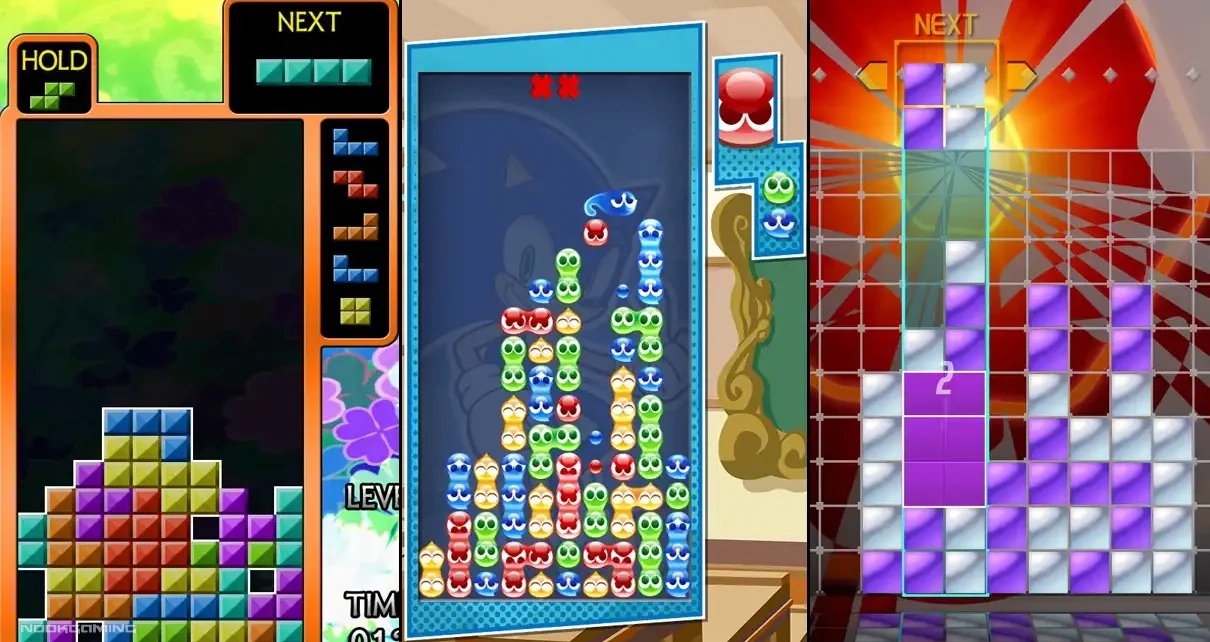
I’ve always had great fondness for tile-matching puzzle games. Whether it be playing Pokemon Puzzle League on Christmas the first morning after I got my Nintendo 64 or playing old Tetris and Columns machines at the arcades, a lot of my formative experiences involved lining up blocks and breaking them down. There’s a simple yet unmistakable joy to aligning colorful shapes and watching them disappear that has helped it become one of gaming’s most broadly appealing genres.
However, despite being one of gaming’s quintessential genres, I often feel like it doesn’t quite get its flowers. Typically when I ask people what their favorite games are, they tell me of stuff like action games that really challenged them or RPGs with resonating stories and immersive worlds. It takes a while going down most of their lists before I get to the Tetris Attacks/Puzzle Leagues and the Puzzle Bobbles (if they’re even on the list in the first place). They’re also quite scarce on “greatest of all time” lists you’ll find across community websites and publications.
It’s also a style of game I see a lot of common descriptors for, yet not a lot of actual discussion about what makes them so appealing beyond a surface level. So I’d like to talk here about this genre and try to break down the essence of what makes it so appealing, why they might be somewhat overlooked, and also hopefully inspire just a bit more appreciation for this perhaps underloved form of game.
What exactly is a “Tile-Matching” Puzzle Game?
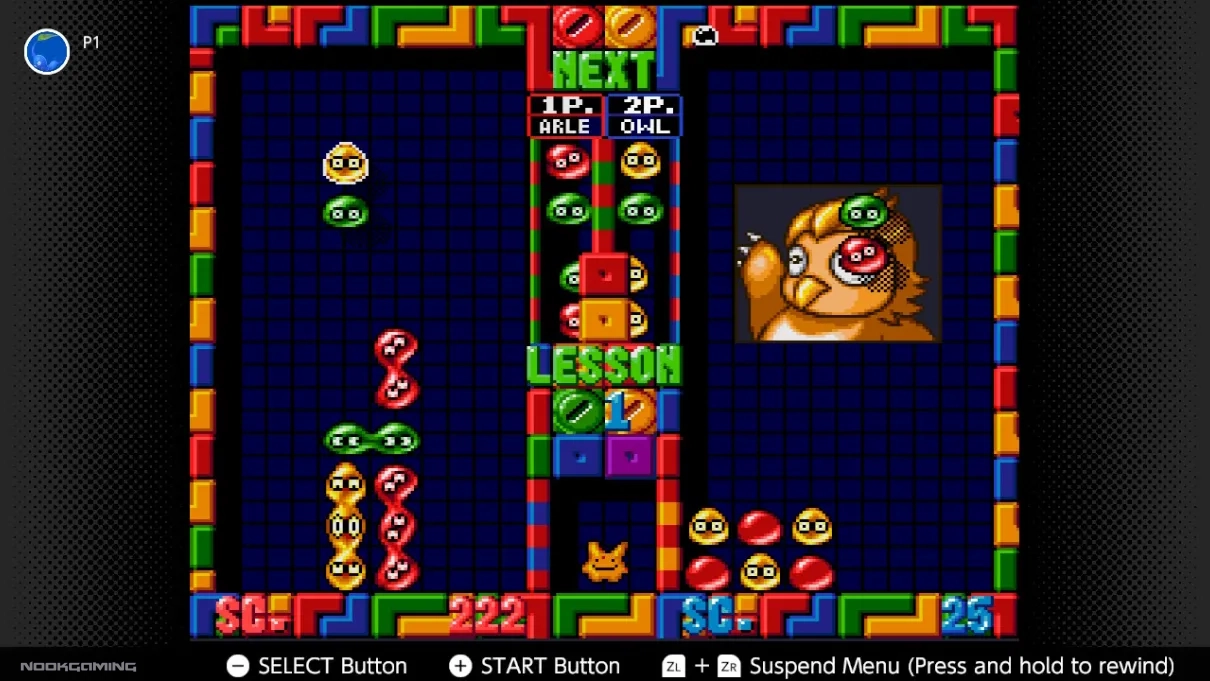
To be specific on which type of game I’m referring to, tile-matching puzzle games (TMPGs) are a variety of puzzle games that usually involve manipulating tiles, blocks, or other objects to make them disappear. How this happens varies based on the rules and mechanics of the game. Though these objects are often in the form of squares, the exact shapes they take can be fairly diverse, such as with Puyo Puyo’s blobular puyos, Puzzle Bobble’s orbs, or Tetris’s tetriminos (which aren’t technically being matched, but the general gameplay still fits the other criteria). This genre is sometimes called “match-three” due to how often 3 is the magic number needed to initiate a clear, such as in games like Columns or Tetris Attack/Puzzle League, though this is far from a hard rule as games like Lumines and Puyo Puyo require 4 and Tetris is about lines.
This distinction is fairly important because the genre of “puzzle game” has become quite diverse and somewhat vague. There are games that fall under the general umbrella of “puzzle” where the idea is to solve a fixed challenge to make progress to new and more complicated challenges, such as Catherine or Baba is You. There are also the puzzle-platformers, which typically combine platforming movement elements like jumping with puzzle-solving mechanics to progress through a linear story, such as Portal or Braid. While the elements of these games vary considerably, these types of games tend to focus more heavily on solving fixed puzzles to beat the game, with elements like randomness often being scarce or nonexistent.
Tile-matching puzzle games typically involve a board or lane in which objects will spawn randomly from a finite pool of options where you have a limited window of time to manipulate them in order to try to clear them. The goal is usually to play efficiently and prevent your board from being so filled up that you “top out” and are no longer able to place any more objects, which typically ends your session. Many such games come with modes where you solve predetermined puzzles as well, but by and large, what people think of when you bring up this genre involves randomly spawning objects that you manipulate to your whims to clear them out.
“Simple Yet Addictive”
The descriptor I most commonly see to describe the genre in reviews and retrospectives is “simple, yet addictive.” I feel like this often captures the essence of the vibe these games give off, though it can perhaps undersell the level of potential depth and the immensely high skill ceiling in many such games.
Take a look at Tetris, by far the most iconic game of the genre and arguably the most successful video game ever made. Almost everyone who plays the game will understand it on a pretty fundamental level in a few minutes; you have a lane 10 tiles wide, a variable amount of tiles tall, and you are fed a constant stream of 7 different types of randomly sequenced colored tetriminos (i.e. blocks comprised of four tiles arranged in different shapes). You rotate these tetriminos at 90-degree angles to fit them into your board to try to create complete lines across a row, which clears them and moves everything stacked above that line down. This has been the core identity of the gameplay of Tetris for more than 40 years, and although there have been several tweaks and variations (e.g. Tetrisphere) on the formula, the core of Tetris remains largely unchanged.
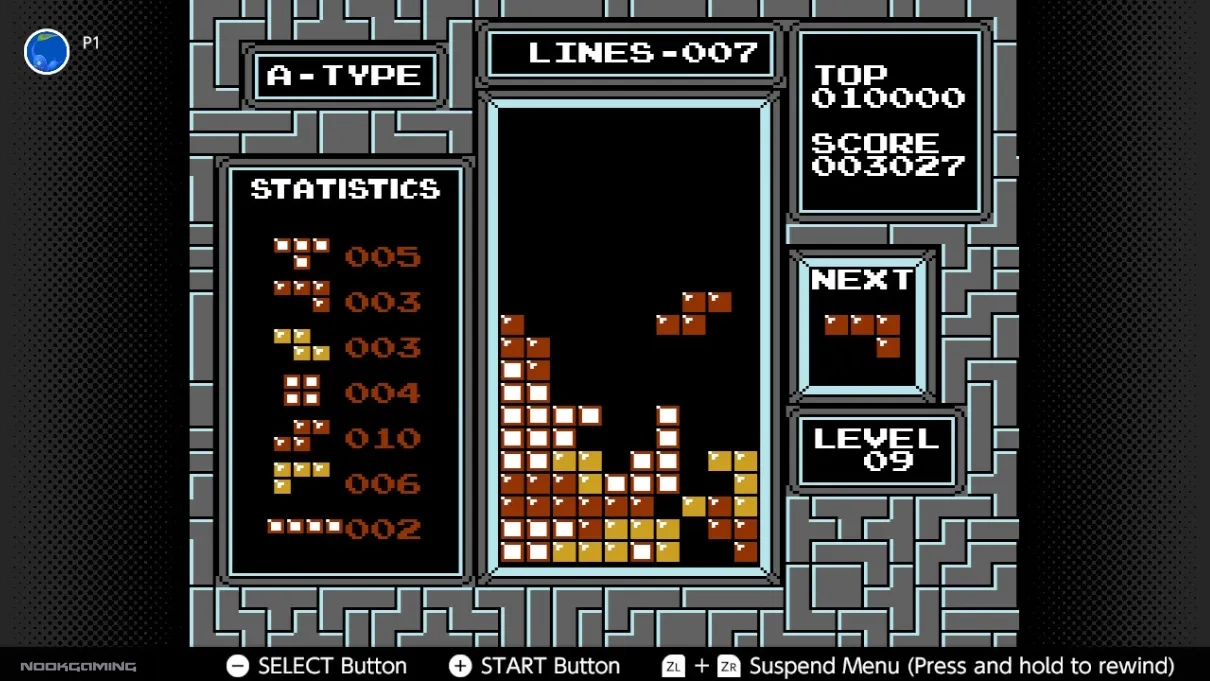
A lot of where this “simple” comes from is that these games are largely unchanging from beginning to end. Games like Tetris usually don’t add new mechanics or boss fights with context-sensitive actions all of a sudden. Instead, they get more difficult simply by getting faster, so your window of opportunity to make decisions gets shorter and you become more prone to making mistakes. On a fundamental level, what makes this gameplay addictive comes from the simple act of creating patterns and making things disappear. It helps that they often have nice flourishes like pretty animations, catchy music, and rewarding fanfare.
This is what makes them fun on a surface level, but at the end of the day, it’s hard to sustain a game just off of “simple”. What is it that gives them depth? What is it that makes a tile-matching puzzle game addictive enough to not only be fun to play for a short while, but get people to keep coming back to the same for many years? I’ve come to a few answers.
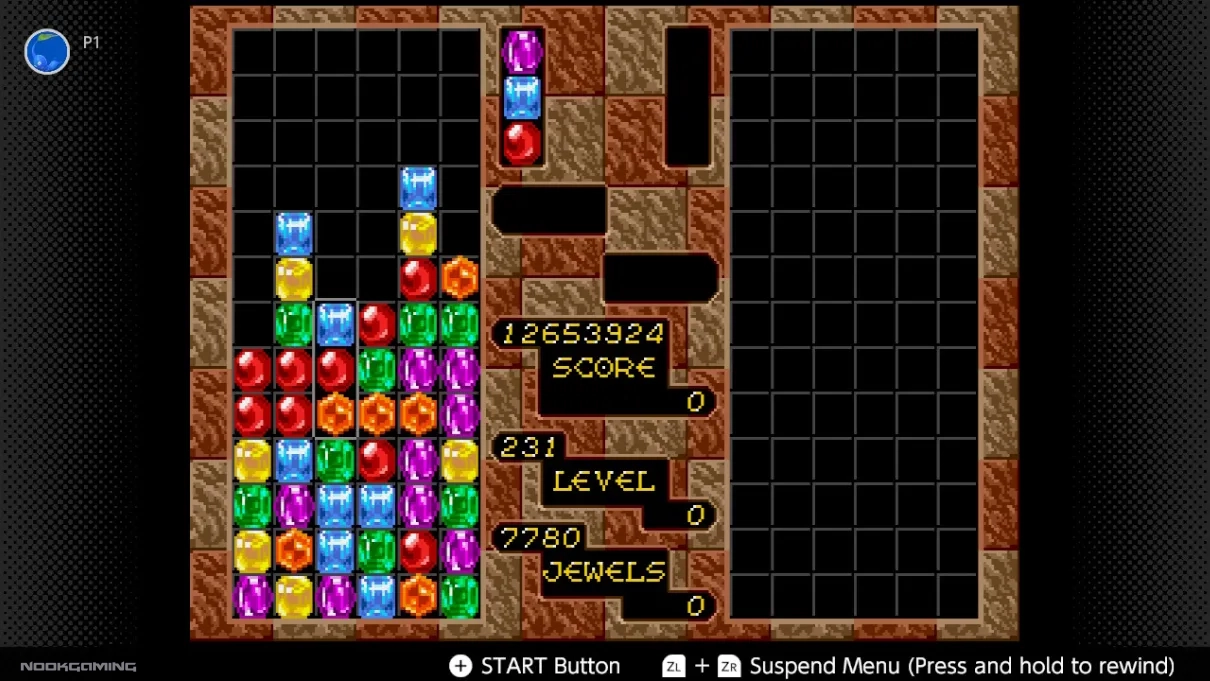
The Joy of Getting Better
While tile-matching puzzle games may have simple mechanics, actually mastering them takes a great deal of work in many titles. As they say, “easy to learn, hard to master”. Much of the appeal in a great many of these games comes from the intrinsic reward factor of simply getting better. The appeal of getting more skilled is not unique to puzzle games, but the way it happens isn’t quite like that of many other types of game.
Single-player games (e.g. action games, shoot ‘em ups) often encourage getting better by presenting you with difficult obstacles in which you learn and memorize patterns, manage resources, and strategize optimal ways to deal with situations or enemies. Skill in rhythm games often comes from accuracy, which is improved by developing a good sense of timing, learning and memorizing how songs and note charts are structured, and recognizing upcoming note sequences while having the dexterity to respond to them. Fighting games encourage getting better through learning how to manage meter, developing effective combos, and responding to a variety of situations, especially in multiplayer where a big part of the game involves understanding the intricacies of your matchup and the behavior patterns of your opponent.
Tile-matching puzzle games tend to be somewhere in between all of this; they’re often far more random than rhythm games, yet more situationally limited than fighting games, and more mechanically static than single-player action games. However, they also draw on similar skills from each. After enough playtime, you often start to notice patterns in the game’s logic and learn how to handle various board states to make planning future moves a lot easier. Like rhythm games, you notice when your hand-eye coordination improves enough to speedily pull off the stuff you used to think you weren’t going to be able to. Like fighting games, you can feel when you’re able to quickly read the screen and come up with a plan of attack or defense based on the situation, especially in multiplayer TMPGs. They combine good mechanical skill (e.g. hand-eye coordination) with good adaptational skill (e.g. resource management). And as with almost any genre of game, it just feels good pulling really cool stuff off because of your skills.
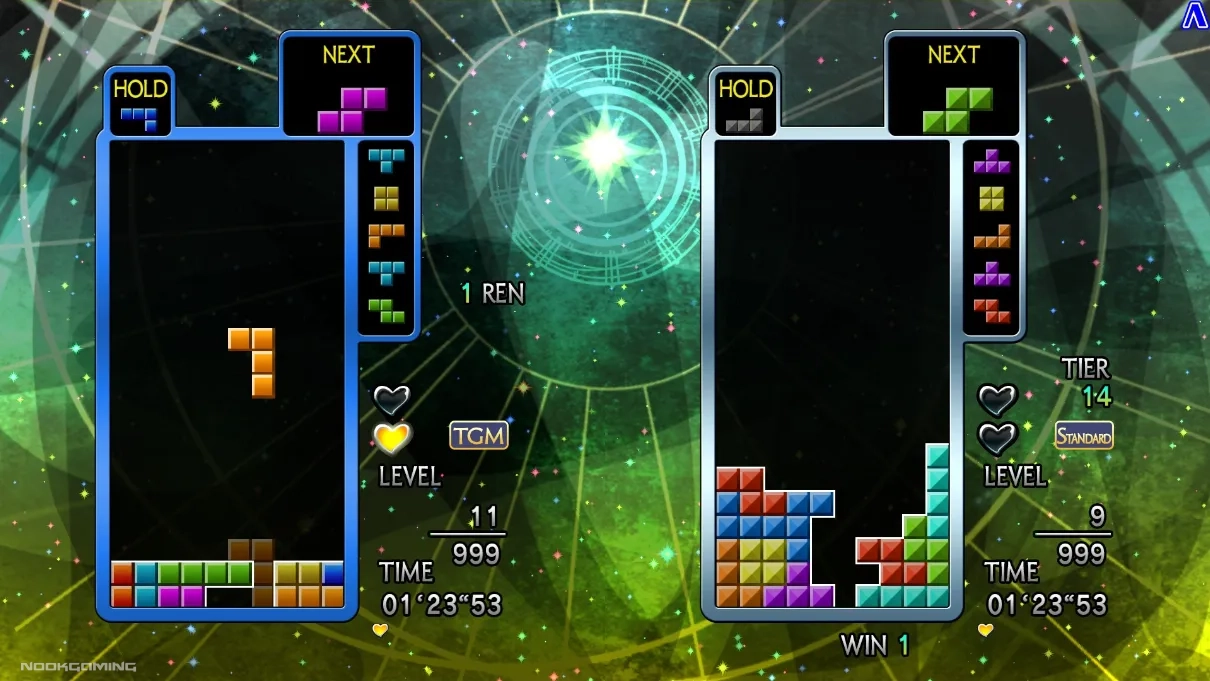
Let’s revisit Tetris. The game is about clearing lines, but the way you go about that can be a lot more deliberate than it sounds, especially in more recent installments. I often watch people who don’t play modern versions of Tetris all that much get into a zone of just trying to keep their board as empty and neat as possible, but there’s so much to learn beyond that. S and Z pieces are infamously awkward to fit into a stack, but there are plenty of ways to use them that aren’t immediately apparent, especially when you learn how to use spins to fit them neatly into otherwise awkward gaps (in the games that allow this mechanic anyway). As you get better, you learn how to hold onto your I and T pieces for when you need them, and you learn how to recover your board when you make mistakes. There’s also mechanics like T-spins and all-clears that get you pretty big score bonuses (and do a lot of damage in multiplayer!), which become incredibly rewarding when you learn how to plan for them and use them on purpose. This takes a lot of practice to improve your hand-eye coordination and game sense, but the joy of pulling these tricks off more and more is so worth it!
The joy in improving one’s skill is no small part of what makes so many other tile-matching puzzle games fun too. Puyo Puyo was a franchise I long struggled to grasp how to plan effectively, so learning how to make chains longer than 4 sequences was immensely gratifying. Puzzle League games are some of the most dexterity-requiring TMPGs, and getting to the point of being able to move my hands to build long chains while blocks are actively disappearing on the screen makes me feel like a beast. Many games also have challenging single-player modes that require you to build these skills up to progress through and clear, offering that classic sense of reward when you’re good enough to finally beat a tough video game. You don’t even have to become a pro, just learning something new and getting another step closer toward improvement is still plenty gratifying.
TMPGs aren’t often the first games people think of when they think of games with incredible skill ceilings, and I think it’s that reputation for being “simple” that is partly to blame. It’s a bit unfortunate too, as there’s a sense of intrigue to extremely high-level puzzle gameplay. Just as it is exciting to watch a pro fighting game player pull off a thrilling match against top competition, or to watch an extremely good rhythm game player full-combo an extremely fast and demanding song, it’s quite a spectacle to watch someone in full control of a tile-matching puzzle game playing at speeds that make you wonder how a person’s brain can even process what’s happening enough to make those moves. This can be true of any of the Tetris masters or even just watching somebody absolutely decimate the single-player mode of a game like Lumines (seriously, check out the speedruns of some of these games).
Unsung Variety
While tile-matching puzzle games as a genre are easy to identify, they aren’t always the easiest to tell apart from one another on the surface. But while there are commonalities to the genre, it’s far from a “you’ve played one, you’ve played them all” sort of genre.
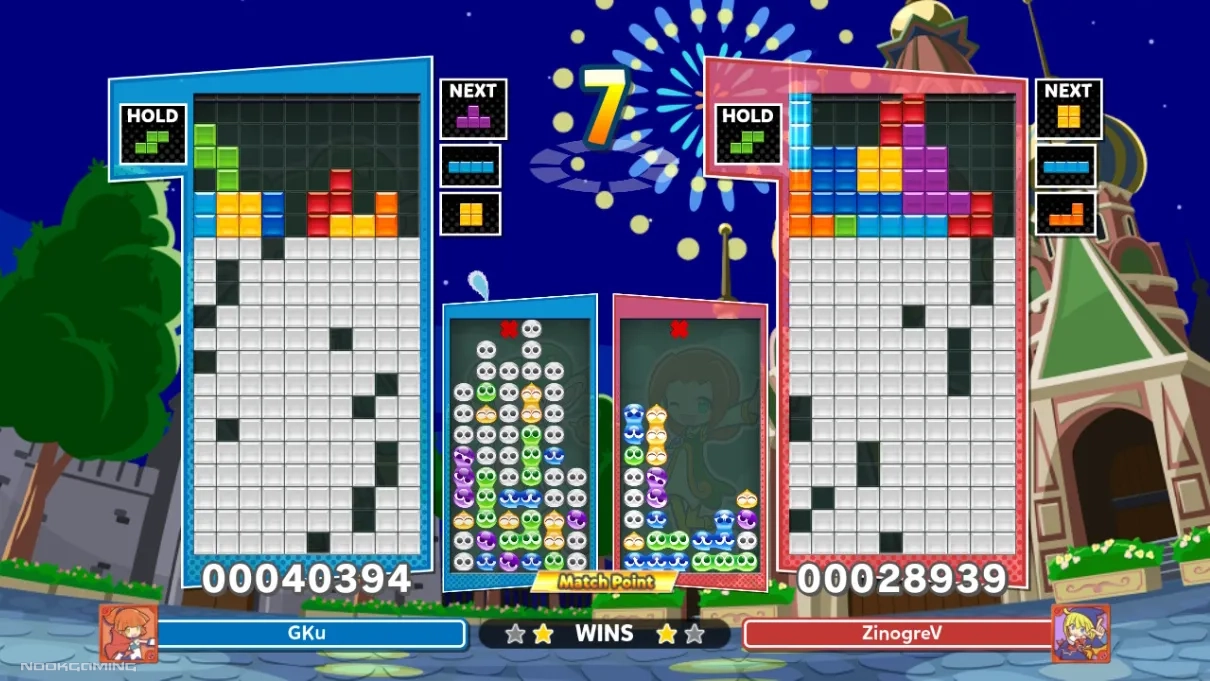
This was made especially clear when Puyo Puyo Tetris came out in the West around the launch of the Nintendo Switch (and sold a considerable number of copies). While this game combined two classic puzzle game franchises, one of them had a far more established player base in the West. A lot of players knew how to stack efficiently in Tetris and a fair few even knew about how to enable T-spins, while not as many players could tell you off the bat what a “sandwich” is in Puyo Puyo, despite it being a rather bread-and-butter technique in those games.
The very ethos of gameplay is considerably asymmetrical between the two. Tetris games are often about how you chain together tetriminos in order to build up and then clear out your board, while Puyo games are often about setting up big long chains to maximize an often frontloaded burst of damage. Garbage blocks in Tetris come from the bottom, which doesn’t affect the part of your board you’ve been building as much, while in Puyo Puyo garbage comes from the top and can be incredibly inhibitive of your combos. Heck, stuff in Tetris happens almost instantly, while Puyo Puyo is generally more animated. When you combine the two, you get chocolate and peanut butter, two very different and very sweet things that nonetheless somehow work excellently in tandem, even if the balance is somewhat off when the two verse each other.
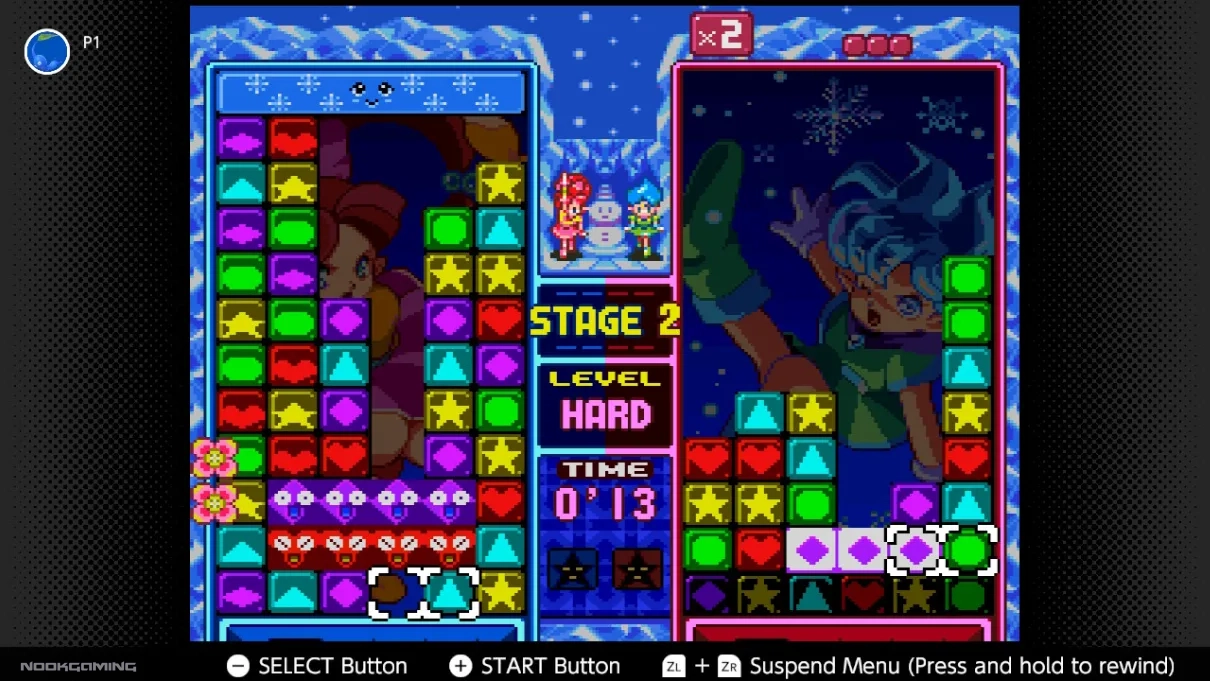
And that’s not even getting into the myriad of other ways TMPGs separate themselves. When you place puyos or tetriminos on a board in their respective games, they’re generally stuck there until you clear them. By comparison, games like the Puzzle League series (a personal favorite) allow you to move your blocks in real time to manipulate your board even while blocks are actively disappearing. This becomes incredibly hectic as you push your hand-eye coordination to its limit to play faster and faster to make longer chains on the spot, and incredibly rewarding when you hear that big combo fanfare.
So even if some of these games don’t quite land, there’s a good chance at least one of them is right for you. One might be much more about planning, while another might be more about how quickly you can move your hands. There are subtle nuances to each game that make them considerably different in practice.
Single Player vs. Competition
Tile-matching puzzle games are a genre of game where there is often a considerable sense of reward in getting better at the single-player and multiplayer experience. This depends a bit more on the game, as the genre tends to vary considerably in how it provides a sense of competition.
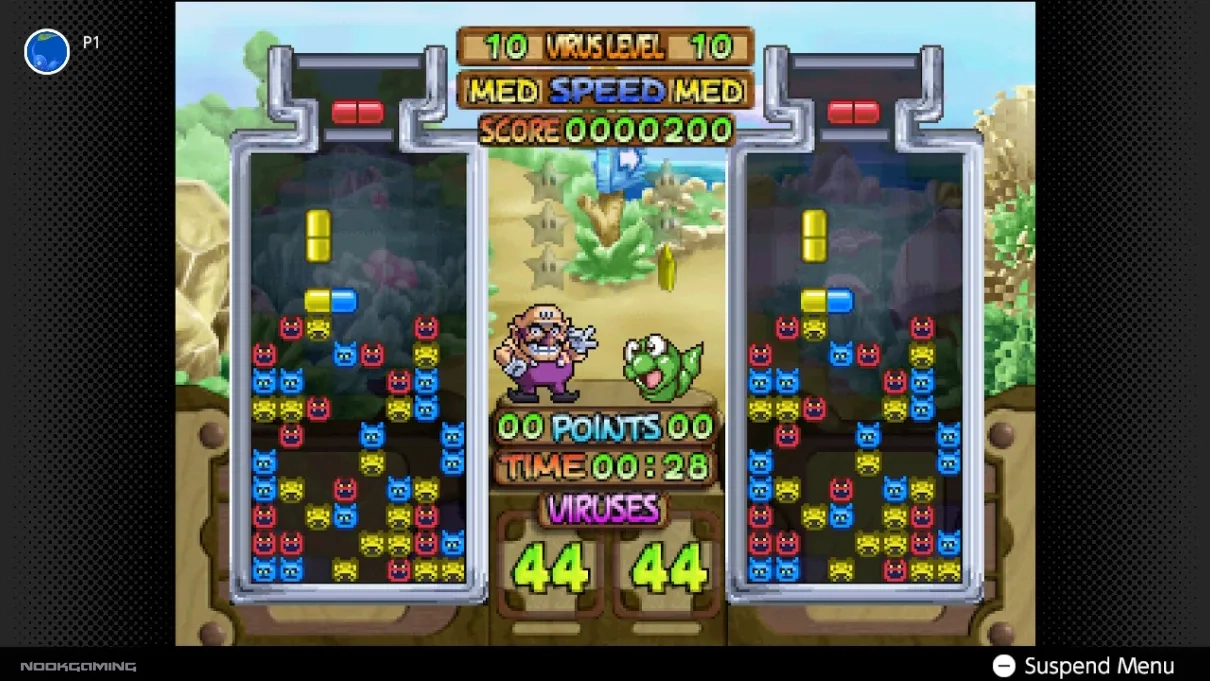
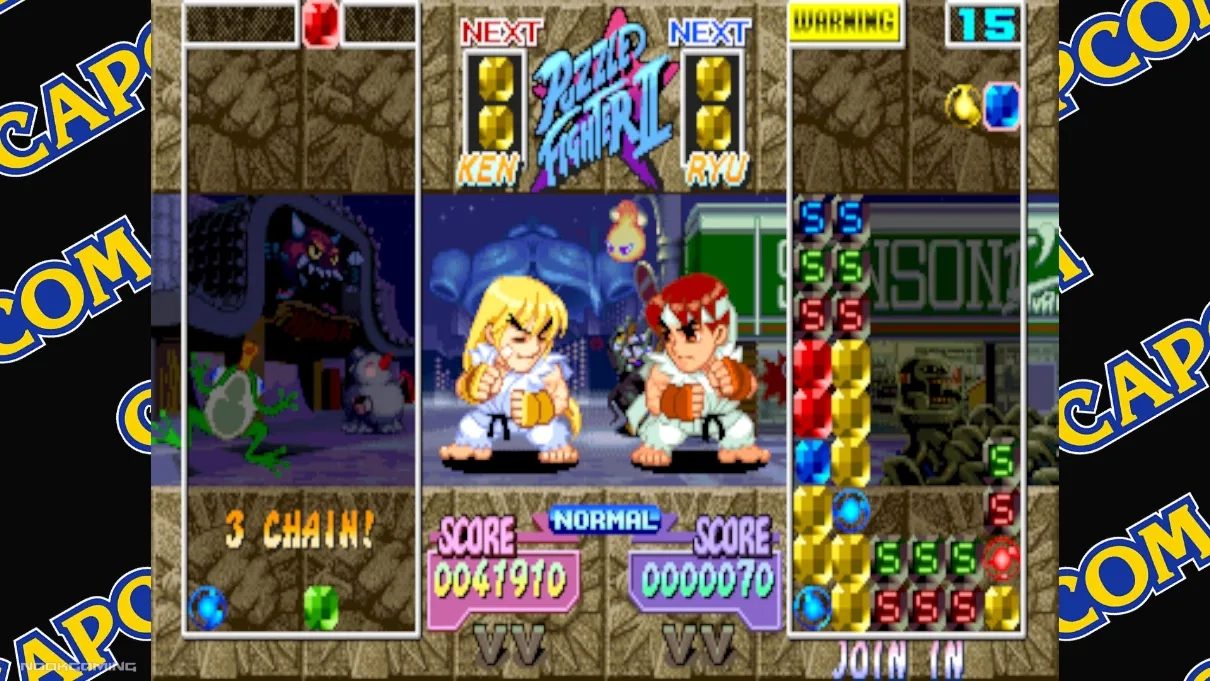
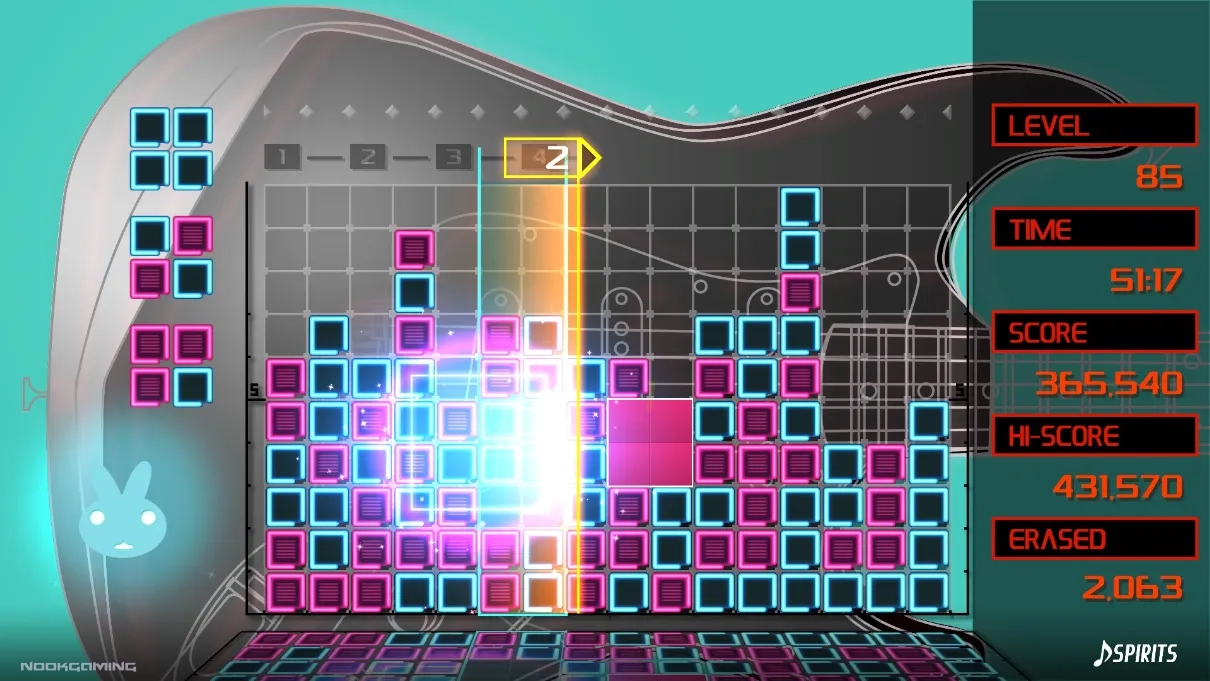
While many of these games release with both some form of single-player and multiplayer, some like Puzzle Bobble and Lumines tend to be much more driven by giving you a board and just leaving you to keep playing until you top out, while others like Puzzle League and Super Puzzle Fighter are more driven by having you compete with another player. In the latter, even the primary single-player modes often have you play against AI-controlled opponents.
The variety is quite nice. Sometimes I enjoy playing a game where it feels like it’s just me against myself, where my biggest obstacle is overcoming skill plateaus and developing my skill with the mechanics to reach higher scores and keep my head above water at faster speeds. Other times, I like taking my skills into multiplayer and matching up against my friends. And still yet, sometimes I just like to clear some blocks at my own pace in a relaxed setting for a while. Regardless of which, TMPGs are a genre that offer all of these options, sometimes within the same individual game.
Why They Are Perhaps Underappreciated
Despite their presence and influence on gaming as a whole, there are a few reasons I believe that the genre may not get the love or recognition it deserves from a great many audiences in gaming at large, particularly in the West. One of the big ones being something of an image problem.
When you have a genre of game that can include both Tetris the Grand Master and Candy Crush, it’s easy to get the idea that a great many of its players are either hardcore enthusiasts or people who don’t play many other video games. There aren’t as many players in the middle ground.
And while “simple yet addictive” can work for marketing, it ultimately can be a double-edged sword that paints tile-matching puzzle games in a perhaps overly casual light. Now, a game isn’t necessarily bad because it’s highly casual, but there is the stigma around the genre being full of simple mindless time-killers rather than mindful games where improvement can be a significant part of the appeal.
Puzzle games can at times be difficult to parse the intricacy of those mechanics if you haven’t actually played the individual game. Often the main distinguishing features between games at first glance are the shapes of the tiles or objects (which don’t usually mean much) and the speed at which the game is being played. It can take a bit of research and trying a game out to find out if a game has a lot of depth to offer or if it’s just a shallow time-waster (or worse, just plain bad). And even if you’ve played hundreds of hours of Tetris, it’s easy to see another title being played and say “I have no idea what’s happening”.
It’s also a genre that hasn’t seen as much innovation as others in particularly obvious ways. Video games look better than they ever have, and a lot more ideas are possible to realize in modern engines, but there’s only so much you can really iterate on the idea of “move block, clear lines, repeat”, which can make the genre feel antiquated and stale at times. As such, it’s hard to come up with new ways to shake up a formula for sequels to tile-matching games that meaningfully iterate and improve on the original idea without completely reshaping its identity.
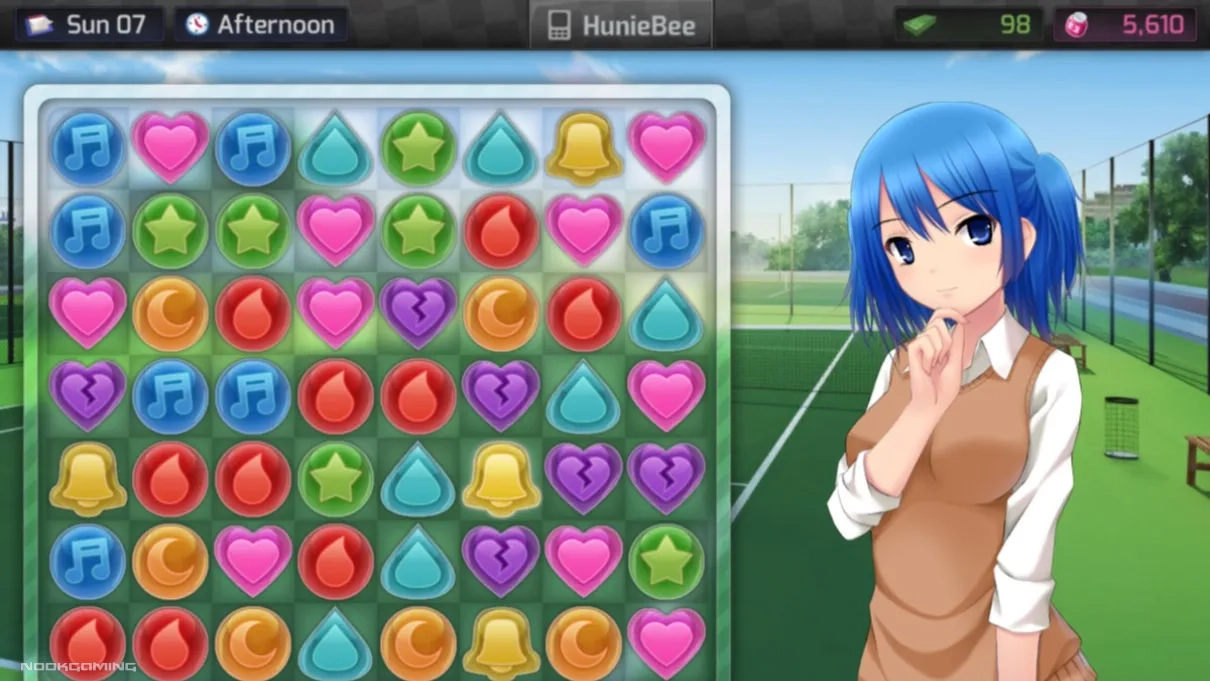
It’s also a genre known for the puzzle gameplay being a rider attached to something else entirely. Especially since the success of HuniePop in 2015, there’s been no shortage of games which feature tile-matching puzzle gameplay as something of a sideshow to a main attraction, often pornography. This sort of game makes up a lot of what you see when you look up “Match 3” games on Steam now. Many games trying to cash in on this idea come off as increasingly slapdash, especially in the era of cheap generative AI, being made with little regard for the gameplay itself and with some thrown in hentai to make a few quick bucks.
A bad visual novel might have crap writing or unlikeable characters. A bad action game might have poorly implemented mechanics or terribly designed areas and stages. But it can sometimes be hard to tell on the surface what separates the good and bad tile-matching puzzle games, as they typically share ostensibly simple mechanics and similar flashy colors. This can make trying to find a new game in the genre to try out seem more difficult and imposing, especially for a genre with no shortage of shovelware, which can make it easy to write off games that actually have a lot to offer.
The Past and Future
Not only has gaming changed considerably in the past few decades, but so too has how we play games. Genres that once dominated arcades now feel like they’re left to the margins of home gaming, and tile-matching puzzle games are counted among those ranks. The genre has also long had a home on handheld devices, but outside of the hybrid Nintendo Switch consoles, handheld gaming is largely relegated to phones nowadays where you mostly find lighter timekiller puzzle games. A lot of examples I’ve mentioned in this article are rather old school as they often originate in the arcades of yesteryear. Heck, we don’t even have a lot of reviews or coverage of this sort of game on this website.
But while new releases of truly standout tile-matching puzzle games have slowed considerably, I don’t think the genre is done chewing up our free time just yet.
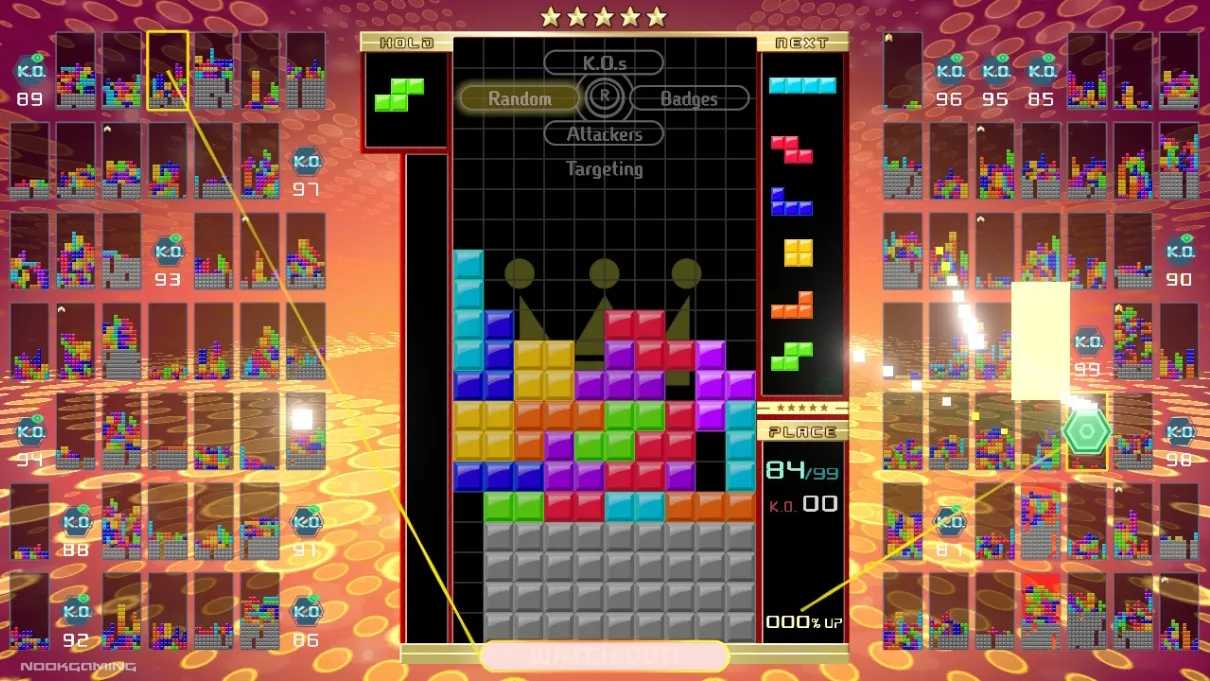
Several genre stalwarts are still making some waves. Puyo Puyo Tetris (which is more of a Puyo game that happens to feature Tetris) sold quite well and proved you can still release a game in this genre that people will come back to for years thanks to its brand of memorable character designs, an amusing story mode people enjoy, and the high skill ceiling to its multiplayer. Heck, Puyo Puyo Tetris 2 got an enhanced rerelease (2S) as a launch title for the Nintendo Switch 2. Despite having the same core premise for decades, Tetris itself has defied time again and again. It became a sensation once more in the era of the battle royale genre with the release of Tetris 99, and Tetris the Grand Master 4 just dropped in April 2025. Also in 2025, there was an announcement of Lumines Arise, the first new Lumines title in 11 years. It’s being developed by ENHANCE, a studio founded by Tetsuya Mizuguchi who was the original designer of Lumines, as many who worked on the absolute somatosensory trip of a game that was Tetris Effect.
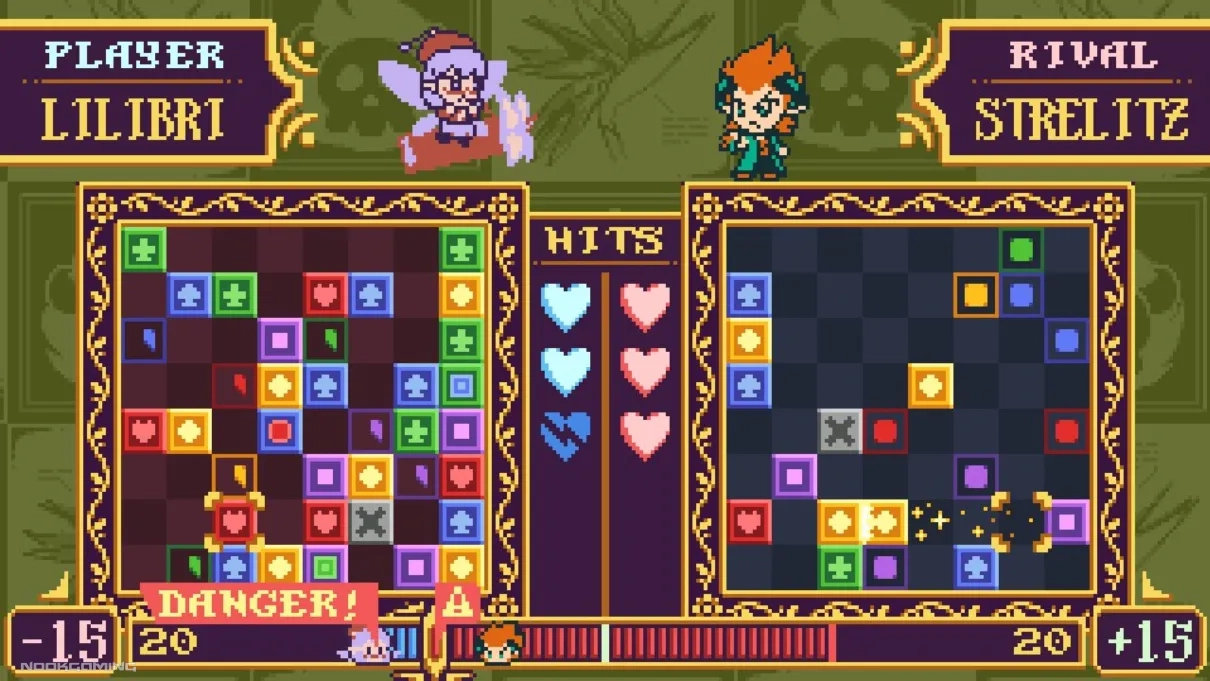
As for newer IPs, you can also find some quality stuff here and there in the indie scene if you can wade through the chaff. A particular favorite of mine is Petal Crash (screenshot above), an extremely cute pixel-art arcade style game about slamming chains of colored flower-squares into each other, and which even has modern features like rollback netcode for multiplayer. It also has a sequel set to hit public early access in 2025 after a successful crowdfunding campaign.
Conclusion
Tile-matching puzzle games are broadly appealing, but I feel they often don’t command as much respect as their peers. And that’s a bit of a shame, because a good one, especially one that feels truly rewarding to get better at, can keep you coming back for years.
Whether you’re looking for something new to play on modern systems or you’re exploring the depths of an old retro collection that happened to feature a title with colorful little blocks to stack together, I recommend giving these games a go. A lot of them have deceptive amounts of depth that can keep you addicted not just to the act of clearing blocks but getting better at doing so within their respective games. And who knows? You might find an entry so addictive that it stealthily climbs its way up your favorite games list.
If you are looking for more posts about puzzle games, you may enjoy our review of Mini Motorways. Or if you’re looking for something else that doesn’t get quite the attention it deserves, here are some of the best overlooked anime games.
Been playing games since my papa gave me an NES controller in the early 90’s. I play games of almost all genres, but especially focus role-playing, action, and puzzle-platform games. Also an enjoyer of many niche things ranging from speedrunning to obscure music from all over the world.