It’s time to return to Edith and bear the nightmare once more! The second game of the Calvard arc of Nihon Falcom’s long-running, ever-expanding Trails series is now here in English with The Legend of Heroes: Trails Through Daybreak II. Following shortly after the events of Trails Through Daybreak, Arkride Solutions once again must take on a new set of complicated matters and mysterious threats.

The Preface
Seeing as this is game number twelve in the continuous world of Zemuria, we come to the usual question of “can I play this game without playing prior games?” And while I will always recommend playing the series from the start to get the most out of it (and also because the first four games specifically rank among my all-time favorites), I understand this is a mammoth of a task.
I would say to play the first Trails Through Daybreak at the absolute minimum before playing through this one, as a lot of Daybreak II’s returning cast is reintroduced with relatively little fanfare. Most of this game’s mechanics are already discussed in my review of that game as well. In addition, a few of the primary characters in Daybreak II are prominent characters from The Legend of Heroes: Trails Into Reverie which can make their reintroduction here feel a bit abrupt (though it’s worth noting that Reverie has likely the largest single expected knowledge burden going into it in the series thus far if you were to try to tackle that one on its own). I go to pretty great lengths to minimize spoilers in these reviews, even limiting references to specific events and characters from past games, but some amount of references to narrative aspects and characters of Reverie and the first Daybreak are unavoidable when talking about Daybreak II.
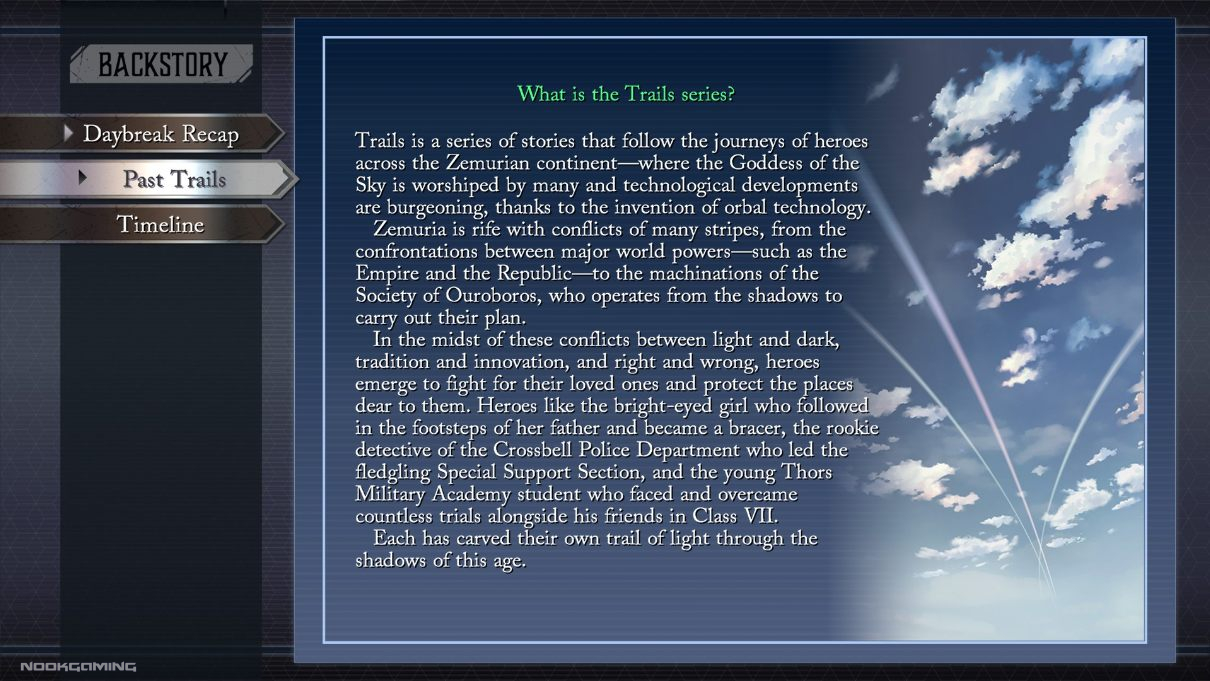
Included in Trails Through Daybreak II is an archive containing an extremely abridged recap of the series, as well as a somewhat lengthy summary of the first Daybreak’s story. As you progress through Daybreak II you will also get a few narrated slideshow recaps of certain plots from previous games pertaining to specific characters and events, which can both help quickly refresh the memories of veterans and give newbies some background detail they’ve missed in not playing previous games. It’s no replacement for playing through the series, but the effort is appreciated.
It is here where I must mention that one of these slideshows involves a certain “Paradise” from previous games, including a recap of its quite infamous purpose. While it’s more subdued here (especially as the series has somewhat shifted on what “Paradise” is in-universe a few times for better or worse), it nonetheless has a reputation for being depressing and deeply disturbing in its choice and depiction of a very dark subject matter, so fair warning on that.
Where We Left Off
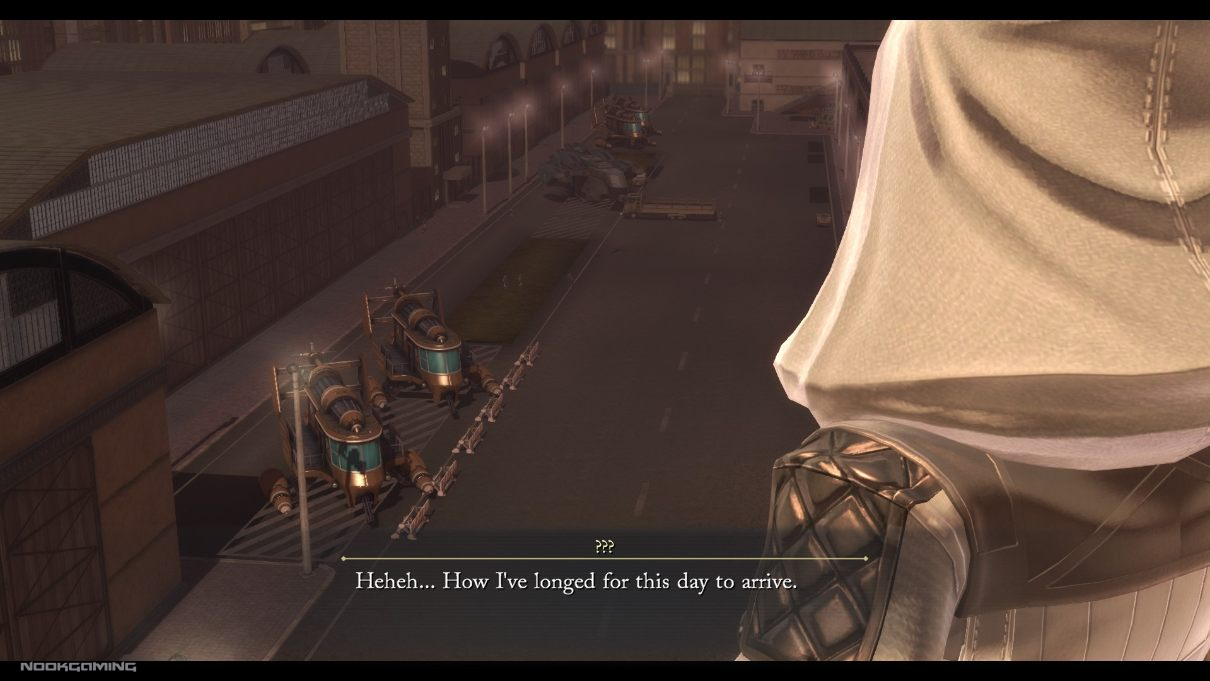
The Legend of Heroes: Trails Through Daybreak II begins not long after the events of the first Trails Through Daybreak. A mysterious entity has emerged and is unleashing gruesome violence on authorities and criminals alike. This gets brought to our protagonist Van Arkride’s attention after a video of the culprit depicts that the two have certain key aspects in common, thus making Van a potential suspect. An encounter with the killer goes awry, setting the story on a tumultuous and peculiar path as Arkride Solutions has to figure out several mysteries and put a stop to this strange threat.
Along with most of his allies from the previous game, Van gets unexpected help from some old acquaintances in the form of Swin Abel and Nadia Rayne, a pair with a complicated set of circumstances who players of The Legend of Heroes: Trails Into Reverie will remember as major characters in C’s route. In fact, the strange developments of Daybreak II’s overture leads Van to hire the duo as temporary members of Arkride Solutions, his company of spriggans who take on jobs not deemed fit for more organized and lawful task forces like the police or Zemuria’s international Bracer guild.
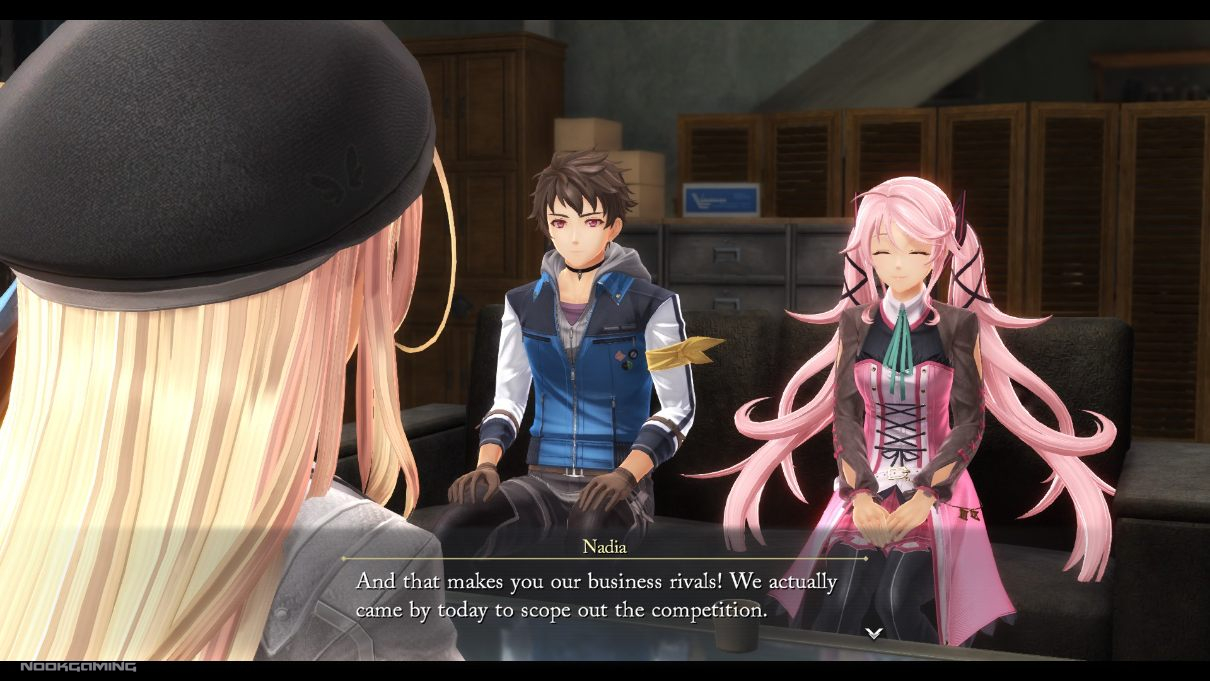
In fact, a good chunk of the story features Swin and Nadia as deuteragonists to Van and his crew. See, unlike many Trails sequels in the past, Daybreak II is a lot less focused on directly resolving a conflict left by the game prior. While a lot of events still relate to those of the first Daybreak, a remarkable amount of it is self-contained. As such, it ends up splitting its focus between Van’s journey around Calvard and the duo’s exploits in the capital city Edith.
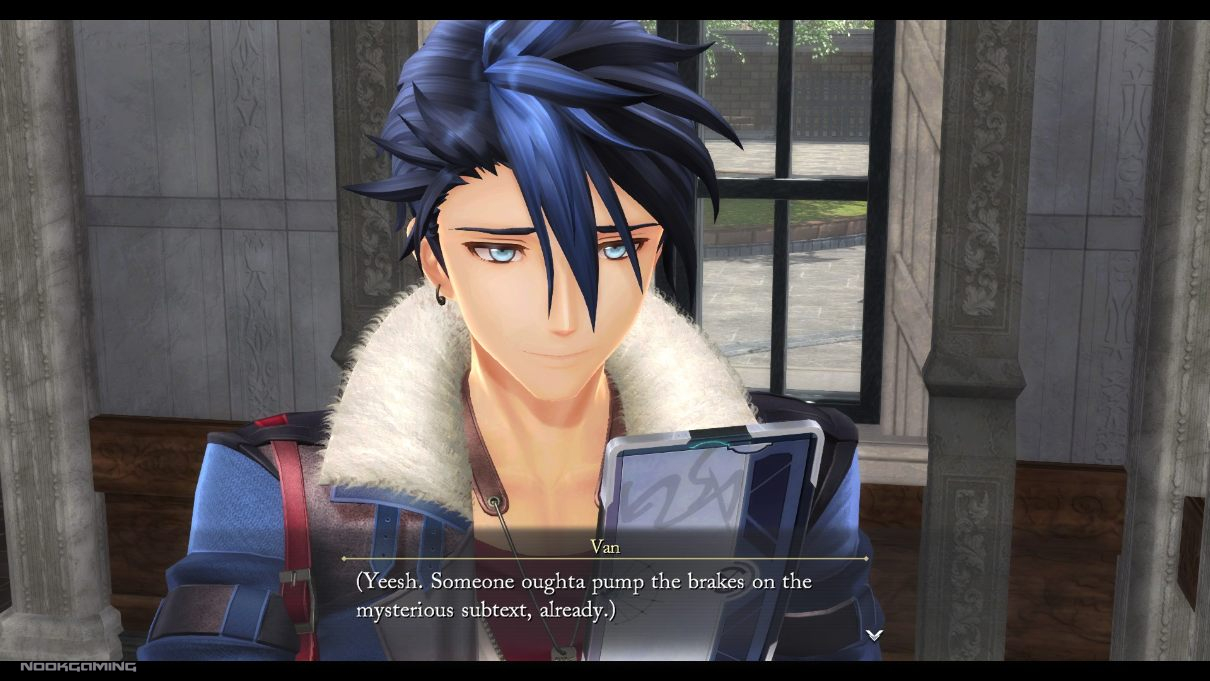
It’s hard to talk about too many narrative specifics in Daybreak II given how much of it involves its share of mysteries, but it’s a game where I can say that a lot happens, yet at the same time not a lot really happens in the greater scope of things. There are a lot of rather interesting ideas in place here, but they can feel awkward at times given how deep into a continuous series this game is, making the story rather uneven.
Mystery Afoot
Without giving away too much, let’s just say Daybreak II has its share of shenanigans. While a lot of strange and supernatural elements come about in the Trails series, Daybreak II’s narrative is one I think would have been a lot more successful for me in a standalone title rather than as part of a series with established conventions. I don’t mind the game having a more self-contained plotline, especially after the behemoth of an arc that effectively spanned the seven games prior to Daybreak and that at many spots felt too ambitious for its own good. However, Daybreak II does little for the overarching story, which is particularly odd when the first Daybreak introduced a sense of urgency to the series’ direction. The way the Trails series has been set up has players in it for the long haul, and I would have liked Daybreak II to feel like it took a few more steps on this decades-long journey than it did.
One of my main issues with Trails of Cold Steel IV was how poorly I felt the game handled repercussions of its events and characters’ actions, and Daybreak II continues the problem by just taking a sledgehammer to the idea of consequences for much of its duration and further testing my suspension of disbelief. There’s something of a theme to Daybreak II about overcoming one’s mistakes, which is good on paper, but feels somewhat hollow given the events that transpire.
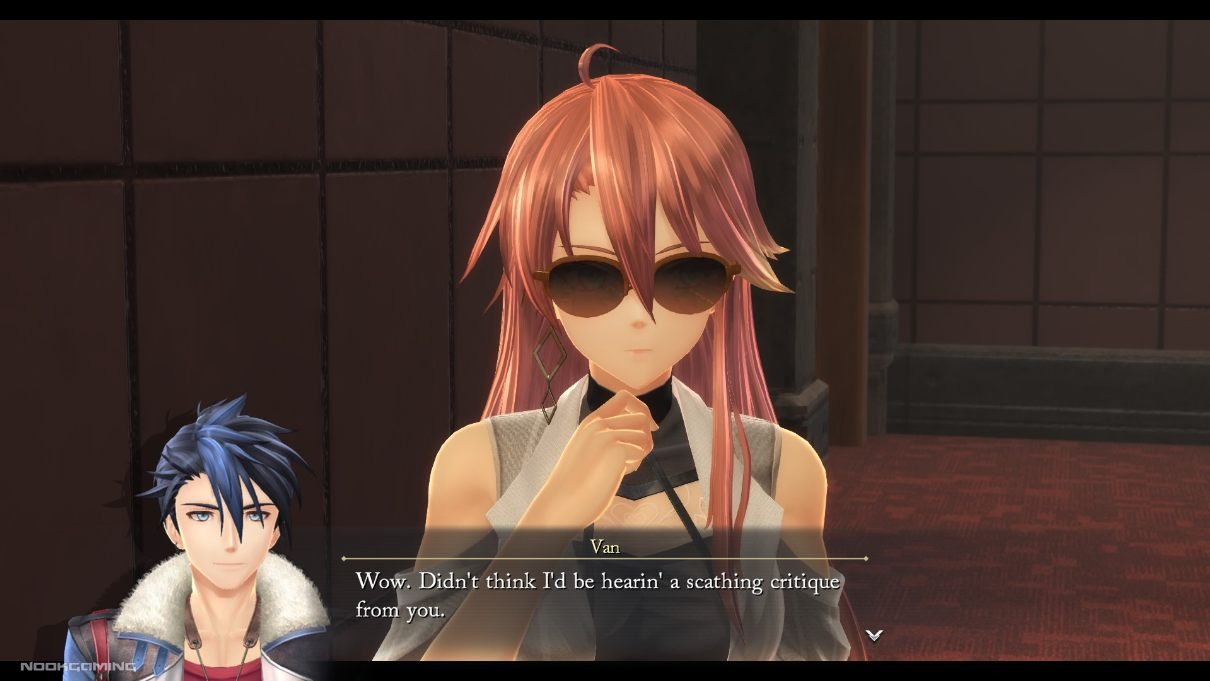
This isn’t helped by Falcom’s propensity to have situations eventuate from characters being mind-controlled or otherwise circumstantially forced to do something they otherwise wouldn’t, which just feels increasingly like cheap means to make characters fight each other. It’s already been established that Arkride Solutions operates in an explicitly grey area of society and thus unsteady alliances and conflict between factions all over the proverbial good/neutral/evil alignment chart happened fairly naturally, making this feel all the more unnecessary.
I’m also not the biggest fan of certain recurring plot threads that continue to come up. While the Trails series has built itself on continuity rewarding you for following along, it at times calls back to old events that did not need to be revisited or expanded on any further, which is sometimes to their detriment as a result.
Silver Linings
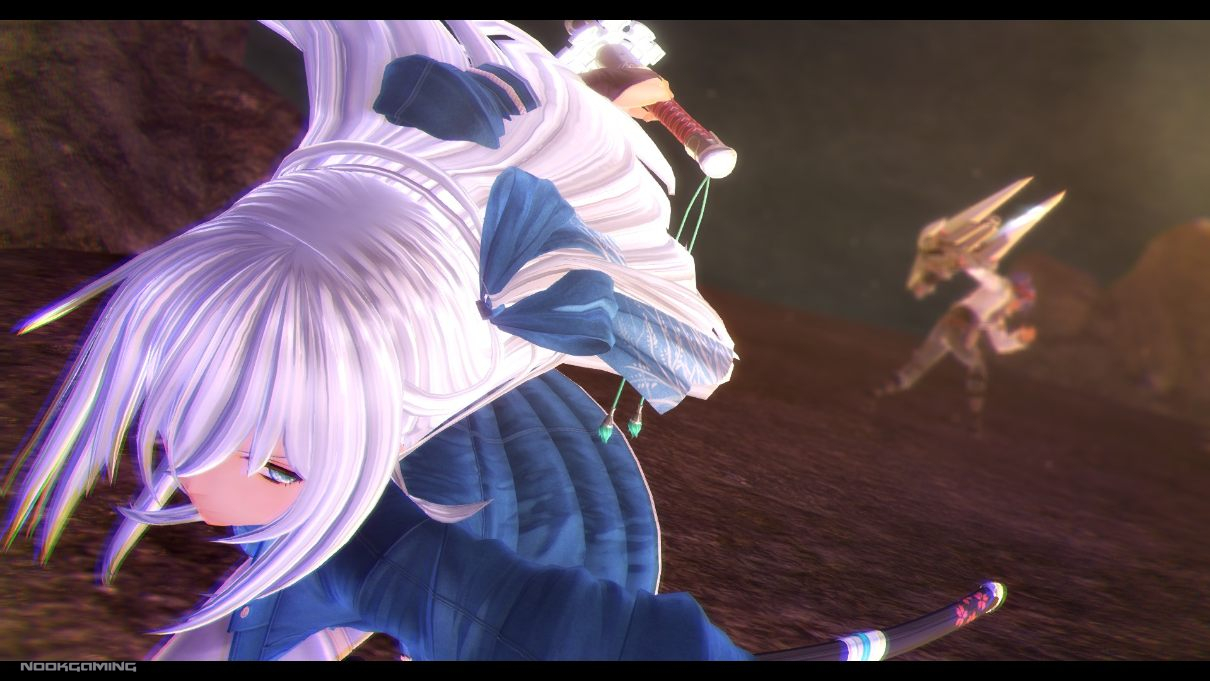
While The Legend of Heroes: Trails Through Daybreak II’s story is quite uneven, I’m hesitant to call it the same outright dud that I felt the first Daybreak or Cold Steel IV was. In contrast to the likes of Almata from the first Daybreak, keeping Daybreak II’s villains under wraps kept an air of mystery behind them, with a share of interesting reveals and twists as you get further into it all. There’s also some interesting concepts surrounding how they work and plan around what the main cast can do, even if there’s some shaky execution. The villains still aren’t great in this game and their plans are ultimately questionable, but they have more connection to the main cast and there are several cool ideas at play involving them.
While I’ve felt that the Calvard arc has been a little on the weak side for this series as far as worldbuilding goes, Daybreak II is a slight improvement in this department. I found myself more invested in the daily goings-on of the country than in the first Daybreak, and it is a bit more front and center about its conflicts pertaining to matters of multiculturalism and racism, even if it is still a touch heavy-handed.
But at the heart of the narrative of the Calvard arc is still the cast of characters, and they remain by far the strongest narrative element of Daybreak II.
I Love These Goofs
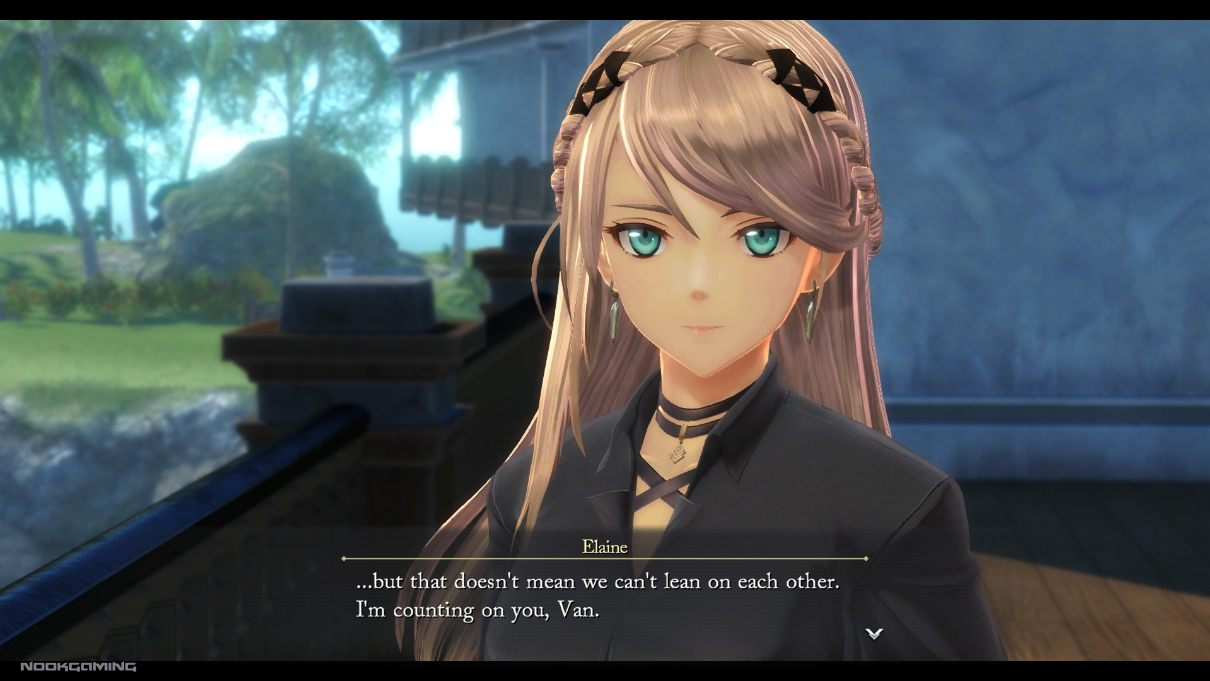
Since we no longer have to spend much time establishing the cast, Daybreak II shines with its characters from the outset, thankfully avoiding the overly frequent dramatic reunions that became something of an issue in Trails of Cold Steel II and III. Van is still the sweet-toothed car-obsessed uncle of a protagonist that I adored throughout my playthrough of Daybreak. His dialogue and dynamic with each of his employees, friends (especially Elaine), and even his adversaries are delightful and fun.
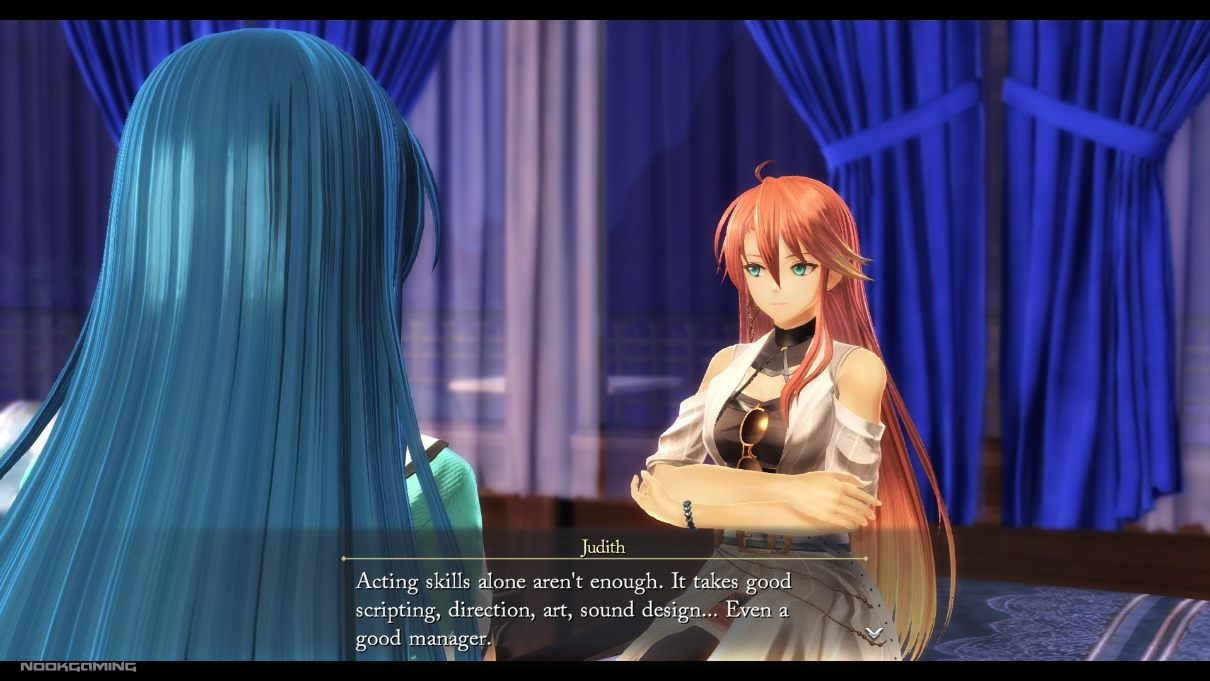
Most of the main cast get their shining moments here, and several of them get their share of engaging character development and emotional scenes that just made me further attached. Feri and Quatre in particular stood out as highlights to me with how they were handled. While the main cast’s development can at times be a bit on the subtle and gradual side, I nonetheless greatly enjoy following them along even when the plot around them isn’t as good. Even if there are a couple party members who could still stand to have a bit more development by now, they nonetheless each occupy a role in the group that makes the cast feel more complete and enjoyable on the whole. I also highly recommend saving whenever connection events are available to view them all.
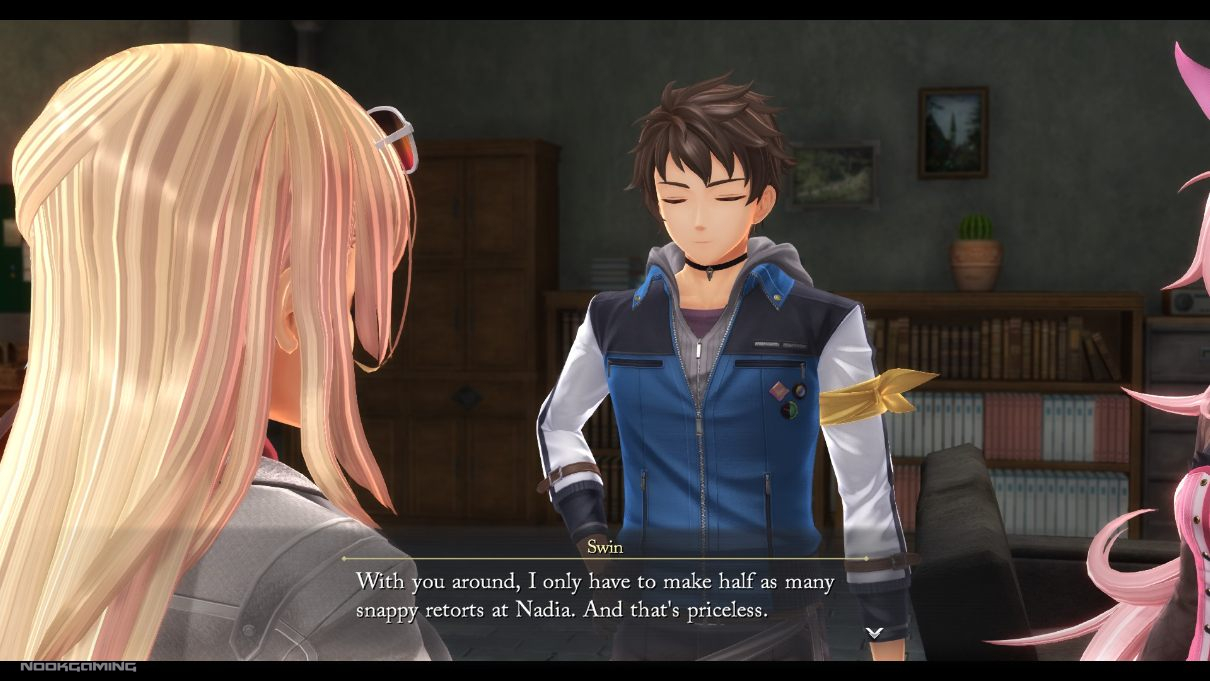
Swin and Nadia further complement this cast and fit in pretty well. Similar to how they were in Trails Into Reverie, much of their shtick is the alternating of constant straight man/funny girl silliness mixed with their own personal baggage as they try to move ahead with their lives. While Trails is no stranger to having plenty of fun banter, Daybreak II definitely kicks it up a notch in this regard by adding these two to a cast that already features its share of eccentrics that had plenty of fun conversations already.
While I have mixed feelings about the main story and felt it could have been better in plenty of areas, going on that journey with these characters made it a lot more enjoyable along the way.
Combat v2.0
The Legend of Heroes: Trails Through Daybreak II has functionally a very similar combat system to that of the first Daybreak, just with a few new features and tweaks. This is fine by me as I felt like Daybreak was a welcome reset in its turn-based combat in comparison to how bloated a couple of the previous games were.
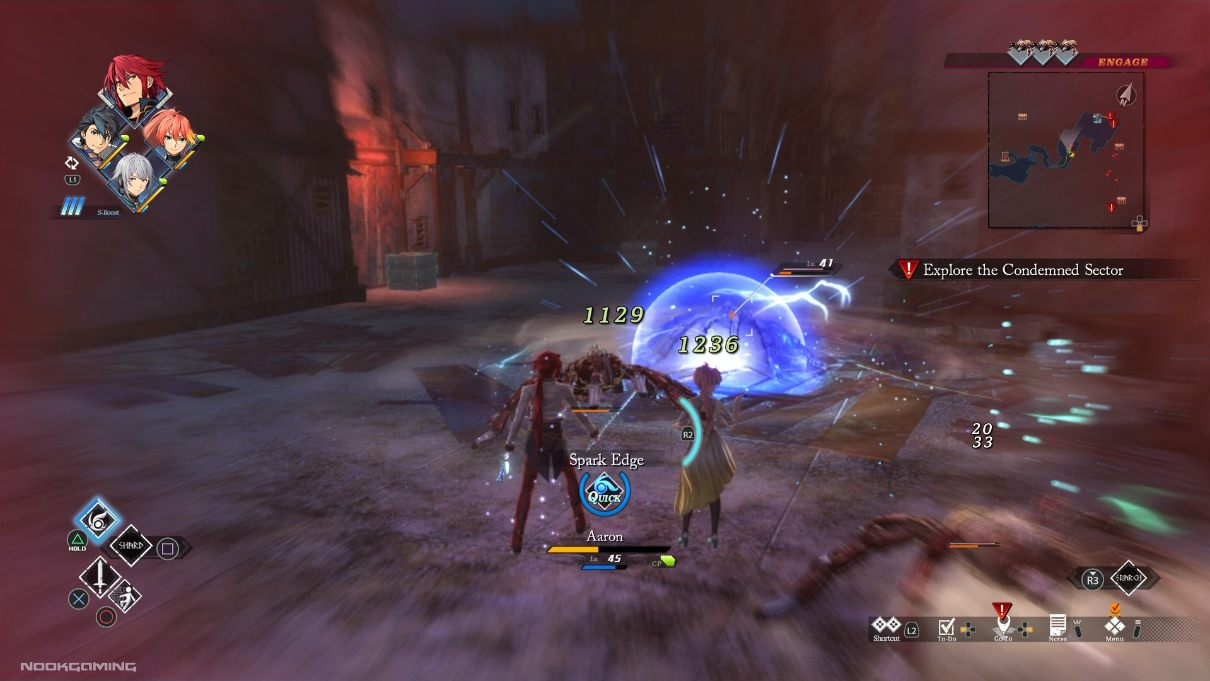
Like with the last game, you have real-time action combat in the form of “field battles” and turn-based combat with the “command battles”. The real-time action combat still isn’t great, but they added the ability to cast spells (Arts as they’re called in Trails) during field battles as well as perform a tag-team attack when you execute a well-timed dodge. These make field battles a touch more fun and rewarding, both for providing options and encouraging a bit more risk-taking.
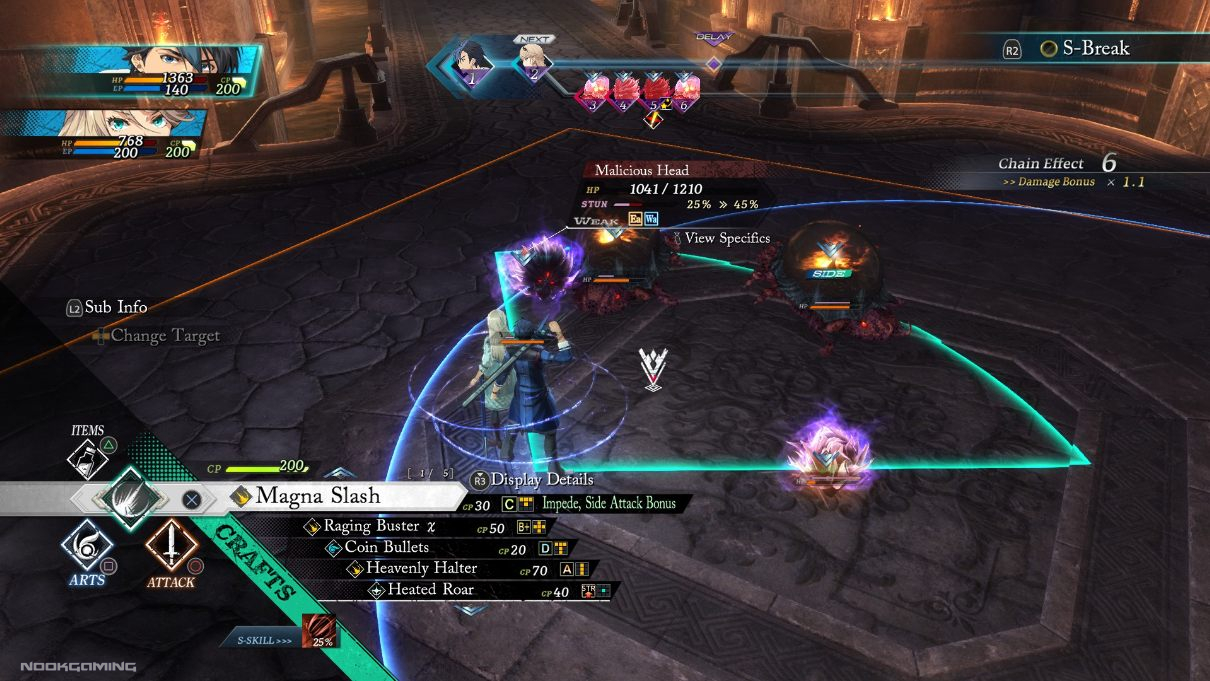
Still, the bread-and-butter is its turn-based combat, especially given bosses are all fought in command battles. As usual, you’re in an arena in which you can position and move your characters around to attack and cast area-of-effect (AoE) Arts and special skills (Crafts). Just like in Daybreak, you get benefits from positioning characters next to each other via the SCLM system, but it makes them more likely to be hit by AoE skills. S-Boosts return, and using two of your S-Boost meter plus 100 Craft Points allows you to perform an S-Craft and interrupt the turn sequence. This time you’re limited to one S-Craft per S-Boost, which ends up encouraging you to consider your craft usage in a different way from previous Trails installments. However, you can also perform what’s called an EX-Chain where you can use at least 1 S-Boost meter to perform a powerful follow-up on a stunned enemy with a SCLM party member. This feature is quite powerful in a lot of places.
Most other new combat features are fairly minor. The orbment system remains basically unchanged from the first Daybreak, though it’s a bit harder to get the best bonuses from how you line your quartz up in their respective slot rows.
Even when playing on Nightmare difficulty I felt this game to be a bit on the easier side for a Trails game given the amount of powerful orbments and increased access to certain powerful abilities. Nonetheless, it was still a fun time throughout, and most of the changes made for a net-positive experience. Trails has done a lot to streamline its gameplay and exploration and remove friction for better or worse, but at the end of the day Daybreak II is still fun to play.
I also found there to be a few more memorable boss fights this time around. Several have unique mechanics that force you to change your gameplans considerably.
Marchen’ Through the Garten
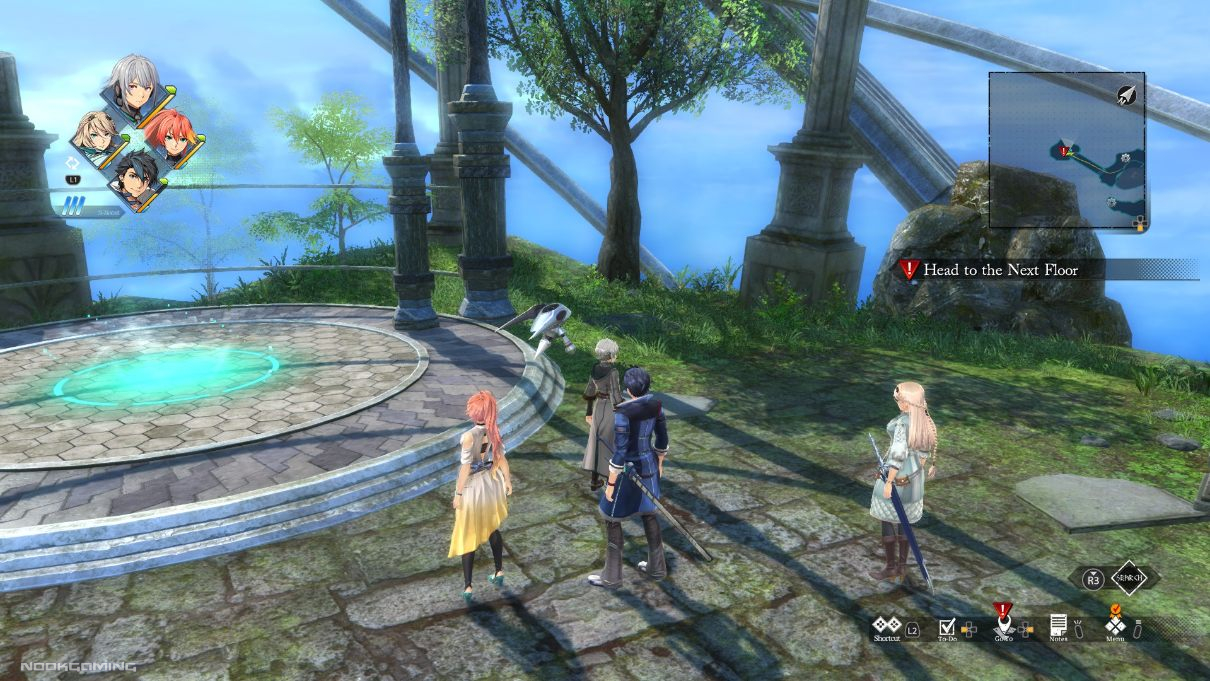
One of the bigger new features of Daybreak II is that of the Märchen Garten, a procedurally generated dungeon you can regularly access throughout your playthrough. It’s reminiscent of the True Reverie Corridor from Trails Into Reverie in a few ways.
I have somewhat mixed feelings about it. Märchen Garten has some nice setpieces, and it allows you to use characters in groups that may otherwise not be doable in the main story. However, exploring it is fairly repetitive on its own and the rewards feel quite insignificant outside of the money and points you get for exploring each floor. As a feature, it feels more like padding than anything else, which makes it unfortunate that it also serves as an unremarkable postgame dungeon concealing a few additional scenes following the events of the main game. It’s not much of a negative nor a positive, it’s just kinda…there.
The Side Shenanigans
It wouldn’t be a Trails game without a load of sidequests and activities to take up your time. Like with many parts of the experience, sidequests felt like a slight step up from Trails Through Daybreak on the whole, with their share of fun little scenarios and some emotional little scenes throughout.
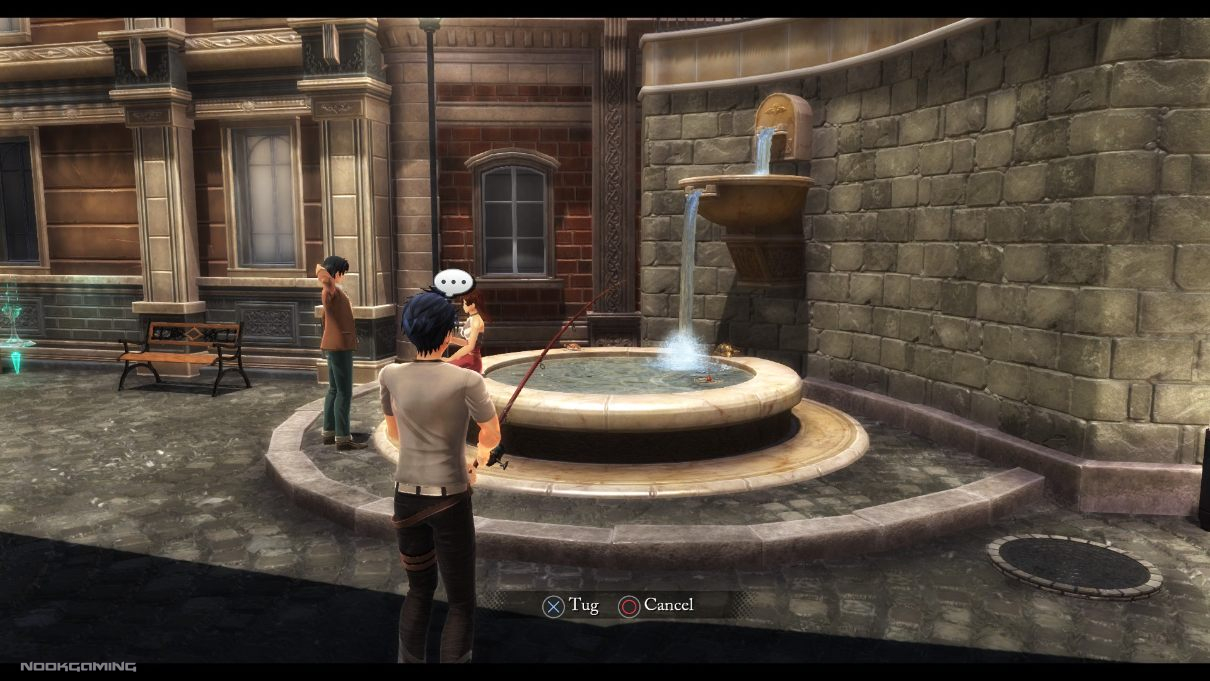
Daybreak was noticeably light on the sorts of fun little minigames and excursions that I was so fond of in games like Azure and Cold Steel IV. In addition to the few that were already there in the first game (cooking and watching movies), Daybreak II rectifies this somewhat by adding its own ones to mess around with.
The beloved fishing minigame has returned with some new tweaks, and honestly despite its simplicity I’m glad they brought it back in some capacity. Throughout the game, there are also a few locked treasure chests you can hack, each of which comes with a fun little puzzle minigame to solve. There are also some fun periodic one-off minigames here and there. Other new additions unfortunately aren’t quite up to snuff. There’s a quasi-basketball minigame, but it’s mechanically way too simple and easy to skunk your opponent. There’s also a new card game called Seven Hearts, but compared to the elaborate Vantage Masters from Trails of Cold Steel III through Reverie, it’s an exceedingly simple, shallow, and luck-based game. Still, I appreciate the effort and am glad they’re there to add a bit of extra spice.
Presentation
Given that it’s on the same engine and largely the same people working on it as its direct predecessor, the presentation in The Legend of Heroes: Trails Through Daybreak II is comparable to the previous game. Everything flows pretty well while moving around from streets to buildings, and apart from the occasional physics jank (e.g. hair blowing in odd directions) caused by the high-speed fast-forward feature, everything usually looks smooth in motion. Characters are expressive in cutscenes, and many action scenes have some pretty well-directed choreography.
The music still doesn’t reach the same heights of the series’s earlier and more musically cohesive entries, but I liked the soundtrack for Daybreak II a bit better than the first Daybreak’s on the whole. The dynamic sound design once again further adds to the experience as you navigate the world, near-seamlessly giving it that extra immersive feel.
I played most of the game with the English dub once again. Most of the voice cast reprise their roles from previous games. The nature of Daybreak II’s story leads to quite a bit of drama, placing more demand on its voice actors, and I’m glad to say they did well stepping up to meet those demands. I don’t think I’d like this game’s cast as much as I do if the voice actors weren’t so much fun to listen to in performing these lines. As per usual there are plenty of conversations that are only partially voiced, which takes getting used to, but the voicework itself is quite solid when it’s there. I was also genuinely surprised (in the best of ways) to see a certain casting choice for one of the game’s main antagonists.
Verdict
I’ve no doubt The Legend of Heroes: Trails Through Daybreak II may be a somewhat contentious entry depending on what peoples’ expectations are and what they play these games for. Still, even though I found it generally easier than its predecessor, I had fun the whole time playing it.
The core gameplay mechanics are fun to play around with, and the cast of delightful characters and their dialogue and relationships make for a sweet treat. This series has had trouble reckoning with the consequences of its escalating stake, and alas Daybreak II is something of an odd entry that does little to fix any of this while also having its share of problems of its own. Nonetheless, taken as its own game, it has enough marginal improvements in certain areas and some interesting concepts brought forth that I still probably liked it a sliver more than the first Daybreak overall, which was already its own pretty fun (if uneven) experience.
THE LEGEND OF HEROES: TRAILS THROUGH DAYBREAK II IS RECOMMENDED

If you’d like to check out the previous games in the series, here are our reviews for Nihon Falcom titles. If you are looking for another JRPG, you should check out our review of Tales of Graces f Remastered.
Thanks to Reef Entertainment for providing a PC review code for The Legend of Heroes: Trails Through Daybreak II.
Been playing games since my papa gave me an NES controller in the early 90’s. I play games of almost all genres, but especially focus role-playing, action, and puzzle-platform games. Also an enjoyer of many niche things ranging from speedrunning to obscure music from all over the world.