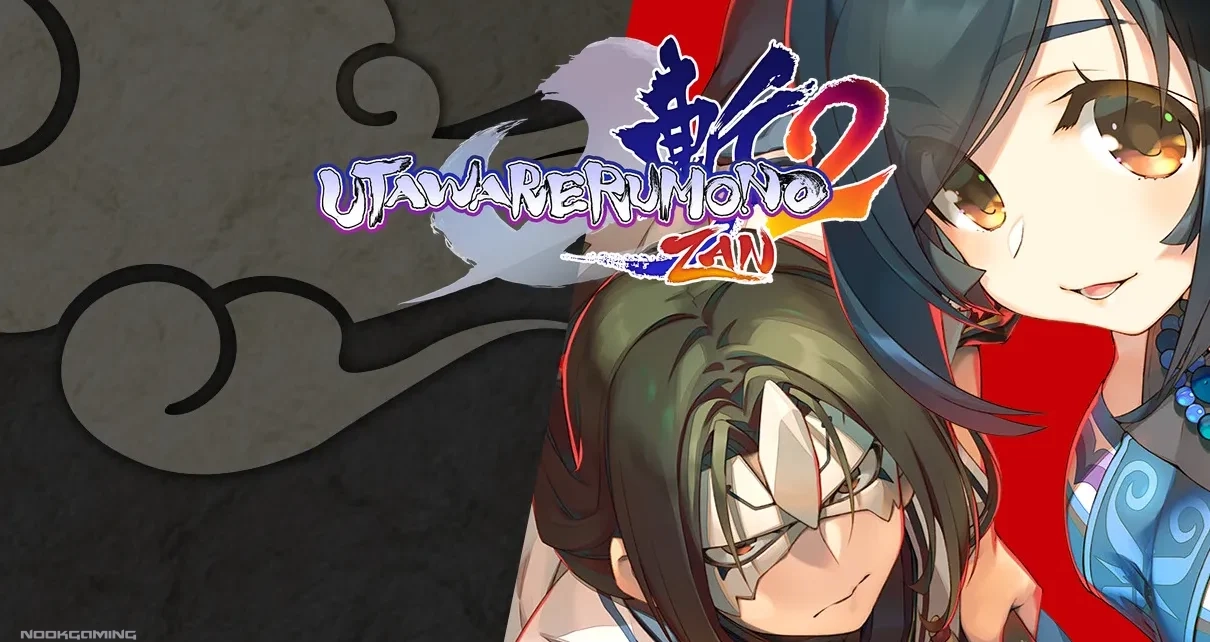
Utawarerumono: ZAN 2 is a 3D Musou-style anime action game released in 2021 by Aquaplus, with Tamsoft as the developer. It is a direct sequel of Utawarerumono: ZAN, this time following the plotline of Utawarerumono: Mask of Truth albeit with heavy focus on story highlights instead of the standard narrative-heavy style that the series is known for. The game features the same hack-and-slash gameplay that its predecessor had, but with a bigger emphasis on character progression through newly-incorporated RPG leveling systems. The game was initially released exclusively in Japanese on PlayStation consoles, but was picked up by Shiravune and DMM games for a global release in February 2026 through the Steam platform.
It’s only been a short time since Utawarerumono: ZAN’s release on Steam, but here we are already with the sequel! ZAN 2 looks a lot more promising compared to the previous title because of all the additional gameplay mechanics that it introduces. Considering the raw file size of the game (22.21GB), it almost triples what the prequel had in terms of asset size! That’s pretty exciting. While I’m not expecting much from the story since it is technically still an abridged version of the series, I look forward to how they’ve implemented the various qualities and quirks unique to the scenario and the characters we interact with as players. Surely with three years in-between releases they were able to improve upon the gameplay loop itself, right?
Can this sequel manage to be a fun retelling of the original title, or will it be another spin-off that preys on the fans of the series because of their rose-tinted lens? It’s time to once again embark on a journey as we storm the capital in preparation for the climax of the Utawarerumono series!
Note: Due to being a direct sequel of ZAN, this review of Utawarerumono: ZAN 2 will contain spoilers for events that happened in the previous game and its alternative, Utawarerumono: Mask of Deception. It is recommended that readers play at least one of the aforementioned titles first before continuing to the next sections.
Inheriting the Will to a Bloody Future
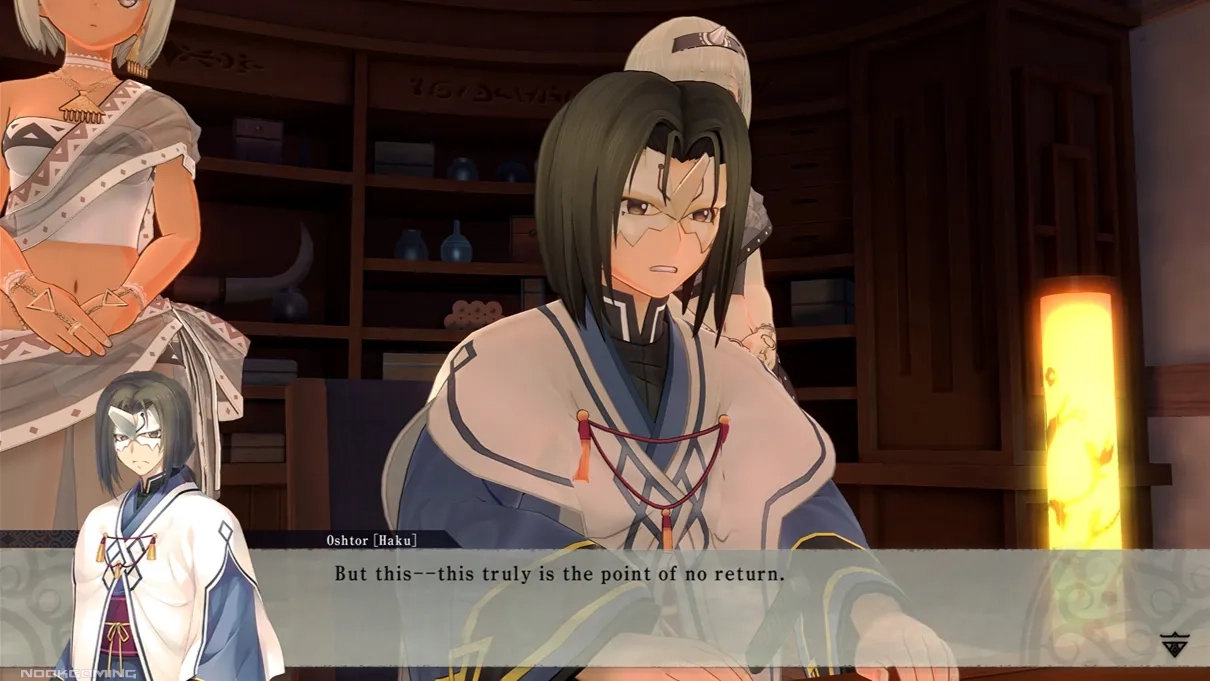
Utawarerumono: ZAN 2 continues from the ending of the previous game, where upon witnessing the death of Oshtor, Haku and Nekone decide to take up the responsibility of continuing the fight for Anju’s ascension to the throne by assuming the identity of the fallen general. He takes the clothes and mask that Oshtor left behind and loudly proclaims his own untimely death, with Nekone serving as his witness. The cast struggles to accept this fabricated reality and grieves for the companion they lost. But war waits for no one; as tensions rise in the capital because of the missing Divine Scion and the lack of a legitimate successor to the Mikado, Oshtor and his friends must now navigate a highly volatile environment where an invisible agent is sowing seeds that seek to destabilize the empire.
Strengthen your forces, forge alliances, and outsmart your enemies; it’s time to write the next chapter of the Legendsung.
Through the Lens of Another Dimension
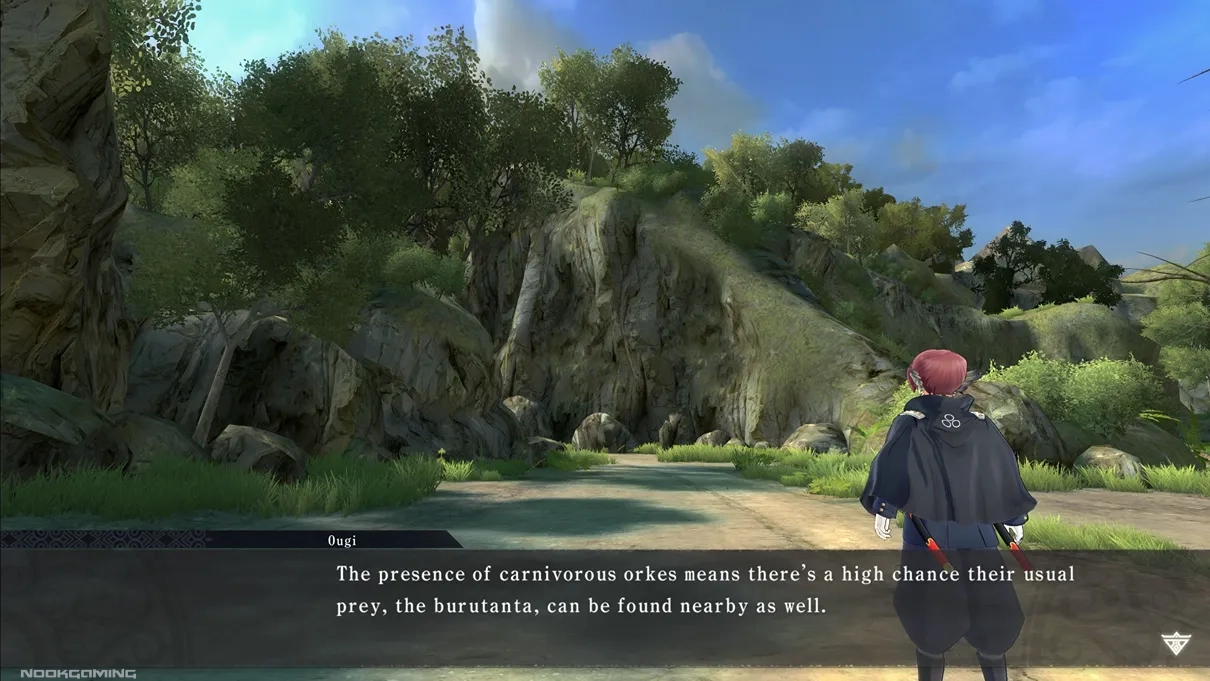
As a spin-off title of Utawarerumono: Mask of Truth, Utawarerumono: ZAN 2 features the same storyline as the original but with an abridged narrative. It keeps most of the main events that happen throughout the story but trims down most of the build up to them, keeping the stakes consistently high to better fit in the action-heavy gameplay loop of the Musou genre. As a result, comparatively speaking, the emotional payoff of some scenes are compromised and undermine specific characters’ arcs. Instead of being an alternative format for the series’ storytelling, it feels more like a summary of events to help existing fans recall beloved scenes from the third game. It is a title that will feel satisfying only for those who already like Utawarerumono.
If we consider the game as specifically catering to fans, however, Utawarerumono: ZAN 2 does the job of a spin-off incredibly well. First, the visual presentation is refreshingly new. Instead of a boring rehashing of the series’ visual novel screen using the characters’ 3D models, it redoes the featured events using most assets unique to the ZAN spin-off series. It’s somewhat similar to the pre-battle sections that the original had that utilized the adorable mini 3D models of the cast, but instead of only taking place within the stages themselves, each scene in focus is given an appropriate 3D backdrop that houses the game’s beautiful character models in different situations. The models aren’t just always standing; they make use of a nice variation of poses to indicate mood, stakes, and to represent ongoing motion. It’s more or less standard when comparing it to modern day JRPGs, but for Utawarerumono, it’s a new way of visualizing the setting.
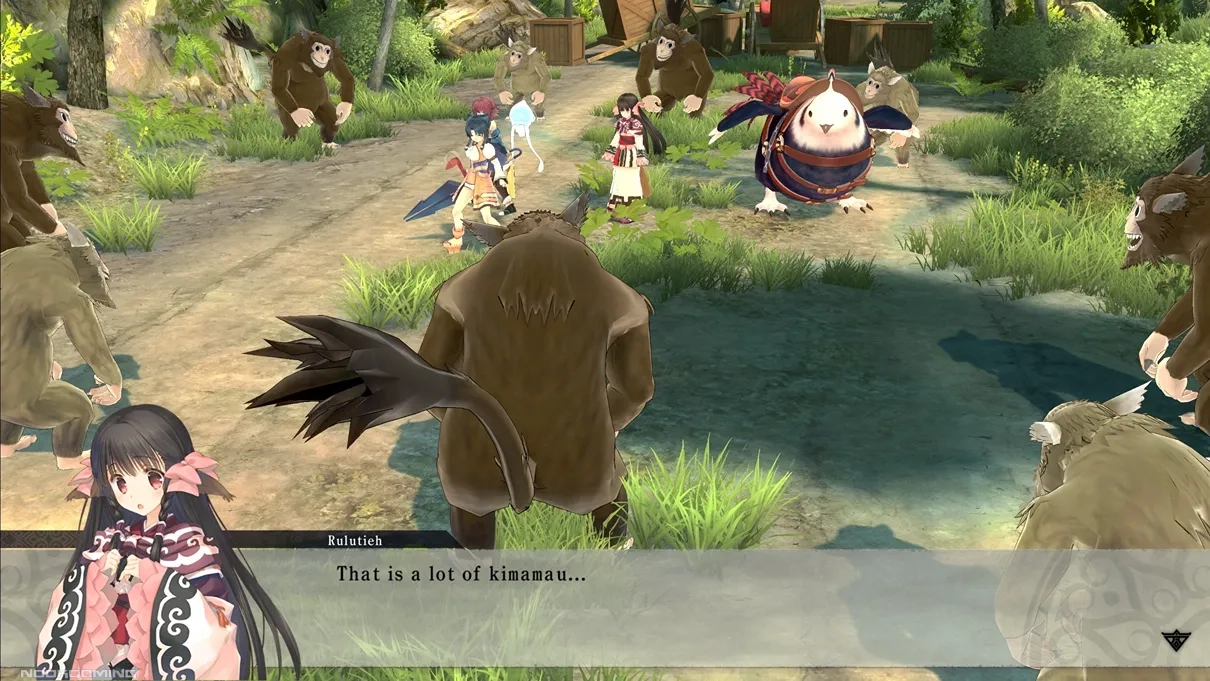
Additionally, despite being an abridged version of Mask of Truth, Utawarerumono: ZAN 2 actually introduces new content to the series’ story. Most of them are fun, lighthearted side scenarios involving members of the cast going about random errands. They sometimes introduce new character dynamics that the original wasn’t able to dive into, given the condensed nature of its final chapters. Some are even alternative retellings of scenes from other characters’ perspectives! This isn’t even considering the new Base section of the game, where you can interact with both the cast and random NPCs in-between story chapters to read short but heartwarming dialogue that adds to the experience. In a way, instead of being a simple refresher, it ended up being a unique way of presenting the series that managed to still be exciting for existing fans like myself despite being a retelling.
The Ebb and Flow of War
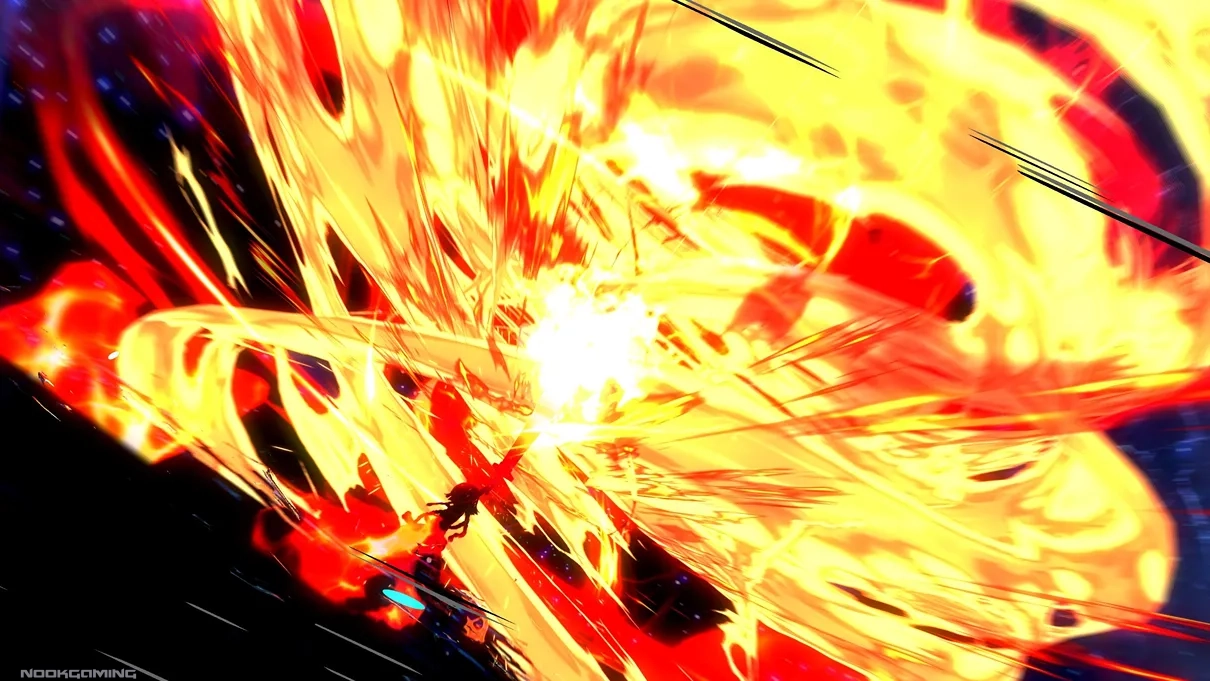
Utawarerumono: ZAN 2 retains the Musou-style anime action game that the previous installment had, with stages still remaining objective-based to track progress towards completion. This means that players will find themselves aiming to clear a set of main objectives while knocking down side objectives that have a random chance of spawning for additional rewards useful for overall progression. As a hack-and-slash game, fielded characters will usually beat up grunts for objectives while defending against elite units that threaten to end a stage prematurely through their enhanced attributes if they’re not dealt with swiftly. The objectives can range from anywhere between surviving for a certain amount of time up to defeating a specific number or type of enemy, but they still mostly revolve around punching enemies as fast and as strong as you can.
The game also inherits the basic button layout of the previous game, with two buttons dedicated to normal and special attacks, a chain skill button, and a jump button. Combat involves a lot of weaving and bobbing to avoid damage while dishing out as much damage as possible, rewarding familiarity to a character’s kit and the ability to incorporate other party members’ skills through a central raid skill mechanic that you can customize via the party edit screen. Zeal and Sigil Effects still form the bread and butter of characters’ burst capabilities, but they’re implemented differently in this game: both are now independent gauges that fill up the more combo chains and damage you do to enemies. They boost stats and provide special effects depending on the character, enabling players to beat higher difficulty content if they are utilized properly as part of the overall plan. Additionally, as part of the overall balance changes, they removed the ability to spam chain skills during overzeal and changed it into a cooldown system to slightly nerf previously overtuned damage-dealing kits.
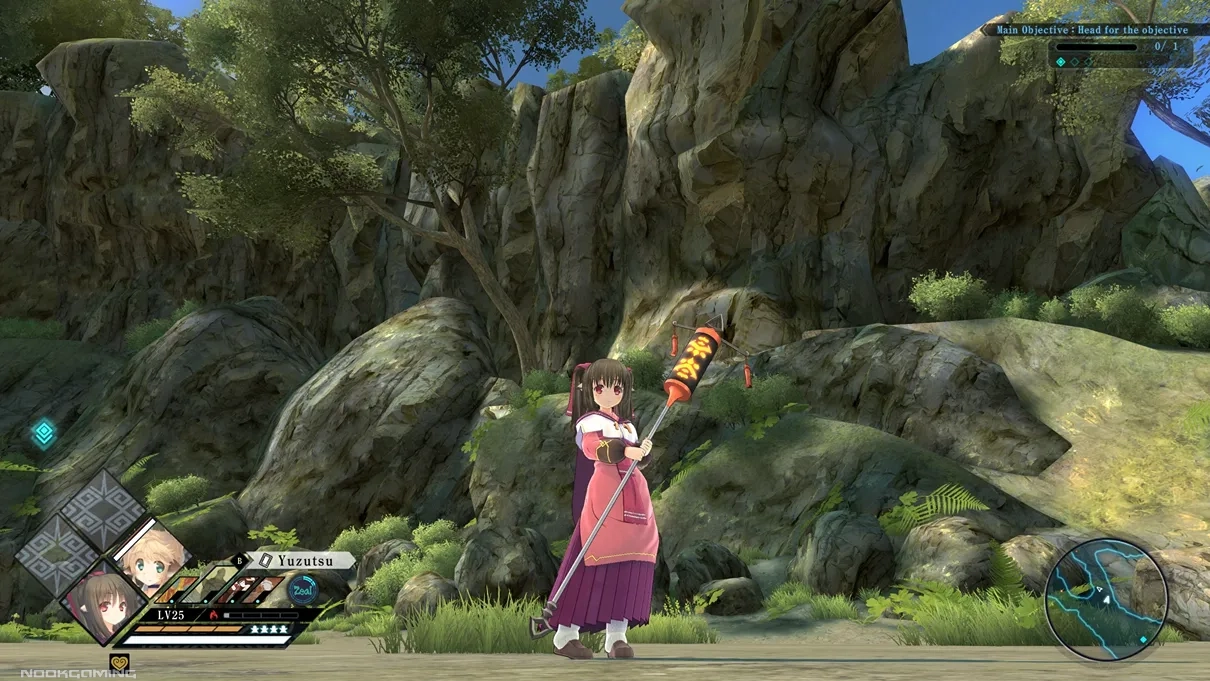
Related to the change in chain skills, Utawarerumono: ZAN 2 also revised the way it punishes greedy gameplay decisions through the introduction of an additional element in the combat system called the Brawn Gauge. It essentially functions similar to how a guard or stagger bar would work, where once the gauge is exhausted, characters will find themselves vulnerable to higher amounts of damage alongside actions that are easily disrupted by being hit once. This, alongside Hate (or the level of aggression characters produce relative to enemies), revive the importance of party balance by essentially reinstating the need for balanced compositions that consider enemy aggro, party buffs, damage dealers, and healing. It makes it an interesting exercise to try and cover all your fields and possible vulnerabilities instead of just slotting in the members of the cast that you are attracted to…Not that it’ll stop me from doing so anyway.
Last but not least, while True Strikes are still part of maximizing chain skills’ effectiveness, the game also introduces an additional dimension to the overall flow of the gameplay by implementing what they call a “Hidden True Strike”. These Hidden True Strikes have less obvious tells within a chain skill, usually a small flash of blue, and reward players that hit them by providing bonus damage or additional buffs. They also feel great to hit as they are put in very intuitive places, sort of how a rhythm game would position beats within a given measure. Overall, these changes create a gameplay loop that manages to be engaging despite being relatively simplistic as a hack and slash variant. This is thanks to the surprising depth of its resource systems (stats, chain skill cooldowns, brawny, and bonus gauges) and how each characters’ unique kit interacts with them.
Many Paths to Victory
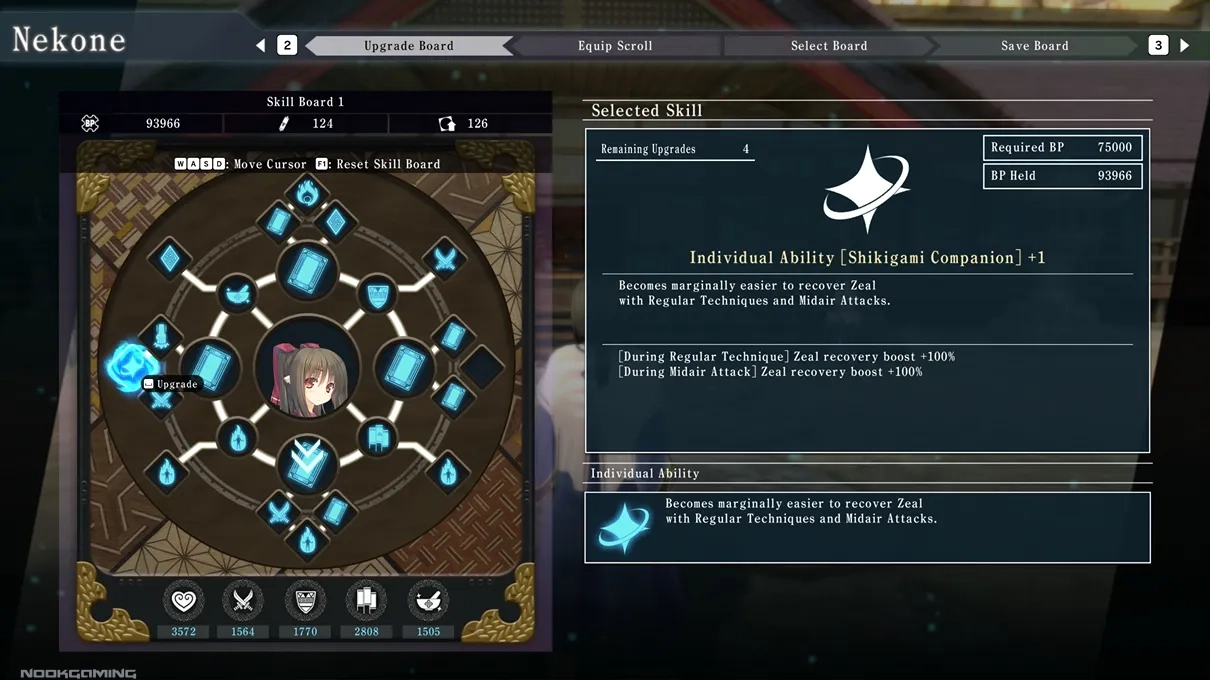
In lieu of the linear Battle Point (BP) system that most fans are familiar with, Utawarerumono: ZAN 2 chose to implement a skill board where progression starts from the middle and branches outwards. Similar to a traditional skill tree in RPGs, inner nodes serve as prerequisites for stronger bonuses that can be found further down the line. Each node comes from a predetermined set of possible bonuses, but since there are only a limited number of them that can be implemented for each character, the way the system distributes them makes each character have some sort of partial advantage or bias towards a specific statline. Some will have more bonuses aligned for a healer role, while others will have more defensive nodes that underline their role as a tank. There’s even the option of using food to cover for possible weaknesses of the party members! These systems emphasize role distribution when creating a party, especially in latter difficulties.
What makes this system a lot more interesting to me though is that besides a few skills that are locked behind story progression, the skill board is actually pretty flexible in terms of character progression. Depending on what a player values for his characters, you can go fully into attack upgrades to create more high risk high reward scenarios, or balance out progression across the board to maintain a consistent feeling across level ups. Additionally, ZAN 2 retains the scroll system that Utawarerumono uses as equipment, which means that you can add preferred statlines or passives that cater to your preferences in combat. This creates a feeling of customization that makes the player experience relatively unique. Although the end state of the board is still the same, the journey towards maxing out a character is different for everyone, which means their roadblocks they need to overcome across content formats become different as well. It’s a great topic for discussion when talking with fellow fans.
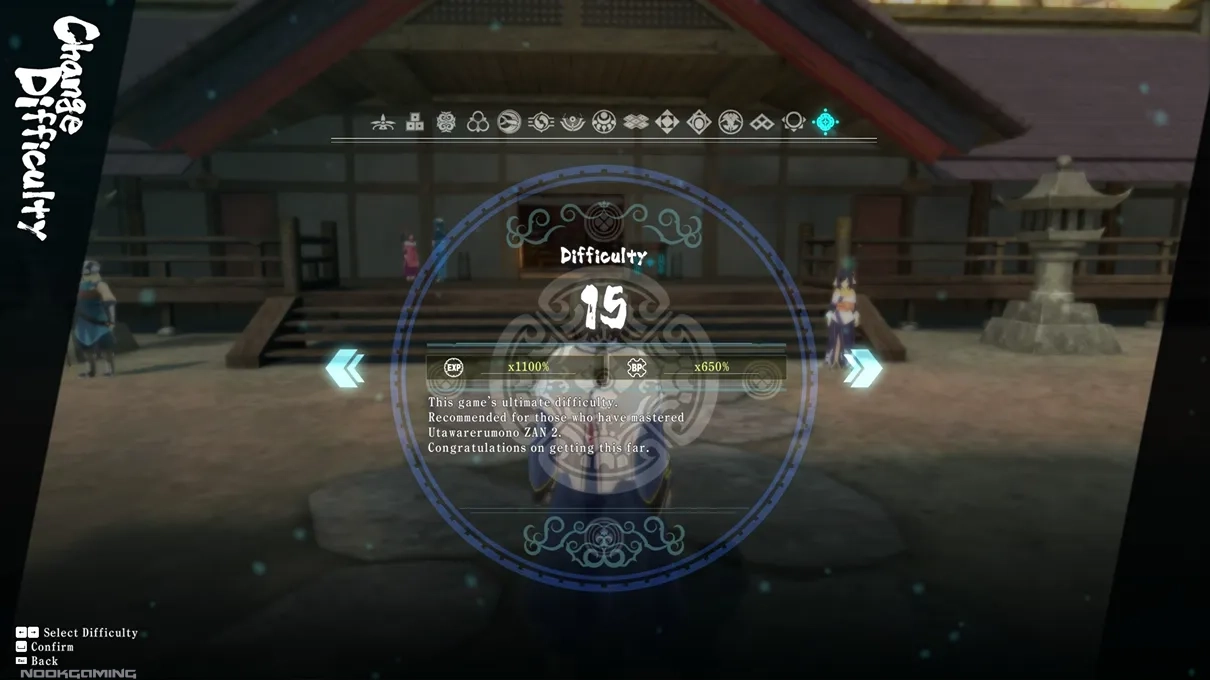
Continuing the topic of Utawarerumono: ZAN 2’s customizable player experience, the game also introduces not three, not five, but fifteen difficulty levels to cater to people of all tastes. The highest difficulty by default is three, but higher levels can be unlocked through the newly introduced Justice Exchange. As you go up in difficulty, the enemies become not only tankier, but deal greater damage and Brawn Gauge reduction as well. This means that at the highest levels, characters are usually only a few hits from being staggered and ultimately dying. To avoid this, it becomes important to familiarize yourself with enemy action patterns to dodge them effectively and figure out ideal combo chains to weave and bob with. Besides achievements, item drops, and character progression, higher difficulties don’t really add much value to the core gameplay experience, so it’s a decision based on preference more than anything.
Lastly, the Justice Exchange is Utawarerumono’s version of a base building mechanic, where additional functions and content can be unlocked by grinding Justice Points (JP) through clearing stages. There’s no enforced order for unlocking most of the content under this feature, so once again, the decision of where to spend your JP it becomes a matter of what functions you’d prefer to have early instead of a strict progression line. This system is included under the larger Bartering system which is ZAN 2’s version of an in-game shop, where additional functions such as the Transmutation Hearth, Summoning Ritual, and Restoration Ritual are found as well.
Exploring the Depths of the Onkamiyamukai
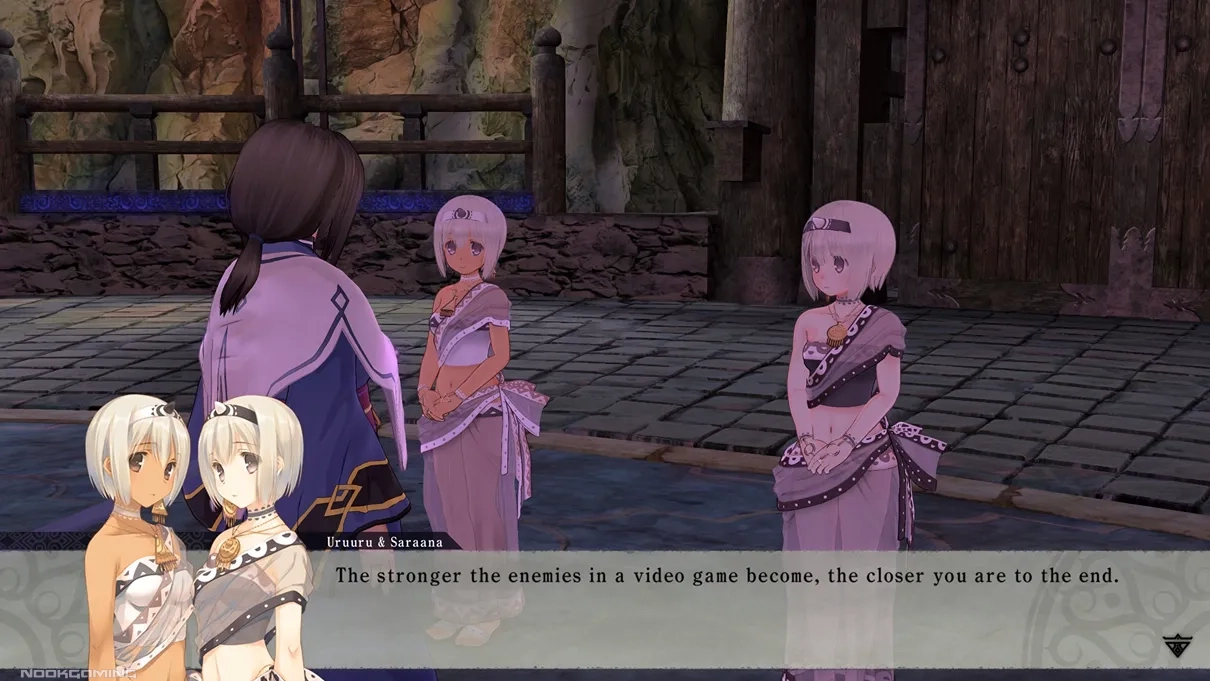
Amongst all the new features that Utawarerumono: ZAN 2 introduced, what stood out to me the most were the numerous gameplay modes available to players to grind: Expeditions, Mock Battles, Dream Arena, and the Tiger’s Den. Each of these modes reward BP and JP but differentiate themselves from each other by incorporating a different kind of pacing per mode. Expeditions are a quick one-stop for resources by clearing objectives scaled to your preferred difficulty, Dream Arena is a gauntlet of stages meant to unlock bonus content in the form of Helpers, and the Tiger’s Den is a continuous dungeon with a difficulty curve that increases the challenge the higher you get in its 100 stages.
Although each of these modes use the same gameplay loop that has been in place from the start, the additional scenarios and random stage sequences add a little bit of unpredictability that make them a bit less tiring to continuously engage. Instead of spamming the same stage that rewards the highest amount of experience, BP, and JP, you can either test your current strength and climb the 100-floor dungeon. Additionally, if you get tired of going through the game solo, you can also seek companions for grinding Dream Arena or testing your PvP skills in Mock Battles through online mode! The only problem is that it’s pretty hard to find other players given the small size of the community. There’s a healthy amount of content variation for what you’d expect to be a simple spin-off game.
The Eternal War Between Good and Evil
Of course, it’s not all pretty rainbows when it comes to actually reaching full completion of the game. Despite the cool bonuses that Dream Arena comes with, when it comes down to it, the mode is a really grindy way of artificially prolonging the playability of the base game without the assurance of actually achieving some sort of meaningful progression. Because of the random nature of the stage selection, Helpers, which you can only unlock through the Summoning Ritual by first beating them in the Dream Arena, are actually pretty frustrating to grind for. Because there’s no assurance that the boss you’ll be fighting every three stages is a character you haven’t unlocked as a Helper yet, I ended up burning around five hours trying to luck my way into the one I wanted, and I still didn’t get them by the end of it. Sure it’s fun, but it’s rough. It shouldn’t be that hard to unlock an NPC whose job is to swing their fists randomly at the closest enemy to them.
On the opposite side of the spectrum though, Utawarerumono: ZAN 2 does try to make sure that people can play the game as much as they want through the use of the Restoration Ritual. The function allows players to reset a character’s level from 100 back to 50 with the intention of renewing their skill board, allowing them to have access to build variations. This ensures that there’s benefit in continuously grinding EXP and BP, and to an extent, JP because of how flexible it is as a currency in various upgrades.
Because of all the features mentioned, although they’re technically just timesinks intended to pad a player’s time in-game, I feel like Utawarerumono: ZAN 2 was successful in introducing a gameplay loop that extends beyond just finishing the story mode. Compared to the first game which had a definite end by completing the Military Medals, this sequel manages to provide options to serve as goals even after completing the game’s achievements. It just gets a little bit frustrating when your specific goal is locked behind a system that mind-numbingly randomizes benchmarks that add to your completion.
Art and Music
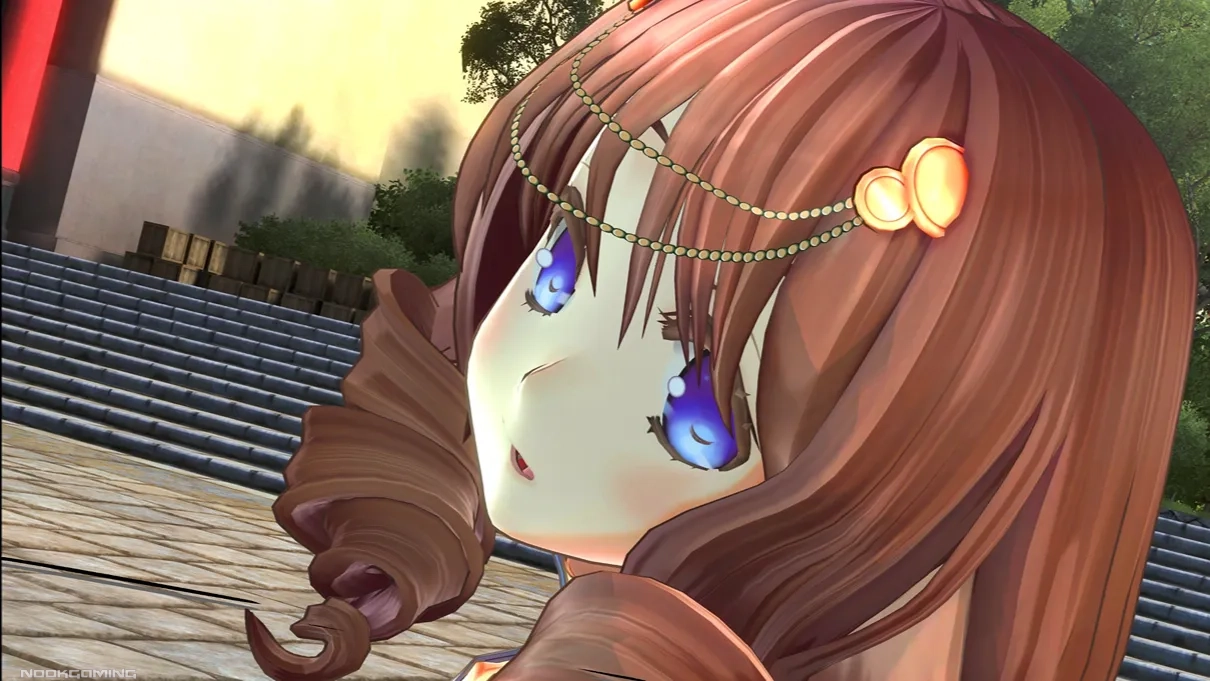
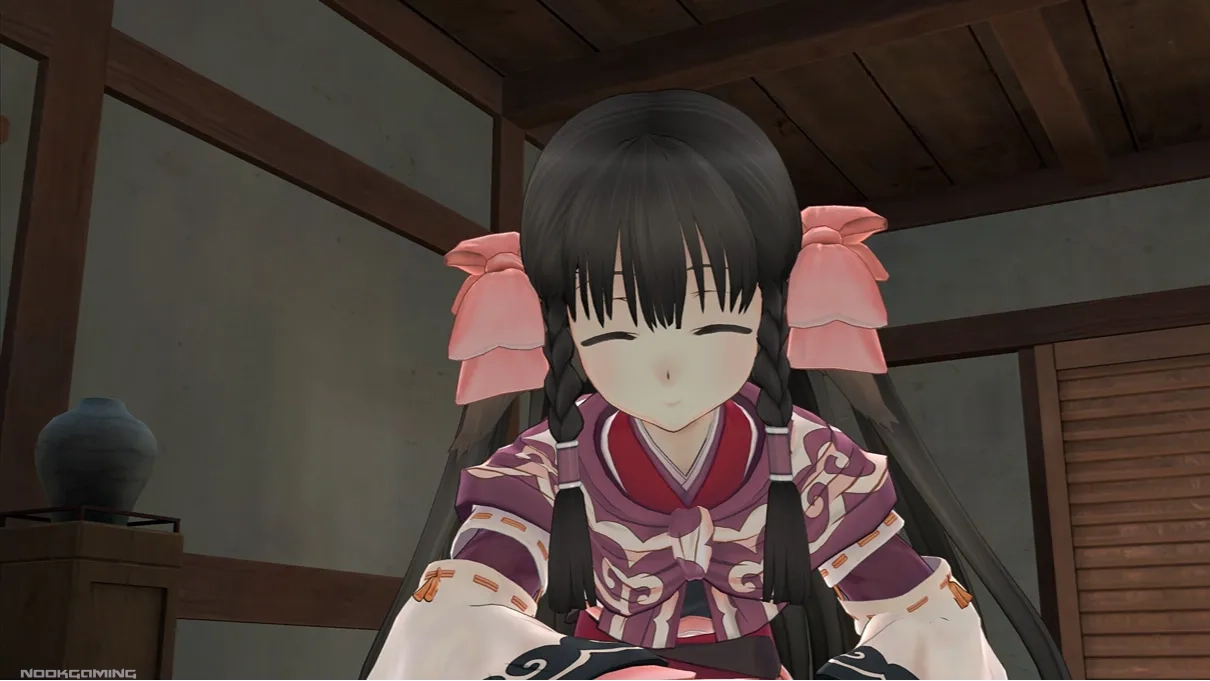
As a 3D action game that draws inspiration from an anime-style visual novel series, Tamsoft’s rendition of the Utawarerumono world and cast remains incredibly pleasant to look at, even more so than the previous installment’s. The characters look crisp and blend well with their surroundings, all while sporting cute and well-designed facial expressions that convey their emotions nicely. There is a bit of wonkiness though with how parts of the model sometimes clip through itself when they do specific gestures, but nonetheless, it’s a pretty moving experience seeing previously static characters doing actions fluidly on the screen. Hell, I didn’t even know that some of them had specific abilities back when I was playing the original Utawarerumono titles before seeing them here! I’m honestly very pleased with how well Amazuyu Tatsuki and Mitsumi Misato’s designs translated into Tamsoft’s 3D model, not to mention the work that went into recreating the environments found within the series as well.
The number of music tracks featured in the game is nothing to scoff at as well, with Utawarerumono: ZAN 2 boasting what looks to be 255 entries in the BGM list. This includes most of the tracks used throughout the original trilogy and both ZAN games, as well as various alternate renditions. You’ll find tracks such as piano versions, specific character versions, and alternative versions all the way back from the series’ first release in 2004. These tracks can be organized within playlists which can then be assigned as the music to play during the Base or Mission sections of the game. It’s an incredible way to pay homage to almost two decades of Utawarerumono. The only problem is that you need to, at minimum, return to the Base at least 255 times because you can only unlock tracks one at a time randomly through Justice Exchange. That’s a lot of grinding!
Verdict
Utawarerumono: ZAN 2, as a spin-off to Utawarerumono: Mask of Truth, manages to capitalize on what its preceding game did well and introduce improvements for replayability. It manages to be a relatively strong Musou-style title despite its obvious dependence on the Utawarerumono IP, providing fun and interesting gameplay while satisfying fan demand for new content. While the newly introduced progression system isn’t exactly free of flaws, the decision to introduce new concepts to the existing Utawarerumono RPG style makes for a refreshingly new experience for the game’s main target audience, which are players that were already fans of the series beforehand.
Combining a simple yet surprisingly engaging gameplay system with visually appealing 3D assets and the most expansive BGM list of the series to date, there’s a lot to love in Utawarerumono: ZAN 2. Unfortunately, it still does have a diced up storyline and a frustrating grind to 100% completion, but the traditional 3D JRPG presentation they decided to use in this sequel’s story mode and the additional scenarios make the experience a whole lot better. As it stands, there are some errors in the English script in both spelling and spacing, but those may be resolved through future patches. They don’t really take away much from the experience and are more of a minor annoyance than anything.
I definitely recommend playing through Utawarerumono: ZAN 2 if you’re a fan of the series and want to see more. Who knows, you might appreciate your fluffy eared wife even better when you see her move in three dimensions!
UTAWARERUMONO: ZAN 2 IS RECOMMENDED

If you are looking for another hack and slash title, check out Warriors: Abyss. Or if you’d like to see more articles about Utawarerumono, check out our look at Monochrome Mobius: Rights and Wrongs Forgotten or Utawarerumono: Prelude to the Fallen.
Many thanks go to Shiravune for a PC review code for Utawarerumono: ZAN 2.

Visual novel reader that wishes there were more than 24 hours in a day. Gacha victim, TCG enjoyer, and VTuber simp. Still trying to live happily.